
Sunglasses By Activity
Find the Right Sunglasses for Every Environment, Job, and Adventure
Choosing the right sunglasses isn't just about style—it's about matching your eyewear to where you'll actually use it. The same pair that's perfect for a weekend road trip may not be the best choice for mountain hiking, construction work, cycling, or spending hours on the water. Different environments place different demands on your eyes, and understanding those differences helps you choose sunglasses that improve both comfort and performance.
This guide organizes sunglasses by real-world activities instead of technical specifications. Whether you're driving to work, hiking remote trails, working construction, traveling across the country, or simply looking for a dependable pair of everyday sunglasses, you'll learn which lens technologies, frame materials, and features make the biggest difference.
If you're still deciding what type of sunglasses best fit your lifestyle, our How To Choose Sunglasses guide is an excellent place to start. For a deeper explanation of lens materials, frame materials, coatings, and technologies, visit our complete Sunglass Lens & Frames Guide. For a broad perspective on sunglasses as a whole, visit EDC Sunglasses.
Explore This Guide
Jump directly to the activity that best matches your lifestyle, or explore the complete guide to
discover which sunglasses perform best in every environment.

Everyday Activities
Most people wear sunglasses for everyday life rather than extreme outdoor adventures. Commuting to work, taking road trips, walking the dog, exploring new cities, or simply enjoying a sunny afternoon all place different demands on your eyewear. The best sunglasses for everyday activities balance comfort, durability, visual clarity, and versatility without feeling overbuilt for the task.
The activities below focus on helping you match your sunglasses to how you actually spend your time. Instead of asking which sunglasses are "best," ask which sunglasses are best for your everyday routine.

Driving
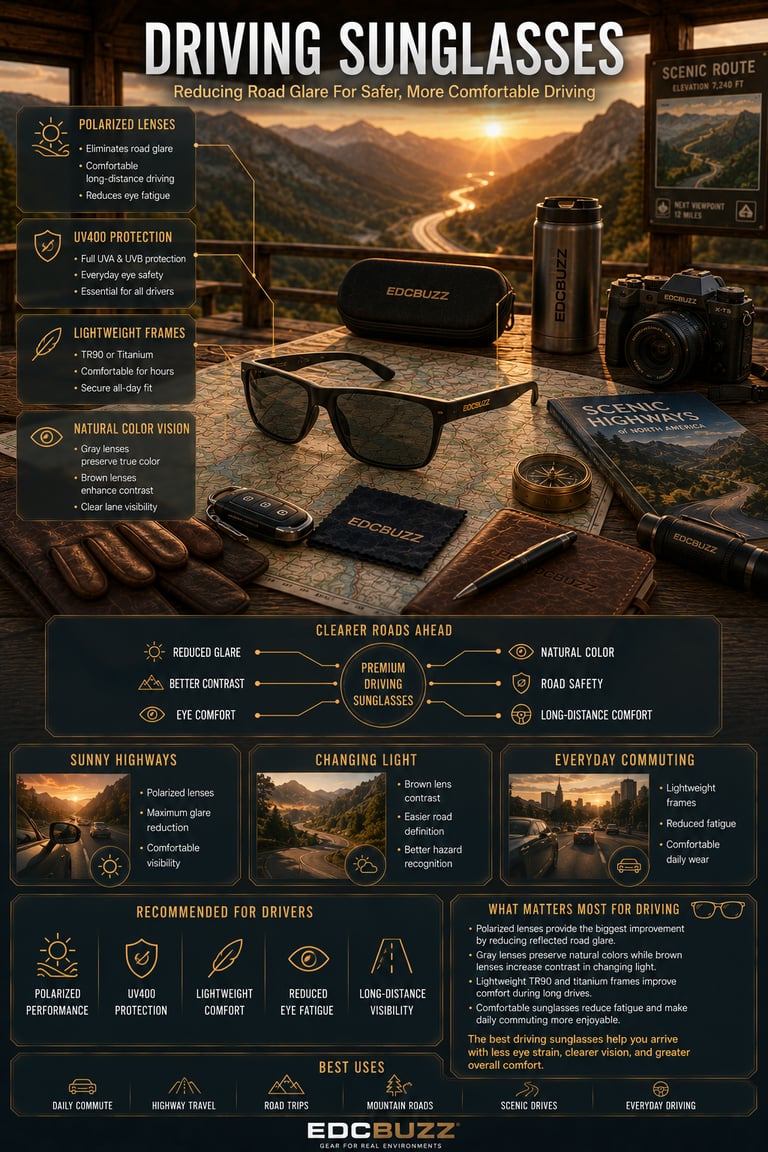
Whether you're commuting twenty minutes to work or driving across the country, quality sunglasses can dramatically reduce eye fatigue and improve comfort behind the wheel. Roads, windshields, chrome trim, wet pavement, and even nearby vehicles constantly reflect sunlight, creating glare that forces your eyes to work harder than necessary. For most drivers, polarized lenses provide the biggest improvement by filtering reflected glare without making the road appear unnaturally dark. Gray lenses preserve natural colors, while brown lenses increase contrast and can make lane markings and road hazards easier to distinguish in certain conditions.
Comfort is equally important. Heavy frames or sunglasses that constantly slide down your nose become distracting during long drives. Lightweight frame materials like TR90 and titanium make it much easier to wear sunglasses for several hours without discomfort. If driving makes up a large part of your day, investing in quality sunglasses isn't simply about seeing better—it's about arriving with less eye fatigue and greater overall comfort.
Recommended Lens Type
Polarized gray or brown lenses with full UV400 protection.
Recommended Frame Material
TR90 or titanium for lightweight, all-day comfort.
Still Researching Driving Sunglasses?
Want to Compare Popular Driving Sunglasses?
Ready to See Our Favorite Driving Sunglasses?
Travel
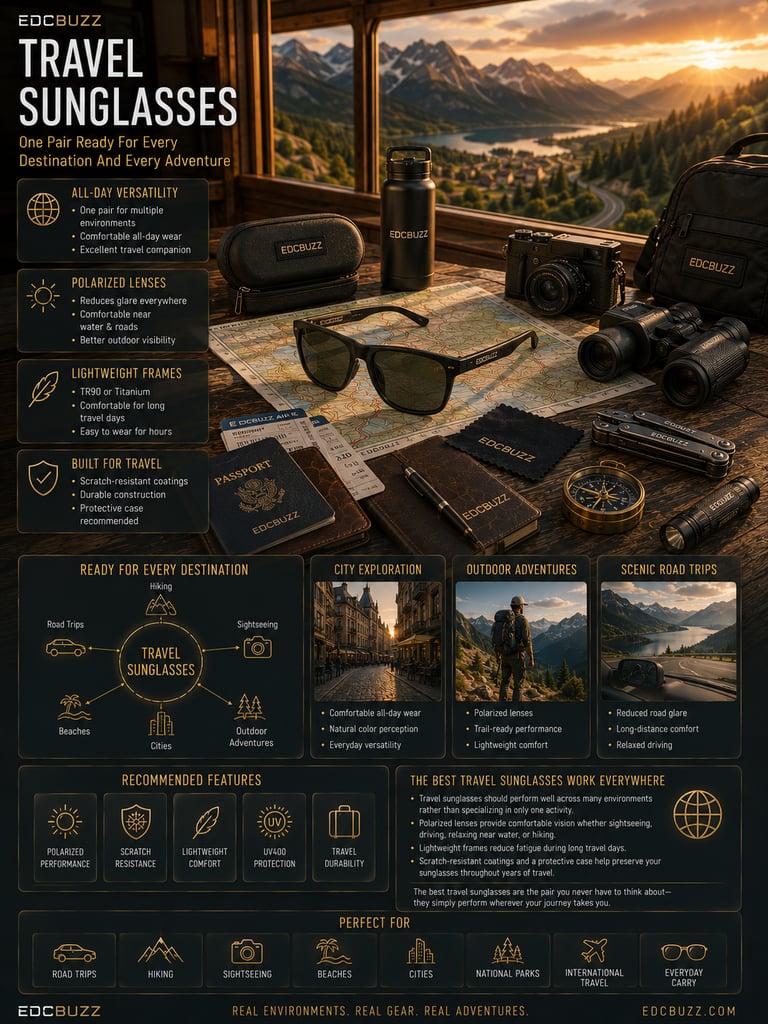
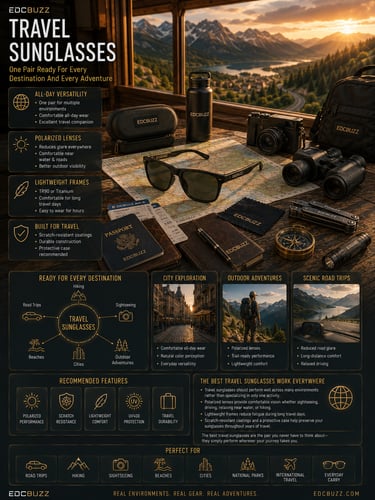
Travel sunglasses need to perform well almost everywhere. One day you might be exploring city streets, the next relaxing on a beach, driving scenic highways, or hiking through a national park. Rather than specializing in one activity, travel sunglasses should comfortably handle a wide variety of environments without requiring multiple pairs. Durability becomes especially important while traveling. Your sunglasses may spend time inside backpacks, carry-on luggage, rental cars, hotel rooms, and airport security bins. Lightweight frames, scratch-resistant coatings, and a quality protective case all help keep your sunglasses looking and performing their best throughout the trip.
Many travelers prefer polarized lenses because they provide excellent all-around comfort whether sightseeing, driving, relaxing near water, or simply spending long days outdoors.
Recommended Lens Type
Polarized gray or green lenses with scratch-resistant coatings.
Recommended Frame Material
TR90, nylon, or titanium for lightweight durability.
Still Researching Travel Sunglasses?
Want to Compare Popular Sunglasses?
Ready to See Our Favorite Everyday Travel Sunglasses?
Walking & Everyday Carry
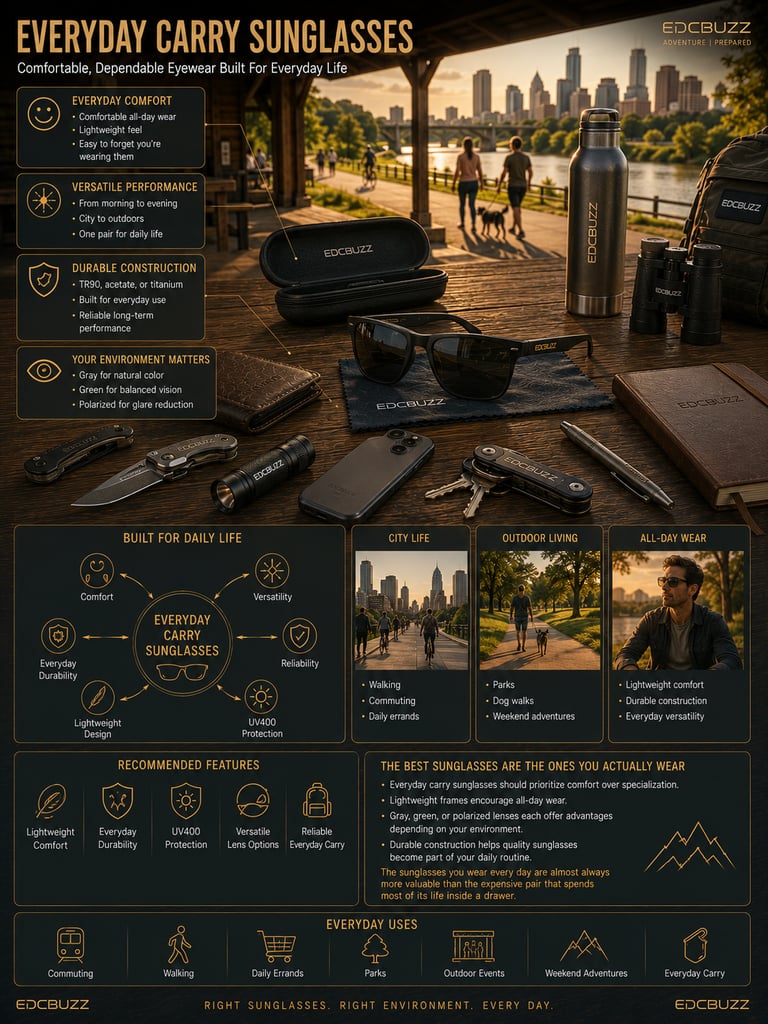
For many people, sunglasses become part of their everyday carry just like a wallet, flashlight, knife, watch, or multi-tool. They're worn while running errands, grabbing lunch, walking the dog, visiting outdoor events, or simply enjoying time outside.
Because everyday carry sunglasses see frequent use, versatility matters more than specialization. A quality pair should feel comfortable from morning until evening, transition easily between different environments, and be durable enough to handle daily life without constant worry.
Many buyers discover that the sunglasses they wear most often aren't necessarily the most expensive—they're simply the pair that's comfortable enough to wear every day.
Recommended Lens Type
Gray, green, or polarized lenses depending on your typical environment.
Recommended Frame Material
TR90, acetate, or titanium.
Still Researching Everyday Carry Sunglasses?
Want to Compare Popular Everyday Sunglasses?
Ready to See Our Favorite Everyday Carry Sunglasses?
Office & Computer Work
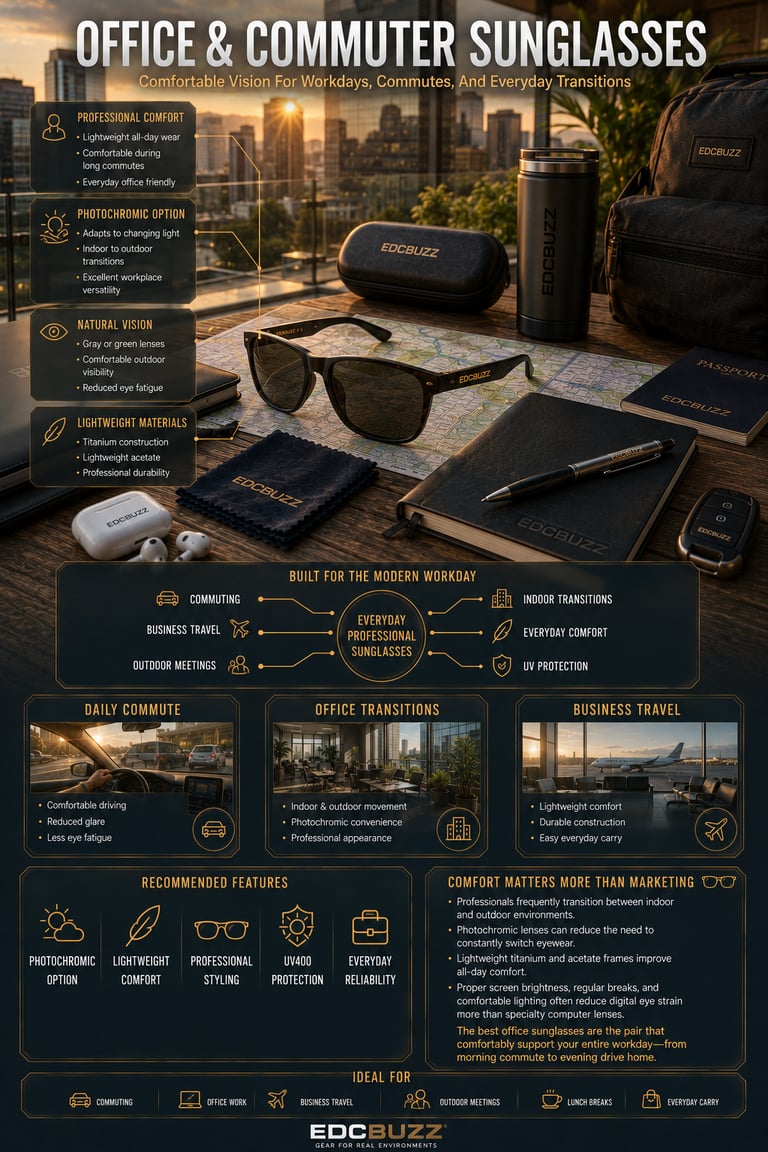
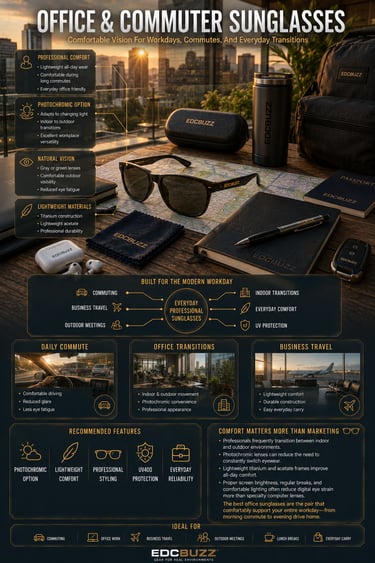
While sunglasses spend most of their time outdoors, office workers often transition between buildings, parking lots, lunch breaks, business travel, and long commutes throughout the day. Having the right sunglasses close at hand reduces eye fatigue every time you step outside, especially during bright afternoons or extended drives.
Professionals who regularly move between indoor and outdoor environments may also benefit from photochromic lenses, which automatically adjust as lighting conditions change. Although they aren't the perfect solution for every situation, they can reduce the need to constantly switch between clear glasses and sunglasses throughout the workday.
It's also worth separating fact from marketing. Many products marketed toward computer users promise dramatic improvements from specialty lens technologies, but proper screen brightness, regular breaks, and comfortable lighting usually play a much larger role in reducing digital eye strain than sunglasses themselves.
Recommended Lens Type
Gray, green, or photochromic lenses for frequent indoor-outdoor transitions.
Recommended Frame Material
Titanium or lightweight acetate for professional everyday wear.
Still Researching Office-Friendly Sunglasses?
Want to Compare Popular Lens Technologies?
Ready to See Our Favorite Everyday Sunglasses?
Outdoor Recreation
Outdoor recreation places greater demands on sunglasses than most everyday activities. Changing weather, uneven terrain, long hours in direct sunlight, and constant movement all influence how well your eyewear performs. The best outdoor sunglasses should remain comfortable over long distances, provide dependable UV protection, and stay securely in place whether you're climbing hills, setting up camp, or spending the afternoon on the water.
Unlike everyday sunglasses, outdoor eyewear often benefits from specialized features such as lightweight TR90 frames, polarized lenses, photochromic technology, wraparound coverage, and improved grip during hot or humid conditions. Choosing the right combination depends on the activity—and the environment—you spend the most time in.
Hiking
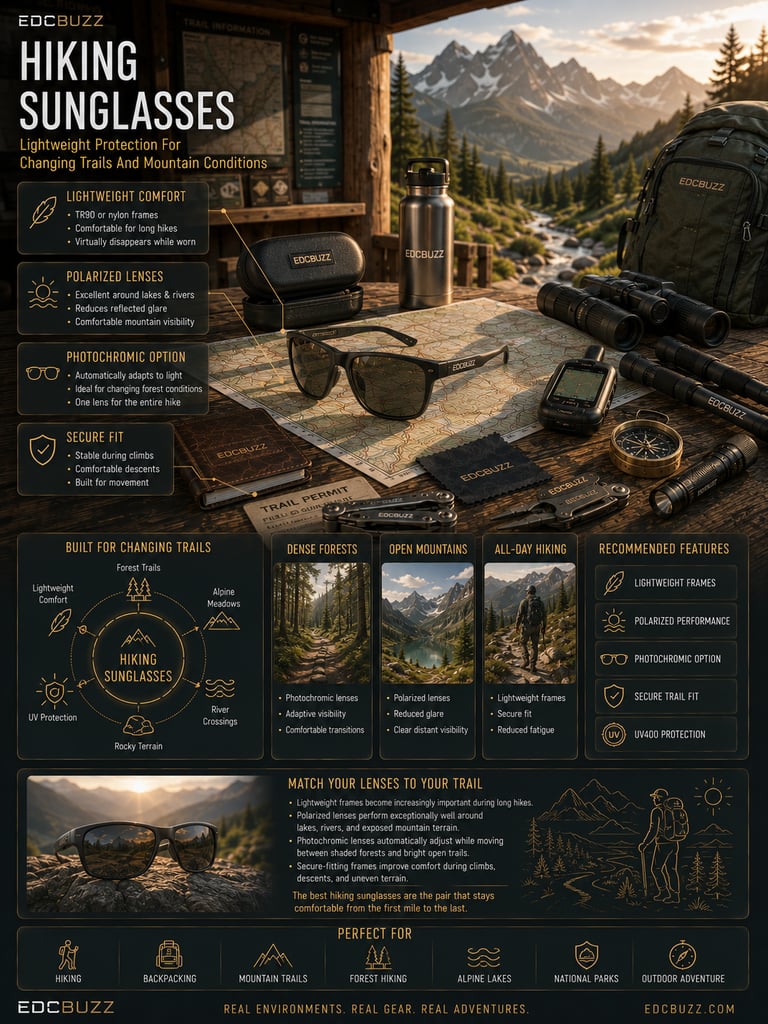
Hiking exposes your eyes to constantly changing conditions. Dense forests, open ridgelines, rocky overlooks, river crossings, and bright alpine meadows all produce different lighting throughout the day. A quality pair of hiking sunglasses helps reduce eye fatigue while improving visibility on uneven terrain.
Weight becomes especially important during long hikes. Heavy sunglasses can become uncomfortable after several hours, while lightweight TR90 or nylon frames often disappear once you're on the trail. Secure nose pads and temple grips also prevent constant adjustments during climbs or descents.
Lens choice depends on where you hike. Polarized lenses work extremely well around lakes, rivers, and exposed mountain terrain, while photochromic lenses automatically adjust as you move between shaded forests and bright open trails.
Recommended Lens Type
Polarized brown or photochromic lenses with full UV400 protection.
Recommended Frame Material
TR90 or nylon for lightweight comfort and flexibility.
Still Researching Hiking Sunglasses?
Want to Compare Popular Hiking Sunglasses?
Ready to See Our Favorite Hiking Sunglasses?
Camping
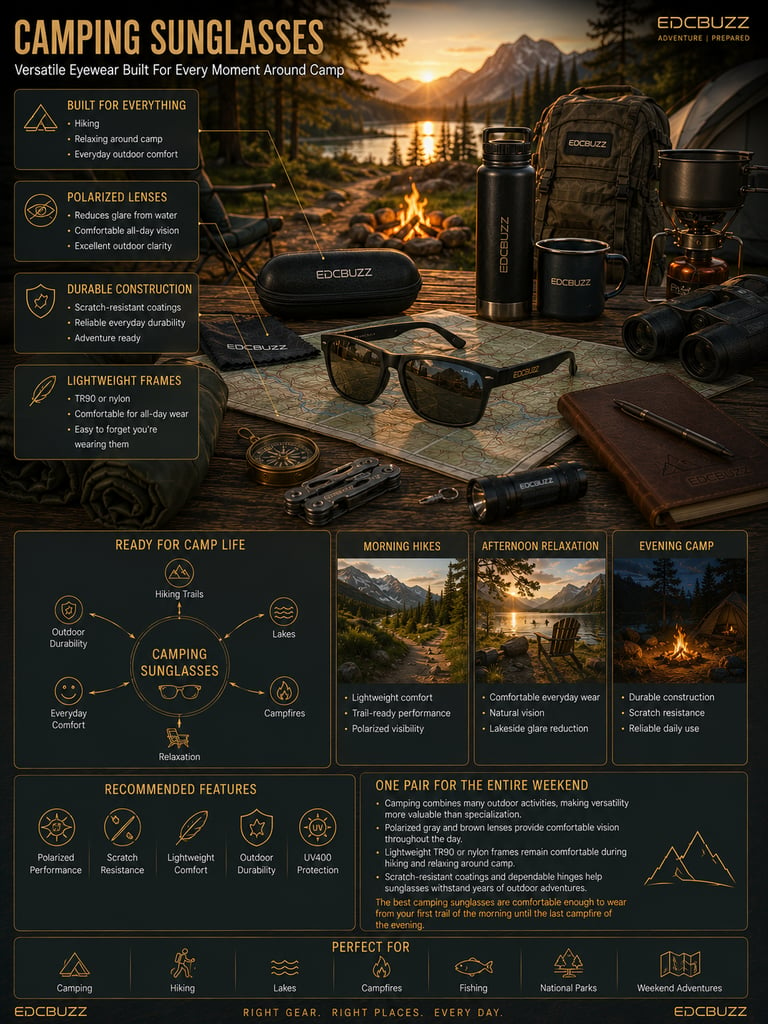
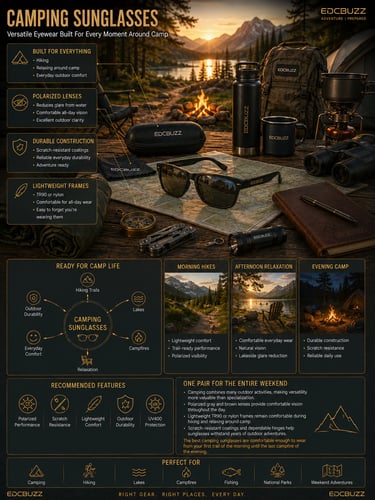
Camping places your sunglasses through a little bit of everything. You may spend the morning hiking, the afternoon relaxing around camp, and the evening gathering firewood before sunset. Because camping combines so many activities, versatility becomes more valuable than specialization.
Durability is equally important. Sunglasses often end up clipped to backpacks, stored inside tents, or tossed onto picnic tables throughout the day. Lightweight frames with scratch-resistant coatings and dependable hinges help them survive repeated use without requiring constant attention.
Unlike dedicated sports sunglasses, camping sunglasses should feel just as comfortable sitting around camp as they do exploring nearby trails.
Recommended Lens Type
Polarized gray or brown lenses with scratch-resistant coatings.
Recommended Frame Material
TR90 or nylon.
Still Researching Camping Sunglasses?
Want to Compare Popular Outdoor Sunglasses?
Ready to See Our Favorite Camping Sunglasses?
Bushcraft
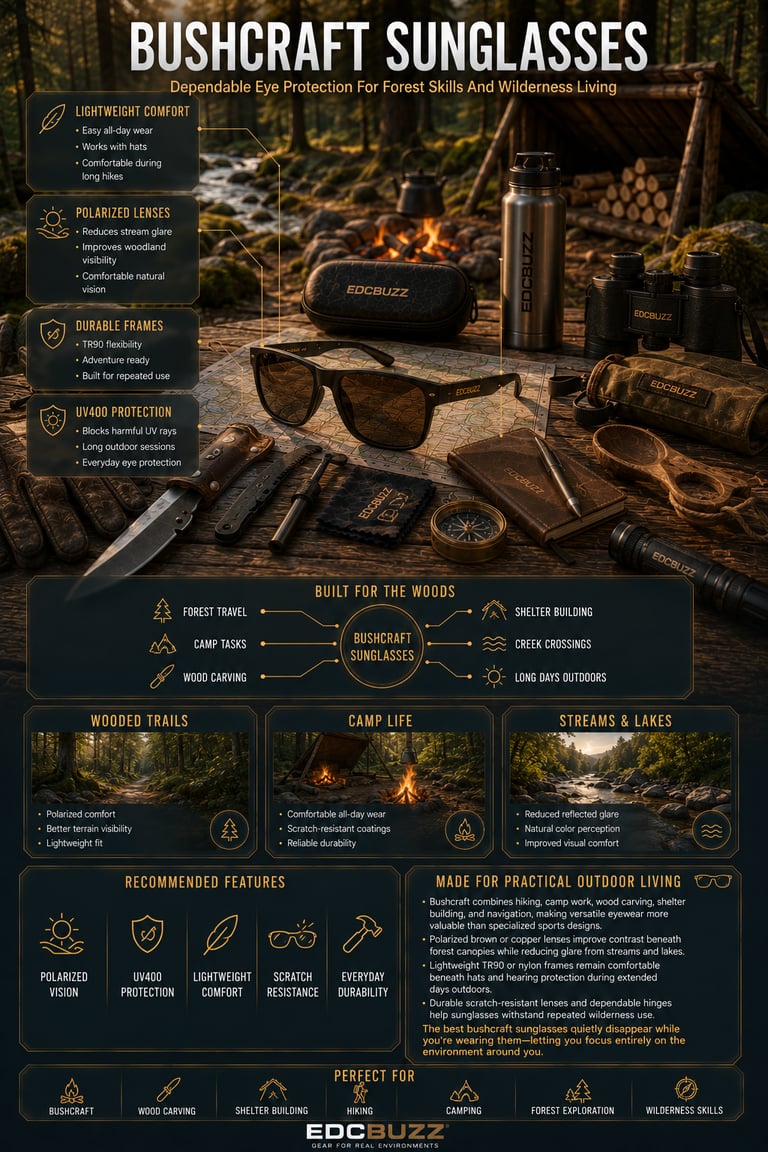
Bushcraft demands durable equipment that performs reliably in unpredictable environments. Whether you're building shelters, carving wood, navigating wooded terrain, or spending extended time outdoors, your sunglasses need to balance comfort with durability.
Large wraparound frames often interfere with hats, hearing protection, or other gear, making medium-sized lightweight frames a practical choice. Polarized lenses help reduce glare around streams and lakes, while brown or copper tints improve contrast beneath forest canopies where terrain changes quickly.
Since branches, brush, and debris are common, durable frame materials and impact-resistant lenses become especially valuable.
Recommended Lens Type
Polarized brown or copper polycarbonate lenses.
Recommended Frame Material
TR90 or nylon.
Still Researching Bushcraft Sunglasses?
Want to Compare Popular Outdoor Sunglasses?
Ready to See Our Favorite Bushcraft Sunglasses?
Fishing
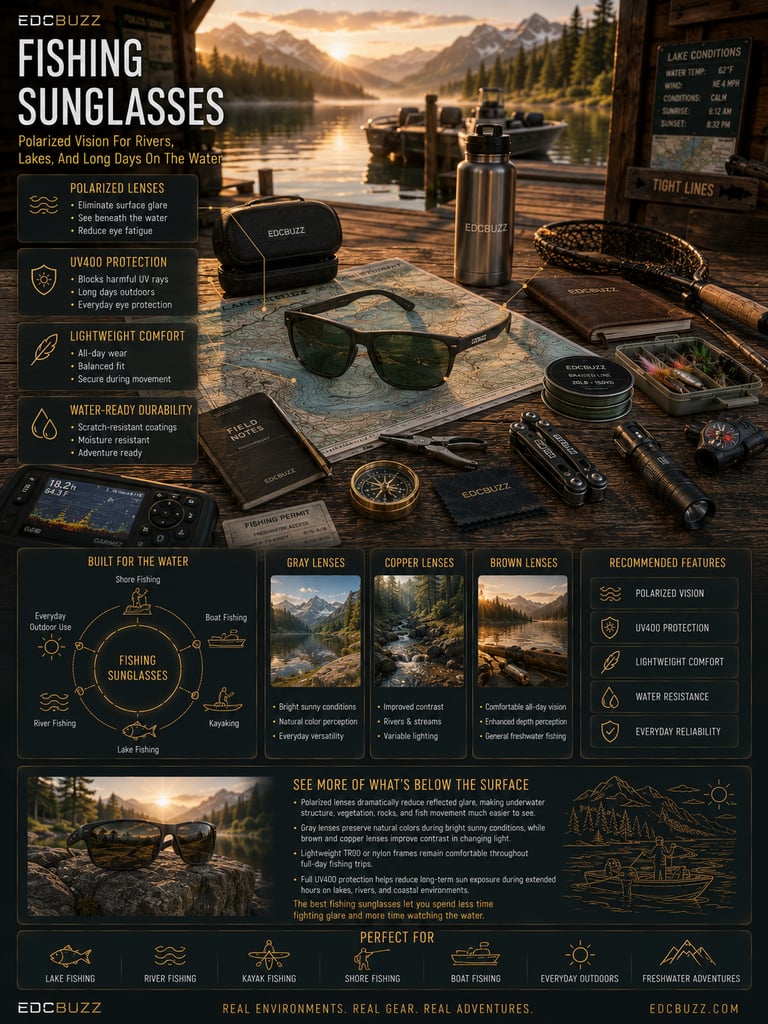
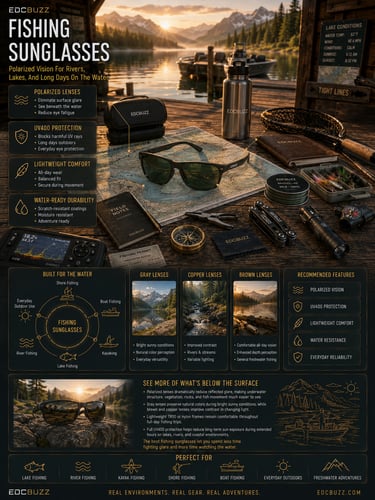
Few activities benefit from polarized sunglasses more than fishing. Whether you're standing on the shoreline, drifting in a kayak, or casting from a boat, reflected glare makes it difficult to see beneath the water's surface. Polarized lenses reduce that glare, making underwater structure, fish movement, and changing water conditions easier to spot.
Lens color also plays an important role. Gray performs well during bright sunny days, while copper and brown often improve contrast in rivers, lakes, and changing weather.
Lightweight frames become increasingly important during full-day fishing trips where sunglasses rarely leave your face.
Recommended Lens Type
Polarized gray, copper, or brown lenses.
Recommended Frame Material
TR90 or nylon with non-slip grip.
Still Researching Fishing Sunglasses?
Want to Compare Popular Polarized Sunglasses?
Ready to See Our Favorite Hiking Sunglasses?
Beach
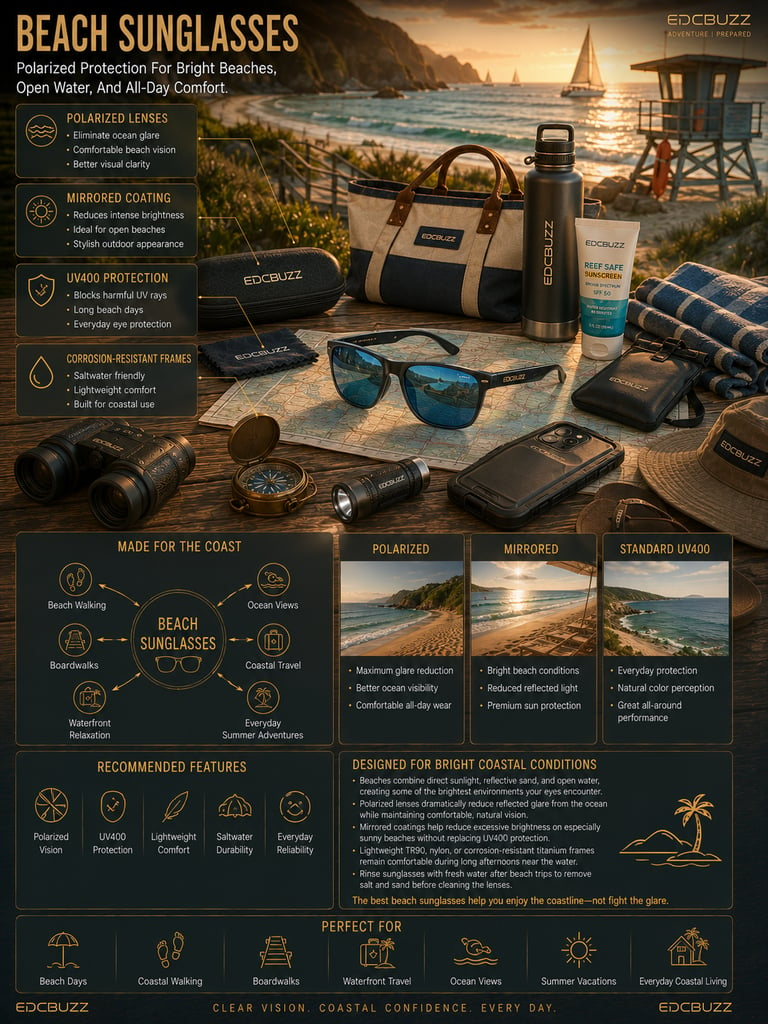
Beach environments combine intense sunlight, reflective sand, open water, and constant UV exposure. Without quality sunglasses, your eyes work overtime trying to manage brightness coming from every direction.
Polarized lenses dramatically reduce glare reflected from the ocean while maintaining comfortable vision during long afternoons outdoors. Mirrored coatings also become useful on especially bright beaches where sunlight remains intense throughout the day.
Saltwater, sunscreen, and blowing sand make regular cleaning important after every trip.
Recommended Lens Type
Polarized gray lenses with optional mirrored coating.
Recommended Frame Material
TR90, nylon, or corrosion-resistant titanium.
Still Researching Beach Sunglasses?
Want to Compare Popular Polarized Sunglasses?
Ready to See Our Favorite Premium Sunglasses?
Boating
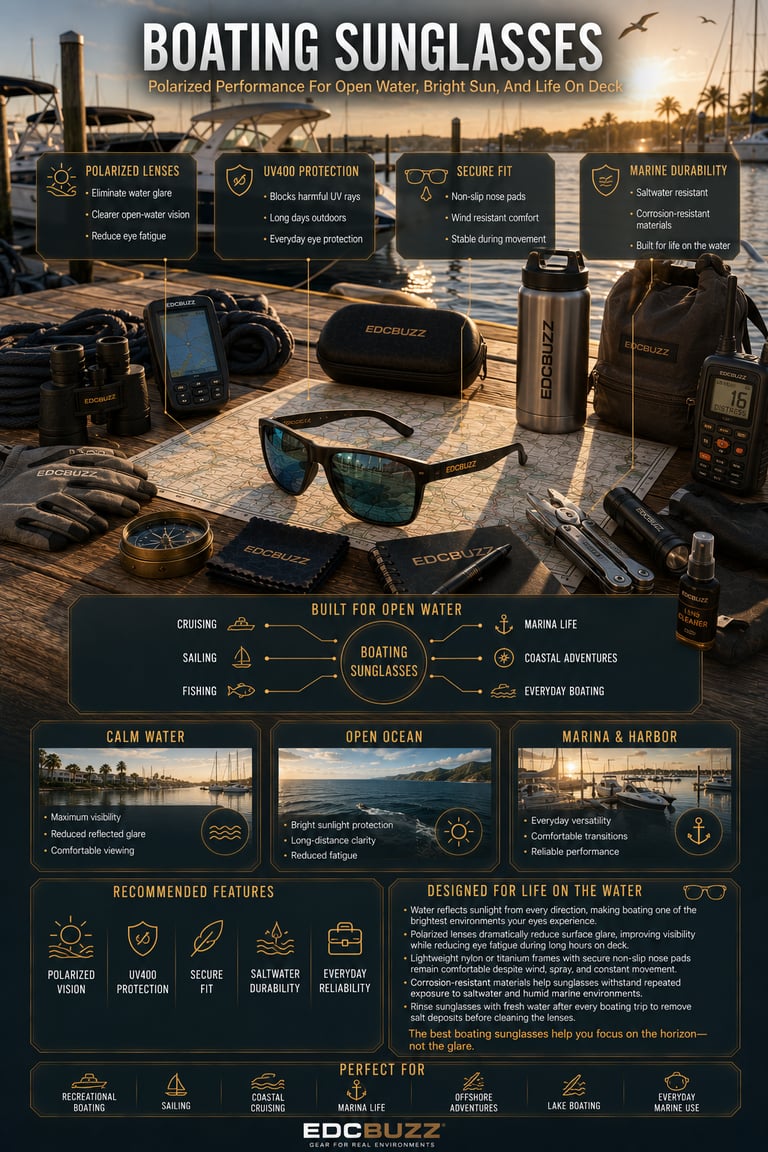
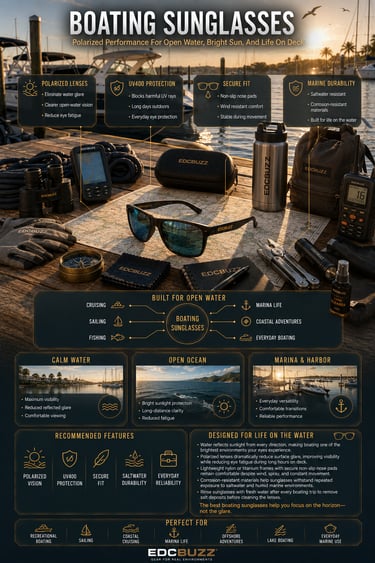
Boating creates one of the harshest lighting environments your eyes will encounter. Sunlight reflects from the water's surface while also bouncing off boat decks, windshields, stainless hardware, and surrounding waves. Without quality sunglasses, eye fatigue develops quickly.
Polarized lenses are the clear choice for most boaters because they significantly reduce reflected glare while improving visibility across open water. Lightweight, corrosion-resistant frames also help withstand frequent exposure to saltwater and humid environments.
A secure fit is equally important. Strong winds and constant movement make sunglasses that slide down your nose both frustrating and easy to lose.
Recommended Lens Type
Polarized gray or copper lenses with UV400 protection.
Recommended Frame Material
Nylon or titanium with secure non-slip nose pads.
Still Researching Boating Sunglasses?
Want to Compare Popular Polarized Sunglasses?
Ready to See Our Favorite Premium Sunglasses?
Sports & Fitness
Athletic sunglasses have one job: stay comfortable while you're moving. Whether you're running a neighborhood trail, riding hundreds of miles on your bike, or spending the afternoon on the golf course, your sunglasses should improve your performance—not become another distraction.
Unlike everyday sunglasses, sports eyewear prioritizes lightweight construction, secure fit, impact resistance, and wide fields of view. Features like non-slip nose pads, wraparound coverage, and ventilation become much more important once you're sweating or constantly changing pace.
The activities below highlight the features that matter most for each sport, helping you choose sunglasses designed for the way you actually train and compete.
Running
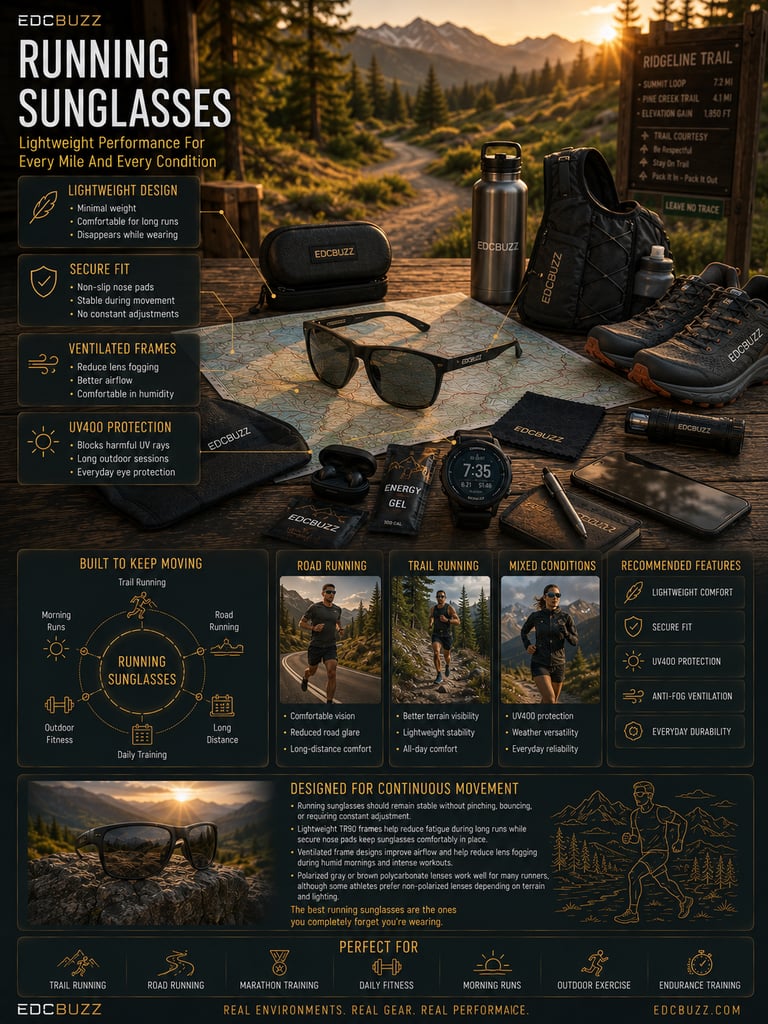
Running exposes your sunglasses to constant movement. Every stride creates vibration, sweat builds throughout the workout, and changing weather can quickly affect visibility. The best running sunglasses remain stable without pinching, allowing you to forget you're even wearing them.
Weight should be one of your highest priorities. Heavy frames gradually become noticeable during longer runs, while lightweight TR90 frames often disappear after the first few minutes. Ventilation also helps reduce lens fogging during humid weather or cooler morning runs.
Polarized lenses work well for most runners, although some competitive athletes prefer non-polarized options depending on the terrain and lighting conditions.
Recommended Lens Type
Polarized gray or brown polycarbonate lenses with UV400 protection.
Recommended Frame Material
Lightweight TR90 with non-slip nose pads.
Still Researching Running Sunglasses?
Want to Compare Popular Running Sunglasses?
Ready to See Our Favorite Athletic Sunglasses?
Cycling
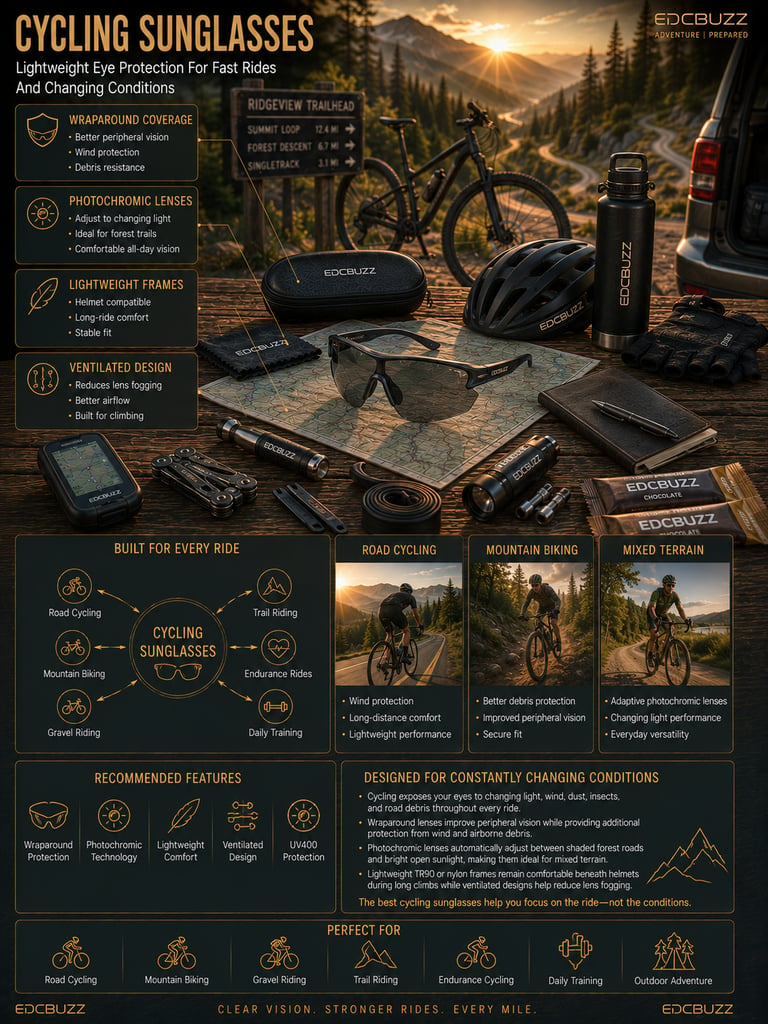
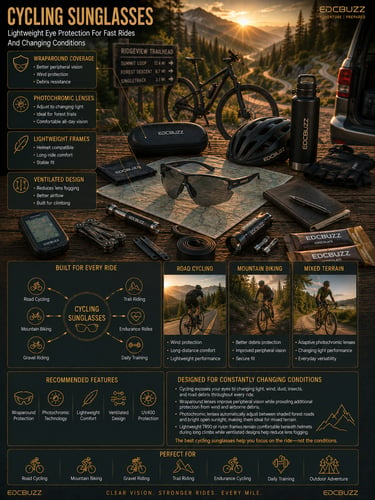
Cyclists often spend hours riding under constantly changing lighting conditions while maintaining high speeds. Wind, dust, insects, road debris, and changing weather all influence which sunglasses perform best on the bike.
Large wraparound lenses have become extremely popular because they improve peripheral vision while protecting your eyes from debris. Lightweight frames remain comfortable under helmets, while vented lens designs help minimize fogging during long climbs or humid rides.
Depending on where you ride, photochromic lenses can be especially useful when transitioning between tree-covered roads and open sunlight.
Recommended Lens Type
Photochromic or polarized polycarbonate lenses.
Recommended Frame Material
TR90 or nylon with wraparound coverage.
Still Researching Cycling Sunglasses?
Want to Compare Popular Cycling Sunglasses?
Ready to See Our Favorite Athletic Sunglasses?
Trail Running
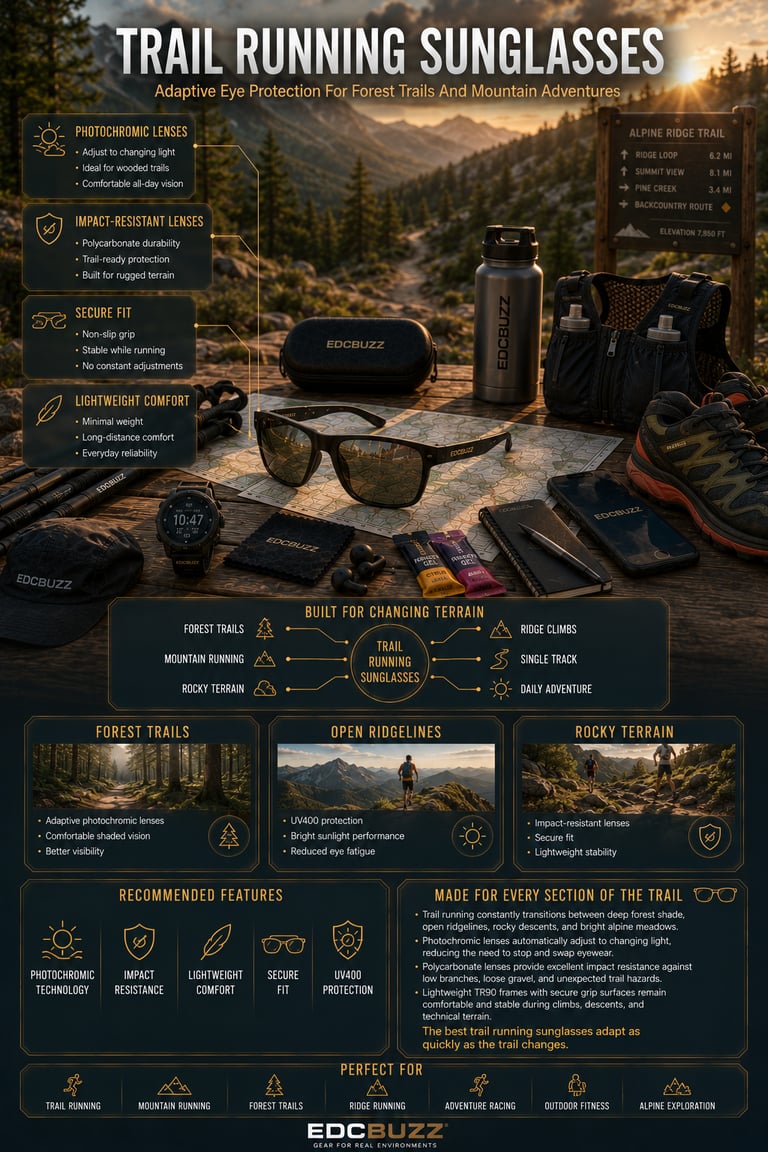
Trail running combines many of the challenges found in both hiking and road running. Constant elevation changes, uneven terrain, tree cover, rocks, roots, and changing sunlight all require sunglasses that adapt without becoming distracting.
Because trail runners frequently move between deep shade and open sunlight, photochromic lenses have become increasingly popular. They automatically adjust throughout the run, allowing your vision to remain comfortable without stopping to change lenses.
Impact-resistant polycarbonate lenses are also a smart choice since low branches, gravel, and accidental falls are more common than during road running.
Recommended Lens Type
Photochromic or polarized brown polycarbonate lenses.
Recommended Frame Material
TR90 with secure grip surfaces.
Still Researching Trail Running Sunglasses?
Want to Compare Popular Trail Sunglasses?
Ready to See Our Favorite Athletic Sunglasses?
Mountain Biking
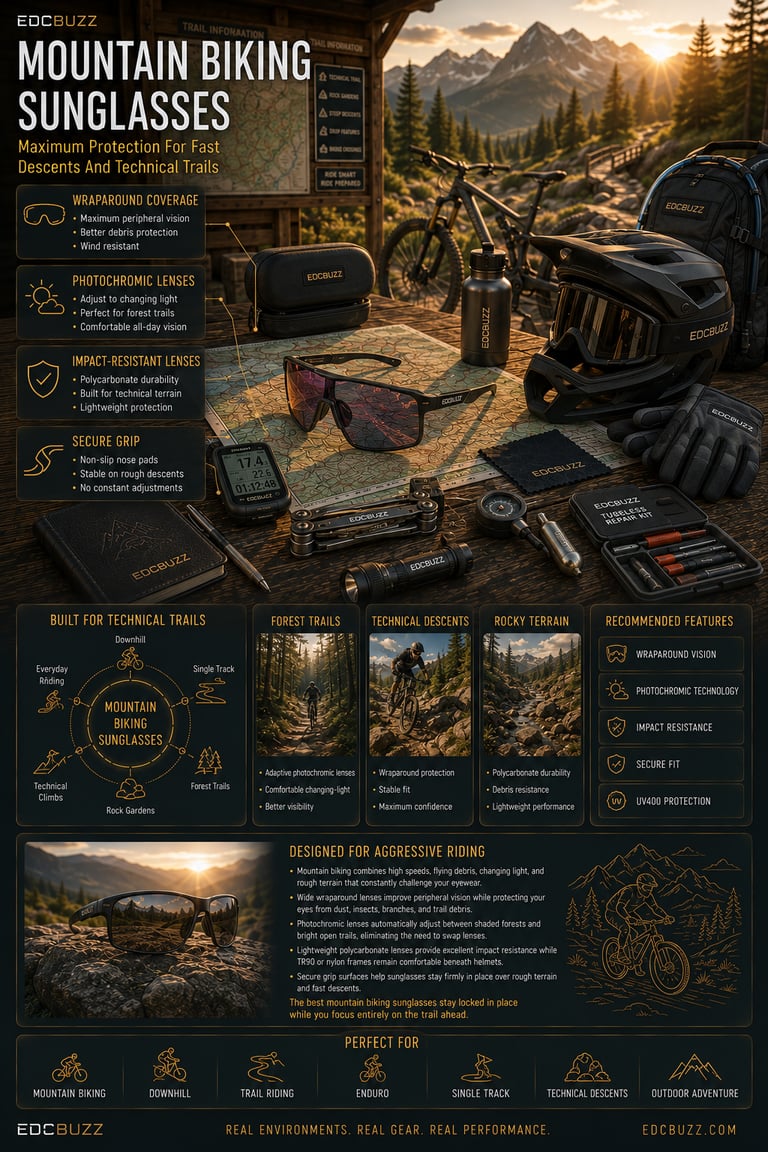
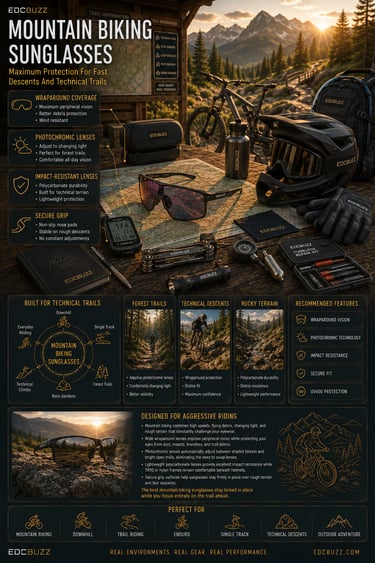
Mountain biking pushes sunglasses harder than almost any other outdoor activity. High speeds, flying debris, changing terrain, tree branches, and rapidly shifting light require durable eyewear that stays firmly in place.
Wide wraparound lenses provide valuable peripheral vision while protecting your eyes from dust, insects, and trail debris. Lightweight polycarbonate lenses also help reduce the risk of damage during falls while keeping overall weight low.
Secure grip becomes especially important because rough terrain constantly challenges how well your sunglasses stay positioned.
Recommended Lens Type
Photochromic or polarized polycarbonate lenses.
Recommended Frame Material
TR90 or nylon with wraparound design.
Still Researching Mountain Bike Sunglasses?
Want to Compare Popular Performance Sunglasses?
Ready to See Our Favorite Athletic Sunglasses?
Golf
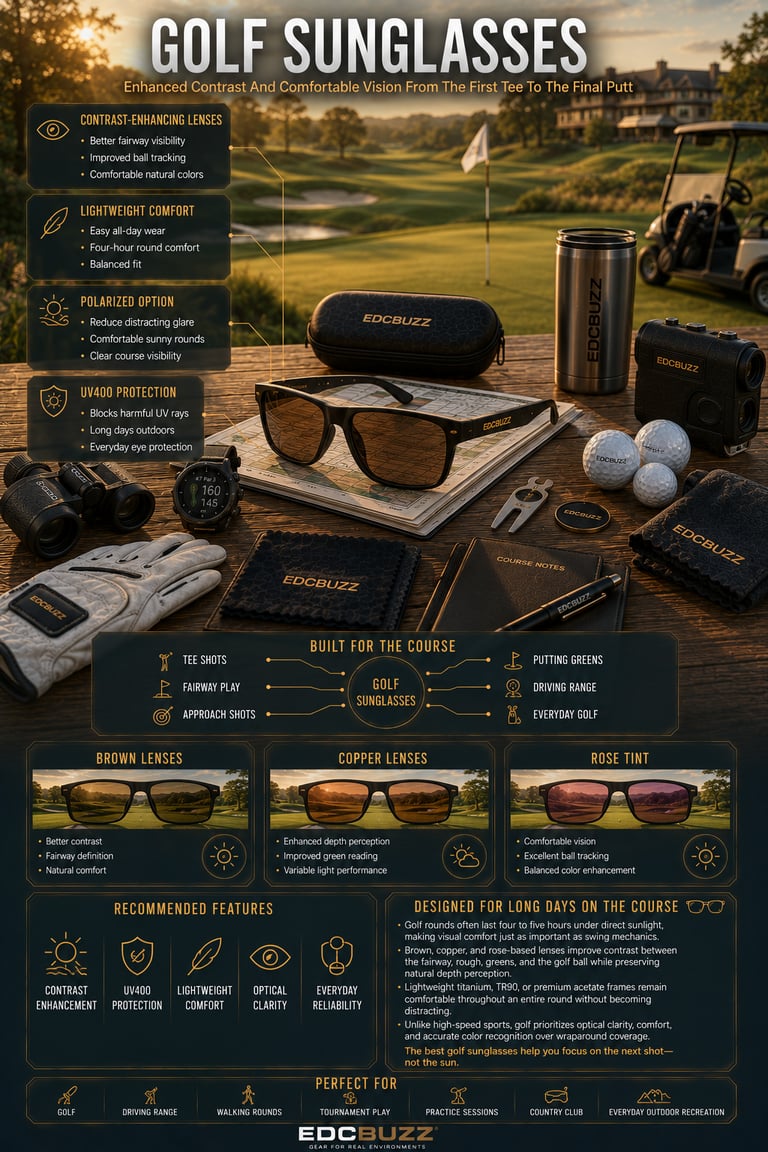
Golf may appear less demanding than other outdoor sports, but players often spend four to five hours under direct sunlight while tracking small white golf balls against dramatically different backgrounds. Good sunglasses reduce eye fatigue while maintaining accurate depth perception and natural color recognition.
Many golfers prefer brown, copper, or rose-based tints because they enhance contrast between the ball, fairway, rough, and greens without dramatically changing natural colors. Lightweight frames also become important over an eighteen-hole round.
Unlike cycling or running, golf generally doesn't require wraparound sport frames, allowing players to prioritize comfort and optical clarity instead.
Recommended Lens Type
Brown, copper, or polarized brown lenses.
Recommended Frame Material
Titanium, TR90, or lightweight acetate.
Still Researching Golf Sunglasses?
Want to Compare Premium Sunglasses?
Ready to See Our Favorite Golf Sunglasses?
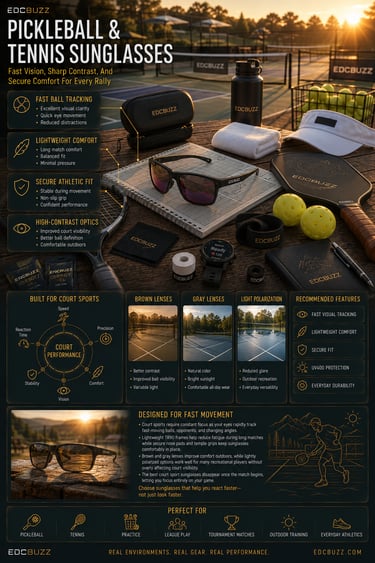
Pickleball & Tennis
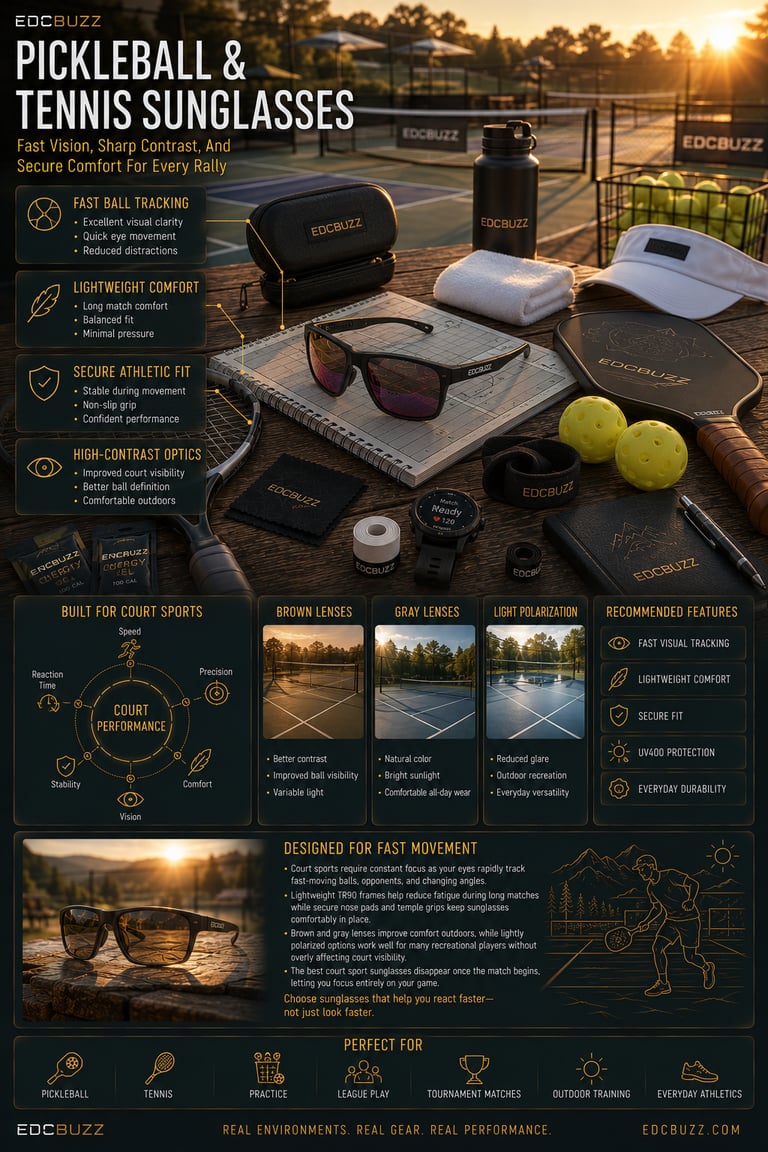
Fast-moving ball sports place unique demands on sunglasses. Quick directional changes, rapid eye movement, and constantly tracking the ball require lenses that maintain excellent clarity without creating unnecessary distractions.
Because players frequently alternate between bright sunlight and shaded courts, lightweight frames and high-contrast lens colors often improve comfort throughout long matches. Secure grip also helps prevent sunglasses from shifting during sudden movement.
While polarized lenses work well for many recreational players, some competitive athletes prefer non-polarized lenses to maintain the most consistent court visibility.
Recommended Lens Type
Brown, gray, or lightly polarized polycarbonate lenses.
Recommended Frame Material
TR90 with secure athletic fit.
Still Researching Court Sport Sunglasses?
Want to Compare Affordable vs Premium Performance?
Ready to See Our Favorite Athletic Sunglasses?
Work & Trades
For many professions, sunglasses are more than a comfort item—they're essential safety equipment. Long hours outdoors expose your eyes to ultraviolet radiation, dust, wind, flying debris, glare, and constantly changing weather. Choosing the right eyewear can reduce fatigue throughout the workday while also helping protect your vision.
Unlike recreational activities, work environments often require balancing comfort with safety standards. Some jobs call for ANSI-rated safety glasses, while others simply benefit from polarized lenses, lightweight frames, or wraparound protection. Understanding the demands of your trade helps narrow down the right features before you invest in a new pair.
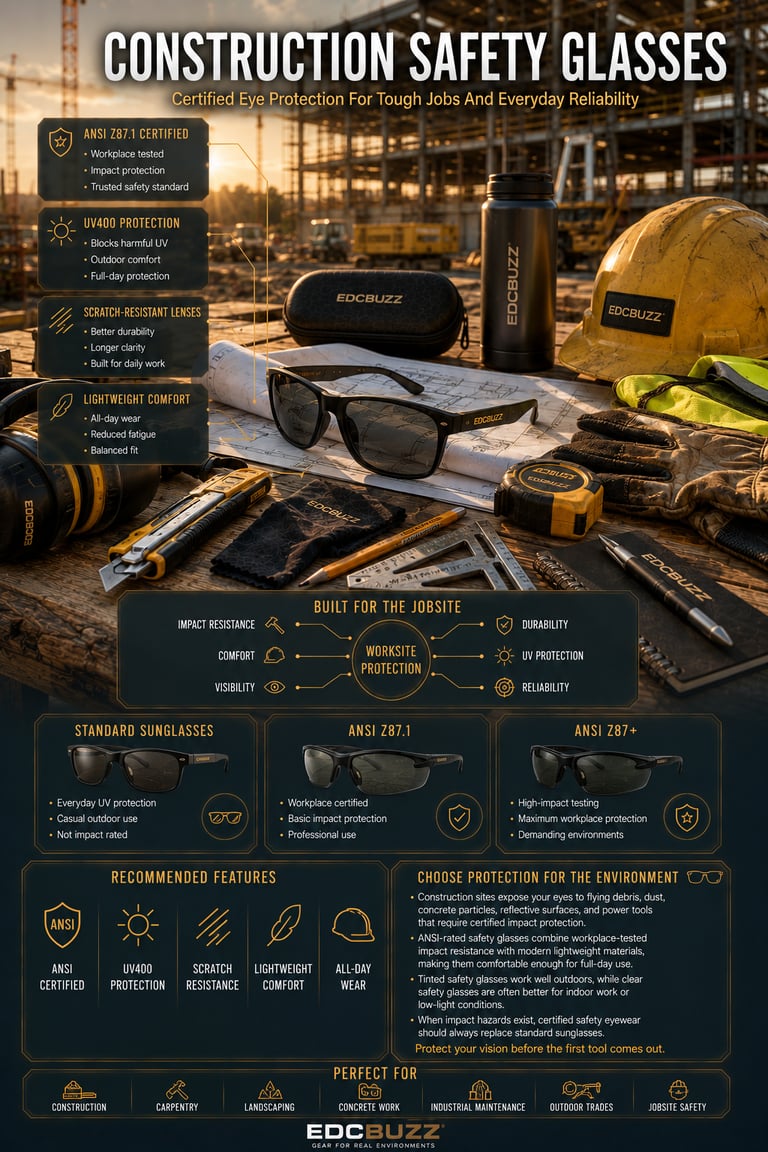
Construction
Construction sites present one of the toughest environments for eyewear. Flying debris, power tools, dust, concrete, reflective surfaces, and constant movement all increase the risk of eye injuries. While sunglasses help reduce glare, certified safety glasses should always take priority whenever impact hazards exist.
Most construction professionals benefit from lightweight ANSI-rated safety glasses that include UV400 protection and scratch-resistant polycarbonate lenses. Modern safety glasses are significantly more comfortable than older designs, making them practical for all-day wear without sacrificing protection.
If your work regularly moves between indoor and outdoor environments, having both clear safety glasses and tinted safety glasses often provides the best solution.
Recommended Lens Type
ANSI-rated polycarbonate lenses with UV400 protection.
Recommended Frame Material
TR90 or nylon safety frames.
Still Researching Safety Glasses?
Want to Compare Safety Glasses and Sunglasses?
Ready to See Our Favorite Safety Glasses?
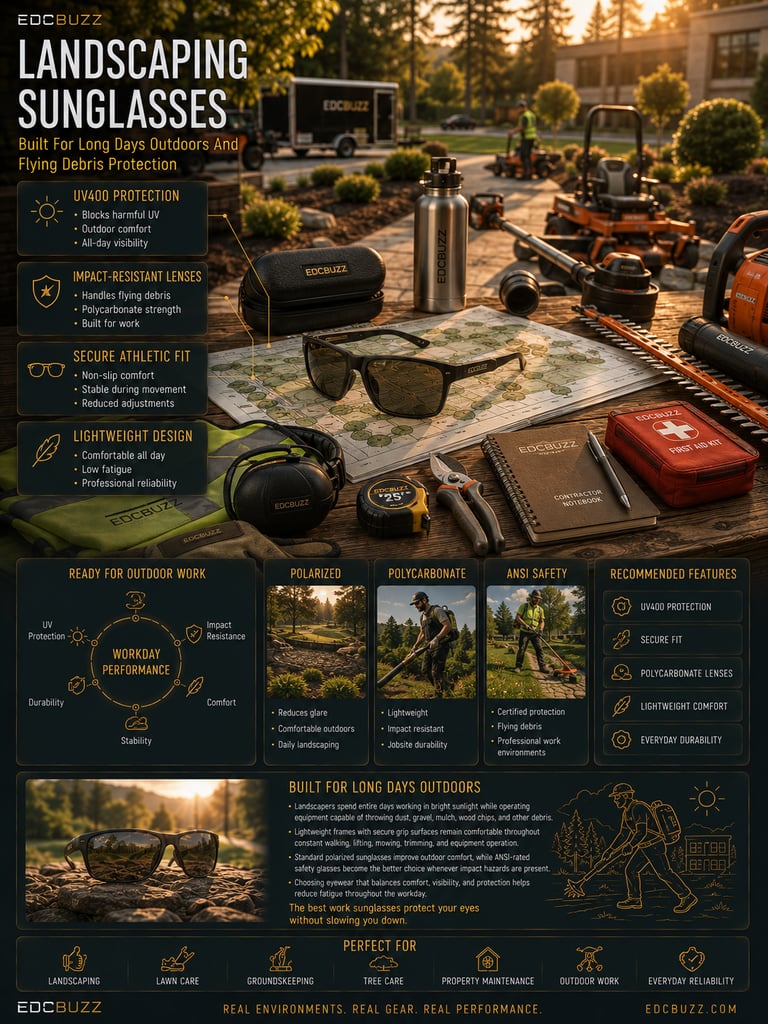
Landscaping
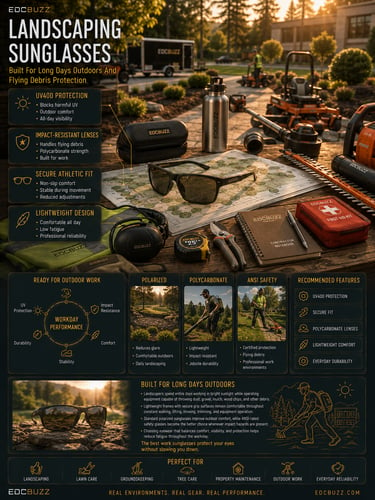
Landscapers spend entire days working under direct sunlight while operating mowers, trimmers, chainsaws, leaf blowers, and other equipment capable of throwing debris. Good sunglasses reduce glare, but impact resistance and secure fit become equally important throughout the workday.
Because many landscaping jobs involve constant movement, lightweight frames with non-slip nose pads remain comfortable even during hot summer weather. Polycarbonate lenses provide additional peace of mind when working around gravel, branches, and flying debris.
Many professional landscapers choose tinted ANSI-rated safety glasses to combine eye protection with comfortable outdoor vision.
Recommended Lens Type
Polycarbonate polarized or ANSI-rated tinted lenses.
Recommended Frame Material
TR90 or nylon.
Still Researching Work Sunglasses?
Want to Compare Safety Glasses and Sunglasses?
Ready to See Our Favorite Work Sunglasses?
Best Tactical Sunglasses (Most Have Higher Protection)
Manufacturing
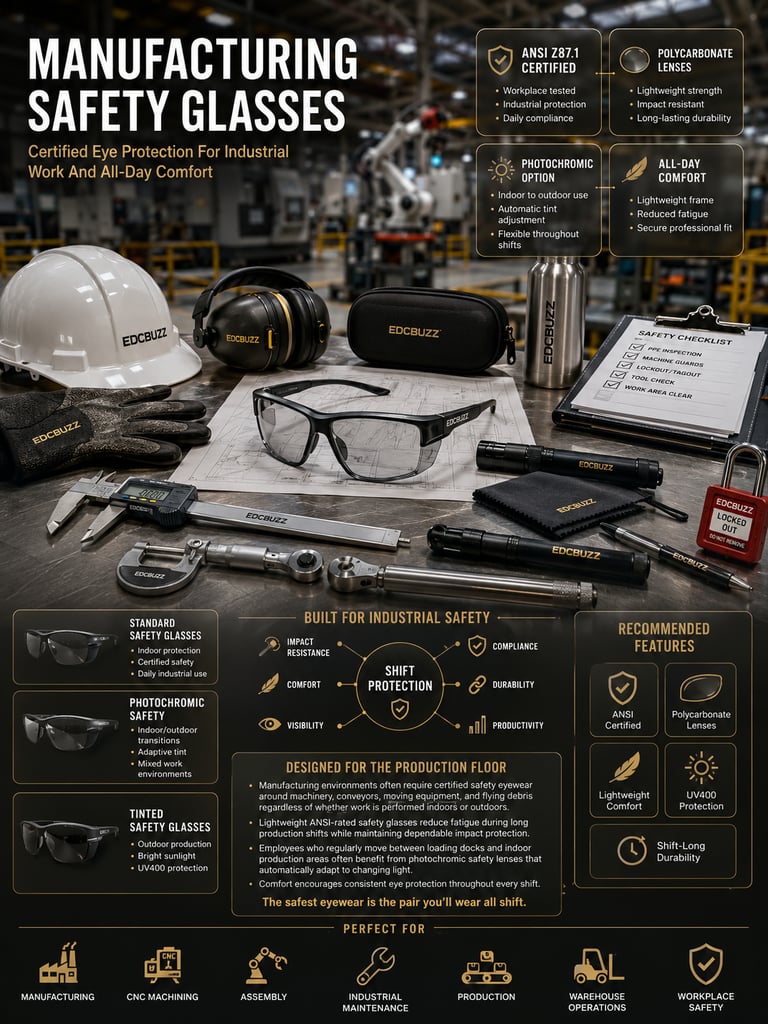
Manufacturing environments vary widely, but many facilities require ANSI-certified safety glasses regardless of whether employees work indoors or outdoors. Protection should always come before style whenever machinery, moving equipment, or flying debris are present.
Workers who frequently transition between indoor loading docks and bright outdoor areas may also appreciate photochromic safety lenses that adapt throughout the day.
Comfort remains important because manufacturing employees often wear protective eyewear for an entire shift.
Recommended Lens Type
ANSI-rated polycarbonate safety lenses.
Recommended Frame Material
Lightweight TR90 or nylon.
Still Researching Safety Eyewear?
Want to Compare Workplace Eyewear?
Ready to See Our Favorite Safety Glasses?
Woodworking
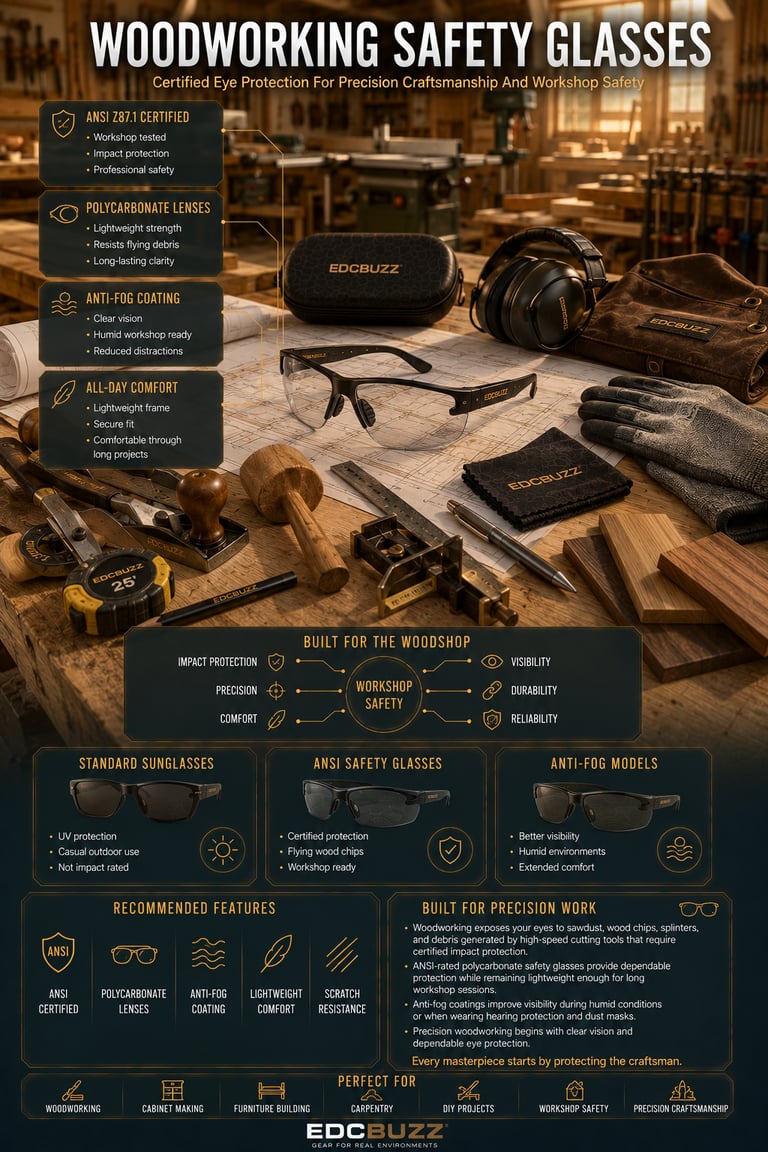
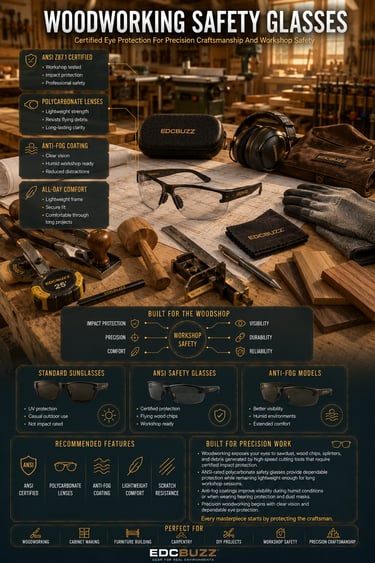
Woodworking combines bright workshop lighting with sawdust, wood chips, flying splinters, and power tools capable of creating serious eye hazards. Certified eye protection should always take priority over traditional sunglasses whenever tools are operating.
Outdoor woodworkers may benefit from tinted safety glasses that reduce glare while maintaining ANSI-certified impact protection. Lightweight frames remain comfortable during long shop sessions, while anti-fog coatings become valuable in humid environments.
No woodworking project is worth risking permanent eye injuries.
Recommended Lens Type
ANSI-rated polycarbonate safety lenses.
Recommended Frame Material
TR90 safety frames.
Still Researching Workshop Eye Protection?
Want to Compare Safety Glasses and Sunglasses?
Ready to See Our Favorite Safety Glasses?
Mechanics & Auto Repair
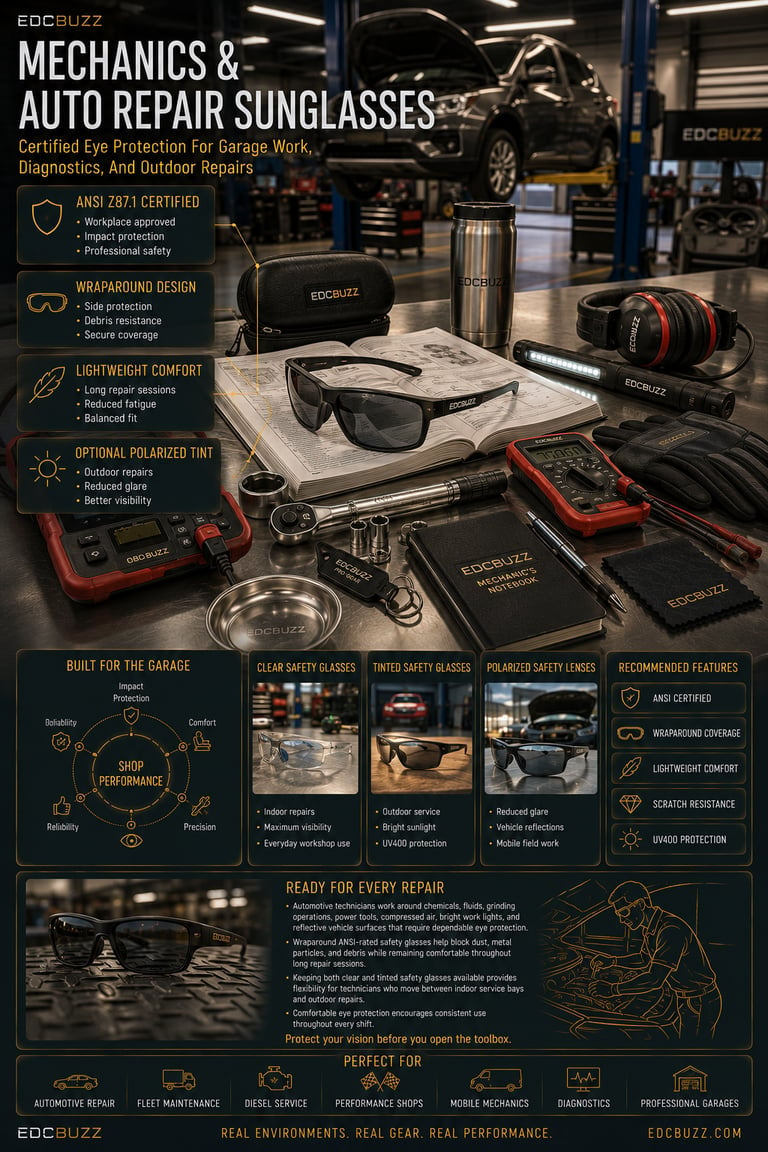
Mechanics face a unique combination of hazards including chemicals, fluids, bright lighting, overhead work, power tools, and reflective vehicle surfaces. Safety glasses remain essential during repairs, while polarized sunglasses become valuable whenever work moves outdoors.
Many mechanics prefer lightweight wraparound safety glasses because they help keep dust and debris away from the eyes while remaining comfortable during long repair sessions.
Keeping both clear and tinted safety glasses available often provides the greatest flexibility.
Recommended Lens Type
ANSI-rated polycarbonate lenses with optional polarized tint.
Recommended Frame Material
TR90 or nylon wraparound frames.
Still Researching Garage Eyewear?
Want to Compare Safety Glasses and Sunglasses?
Ready to See Our Favorite Safety Glasses?
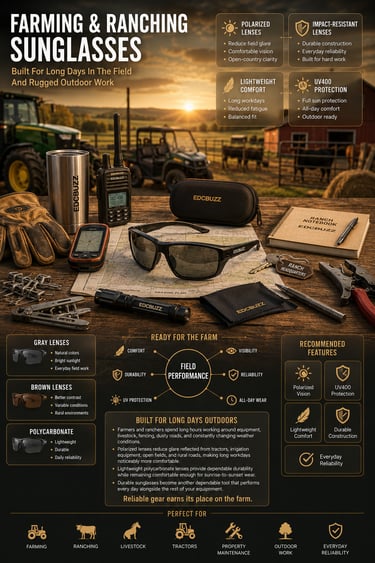
Farming & Ranching
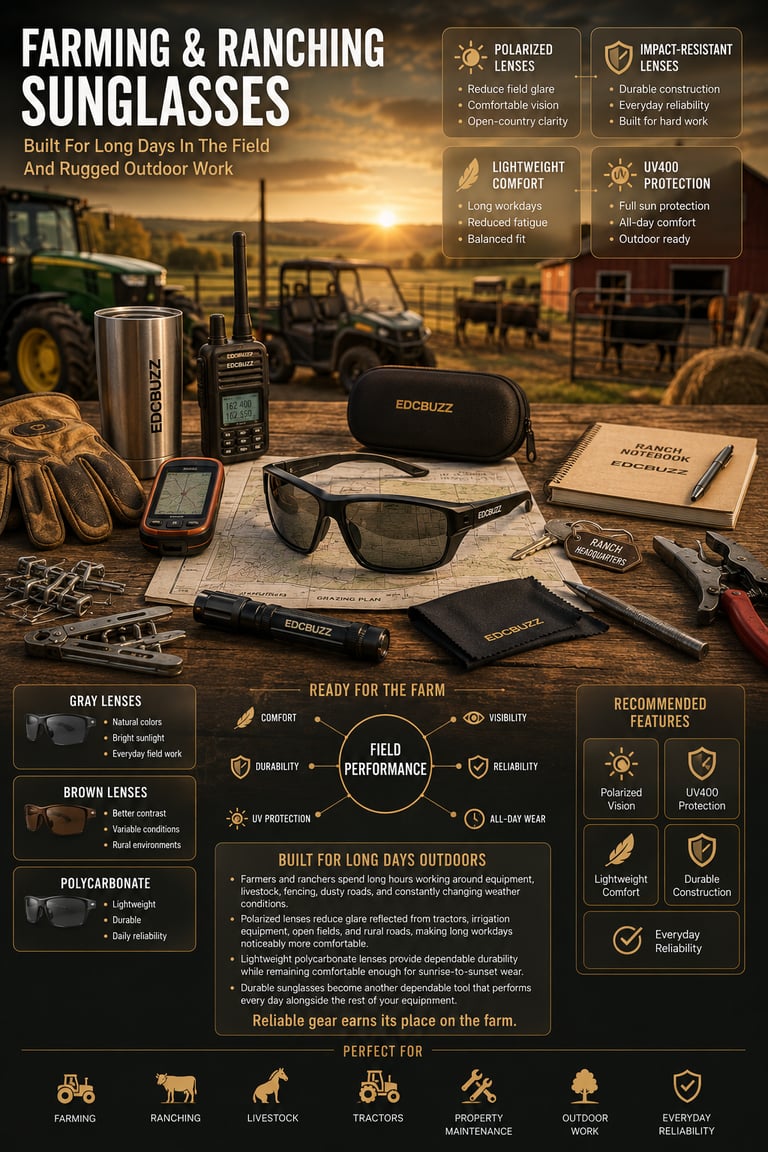
Farmers and ranchers spend countless hours outdoors in bright sunlight while operating heavy equipment, working around livestock, repairing fences, and managing property. Their sunglasses need to handle changing weather, blowing dust, long workdays, and frequent transitions between vehicles and outdoor tasks.
Polarized lenses reduce glare from equipment and open fields, while impact-resistant polycarbonate lenses provide additional durability for demanding daily use.
Durability and comfort often outweigh fashion on the farm.
Recommended Lens Type
Polarized polycarbonate gray or brown lenses.
Recommended Frame Material
TR90 or nylon.
Still Researching Farm Sunglasses?
Want to Compare Outdoor Work Sunglasses?
Ready to See Our Favorite Tactical Sunglasses?
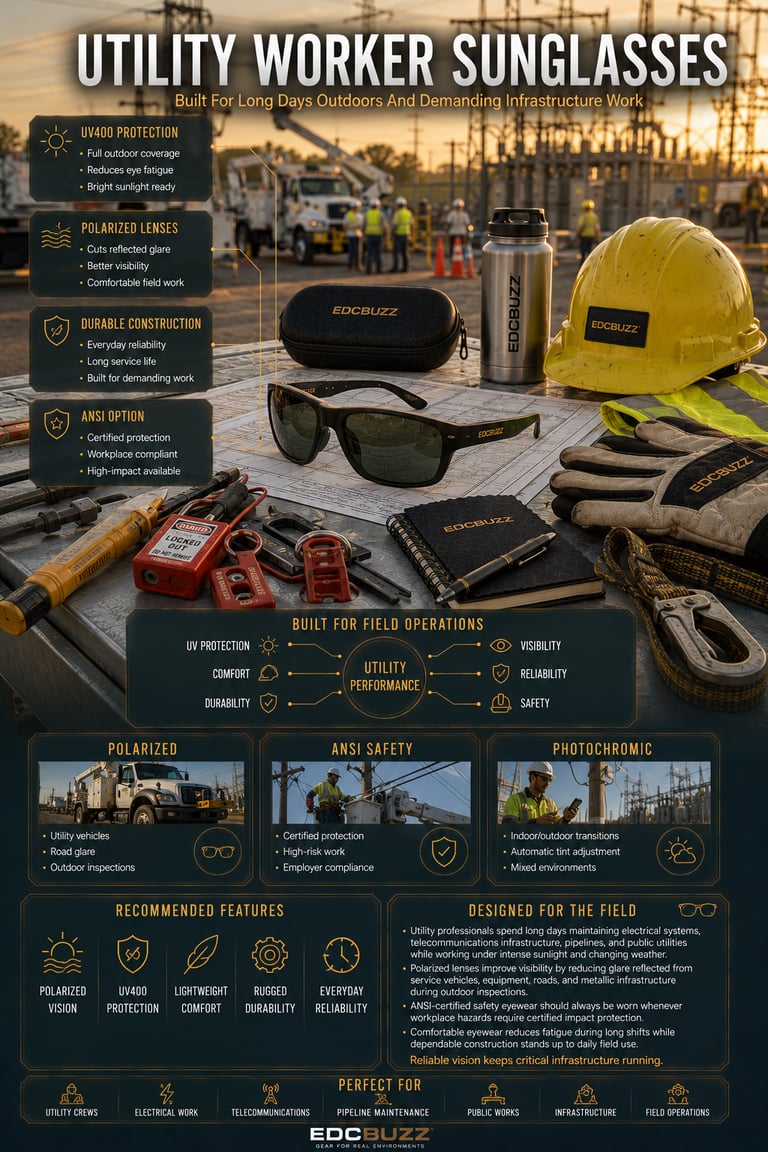
Utility Workers
Utility crews often spend long days outdoors maintaining electrical systems, telecommunications infrastructure, pipelines, and public utilities. They encounter changing weather, elevated work, reflective equipment, and significant UV exposure throughout the year.
Comfortable sunglasses reduce fatigue while durable frames withstand constant daily use. Workers requiring certified protection should always follow employer safety requirements before selecting eyewear.
Recommended Lens Type
Polarized polycarbonate or ANSI-rated lenses.
Recommended Frame Material
TR90 or nylon.
Still Researching Utility Work Sunglasses?
Want to Compare Popular Work Eyewear?
Ready to See Our Favorite Work Sunglasses?
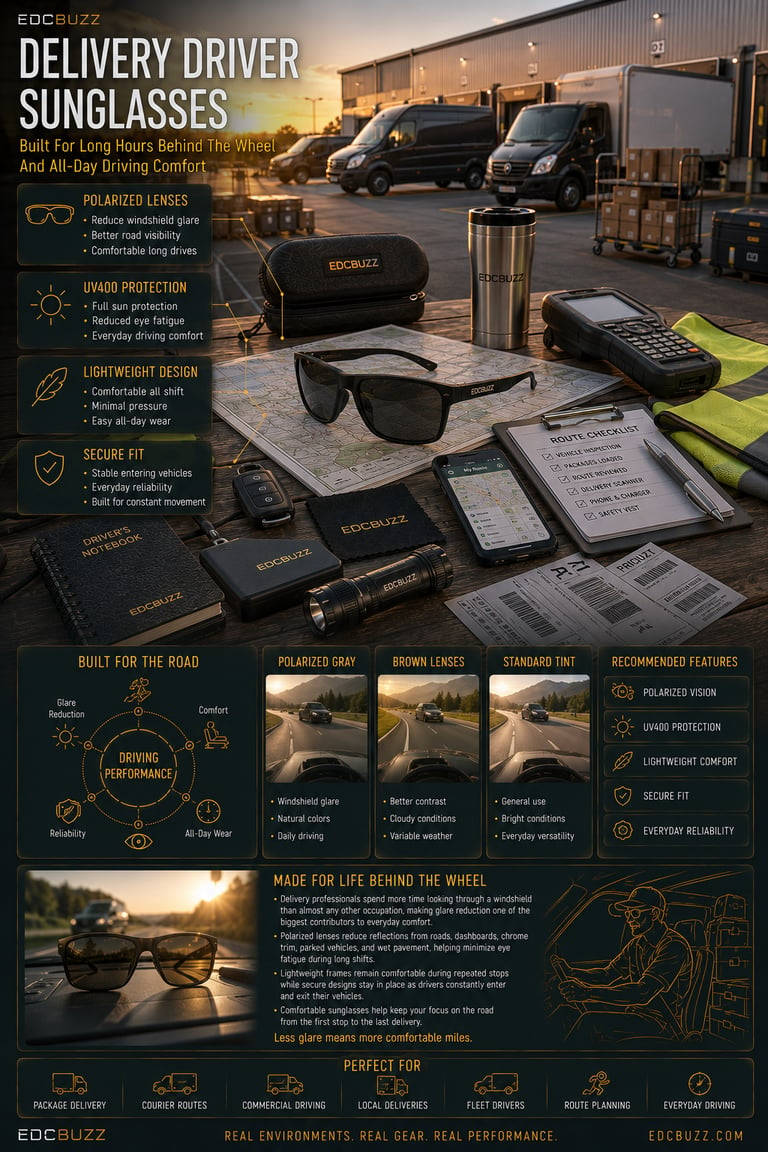
Delivery Drivers
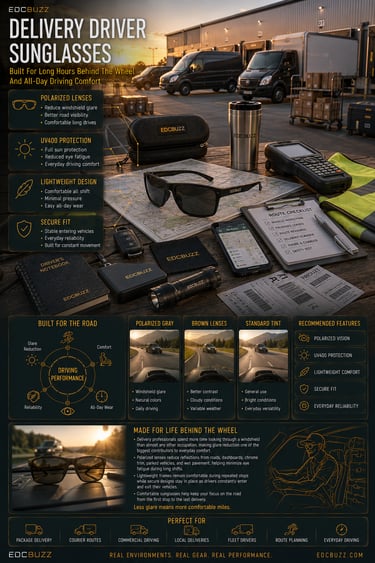
Delivery drivers may spend more time looking through a windshield than almost anyone else. Whether delivering packages, food, freight, or commercial goods, reducing road glare quickly becomes one of the biggest contributors to daily comfort.
Lightweight polarized sunglasses reduce reflections from pavement, dashboards, parked vehicles, and surrounding traffic while helping minimize eye fatigue over long shifts.
Because drivers frequently enter and exit vehicles, comfortable frames that stay securely in place become especially valuable.
Recommended Lens Type
Polarized gray lenses with UV400 protection.
Recommended Frame Material
Titanium or lightweight TR90.
Still Researching Driving Sunglasses?
Want to Compare Popular Driving Sunglasses?
Ready to See Our Favorite Driving Sunglasses?
Weather & Environment
Sometimes the environment matters more than the activity itself. A pair of sunglasses that performs perfectly on a sunny beach may struggle in snowy mountains or dense fog. Light intensity, reflections, weather, elevation, and terrain all influence how well different lens colors and technologies perform.
Understanding how your surroundings affect vision helps you choose sunglasses that improve both comfort and visibility instead of simply making everything darker.
Bright Sun
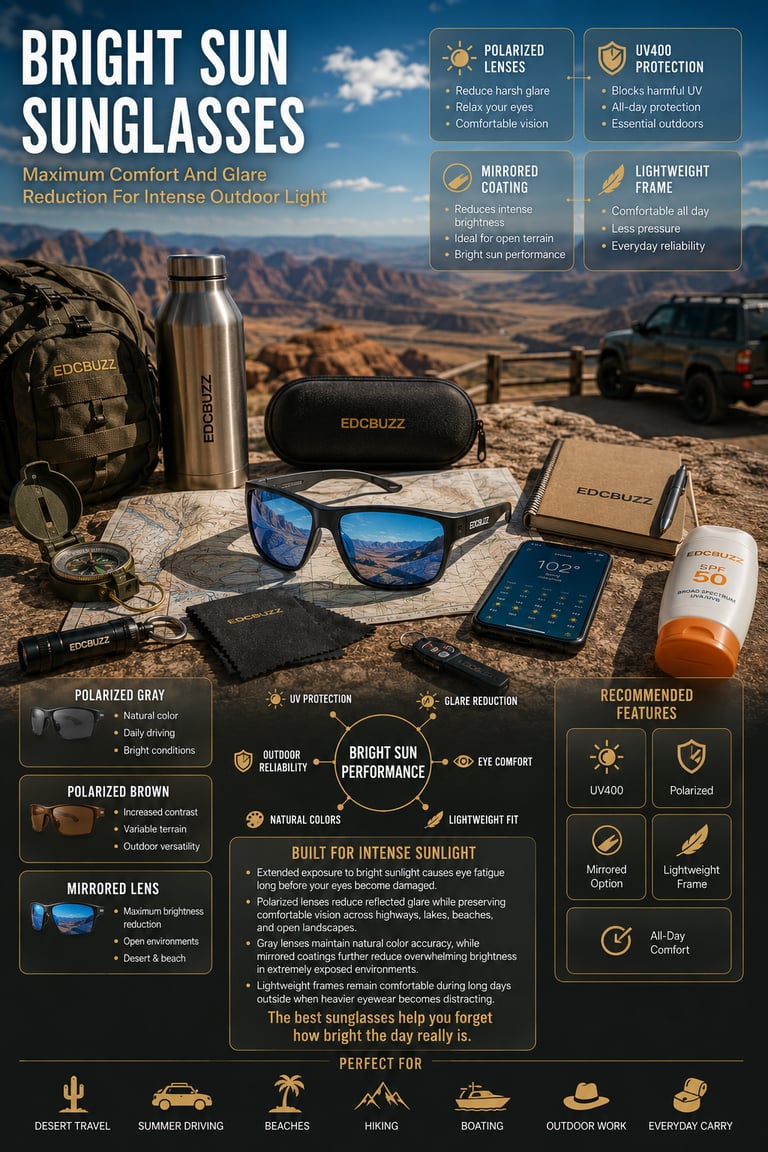
Few conditions are as demanding on your eyes as prolonged exposure to intense sunlight. Whether you're spending the day at the beach, driving across the desert, working outdoors, or relaxing on the lake, excessive brightness can quickly lead to eye fatigue.
Polarized lenses remain one of the best upgrades for bright environments because they reduce glare while maintaining comfortable vision. Gray lenses preserve natural colors, while mirrored coatings can further reduce the amount of light entering your eyes during especially intense conditions.
Long hours in direct sunlight also make lightweight frames increasingly important, helping prevent pressure points and discomfort.
Recommended Lens Type
Polarized gray lenses with optional mirrored coating.
Recommended Frame Material
TR90, titanium, or nylon.
Still Researching Bright Sun Sunglasses?
Want to Compare Popular Sunglasses?
Ready to See Our Favorite Premium Sunglasses?
Snow
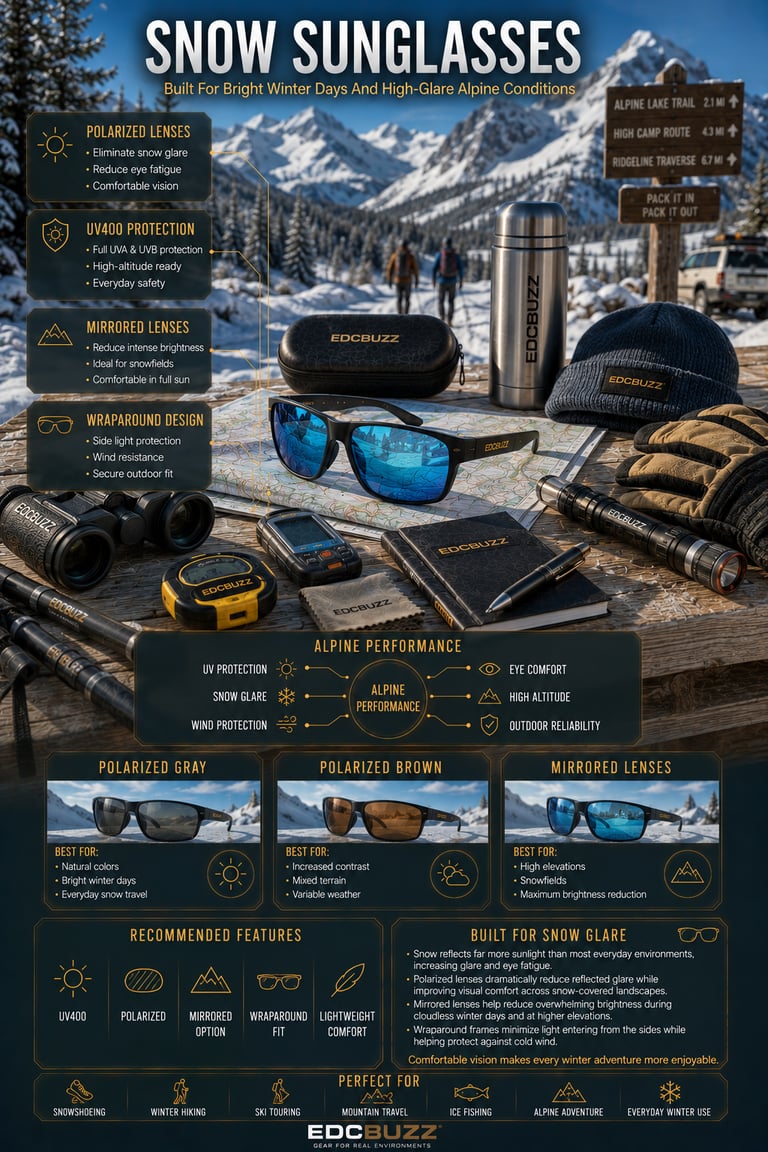
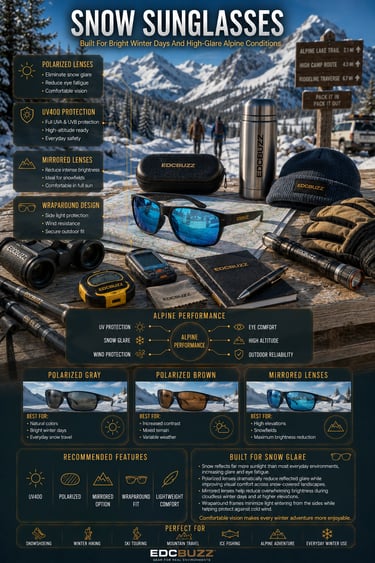
Snow reflects enormous amounts of sunlight, often creating glare that's even more intense than what you'll experience on the beach or open water. Combined with higher elevations, this makes quality eye protection especially important during winter recreation.
Polarized lenses reduce reflected glare while gray or brown tints help maintain comfortable vision across bright snowfields. Mirrored coatings can provide additional comfort during especially sunny winter days.
Wraparound frames also help reduce light entering from the sides while protecting your eyes from cold winds.
Recommended Lens Type
Polarized gray or brown mirrored lenses.
Recommended Frame Material
TR90 or nylon wraparound frames.
Still Researching Snow Sunglasses?
Want to Compare Premium Outdoor Sunglasses?
Ready to See Our Favorite Hiking Sunglasses?
Rain
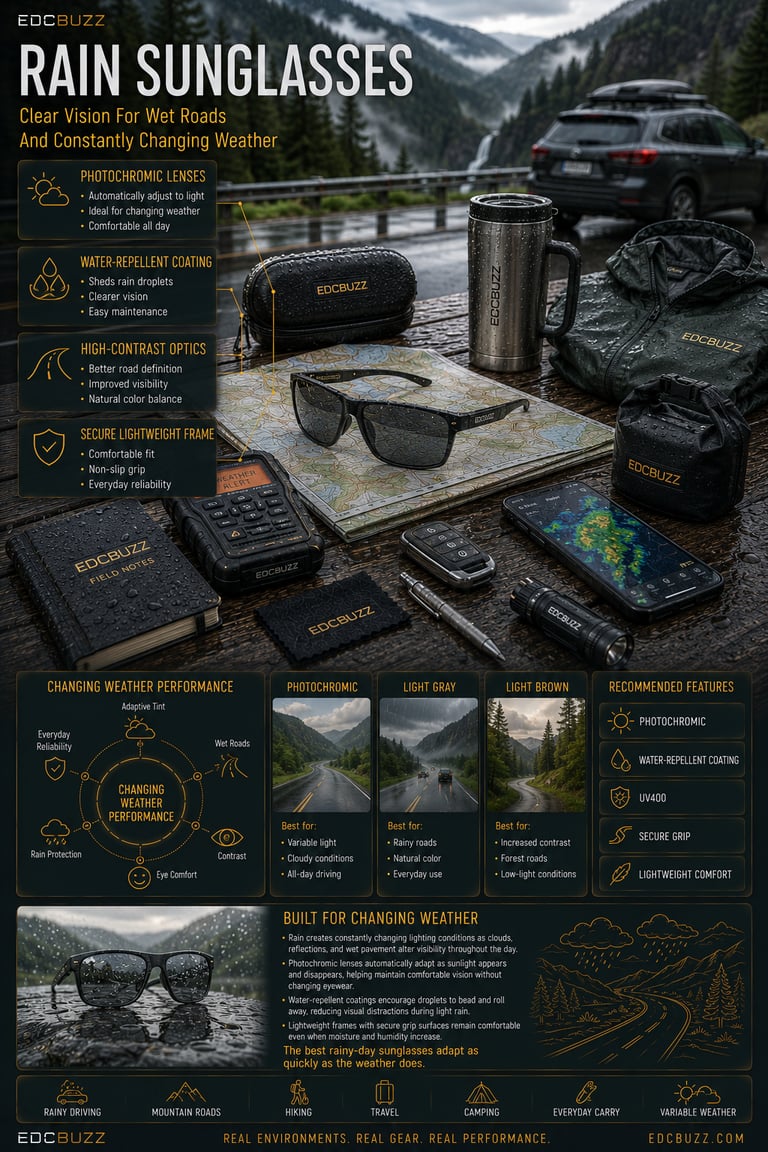
Rain creates a unique combination of reduced brightness, wet roads, changing reflections, and rapidly shifting weather. Instead of simply blocking sunlight, sunglasses for rainy conditions should help maintain contrast without making the environment appear too dark.
Many people prefer lighter gray, brown, or photochromic lenses that automatically adapt as clouds move overhead. Water-resistant coatings also help water bead off the lenses, improving visibility throughout changing weather.
Comfortable frames with secure grip surfaces prevent constant adjustments during wet conditions.
Recommended Lens Type
Photochromic, gray, or light brown lenses.
Recommended Frame Material
TR90 with secure nose pads.
Still Researching Sunglasses for Changing Weather?
Want to Compare Adaptive Lens Technologies?
Ready to See Our Favorite Hiking Sunglasses?
Fog
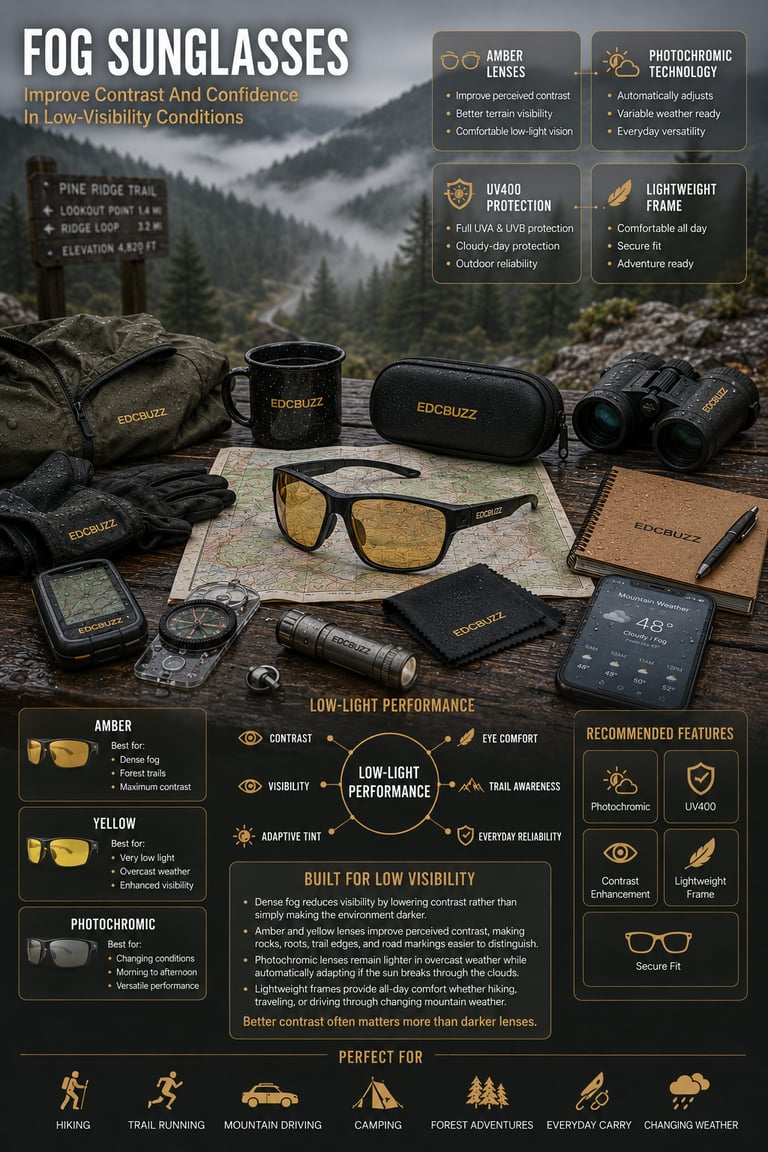
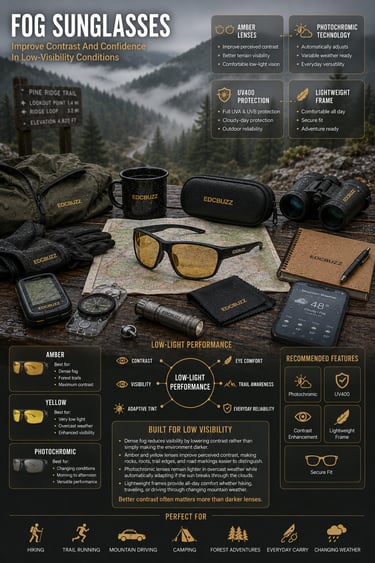
Fog dramatically reduces visibility, making contrast far more important than maximum darkness. Very dark lenses can actually reduce your ability to distinguish terrain, obstacles, and road conditions during dense fog or heavy overcast skies.
Yellow and lighter amber tints often perform well because they improve perceived contrast while allowing more visible light to reach your eyes. Many outdoor enthusiasts also choose photochromic lenses because they automatically remain lighter during poor weather.
Recommended Lens Type
Yellow, amber, or photochromic lenses.
Recommended Frame Material
TR90 or lightweight nylon.
Still Researching Low-Light Sunglasses?
Want to Compare Adaptive Outdoor Sunglasses?
Ready to See Our Favorite Hiking Sunglasses?
Desert
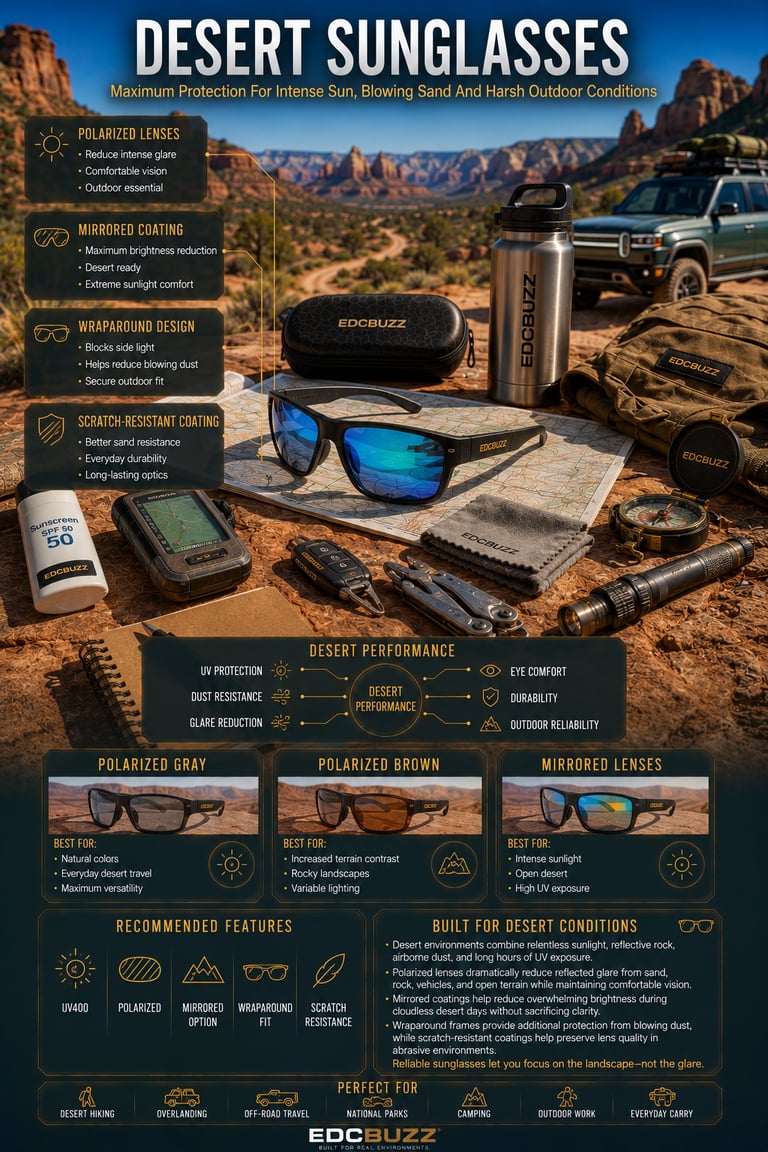
Desert environments combine relentless sunlight, reflective sand, blowing dust, and extremely dry conditions. Sunglasses need to reduce glare while remaining comfortable throughout long days under intense UV exposure.
Polarized gray lenses remain one of the safest all-around choices, while wraparound frames help keep dust and wind away from your eyes. Scratch-resistant coatings also become valuable since airborne sand can gradually wear down lenses over time.
Recommended Lens Type
Polarized gray lenses with mirrored coating.
Recommended Frame Material
Wraparound TR90 or nylon.
Still Researching Desert Sunglasses?
Want to Compare Premium Outdoor Sunglasses?
Ready to See Our Favorite Tactical Sunglasses?
Mountains
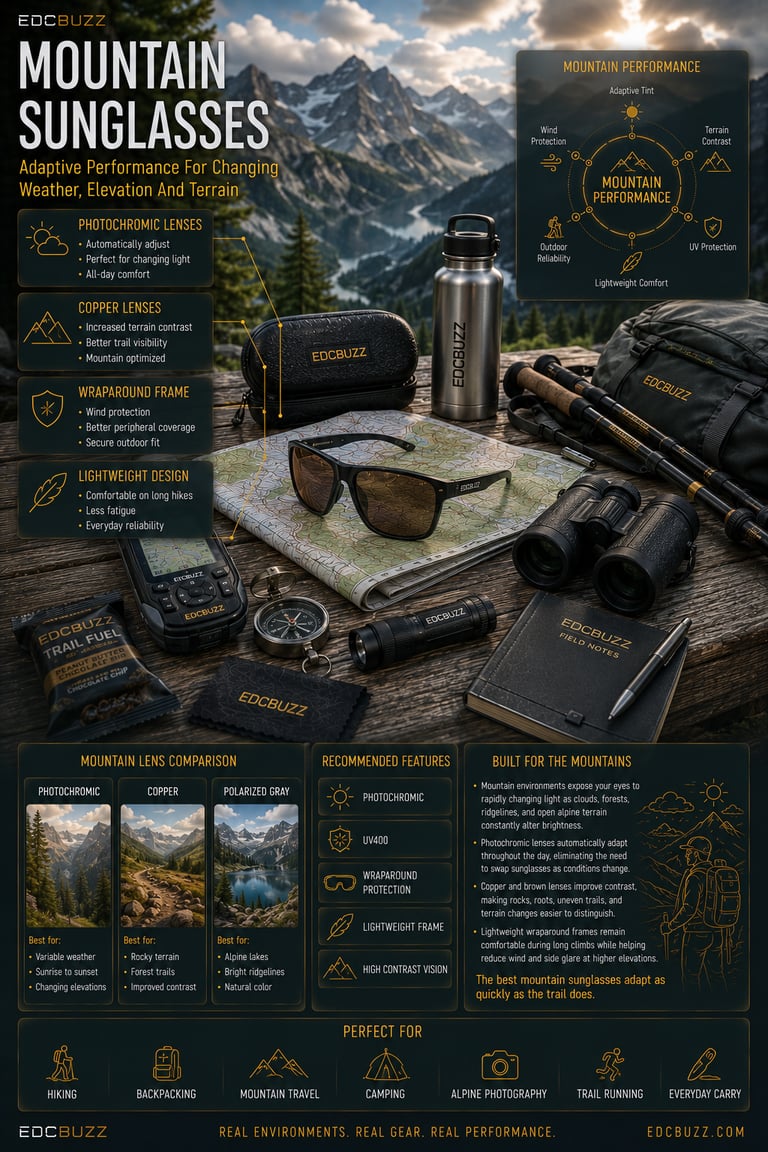
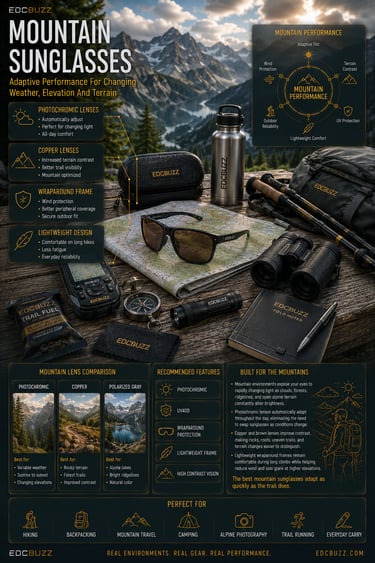
Mountain environments often expose you to rapidly changing weather, forests, open ridges, snowfields, and dramatic elevation changes within a single day. Few environments benefit more from adaptive lens technology.
Photochromic lenses automatically respond as conditions change, reducing the need to swap sunglasses throughout the day. Brown and copper lens colors also improve terrain contrast while helping distinguish rocks, roots, and uneven trails.
Lightweight frames remain comfortable during long climbs while wraparound designs offer additional protection from wind.
Recommended Lens Type
Photochromic brown or copper lenses.
Recommended Frame Material
TR90 or nylon.
Still Researching Mountain Sunglasses?
Want to Compare Mountain Sunglasses?
Ready to See Our Favorite Hiking Sunglasses?
Specialty Activities
Some activities place very specific demands on sunglasses that aren't covered by general outdoor or workplace recommendations. Whether you're riding a motorcycle, exploring off-road trails, hunting, or working behind a camera, choosing sunglasses designed for those situations improves both comfort and safety.
Motorcycle Riding
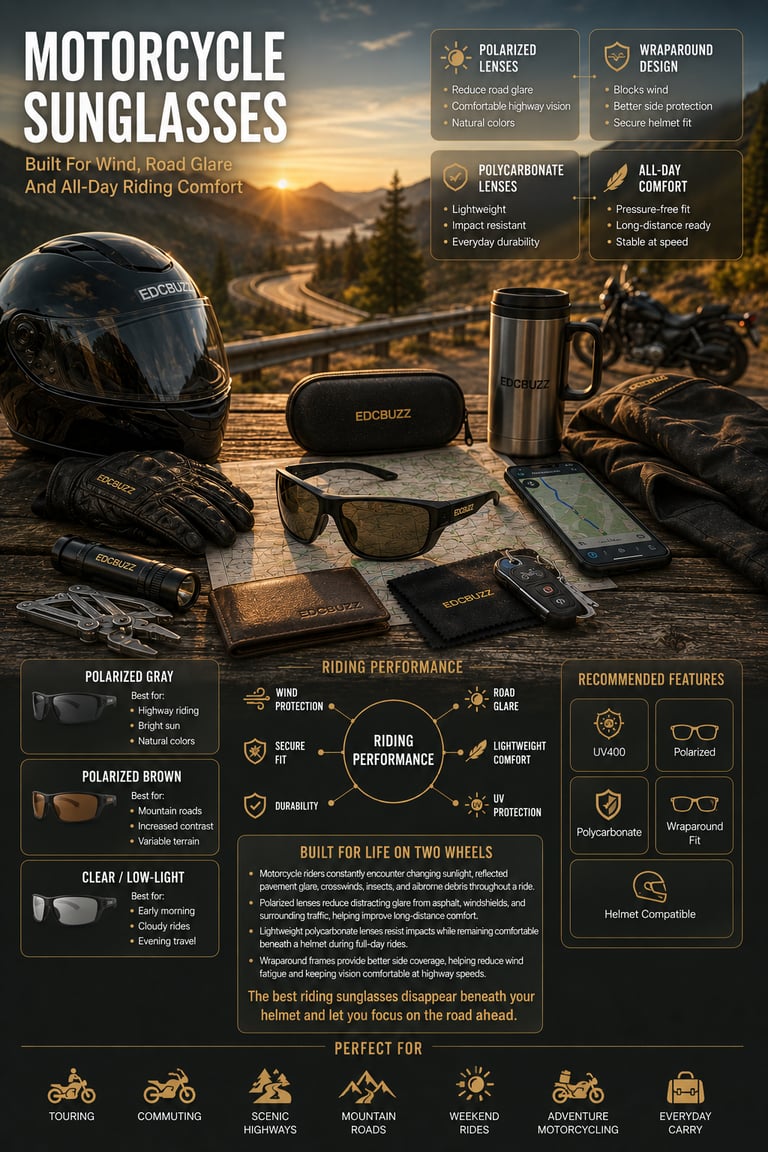
Motorcycle riders experience constant wind, changing sunlight, road glare, insects, and airborne debris. Sunglasses should fit comfortably beneath a helmet while remaining secure at highway speeds.
Wraparound designs, impact-resistant polycarbonate lenses, and lightweight frames are typically the best combination for long rides.
Recommended Lens Type
Polarized polycarbonate gray or brown lenses.
Recommended Frame Material
TR90 with wraparound coverage.
Still Researching Motorcycle Sunglasses?
Want to Compare Riding Sunglasses?
Ready to See Our Favorite Tactical Sunglasses?
ATV & UTV Riding
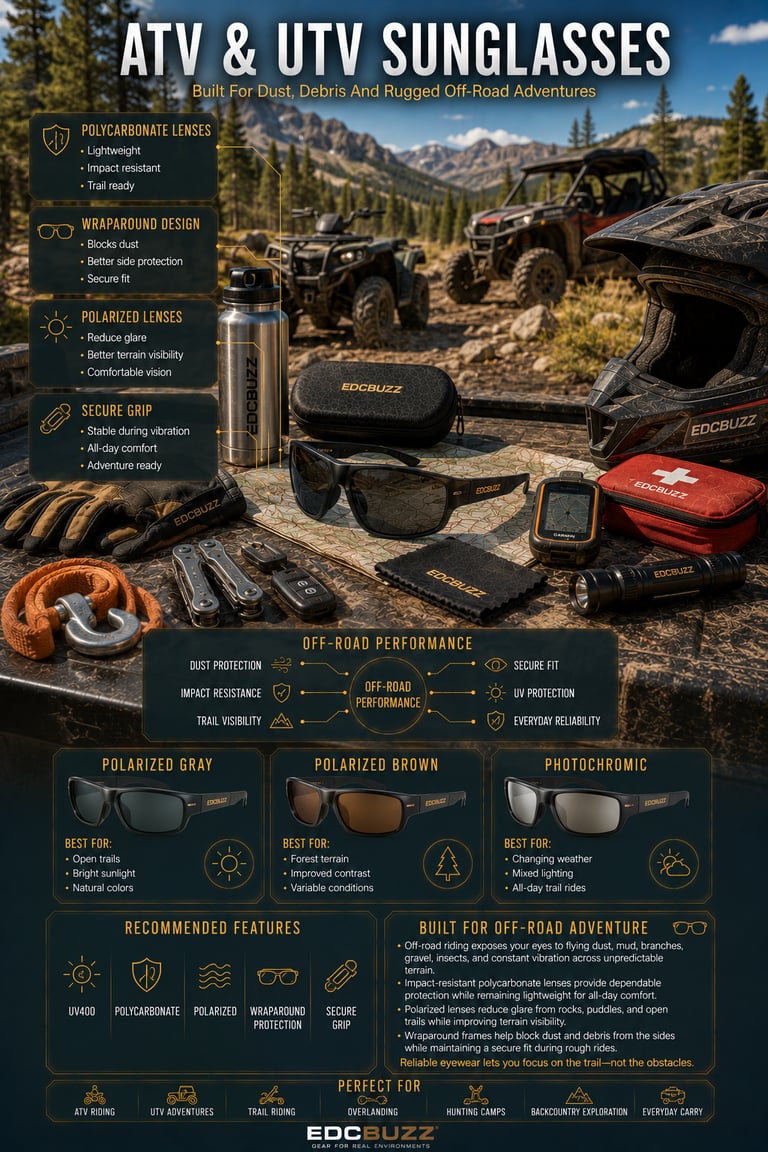
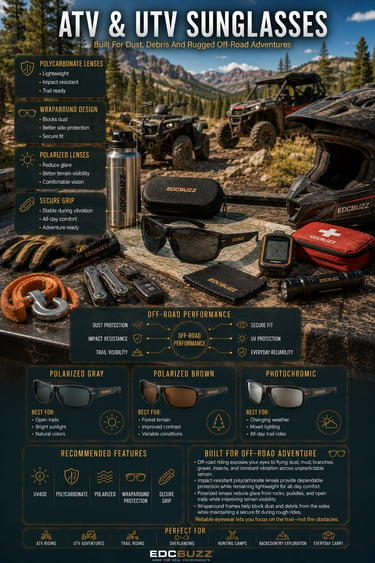
Dust, mud, branches, changing terrain, and vibration all make durable sunglasses essential for off-road riding.
Recommended Lens Type
Impact-resistant polarized polycarbonate.
Recommended Frame Material
TR90 or nylon.
Still Researching Off-Road Sunglasses?
Want to Compare Popular Outdoor Sunglasses?
Ready to See Our Favorite Tactical Sunglasses?
Hunting
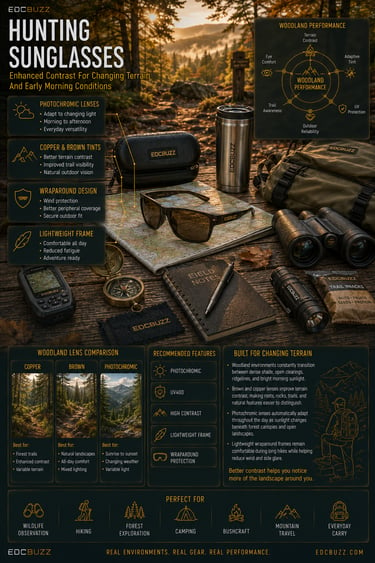
Hunters often encounter changing forests, open fields, early mornings, and unpredictable weather during a single outing. Contrast and terrain visibility become more important than simply reducing brightness.
Recommended Lens Type
Brown, copper, or photochromic lenses.
Recommended Frame Material
TR90 or nylon.
Still Researching Hunting Sunglasses?
Want to Compare Outdoor Sunglasses?
Ready to See Our Favorite Tactical Sunglasses?
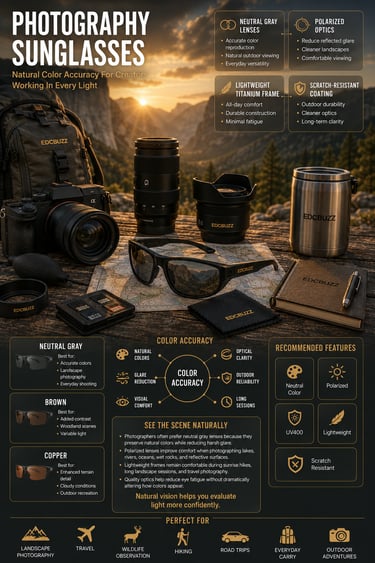
Photography
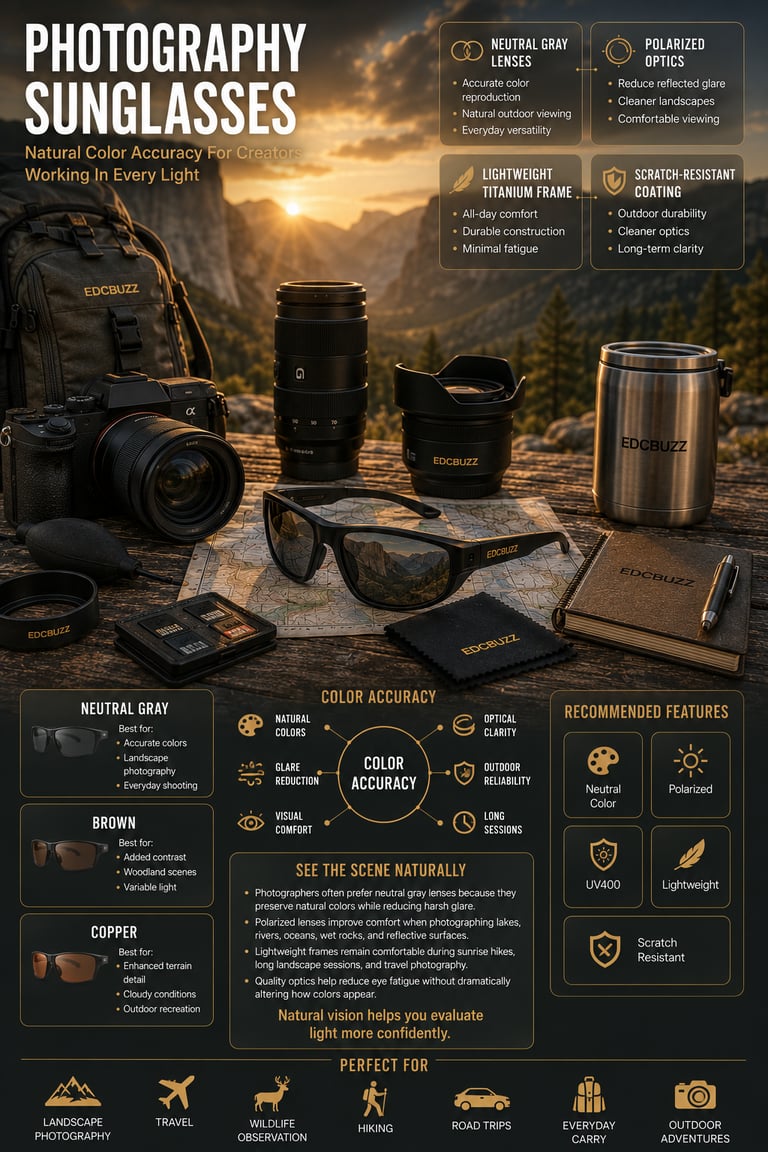
Photographers rely on accurate color reproduction more than almost any other outdoor user. Extremely dark lenses or aggressive color tints can make evaluating scenes more difficult.
Neutral gray lenses often provide the most natural viewing experience while reducing eye fatigue during long outdoor sessions.
Recommended Lens Type
Gray polarized or neutral gray lenses.
Recommended Frame Material
Titanium or lightweight acetate.
Still Researching Lens Colors?
Want to Compare Premium Sunglasses?
Ready to See Our Favorite Everyday Sunglasses?
Frequently Asked Questions
What sunglasses are best for everyday carry?
The best everyday sunglasses balance comfort, durability, UV protection, and versatility. Lightweight frames, quality lenses, and all-day comfort generally matter more than highly specialized features.
Are polarized sunglasses worth it for most activities?
For most outdoor activities, yes. Polarized lenses reduce glare from roads, water, snow, and other reflective surfaces, making them one of the most valuable upgrades available.
Which activities benefit most from photochromic lenses?
Hiking, mountain biking, trail running, hunting, and other activities with constantly changing light benefit most from photochromic technology.
Should I use safety glasses instead of sunglasses for work?
If your job exposes you to flying debris or impact hazards, ANSI-rated safety glasses should always take priority over traditional sunglasses.
What frame material is best for active lifestyles?
TR90 and nylon remain two of the best choices thanks to their lightweight construction, flexibility, and long-term durability.
What lens color is best for outdoor activities?
Gray remains the most versatile, while brown and copper improve contrast. The best color depends on your activity and environment.
Can one pair of sunglasses handle every activity?
A versatile pair works well for many situations, but dedicated hikers, anglers, cyclists, or tradespeople often benefit from sunglasses designed specifically for those environments.
Where should I start if I'm buying my first quality sunglasses?
Start by identifying where you'll wear them most often. Once you know the activity, selecting the appropriate lens technology and frame material becomes much easier.
Final Thoughts
The best sunglasses aren't determined by price, brand, or popularity—they're determined by how well they match the environments where you'll actually use them. A commuter spends the day battling road glare, a hiker deals with changing mountain light, a contractor needs impact protection, and an angler relies on polarized lenses to see beneath the water's surface. Each activity benefits from different features.
Rather than searching for one pair that claims to do everything, think about where your sunglasses spend most of their time. Matching your lens technology, frame material, and overall design to your lifestyle almost always results in greater comfort, better visibility, and longer-lasting satisfaction.
If you're ready to compare complete recommendations across every category, explore our EDC Sunglasses guide where you'll find all of our buying guides, comparisons, and expert recommendations in one place.

Contact@TheBuzzHQ.com
© 2026 EDCBuzz. All rights reserved.
EDCBuzz
Master everyday carry systems with clarity and precision. Built for real environments and practical use.
For educational purposes only.
General Inquiries: