
Are Polarized Sunglasses Good for Driving?
Discover the pros and cons of polarized sunglasses for driving, how they reduce glare and eye strain, and what to consider before buying your pair.
EDC SUNGLASSES
The EDCBuzz Editorial Team - Led by AJ “Buzz” Eichman
7/4/20267 min read
When it comes to sunglasses, most of us already know they help keep the sun out of our eyes and make us look a bit cooler at stoplights. But polarized sunglasses? They’ve got a bit more going on under the hood—or, should I say, behind the lenses. If you spend any amount of time behind the wheel during bright, glare-heavy days, you might have wondered if polarized sunglasses deserve a permanent spot in your everyday carry.
After spending weeks wearing polarized sunglasses on daily commutes and long road trips, I can tell you there are definite perks, and a few quirks, worth knowing before you invest. Polarized lenses have a way of reducing the annoying reflections bouncing off wet roads, shiny hoods, and even neighboring vehicles. But they can also play tricks on your car’s digital displays or GPS screens.
Here’s a no-nonsense breakdown of how polarized sunglasses affect driving, what works well, where they fall short, and what you should be watching out for. For a broader look at choosing everyday eyewear, see EDC Sunglasses and How To Choose Sunglasses.
Quick Verdict
Polarized sunglasses excel at cutting glare from horizontal reflective surfaces, easing eye strain on bright days.
They improve contrast and clarity, which can help spot road hazards and details more comfortably.
LCD and LED digital dashboards or screens can appear dim or distorted when viewed through polarized lenses.
Lens quality and tint matter as much as polarization; cheaper options may disappoint in clarity and durability.
What Are Polarized Sunglasses and How Do They Work?
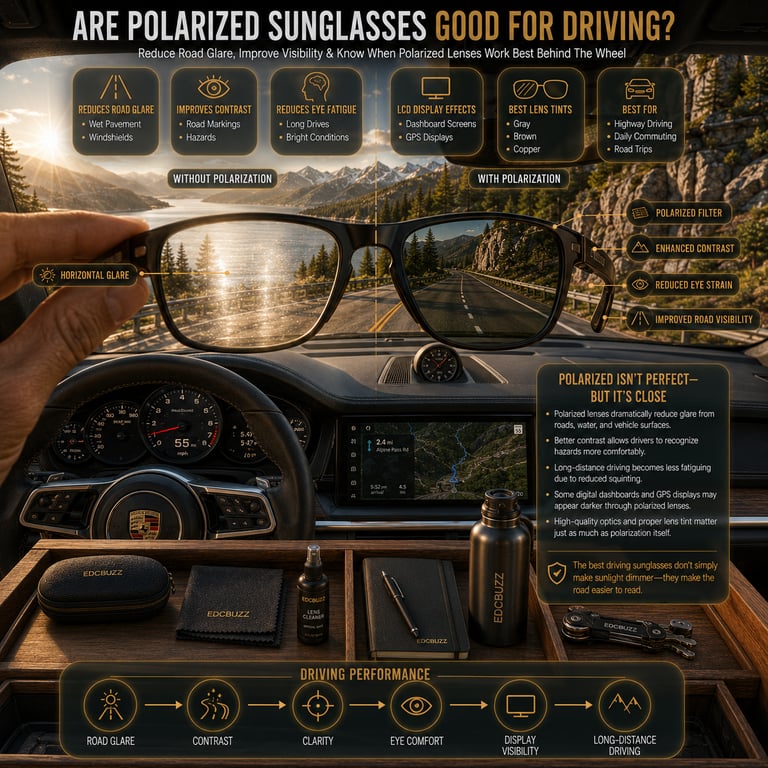
At its core, polarization is a clever filter trick. Imagine sunlight hitting a lake on a clear day—it bounces off the surface horizontally, creating that blinding glare that makes you want to squint harder or even borrow your friend’s shade. Polarized lenses have a special vertical filter that blocks this horizontally polarized light. The result? You get a much cleaner view with fewer harsh reflections.
But it’s not magic. The filter doesn’t block all light, just the glare-causing kind that makes your eyes tired and reduces visibility. This technology has been around for a while and has found its way into quality everyday sunglasses designed specifically for driving. If you spend time off-road or in demanding environments, Best Tactical Sunglasses are also worth considering.
Benefits of Polarized Sunglasses for Driving
If you’re regularly moving through bright sunlight with reflective road surfaces, a pair of polarized sunglasses can become your best co-pilot. After several weeks using them, here’s what stood out:
Glare Reduction That Matters
Nobody likes to be temporarily blinded by the mirror-like shine of a freshly washed car hood or wet pavement. Polarized lenses significantly tone down that horizontal glare, which tends to make driving more comfortable (and safer) in the brightest conditions. The difference becomes notable on cloudy days with patches of sun, or after rain when every puddle is practically shining at you.
Enhanced Contrast and Visual Clarity
Once the glare fades, your eyes can focus on actual road details—the cracks, the signs, and yes, even that squirrel dashing across your path. Colors and contrast get a subtle boost, which means you spend less mental energy guessing and more time reacting appropriately. Over time, this feature proved valuable during long highway stretches where roadside distractions are minimal but visual fatigue tends to build.
Reduced Eye Strain and Fatigue
After a full day of driving with polarized sunglasses, the reduced glare meant my eyes felt less strained. Not to romanticize it, but by hours four and five, the difference was noticeable compared to non-polarized glasses. Less squinting equals less tension over extended use—which is a significant plus if you’re clocking serious miles. If you also spend time on the trail, Are Polarized Sunglasses Good for Hiking? covers how they perform away from the road.
Potential Drawbacks and Limitations When Driving
Not every shiny feature remains shiny after some practical use. Polarized sunglasses come with a few caveats that tend to crop up on the road.
Dashboard and Digital Screen Interference
This one caught me off guard initially. Many modern cars rely heavily on LCD or LED displays—your speedometer, infotainment screen, GPS units, even smartphone maps. Polarized lenses can cause those screens to appear dim, patchy, or even completely black at certain angles. It’s not a universal dealbreaker, but it’s a quirk worth testing for before choosing polarized glasses as your go-to driving shades.
Reduced Visibility in Low Light or Overcast Conditions
Polarization primarily fights glare from bright sunlight reflecting horizontally. On dull or cloudy days where glare is minimal, the benefit is less noticeable—sometimes the lenses can even make the scene look a bit darker than you need. If you spend plenty of drive time in mixed weather, you might find yourself switching glasses depending on how the day shapes up.
Lens Tint and Color Choices Affect Perception
Choosing the right lens tint is more nuanced than just picking what looks best. While polarization blocks glare, the lens color affects contrast, color accuracy, and eye comfort. Browns and amber tints tend to enhance contrast better for driving, while darker grays reduce brightness uniformly. I found that the right combo of tint and polarization directly impacts how comfortably I could judge distances and colors out on the road. For a comparison between lens technologies, see Julbo Shield REACTIV vs Maui Jim Stone Shack (Photochromic vs Polarized).
Choosing the Best Polarized Sunglasses for Driving
Not all polarized sunglasses are created equal. Lens quality, frame fit, and thoughtful design can spell the difference between a pair that settles into your pocket all day and one you wish you left at home.
Optical Clarity and Lens Material
Look for high-quality lenses that maintain true optical clarity without distortion. Glass lenses usually offer superior optical performance but weigh more and require more care, while polycarbonate tends to be lighter and more impact-resistant at a small clarity tradeoff. Coatings like anti-reflective layers on the inside of the lens can further improve your view by reducing internal reflections.
Frame Comfort and Fit
Comfort matters more than just looking good. Frames should feel secure without pinching or sliding, especially during longer drives or quick turns of the head. Over time, even subtle discomfort becomes downright distracting, making it harder to focus on the road.
Compatibility with Your Vehicle’s Displays
Test how polarized lenses interact with your dashboard displays, GPS, or smartphone screens before committing. It’s a simple step that can save you from awkwardly tilting your head or squinting at a crucial screen mid-drive. If you're comparing classic polarized designs, Ray-Ban RB3025 vs Randolph Concorde Aviator (Polarized vs Non-Polarized) provides a detailed comparison.
Practical Tips for Using Polarized Sunglasses While Driving
Besides picking the right pair, here are a few pointers to get the most from your polarized driving sunglasses:
Try them on during daytime driving in varied conditions to spot any screen visibility issues.
Consider a photochromic option if you drive in heavily changing light but want polarization benefits.
Don’t forget to combine lens polarization with proper lens tint for optimal contrast.
Have a secondary pair of non-polarized sunglasses for low-light or night driving to avoid unnecessary dimming.
Keep your lenses clean and scratch-free to maintain glare-reducing effectiveness.
If you frequently drive through changing light conditions, When Should You Wear Photochromic Sunglasses? may help you decide if adaptive lenses are a better fit.
Comparing Polarized Sunglasses with Other Driving Eyewear Options
It’s not as if polarized sunglasses are the only game in town when it comes to driving glasses. Regular tinted lenses block sunlight but don’t filter glare in the same way. Photochromic lenses adapt to light changes but may lack glare-cutting punch during peak sunlight hours.
In my experience, polarized lenses represent a solid middle ground—providing consistent glare reduction and visual comfort without needing to switch repeatedly. But it always pays to test what works best for your specific driving environment and habits. If you're wondering whether premium eyewear is worth the extra money, Do Expensive Sunglasses Really Protect Your Eyes Better? explores the differences.
Common Mistakes to Avoid When Buying Polarized Sunglasses for Driving
Polarized sunglasses can be a solid investment in driving comfort, but here are a few mistakes I’ve seen (and made) that tend to undercut the experience:
Assuming all polarized sunglasses are equal
Not testing with your vehicle's digital displays
Ignoring tint color and lens quality
Expecting polarization to fix every visual issue
Avoiding these mistakes will help you choose eyewear that actually improves your driving experience. If eye protection is your primary concern, Best Safety Glasses may also be worth exploring.
Frequently Asked Questions About Polarized Sunglasses and Driving
How do polarized sunglasses reduce glare while driving?
Polarized lenses have a vertical filter that blocks horizontally polarized light, which causes glare on reflective surfaces like roads or car hoods. This reduces harsh reflections and improves visual comfort.
Are polarized sunglasses better than non-polarized for driving safety?
Polarized sunglasses generally improve visibility by cutting glare and enhancing contrast, which can contribute to safer driving. However, they may interfere with digital displays, so their benefit varies by driver and vehicle setup.
Can polarized lenses make it hard to see GPS or dashboard screens?
Yes. Polarized lenses can make LCD or LED screens appear dim or distorted at certain angles, which might require head tilting or switching glasses for clear viewing. Can Smart Glasses Replace Traditional Sunglasses?
Do polarized sunglasses work well in all weather conditions for driving?
Polarization is most beneficial under bright, sunny conditions with strong glare. In low light or cloudy weather, the advantages diminish, and lenses may make scenes look darker than needed.
What should I look for when buying polarized driving sunglasses?
Focus on lens quality, optical clarity, appropriate tint color, frame comfort, and how they interact with your vehicle’s digital displays.
Are there any situations where polarized lenses are not recommended for driving?
Driving at night or in very low light where glare is minimal is not ideal for polarized lenses, as they can reduce overall brightness and vision clarity. Do You Need Polarized Sunglasses for Fishing?
How do polarized lenses compare with photochromic or regular tinted lenses for driving?
Polarized lenses specifically reduce horizontal glare, photochromic lenses adapt to changing light levels but don’t necessarily block glare, and regular tinted lenses reduce brightness but not glare as effectively.
Can polarized sunglasses reduce eye fatigue on long drives?
By cutting glare and improving contrast, polarized sunglasses can lessen eye strain during extended periods of bright driving, leading to less fatigue. Are Safety Glasses Good Enough for Outdoor Work?
Conclusion
Polarized sunglasses deserve serious consideration for anyone who spends significant time driving in sunny, glare-prone conditions. The way they tame reflective surfaces without dimming your entire view offers tangible comfort and safety perks you notice most after a few hours on the road—not just right out of the box. That said, the interaction with your car’s digital displays and lighting conditions is something to weigh carefully.
Choosing high-quality lenses with a suitable tint and ensuring a comfortable, well-fitting frame are equally important to harness the full benefit. And remember, one size rarely fits all for driving eyewear. Keep a backup pair nearby for night or overcast conditions where polarization might hold you back.
After all, sunglasses are tools too—tools that should slip seamlessly into your everyday carry and help you see the road clearly, every mile of the way. If they can do that while making you look good sitting at the red light, well, that’s just icing on the cake.

Contact@TheBuzzHQ.com
© 2026 EDCBuzz. All rights reserved.
EDCBuzz
Master everyday carry systems with clarity and precision. Built for real environments and practical use.
For educational purposes only.
General Inquiries: