

How To Choose Sunglasses
Find the Right Pair for Your Lifestyle, Budget, and Everyday Adventures
Choosing sunglasses shouldn't feel complicated, yet many buyers end up overwhelmed by hundreds of styles, lens technologies, frame materials, and marketing claims. While it's easy to focus on appearance first, the best sunglasses are the ones that match how you'll actually use them. A pair that's perfect for driving may not be the best choice for hiking, and sunglasses designed for construction work have very different priorities than those made for everyday travel.
This guide walks you through the most important decisions you'll make when buying sunglasses. Instead of diving into every technical detail, we'll focus on the practical questions that help narrow your choices quickly. By the time you finish reading, you'll know what size fits you best, which frame styles to consider, how different lens options affect performance, and where it's worth spending a little more money.
If you're looking for a deeper explanation of lens materials, frame materials, coatings, and technologies, our Sunglass Lens & Frames Guide serves as the complete technical reference. If you're ready to start comparing our favorite recommendations across every category, explore our EDC Sunglasses guide.
Start With How You'll Use Them
The biggest mistake people make when buying sunglasses is choosing a frame they like before thinking about how they'll actually use it. While style certainly matters, your daily activities should have a much bigger influence on your decision than current trends or brand names.
For example, someone who spends hours driving every week will usually benefit from polarized lenses that reduce road glare. A weekend hiker may appreciate lightweight frames with photochromic lenses that automatically adjust as the trail moves between bright sunlight and dense tree cover. Construction workers should prioritize ANSI-rated safety glasses, while golfers often prefer lens colors that improve contrast across fairways and greens.
Thinking about your lifestyle first immediately narrows your options and makes every other buying decision much easier.
Ask yourself a few simple questions before shopping:
Where will I wear these sunglasses most often?
Will I primarily be driving, hiking, working, traveling, or playing sports?
Do I spend long hours in bright sunlight?
Do I need impact protection for work?
Will I wear them every day or only occasionally?
The answers to those questions usually matter far more than choosing between two similar frame styles.
If your sunglasses need to perform across several different environments, focus on versatility. Lightweight frames, UV400 protection, comfortable fit, and polarized lenses provide an excellent balance for many everyday users. On the other hand, if you primarily buy sunglasses for one activity, choosing a pair specifically designed for that environment often delivers noticeably better performance.
If you're unsure which type of sunglasses best fits your lifestyle, explore our Sunglasses By Activity guide. It matches different activities, professions, and outdoor environments with the lens technologies, frame materials, and features that perform best in each situation.

Choosing the Right Size
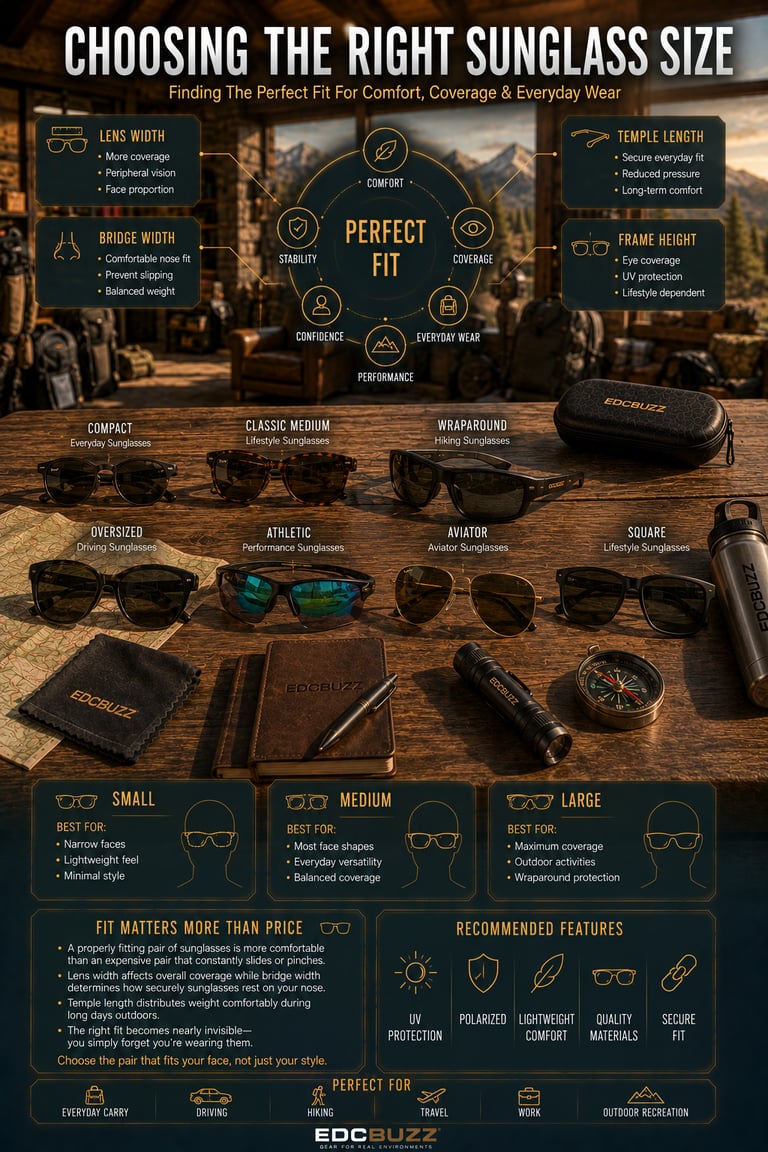
Even the highest-quality sunglasses won't feel comfortable if they don't fit properly. Frames that are too small can pinch behind your ears or create pressure points on your nose, while oversized frames may slide down your face or bounce around during everyday movement. Fortunately, finding the right size is much easier than many people expect. Most manufacturers publish three basic measurements that help you compare different models before purchasing.
Lens Width
Lens width measures the horizontal width of each lens and is usually the number most buyers notice first. Larger lenses generally provide greater coverage, making them popular for driving, hiking, and outdoor sports. Smaller lenses often create a more classic appearance but may allow additional sunlight to enter from the sides. The goal isn't choosing the biggest lens available—it's choosing a size that comfortably fits the width of your face.
Bridge Width
The bridge measurement refers to the distance between the two lenses where the sunglasses rest on your nose. A bridge that's too narrow may pinch, while one that's too wide can allow the frames to slide forward throughout the day. Proper bridge fit keeps your sunglasses centered without requiring constant adjustment.
Temple Length
Temple length measures the arms extending from the hinges to behind your ears. Correct temple length helps distribute weight evenly while keeping the sunglasses comfortably in place during normal movement. If the temples feel too short, the sunglasses may press against your head. If they're too long, the frames may feel loose or unstable.
Why Proper Fit Matters
Comfort becomes increasingly important the longer you wear your sunglasses. A pair that feels fine for ten minutes inside a store may become uncomfortable after two hours behind the wheel or an afternoon on the hiking trail. If you're choosing between two sizes, remember that comfort almost always outweighs appearance. The sunglasses you enjoy wearing every day will ultimately provide far more value than the pair that simply looked best in the display case.
Choosing Sunglasses for Your Face Shape
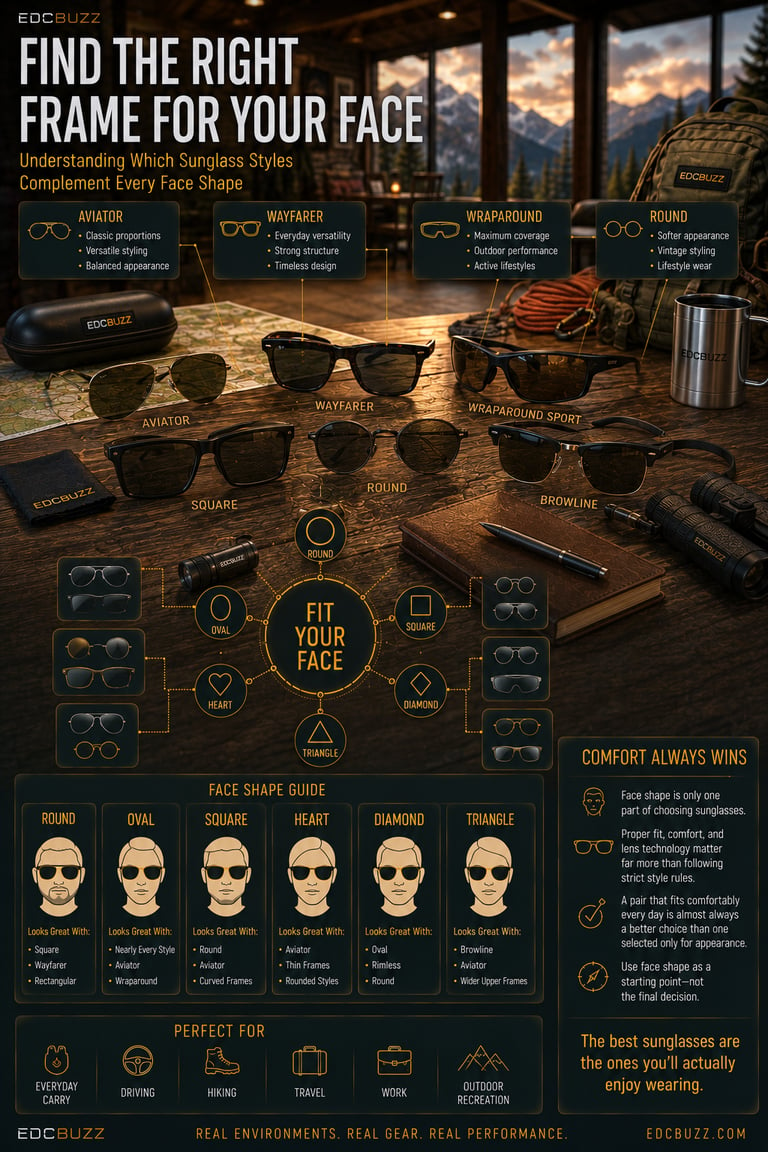
While face shape can help narrow your choices, it shouldn't be treated as a strict set of fashion rules. Comfort, proper fit, and choosing sunglasses that match your lifestyle will always matter more than following a chart. Think of your face shape as a helpful starting point rather than the deciding factor.
Round Face
Round faces usually have softer features with similar width and height. Frames with stronger angles, such as square, rectangular, or Wayfarer styles, help add visual definition while maintaining a balanced appearance. Larger frames also provide better coverage without making your face appear rounder.
Oval Face
Oval faces naturally work well with almost every frame style. Aviators, Wayfarers, wraparound sports sunglasses, and lightweight everyday frames are all excellent options. Focus on choosing sunglasses that match your activities, comfort preferences, and lens features rather than worrying about frame shape.
Square Face
Square faces feature a broad forehead and defined jawline. Rounded frames, aviators, and gently curved styles help soften these stronger features while creating a balanced appearance. Medium-sized frames usually provide the most natural proportions for everyday wear.
Heart Face
Heart-shaped faces are typically wider across the forehead and narrower toward the chin. Aviators, rounded frames, and thinner frame profiles help balance facial proportions while maintaining a lightweight, comfortable fit for everyday use.
Diamond Face
Diamond-shaped faces often feature high cheekbones with a narrower forehead and jawline. Oval and gently rounded frames help soften facial angles without drawing attention to the widest part of the face. Avoid extremely narrow frames whenever possible.
Triangle Face
Triangle-shaped faces are widest along the jawline with a slightly narrower forehead. Frames that place more visual emphasis across the upper portion of the face, including aviators and browline styles, generally create the most balanced appearance.
Finding the Right Fit
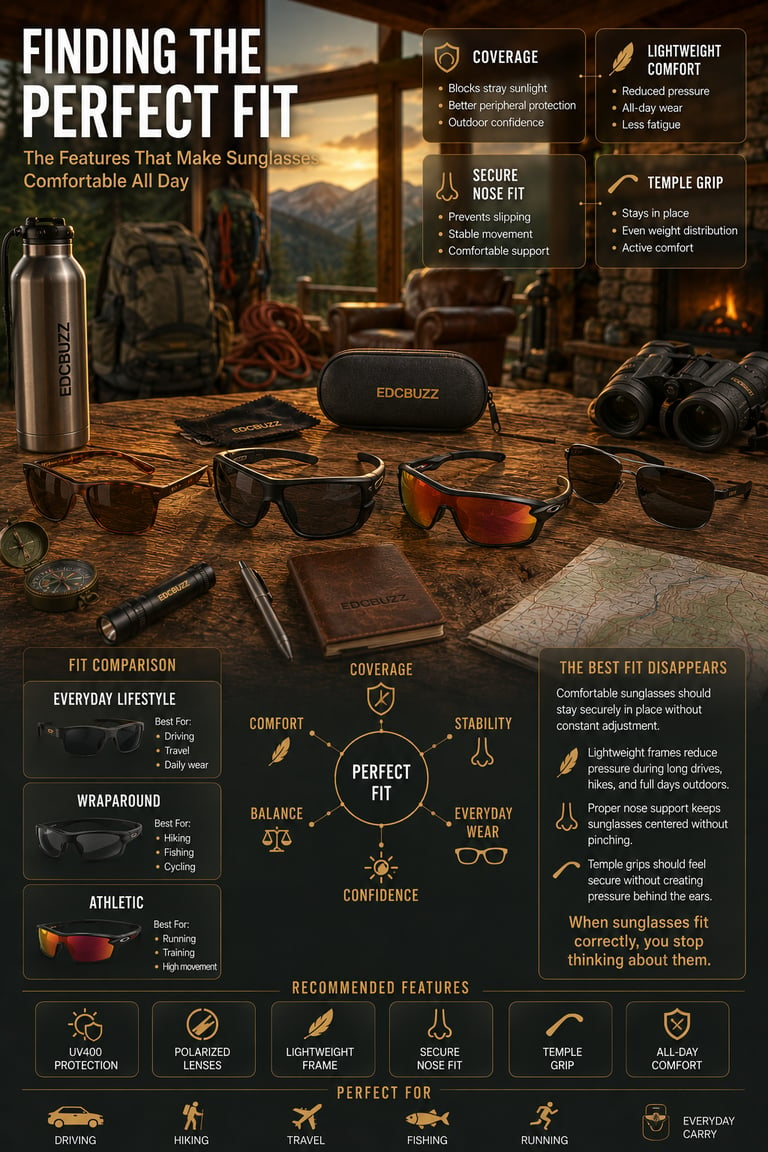
A pair of sunglasses can have premium lenses, lightweight frames, and outstanding reviews, but none of that matters if they aren't comfortable to wear. The best-fitting sunglasses are the ones you forget you're wearing. They stay securely in place, provide excellent coverage, and remain comfortable whether you're outside for fifteen minutes or several hours.
Coverage
Coverage refers to how much of your eyes and the surrounding area your sunglasses protect from sunlight. Larger lenses generally block more light from entering around the top, bottom, and sides, reducing glare while improving overall comfort. If you spend time driving, hiking, fishing, or working outdoors, slightly larger lenses often provide noticeably better protection.
Weight
The longer you wear your sunglasses, the more weight matters. Heavy frames may feel comfortable at first but gradually create pressure points during long drives, hikes, or full workdays. Lightweight materials like TR90, nylon, and titanium provide excellent durability while remaining comfortable for extended wear.
For a deeper look at frame materials, visit our Sunglass Lens & Frames Guide.
Nose Pads
Your sunglasses should rest securely on your nose without pinching or constantly sliding forward. Adjustable nose pads offer a customized fit, while molded designs found on many TR90 and nylon frames provide excellent stability during active use.
Temple Grip
The temples should gently wrap behind your ears without creating pressure. A proper fit keeps your sunglasses secure during everyday movement, while rubberized grips provide extra stability for hiking, cycling, running, and other outdoor activities.
Wraparound vs Lifestyle Frames
Wraparound sunglasses provide additional side coverage and are ideal for hiking, cycling, fishing, and other outdoor sports. Lifestyle frames, including aviators and Wayfarers, offer a more casual look that's perfect for driving, travel, and everyday wear. Neither is better—the right choice depends on how you'll use them most.
Understanding Your Lens Options
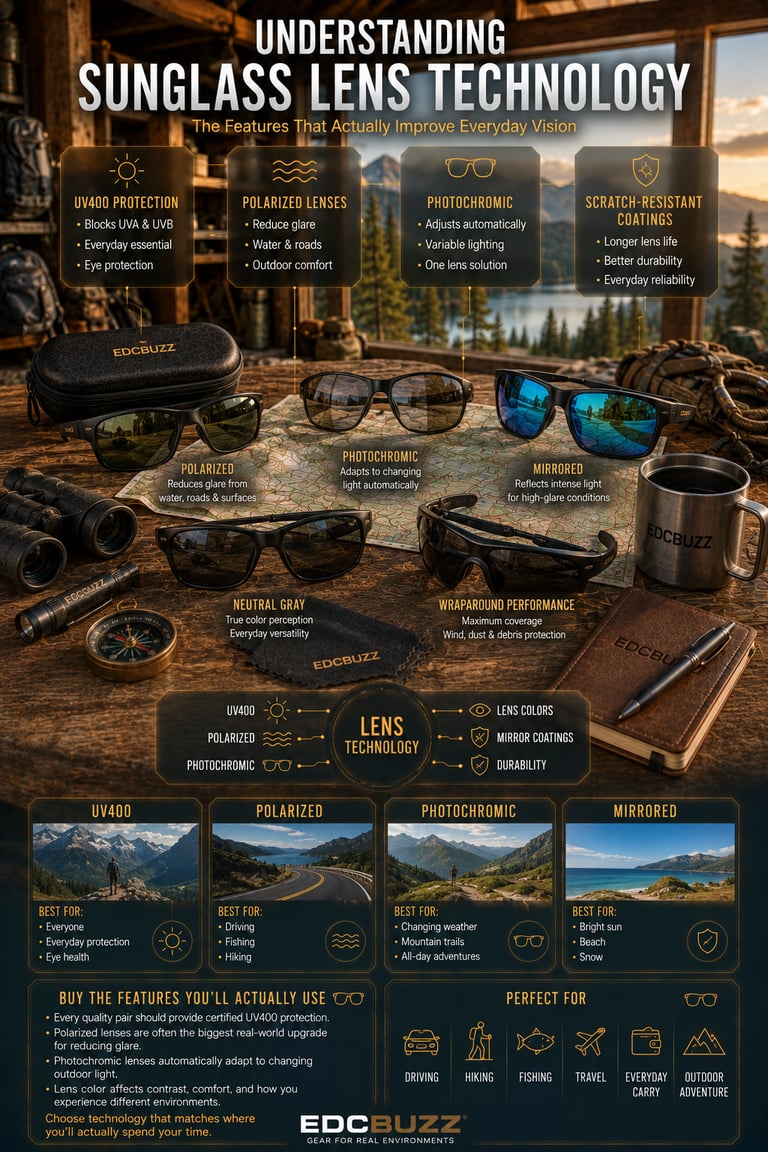
Modern sunglasses offer far more than simple dark lenses. Today's eyewear includes technologies designed to reduce glare, adapt to changing light, improve durability, and enhance outdoor visibility. Fortunately, choosing the right lens doesn't need to be complicated. Rather than memorizing dozens of technical specifications, focus on selecting the features that match your lifestyle.
UV Protection
Every quality pair of sunglasses should provide full UV400 protection, blocking virtually all harmful UVA and UVB rays during outdoor use. One of the biggest myths is that darker lenses automatically provide better protection. In reality, lens darkness has very little to do with UV protection. Always look for certified UV400 lenses regardless of tint.
Learn more in Polarized Sunglasses and UV Protection Explained.
Polarized Lenses
Polarized lenses reduce reflected glare from roads, lakes, snow, and other flat surfaces. For many people, they're the single biggest upgrade because they noticeably improve comfort while driving, fishing, boating, and spending time outdoors. If glare regularly bothers your eyes, polarized lenses are usually worth the investment.
Learn more in What Are Polarized Sunglasses and Are They Worth It?
Photochromic Lenses
Photochromic lenses automatically darken in sunlight and become lighter as UV exposure decreases. They're especially useful for hiking, cycling, and other activities where you'll frequently move between shade and bright sunlight. If you prefer carrying one pair instead of swapping lenses throughout the day, photochromic technology is worth considering.
Learn more in Photochromic Lenses Explained: How They Work.
Lens Colors
Gray, brown, green, yellow, and copper lenses each affect your vision differently. Some preserve natural colors, while others improve contrast or perform better in changing weather. Instead of choosing a color based on appearance alone, think about where you'll wear your sunglasses most often.
For a deeper dive, visit our Sunglass Lens & Frames Guide or read How Lens Colors Affect Vision Outdoors.
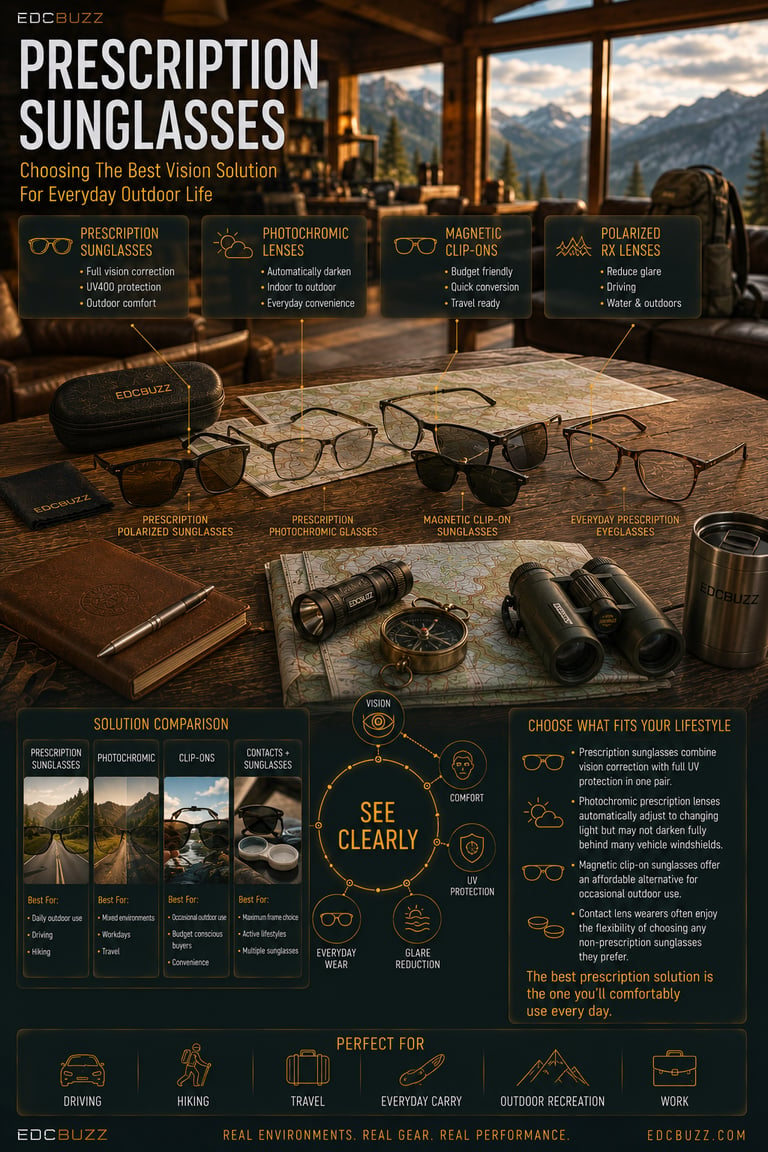
Prescription Sunglasses
If you already wear prescription glasses, investing in prescription sunglasses can make everyday life significantly more comfortable. Instead of constantly switching between regular glasses and sunglasses—or relying on clip-on lenses—you can enjoy clear vision and full UV protection in a single pair. Prescription sunglasses are available in nearly every frame style, from classic aviators to wraparound athletic designs. Many also include the same premium lens technologies found in non-prescription sunglasses, including polarization, photochromic lenses, anti-reflective coatings, and scratch-resistant treatments. The right option depends on how often you'll wear them and the activities you enjoy most.
Prescription Sunglasses
Prescription sunglasses provide the same vision correction as your everyday glasses while protecting your eyes from bright sunlight. They offer the cleanest solution for drivers, travelers, golfers, hikers, and anyone who spends significant time outdoors. Most premium frame manufacturers now offer prescription-compatible models, giving you plenty of choices without sacrificing comfort or style.
Clip-On Sunglasses
Clip-on lenses remain a practical and affordable solution for people who only wear sunglasses occasionally. Modern magnetic clip-ons have improved dramatically in appearance compared to older designs, and they're easy to remove whenever you move indoors. While they aren't as streamlined as dedicated prescription sunglasses, they can be an excellent value if you're trying to minimize costs.
Photochromic Prescription Lenses
Many prescription lenses are available with photochromic technology, allowing them to automatically darken outdoors and return to a clear state indoors. These lenses are especially convenient for people who frequently move between indoor and outdoor environments, although it's worth remembering that many vehicle windshields block enough UV light to prevent them from reaching their darkest tint while driving.
If you'd like to learn more, read Photochromic Lenses Explained: How They Work.
Contact Lenses with Sunglasses
Many contact lens wearers simply choose standard non-prescription sunglasses, giving them complete freedom to select any frame style or lens technology they prefer. This combination remains one of the most flexible solutions because it allows you to own multiple sunglasses for different activities without purchasing several prescription pairs.
Budget vs Premium
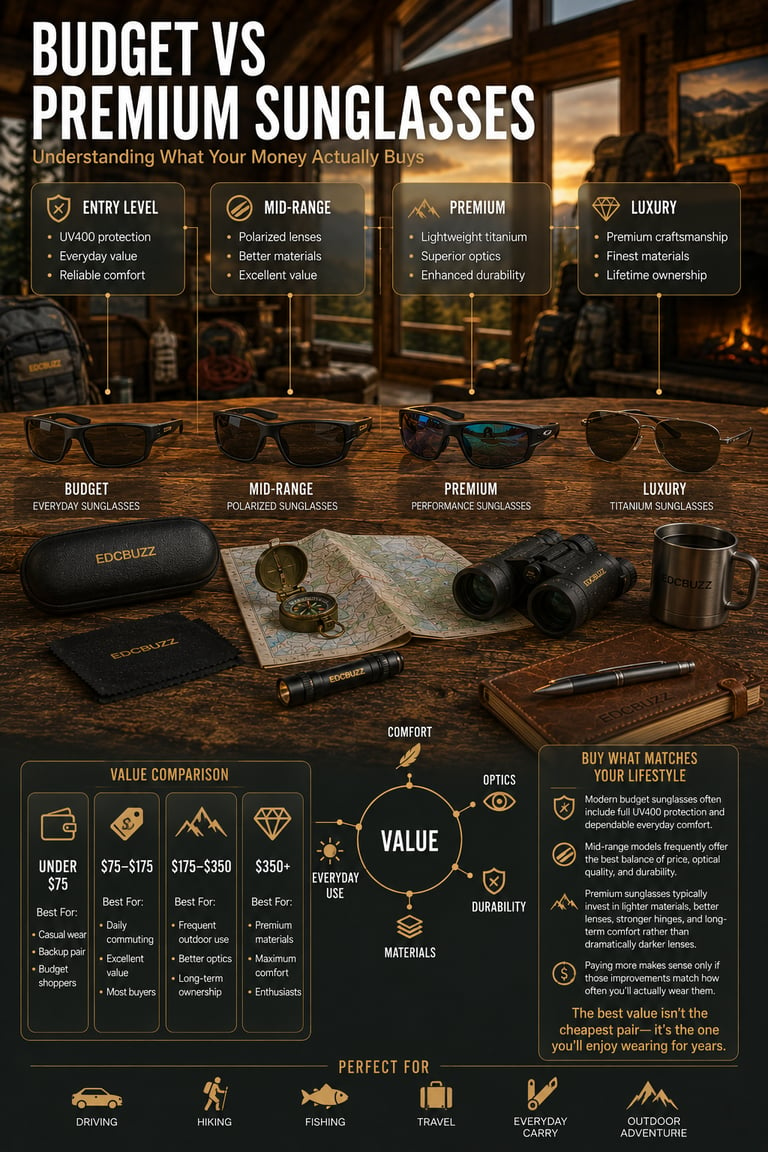
One of the biggest questions buyers ask is whether premium sunglasses are worth the extra cost. The answer depends less on the brand and more on how often you'll wear them. If you only use sunglasses occasionally, a quality budget pair may be all you need. If you wear them daily, investing in better materials and optics often pays off over time.
What You Get at Budget Prices
Budget sunglasses have improved dramatically in recent years. Many now include UV400 protection, lightweight frames, polarized lenses, and comfortable designs at affordable prices. For commuting, vacations, and casual outdoor use, a quality budget pair often delivers excellent value.
What Premium Sunglasses Offer
Premium sunglasses typically improve the details you'll notice after years of ownership rather than during a quick try-on. Better optics, lighter materials, stronger hinges, and improved construction all contribute to greater comfort and durability.
If you're curious where the extra money goes, read Why Do Premium Sunglasses Cost So Much?
When Premium Makes Sense
Premium sunglasses are often worth the investment if you:
Wear sunglasses almost every day.
Spend long hours driving.
Frequently hike or enjoy outdoor sports.
Work outside.
Plan to keep the same pair for years.
For these buyers, long-term comfort and durability often justify the higher price.
When Budget Is the Better Choice
Budget sunglasses are an excellent choice if you:
Wear sunglasses occasionally.
Want a backup pair.
Frequently lose sunglasses.
Are buying your first quality pair.
Prefer owning multiple styles.
Today's budget models provide excellent protection and performance without requiring a large investment.
Common Buying Mistakes
Buying sunglasses doesn't need to be complicated, but a few common mistakes often lead to disappointment. Fortunately, they're also easy to avoid once you know what to look for.
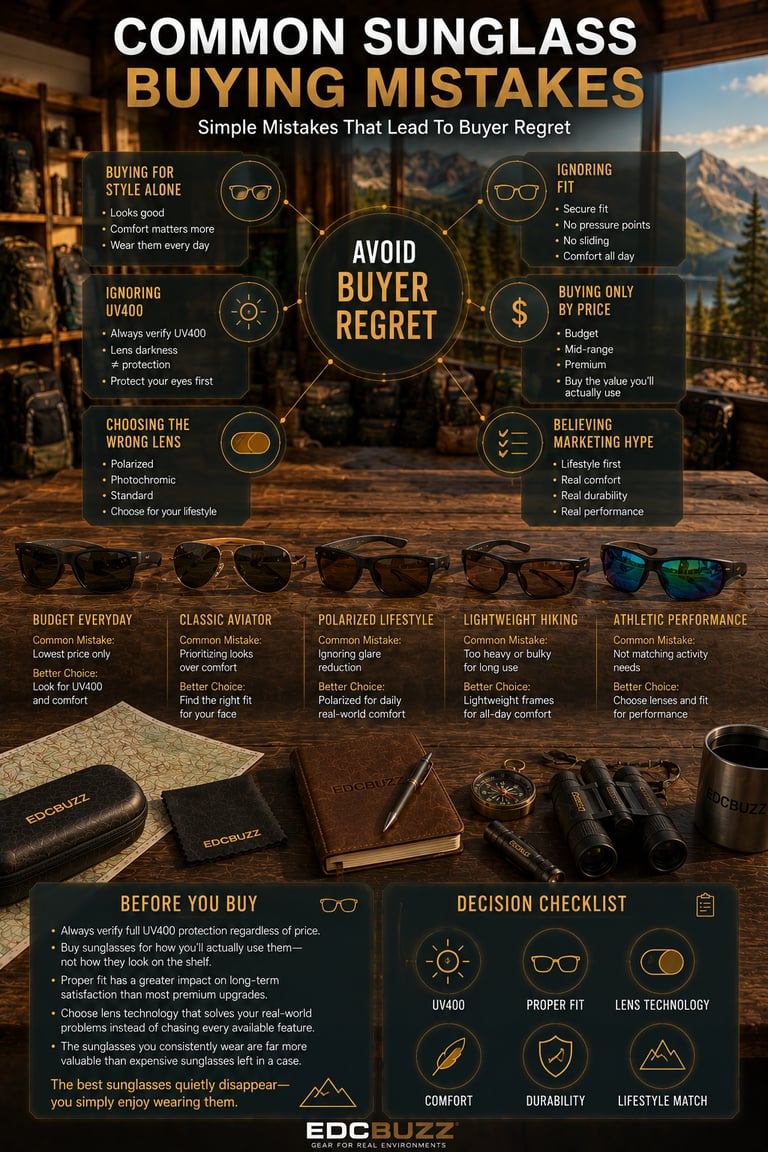
Buying for Style Alone
Appearance matters, but comfort and performance should always come first. The best-looking sunglasses won't help if they're uncomfortable enough to leave in your vehicle instead of wearing them.
Ignoring UV Protection
Never assume expensive sunglasses automatically provide better UV protection. Always verify that the lenses offer full UV400 protection regardless of price or brand.
Choosing the Wrong Lens Technology
Polarized lenses aren't automatically the best choice for every situation, just as photochromic lenses aren't ideal for every driver. Match the lens technology to the activities you'll actually be doing most often.
Buying the Wrong Size
Frames that constantly slide, pinch your head, or feel unstable usually aren't the right size. Proper fit has a greater impact on long-term comfort than many buyers expect.
Focusing Only on Price
The cheapest sunglasses aren't always the best value, but the most expensive pair isn't automatically the best either. Consider how often you'll wear them, where you'll use them, and which features genuinely improve your experience.
For an even more detailed breakdown, visit Common Mistakes People Make When Buying Sunglasses.
Frequently Asked Questions
How do I know which sunglasses are right for me?
Start by thinking about where you'll wear them most often. Driving, hiking, sports, work, and travel all benefit from different lens technologies and frame styles.
Is UV400 more important than polarized lenses?
Yes. UV400 protection is essential because it blocks harmful ultraviolet radiation. Polarization improves comfort by reducing glare but doesn't replace proper UV protection.
Are expensive sunglasses always better?
Not necessarily. Premium sunglasses often offer better optics, materials, and long-term durability, but many affordable models provide excellent UV protection and everyday performance.
Should I choose polarized or photochromic lenses?
Polarized lenses are generally better for reducing glare, while photochromic lenses excel in environments with constantly changing light. Your typical activities should determine which technology fits you best.
How should sunglasses fit?
They should sit comfortably on your nose, stay securely in place without slipping, and avoid creating pressure points behind your ears or across your temples.
Can I wear the same sunglasses for every activity?
You can, but choosing sunglasses designed for your primary activity usually delivers better comfort and performance than trying to find one pair that does everything.
Final Thoughts
Choosing sunglasses doesn't have to be overwhelming. Once you focus on how you'll actually use them, the right choice becomes much easier. Start with your lifestyle, find a frame that fits comfortably, choose the lens technologies that solve your biggest challenges, and don't pay for features you'll never use.
Remember that the "best" sunglasses aren't necessarily the most expensive pair on the shelf—they're the pair you'll enjoy wearing every time you head outside.
If you're ready to compare complete recommendations across every category, explore our EDC Sunglasses guide to find buying guides, product comparisons, and expert recommendations for every budget and activity.

Contact@TheBuzzHQ.com
© 2026 EDCBuzz. All rights reserved.
EDCBuzz
Master everyday carry systems with clarity and precision. Built for real environments and practical use.
For educational purposes only.
General Inquiries: