
Watch Types Guide
Not every watch is built for the same purpose. While all watches share the basic job of telling time, the way they're designed can make a significant difference in how they perform throughout everyday life. Some prioritize durability, others focus on precision, and some are built around specialized activities like diving, aviation, travel, or fitness.
Understanding the major watch categories is one of the easiest ways to narrow your search before comparing individual models. Rather than becoming overwhelmed by thousands of watches from dozens of brands, you can first identify the style that best matches your daily routine, work environment, and personal preferences.
Whether you're looking for a rugged field watch, a professional dive watch, a refined dress watch, or a feature-packed smartwatch, each category offers distinct advantages that make it better suited for certain lifestyles than others.
This guide explains the purpose, strengths, and limitations of every major everyday carry watch category. Along the way, you'll discover who each watch type is designed for, what features define it, and why some styles have remained popular for decades.
If you're ready to compare specific models after learning about each category, visit our Best EDC Watches guide or explore our individual recommendations for each watch type.

Why Watch Types Matter
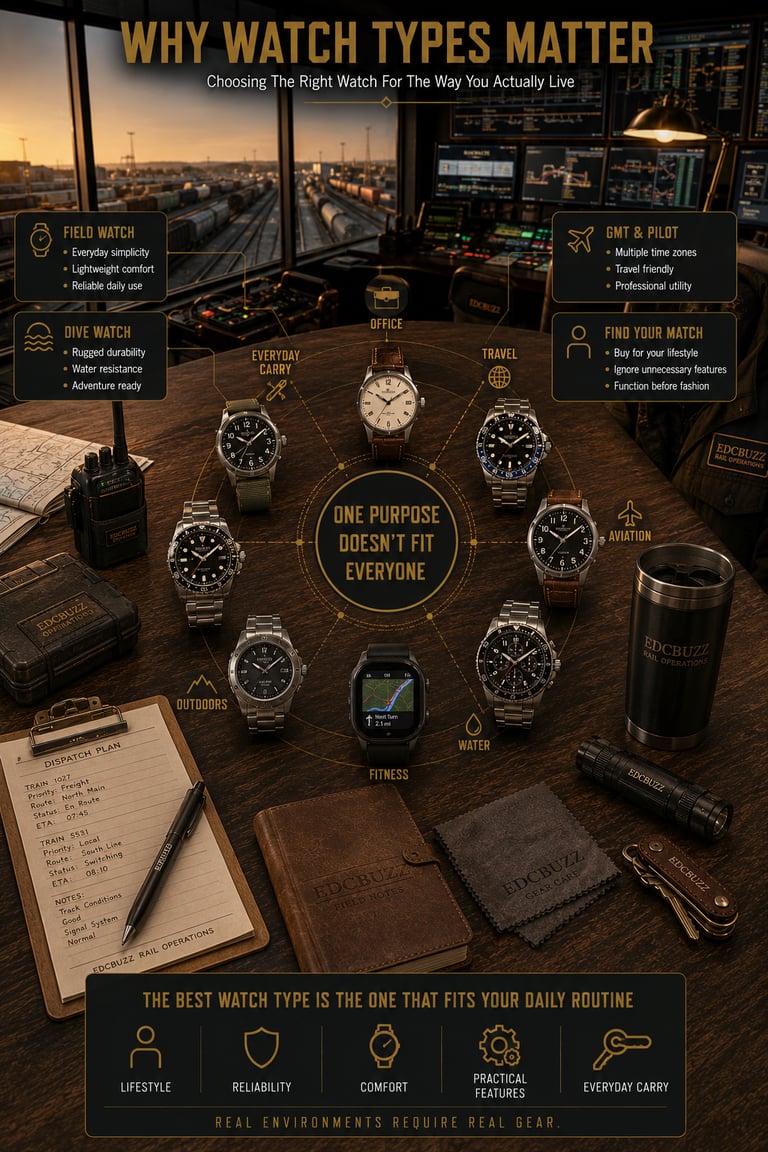
It's easy to assume that every watch serves the same purpose, but that's far from the truth.
A pilot flying across multiple time zones has very different needs than someone working in an office, hiking on weekends, or spending their days on construction sites. Likewise, a frequent traveler may appreciate a GMT watch, while someone who values simplicity may prefer a classic field watch with nothing more than three hands and a date window.
Understanding the purpose behind each watch style helps you focus on features that genuinely improve your daily experience instead of paying for functions you'll rarely use.
Choosing the right category also helps determine which case materials, crystal types, water resistance ratings, and movements make the most sense for your lifestyle. Instead of asking, "What's the best watch?" the better question becomes, "What's the best watch for the way I live?"
Many experienced collectors own several different watches because no single design excels at everything. However, for most people purchasing an everyday carry watch, choosing the category that best matches their routine will provide far more satisfaction than chasing trends or buying the most expensive option available.
As you read through this guide, think about where you spend most of your time. The best watch isn't always the one with the longest feature list—it's the one you'll actually enjoy wearing every day.
Field Watches
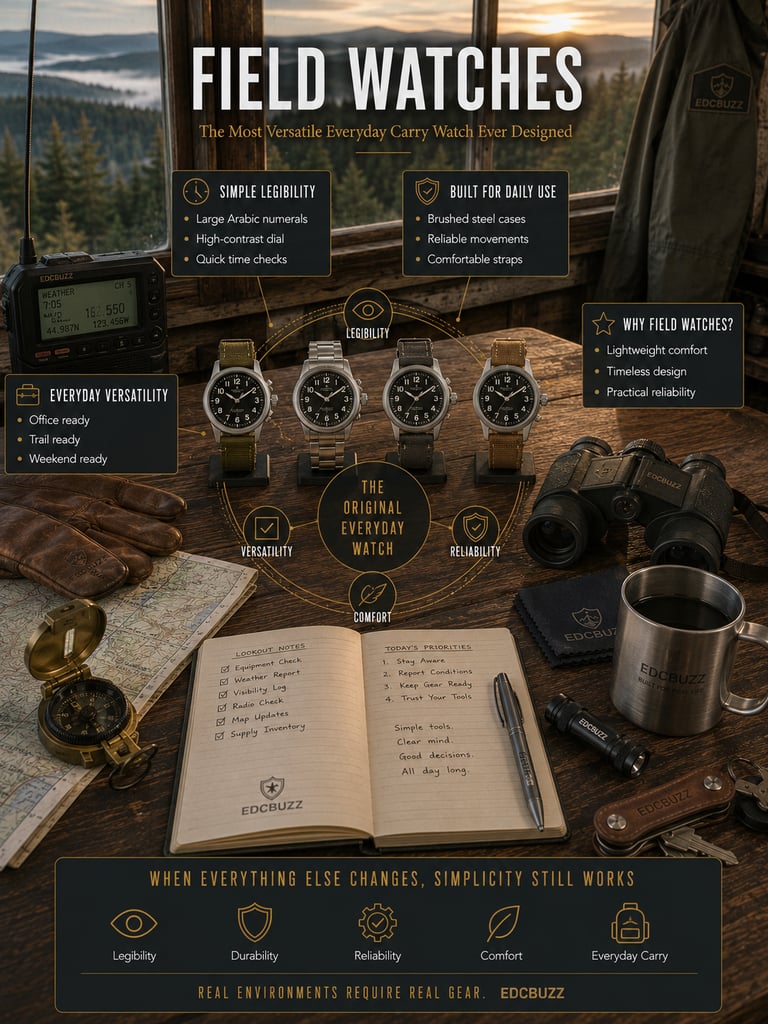
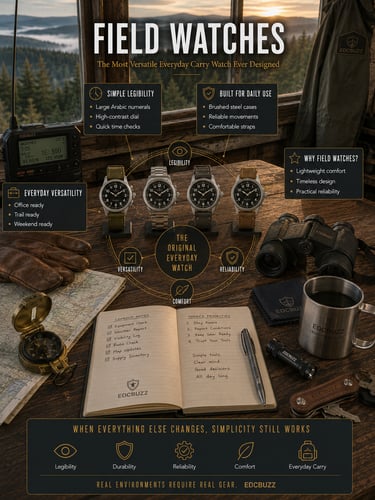
Field watches are among the most practical and versatile watches ever created.
Originally developed for military use during the early twentieth century, field watches were designed around one simple goal: provide dependable, highly legible timekeeping under demanding conditions. That philosophy still defines modern field watches today.
Unlike more specialized watch categories, field watches avoid unnecessary complications. Most feature clean dials with large Arabic numerals, three-hand layouts, durable stainless steel cases, and comfortable straps that remain easy to wear throughout long workdays.
Their moderate case sizes—typically between 38mm and 40mm—also make them one of the most comfortable everyday carry options available. They're equally at home in an office, on a hiking trail, during weekend projects, or while traveling.
Many field watches prioritize practicality over luxury. Instead of polished finishes and decorative complications, you'll usually find brushed cases, easy-to-read dials, reliable quartz or automatic movements, and enough water resistance to handle everyday life with confidence.
Popular examples include the Hamilton Khaki Field Mechanical, Citizen Garrison, Bertucci DX3 Super, and Timex Expedition Field Post Automatic. Each approaches the category a little differently, but all remain faithful to the field watch's original purpose of dependable daily service.
Field watches are especially well suited for first-time buyers because they pair easily with almost any clothing style while remaining useful in nearly every environment. Their timeless appearance also means they rarely go out of style, making them an excellent long-term investment.
If you're looking for one watch that can comfortably handle work, weekends, travel, and everyday life without feeling overly specialized, it's difficult to beat a quality field watch.
For specific recommendations across multiple budgets, see our Best Field Watches guide.
Dive Watches
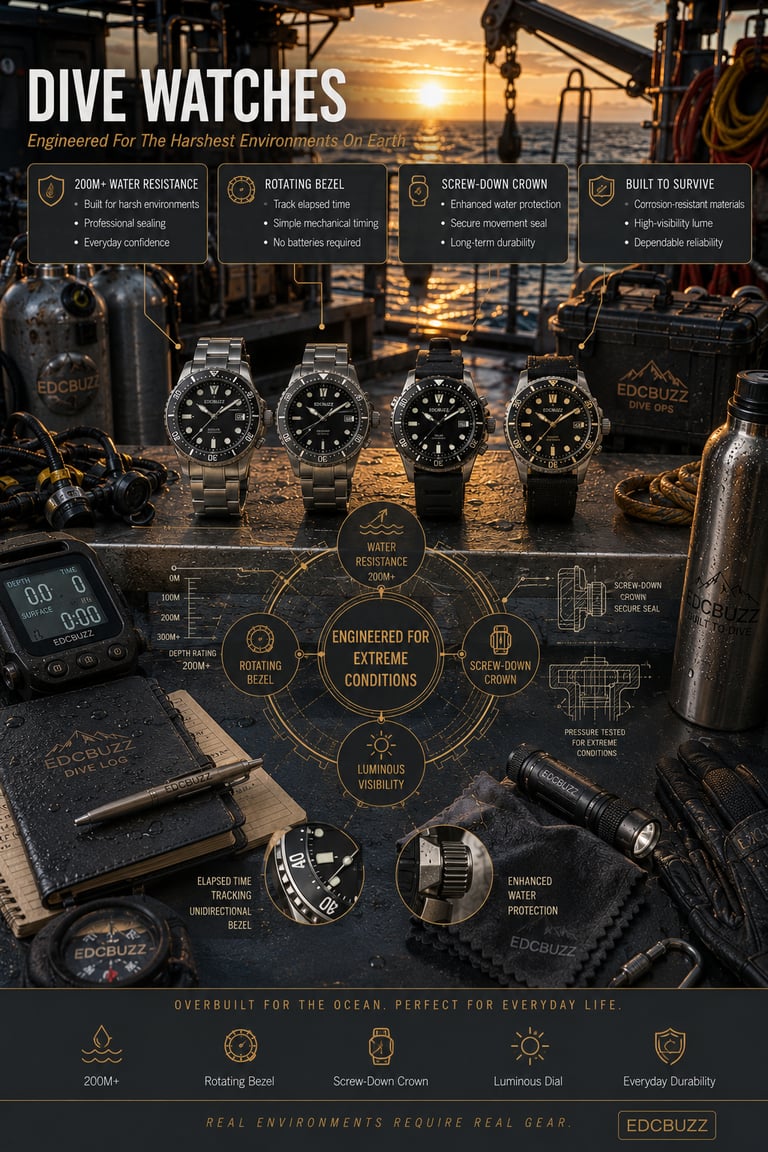
Few watch categories have earned a reputation for toughness like the dive watch.
Originally created for professional scuba divers, dive watches are engineered to withstand underwater pressure, harsh environments, and years of demanding use. Even though most owners will never take their watch deeper than a swimming pool, those same engineering standards make dive watches outstanding everyday companions.
The defining feature of a dive watch is its emphasis on durability.
Most include water resistance ratings of at least 200 meters, screw-down crowns, highly luminous hands and markers, corrosion-resistant stainless steel cases, and rotating bezels used to measure elapsed time underwater. Together, these features create one of the most rugged watch designs available.
Their bold appearance has also made dive watches one of the most recognizable styles in the world. Larger cases, wide bezels, and strong wrist presence appeal to buyers who want a watch that looks as capable as it performs.
Beyond diving, these watches excel during boating trips, fishing excursions, camping weekends, beach vacations, and virtually any activity involving water. Even in everyday office environments, many people appreciate the confidence that comes from wearing a watch built to survive far harsher conditions than they'll ever encounter.
Popular examples include the Tissot Seastar, Citizen Promaster Diver, Seiko Prospex collection, Victorinox Journey 1884, and numerous professional dive watches from established Swiss and Japanese manufacturers.
The only downside is that dive watches are often larger and heavier than other watch categories. While many people enjoy their substantial feel, buyers with smaller wrists may prefer a more compact field or dress watch for everyday comfort.
For anyone who values durability above almost everything else, however, a dive watch remains one of the strongest choices available.
Our Best Dive Watches guide compares the top models across a wide range of budgets and styles.
Pilot Watches
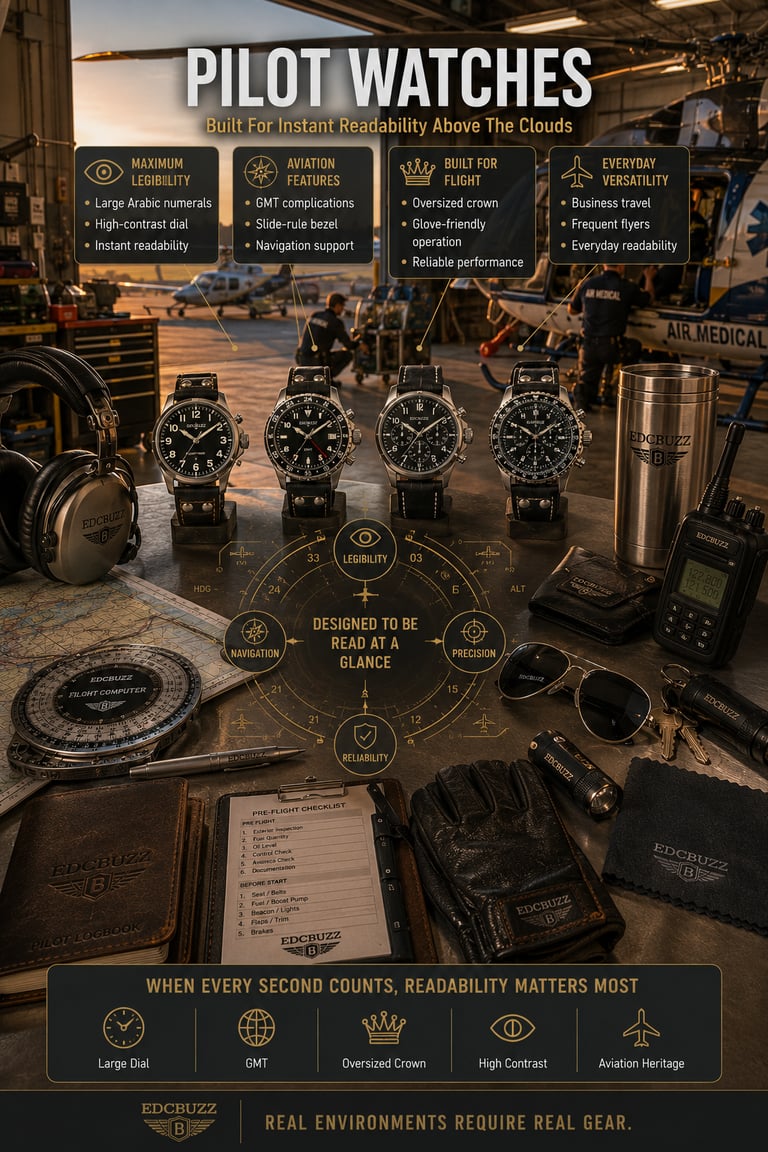
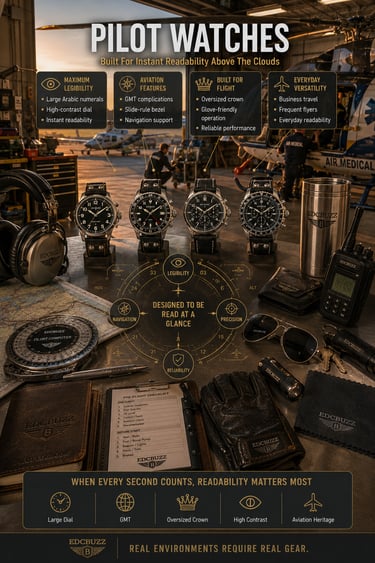
Pilot watches were developed to solve a very specific problem: helping aviators quickly read critical information while flying.
Early military and civilian pilots needed watches with large, highly legible dials that could be read instantly in changing light conditions and while wearing gloves. Over time, those practical requirements created one of the most recognizable watch styles still available today.
Large Arabic numerals, oversized crowns, high-contrast hands, and uncluttered dial layouts remain defining characteristics of traditional pilot watches. Many also include additional complications such as GMT functions, chronographs, slide-rule bezels, or world-time displays that support navigation and long-distance travel.
Modern pilot watches have evolved beyond aviation while maintaining their functional roots. Today they're popular with travelers, business professionals, emergency responders, and anyone who values outstanding readability combined with a bold wrist presence.
Unlike dive watches, pilot watches generally prioritize visibility and information over extreme water resistance. Most models provide more than enough protection for everyday life, but they're rarely intended for serious underwater use.
Notable examples include the Citizen Promaster Navihawk A-T, Hamilton Khaki Aviation Pilot Mechanical, Bulova Lunar Pilot, AVI-8 Hawker Hurricane, and PANZERA Flieger collections.
Pilot watches also tend to wear slightly larger than field watches, making them particularly appealing to buyers who enjoy a watch with greater visual presence without venturing into oversized territory.
If frequent travel, aviation heritage, or exceptional readability appeal to you, a pilot watch offers one of the most distinctive styles available.
Explore our Best Pilot Watches guide to compare the strongest options across multiple budgets.
Dress Watches
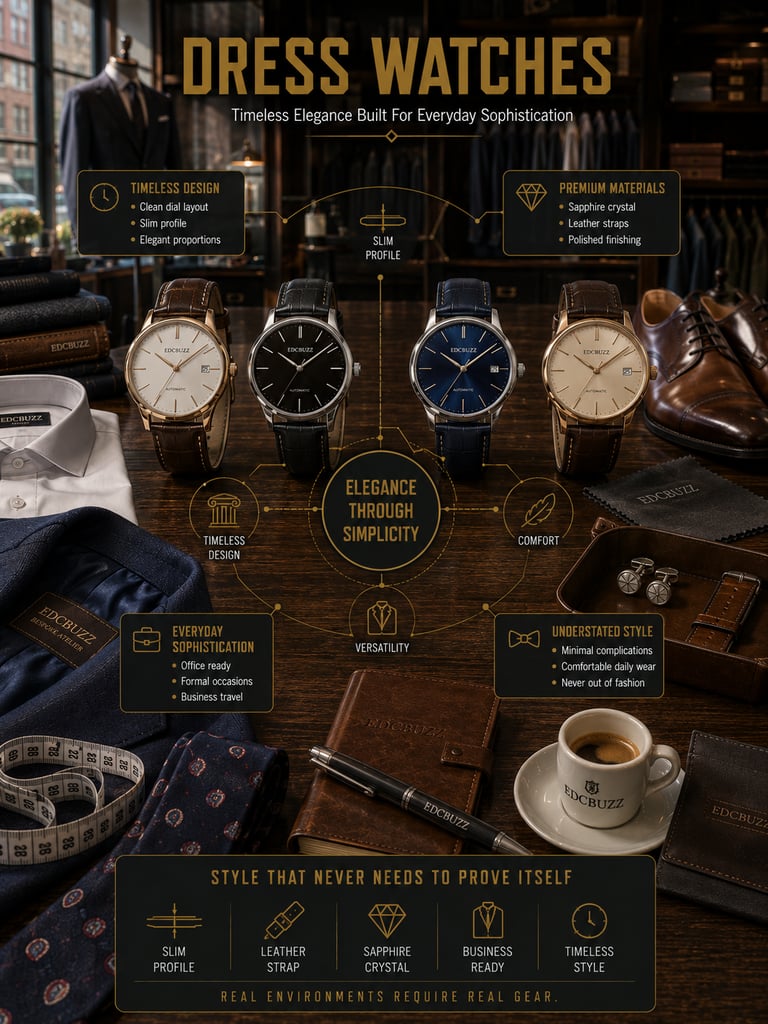
Dress watches prove that simplicity never goes out of style.
Unlike rugged outdoor watches or feature-rich sports watches, dress watches focus on clean design, refined proportions, and timeless elegance. They're built to complement business attire, formal events, and professional environments without drawing unnecessary attention.
Most dress watches feature slim cases, polished finishes, uncluttered dials, and leather straps that slide comfortably beneath shirt cuffs. Their understated appearance allows them to pair effortlessly with suits, business casual clothing, or evening wear while remaining tasteful enough for everyday office use.
Although dress watches traditionally emphasized style over durability, many modern examples offer sapphire crystals, automatic movements, and respectable water resistance, making them more practical for daily wear than ever before.
Popular models include the Seiko Presage Cocktail Time, Orient Bambino, Bulova Aerojet Open Heart, Tissot Le Locle, and Citizen Tsuyosa collections.
One of the biggest advantages of a dress watch is versatility within professional settings. A well-designed dress watch looks just as appropriate during an important client meeting as it does at a wedding or formal dinner.
The primary tradeoff is ruggedness. Leather straps require more care than rubber or stainless steel, and lower water resistance means dress watches aren't the best choice for demanding outdoor activities or heavy manual labor.
For buyers who spend most of their time in offices, professional workplaces, or formal environments, however, few watch styles offer the same balance of sophistication and everyday usability.
If you're searching for an elegant everyday companion, our Best Dress Watches guide compares today's strongest affordable and premium options.
Chronograph Watches
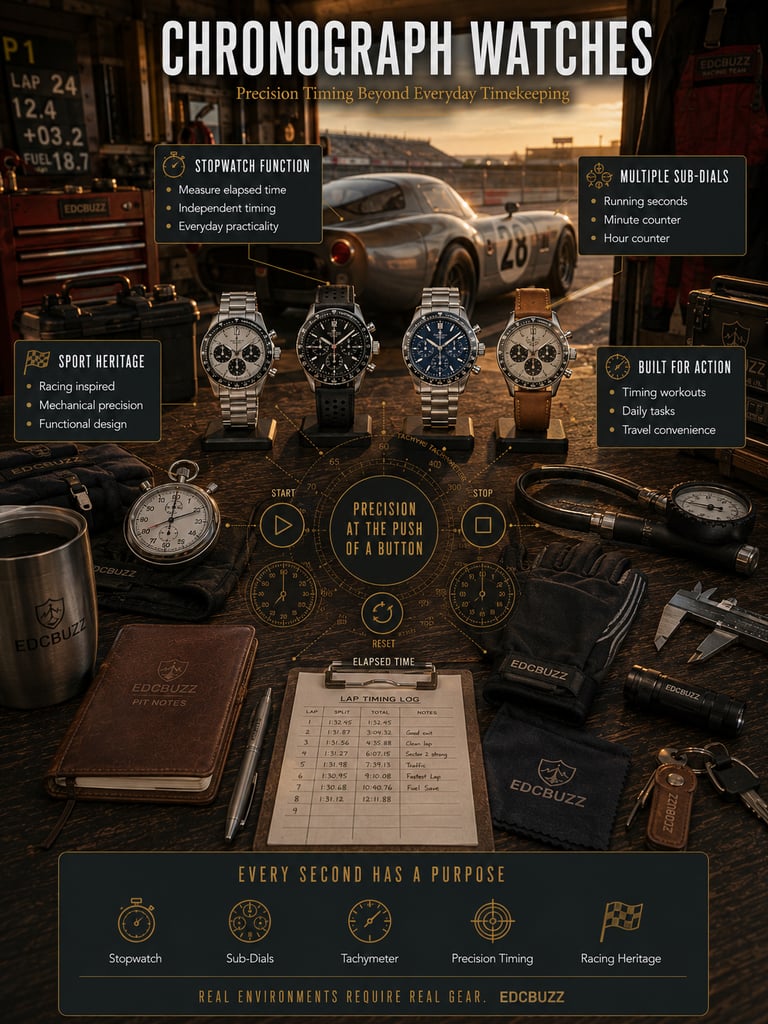
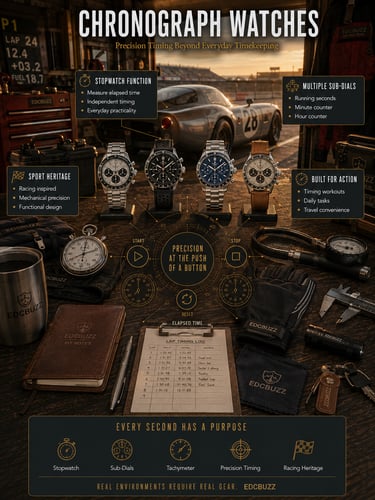
Chronograph watches combine classic watchmaking with practical timing functions, creating one of the most recognizable and feature-rich categories in the industry.
At first glance, most chronographs are easy to identify by the additional pushers located beside the crown and the smaller sub-dials displayed across the watch face. These controls allow the wearer to measure elapsed time without affecting the watch's normal timekeeping.
Originally developed for scientific, industrial, military, and racing applications, chronographs have since become popular everyday carry watches thanks to their versatility and distinctive appearance.
For many owners, the stopwatch function proves useful more often than expected. Timing workouts, cooking meals, parking meters, presentations, meetings, road trips, and countless everyday activities becomes quick and convenient with the press of a button.
Chronographs also tend to have a sportier appearance than traditional three-hand watches. The additional sub-dials, pushers, and technical layouts create visual depth that appeals to buyers who appreciate mechanical complexity.
Popular examples include the Bulova CURV, Victorinox Swiss Army Chronograph, Tissot Chrono XL, Citizen Eco-Drive Sport Chronograph, and Timex Q Chronograph.
The main compromise is dial simplicity. With multiple hands, sub-dials, and scales competing for space, chronographs generally aren't as instantly readable as field watches or pilot watches.
They can also be slightly thicker due to the additional components required to operate the timing mechanism.
Still, for buyers who appreciate a watch that offers both functionality and distinctive styling, chronographs remain one of the most rewarding categories to own.
If you're interested in adding stopwatch functionality to your everyday carry, our Best Chronograph Watches guide highlights the strongest models available across several price ranges.
GMT Watches
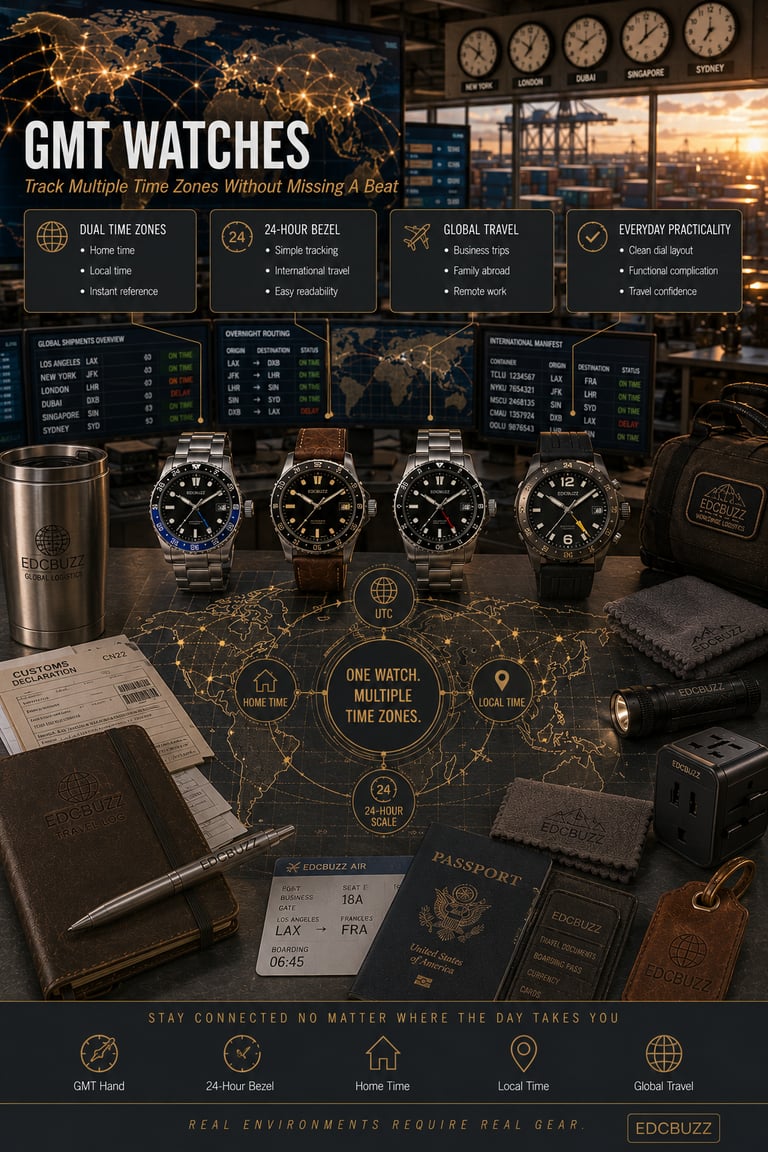
GMT watches were originally created for one purpose: helping travelers keep track of multiple time zones at once.
The concept was developed during the rise of international air travel, when pilots regularly crossed several time zones in a single day. Instead of constantly calculating the time back home, a GMT watch allowed them to monitor local time alongside a second time zone using an additional 24-hour hand.
Today, GMT watches remain one of the most practical options for business travelers, military personnel, remote workers, and anyone with family or coworkers living in different parts of the world.
The defining feature is the fourth hand, which completes one full rotation every 24 hours instead of the standard 12. When paired with a 24-hour bezel or chapter ring, it allows the wearer to monitor another time zone without interrupting local timekeeping.
Modern GMT watches range from simple office-friendly designs to rugged adventure watches built for international travel.
Popular examples include the Glycine Combat GMT, Mathey-Tissot GMT Automatic, Citizen Series 8 GMT, and several respected offerings from Seiko and Bulova.
Even if you don't travel frequently, GMT watches have become increasingly popular because they offer useful functionality without significantly increasing dial complexity. Many owners use the second time zone to monitor a family member's location, business headquarters, or favorite travel destination.
Compared to chronographs, GMT watches generally maintain cleaner, easier-to-read dials while adding one genuinely useful complication.
For frequent travelers or anyone working across multiple time zones, few watch categories offer as much everyday practicality.
Our Best GMT Watches guide compares some of the strongest GMT models currently available.
Solar Watches
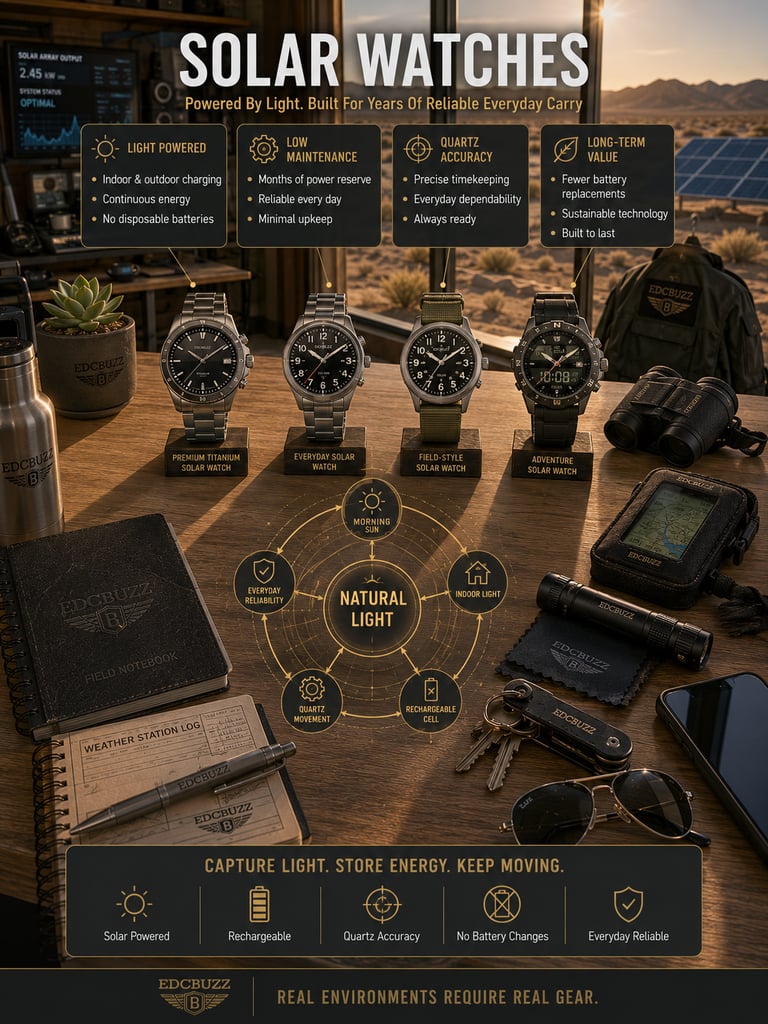
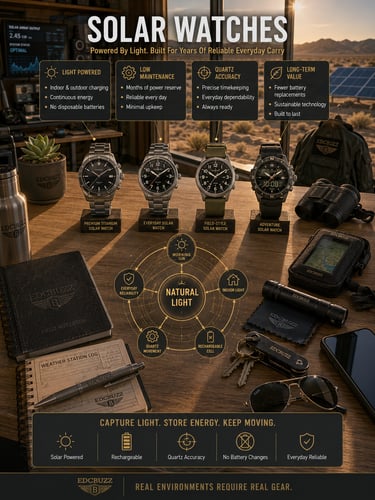
Few technologies have changed everyday watch ownership as much as solar power.
Instead of relying on disposable batteries, solar watches convert natural and artificial light into energy that continuously charges a rechargeable power cell hidden beneath the dial. As long as the watch receives regular exposure to light, it can continue operating for months without additional charging.
For everyday carry, this creates one of the most maintenance-free ownership experiences available.
Solar watches combine the outstanding accuracy of quartz movements with the convenience of eliminating routine battery replacements. For many buyers, that alone makes them one of the smartest long-term investments in the watch market.
The technology has matured significantly over the past two decades. Early concerns about charging efficiency and battery longevity have largely disappeared, with many modern solar watches capable of operating for years before requiring any significant service.
Manufacturers such as Citizen, Casio, Seiko, and Tissot have invested heavily in solar technology, producing watches that range from affordable field watches to premium titanium everyday carry models.
Excellent examples include the Casio Oceanus OCW-S100-1AJF, Citizen Eco-Drive collections, Tissot PRC 100 Solar, Seiko Prospex Solar series, and numerous sport watches designed for demanding outdoor use.
Another major advantage is reliability. Since solar watches are built around quartz movements, they deliver excellent accuracy while requiring very little attention from the owner.
For buyers who simply want a dependable watch that works every day without worrying about winding, battery changes, or frequent servicing, solar watches are difficult to beat.
Our Best Solar Watches guide highlights the top solar-powered watches across multiple price ranges.
Sport Watches
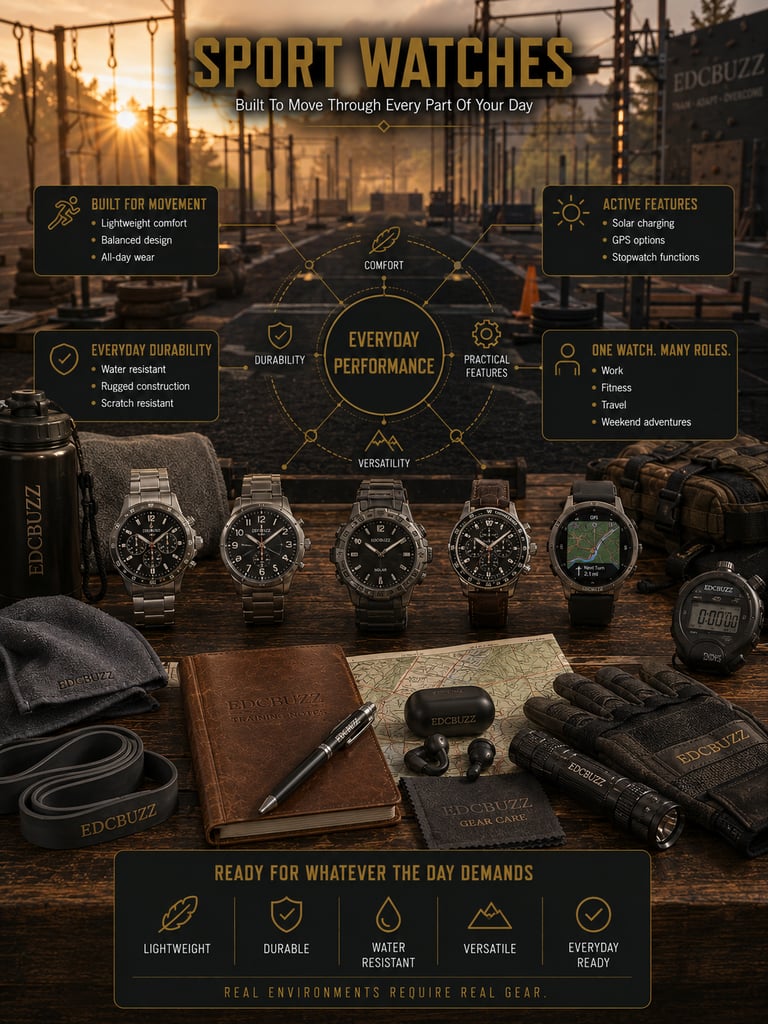
Sport watches are designed for people who live active lifestyles but don't necessarily need the specialized capabilities of professional dive watches or aviation instruments.
Rather than focusing on one specific activity, sport watches balance durability, comfort, versatility, and practical features that support everyday movement.
They typically include stronger water resistance than dress or field watches, durable case materials, highly legible dials, and rugged straps capable of handling everything from gym workouts to weekend hikes.
Many sport watches also emphasize lightweight construction, making them comfortable enough to wear throughout long days filled with physical activity.
Unlike traditional dive watches, sport watches often prioritize overall versatility instead of maximum underwater capability. They may include chronographs, solar charging, GPS functionality, or enhanced shock resistance depending on the intended audience.
Popular examples include the Victorinox Journey 1884, Citizen Eco-Drive Sport Chronograph, Casio G-Shock collections, Garmin Instinct 3, and several rugged outdoor watches from Suunto and Coros.
One of the biggest strengths of sport watches is flexibility. They transition comfortably between work, exercise, travel, and casual weekends without feeling overly specialized for any single environment.
This makes them an excellent choice for buyers who want one dependable watch capable of handling nearly every activity they encounter.
Although they may not possess the formal elegance of a dress watch or the military heritage of a field watch, sport watches often provide one of the best overall balances of comfort, durability, and functionality available today.
If your lifestyle regularly includes outdoor recreation, fitness, travel, or physically demanding work, our Best Sport Watches guide compares the top options worth considering.
Smartwatches
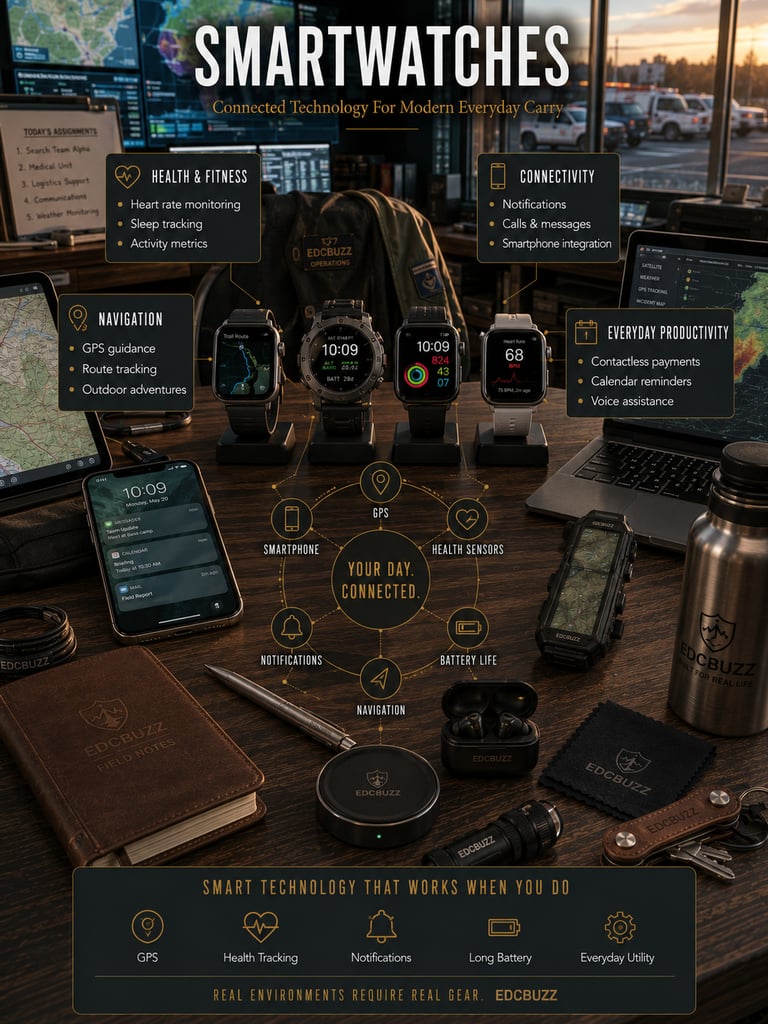
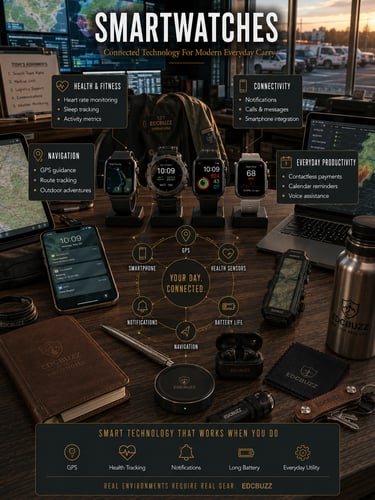
Smartwatches have transformed what people expect from a watch.
While traditional watches focus almost entirely on timekeeping, smartwatches function as wearable computers capable of tracking health, navigating unfamiliar locations, receiving notifications, answering calls, controlling music, and much more.
For many users, a smartwatch has become less about telling time and more about managing daily life from their wrist.
Modern smartwatches continuously monitor heart rate, sleep quality, exercise, stress levels, blood oxygen, and numerous other health metrics. GPS navigation, contactless payments, smartphone integration, weather updates, and emergency safety features have also become standard on many models.
Unlike mechanical or quartz watches, however, smartwatches require regular charging. Battery life varies dramatically depending on the model, with some lasting only a day or two while others can operate for several weeks before needing additional power.
Manufacturers have also begun specializing in different audiences.
Apple focuses heavily on seamless integration with the iPhone ecosystem. Samsung builds feature-rich watches for Android users. Garmin targets outdoor adventurers and endurance athletes, while companies like Amazfit and COROS emphasize battery life and fitness tracking.
Popular examples include the Garmin Fenix 8, Apple Watch Series 10, Samsung Galaxy Watch 7, Garmin Instinct 3, COROS Pace Pro, and Amazfit T-Rex 3.
For buyers focused on health monitoring, fitness tracking, navigation, or productivity, smartwatches offer capabilities that traditional watches simply cannot match.
The primary tradeoff is longevity. While a quality mechanical or quartz watch can remain useful for decades, smartwatches evolve much more quickly as technology advances. Software support, battery degradation, and changing hardware often encourage replacement every several years.
Despite that limitation, smartwatches remain one of the most practical choices available for people who value connectivity and digital convenience.
If you're considering a smartwatch, our Best Smartwatches guide compares today's leading models across several different categories.
Which Watch Type Is Right For You?
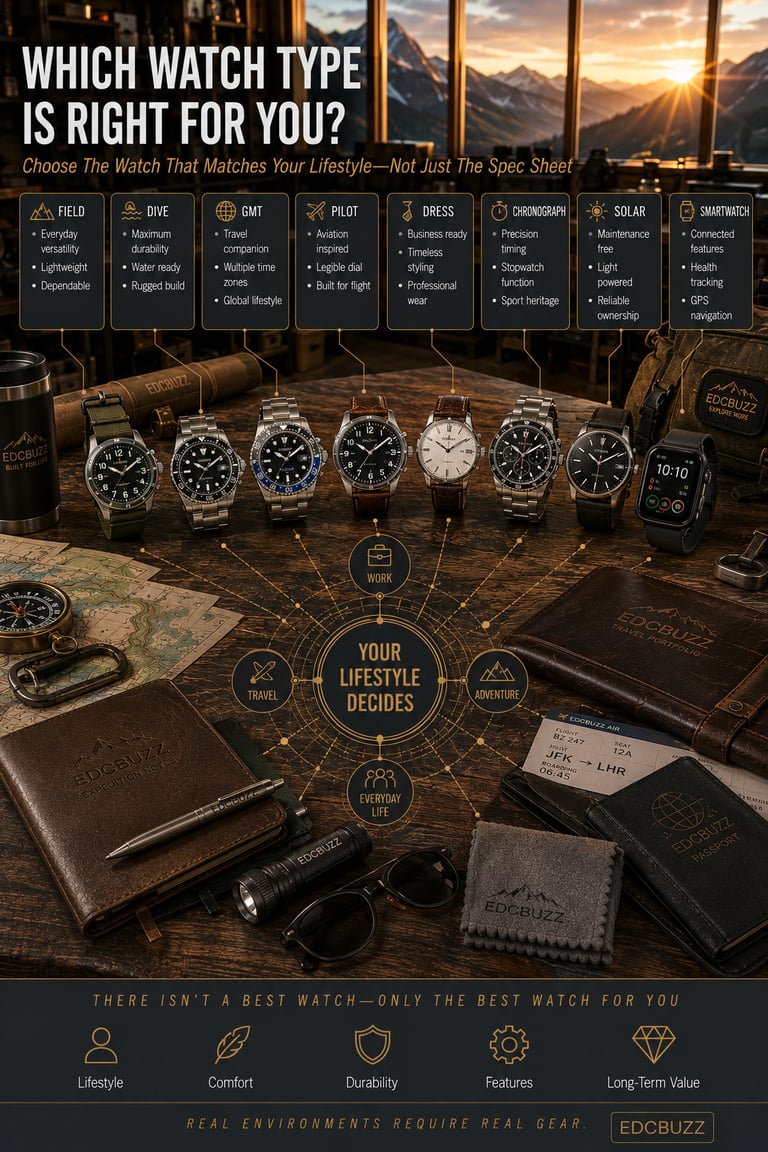
After exploring the major watch categories, one question remains:
Which one actually fits your lifestyle?
The answer depends less on which watch is objectively "best" and more on how you'll use it every day.
If you're looking for maximum versatility, a field watch is difficult to beat. Its clean design, comfortable proportions, and dependable construction make it one of the best all-around everyday carry choices for most people.
If durability is your highest priority, dive watches remain the benchmark. Their robust construction, generous water resistance, and rugged components make them ideal for demanding environments and active lifestyles.
Frequent travelers should strongly consider a GMT watch. The ability to monitor multiple time zones becomes surprisingly useful whether you're flying internationally or coordinating with coworkers around the world.
Buyers who spend most of their time in professional settings may appreciate the understated elegance of a dress watch. A slim case and refined styling pair naturally with business attire while remaining comfortable enough for everyday wear.
If timing functions are important to your routine, a chronograph offers practical stopwatch capabilities without sacrificing the traditional appearance of an analog watch.
Those who prioritize convenience should look closely at solar watches. Their combination of quartz accuracy and virtually maintenance-free ownership makes them one of the smartest long-term investments available.
People with active lifestyles often find sport watches provide the best overall balance of durability, comfort, and versatility. Whether you're hiking, exercising, traveling, or working outdoors, they adapt well to changing environments.
Finally, buyers who rely heavily on technology may find a smartwatch to be the most useful option of all. Health tracking, GPS navigation, smartphone notifications, and productivity features create an experience that traditional watches simply can't replicate.
The good news is that there isn't a wrong choice.
Every watch category exists because it solves different problems for different people. The key is identifying which strengths align most closely with your own daily routine.
If you're still deciding between several categories, our Watch Buying Guide walks through the complete purchasing process, while our Best EDC Watches guide compares top-performing models from every major watch category to help you make a confident decision.
Frequently Asked Questions
What is the best watch type for everyday carry?
For most people, a field watch offers the best balance of durability, comfort, legibility, and versatility. It works equally well in the office, outdoors, while traveling, or during everyday errands. However, the best choice ultimately depends on your lifestyle. A frequent traveler may benefit more from a GMT watch, while an outdoor enthusiast might prefer a dive or sport watch.
What's the difference between a field watch and a dive watch?
Field watches prioritize simplicity, lightweight comfort, and easy readability, making them excellent all-around everyday watches. Dive watches are built for maximum durability, offering higher water resistance, rotating bezels, and more rugged construction. If you rarely spend time around water, a field watch may be the more comfortable everyday option.
Are pilot watches only for pilots?
Not at all. While pilot watches were originally designed for aviation, their large dials, excellent legibility, and practical complications make them popular with travelers, professionals, and anyone who appreciates their distinctive design. Most owners simply enjoy their functionality and aviation-inspired styling.
Are dress watches good everyday watches?
They certainly can be. If your daily routine involves offices, meetings, or professional environments, a dress watch may be one of the most practical choices available. Modern dress watches often include sapphire crystals, automatic movements, and enough water resistance for everyday life while maintaining a refined appearance.
Is a chronograph actually useful?
For many people, yes. A chronograph functions as a built-in stopwatch that can be used for workouts, cooking, meetings, travel, parking meters, and countless everyday tasks. Others simply enjoy the sportier appearance and mechanical complexity it brings to a watch.
Who should buy a GMT watch?
GMT watches are ideal for anyone who regularly deals with multiple time zones. Business travelers, airline professionals, military personnel, remote workers, and people with family living overseas all benefit from being able to monitor two locations at the same time.
Are solar watches reliable?
Absolutely. Modern solar watches are among the most reliable everyday carry watches available. They combine the outstanding accuracy of quartz movements with rechargeable power systems that continuously charge from natural or artificial light, greatly reducing long-term maintenance.
Should I choose a traditional watch or a smartwatch?
That depends on your priorities. Traditional watches emphasize craftsmanship, longevity, and timeless style. Smartwatches focus on health tracking, GPS navigation, notifications, and digital convenience. Neither is inherently better—they simply serve different lifestyles.
Can I own just one watch?
Many people do, and choosing the right category makes that much easier. A versatile field watch, sport watch, or durable dive watch can comfortably handle most daily situations without requiring multiple watches. Others eventually build collections because they enjoy matching different watches to different occasions.
Which watch type offers the best long-term value?
Value depends on what you expect from your watch. For low maintenance and exceptional accuracy, solar watches are hard to beat. For versatility, field watches remain one of the strongest investments. Buyers seeking maximum durability often choose dive watches, while enthusiasts who appreciate traditional craftsmanship frequently prefer automatic mechanical watches.
Final Thoughts
Every watch category exists because it was designed to solve a different problem.
Field watches emphasize versatility. Dive watches prioritize durability. Pilot watches focus on readability. Dress watches offer timeless refinement. Chronographs provide practical timing functions. GMT watches simplify international travel. Solar watches minimize maintenance. Sport watches thrive in active environments. Smartwatches deliver technology that traditional watches simply can't match.
Understanding these differences makes buying your next watch significantly easier because you can focus on the categories that genuinely fit your lifestyle instead of comparing thousands of unrelated models.
The best everyday carry watch isn't necessarily the one with the highest price tag or the longest feature list. It's the one you'll enjoy wearing every morning, trust throughout the day, and still appreciate years down the road.
If you're ready to compare specific models, explore our Best EDC Watches guide for our top overall recommendations. You can also continue your research with our Watch Buying Guide to learn how to evaluate movements, materials, sizing, and features, or visit our Watch Ownership Guide to discover how proper maintenance can keep your watch performing reliably for decades.

Contact@TheBuzzHQ.com
© 2026 EDCBuzz. All rights reserved.
EDCBuzz
Master everyday carry systems with clarity and precision. Built for real environments and practical use.
For educational purposes only.
General Inquiries: