
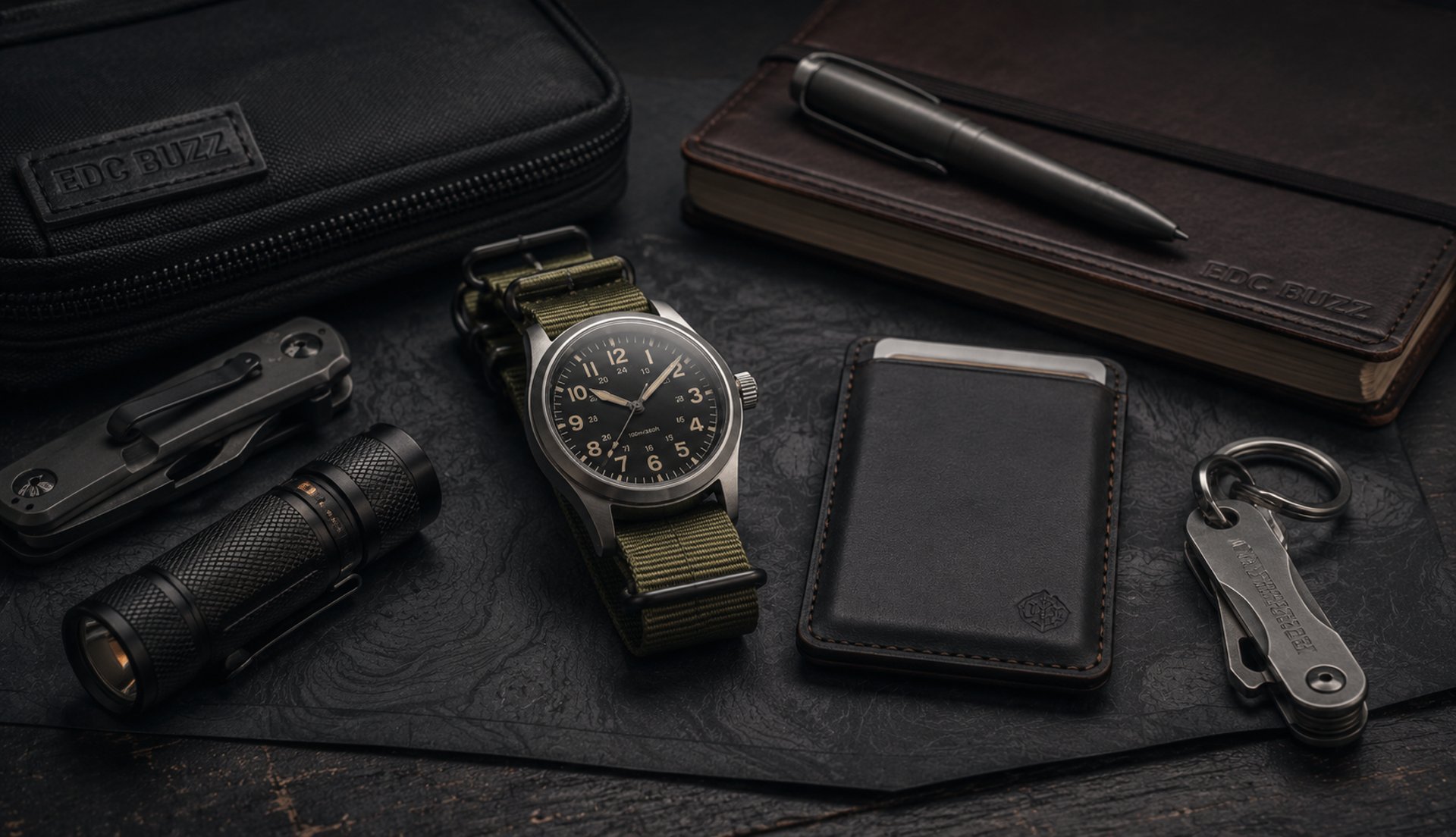
Watch Buying Guide
Buying an everyday carry watch isn't as simple as picking the one that looks best in a display case. The right watch becomes part of your daily routine, whether you're heading to the office, working with tools, traveling for business, or spending the weekend outdoors. A quality EDC watch should be dependable, comfortable enough to wear all day, and durable enough to handle years of regular use.
Unlike fashion accessories that spend most of their time tucked away in a drawer, an everyday carry watch is meant to be worn. It should provide quick, reliable timekeeping without requiring constant attention or special care. That's why choosing the right model involves much more than selecting a color or brand name.
Today's market offers thousands of options ranging from affordable quartz watches under $100 to luxury mechanical timepieces costing several thousand dollars. Along the way you'll encounter different movements, case materials, crystal types, water resistance ratings, and dozens of features that may—or may not—actually matter for your lifestyle.
This guide walks through everything you need to know before purchasing your next watch. Whether you're buying your very first EDC watch or looking to upgrade your current collection, you'll learn what features deserve your attention, which marketing claims can safely be ignored, and how to choose a watch that fits both your budget and the way you actually live.
If you're still deciding which category fits your lifestyle best, our Watch Types Guide explains the strengths and weaknesses of every major watch style. Once you've narrowed down your options, you can also browse our Best EDC Watches recommendations for models that consistently deliver excellent everyday performance.
Why Choosing the Right EDC Watch Matters
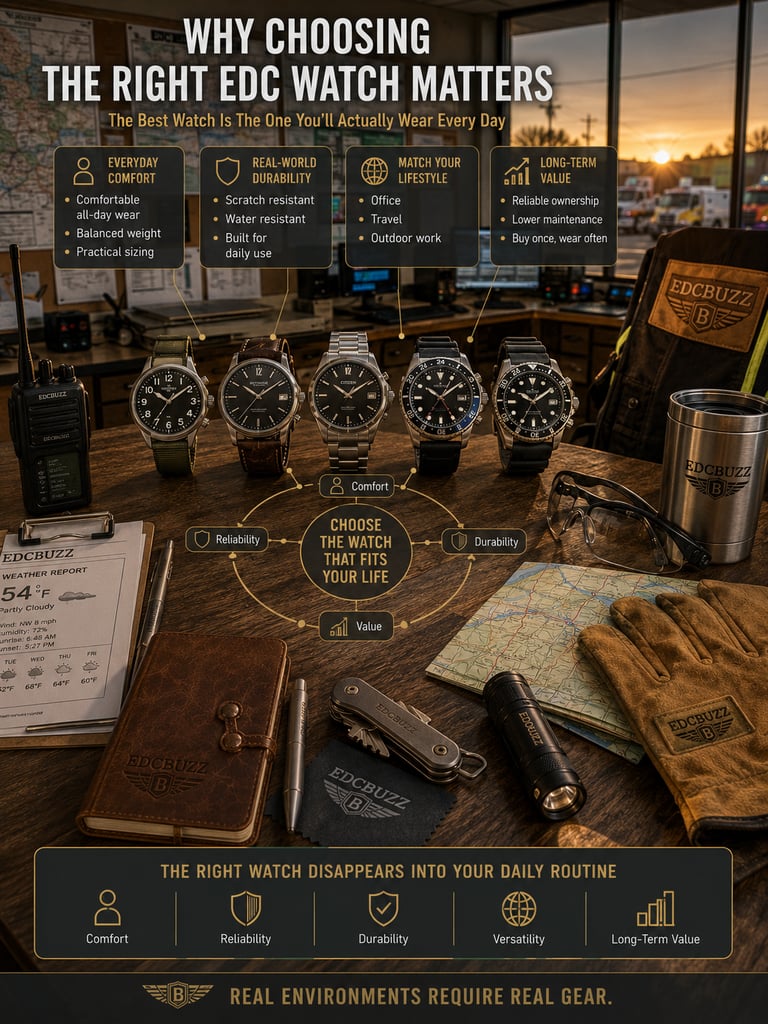
The best everyday carry watch isn't necessarily the most expensive or the most feature-packed. Instead, it's the one you'll enjoy wearing every day without thinking about it.
A watch that's too heavy eventually gets left at home. One that's difficult to read becomes frustrating during busy workdays. A leather strap may be perfect for an office environment but less practical if your weekends involve hiking, fishing, or working outdoors. Likewise, someone who travels internationally may benefit from a GMT watch, while another person simply needs a dependable quartz field watch that always displays the correct time.
Your daily routine should influence your purchase far more than current trends or luxury branding.
For many buyers, reliability comes first. Nobody wants a watch that constantly needs adjusting or spends more time in a repair shop than on their wrist. Others prioritize durability, preferring scratch-resistant sapphire crystals, stainless steel cases, and enough water resistance to handle unexpected weather without worry.
Comfort is equally important. Since an EDC watch may spend twelve or more hours on your wrist every day, weight, thickness, and strap material all play major roles in long-term satisfaction.
It's also worth considering ownership costs before making a purchase. Quartz watches typically require little more than an occasional battery replacement, while automatic watches eventually need servicing to maintain peak performance. Solar-powered watches reduce maintenance even further by continuously charging from available light.
Choosing wisely from the beginning often saves money over the long term because you'll be less likely to replace a watch that never quite suited your needs.
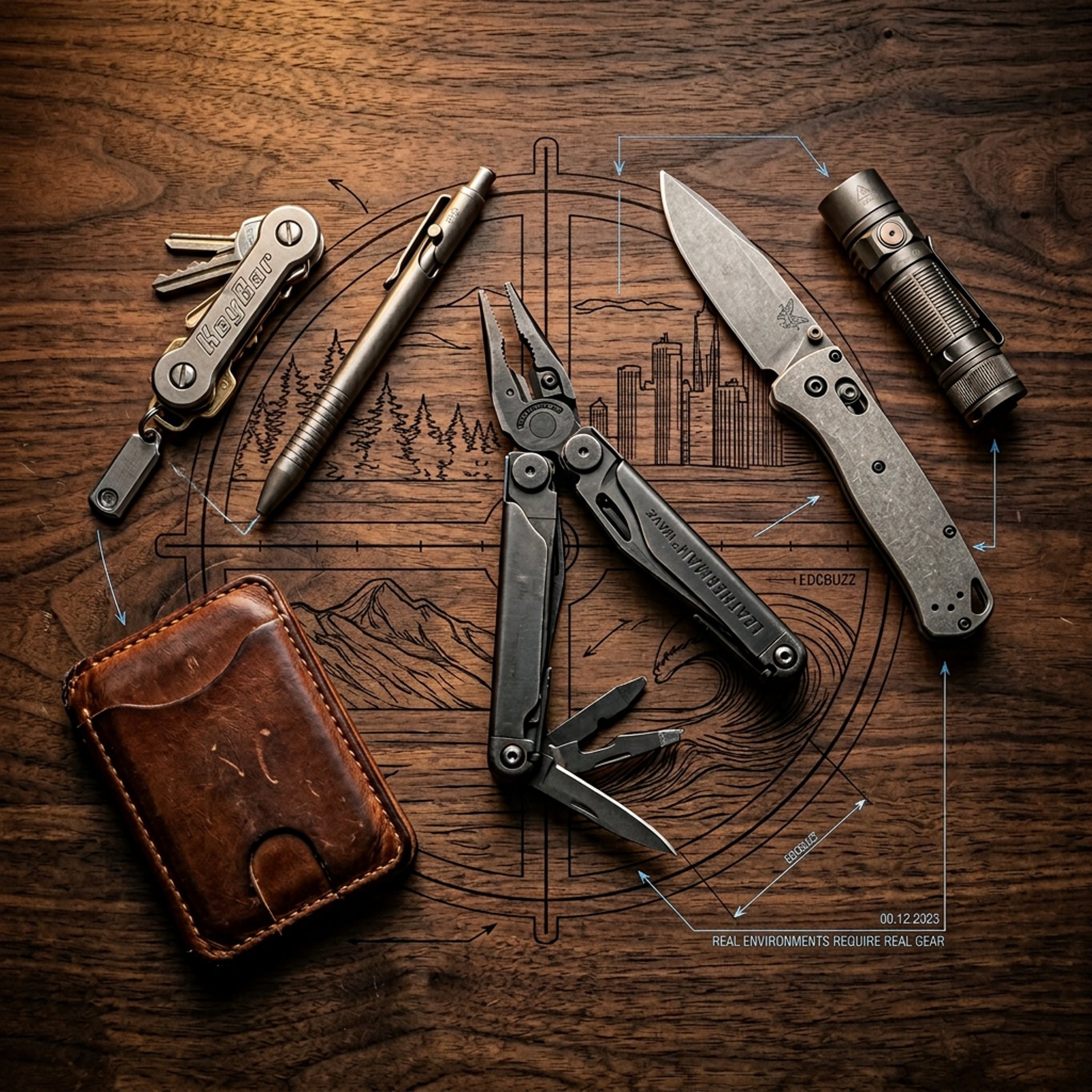
Explore This Guide
Jump directly to the section you're most interested in, or scroll through the complete guide from start to finish.

What Makes a Great Everyday Carry Watch?
Every quality everyday carry watch shares a few important characteristics. While individual features may vary depending on your lifestyle, the best EDC watches strike a balance between durability, reliability, comfort, and practical functionality instead of focusing on flashy complications or luxury materials.
Understanding these core qualities makes it much easier to compare watches across different price ranges and styles.

Reliability
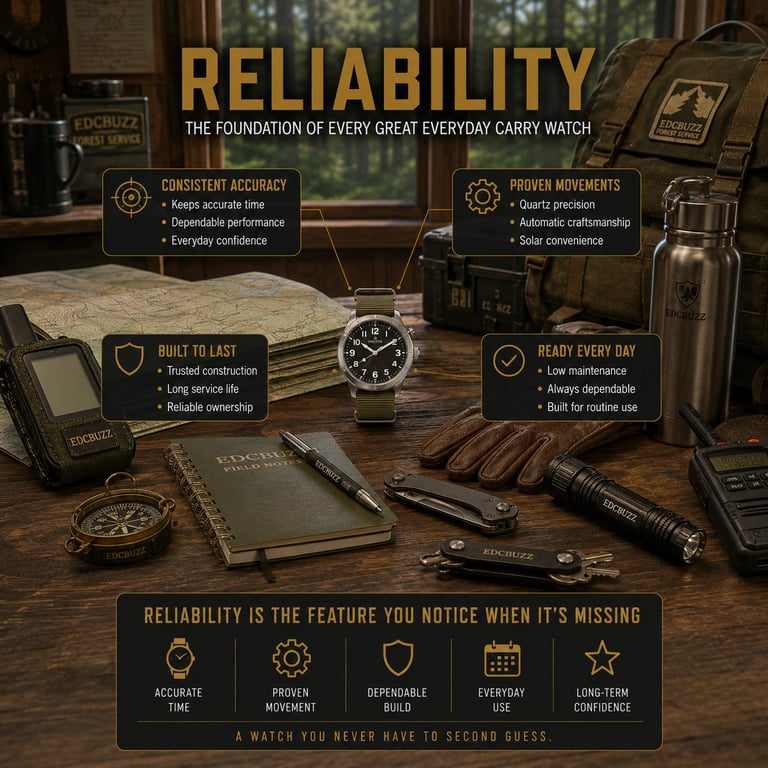
Reliability is the foundation of any good everyday carry watch.
Whether you choose a quartz movement, an automatic movement, or a solar-powered design, your watch should consistently keep accurate time without requiring constant attention. Missing appointments because your watch lost several minutes isn't something anyone wants to deal with.
Quartz watches remain the benchmark for everyday accuracy. Models from brands like Citizen, Casio, and Seiko often gain or lose only a few seconds each month while requiring very little maintenance.
Automatic watches sacrifice some accuracy in exchange for mechanical craftsmanship. Well-built models like the Hamilton Khaki Field Mechanical or Tissot Gentleman still offer dependable daily performance when properly maintained, although they generally require periodic servicing over the years.
Solar watches combine the convenience of quartz accuracy with long-term self-charging technology, making them one of the lowest-maintenance choices available today.
Regardless of movement type, dependability should always come before unnecessary features.
Comfort
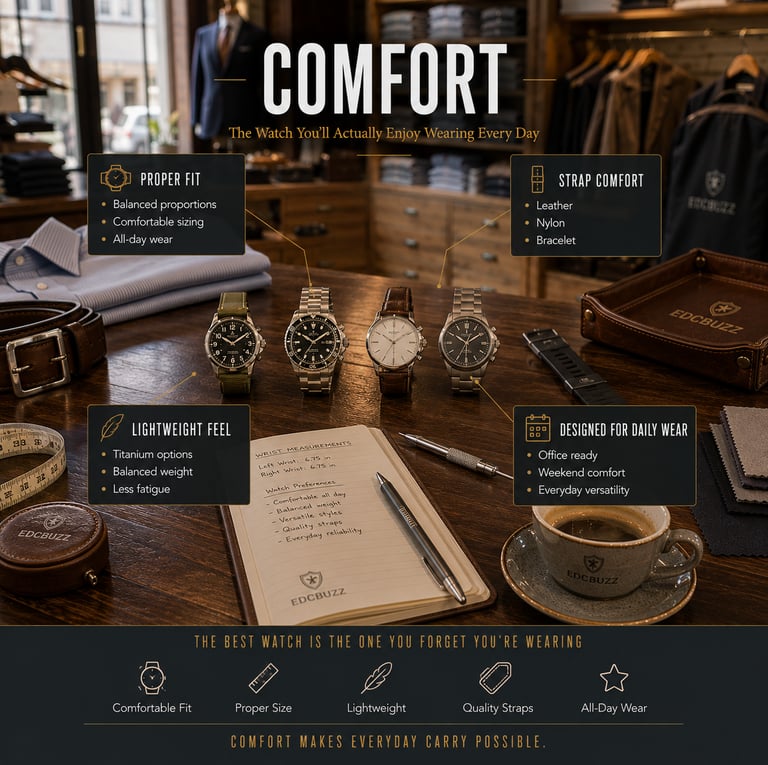
Even the highest-quality watch becomes a poor everyday carry choice if it isn't comfortable enough to wear all day.
Comfort depends on several factors working together, including case diameter, thickness, overall weight, and strap material. A watch that feels perfectly balanced on one person's wrist may feel oversized or awkward on someone else.
Many buyers focus only on case diameter while overlooking lug-to-lug length, which often has a much greater impact on how large a watch actually wears. Likewise, a thick dive watch may feel noticeably heavier than a slim field or dress watch despite sharing the same case diameter.
Strap selection also matters. Leather offers classic style and molds to your wrist over time, NATO straps provide excellent versatility, rubber excels around water, and stainless steel bracelets deliver outstanding durability with a more substantial feel.
Since you'll likely wear your EDC watch for years, comfort should never be sacrificed simply because a watch looks impressive in photos.
Durability
An everyday carry watch should be ready for everyday life.
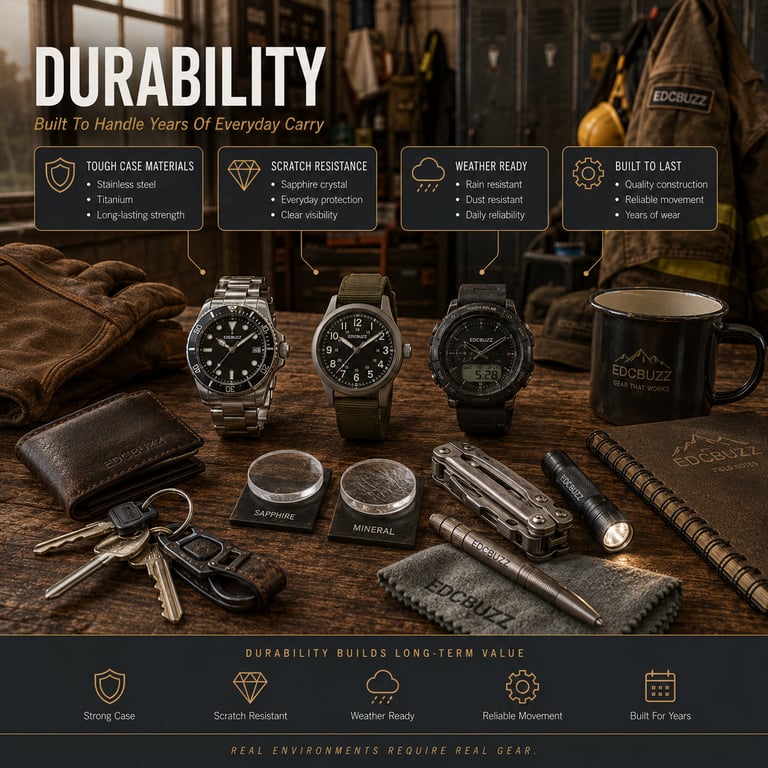
Minor bumps against door frames, accidental drops onto a desk, changing weather conditions, and occasional exposure to water all happen over the course of normal ownership. Choosing durable materials helps your watch maintain both its appearance and performance for years.
Stainless steel remains the most popular case material because it balances strength, corrosion resistance, and affordability. Titanium offers similar durability while reducing overall weight, making it an excellent choice for people who wear a watch from morning until bedtime.
Crystal material also plays a major role in long-term durability. Sapphire crystal offers outstanding scratch resistance and has become increasingly common on mid-range and premium watches, while mineral crystal provides respectable durability at lower price points.
When combined with solid construction and quality manufacturing, these materials allow a watch to withstand years of regular use with minimal signs of wear.
Legibility
A watch only serves its purpose if you can quickly read the time.
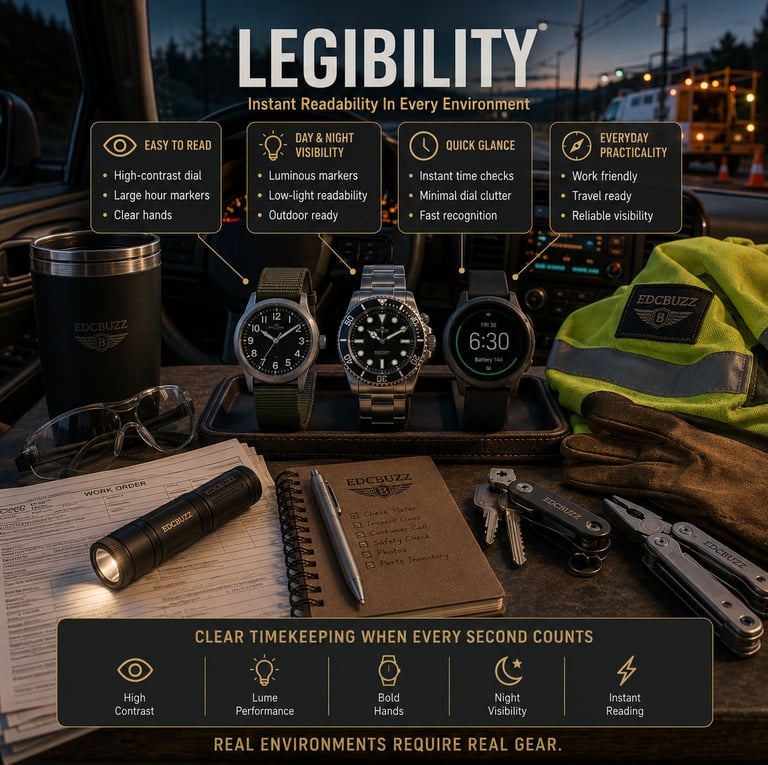
Large, high-contrast hands, uncluttered dials, and quality lume make a significant difference during daily use. Whether you're checking the time while driving, working outdoors, or walking through a dim parking garage, readability should remain effortless.
Field watches are especially well known for their clean, highly legible dial layouts, while many dive watches pair bold hands with excellent luminous markers that remain visible long after dark.
Digital smartwatches offer exceptional readability as well, though many traditional watch enthusiasts still prefer the simplicity and timeless appearance of an analog display.
Regardless of style, a quick glance should always provide the information you need.
Practical Features
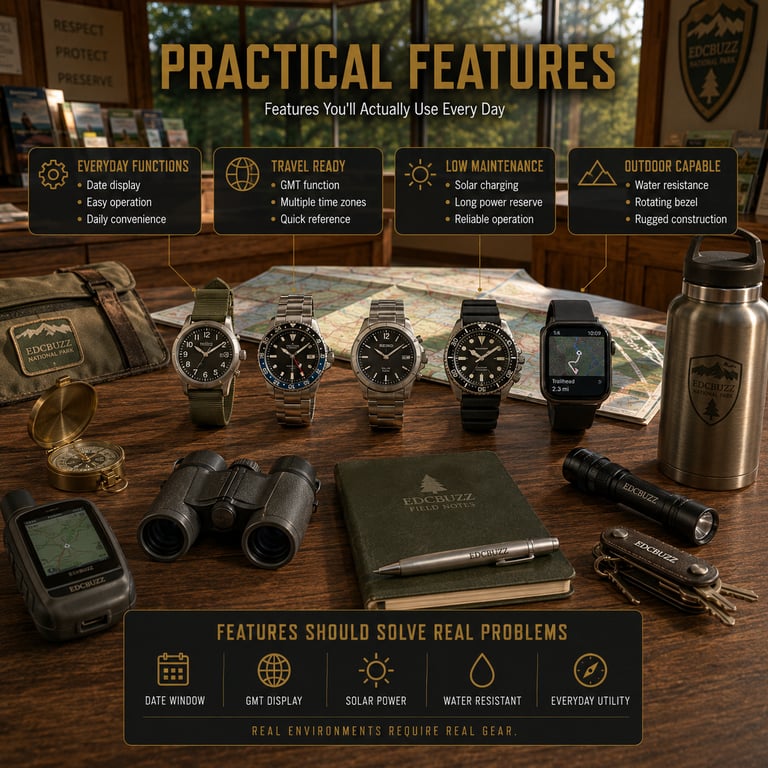
The best everyday carry watches include features that solve real problems instead of simply adding complexity.
For some people, a simple date window is enough. Others regularly travel across time zones and benefit from a GMT function. Outdoor enthusiasts may appreciate solar charging, while divers naturally require higher levels of water resistance.
It's easy to become distracted by long specification sheets, but very few owners actually use every available complication. Focusing on features you'll use regularly usually leads to a much more satisfying purchase than chasing impressive specifications alone.
Throughout this guide, we'll cover which features genuinely improve everyday usability and which ones are often more about marketing than real-world value.
How Much Should You
Spend on an EDC Watch?
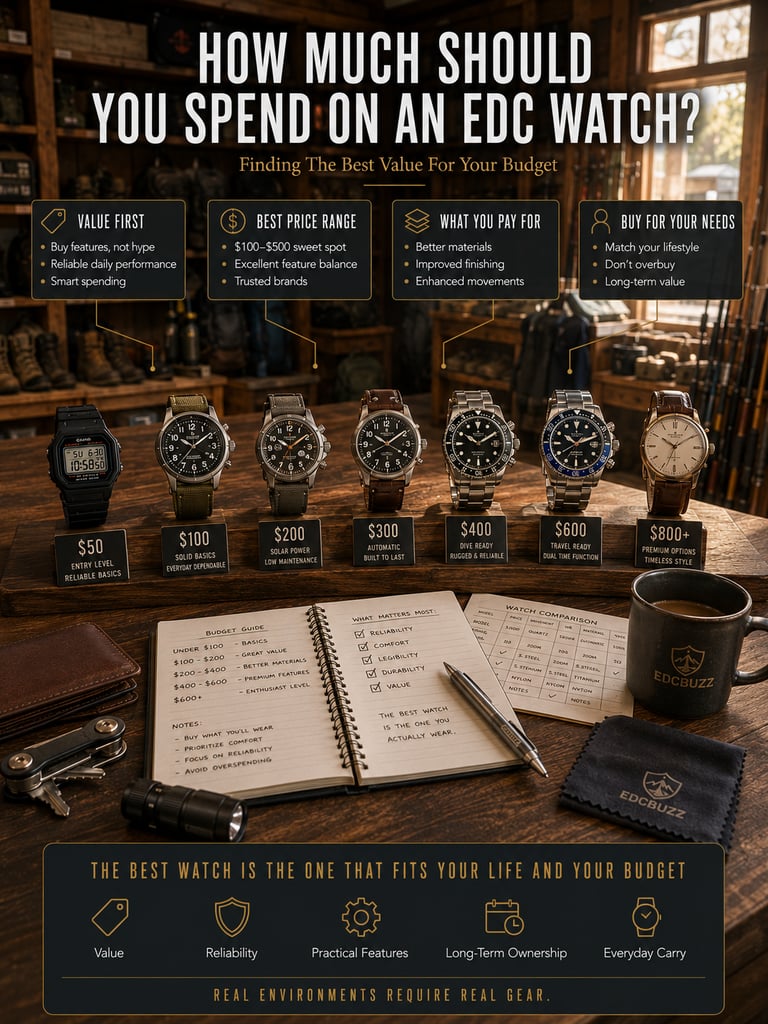
One of the biggest misconceptions about buying a watch is that spending more automatically gets you a better everyday carry experience. While higher budgets often bring premium materials, finer finishing, and more advanced movements, there's a point where you're paying more for craftsmanship, heritage, or exclusivity than practical everyday benefits.
For most people, the best value falls somewhere between $100 and $500. This price range includes excellent quartz, solar, and automatic watches from trusted brands like Citizen, Seiko, Hamilton, Timex, Orient, Bulova, and Casio. Many of these watches include features that were once reserved for luxury models, such as sapphire crystals, stainless steel cases, reliable movements, and 100 to 200 meters of water resistance.
If you're buying your first everyday carry watch, there's no need to spend four figures immediately. A dependable watch that fits your lifestyle is far more valuable than an expensive one that spends most of its time sitting in a drawer.
Budget should also reflect how you'll use the watch. Someone working in construction or maintenance may prioritize durability over luxury finishing, while an office professional may appreciate a slimmer automatic watch that pairs well with business attire. Travelers might find greater value in a GMT watch, while hikers and outdoor enthusiasts often benefit from solar charging and higher water resistance.
The goal is finding the best balance between performance, reliability, and long-term value rather than simply buying the most expensive option you can afford.
If you're trying to determine what budget makes the most sense for your needs, read our How Much Should You Spend On An EDC Watch? guide for a more detailed breakdown.
For buyers looking to maximize value, our Best Watches Under $150 page highlights watches that deliver outstanding everyday performance without stretching your budget.
Understanding the Different Types of Watches
Not every watch is designed for the same purpose. While almost any watch can tell time, different styles emphasize different strengths depending on how they're intended to be used.
Understanding the major watch categories helps narrow your search before comparing individual models.
Field Watches
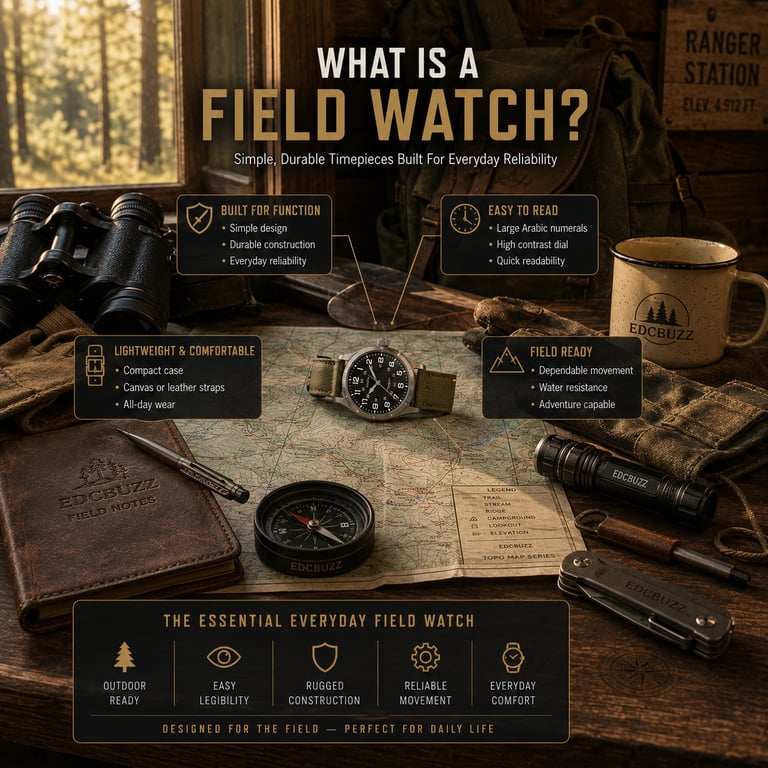
Originally designed for military use, field watches focus on simplicity, durability, and excellent legibility. They typically feature uncluttered dials, rugged construction, and comfortable straps that make them ideal for everyday wear.
Most field watches remain relatively compact, allowing them to slide easily under sleeves while staying comfortable throughout long workdays. Their clean appearance also makes them surprisingly versatile, pairing just as well with jeans as they do with business casual clothing.
Popular examples include the Hamilton Khaki Field Mechanical, Bertucci DX3 Super, Citizen Garrison, and Timex Expedition Field Post Automatic.
If you want a dependable watch that excels at almost everything without unnecessary complexity, a field watch is often the best starting point.
For a deeper look at this category, visit our Best Field Watches guide.
Dive Watches
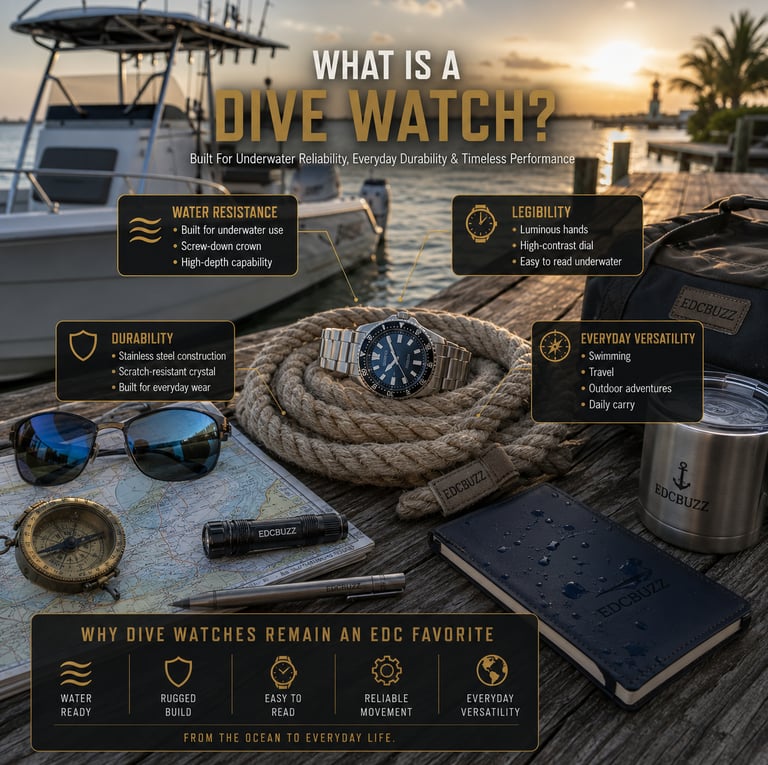
Dive watches were built to survive harsh underwater environments, making them some of the toughest everyday watches available.
Most feature rotating bezels, highly luminous hands and markers, screw-down crowns, and water resistance ratings of at least 200 meters. Even if you never plan to scuba dive, these features translate into exceptional durability for daily wear.
Their slightly larger cases and bold styling have made dive watches one of the most popular categories in the world. Models like the Tissot Seastar, Seiko Prospex, Citizen Promaster Diver, and Victorinox Journey 1884 offer outstanding versatility while maintaining true dive-watch capability.
For buyers wanting maximum durability, dive watches remain one of the safest long-term investments.
See our complete Best Dive Watches recommendations for top picks across every budget.
Pilot Watches
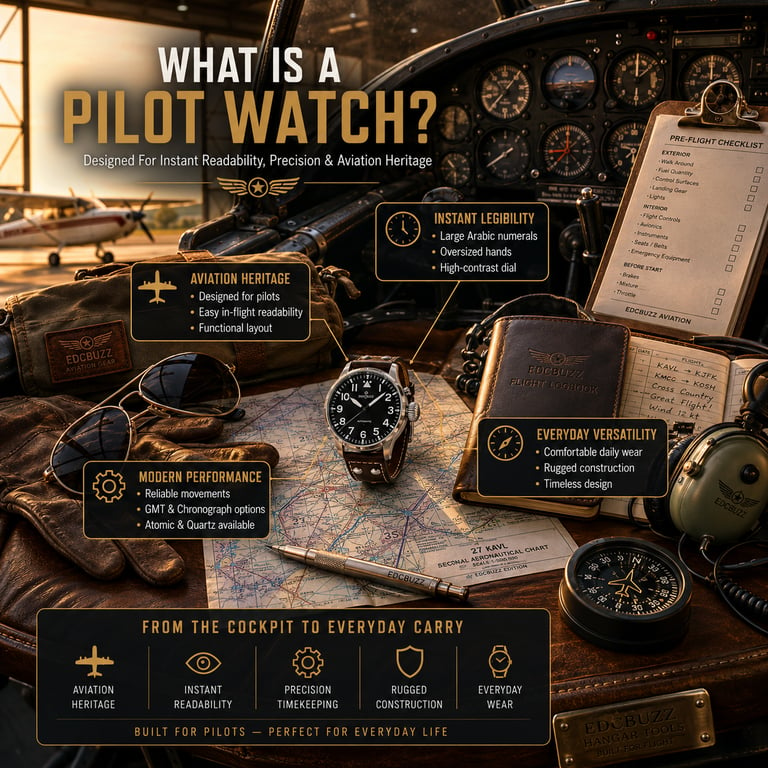
Pilot watches were created to provide quick readability and useful aviation functions inside aircraft cockpits.
Large numerals, oversized crowns, and highly legible dials remain common characteristics today. Some models also include GMT functions, slide-rule bezels, or chronographs designed to assist pilots during flight.
Although most people will never fly an airplane, pilot watches continue to appeal to buyers who appreciate their clean layouts and strong wrist presence.
Excellent examples include the Citizen Promaster Navihawk A-T, Hamilton Khaki Aviation Pilot Mechanical, Bulova Lunar Pilot, and AVI-8 Hawker Hurricane.
If readability and aviation-inspired styling appeal to you, our Best Pilot Watches guide explores the strongest options available today.
Dress Watches
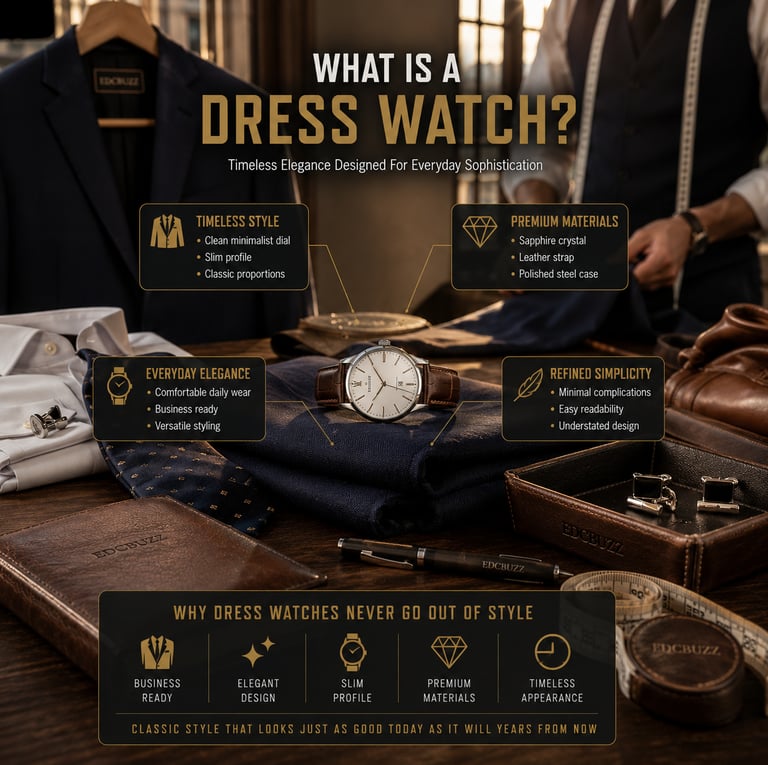
Dress watches prioritize elegance over ruggedness.
Typically thinner than sport-oriented watches, they feature clean dials, polished cases, and leather straps designed to complement business or formal clothing. While they may not offer the same level of water resistance as dive watches, many modern dress watches are still perfectly suitable for everyday office wear.
Popular choices include the Seiko Presage Cocktail Time, Orient Bambino, Bulova Aerojet Open Heart, and Tissot Le Locle.
A quality dress watch can easily become an everyday companion if your lifestyle centers around professional environments rather than outdoor activities.
Our Best Dress Watches guide compares some of the finest affordable and premium options currently available.
Chronograph Watches
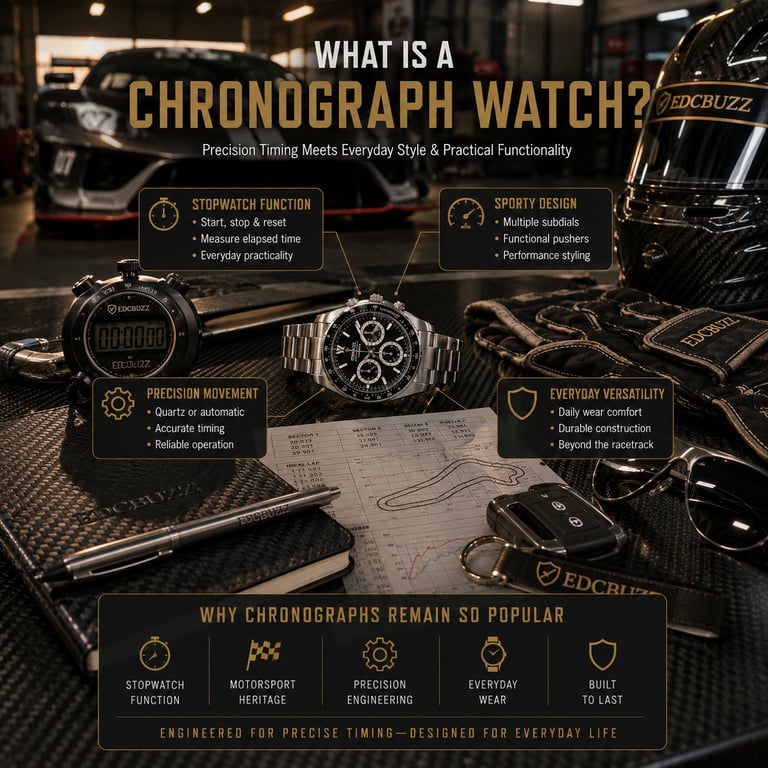
Chronograph watches combine traditional timekeeping with stopwatch functionality.
Additional pushers on the side of the case control elapsed timing functions, making chronographs useful for timing workouts, cooking, travel, or various daily tasks. While many owners simply enjoy their distinctive appearance, the added functionality can also be genuinely practical.
Well-known models include the Bulova CURV, Tissot Chrono XL, Victorinox Swiss Army Chronograph, and Timex Q Chronograph.
If you enjoy watches with a more technical appearance and useful timing features, our Best Chronograph Watches guide is worth exploring.


GMT Watches
GMT watches display multiple time zones simultaneously.
Originally developed for airline pilots and international travelers, these watches allow the wearer to monitor local time alongside a second time zone using an additional hand or independently adjustable hour hand.
Today they're especially useful for business travelers, military personnel, remote workers, and anyone with family or coworkers living overseas.
Popular models include the Glycine Combat GMT, Mathey-Tissot GMT Automatic, and various Seiko and Citizen GMT offerings.
If you travel regularly, a GMT watch can quickly become one of the most useful watches you'll own.
Learn more in our Best GMT Watches guide.
Solar Watches
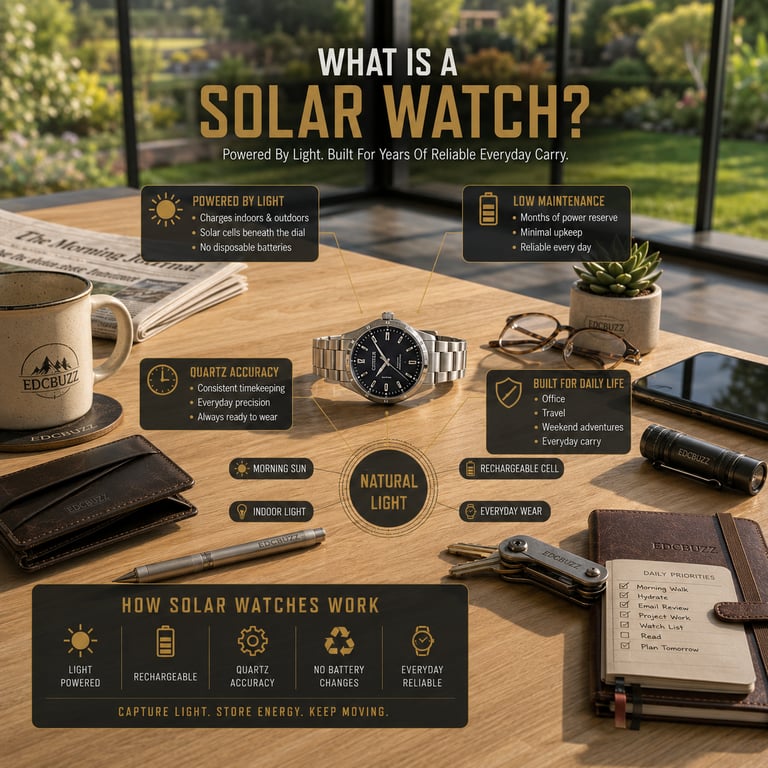
Solar watches use light instead of traditional batteries to power their quartz movements.
Exposure to sunlight or even indoor lighting continuously charges an internal rechargeable cell, allowing many models to operate for months without additional light once fully charged.
Because they combine quartz-level accuracy with extremely low maintenance, solar watches have become one of the most practical choices for everyday carry.
Outstanding examples include the Casio Oceanus OCW-S100-1AJF, Citizen Eco-Drive lineup, Seiko Solar series, and Tissot PRC 100 Solar.
If long-term convenience is one of your priorities, our Best Solar Watches guide highlights some of the strongest options available.
Sport Watches
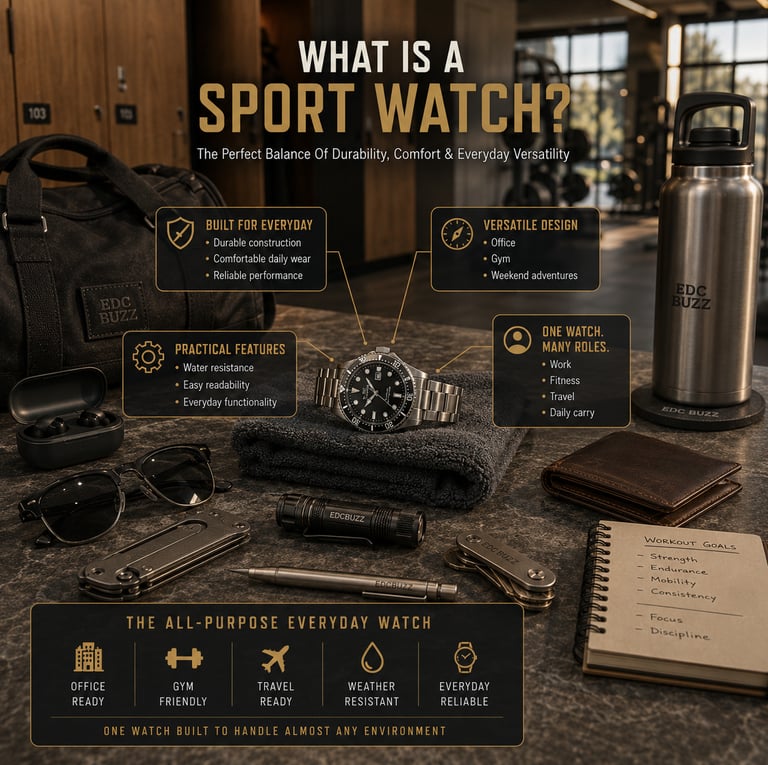
Sport watches bridge the gap between rugged outdoor watches and everyday casual wear.
They're designed to handle active lifestyles while remaining comfortable enough for daily use. Most include higher levels of water resistance, durable case materials, improved shock resistance, and highly legible dials.
Examples include the Victorinox Journey 1884, Citizen Eco-Drive Sport Chronograph, Garmin Instinct 3, and numerous Casio G-Shock models.
For buyers who spend weekends hiking, cycling, camping, or simply living an active lifestyle, sport watches provide an excellent balance of durability and versatility.
Our Best Sport Watches page compares the top choices across several price ranges.
Smartwatches
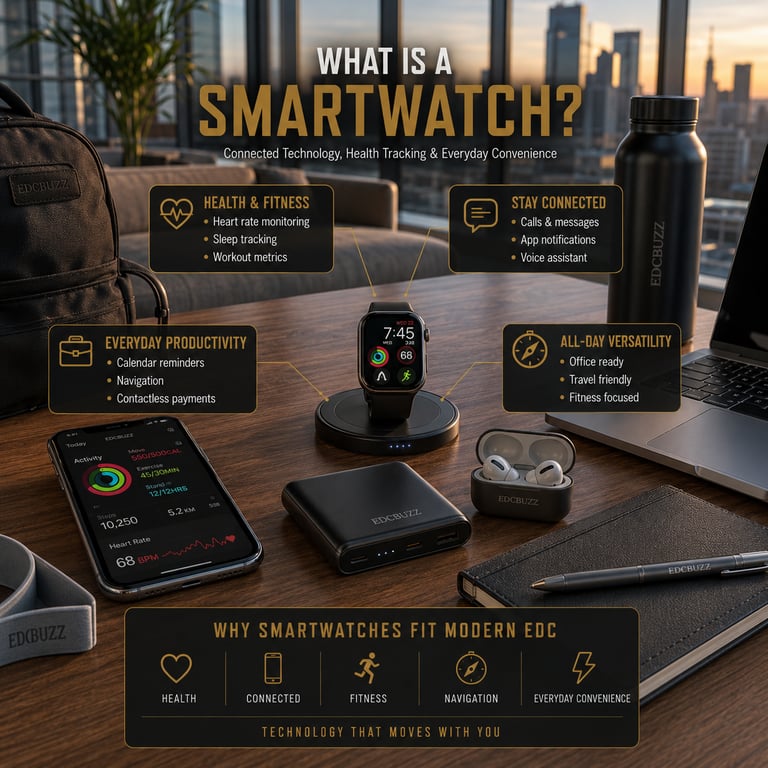
Smartwatches do far more than display the time.
Modern models can track fitness, monitor heart rate, provide GPS navigation, display notifications, answer calls, and even make payments directly from your wrist. While they require more frequent charging than traditional watches, they offer unmatched convenience for users who want wearable technology integrated into their daily routine.
Leading models include the Garmin Fenix 8, Apple Watch Series 10, Samsung Galaxy Watch 7, and COROS Pace Pro.
For buyers focused on fitness, health tracking, or productivity, our Best Smartwatches guide covers today's top performers.
Quartz, Automatic, or Solar:
Which Movement Is Right for You?
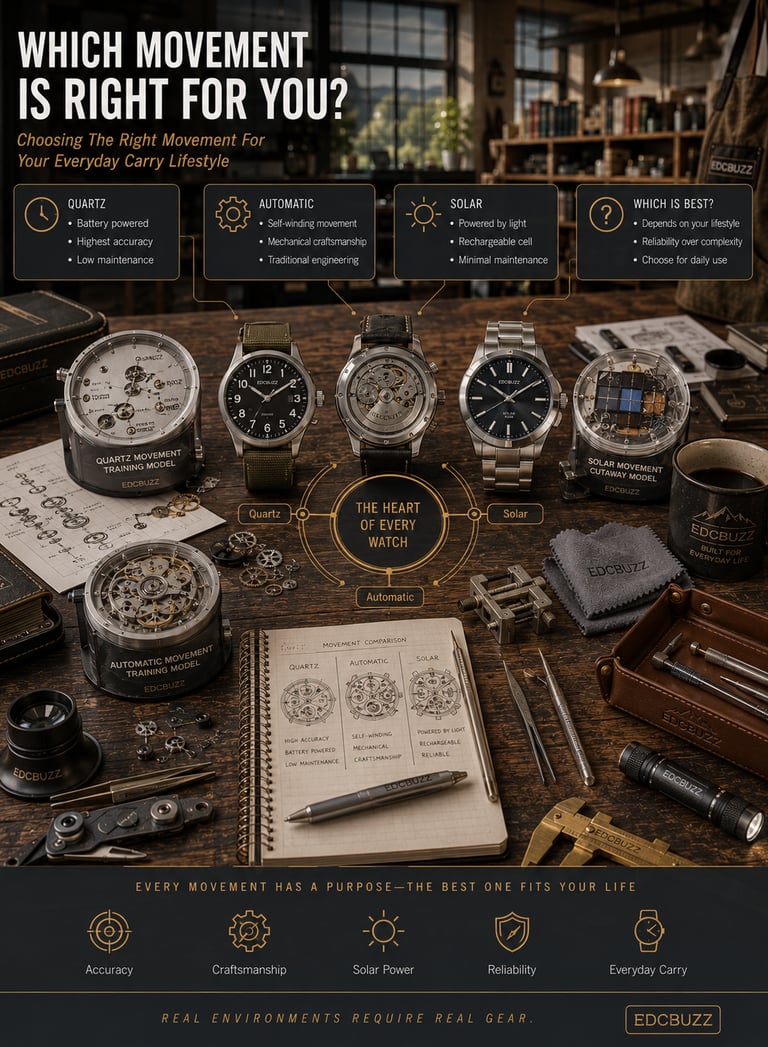
The movement is the heart of every watch. It determines how the watch keeps time, how much maintenance it requires, and often plays a significant role in both price and ownership experience.
Choosing the right movement depends less on which one is objectively "best" and more on how you plan to use your watch every day.
Quartz
Quartz watches are the benchmark for reliability and accuracy.
Powered by a battery, a quartz movement uses a vibrating quartz crystal to regulate timekeeping with remarkable precision. Most quartz watches gain or lose only a few seconds per month while requiring very little maintenance beyond an occasional battery replacement. Their affordability, durability, and accuracy make them an excellent choice for first-time buyers and anyone who simply wants a dependable watch that always works.
If accuracy is your top priority, quartz remains difficult to beat.
Automatic
Automatic watches represent traditional mechanical watchmaking.
Instead of using a battery, they rely on a mainspring that is wound through the natural movement of your wrist. This intricate mechanical design appeals to enthusiasts who appreciate craftsmanship, engineering, and the heritage behind mechanical timepieces. Automatic watches generally require more maintenance and aren't as accurate as quartz models, but many owners enjoy the character and mechanical artistry they offer.
For many collectors, wearing an automatic watch is about enjoying the experience as much as telling time.
Solar
Solar watches combine many of the advantages of quartz with even lower maintenance.
Using photovoltaic cells beneath the dial, they convert light into stored energy that powers a highly accurate quartz movement. With regular exposure to light, many solar watches can operate for years without requiring battery replacement. For everyday carry, solar technology has become one of the most practical solutions available. You receive quartz-level accuracy while eliminating one of the few maintenance tasks associated with traditional battery-powered watches.
For buyers who value convenience above all else, solar watches are difficult to beat.
Choosing the Right Watch Size
One of the most common mistakes buyers make is choosing a watch that's either too large or too small for their wrist. While personal preference always plays a role, proper sizing greatly affects comfort, appearance, and long-term wearability.
A well-sized watch feels balanced throughout the day, slides comfortably under sleeves when needed, and looks proportionate rather than overpowering your wrist.
Fortunately, selecting the right size is much easier once you understand a few key measurements.
Case Diameter
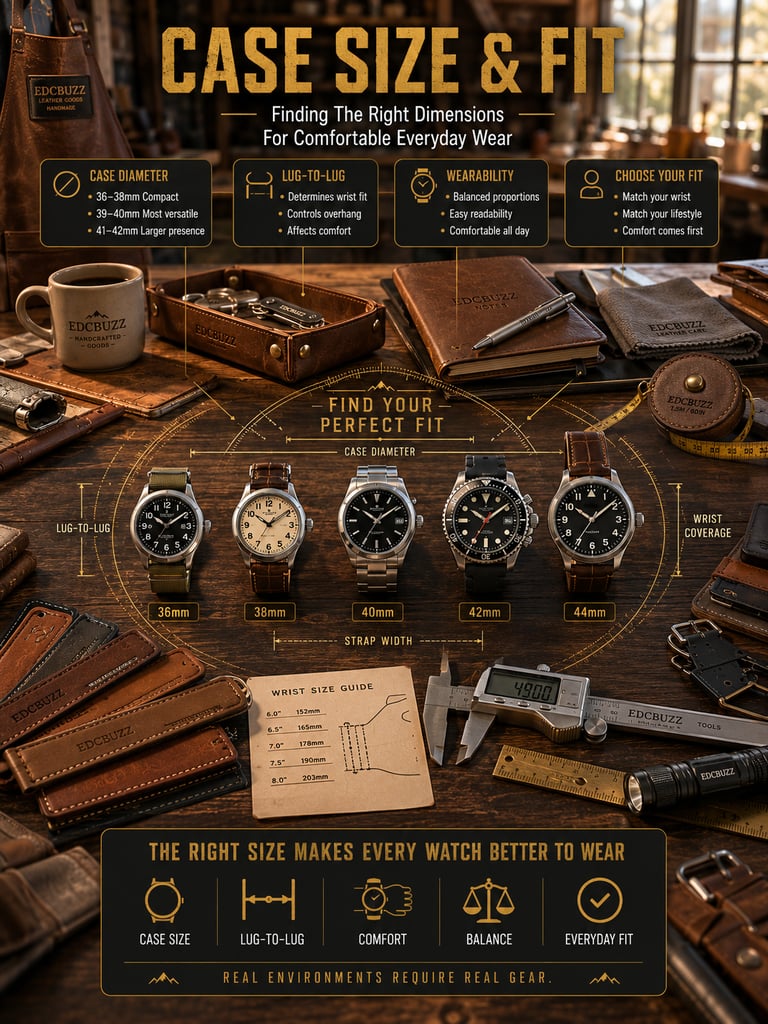
Case diameter is the measurement across the watch excluding the crown, and it's usually the first specification buyers notice. While there are no strict rules, most everyday carry watches fall between 38mm and 42mm. This range offers an excellent balance of comfort and readability for the majority of people.
General sizing guidelines include:
36–38mm for smaller wrists or those who prefer a classic appearance.
39–40mm as an excellent all-around everyday size.
41–42mm for larger wrists or buyers wanting slightly more wrist presence.
43mm and above for oversized sport, dive, or pilot watches.
Keep in mind that two watches with the same case diameter can wear very differently depending on their overall design. If you're unsure where to start, a 40mm watch remains one of the safest choices for everyday use.
For a more detailed breakdown, visit How To Choose The Right Watch Size.
Lug-to-Lug Distance
While case diameter receives most of the attention, lug-to-lug distance often has a greater impact on comfort. This measurement represents the distance from the top lug to the bottom lug where the strap attaches. If the lugs extend beyond the width of your wrist, the watch can appear awkward and may become uncomfortable during extended wear.
Many experienced collectors consider lug-to-lug measurement one of the most important sizing specifications because it determines how naturally a watch sits on the wrist. As a general rule, the lugs should remain within the edges of your wrist whenever possible.
Before purchasing a watch online, checking this specification can prevent many sizing disappointments.
Thickness
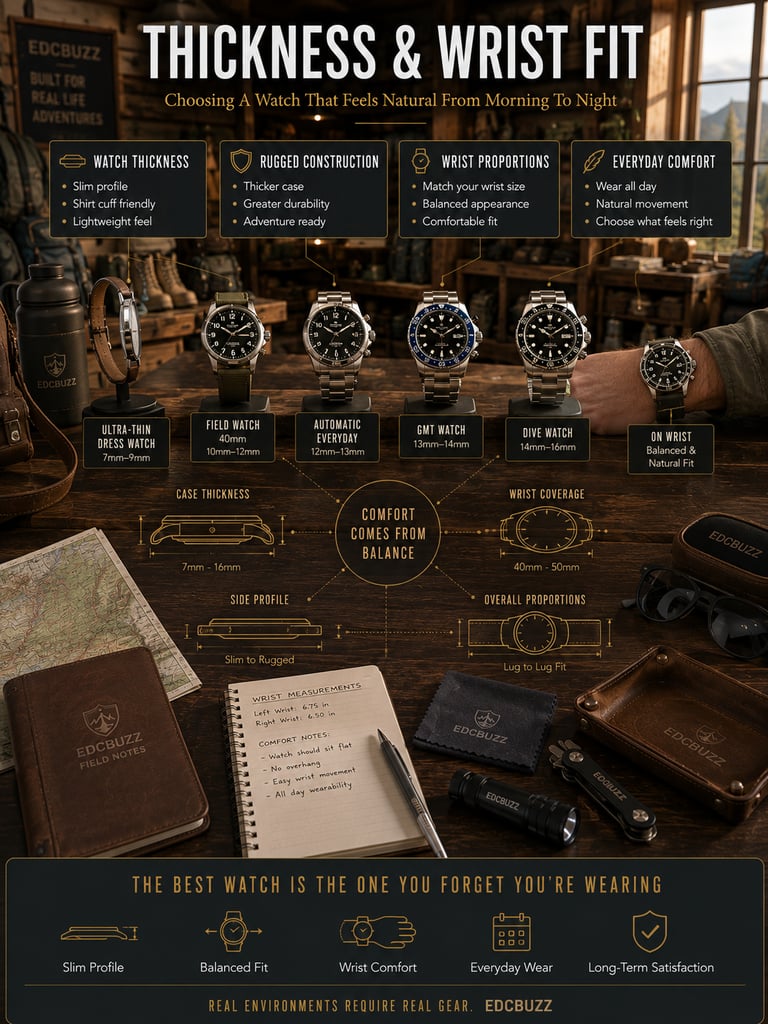
Watch thickness affects both comfort and versatility. Slim watches typically slide beneath dress shirt cuffs with ease and feel less bulky during everyday activities. Dress watches often fall between 8mm and 11mm thick for exactly this reason.
Dive watches, GMT watches, and many chronographs are naturally thicker because they contain additional components or require stronger cases for higher water resistance. Thicknesses between 12mm and 15mm are common within these categories.
Neither approach is inherently better.
The key is matching the watch to your lifestyle. Office professionals may appreciate a thinner profile, while outdoor enthusiasts often accept additional thickness in exchange for increased durability.
Matching Your Wrist Size
Your wrist size should guide your final decision rather than current fashion trends. Smaller wrists generally benefit from compact watches that remain balanced and comfortable throughout the day. Larger wrists often allow greater flexibility across a wider range of case sizes without appearing oversized.
It's also important to consider the watch's dial design. A watch with a large bezel may wear smaller than another watch with the same diameter but a much larger dial opening.
Ultimately, the best watch is the one that feels natural after several hours of wear. If you constantly notice its weight or size, it's probably not the right fit.
If you'd like more guidance, our What Watch Case Size Fits Your Wrist? article explores sizing recommendations for every wrist measurement.
Choosing the Right Crystal
The crystal is the transparent cover that protects the watch dial.
Although it often receives less attention than the movement or case material, the crystal plays a major role in long-term durability. A scratched crystal can make even an expensive watch look worn, while a high-quality crystal helps maintain a clean appearance for years.
The two most common materials found on modern everyday carry watches are mineral crystal and sapphire crystal.
Mineral Crystal
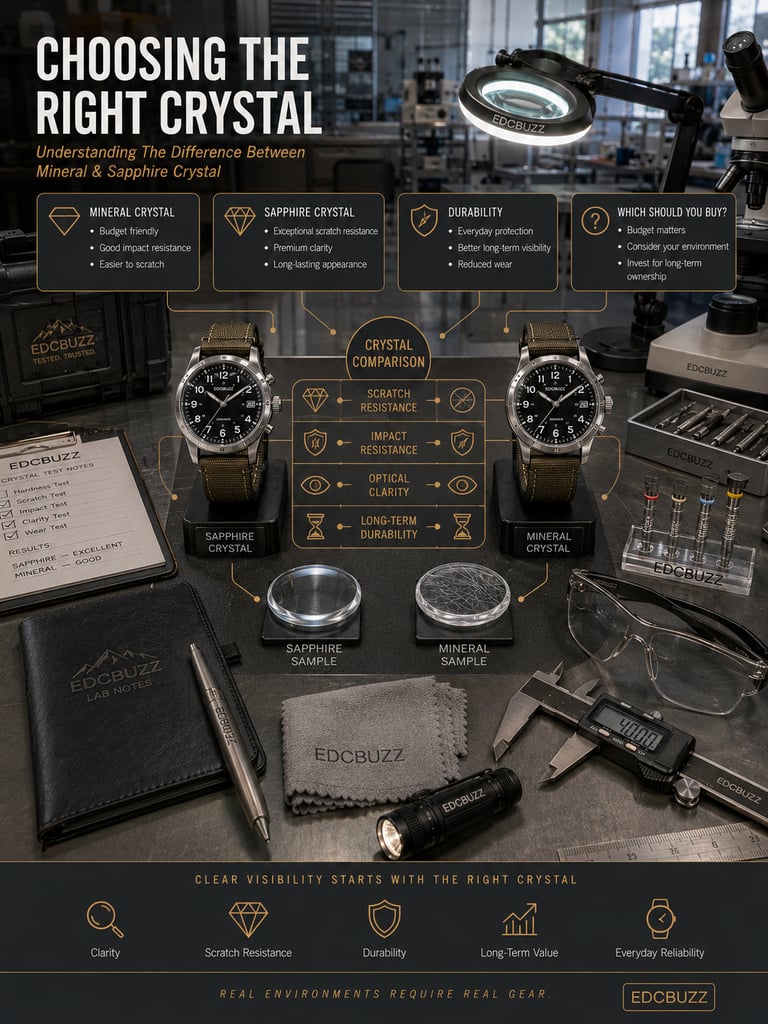
Mineral crystal is a specially hardened glass used on many affordable and mid-range watches. Its biggest advantage is cost. Manufacturers can produce durable mineral crystals at a lower price, allowing buyers to enjoy reliable watches without significantly increasing overall cost.
Mineral crystal also resists impacts reasonably well and can survive everyday bumps that might damage more brittle materials. Its primary weakness is scratch resistance. Over time, repeated contact with keys, tools, countertops, and other hard surfaces may leave visible marks.
For buyers on tighter budgets, however, mineral crystal still offers excellent value.
Sapphire Crystal
Sapphire crystal is widely considered the gold standard for everyday carry watches. Made from synthetic sapphire, this material is exceptionally resistant to scratches and maintains its clarity even after years of regular wear.
Unless it encounters extremely hard materials such as diamonds or specialized industrial abrasives, sapphire crystal typically remains free from noticeable scratches. Because of its durability, sapphire has become increasingly common on watches priced above approximately $300, although several manufacturers now offer sapphire even on more affordable models.
While sapphire can be slightly more susceptible to cracking from severe impacts compared to mineral crystal, most everyday users will never encounter situations where this becomes a concern.
If long-term durability is one of your priorities, sapphire crystal is usually worth the additional investment.
You can learn more in Are Sapphire Crystals Worth It? and Mineral Crystal or Sapphire Crystal: Which Should You Choose?
Understanding Water Resistance
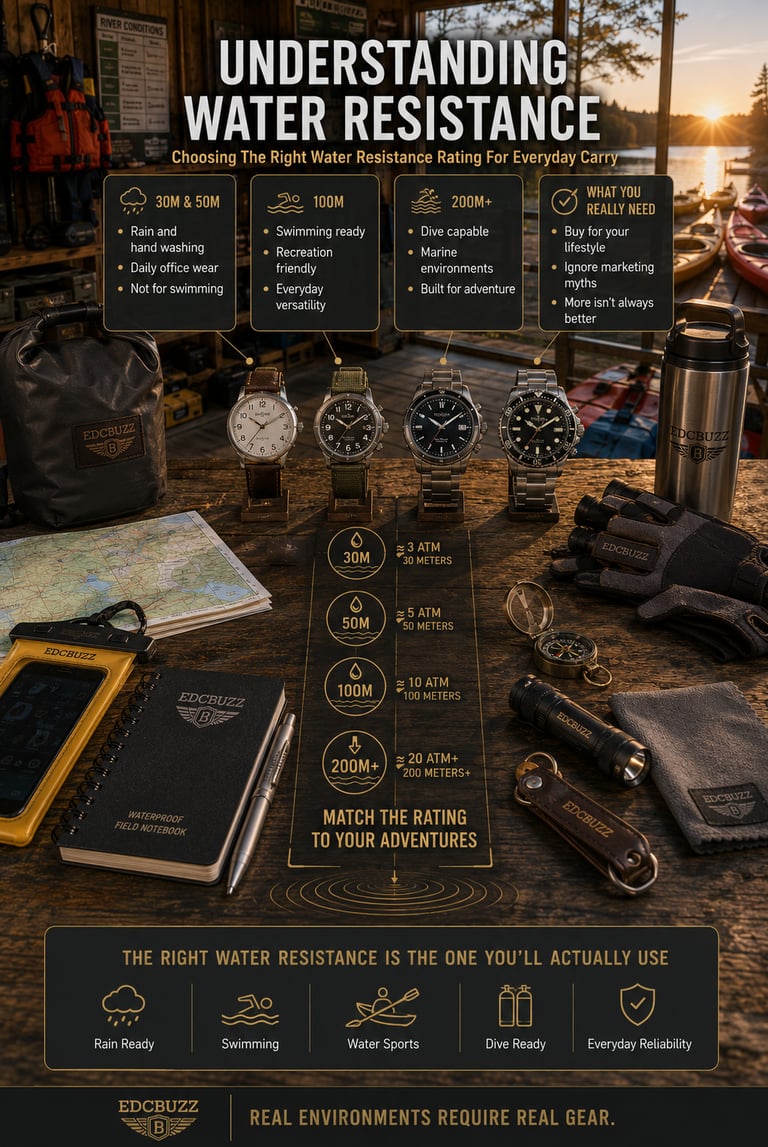
Water resistance is one of the most misunderstood watch specifications.
Many buyers assume a higher number simply means they can dive deeper underwater. In reality, water resistance ratings represent controlled laboratory testing rather than real-world conditions.
Knowing what these ratings actually mean helps you choose the right watch without paying for capabilities you'll never use.
30M & 50M
Thirty and fifty meter water resistance ratings are suitable for basic everyday exposure. These watches can generally handle rain, hand washing, and occasional splashes without issue, but they should not be worn while swimming or participating in water sports. Despite what the numbers might suggest, a 30-meter watch is not designed for diving thirty meters underwater.
If your daily routine rarely involves water beyond normal household activities, these ratings may be perfectly adequate.
100M
A 100-meter water resistance rating provides a noticeable increase in versatility. Most 100M watches can comfortably handle swimming, recreational water activities, heavy rain, and routine everyday use without concern. For many buyers, 100 meters represents an ideal balance between durability and affordability.
Unless you're planning to scuba dive or spend significant time in demanding marine environments, 100 meters is often more than enough.
200M and Above
Two hundred meters or greater is generally considered true dive-watch territory. These watches often include additional features such as screw-down crowns, rotating bezels, reinforced seals, and construction designed to withstand significantly greater underwater pressure. Even if you never dive, higher water resistance provides extra peace of mind for boating, fishing, kayaking, beach vacations, and active outdoor lifestyles.
For many buyers, choosing a 200-meter watch isn't about diving—it's about knowing the watch can easily handle whatever everyday life throws at it.
If you're still deciding how much protection you actually need, read What Is Water Resistance On A Watch? and Do You Need A 200M Water Resistant Watch?
Choosing the Best Strap Material
The strap affects your watch almost as much as the case itself.
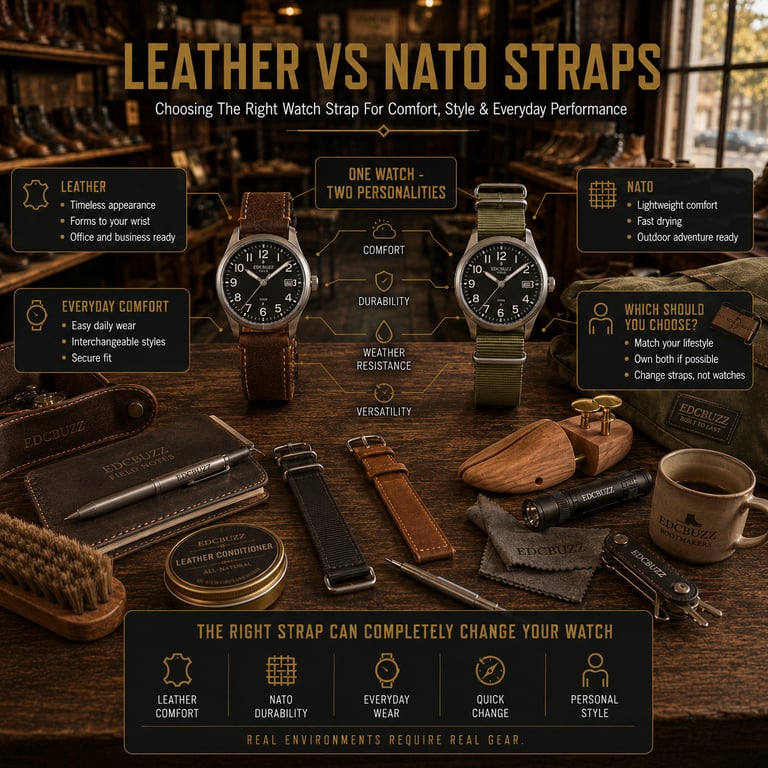
Changing straps can dramatically alter both the appearance and comfort of the same watch. A rugged field watch on a NATO strap feels completely different from that same watch mounted on leather or stainless steel.
Selecting the right material depends on your daily activities, climate, and personal preferences.
Leather
Leather remains one of the most timeless strap options available. It offers excellent comfort, develops unique character as it ages, and pairs well with business attire, casual clothing, and dress watches alike.
Quality leather straps gradually conform to your wrist, creating a personalized fit that's difficult to replicate with synthetic materials.Their primary weakness is moisture. Frequent exposure to sweat or water eventually shortens their lifespan.
For office environments and everyday casual wear, however, leather remains an outstanding choice.
NATO
NATO straps have earned a loyal following among everyday carry enthusiasts. Originally developed for military use, they provide exceptional security because the watch remains attached even if one spring bar fails. They're lightweight, affordable, easy to replace, and available in countless colors and patterns. NATO straps also dry quickly, making them excellent companions for outdoor activities and travel.
For buyers who prioritize versatility and comfort, they're difficult to beat.
Learn more in NATO Strap or Leather Strap: Which Is Right for You?
Rubber
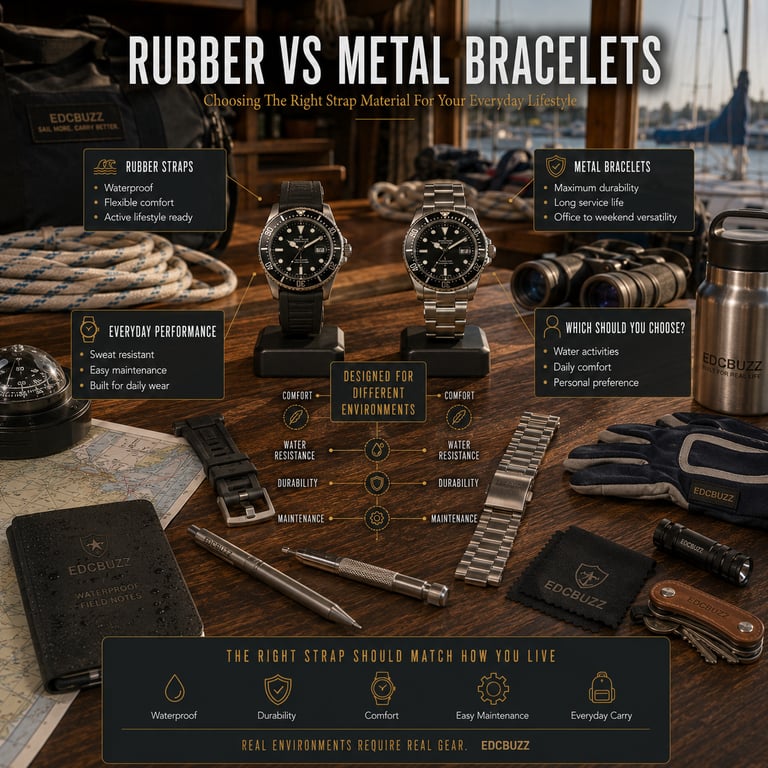
Rubber straps excel whenever water is involved. Swimming, boating, fishing, hiking in wet conditions, and intense workouts all highlight the strengths of modern rubber straps. High-quality rubber remains flexible, resists sweat and saltwater and requires very little maintenance beyond occasional cleaning. They're especially popular on dive watches and sport watches where durability matters more than formal appearance.
For active lifestyles, rubber remains one of the most practical strap choices available.
Metal Bracelets
Metal bracelets offer unmatched durability and longevity. Stainless steel bracelets require very little maintenance, resist water completely, and often outlast multiple leather or rubber straps over the life of the watch. They also provide a more substantial feel on the wrist, which many owners appreciate.
The tradeoff is weight. Metal bracelets are generally heavier than other strap materials and may require occasional sizing adjustments for the perfect fit. If you prefer a watch that can transition seamlessly between work, travel, and weekends, a quality stainless steel bracelet remains one of the most versatile options available.
For a full comparison, see Metal Bracelet or Rubber Strap: Which Fits Your Lifestyle?
Watch Features That Actually Matter
Modern watches are packed with features, but not all of them improve your everyday experience. Manufacturers often advertise long specification sheets filled with technical terminology, making it easy to assume that more features automatically mean a better watch.
In reality, the best everyday carry watch is usually the one that includes the features you'll actually use while avoiding unnecessary complexity.
Before spending extra money on advanced complications, it's worth understanding which features genuinely make life easier and which ones simply add cost.
If you'd like a more detailed breakdown, our What Watch Features Actually Matter For Everyday Carry? guide explores these topics in greater depth.
Lume
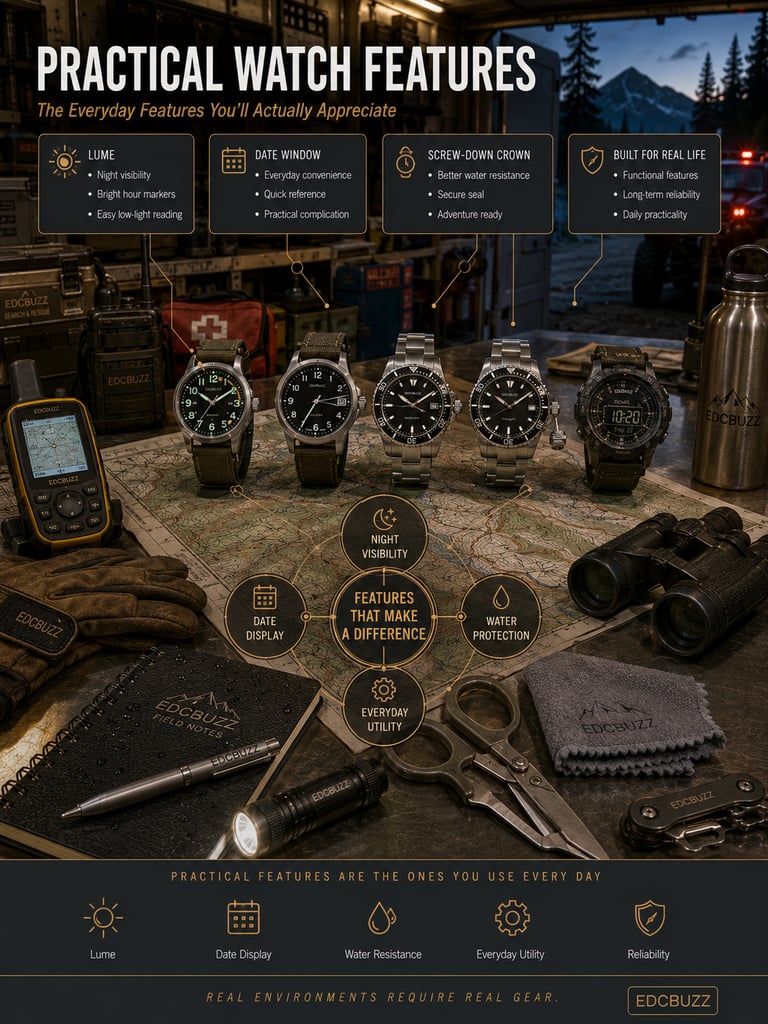
Luminous hands and hour markers allow you to read the time in low-light conditions without relying on your phone. Whether you're checking the time before sunrise, walking through a dark parking lot, or camping outdoors, quality lume can be surprisingly useful. Not all luminous materials perform equally. Brands such as Seiko, Citizen, and Hamilton have built strong reputations for bright, long-lasting lume, while premium Swiss dive watches often provide exceptional nighttime visibility.
If your watch frequently accompanies you outdoors or during evening hours, good lume is well worth having.
Date Window
The humble date window remains one of the most practical complications available. Many people reference today's date several times throughout the day, making this simple feature genuinely useful without adding unnecessary complexity to the dial. Some buyers prefer a cleaner appearance without a date display, especially on minimalist field or dress watches. Others appreciate having the information available with a quick glance.
There isn't a right or wrong answer—it's simply a matter of personal preference and daily habits.
Screw-Down Crown
A screw-down crown improves water resistance by creating a tighter seal between the crown and the watch case. While it's most commonly associated with dive watches, many sport watches and field watches now include this feature as well. For anyone who spends time around water, a screw-down crown provides additional peace of mind by helping prevent moisture from entering the movement.
It's a small feature that contributes significantly to long-term durability.
Bezel Types
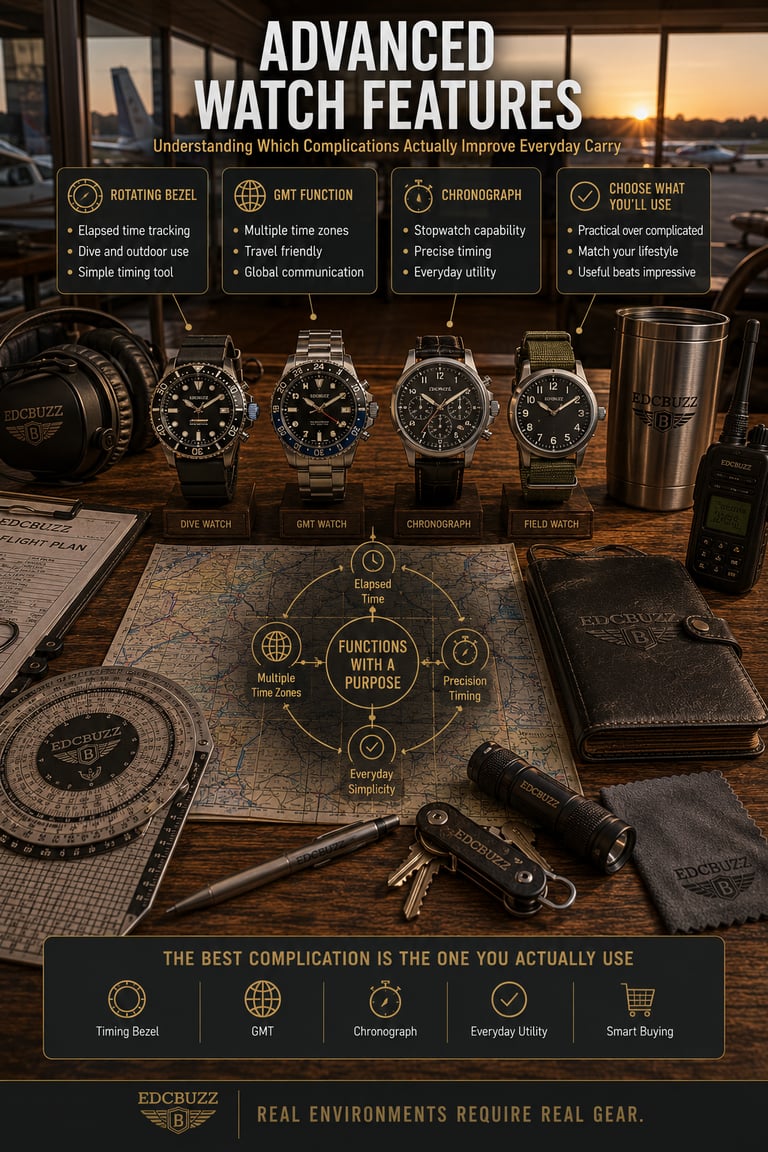
Bezels come in several different styles, each serving a unique purpose. Dive watches often feature rotating timing bezels that can measure elapsed time, making them useful for timing everything from parking meters to cooking dinner. GMT watches include 24-hour bezels that work alongside an additional hand to display multiple time zones. Many field and dress watches use fixed bezels instead, emphasizing simplicity and reducing overall bulk.
The best bezel is simply the one that supports your daily activities without adding unnecessary complexity.
GMT Function
A GMT complication allows a watch to display two or even three different time zones simultaneously. For international travelers, remote workers, airline professionals, military personnel, and anyone with family overseas, this feature can be incredibly convenient. Instead of constantly performing mental time conversions, a GMT watch keeps both local and home time visible throughout the day.
If you rarely travel or communicate across time zones, however, you may never actually use it.
Chronograph
Chronographs combine traditional timekeeping with stopwatch functionality. Although many buyers are initially attracted by their technical appearance, chronographs can also be genuinely useful for timing workouts, meetings, cooking, parking, or countless everyday tasks. The tradeoff is a slightly busier dial and additional pushers on the side of the case.
For buyers who regularly time activities, a chronograph adds practical value. Others may prefer the cleaner appearance of a simpler three-hand watch.
Solar Charging
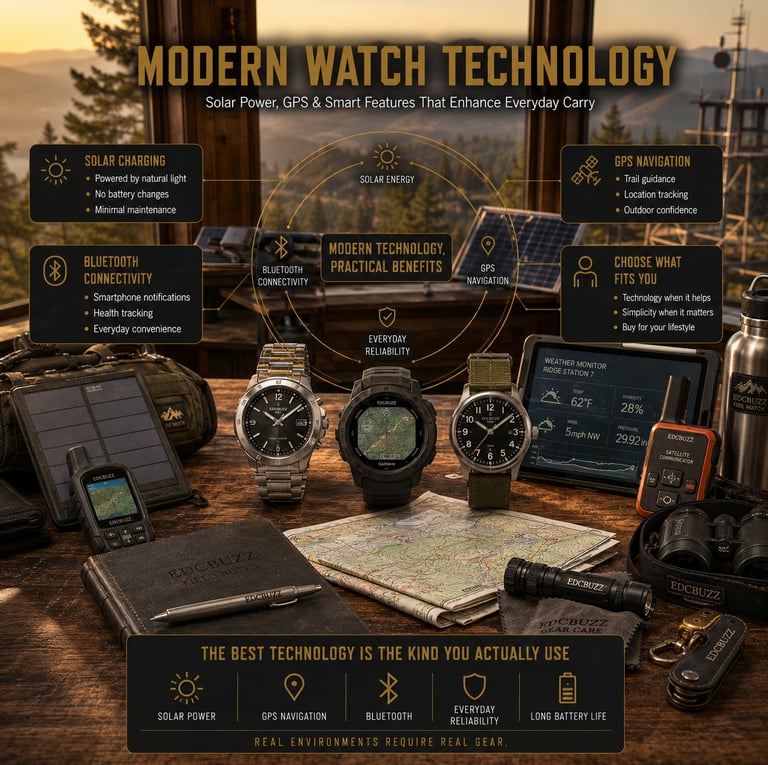
Solar charging has quietly become one of the most useful technologies available in modern watches. Rather than relying on disposable batteries, solar watches continuously recharge whenever they're exposed to natural or artificial light. This significantly reduces maintenance while maintaining the outstanding accuracy associated with quartz movements.
For everyday carry, solar technology offers one of the best combinations of convenience, reliability, and long-term value.
Bluetooth & GPS
Bluetooth connectivity and GPS have transformed modern smartwatches. These technologies allow watches to synchronize notifications, track workouts, provide navigation, monitor health metrics, and even make contactless payments. For fitness enthusiasts and technology-focused users, these capabilities can dramatically improve everyday convenience.
However, traditional watch enthusiasts often prefer the simplicity of mechanical or quartz watches that require little attention beyond occasionally checking the time.
Ultimately, the right choice depends on whether you value connected technology or timeless simplicity.
Recommended Watches for Different Budgets
Finding the right everyday carry watch isn't about buying the most expensive model available. It's about getting the best combination of quality, durability, and features within your budget.
Excellent watches exist at virtually every price point, and understanding what each budget offers helps you spend your money wisely.
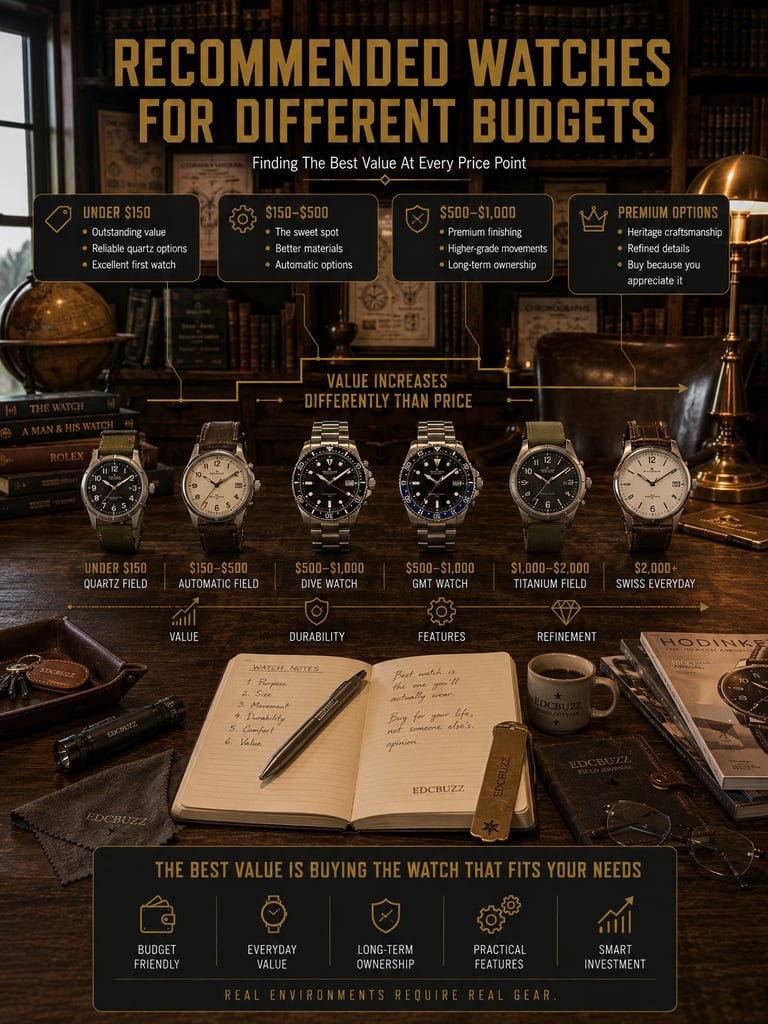
Under $150
This is one of the strongest value categories in the entire watch market. You'll find dependable quartz movements, rugged field watches, affordable dive watches, and even entry-level solar models from respected manufacturers. Brands like Casio, Timex, Citizen, Bertucci, and Seiko offer watches that can easily provide years of dependable service with minimal maintenance. Many first-time buyers never feel the need to upgrade because these watches simply continue doing their job.
If you're shopping in this price range, our Best Watches Under $150 guide highlights the strongest options currently available.
$150–$500
For many buyers, this is the sweet spot. Additional budget opens the door to sapphire crystals, automatic movements, improved finishing, better bracelets, and higher levels of water resistance. You'll also find many enthusiast favorites, including the Hamilton Khaki Field Mechanical, Citizen Promaster collections, Seiko Prospex models, Bulova Lunar Pilot, and numerous outstanding solar watches.
This price range offers an excellent balance between affordability and long-term ownership satisfaction.
$500–$1,000
Once you move into this range, you're generally paying for refinement rather than dramatic improvements in basic functionality. Expect higher-quality finishing, premium materials, Swiss movements, more advanced complications, and stronger brand heritage. Models like the Victorinox Journey 1884, Garmin Fenix 8, Casio Oceanus OCW-S100-1AJF, Hamilton Khaki Aviation Pilot Mechanical, and Tissot PRC 100 Solar demonstrate just how capable watches in this category have become.
For enthusiasts planning to own a watch for decades, this range often delivers outstanding long-term value.
Premium Options
Luxury watches certainly have their place, but they're not necessary for an excellent everyday carry experience. Brands such as Rolex, Omega, Tudor, Grand Seiko, Breitling, and IWC produce remarkable timepieces with exceptional craftsmanship and history. However, many of the practical advantages found on these watches are now available at significantly lower prices.
For most buyers, spending more than $1,000 becomes less about additional functionality and more about mechanical artistry, finishing quality, heritage, and collector appeal. Buy a premium watch because you genuinely appreciate it—not because you believe it's required for dependable everyday performance.
Common Mistakes New Watch Buyers Make
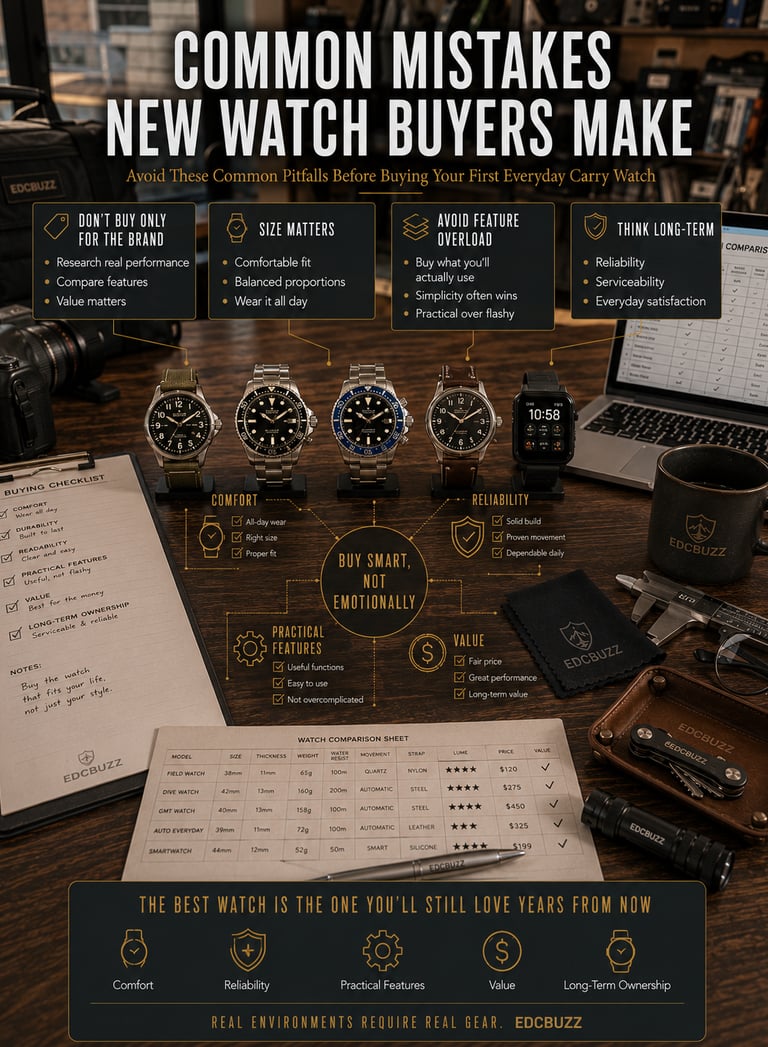
Buying your first quality watch is exciting, but it's also easy to become overwhelmed by marketing, online opinions, and endless specification lists.
Many people make purchasing decisions based on features they'll never use while overlooking the factors that actually affect long-term satisfaction.
Avoiding a few common mistakes can help you choose a watch you'll enjoy wearing for many years.
One of the biggest mistakes is buying a watch that's simply too large. Oversized watches may stand out in advertisements, but they often become uncomfortable during long workdays and can look disproportionate on smaller wrists.
Another common mistake is focusing entirely on brand recognition instead of overall quality. Well-known luxury brands certainly produce excellent watches, but many affordable manufacturers now offer remarkable durability, accuracy, and reliability at a fraction of the price.
Buyers also tend to overestimate how much water resistance they actually need. Unless you regularly dive, a well-built 100-meter watch is more than capable of handling everyday life.
Ignoring strap comfort is another frequent oversight. Since the strap touches your wrist all day, choosing the right material can have a greater impact on daily satisfaction than many technical specifications.
Finally, many first-time buyers purchase complicated watches filled with functions they rarely use. Simplicity often leads to greater enjoyment because the watch becomes easier to read, easier to maintain, and more comfortable to wear.
If you're preparing to purchase your first serious watch, our Common Watch Mistakes New Buyers Make article covers additional pitfalls and practical buying advice to help you make a confident decision.
How to Buy a Watch That Will Last 20 Years
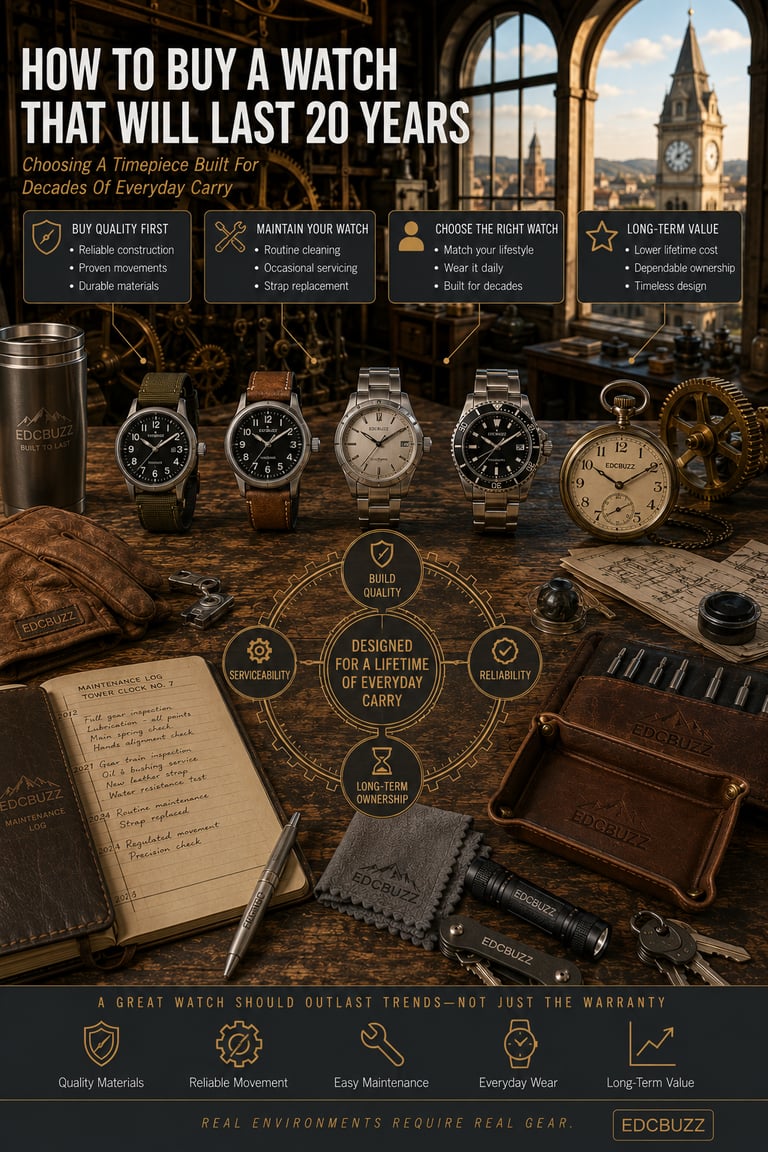
A well-built watch can easily remain part of your everyday carry for decades. In fact, many quality watches are passed from one generation to the next with nothing more than routine maintenance and occasional servicing. Longevity isn't determined by price alone. It's the result of buying a watch that's well made, suits your lifestyle, and receives basic care throughout its life.
The first step is choosing quality over unnecessary features. A simple watch built with dependable components will usually outlast a complicated watch filled with functions you rarely use. Stainless steel cases, sapphire crystals, reliable movements, and proven manufacturers are all excellent places to start.
It's also important to buy a watch that fits your daily routine. If you work outdoors, prioritize durability and water resistance. If you spend most of your time in professional settings, a slimmer field or dress watch may see far more wrist time than a bulky dive watch. The more often you enjoy wearing your watch, the more value you'll receive from your investment.
Routine maintenance plays a major role as well. Quartz watches require little beyond occasional battery replacements, while automatic watches benefit from professional servicing every several years depending on usage and manufacturer recommendations. Solar watches require even less attention, provided they receive regular exposure to light.
Straps are often the first component to show wear, but replacing a leather, rubber, or NATO strap is inexpensive compared to replacing the watch itself. Many owners refresh the appearance of a favorite watch simply by installing a new strap every few years.
Protecting the crystal also goes a long way toward preserving your watch's appearance. Sapphire crystal dramatically reduces everyday scratches, while simple habits like removing your watch before heavy impact work can prevent unnecessary damage regardless of crystal type.
Finally, don't underestimate the importance of buying a watch you genuinely enjoy. The watches that last twenty years are usually the ones that continue earning a place on your wrist because they remain comfortable, dependable, and enjoyable to wear long after trends have changed.
If you'd like more advice on maximizing the lifespan of your watch, our Watch Maintenance Tips For Long-Term Reliability, How Often Should You Service Your Watch?, and How To Make Your Watch Last 20 Years guides provide more detailed maintenance recommendations.
Frequently Asked Questions
What is the best type of watch for everyday carry?
There isn't a single best option for everyone. Field watches offer outstanding versatility, dive watches provide exceptional durability, pilot watches prioritize readability, and smartwatches deliver advanced technology. The right choice depends on your lifestyle, work environment, and personal preferences. If you're unsure where to start, our Best EDC Watches guide highlights some of the strongest options across every major category.
Should I buy a quartz or automatic watch?
If you value accuracy, affordability, and low maintenance, quartz is usually the better choice. If you appreciate traditional mechanical engineering and enjoy owning a watch powered entirely by intricate gears and springs, an automatic watch offers a unique ownership experience. Neither is objectively better—each simply serves a different type of buyer.
Are solar watches worth buying?
For many people, yes. Solar watches combine quartz-level accuracy with extremely low maintenance by continuously charging from available light. They eliminate routine battery replacements while providing excellent long-term reliability, making them one of the most practical everyday carry options available.
Is sapphire crystal worth the extra money?
In most cases, absolutely. Sapphire crystal offers exceptional scratch resistance and helps your watch maintain its appearance for years of everyday wear. While it may slightly increase the purchase price, many buyers consider it one of the best long-term upgrades available.
Do I really need 200M water resistance?
Probably not. Unless you regularly scuba dive or spend significant time in demanding marine environments, a quality 100-meter watch is more than capable of handling swimming, rain, and most everyday activities. Higher water resistance simply provides additional peace of mind.
What size watch should I buy?
Most buyers find that watches between 38mm and 42mm provide an excellent balance of comfort and readability. However, lug-to-lug distance, case thickness, and your wrist size are equally important when determining the best overall fit.
Can I wear the same watch every day?
Absolutely. Many people wear the same watch every day for years without issue. Choosing a durable watch with quality materials, appropriate water resistance, and a comfortable strap makes daily wear not only practical but exactly what an everyday carry watch is designed to do.
How much should I spend on my first EDC watch?
For most first-time buyers, a budget between $100 and $500 provides outstanding value. This price range includes dependable quartz, automatic, and solar watches from respected manufacturers without requiring a significant financial commitment.
What watch brands are known for reliability?
Several manufacturers have built excellent reputations for dependable everyday watches. Citizen, Seiko, Casio, Hamilton, Timex, Bulova, Tissot, Victorinox, Garmin, and Orient all produce watches known for reliability across various price ranges and styles.
What features matter most on an everyday carry watch?
The most valuable features are the ones you'll actually use. Reliability, comfort, durability, good legibility, appropriate water resistance, and a quality crystal generally matter far more than complicated functions that rarely leave the instruction manual.
Final Thoughts
Buying an everyday carry watch doesn't have to be complicated. Once you understand the differences between watch types, movements, materials, and features, choosing the right model becomes much more straightforward.
The best watch isn't determined by price, brand prestige, or the number of complications it offers. It's the one that fits comfortably, keeps reliable time, matches your lifestyle, and continues earning a place on your wrist day after day.
Whether you're looking for an affordable quartz field watch, a rugged dive watch, a solar-powered everyday companion, or a premium automatic timepiece, investing a little time in research will help you make a purchase you'll appreciate for years.
From here, explore our Best EDC Watches recommendations to compare top-performing models, or continue learning with our Watch Types Guide and Watch Ownership Guide before deciding which watch belongs in your everyday carry.
Contact@TheBuzzHQ.com
© 2026 EDCBuzz. All rights reserved.
EDCBuzz
Master everyday carry systems with clarity and precision. Built for real environments and practical use.
For educational purposes only.
General Inquiries: