
EDC AUDIO:
COMPLETE GUIDE TO EVERYDAY CARRY AUDIO
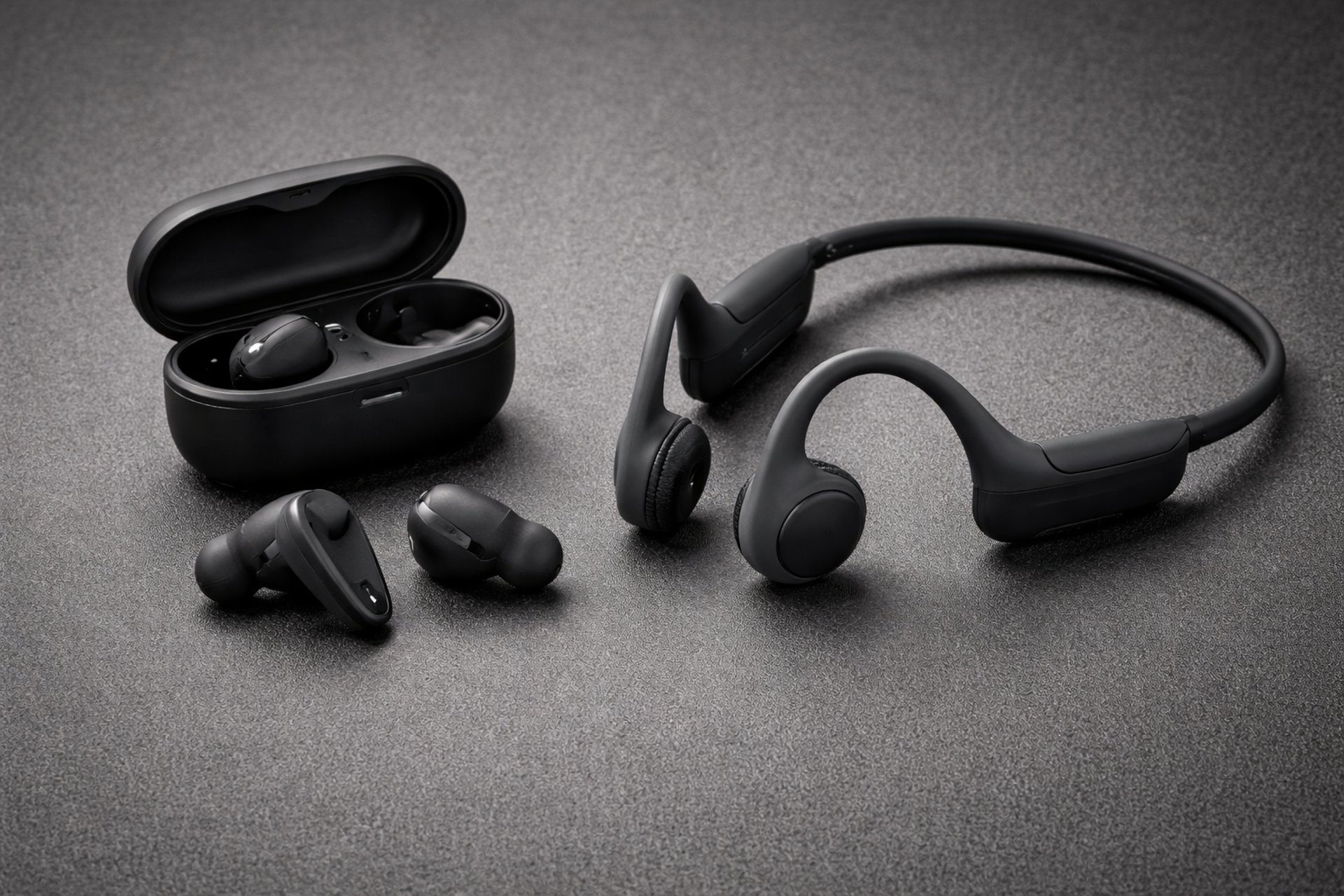
EDC audio is more than just listening to music—it's how you stay connected, informed, productive, and entertained throughout the day.
From daily commutes and office work to hiking trails, fishing trips, jobsites, and travel, the right audio setup depends heavily on where you spend your time and what you need to hear around you.
If you're new to the category, What Is EDC Audio breaks down the different types of audio gear that fit into modern everyday carry systems.
The best EDC audio isn't necessarily the most expensive—it’s the audio gear you'll actually use every day.

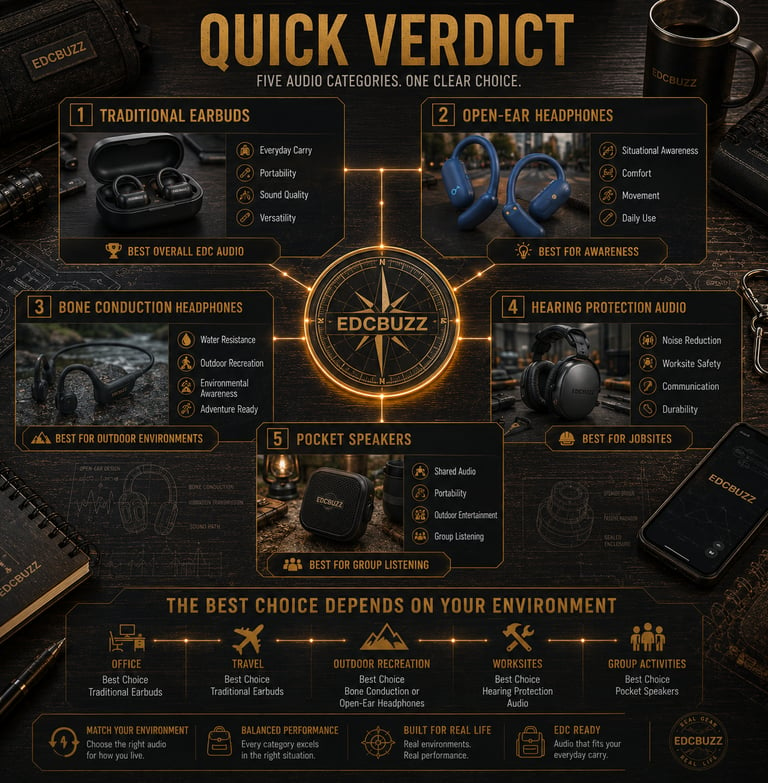
Quick Verdict
• Best overall EDC audio: Traditional earbuds
• Best for awareness: Open-ear headphones
• Best for outdoor environments: Bone conduction headphones
• Best for jobsites: Hearing protection audio
• Best for group listening: Pocket speakers
The best choice comes down to where you spend your time and what role audio plays in your daily routine.


TYPES OF EDC AUDIO
Understanding the different categories is the first step toward building the right audio setup.
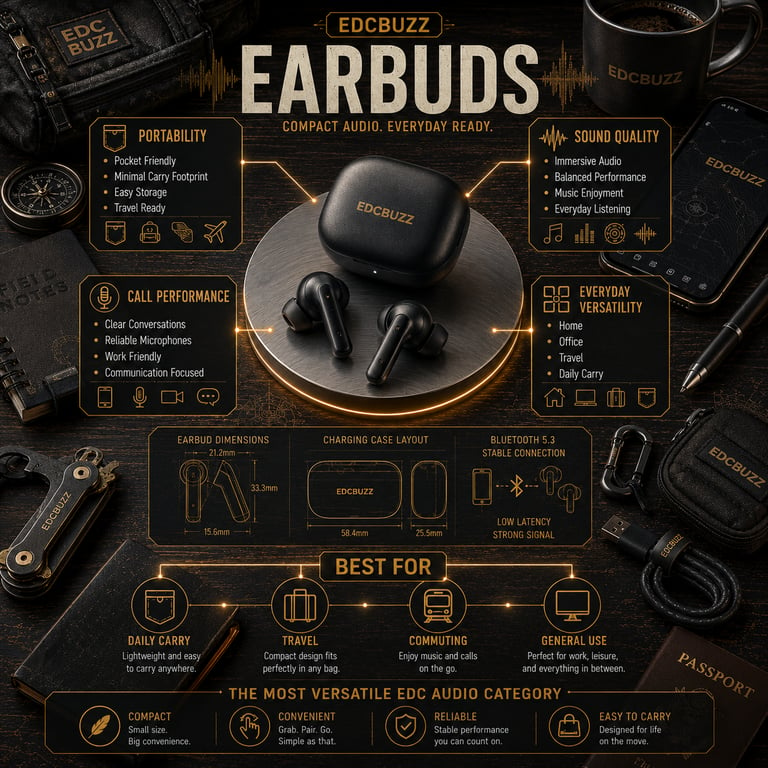

Earbuds
These are the most common EDC audio solution for good reason.
They focus on:
• Portability
• Sound quality
• Call performance
• Everyday versatility
Best for:
• Daily carry
• Travel
• Commuting
• General use
Most users should start with Best EDC Earbuds before exploring more specialized options.
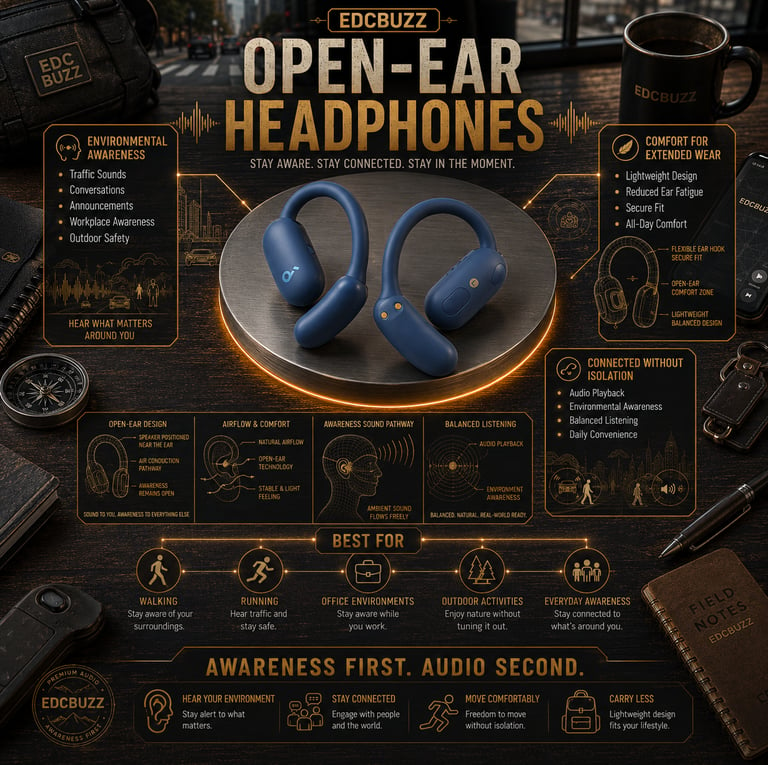
Open-Ear Headphones
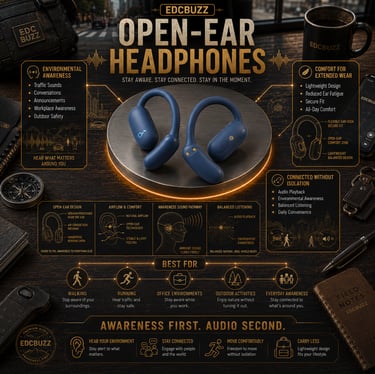
Open-ear headphones prioritize awareness instead of isolation.
Rather than sealing off your ears, they allow you to hear traffic, conversations, announcements, coworkers, and environmental sounds while still enjoying audio.
Best for:
• Walking
• Running
• Office environments
• Outdoor activities
• Everyday awareness
Explore the category further in Best EDC Open Ear Headphones.
Bone Conduction Headphones
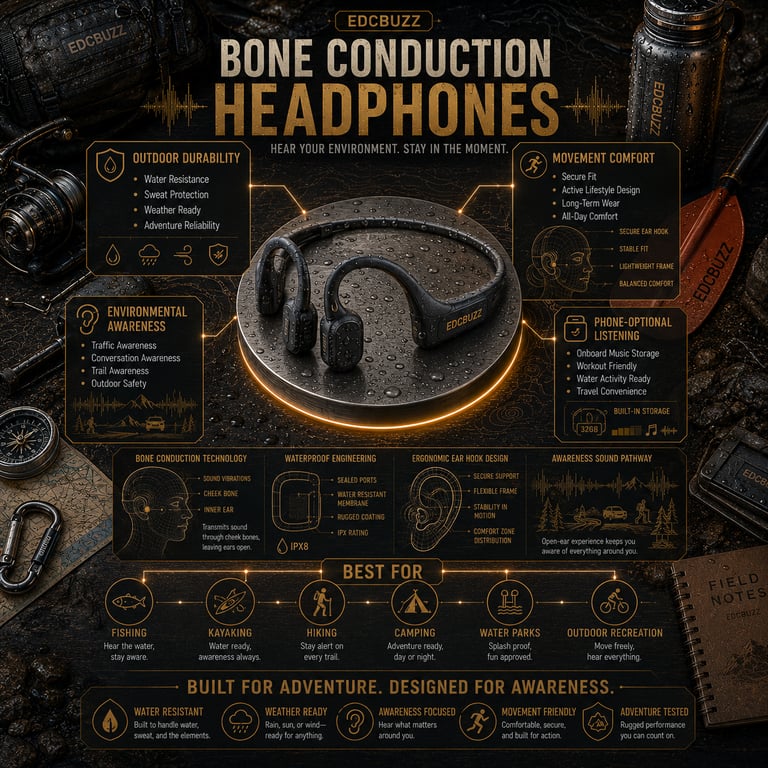
Bone conduction headphones are designed for users who spend significant time outdoors or around water.
Unlike traditional earbuds, they remain comfortable during movement and allow environmental awareness while offering exceptional weather resistance.
Best for:
• Fishing
• Kayaking
• Hiking
• Camping
• Water parks
• Outdoor recreation
Learn more in Best EDC Waterproof Bone Conduction Headphones.
Hearing Protection Audio
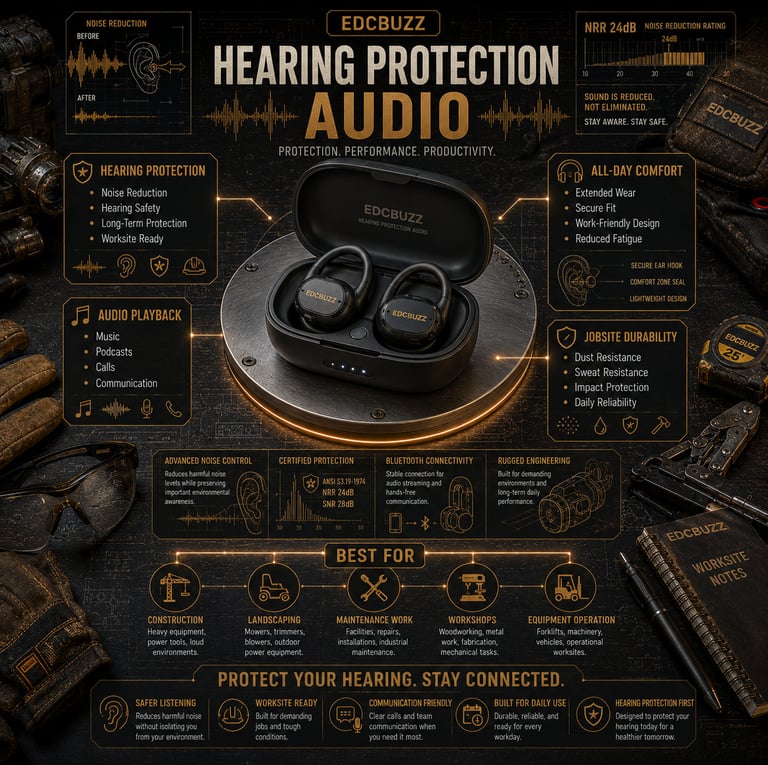
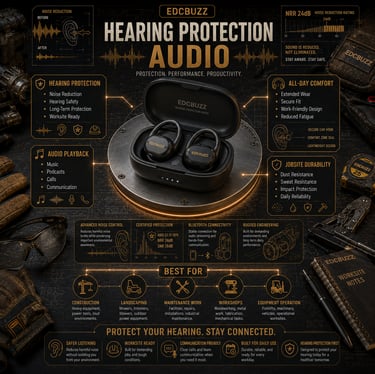
Some users need more than awareness—they need hearing protection.
These products combine audio playback with noise reduction to help protect hearing in louder environments.
Best for:
• Construction
• Landscaping
• Maintenance work
• Workshops
• Equipment operation
These are often the safest solution when environmental noise becomes a concern.
Pocket Speakers
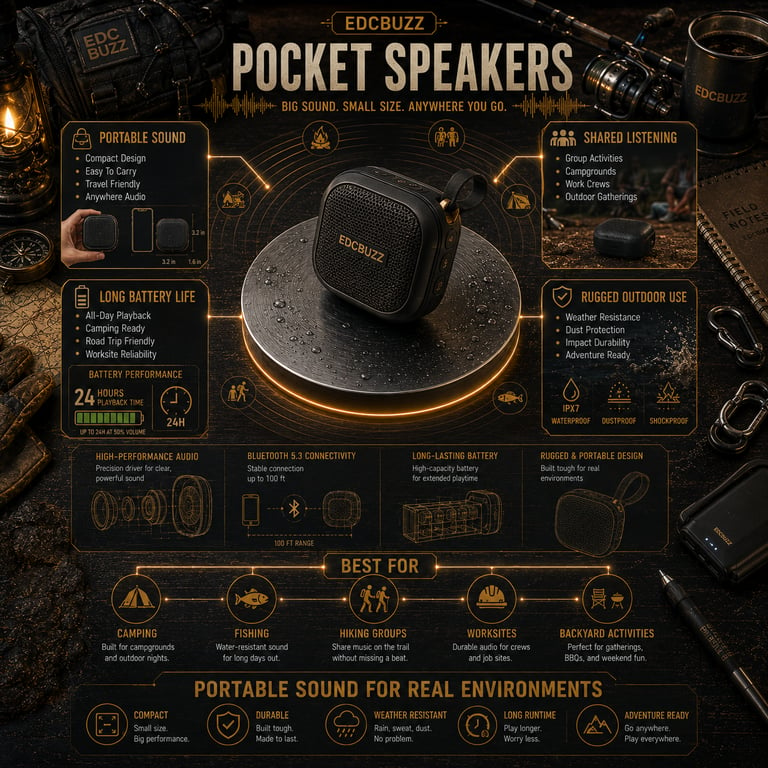
Pocket speakers solve a completely different problem.
Instead of isolating audio to a single listener, they provide portable sound for outdoor activities, campsites, jobsites, and shared environments.
Best for:
• Camping
• Fishing
• Hiking groups
• Worksites
• Backyard activities
Explore the best options in Best EDC Pocket Speakers.
EDC AUDIO STYLES EXPLAINED
Different audio categories solve different problems.
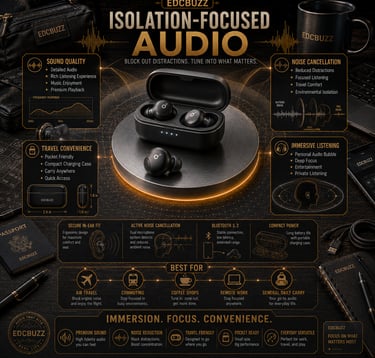
Isolation-Focused Audio
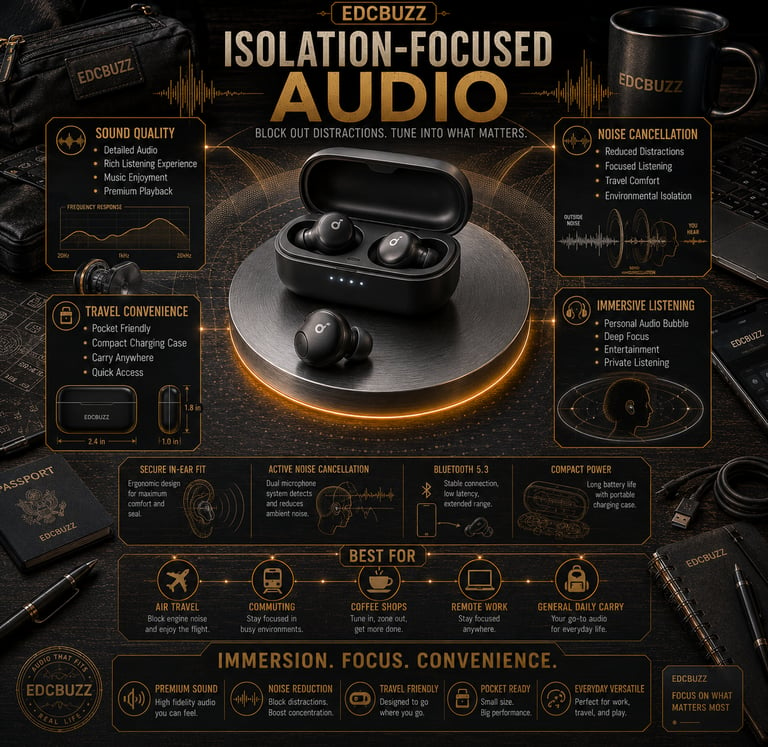
Traditional earbuds focus on:
• Sound quality
• Noise cancellation
• Travel convenience
• Immersive listening
For many users, earbuds remain the most balanced choice.
For a deeper comparison, see Earbuds vs Headphones for EDC.
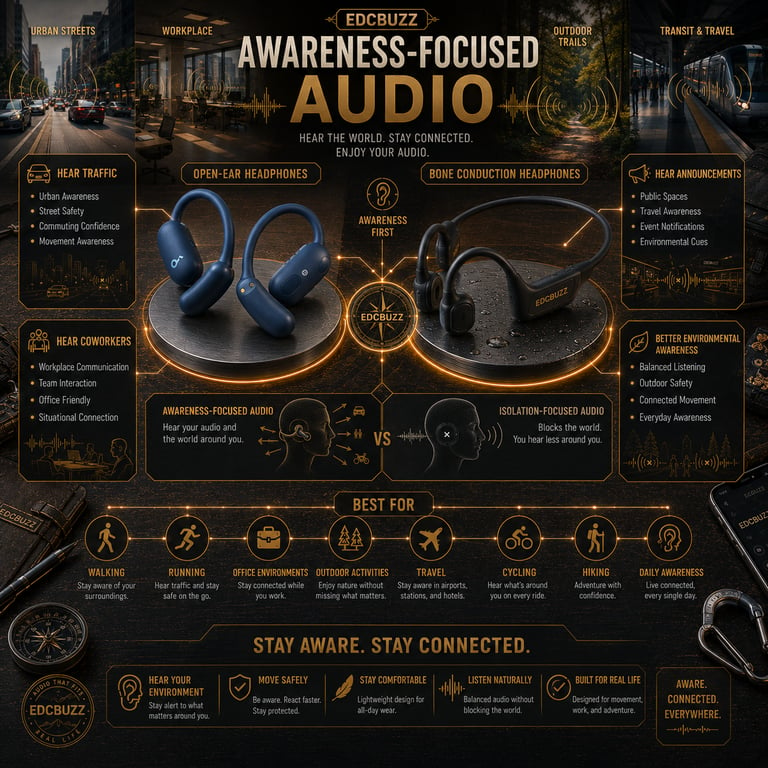
Awareness-Focused Audio
Open-ear and bone conduction headphones prioritize awareness.
Benefits include:
• Hearing traffic
• Hearing coworkers
• Hearing announcements
• Better environmental awareness
Many users discover awareness matters more than pure sound quality.
Learn more in Situational Awareness and EDC Audio.
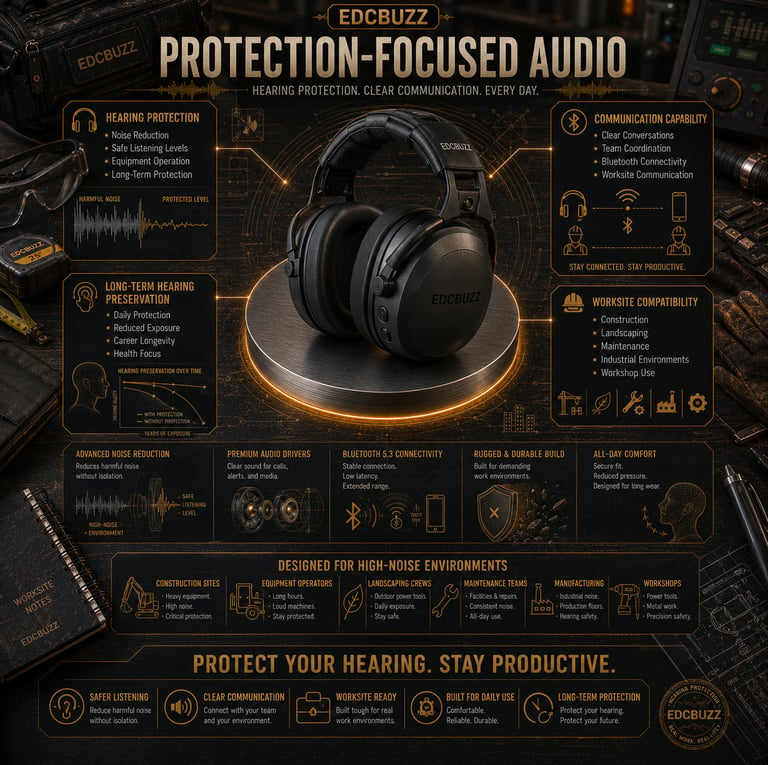
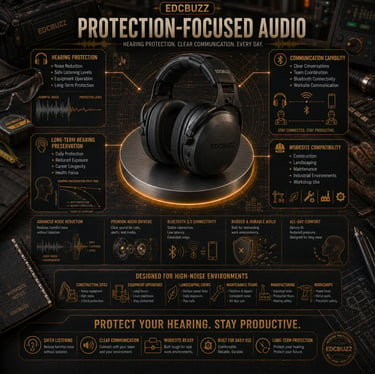
Protection-Focused Audio
Protection-focused audio is designed around safety.
Benefits include:
• Hearing protection
• Communication capability
• Long-term hearing preservation
• Worksite compatibility
Understanding the difference between isolation and protection is important, which is why Noise Canceling vs Passive Isolation is worth reviewing.
REAL WORLD USE
Different audio solutions perform better depending on where you use them.
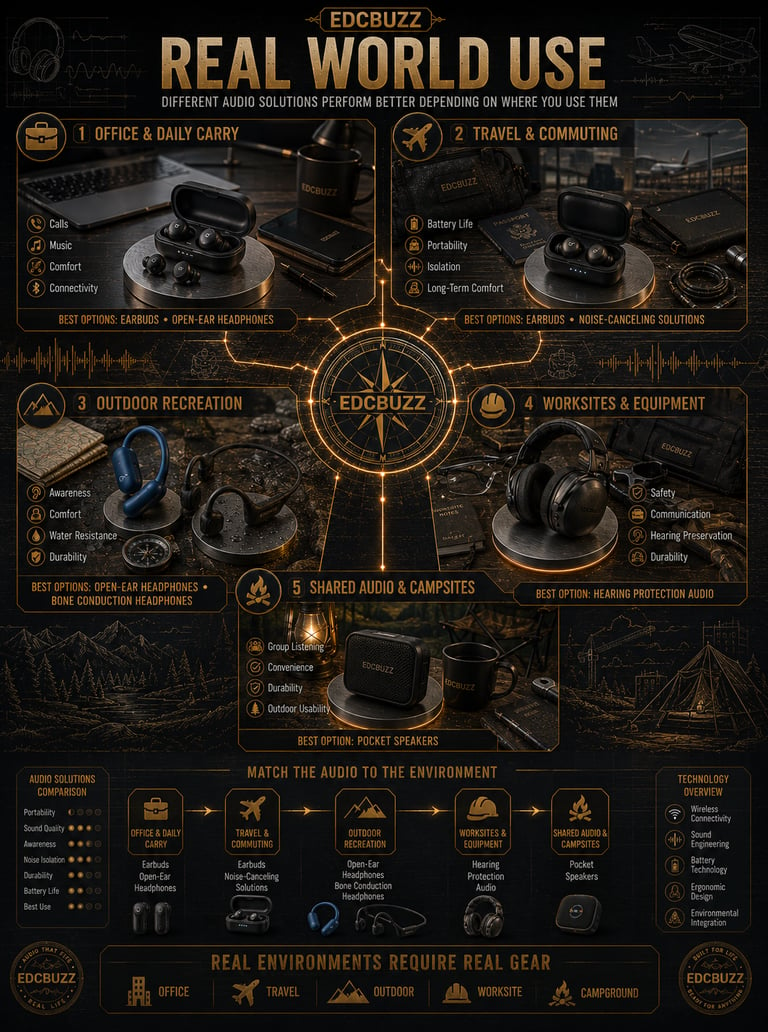
Office & Daily Carry
Best options: Earbuds - Open-ear headphones
Focus on: Calls - Music - Comfort - Connectivity
These users typically prioritize convenience and comfort above all else.
Travel & Commuting
Best options: Earbuds - Noise-canceling solutions
Focus on: Battery life - Portability - Isolation - Long-term comfort
Battery performance often becomes more important than buyers initially expect.
See How Much Battery Life Do You Really Need for EDC Audio?
Outdoor Recreation
Best options: Open-ear headphones - Bone conduction headphones
Focus on: Awareness - Comfort - Water resistance - Durability
Outdoor users often benefit from awareness-focused designs.
See Water Resistance for Earbuds.
Worksites & Equipment
Best options: Hearing protection audio
Focus on: Safety - Communication - Hearing preservation = Durability
For many workers, hearing protection becomes more important than premium sound quality.
See How to Choose EDC Audio for Your Daily Environment.
Shared Audio & Campsites
Best options: Pocket speakers
Focus on: Group listening - Convenience - Durability - Outdoor usability
Pocket speakers often provide more practical value than headphones in social environments.
WHAT MAKES GREAT EDC AUDIO?
The best audio gear succeeds because it performs consistently in the environments where you use it most.
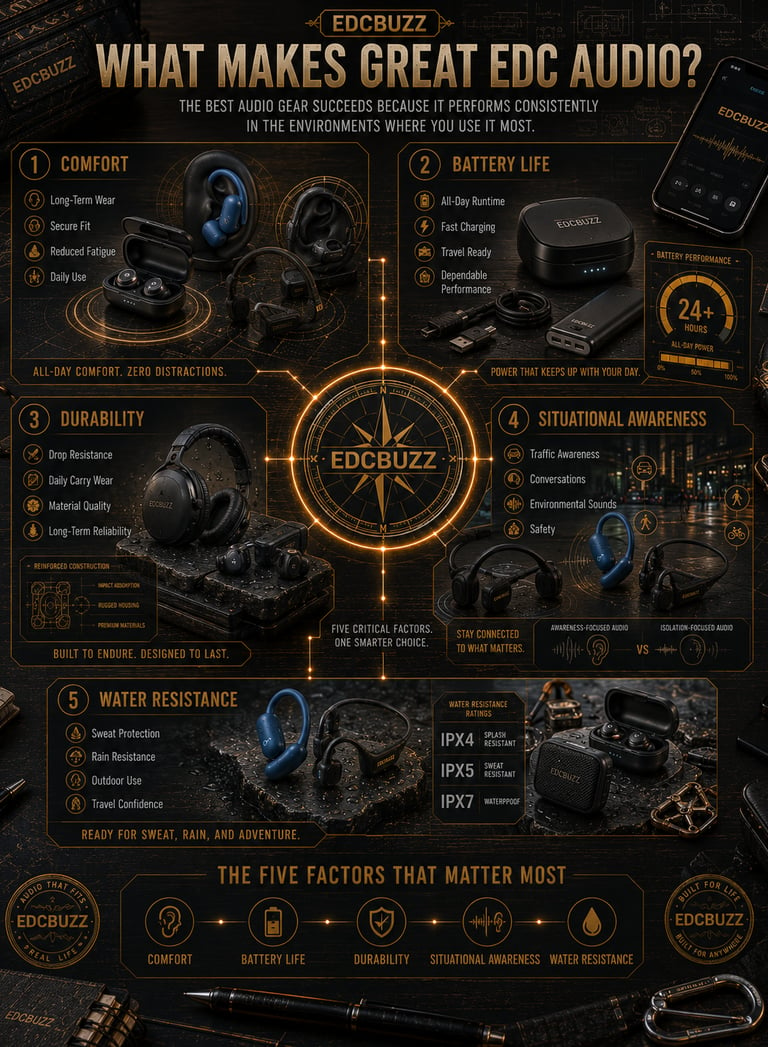

Comfort
If audio isn't comfortable, you won't use it. Comfort often matters more than sound quality over the long term.
See Why Comfort Matters More Than Sound Quality for EDC.
Battery Life
Most users don't need the longest battery life available. They need enough battery to support their routine.
See How Much Battery Life Do You Really Need for EDC Audio?
Durability
Audio gear gets dropped, carried, stuffed into bags, exposed to weather, and used daily. Durability often determines long-term satisfaction.
See How Durable Should EDC Earbuds Be?
Situational Awareness
Awareness can dramatically change how useful audio becomes in real-world environments.
See Situational Awareness and EDC Audio.
Water Resistance
Sweat, rain, outdoor recreation, and travel all make water resistance increasingly valuable.
HOW TO CHOOSE THE RIGHT EDC AUDIO
Choosing the right audio starts with understanding your environment.
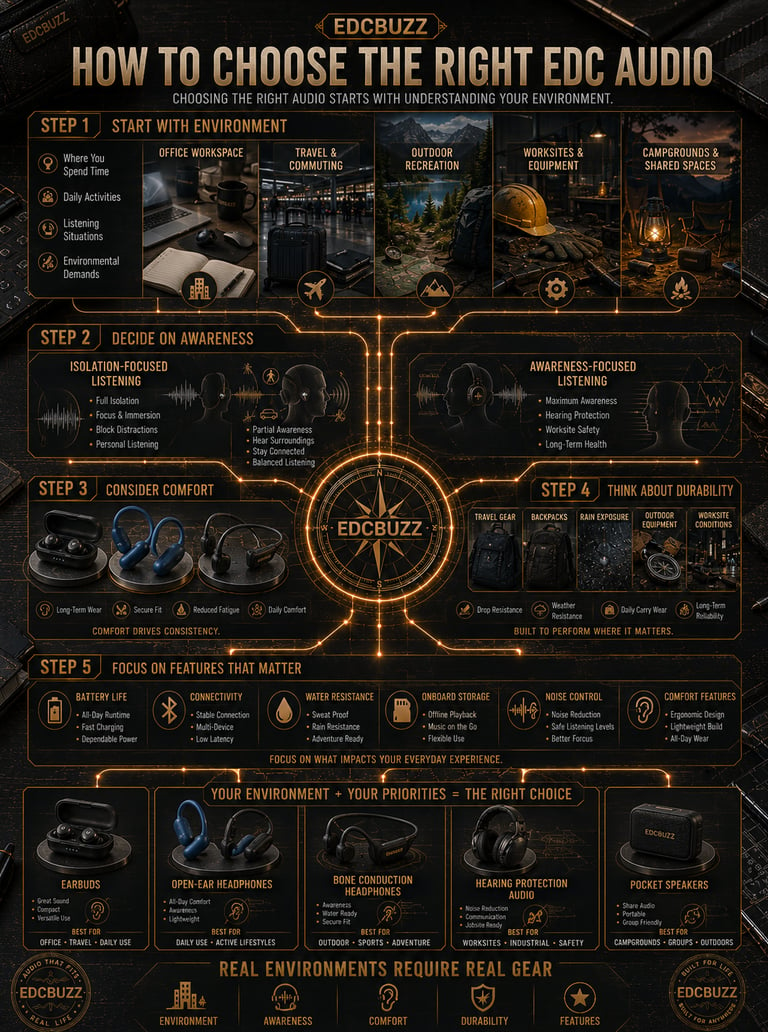

Start With Environment
Ask yourself: Office? Travel? Outdoor recreation? Jobsite? Daily commuting?
Your environment determines almost everything else.
Decide On Awareness
Do you want: Full isolation? Partial awareness? Maximum awareness?
The answer usually points you toward the correct category.
See Are Open-Ear Headphones Better for Everyday Carry?
Consider Comfort
Long listening sessions reveal comfort problems quickly.
Small comfort differences often matter more than small sound quality differences.
Think About Durability
Will your audio live: In a pocket? In a backpack? On a jobsite? Around water?
Choose accordingly.
Focus On Features That Matter
Many buyers overvalue features they'll never use. Instead, focus on features that improve your actual routine.
• Match audio type to environment
• Carry charging options when traveling
• Store earbuds in protective cases
• Keep audio gear clean
• Prioritize comfort over specifications
• Replace worn ear tips when needed
For maintenance guidance:
PRACTICAL
EDC AUDIO TIPS
BEST EDC AUDIO
(Best Picks & Comparisons)

Find Your Perfect EDC Audio Setup
You've explored earbuds, headphones, speaker types, battery life, sound profiles, and everyday listening needs. Now it's time to put that knowledge to work.
Use the EDCBuzz Audio Advisor to find the best audio gear for your budget, listening habits, lifestyle, and daily routine.
Explore More EDC Advisors
Great audio is only one part of your everyday carry. Explore the EDCBuzz Advisor Series to discover the gear that complements your daily routine and personal preferences.

Related EDC Gear
An EDC audio setup works best when it fits into a broader everyday carry system.
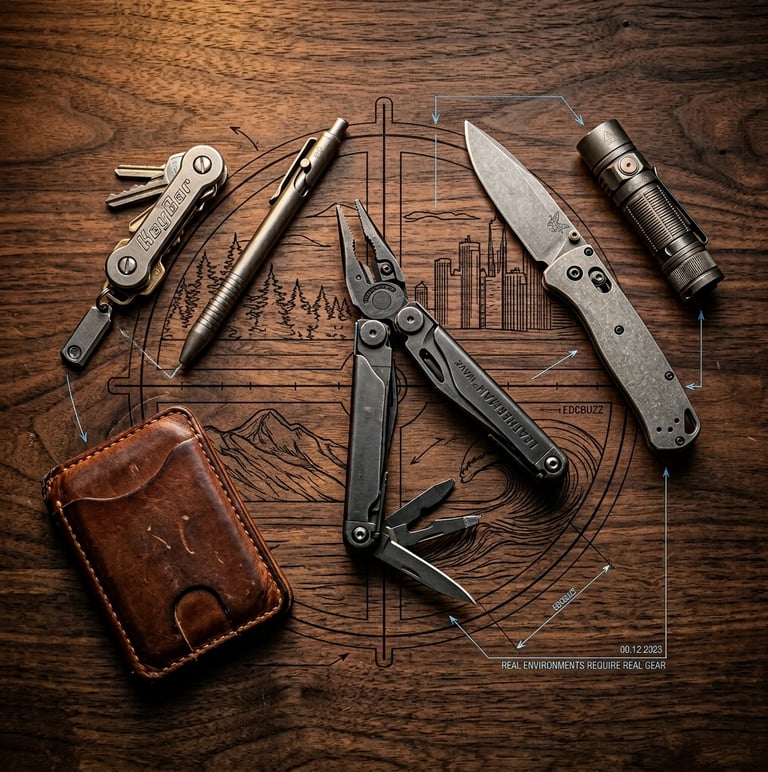

FLASHLIGHTS
A flashlight gives you control in low-light situations where most real tasks actually happen. Your multi-tool handles the job—but your flashlight lets you see what you’re doing.
KNIVES
Multi-tools include blades, but a dedicated knife is faster and easier for daily cutting. Use a knife for frequent tasks. Use your multi-tool when things get more complex.
WALLETS
Your wallet affects comfort more than anything else you carry. A slim, structured wallet keeps your setup clean and prevents unnecessary bulk.
FULL EDC SETUP
A strong setup is built on balance.
Each tool has a role—multi-tool for versatility, knife for cutting, flashlight for visibility, wallet for organization. When everything has a purpose, your carry becomes faster, lighter, and easier to use.
Frequently asked questions
What is EDC audio?
EDC audio refers to earbuds, headphones, hearing protection devices, and portable speakers designed for regular daily use. The focus isn't just sound quality—it's portability, comfort, durability, and fitting naturally into your routine.
Some users carry earbuds for commuting, others prefer open-ear headphones for awareness, while outdoor users may choose bone conduction headphones or pocket speakers.
For a full breakdown, see What Is EDC Audio.
Are earbuds or open-ear headphones better for EDC?
Neither is automatically better because they serve different purposes.
Earbuds prioritize sound quality and isolation, while open-ear headphones prioritize situational awareness. If you spend time around traffic, coworkers, or outdoor environments, awareness can become more valuable than maximum audio quality.
For a deeper comparison, see Earbuds vs Headphones for EDC.
Are open-ear headphones safer than traditional earbuds?
In many environments, yes.
Open-ear headphones allow you to hear traffic, conversations, announcements, and other environmental sounds while listening to audio. This makes them popular for walking, running, commuting, and general everyday carry.
Learn more in Situational Awareness and EDC Audio.
Are expensive earbuds worth it?
They can be if you use them every day. Premium earbuds often provide better comfort, battery life, microphones, connectivity, and durability. However, many mid-range options now offer excellent performance for most users.
See Are Expensive Earbuds Worth It for Everyday Carry?.
How much battery life do I need?
Most users need enough battery to comfortably cover their daily routine. Rather than focusing on the biggest battery specification, pay attention to real-world usage, charging speed, and how often you'll realistically recharge your audio gear.
See How Much Battery Life Do You Really Need for EDC Audio?.
Is water resistance important?
For many users, absolutely. Even if you never swim with your audio gear, water resistance helps protect against sweat, rain, humidity, and everyday outdoor use. It often becomes one of the most valuable durability features available.
See Water Resistance for Earbuds.
What is the difference between bone conduction and open-ear headphones?
Both are designed to improve awareness, but they deliver sound differently. Open-ear headphones use speakers positioned near your ears, while bone conduction headphones transmit sound through vibrations against your cheekbones. Both allow you to remain aware of your surroundings while listening.
Final Thoughts
EDC audio isn't about chasing specifications.
It's about finding the right solution for your environment.
A commuter may benefit from earbuds.
A runner may prefer open-ear headphones.
A fisherman may choose waterproof bone conduction headphones.
A contractor may need hearing protection audio.
A camper may prefer a pocket speaker.
The best EDC audio is the gear that naturally fits into your daily routine and performs reliably when you need it.
If you're still exploring the category, start with What Is EDC Audio and build your setup around the environments that define your everyday carry.
Contact@TheBuzzHQ.com
© 2026 EDCBuzz. All rights reserved.
EDCBuzz
Master everyday carry systems with clarity and precision. Built for real environments and practical use.
For educational purposes only.
General Inquiries: