
How to Clean Sunglasses Without Scratching Them
Learn how to clean sunglasses effectively without scratching them by using the right tools and techniques for spotless, clear lenses.
EDC SUNGLASSES
The EDCBuzz Editorial Team - Led by AJ “Buzz” Eichman
7/4/20267 min read
Sunglasses are more than just style statements; they're vital for protecting your eyes and ensuring clear vision in bright conditions. But there’s a catch — keeping those lenses spotless without turning them into a scratched mess requires a bit of know-how. Without proper care, smudges and dirt can quickly turn into fine scratches that degrade visibility and shorten the life of your favorite shades. After having my fair share of scratched lenses and cringing every time I spot one, I figured it’s worth sharing what really works to clean sunglasses without scratching them. It boils down to using the right tools, techniques, and a little patience — no fancy tricks or expensive gear needed.
For a complete overview of EDC Sunglasses and guidance on How To Choose Sunglasses, start there before learning the proper care techniques covered below.
Quick Verdict
Rinsing lenses with lukewarm water before wiping prevents abrasive particles from grinding in.
Microfiber cloths designed for lenses are your best friend; avoid paper towels or shirts.
Use gentle lens cleaning solutions or mild soap; steer clear of household cleaners with harsh chemicals.
Don’t neglect the frame and nose pads — grime there soon finds its way back to the lenses.
Why Proper Sunglasses Cleaning Matters
At first glance, wiping your sunglasses with any cloth or tissue might seem harmless. I thought like that too — until the fine scratches started showing up, distorting the view and occasionally catching the light in all but the flattering ways. These scratches aren’t just cosmetic; they impact your vision clarity, strain your eyes, and chip away at those protective coatings manufacturers recommend. Sunglasses lenses typically come with UV protection, anti-reflective layers, and sometimes even oleophobic coatings to resist fingerprints. All these coatings are delicate and easily damaged by abrasive or chemical-heavy cleaning methods.
Proper cleaning isn’t just about keeping them pretty; it’s about maximizing longevity and performance. When you carry sunglasses daily, be it EDC staples for driving, outdoor activities, or just surviving the glare of office lighting, those lenses see a lot of action — sweat, dust, oil from skin, and who knows what else. Proper care avoids scratches, streaks, and film buildup, so you’re left with sharp, clear vision instead of the “looking through a foggy window” effect. If your shades see frequent workouts or outdoor use, many of the same maintenance habits apply to Best Athletic Sunglasses.
Best Materials for Cleaning Sunglasses
Over the years, I’ve tested various cleaning materials, mostly because I’ve been guilty of using whatever cloth was handy—shirt sleeves, tissues, even napkins. Here’s what stuck and what I learned to avoid:
Microfiber Cloth
Microfiber cloths designed specifically for optics remain the gold standard. The fine threads trap oils and dirt without digging into the lens surface like sandpaper pretending to be fabric. These cloths don’t leave lint behind, and they’re soft enough to treat coatings with the care they demand. Keep one in your pocket or glove box, making it easy to clean on the go without resorting to anything abrasive.
Lens Cleaning Solutions
Commercial lens cleaning sprays formulated for glasses and sunglasses play nicely with coatings because of their pH-balanced, non-abrasive formulas. They’re more effective than water alone and safe to use with microfiber cloths. Mild dish soap diluted with water also works fine in a pinch—it gets the grime off without eating away at coatings like household cleaners. If you regularly wear sunglasses behind the wheel, keeping lenses clean is especially important for visibility with Best Driving Sunglasses.
Avoid Paper Towels, Tissues, and Clothing
Despite the convenience, paper towels, tissues, or regular cotton fabric are usually rougher than you think. They tend to contain tiny fibers or residues that scratch lenses. Plus, tissues can leave behind lint particles that add to the frustration. Shirts, especially rougher fabrics or those with dirt caught in the fibers, can do more harm than good. Best to steer clear if you want your lenses to last.
Step-by-Step Guide to Cleaning Sunglasses Safely
Here’s the routine I settled into after learning from a few too many scratched lenses. It’s simple, reliable, and requires only a bit of time.
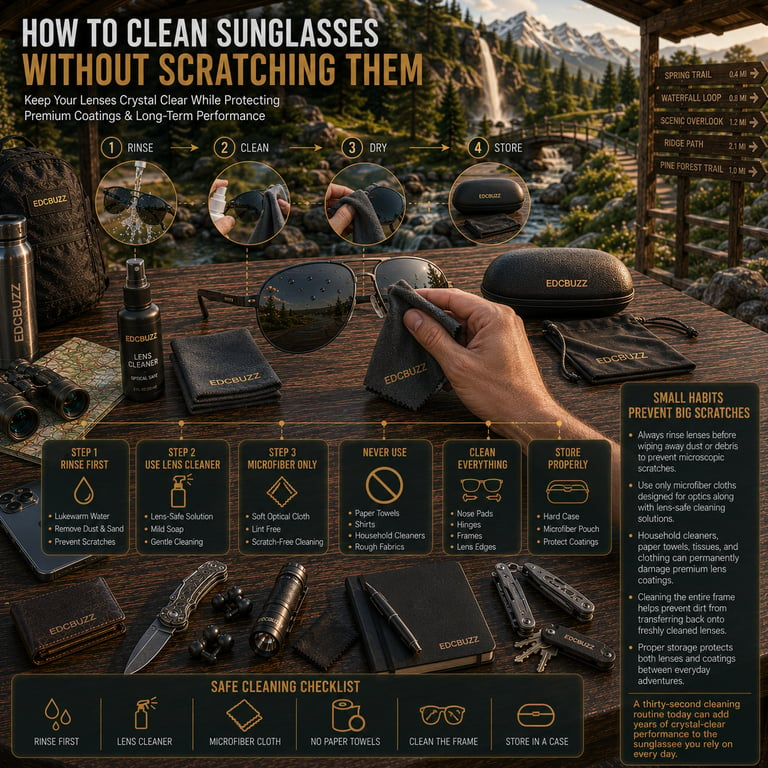
1. Rinse with Lukewarm Water
Always start by rinsing your sunglasses under lukewarm water. It loosens and washes away grit, dust, and sand that could act like sandpaper when you wipe the lenses. Avoid hot water as it might damage coatings or warp frames.
2. Apply Lens Cleaning Solution or Mild Soap
If your lenses are oily or especially dirty, apply a small amount of lens cleaning spray or dilute mild dish soap with water. Rub gently with your fingers — avoid rough scrubbing. The soap cuts oils more effectively than water alone.
3. Rinse Again
Rinse off the cleaning solution or soap thoroughly. Remaining residues can leave spots or streaks once dry.
4. Dry with a Clean Microfiber Cloth
Once rinsed, let the sunglasses air dry or gently pat dry with a clean microfiber cloth. Avoid towel drying or vigorous wiping that might rub in lingering particles.
5. Clean the Frame and Nose Pads
Don’t forget other parts. Dirt on the frame and nose pads can transfer back onto your lenses during daily use. If scratches have already appeared, learn How to Remove Scratches from Sunglass Lenses before replacing your eyewear.
Common Mistakes That Cause Lens Scratches
It’s tempting to just swipe lenses when they look dirty, but some mistakes are classic routes to damage:
Wiping Dry Without Rinsing
Scratching happens when dust and grit are dragged across lenses, and wiping dry lenses without rinsing first is the worst offender. The dust acts like crumbly little sandblasters. Rinsing is your simple defense.
Using Harsh Household Cleaners
Many people use window cleaners or alcohol-based solutions thinking they’ll clean well. While they might remove dirt, those chemicals degrade anti-reflective and UV coatings, accelerating lens wear.
Cleaning with Rough Materials
Tissues, paper towels, regular towels, or even shirts aren’t microfiber — they don’t trap grit and instead grind it into the lens surface.
Ignoring Nose Pads and Frames
Skipping cleaning on parts around the lenses causes grime build-up, which soon ends up on your lenses again.
Storing Sunglasses Without Protection
Letting sunglasses swish around unprotected inside pockets or bags leads to scratches fast. Always use a proper case or dedicated pouch. Learning How to Store Sunglasses Properly helps prevent this kind of damage altogether.
Caring for Different Lens Coatings
Understanding your sunglass lenses’ coatings can make a difference in how you clean and care for them.
Anti-Reflective Coatings
These coatings reduce glare but require extra gentle treatment. Mechanical abrasion and harsh chemicals wear them down over time, so stick to gentle sprays and microfiber cloths.
UV Protection Layers
UV coatings are more resilient but not invincible. Over-exposure to heat and chemicals can degrade these layers, so rinsing with lukewarm water and avoiding abrasive cleaning remain essential.
Oleophobic Coatings
Oleophobic layers repel oils and fingerprints but can wear off if wiped too harshly or cleaned with solvents. Frequent, gentle cleaning with microfiber cloths and proper solutions extends their lifespan. If you're deciding between protective eyewear and standard sunglasses, see Mechanix Vision Type-E vs Oakley Half Jacket 2.0 (Safety Glasses vs Sunglasses).
Tips for On-the-Go Sunglasses Cleaning
Daily wear means dirt and sweat find their way onto lenses anytime, anywhere. Keeping your sunglasses clear when you don’t have your full cleaning kit requires a plan:
Carry a Small Microfiber Cloth
Slip a dedicated cloth into your EDC kit or glove compartment. It’s lightweight, pocket-friendly, and much better than improvising with tissues.
Use Portable Lens Cleaning Wipes
Pre-moistened lens wipes designed for glasses can be handy for quick touch-ups, especially outdoors. Just make sure they don’t contain alcohol or harsh chemicals.
Rinse Before Wiping If Possible
If you’re near water, rinse your lenses before wiping if they feel gritty. Even a splash from a water bottle can help loosen debris.
Avoid Using Your Shirt or Other Rough Fabrics
I get it — sometimes it’s tempting to just wipe with your sleeve, but resist. It’s a fast way to add new scratches. If fogging is part of your daily frustration, check out How to Keep Sunglasses from Fogging Up.
Storing Sunglasses to Avoid Damage
It’s the same story: even the best cleaning routine can’t undo scratches caused by careless storage.
Get a Hard or Semi-Hard Case
A sturdy case protects against pressure and contact with other objects that cause scratches.
Use a Dedicated Pouch for Light Protection
If a hard case is too bulky, at least opt for a soft microfiber pouch. It prevents lens-to-key or lens-to-coin contact.
Store Separately in Bags and Pockets
Avoid throwing sunglasses loose in bags or pockets where they’re rubbing against abrasive materials. If your frames start loosening from daily carry, here's How to Tighten Loose Sunglass Hinges.
Avoid Leaving Sunglasses Face Down
When not in use, set your sunglasses down on the frame, not the lenses.
FAQ
What is the safest way to clean sunglasses lenses?
Start by rinsing the lenses with lukewarm water to remove dust and grit, then use a gentle lens cleaning solution or diluted mild soap. Finally, dry with a clean microfiber cloth designed for lenses.
Can I use regular glass cleaner on my sunglasses?
It’s best to avoid standard glass cleaners as they often contain harsh chemicals like ammonia that degrade lens coatings and cause faster wear. If you're comparing inexpensive and premium performance, read goodr FXG vs KOO Supernova (Cheap vs Expensive).
How often should I clean my sunglasses?
Cleaning frequency depends on use, but regular cleaning after exposure to sweat, dirt, or oils keeps lenses clear and coatings intact. For daily wear, a quick wipe with a microfiber cloth and periodic deep clean is ideal.
What cloth is best for cleaning lenses without scratching?
Microfiber cloths made specifically for optics are the safest and most effective. Avoid paper towels, regular tissues, or shirts.
How do I clean sunglasses with anti-reflective coating?
Use only lens-specific cleaning solutions or mild soap with lukewarm water. Avoid abrasive materials and harsh household cleaners that can strip this delicate coating.
Can water damage sunglasses lenses or frames?
Water itself is generally safe if it’s lukewarm and clean. Hot water or harsh cleaning agents can damage coatings and warp frames. You can also learn How Long Do Sunglasses Last? to better understand when cleaning is no longer enough.
What should I avoid when cleaning sunglasses?
Avoid wiping dry lenses without rinsing, using rough fabrics or paper products, and applying household cleaners containing alcohol or ammonia.
Are there special cleaning kits for sunglasses?
Yes, many kits come with lens-safe cleaning sprays and microfiber cloths designed to preserve coatings and keep lenses clear. If your primary use is behind the wheel, Are Polarized Sunglasses Good for Driving? explains whether polarized lenses are the right choice.
Conclusion
Living with a pair of sunglasses means dealing with dirt, sweat, and the occasional unexpected smudge from who knows where. Keeping your lenses clean, clear, and free of scratches isn’t rocket science—it demands the right approach and materials. Rinsing away the debris before touching your lenses, choosing microfiber cloths over whatever fabric handiest, and skipping harsh chemicals will serve you well over time. After weeks of using these methods, I barely notice the cleaning routine itself, except when I put on scratched shades and rue the days I skimped on care. It’s a small investment in effort, with a big payoff in clear vision and a long-lasting tool in your everyday carry. So keep that microfiber cloth handy and treat your sunglasses well — it’s the simplest way to keep your view scratch-free, and your eyes grateful.

Contact@TheBuzzHQ.com
© 2026 EDCBuzz. All rights reserved.
EDCBuzz
Master everyday carry systems with clarity and precision. Built for real environments and practical use.
For educational purposes only.
General Inquiries: