
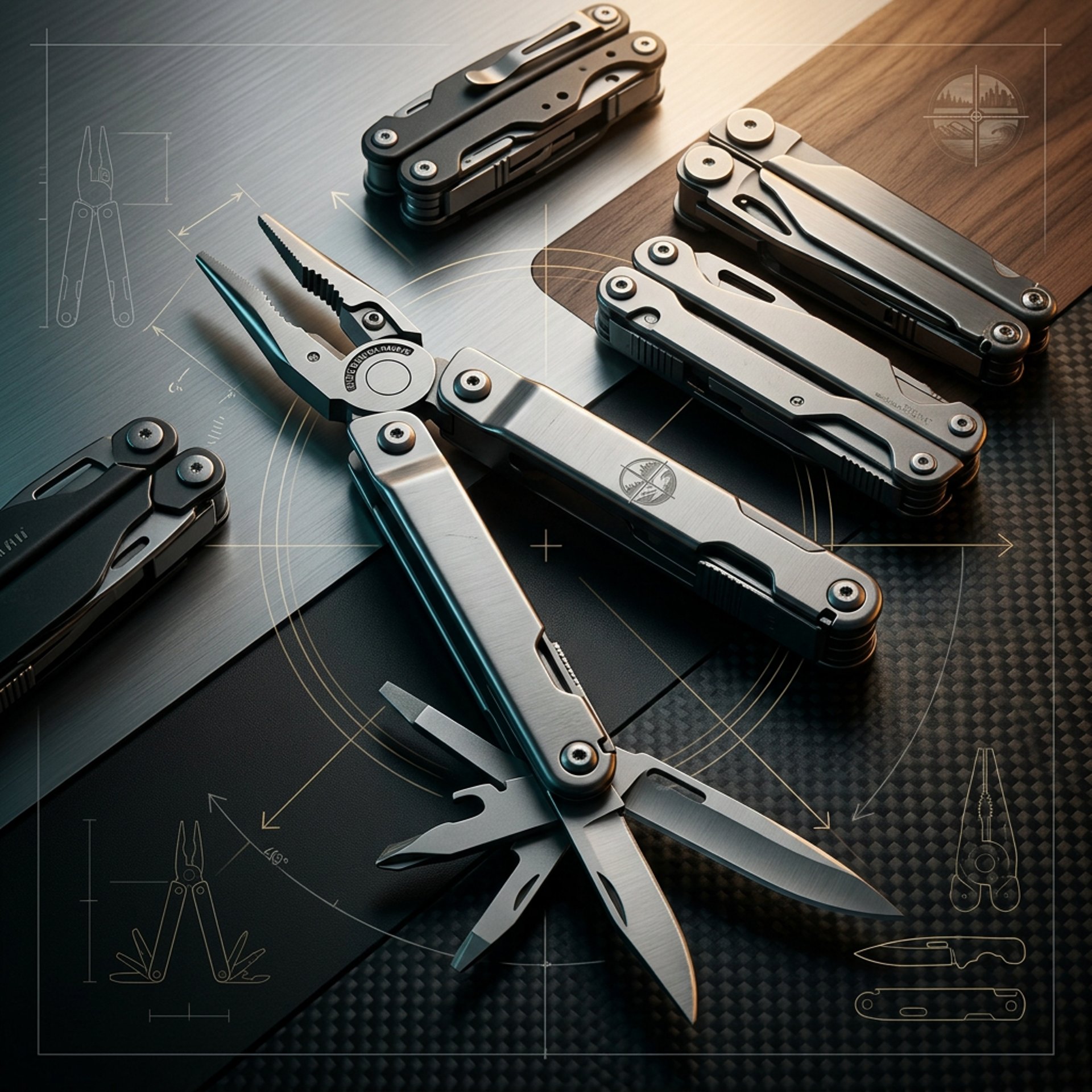
BEST EDC MULTI-TOOLS: COMPLETE GUIDE TO EVERYDAY CARRY MULTI-TOOLS
An everyday carry (EDC) multi-tool is more than just a backup—it’s a system that solves problems without needing a full toolbox.
If you’re new to multi-tools, What is an EDC Multitool breaks down how they actually fit into everyday carry.
From quick fixes to real-world repairs, the right multi-tool directly impacts how efficiently you handle everyday situations.
Modern multi-tools are built around:
Compact functionality
Reliable performance under pressure
Tool access speed
Long-term durability
A good multi-tool doesn’t just sit in your pocket—it gets used.

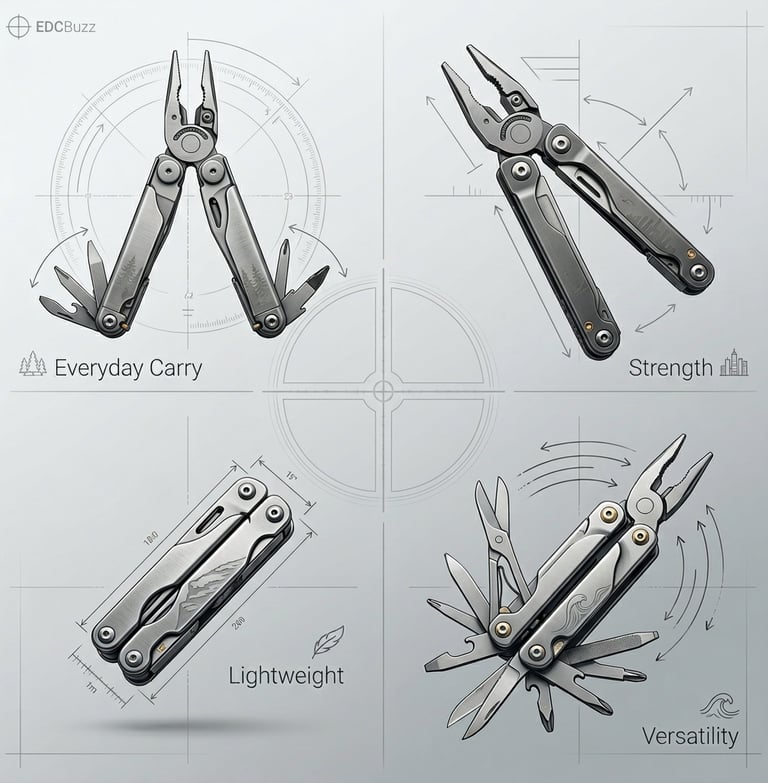
Quick Verdict
Best for everyday carry: Balanced, mid-size multi-tools
Best for strength: Full-size tools with larger pliers
Best for lightweight carry: Compact / minimalist tools
Best for versatility: Multi-tools with scissors + drivers
Choosing between these setups often comes down to your carry style, which is why Multitool vs Knife EDC is an important comparison.

TYPES OF EDC MULTI-TOOLS
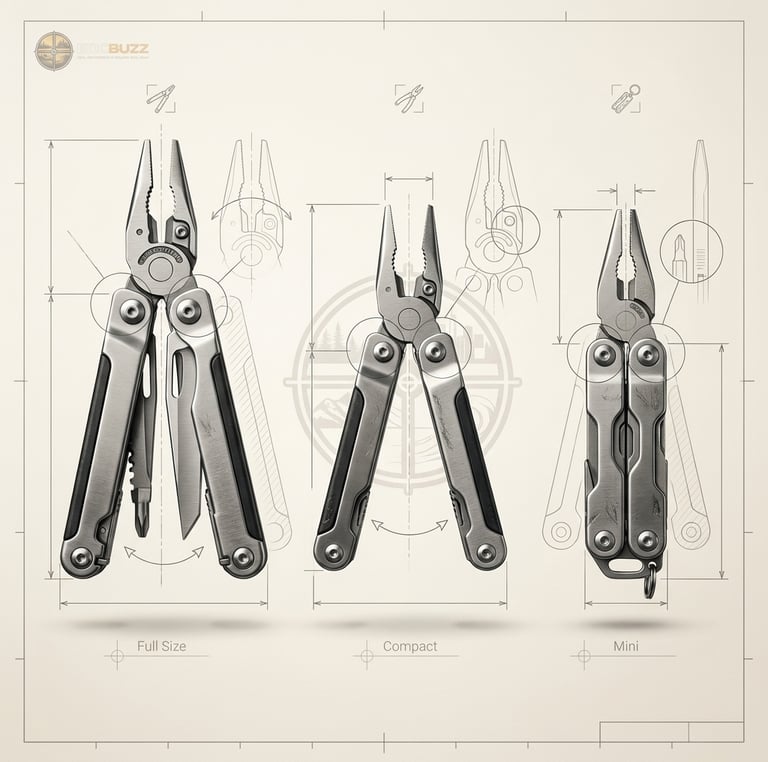
Understanding the different categories is the first step to choosing the right tool. Each category focuses on different priorities, and Types of Multitools Explained breaks down how they’re structured.
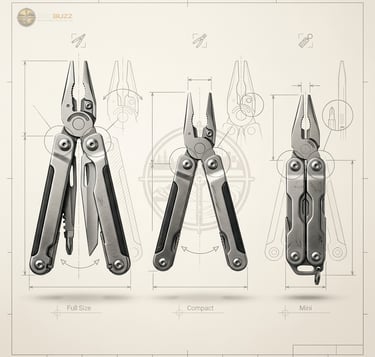
Full-Size Multi-Tools
Full-size multi-tools are built for capability. These tools prioritize performance, and Cheap vs Premium Multitools highlights how build quality impacts long-term use.
They typically include:
Larger pliers
Multiple blades
Full driver sets
Heavier construction
These are best for:
Work environments
Mechanical tasks
Users who rely on their tool regularly
Trade-off: heavier and less comfortable for daily carry.
Compact Multi-Tools
Compact tools reduce size without removing essential functionality. Compact tools rely heavily on core functionality, which is why Best Multitool Features matters more than tool count.
They focus on:
Lightweight carry
Basic toolset (pliers, blade, drivers)
Daily usability
Best for:
Everyday carry
Casual use
Backup tools
These are the most commonly carried tools because they balance size and function.
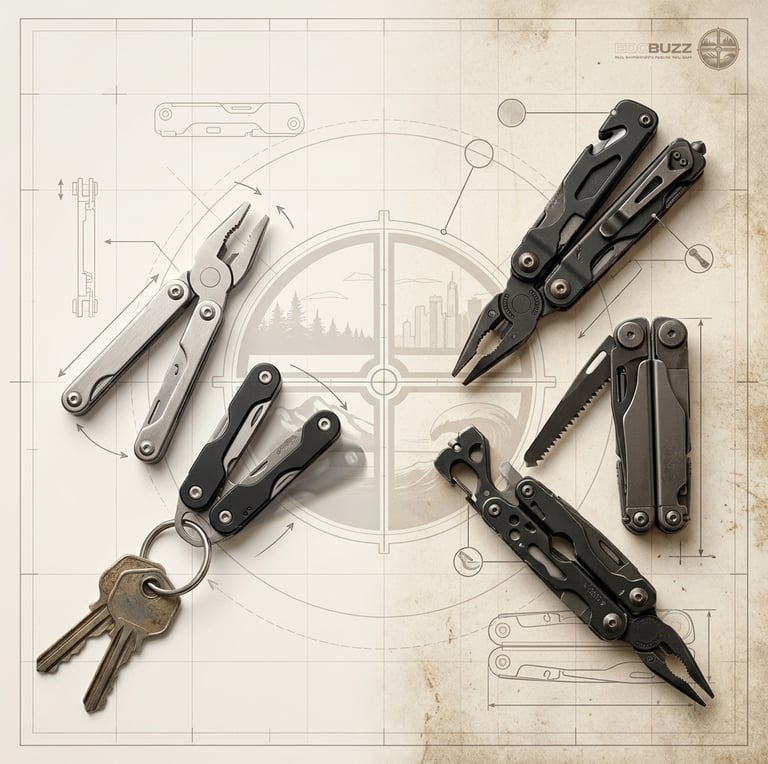
Keychain Multi-Tools
Keychain tools are built for convenience, not power. These tools are often misunderstood, and Are Multitools Worth It explains where smaller tools actually make sense.
They include:
Small pliers or scissors
Minimal tool sets
Ultra-lightweight designs
Best for:
Quick fixes
Emergency use
Minimalist setups
They’re not replacements—they’re supplements.
Specialty Multi-Tools
Some tools are built around specific use cases:
Rescue tools (seatbelt cutters, glass breakers)
Outdoor tools (saws, can openers)
Tactical-style tools
These are purpose-built—not general-use tools.
MULTI-TOOL STYLES EXPLAINED
Design affects how a tool feels, performs, and holds up over time.
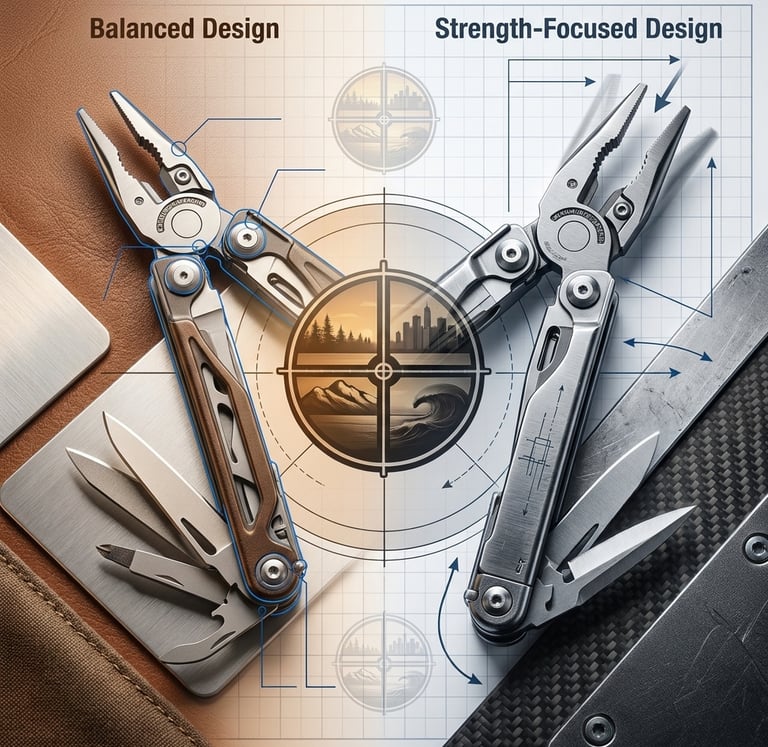
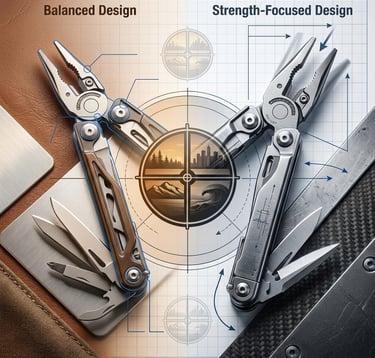
Balanced Design
Balanced tools aim to do everything well.
They provide:
Good plier strength
Usable secondary tools
Comfortable carry
This is the best choice for most users.
Strength-Focused Design
These tools prioritize power over convenience.
They feature:
Larger pliers
Reinforced builds
Heavier construction
Best for:
Work use
Mechanical tasks
High-force situations
Trade-off: slower and heavier.
Design differences directly impact usability, especially when comparing Locking vs Non-Locking Multitools.
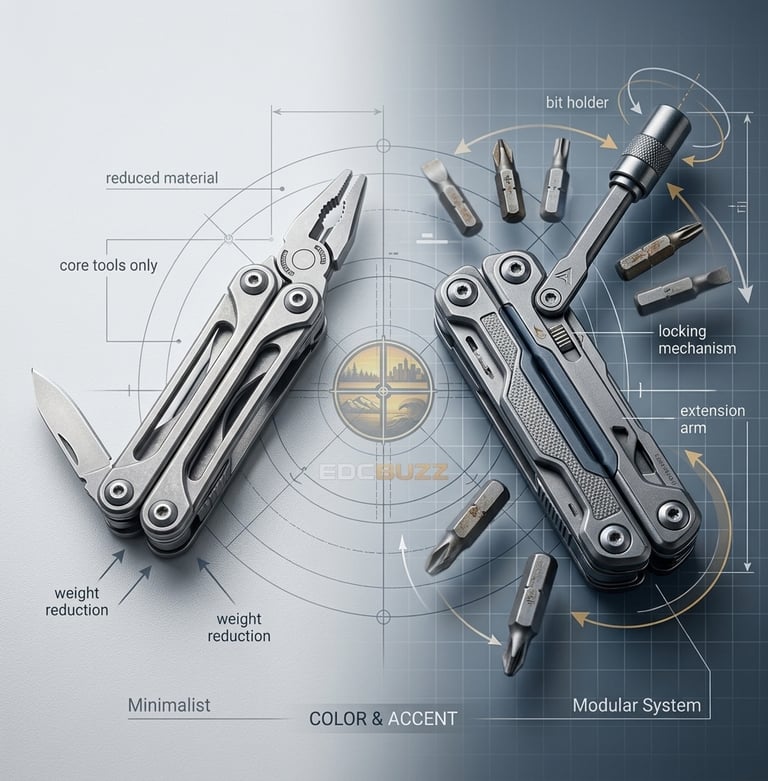
Minimalist Design
Minimalist tools strip down to essentials.
They focus on:
Weight reduction
Simplicity
Fast access
Best for:
Daily carry
Users who want less bulk
Trade-off: fewer tools.
Modular / Bit Driver Systems
Some tools expand capability with interchangeable bits.
They offer:
Greater flexibility
Better screwdriver performance
Customizable setups
Best for:
Tech work
Precision tasks
These systems can change how you use a tool entirely, which is why How to Choose EDC Multitool becomes critical here.
MULTI-TOOL MATERIALS
Material impacts durability, weight, and long-term performance.
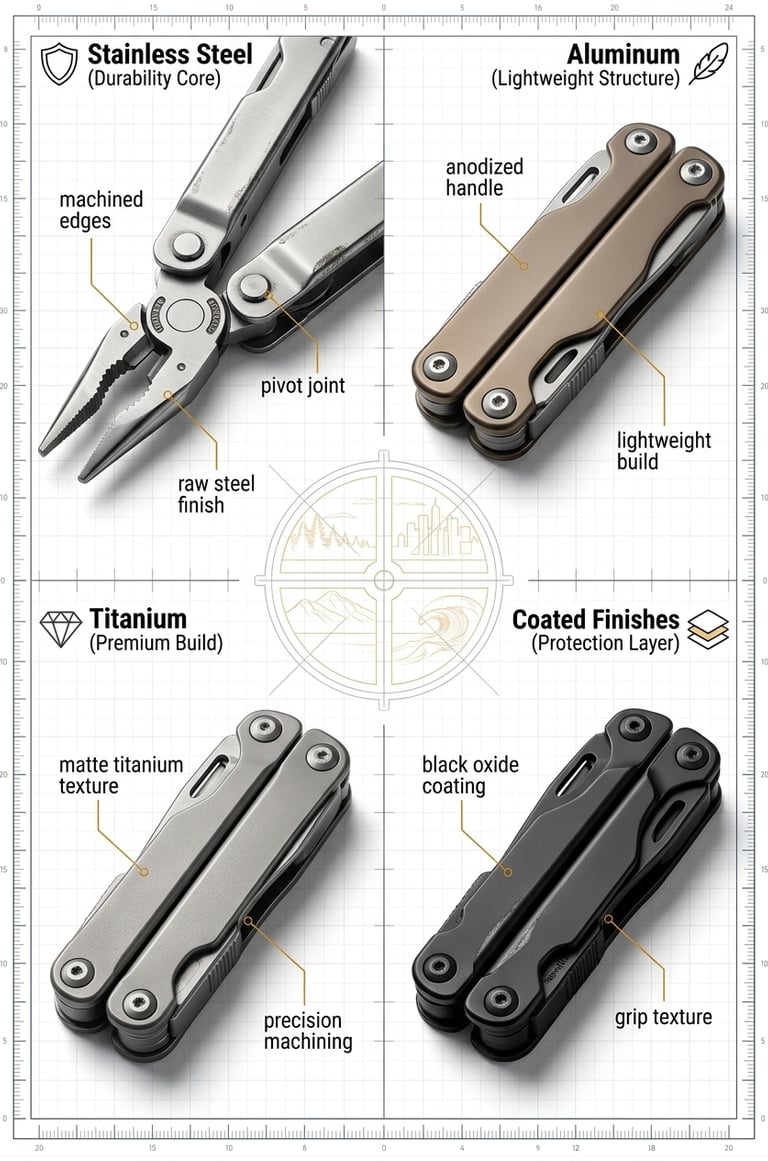
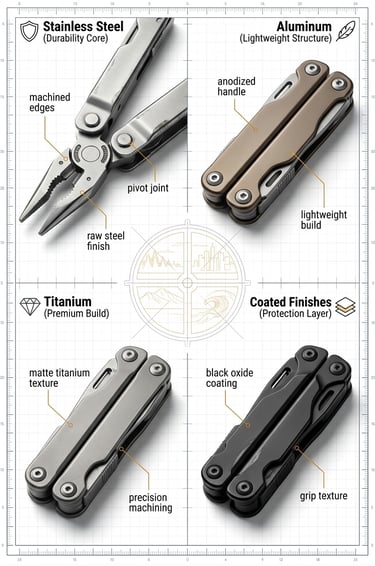
Stainless Steel
Most multi-tools use stainless steel.
Benefits:
Durable
Corrosion-resistant
Strong under load
This is the standard for reliability.
Aluminum Handles
Used to reduce weight.
Benefits:
Lighter carry
Easier handling
Trade-off:
Less durable than full steel builds
Titanium (Premium)
High-end tools may use titanium.
Benefits:
Stronger-to-weight ratio
Corrosion resistance
Premium feel
Trade-off:
Higher cost
Coated Finishes
Black oxide or coated tools reduce glare and corrosion.
They also:
Improve grip
Add wear resistance
Material choices affect durability and feel over time, especially when paired with strong tool design like those explained in Multitool Pliers Guide.
REAL WORLD USE
Different tools perform better depending on how you use them.
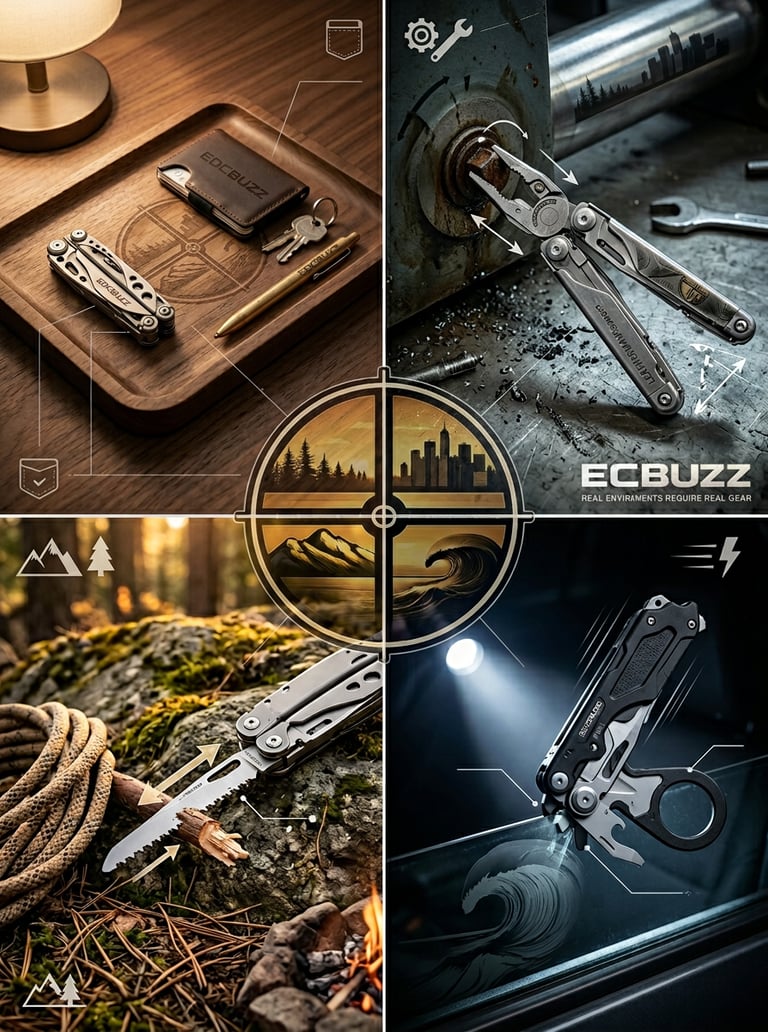
Everyday Carry
Best options:
Compact multi-tools
Balanced designs
Focus on:
Comfort
Speed
Accessibility
Work / Hard Use
Best options:
Full-size tools
Strength-focused designs
Focus on:
Durability
Plier strength
Reliability
Outdoor Use
Best options:
Tools with saws
Multi-tools with can openers
Focus on:
Versatility
Durability
Emergency Use
Best options:
Fast-access tools
Rescue-specific tools
Focus on:
Speed
Reliability
Real-world performance often comes down to strength and reliability, and Best Multitool for Beginners helps simplify what actually matters early on.
HOW TO CHOOSE THE RIGHT EDC MULTI-TOOL
Choosing the right tool depends on how you actually use it.
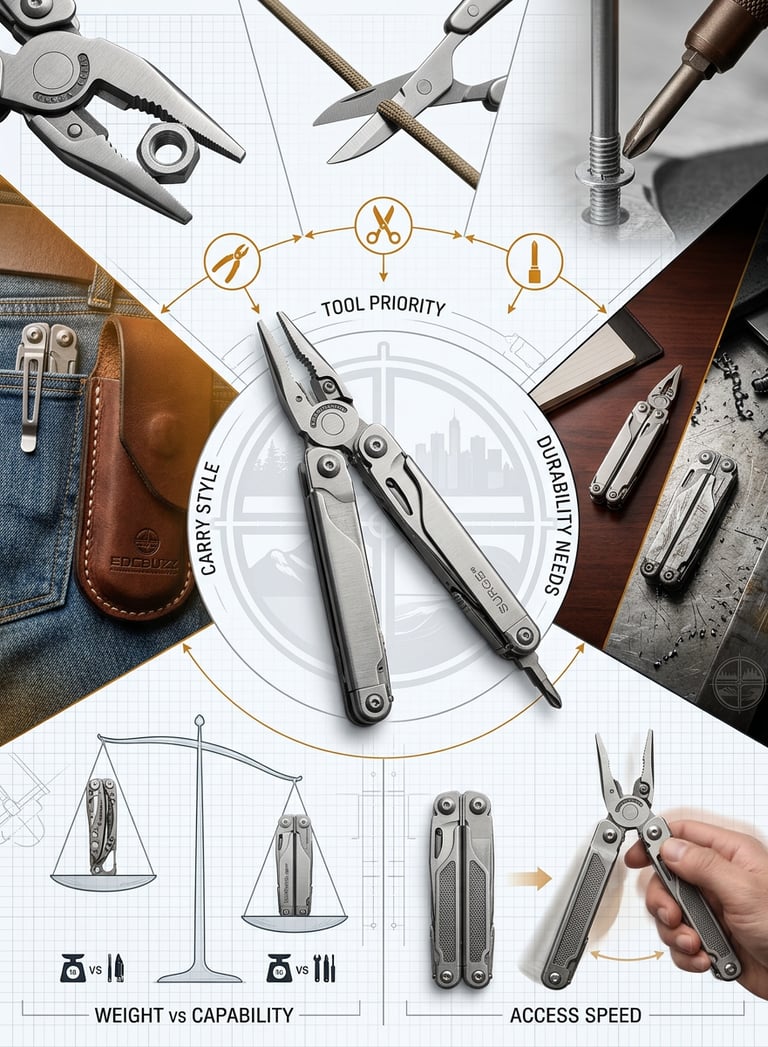
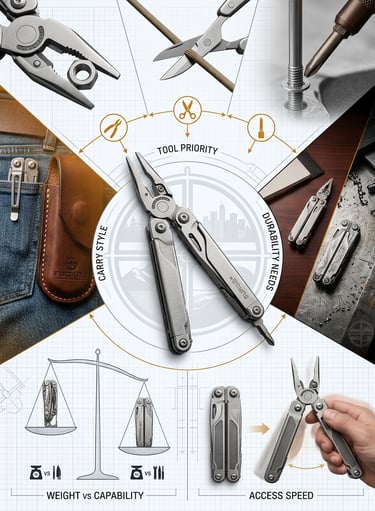
Tool Priority
Ask yourself:
What do you use most?
Pliers → go full-size or strong compact
Scissors → choose tools that prioritize them
Drivers → look for bit systems
Carry Style
Pocket carry → compact tools
Sheath carry → full-size tools
If it’s uncomfortable, you won’t carry it.
Weight vs Capability
More tools = more weight.
Balance matters.
Access Speed
Fast access tools get used more.
Slow tools get ignored.
Durability Needs
Light use → compact tools
Heavy use → reinforced designs
If you’re still narrowing things down, How to Choose EDC Multitool walks through the decision process step-by-step.
Carry what you’ll actually use
Avoid oversized tools for daily carry
Choose quality over tool count
Learn your tool—it matters more than specs
Keep it accessible, not buried
A multi-tool only works if you actually use it.
Many users overestimate what they need, which is why Best Multitool Features helps focus on what actually matters.
PRACTICAL EDC MULTI-TOOL TIPS
EDC MULTI-TOOLS
(Best Picks & Comparisons)

Find Your Perfect EDC Multi-Tool
You've learned how tool selection, size, locking mechanisms, and carry options impact everyday usability. Now it's time to put that knowledge to work.
Use the EDCBuzz Multi-Tool Advisor to find the best multi-tool for your budget, daily tasks, carry preferences, and work environment.
Explore More EDC Advisors
Now that you've chosen the right multi-tool, continue building your everyday carry with the EDCBuzz Advisor Series and find gear designed for your work, hobbies, and lifestyle.
Related EDC Gear
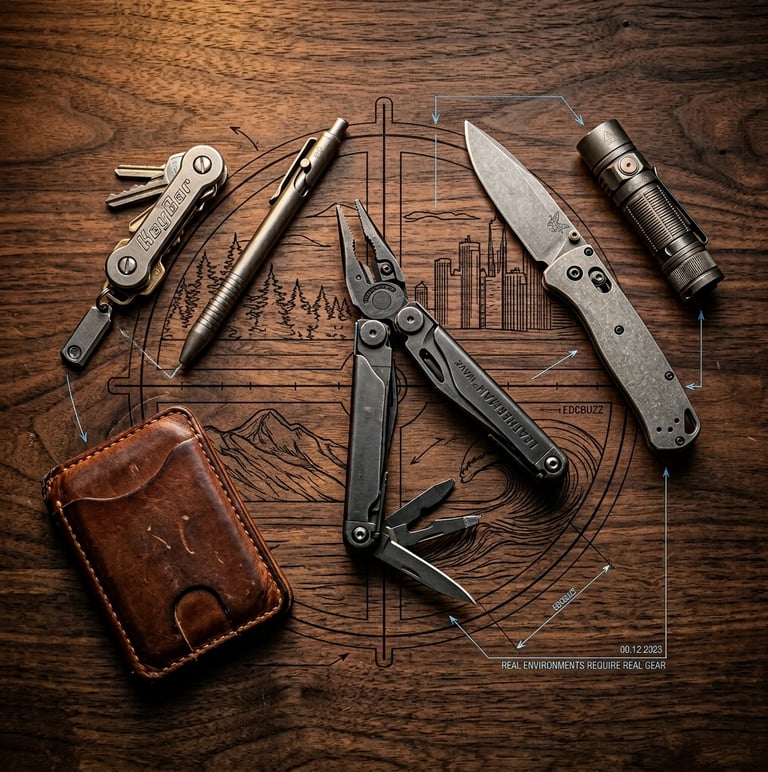
An EDC Multi-tool is most effective when paired with the right supporting tools. A well-built setup isn’t about carrying more—it’s about carrying what works together.
FLASHLIGHTS
A flashlight gives you control in low-light situations where most real tasks actually happen. Your multi-tool handles the job—but your flashlight lets you see what you’re doing.
KNIVES
Multi-tools include blades, but a dedicated knife is faster and easier for daily cutting. Use a knife for frequent tasks. Use your multi-tool when things get more complex.
WALLETS
Your wallet affects comfort more than anything else you carry. A slim, structured wallet keeps your setup clean and prevents unnecessary bulk.
FULL EDC SETUP
A strong setup is built on balance.
Each tool has a role—multi-tool for versatility, knife for cutting, flashlight for visibility, wallet for organization. When everything has a purpose, your carry becomes faster, lighter, and easier to use.
Frequently asked questions
What is the best EDC multi-tool?
The best EDC multi-tool balances size, usability, and durability. Most users benefit from a compact or mid-size tool that includes pliers, a blade, and basic drivers without adding unnecessary bulk.
Are multi-tools worth carrying every day?
Yes. A multi-tool solves small problems quickly without needing a full toolbox, making it one of the most practical everyday carry items.
What size multi-tool is best for EDC?
Compact to mid-size tools are best for everyday carry because they balance usability and comfort. Full-size tools are better for work but less convenient to carry daily.
Which is better: Leatherman or Gerber?
Both brands make high-quality tools. Leatherman tends to focus on refinement and usability, while Gerber often offers more budget-friendly and rugged options.
Do I need scissors on a multi-tool?
Scissors are one of the most useful tools for everyday tasks like cutting packaging, threads, and small materials. Many users find them more useful than expected.
How long do multi-tools last?
A quality multi-tool can last for years with regular use. Higher-end tools often include replaceable parts, which extend their lifespan.
What tools are most important on a multi-tool?
The most useful tools are pliers, a blade, and a screwdriver. Everything else is secondary and depends on your specific needs.
Are cheap multi-tools worth it?
Budget multi-tools can offer good value, but they may lack durability and refinement compared to higher-end models. They’re best for light use or backup carry.
What is the difference between a multi-tool and a Swiss Army knife?
Multi-tools typically include pliers and are built for mechanical tasks, while Swiss Army knives focus more on compact versatility and lighter everyday functions.
How do I choose the right multi-tool for me?
Choose based on how you carry and what tasks you perform most often. Focus on usability, not just the number of tools.
Final Thoughts
EDC multi-tools aren’t about having more tools—they’re about having the right ones.
The best multi-tool:
Fits your carry style
Matches your daily needs
Performs consistently over time
If you focus on real-world use—not just features—you’ll end up with a tool that actually improves your everyday carry.
Contact@TheBuzzHQ.com
© 2026 EDCBuzz. All rights reserved.
EDCBuzz
Master everyday carry systems with clarity and precision. Built for real environments and practical use.
For educational purposes only.
General Inquiries: