
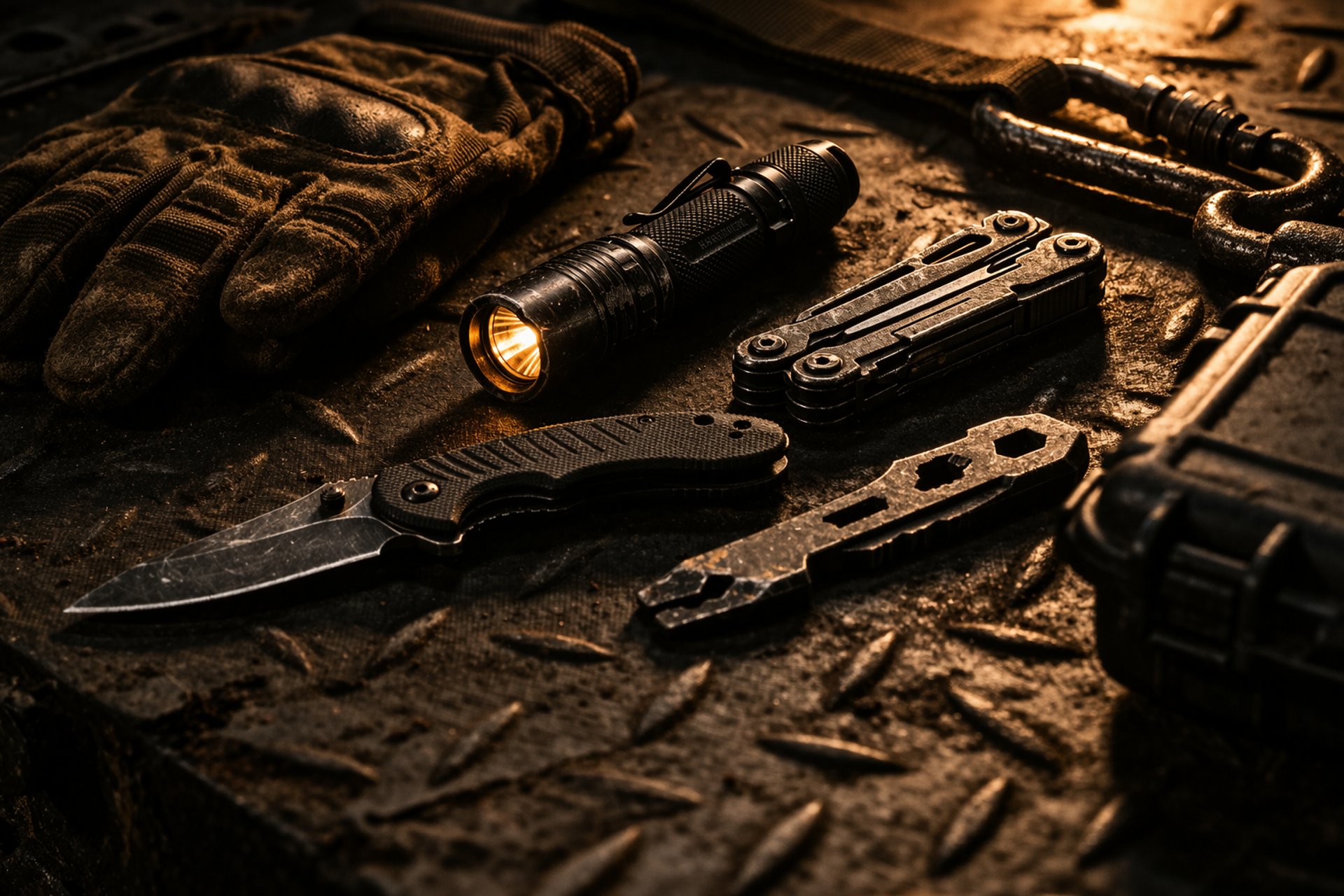
EDC Flashlights: Complete Guide to Everyday Carry Lighting
An everyday carry (EDC) flashlight is a compact, reliable light source designed to handle real-world situations—whether that’s navigating low-light environments, checking dark spaces, or responding to unexpected conditions.
Unlike larger duty or search lights, EDC flashlights prioritize portability, fast access, and consistent performance. They are built to disappear in your pocket until you actually need them—then deliver immediately.
From quick daily tasks to emergency use, a well-chosen flashlight is one of the most practical tools you can carry.
EDC flashlights are not about maximum brightness—they are about usable light when it matters.

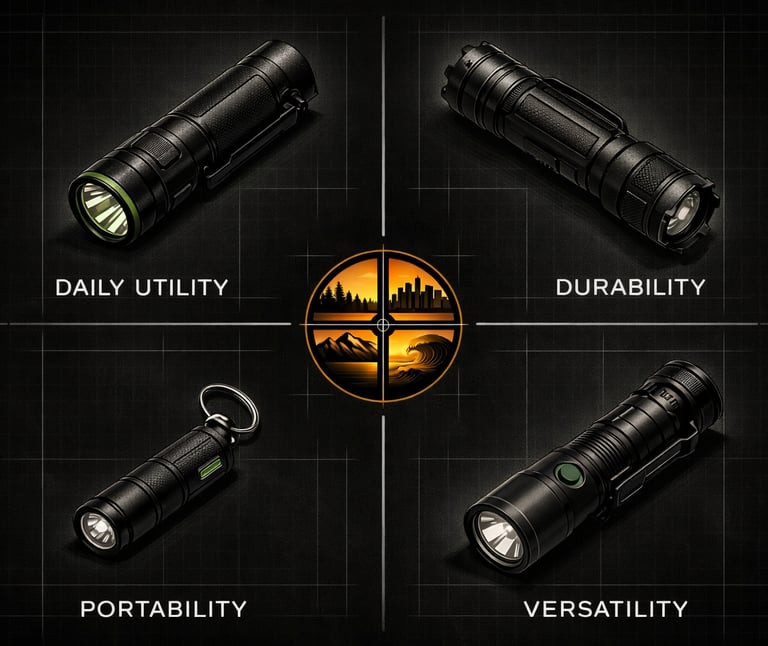
Quick Verdict
• Best for daily utility: Compact rechargeable flashlights with pocket clips
• Best for performance: High-output models with balanced lumens and candela
• Best for portability: Keychain or slim pen-style lights
• Best for versatility: Multi-mode lights with adjustable beam profiles

Types of EDC Flashlights
Understanding flashlight types is the first step in choosing the right carry.
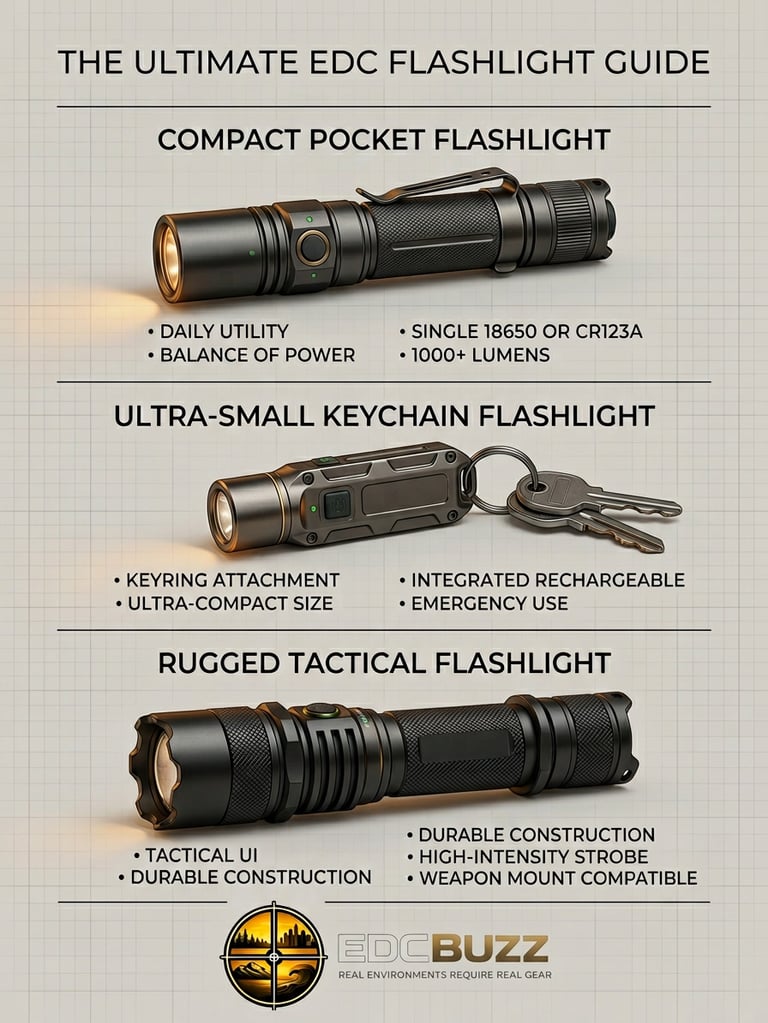
If you’re just getting started, this breakdown puts the categories into real-world context.
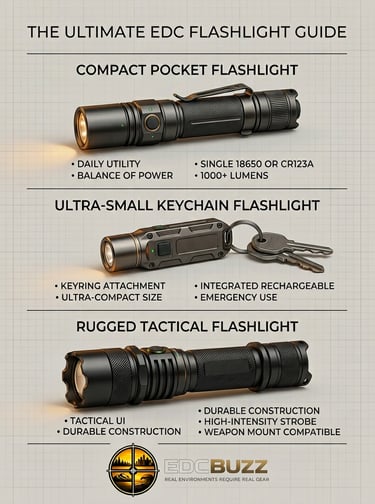
Pocket EDC Flashlights
Pocket flashlights are the most common EDC option. They are compact, powerful for their size, and designed for daily carry without adding bulk.
Most feature rechargeable batteries, multiple brightness modes, and a clip for secure carry.
They are ideal for everyday tasks and general-purpose use, see Best EDC Flashlights.
Keychain Flashlights
Keychain lights prioritize ultra-compact size over raw output. They attach directly to your keys and are always available when needed.
While they don’t match the power of larger lights, they are perfect for quick tasks and emergency backup.
For smaller setups, they pair well with Best Keychain Flashlights.
Tactical Flashlights
Tactical-style lights are built for durability and high-output performance. They often feature higher candela, stronger beams, and simplified controls for fast activation.
They are best suited for users who prioritize performance and reliability under pressure.
If you want more output-focused options, see Best Tactical Flashlights.
High-End EDC Flashlights
Premium EDC flashlights push performance, materials, and efficiency further. They often include advanced drivers, better thermal control, and higher-quality construction.
They are built for users who want long-term reliability and top-tier performance.
For upgraded options, check Best High-End EDC Flashlights.
Flashlight Performance Explained
Flashlight performance is not just about brightness—it’s about how that light is delivered and used.
Understanding output helps you choose a light that actually performs in real-world conditions.
Lumens vs Candela
Lumens measure total light output. Candela measures how focused that light is.
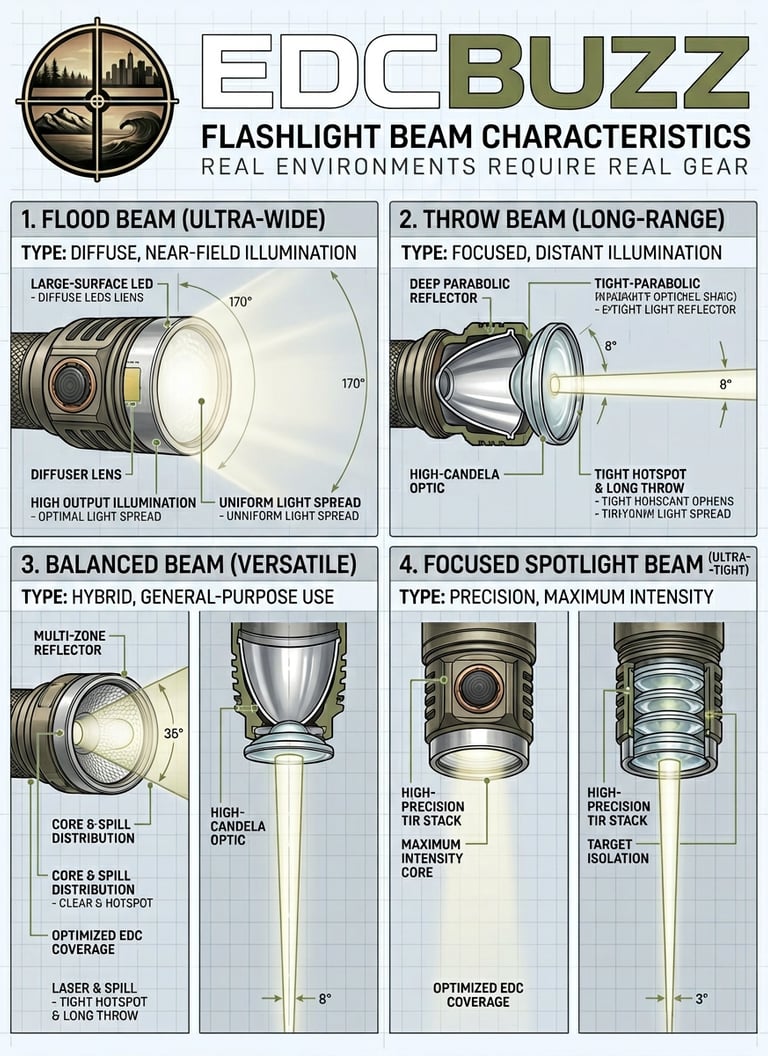
A high-lumen light may flood an area, while a high-candela light throws farther with more intensity.
For a deeper breakdown, see lumens vs candela explained.
Beam Types
Beam shape affects how a flashlight performs in different environments.
Flood beams provide wide coverage for close-range tasks.
Throw beams focus light farther for distance visibility.
Balanced beams combine both for general use.
If you want to understand how beam patterns impact performance, read flashlight beam types.
Modes and Output Levels
Most EDC flashlights include multiple brightness modes—from low-output utility modes to high-output bursts.
Lower modes extend battery life and reduce glare, while higher modes provide maximum visibility when needed.
A well-designed flashlight gives you usable output—not just peak numbers.
Battery Types
Battery choice affects runtime, performance, and long-term usability.
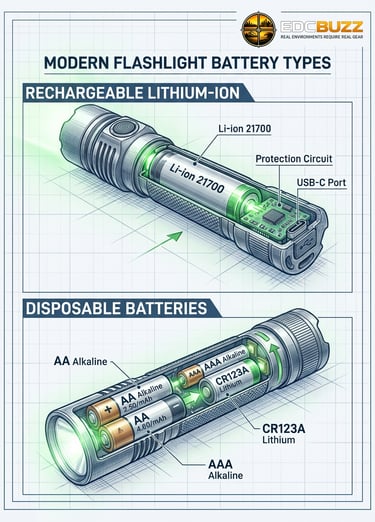
Rechargeable Batteries
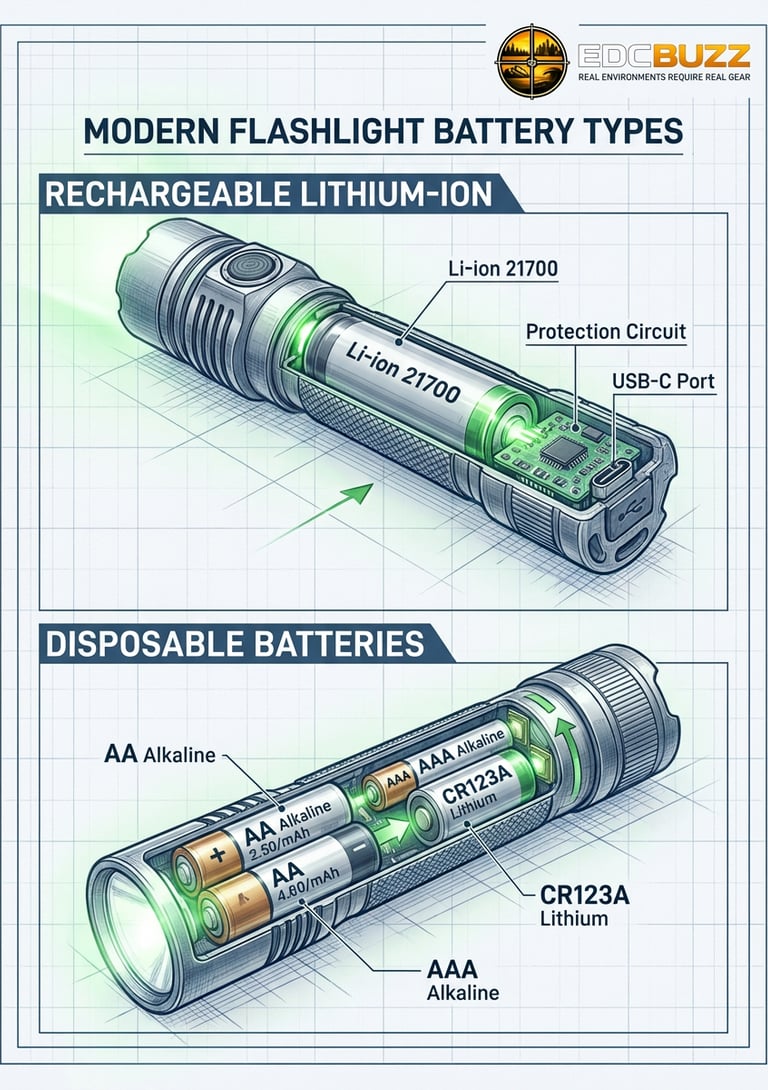
Rechargeable lithium-ion batteries are the most common in modern EDC flashlights. They offer strong output, consistent performance, and convenience.
Most modern lights use built-in USB charging or removable rechargeable cells.
If you’re comparing options, see edc flashlight battery types.
Disposable Batteries
Disposable batteries (AA, AAA, CR123A) are widely available and easy to replace, making them useful for backup or emergency use.
However, they generally offer lower performance compared to rechargeable systems.
To compare both options, read rechargeable vs disposable flashlights.
Build Materials and Durability
A flashlight’s construction determines how well it holds up under real-world use.
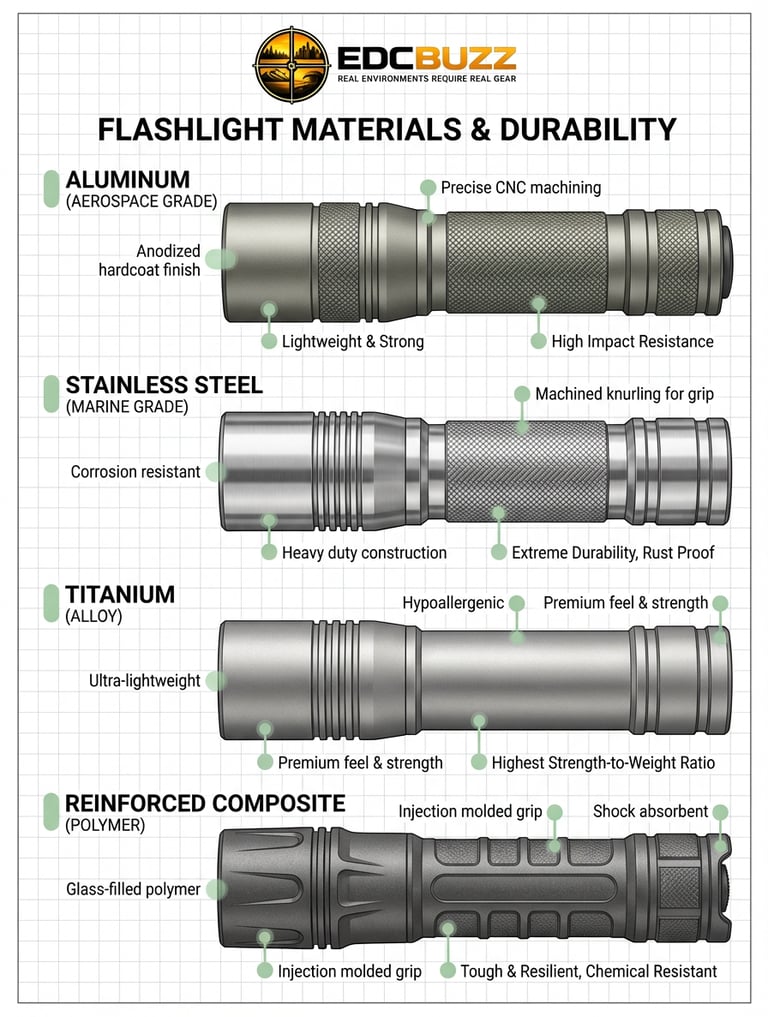
Aluminum
Most EDC flashlights use anodized aluminum. It provides a strong balance of durability, weight, and heat management.
It’s lightweight, corrosion-resistant, and built for daily carry.
Stainless Steel and Titanium
Premium materials like stainless steel and titanium offer increased durability and a more refined feel.
They are heavier but often found in higher-end models for long-term use.
Water and Impact Resistance
Look for IP ratings that indicate water resistance and durability.
A solid EDC flashlight should handle drops, rain, and everyday wear without issue.
Controls and Usability
How a flashlight operates matters just as much as its performance.
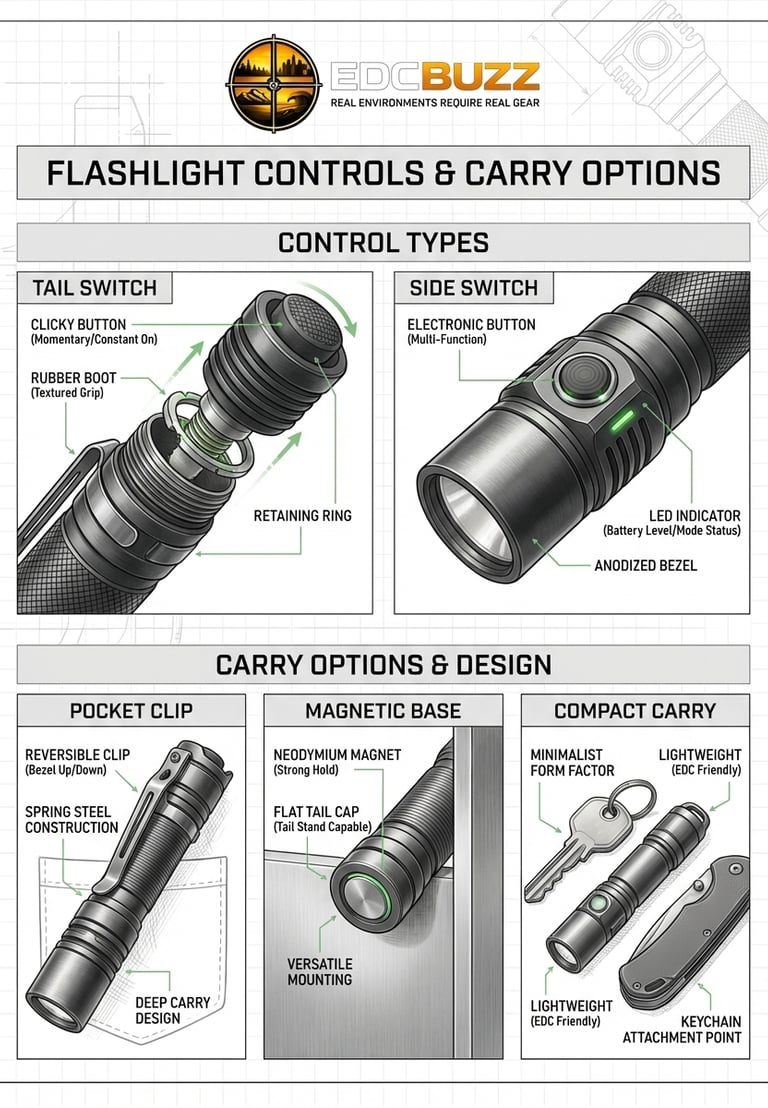
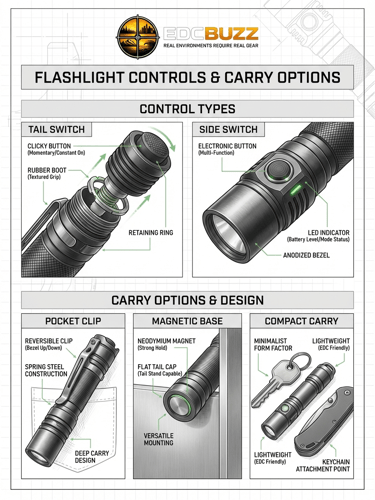
Tail Switch vs Side Switch
Tail switches allow quick activation and are often preferred for fast access.
Side switches provide easier mode control and are more common in everyday-use lights.
Some models combine both for flexibility.
Carry Options
Pocket clips, magnetic bases, and compact designs all affect how easily a flashlight integrates into your daily carry.
The best flashlight is the one you actually carry.
Choosing the right flashlight depends on how you plan to use it.
Consider:
• Size and carry comfort
• Output balance (not just max brightness)
• Battery type and charging method
• Beam style based on your environment
• Durability for your use case
If you’re building a full setup, edc gear checklist helps tie everything together.
How to Choose the Right EDC Flashlight
EDC Knives
(Best Picks & Comparisons)
Legal Considerations
Flashlight laws are generally minimal, but brightness, usage, and mounting (in certain contexts) can have restrictions depending on location.
Always follow local regulations and use responsibly.
EDC Knife vs Multi-Tool
While both serve practical purposes, they solve different problems.
EDC Flashlight
• Provides visibility and situational awareness
• Essential in low-light conditions
Multi-Tool
• Handles mechanical tasks and adjustments
• Expands capability beyond cutting
Most users benefit from carrying both as part of a balanced setup.
Who Should Carry an EDC Flashlight?
EDC flashlights are useful for:
• Everyday tasks and quick visibility needs
• Travel and low-light environments
• Work situations requiring reliable lighting
• Emergency preparedness
They are one of the simplest upgrades you can make to your everyday carry.

Find Your Perfect EDC Flashlight
You've learned how beam patterns, brightness, battery types, runtime, and carry styles affect real-world performance. Now it's time to put that knowledge to work.
Use the EDCBuzz Flashlight Advisor to find the best flashlight for your budget, everyday needs, carry preferences, and environment.
Explore More EDC Advisors
You've found the flashlight that fits your needs. Continue building the rest of your everyday carry with the EDCBuzz Advisor Series and discover gear that works together for your budget and lifestyle.

Related EDC Gear
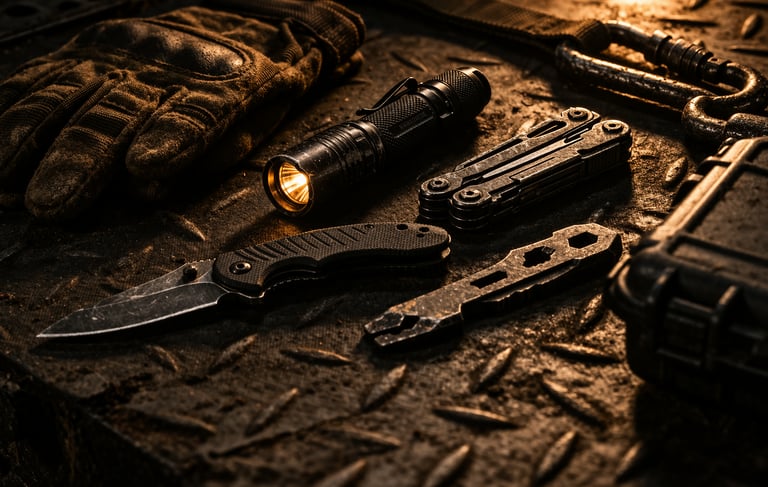
An EDC flashlight works best when paired with the right supporting tools.
Flashlights
A reliable flashlight improves safety and usability across nearly every environment.
Multi-Tools
Multi-tools expand your capability beyond lighting, helping with quick fixes and adjustments.
Building a Complete Setup
A balanced EDC system focuses on what you actually use. A flashlight, cutting tool, and supporting gear create a setup that adapts without unnecessary bulk.
A well-balanced setup starts with the right foundation—this guide on how to build an EDC loadout ties everything together.
Frequently asked questions
What is a good lumen range for an EDC flashlight?
Most EDC flashlights fall between 300 to 1,500 lumens for practical use. Lower modes are used more often, while higher output is reserved for short bursts.
Is higher lumens always better?
No. Higher lumens don’t always mean better performance. Beam focus, efficiency, and usability matter just as much.
What is the best battery type for EDC flashlights?
Rechargeable lithium-ion batteries are the most practical for performance and convenience, though disposable batteries remain useful for backup.
How long do EDC flashlights last?
A quality flashlight can last years with proper care. Battery lifespan and build quality are the biggest factors.
Are expensive flashlights worth it?
Higher-end flashlights often provide better durability, efficiency, and long-term reliability—but many mid-range options perform extremely well for everyday use.
What beam type is best for EDC flashlights?
A balanced beam with both flood and throw is ideal for everyday use. It provides enough spread for close tasks while still offering distance when needed.
How important is flashlight size for everyday carry?
Size matters more than most people think. A flashlight that’s too large becomes inconvenient, while a compact light is more likely to be carried consistently.
Do EDC flashlights need multiple brightness modes?
Yes, multiple modes improve usability. Lower settings extend battery life for daily tasks, while higher modes are useful for short bursts when maximum output is needed.
Final Thoughts
An EDC flashlight is one of the most practical tools you can carry.
The right choice isn’t about chasing the highest numbers—it’s about finding a light that fits your daily routine, performs when needed, and integrates seamlessly into your carry.
Focus on usability, reliability, and real-world performance—and your flashlight becomes a tool you rely on every day.
Contact@TheBuzzHQ.com
© 2026 EDCBuzz. All rights reserved.
EDCBuzz
Master everyday carry systems with clarity and precision. Built for real environments and practical use.
For educational purposes only.
General Inquiries: