
Polarized Sunglasses and UV Protection Explained
Discover how polarized sunglasses improve visual clarity and why UV protection is essential for safeguarding your eyes from harmful rays.
EDC SUNGLASSES
The EDCBuzz Editorial Team - Led by AJ “Buzz” Eichman
7/4/20267 min read
When it comes to sunglasses, the terms “polarized” and “UV protection” often get lumped together, creating confusion about what each actually does and why both matter. Polarized sunglasses are popular for their glare-reducing properties, while UV protection is essential for eye health against invisible but harmful ultraviolet rays. Understanding the difference between these features—and how they complement each other—can help you make informed decisions when selecting everyday carry eyewear designed for comfort, safety, and performance. To better understand how they fit into an everyday carry setup, explore EDC Sunglasses and the Sunglass Lens & Frames Guide.
Quick Verdict
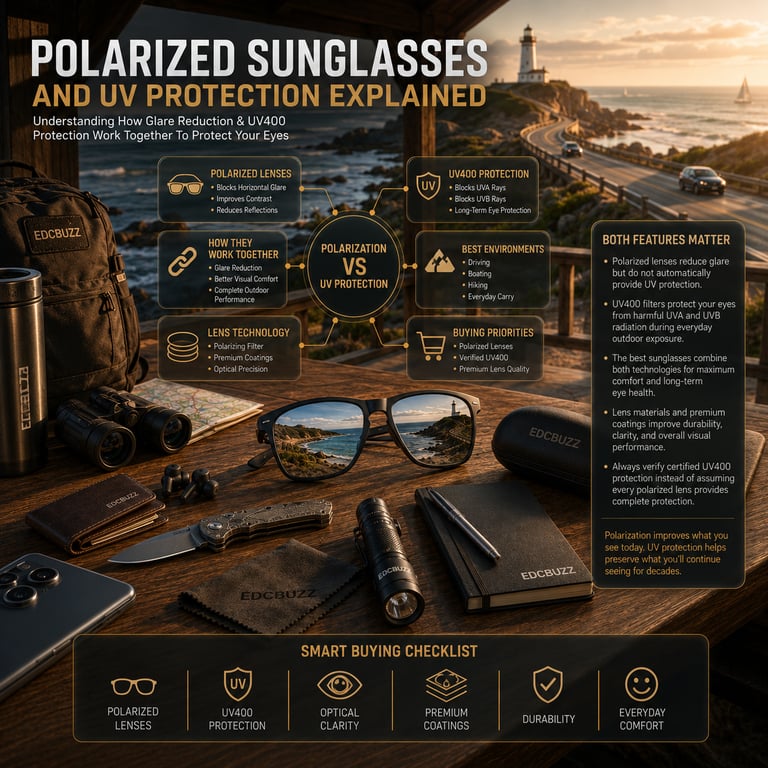
Polarized lenses reduce glare from horizontal surfaces like water and roads, improving visual clarity but do not inherently block UV rays.
UV protection involves filtering out harmful ultraviolet radiation (UVA and UVB) to prevent long-term eye damage.
Effective sunglasses combine polarization technology with verified UV filtering for comprehensive eye safety.
Lens materials and coatings influence durability, comfort, and optical performance beyond just polarization and UV coverage.
What Are Polarized Sunglasses and How Do They Work?
Polarized sunglasses incorporate a specialized chemical filter embedded in their lenses that aligns vertically to block horizontally polarized light. This horizontally polarized light is what bounces off flat surfaces—water, wet pavement, glass—and creates glare that washes out visual detail. When glare saturates your field of vision, it forces your eyes to strain, reducing both comfort and safety.
The polarization filter works by essentially acting like a vertical fence for light waves. Instead of letting in all orientations of light, it selectively filters out reflected glare that is horizontally polarized, allowing only vertically polarized light to pass through. The result is a dramatic reduction in blinding reflections, making surfaces appear clearer and colors more saturated. If you're considering them for daily use, How to Choose Sunglasses for Everyday Carry provides additional buying guidance.
Understanding UV Rays and Eye Health
Ultraviolet (UV) rays from the sun are invisible wavelengths of light that fall outside the visible spectrum but carry significant energy. They are generally classified into UVA (320-400 nm) and UVB (280-320 nm) bands. Both have the capacity to damage eye structures over time. UV exposure contributes to cataracts, macular degeneration, and photokeratitis—essentially sunburn of the cornea.
UV protection in sunglasses involves a UV filter that blocks or absorbs these harmful rays before they reach your eyes. The effectiveness is measured by the percentage of UV blockage, with the industry standard recommending blocking 99% to 100% of UVA and UVB rays. This filtering is different from polarization, as polarization addresses light orientation rather than wavelength. If you're curious about adaptive lenses, see Photochromic Lenses Explained: How They Work.
How Polarized Lenses Reduce Glare
The horizontal polarization filter selectively neutralizes glare by rejecting light waves oscillating in the horizontal plane. To break it down further: sunlight normally scatters in multiple directions but when it reflects off a flat surface, it becomes predominantly horizontally polarized. Since your lens filter passes only vertically polarized light, the glare is essentially “blocked” or canceled out.
This is why polarized sunglasses excel in scenarios like fishing or boating, where water reflection is intense, or driving on wet roads where glare from other vehicles and asphalt can impair visibility. However, polarized lenses can sometimes interfere with reading LCD or digital screens, which emit polarized light themselves, causing patterns or blackouts on displays. If driving is your priority, consider Best Driving Sunglasses.
The Importance of UV Protection in Sunglasses
While polarization enhances visual comfort and acuity, UV protection plays a critical role in maintaining long-term eye health. UV rays are linked to microscopic cellular damage in the lens and retina, which accumulate silently over years of exposure. Sunglasses without UV protection provide no defense against this damage, no matter how effective their glare reduction.
It’s also important to note that polarization alone does not guarantee UV filtering. Many sunglasses labeled as polarized do not offer comprehensive UV blocking unless specified. Therefore, the best sunglasses combine both: the glare-reducing benefits of polarization with full-spectrum UV protection.
Materials and Technologies Behind Polarized Sunglasses
Lens materials used in polarized sunglasses impact their optical clarity, impact resistance, and comfort. Common materials include polycarbonate and CR-39 plastic. Polycarbonate lenses are prized for high impact resistance, making them suitable for active or work scenarios. CR-39 plastics offer slightly better optical clarity but are less resistant to scratches and impacts.
Polarization works through applying a thin chemical film arranged vertically during the lens manufacturing process. This film is durable but can be damaged by improper cleaning or abrasive use. Additional coatings, such as anti-scratch and anti-reflective layers, enhance durability and reduce secondary reflections, improving comfort during extended wear. For a deeper comparison of lens materials, read Choosing Between Glass and Polycarbonate Lenses.
Everyday Benefits of Wearing Polarized Sunglasses
Wearing polarized sunglasses daily offers tangible improvements in visual comfort and safety. By reducing glare, these lenses alleviate eye strain during activities like driving, especially on wet or shiny road surfaces. Outdoors, they improve contrast and detail detection when hiking, fishing, or camping, allowing you to more accurately identify terrain features and obstacles.
In work environments where glare from reflective machinery, glass, or metal surfaces is common, polarized lenses help reduce fatigue and maintain focus. Even indoor use near large, bright windows or reflective screens can benefit from the glare reduction provided by polarization. Those with active lifestyles may also want to explore Best Athletic Sunglasses.
Common Misconceptions about Polarization and UV Protection
A frequent misunderstanding is assuming that all polarized sunglasses inherently provide UV protection. This is not necessarily true; polarization relates solely to glare reduction and does not filter ultraviolet radiation on its own. Always check for verified UV protection labels or specifications.
Another common error is believing polarized lenses improve visibility at night or in low-light driving conditions. In reality, polarization can reduce contrast under these circumstances, sometimes making it harder to see.
Some think that buying cheaper polarized sunglasses is an adequate shortcut, but inexpensive models may lack certified UV blocking filters. This risks potential damage from unfiltered ultraviolet exposure. You can also compare real-world lens technologies in Julbo Shield REACTIV vs Maui Jim Stone Shack (Photochromic vs Polarized).
Buyer’s Guide: Choosing the Right Polarized Sunglasses for UV Protection
When selecting polarized sunglasses, first verify that the lenses block 99% to 100% of UVA and UVB rays. Look for UV 400 labels or certification from recognized testing authorities. Confirm the presence of polarization, but understand its function is glare reduction, not UV blocking.
Consider lens material based on your daily activities. Polycarbonate lenses are advisable if durability and impact resistance are priorities, such as during sports or manual work. For general use, CR-39 offers excellent optical clarity.
Check for additional lens coatings—anti-scratch coatings extend lens life, while anti-reflective coatings reduce ghost reflections inside the lens, improving visual comfort. Try to test how sunglasses affect visibility of digital displays, especially if you frequently use smartphones or GPS devices.
Balance your budget with quality: polarized lenses without UV protection or with inferior coatings provide limited benefits. Investing in verified quality prevents subtle but cumulative eye damage over time and improves the practical value of your sunglasses. Lens tint also plays a role, so it's worth learning How Lens Colors Affect Vision Outdoors.
Common Mistakes When Choosing Polarized Sunglasses
One of the most pervasive mistakes is assuming any pair of polarized sunglasses provides full UV protection without verifying the certification. This assumption overlooks the separate nature of polarization and UV filtering, potentially leaving eyes vulnerable.
Another error is relying on polarized lenses for night driving or low-light conditions, where their glare-blocking benefits vanish and may even degrade contrast.
Not understanding that UV protection is about preventing eye diseases, while polarization is purely about visual comfort and glare reduction, leads to mismatched expectations. This can result in disappointment and improper use.
Finally, opting for cheaper, uncertified products can expose wearers to harmful UV rays and low-quality lenses prone to distortion, causing discomfort and impaired vision. If glare is your primary concern, Do Mirrored Sunglasses Actually Reduce Glare? offers another useful comparison.
Frequently Asked Questions
How do polarized lenses reduce glare?
Polarized lenses filter out horizontally polarized light reflected from flat surfaces using a vertically aligned chemical filter. This selective filtration reduces harsh glare, improving visual clarity and reducing eye strain.
Do polarized sunglasses protect against UV rays?
Not necessarily. Polarization removes glare but does not inherently block ultraviolet radiation. Effective UV protection requires a dedicated UV filter certified to block both UVA and UVB rays.
Can I use polarized sunglasses at night or while driving?
Polarized lenses can reduce visibility in low-light or night driving by filtering light in ways that reduce contrast. They are generally not recommended for nighttime use.
What materials are used for polarized lenses?
Common lens materials include polycarbonate and CR-39 plastic. Polycarbonate is impact resistant and durable, while CR-39 offers excellent optical clarity but is less resistant to scratches.
How do I know if my sunglasses have UV protection?
Look for clear labeling indicating 99% to 100% UVA/UVB blocking or “UV400” certification. Trusted manufacturers provide testing data or compliance with international UV standards.
What are the everyday benefits of wearing polarized sunglasses?
They reduce glare-related eye strain, improve clarity in bright environments, enhance contrast and color perception during outdoor activities, and contribute to safer driving and work performance.
Are polarized sunglasses suitable for water sports or fishing?
Yes, polarization is particularly effective for water activities as it cuts glare from water surfaces, allowing better visibility beneath the water and improving visual comfort.
What maintenance do polarized sunglasses require for best performance?
Clean lenses regularly with a microfiber cloth and mild soap or lens cleaner to avoid scratching the polarization film. Avoid abrasive materials and exposure to extreme heat, which can degrade lens coatings.
Conclusion
The value of polarized sunglasses lies in their ability to reduce visual glare, making everyday tasks and outdoor activities easier on the eyes. However, the invisible threat ultraviolet radiation poses to long-term eye health makes UV protection an equally critical feature. Understanding the distinction between polarization and UV filtering, and choosing sunglasses that effectively incorporate both, ensures you get comprehensive protection and enhanced comfort.
Lens material choices and supplementary coatings further influence the performance, durability, and usability of your sunglasses across varied environments. By approaching your selection with clear knowledge of how polarization and UV protection work in tandem, you avoid misconceptions and make choices that support your daily eye comfort and protection for years to come. For additional comparisons, see Serengeti Anteo vs Oakley Sutro TI Sweep (Glass vs Polycarbonate) and What Color Sunglass Lens Is Best?

Contact@TheBuzzHQ.com
© 2026 EDCBuzz. All rights reserved.
EDCBuzz
Master everyday carry systems with clarity and precision. Built for real environments and practical use.
For educational purposes only.
General Inquiries: