
Are Safety Glasses Good Enough for Outdoor Work?
Explore how safety glasses protect your eyes outdoors with impact resistance, UV blocking, durability, and comfort to keep you safe during any task.
EDC SUNGLASSES
The EDCBuzz Editorial Team - Led by AJ “Buzz” Eichman
7/4/20267 min read
When you’re out there working with your hands—whether it’s clearing brush, grinding metal, or tinkering with power tools—you tend to learn quickly that keeping your eyes intact is non-negotiable. Safety glasses are a go-to for protecting against flying debris and accidental dust storms. But the question that sticks around is whether ordinary safety glasses hold up well enough for the demands of outdoor work. From regular wear and tear to sun exposure that seems relentless, the gear you choose can either keep you safe or leave you squinting in regret.
The answer depends on more than impact resistance alone. Choosing the right EDC Sunglasses or protective eyewear starts with understanding How To Choose Sunglasses that combine impact protection, UV defense, and comfort for long days outside.
Quick Verdict
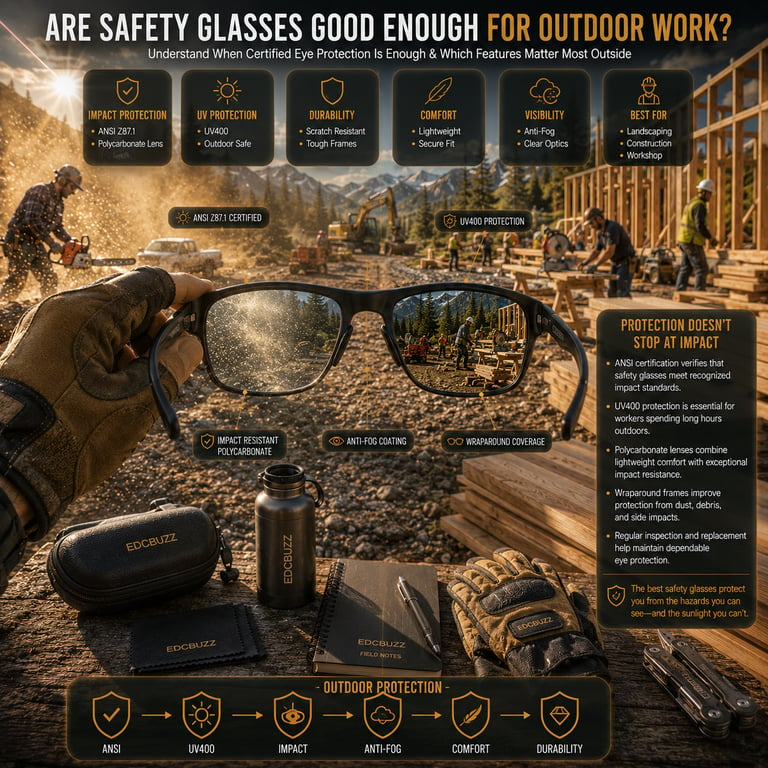
Safety glasses offer solid protection against impact and flying particles common in outdoor environments.
Not all safety glasses block UV rays effectively; look for models that clearly advertise UV protection.
Durability varies, with polycarbonate lenses and sturdy frames standing up better to outdoor use.
Comfort and secure fit are crucial for consistent use, especially during long workdays outside.
Understanding Safety Glasses: What They Protect Against
Safety glasses were made to shield your eyes from hazards you encounter in work zones—think dust, flying debris, and occasional impacts. That’s their baseline function, and they generally do it well enough. When you’re working outdoors, whether trimming limbs or handling tools, things move fast and some dust or tiny bits tend to fly your way. Without eyewear designed to catch those hazards, well, your eyes pay the price.
The trick with outdoor work is the environment itself adds stress to your protective gear. Dirt, moisture, and exposure to sunlight all chip away at the effectiveness of lenses and frames over time. That means your safety glasses need more than just the basic impact shield—they need to endure weather and keep letting you see clearly. If you spend extended hours outside, dedicated Best EDC Sunglasses often combine these features with better all-day comfort.
The Importance of UV Protection in Outdoor Eye Safety
One detail often overlooked is UV protection. The sun’s rays, especially UVA and UVB, can sneak up on you. It’s not just about immediate injury; long-term exposure can damage the delicate tissues in your eyes. Many safety glasses don’t automatically come with full UV protection, and unless it’s specified, you shouldn’t assume they're blocking it.
You want safety glasses that offer 99 to 100 percent UV blocking, not just a dark tint or a general sticker. Polycarbonate lenses usually come with built-in UV protection, making them a strong candidate for outdoor use. Without that feature, your glasses are only half doing their job—stopping debris but letting the sun slowly wear your eyesight down. If your work shifts between bright sunlight and shaded areas, understanding When Should You Wear Photochromic Sunglasses? can help determine whether adaptive lenses are a better option.
Materials and Construction: What Makes Safety Glasses Durable Outdoors
Durability is a silent but serious player in outdoor eye protection. The kind of plastic your lenses are made from and how well the frames hold up to knocks and weather can make the difference over the long haul.
Polycarbonate lenses are arguably the most durable and reliable you’ll find for outdoor tasks. They resist impact better than many alternatives and handle UV rays well. Scratch resistance also matters here—no one wants to work through a fogged-up or deeply scratched lens. Some safety glasses come with anti-scratch coatings that keep them clear longer, which you notice more after a few days of persistent use.
Frames built for outdoor work tend to be tougher plastics, sometimes with rubber inserts or adjustable features to keep glasses snug during active movement. Wraparound styles add protection from the sides, blocking debris or sun that sneaks in from angles. If you're wondering how these materials compare, our Serengeti Anteo vs Oakley Sutro TI Sweep (Glass vs Polycarbonate) comparison breaks down the strengths of each lens material.
Impact Resistance Standards and What to Look For
When picking safety glasses for outdoor work, it pays to check if they meet recognized standards. In the United States, ANSI Z87.1 certification is the key mark to look for. This standard verifies that glasses can stand up to certain impact forces, giving you confidence the lenses won’t shatter or let debris through.
Not every pair marketed as safety glasses carries this certification. Without it, you might as well be risking your eyes on a budget pair of reading glasses—not quite the same thing.
If your work involves power tools, cutting, or handling materials prone to cracking or splintering, invest in glasses built to these standards. They’re the difference between a close call and a trip to the doctor. While some people consider wearable technology, it's worth asking Can Smart Glasses Replace Traditional Sunglasses? before relying on them for demanding outdoor environments.
Common Mistakes When Choosing Safety Glasses for Outdoor Use
Choosing safety glasses might seem straightforward, but some pitfalls can trip you up if you don’t watch your step.
Assuming All Safety Glasses Provide UV Protection
Not all safety glasses block UV rays. Choosing a pair without checking could leave your eyes vulnerable even though you feel fully protected.
Picking Based Solely on Price
While budget is a factor, cheap glasses often skimp on materials, coatings, or impact resistance. That “one size fits all” approach rarely fits well, leading to uncomfortable wear and inconsistent use. If you're wondering whether paying more is worthwhile, Do Expensive Sunglasses Really Protect Your Eyes Better? explores where premium models actually make a difference.
Ignoring Impact Resistance Certifications
Without ANSI Z87.1 or equivalent certification, your glasses might not survive an impact that matters.
Overlooking Fit and Comfort
Glasses that slip or pinch tend to end up in pockets or on tops of heads. That means they aren’t doing their job when you need them.
Using Glasses with Uncoated Lenses
Lenses without anti-scratch or anti-fog coatings degrade quickly outdoors, reducing clarity and risking safety. Understanding the differences in lens technologies, like those covered in Julbo Shield REACTIV vs Maui Jim Stone Shack (Photochromic vs Polarized), can help you choose coatings that match your work environment.
Delaying Replacement
You might hesitate to replace glasses with scratched or damaged lenses, but damage compromises protection—a risk that isn’t worth saving a few bucks.
When to Upgrade Your Protective Eyewear
If your current safety glasses cover debris but don’t explicitly mention UV protection, it’s time to consider something better. Likewise, if you notice scratches, fogging, or a frame that’s lost its grip, your glasses aren’t doing their job anymore.
Outdoor work exposes your gear to all sorts of punishment, so glasses need regular assessment. A pair that was fine last year might not hold up this year. If you're unsure whether aging lenses still offer adequate protection, Do Sunglasses Expire? explains what actually wears out over time.
Practical Tips for Maintaining and Using Safety Glasses Outdoors
Keeping your safety glasses in good condition is as important as picking the right pair in the first place.
Clean lenses regularly, using appropriate cloths to avoid scratches. If you’re working in dusty or wet environments, wipe them down to maintain visibility.
Store them in a hard case when not in use to prevent damage.
If you’re prone to lenses fogging up—common when moving between temperatures or sweating—look for glasses with anti-fog coatings or use sprays designed for this purpose.
Always adjust fit to remain snug but comfortable. Loose glasses tend to fall off or move, which is worse than no glasses at all.
And finally, don’t skip wearing them on “easy” days. Most eye injuries happen when you least expect trouble. Even budget-friendly eyewear can work well if it's properly certified, though Are Cheap Sunglasses Bad for Your Eyes? explains what separates good value from poor protection.
Frequently Asked Questions
Are safety glasses enough protection for outdoor work?
For many outdoor tasks, safety glasses provide essential protection against flying debris and minor impacts. However, to fully safeguard against elements like sunlight and persistent wear, look for glasses with UV protection and durable materials.
What kind of UV protection should safety glasses have for outdoor use?
Aim for safety glasses that block 99 to 100 percent of UVA and UVB rays. Polycarbonate lenses often include this protection inherently, but always check the specifications.
How can I tell if safety glasses are impact resistant?
Look for ANSI Z87.1 certification or equivalent standards. This certification ensures the glasses have passed impact resistance tests.
What materials make safety glasses durable for outdoor conditions?
Polycarbonate lenses combined with sturdy plastic frames, often with anti-scratch and anti-fog coatings, offer the best balance of durability and comfort for outdoor use.
Can safety glasses protect against dust and debris during outdoor activities?
Yes, that is their primary role. Wraparound designs and proper fit improve protection from particles coming from all sides.
How often should safety glasses be replaced when used outdoors?
Replace glasses when lenses become scratched, coatings wear off, or frames loosen. There’s no fixed timeline, but regular inspection is important since damage compromises safety.
Do safety glasses fog up during outdoor work and how to prevent it?
They can, especially during temperature changes or heavy exertion. Choose models with anti-fog coatings or apply suitable sprays to help reduce fogging.
Are polarized lenses beneficial in safety glasses for outdoor use?
Polarized lenses reduce glare, which can help with comfort and clarity outdoors, especially near reflective surfaces. However, they’re not a substitute for proper impact and UV protection. If you've ever wondered whether dark lenses can create problems instead of solving them, Can Sunglasses Damage Your Eyes? explains when eyewear can become a liability.
Conclusion
Safety glasses have been a reliable staple for protecting eyes outdoors for decades. If you lean on them for your work or hobbies, make sure they do more than just sit on your nose. The best safety glasses for outdoor work combine impact resistance, UV protection, durable materials, and a fit that keeps them on your face comfortably all day long. It’s the kind of gear that quietly steps aside when you wear it—letting you focus on the task, not the risk. That’s eye protection worth carrying.
Contact@TheBuzzHQ.com
© 2026 EDCBuzz. All rights reserved.
EDCBuzz
Master everyday carry systems with clarity and precision. Built for real environments and practical use.
For educational purposes only.
General Inquiries: