
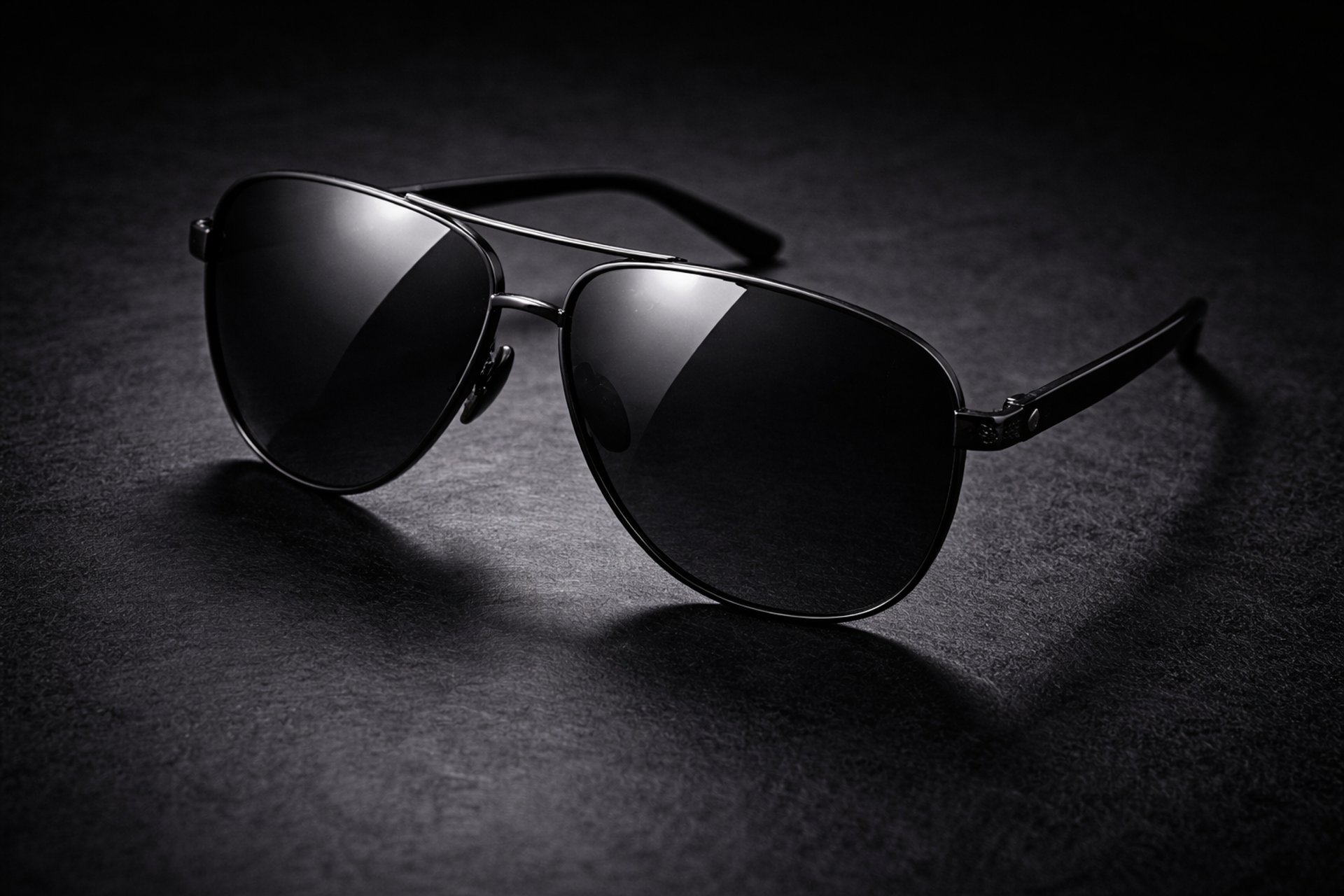
Choosing Between Glass and Polycarbonate Lenses
Explore the key differences between glass lenses and polycarbonate lenses, focusing on clarity, durability, weight, and safety to choose the best for your needs.
EDC SUNGLASSES
The EDCBuzz Editorial Team - Led by AJ “Buzz” Eichman
7/4/20267 min read
When deciding on eyewear—whether it’s your everyday glasses, protective gear for work, or sunglasses for outdoor use—the choice of lens material often boils down to two popular options: glass lenses and polycarbonate lenses. Both materials are prevalent in everyday carry gear and optical products, but their physical properties and performance differ substantially. Understanding these differences goes beyond simple labels; it’s about recognizing how these materials behave in real-world use and which lens will best align with your day-to-day needs.
This article breaks down the core differences between glass and polycarbonate lenses by examining their optical clarity, durability, weight, scratch resistance, and impact resistance. By exploring these attributes in practical terms, the goal is to give you a clearer picture—literally and figuratively—so that your next lens choice is well-informed. To better understand your options, start with EDC Sunglasses and How To Choose Sunglasses.
Quick Verdict
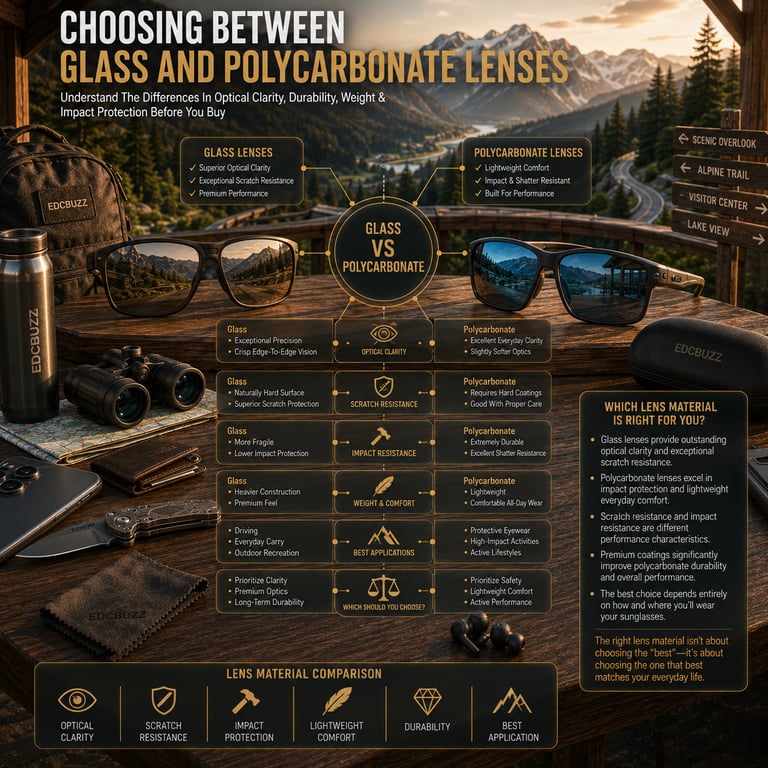
Glass lenses offer superior optical clarity and scratch resistance but come with added weight and more fragility.
Polycarbonate lenses are considerably lighter and provide excellent impact resistance, though they require coatings to improve scratch durability.
For active or protective eyewear, polycarbonate is generally safer and more comfortable during extended use.
Glass lenses are preferable for applications where visual precision and scratch resistance outweigh concerns about weight and impact safety.
Introduction to Lens Materials: Glass vs. Polycarbonate
At the core, glass lenses are made from silicate-based materials that have been used historically for optical applications due to their excellent refraction properties and scratch resistance. Polycarbonate lenses, in contrast, are manufactured from a durable plastic polymer engineered specifically for impact resistance and lightweight performance.
Choosing between these lens materials isn’t merely a question of cost or common preference; it’s about balancing the mechanical and optical properties that affect how lenses perform in different scenarios. That balance includes understanding how weight influences comfort during long wear, how impact resistance can protect your eyes in variable environments, and how coatings extend lens functionality across different materials. If you're investing in higher-end eyewear, Best Premium Sunglasses may also be worth exploring.
Optical Clarity and Visual Performance
Optical clarity is often the first factor people consider for lenses. Glass inherently provides excellent clarity because of its density and consistent molecular structure, which results in minimal distortion and high purity of image transmission. This means that with glass lenses, you get sharp, crisp vision across a wide range of lighting conditions, which is particularly important for precision tasks or activities demanding acute visual accuracy.
By comparison, polycarbonate lenses, while engineered to allow clear optics, can display a slight compromise in image sharpness because of their plastic composition and comparatively lower refractive index. However, for most everyday uses—from reading and driving to sports and casual wear—this difference is subtle and often negligible. Modern manufacturing techniques have improved polycarbonate optics significantly, though some professionals who require exacting visual precision still prefer glass.
The practical implication is this: if your use case is primarily visual quality where scratch resistance and clarity are paramount, glass remains the gold standard. Where lens weight and durability are critical, polycarbonate offers sufficient optical clarity with practical advantages in other physical properties.
Durability and Scratch Resistance Comparison
When it comes to durability, the distinction between scratch resistance and impact resistance is crucial. Glass lenses are naturally much more resistant to scratches due to their hard, dense surface. Scratch resistance is not just about aesthetic preservation—it affects the longevity of the lenses and your ability to see clearly over time. A lens covered in scratches diffuses light and reduces visibility.
Polycarbonate lenses, on the other hand, are inherently softer and more prone to scratches due to their plastic nature. That said, this vulnerability is routinely addressed by applying specialized hard coatings onto polycarbonate surfaces. These coatings significantly improve scratch resistance, making the lenses more practical for everyday use and active lifestyles.
It is worth noting that while polycarbonate coatings improve scratch protection, they don’t fully replicate the hardness of glass. This means that while polycarbonate lenses are less likely to break or shatter on impact, they do require a bit more care to avoid surface blemishes. For another perspective on premium lens technologies, compare Julbo Shield REACTIV vs Maui Jim Stone Shack (Photochromic vs Polarized).
Weight and Comfort Considerations
A notable physical difference is lens weight. Glass lenses typically weigh two to three times more than equivalent polycarbonate lenses. This weight difference affects how your eyewear feels, especially for long-term wear.
Heavier lenses, as with glass, can cause discomfort or fatigue on the nose and ears over time. This is particularly relevant in daily wear situations where you might have your glasses on for many hours.
Polycarbonate’s lighter profile helps reduce pressure points, making it a better choice for anyone prioritizing comfort. This characteristic also favors active users — runners, cyclists, or workers who need reliable eye protection without the burden of extra weight. Outdoor enthusiasts may also appreciate Best Hiking Sunglasses.
Impact Resistance and Safety Features
Polycarbonate is engineered to absorb and dissipate energy on impact, which translates to exceptional shatter resistance. This quality makes it a highly preferred lens material in environments where eye protection is essential—such as sports, construction worksites, and outdoor adventures. The inherent flexibility of polycarbonate allows it to bend slightly under stress rather than fracture.
Glass lenses, despite their hardness, are much more brittle relative to polycarbonate. Under strong impact, glass can crack or shatter, posing a safety risk. While some glass types use chemical treatments or lamination to improve durability and safety, their fundamental fragility remains a limiting factor in high-impact situations.
For everyday carry users who anticipate exposure to frequent bumps or environmental hazards, polycarbonate lenses offer a clear safety advantage without compromising functional performance.
Coatings and Additional Treatments
Both glass and polycarbonate lenses benefit significantly from coatings that optimize performance and longevity. Anti-reflective coatings are common upgrades that reduce glare from screens, headlights, or bright lights, improving visual comfort and reducing eye strain.
Gloss and scratch-resistant coatings are especially important for polycarbonate lenses to compensate for their softer base material. Ultraviolet (UV) protective coatings are standard and critical for shielding eyes from harmful sun exposure—available for both materials.
It is important to verify whether coatings come standard or as an additional feature when purchasing lenses. Skipping coatings on polycarbonate lenses often results in a lens that is vulnerable to scratches and reduced durability, negating some of the inherent advantages. You can also learn Do Mirrored Sunglasses Actually Reduce Glare? to better understand another common lens coating.
Choosing the Right Lens Material for Your Everyday Use
The best lens material hinges on your specific use case, lifestyle, and priorities. If optical clarity and scratch resistance are your top concerns and you do not mind some additional weight or fragility, glass lenses provide unmatched performance. They are ideal for home use, office wear, or any scenario where precise vision and scratch resilience enhance your daily experience.
In contrast, if you are active, work in environments with impact risks, or seek lighter eyewear for extended comfort, polycarbonate lenses usually offer a better balance of traits. Their superior impact resistance and lighter weight can reduce the likelihood of eyewear damage and discomfort, even if you need to pay extra attention to scratch prevention by ensuring appropriate coatings.
For those balancing budget and durability, polycarbonate lenses often come at a lower cost while delivering safer, more rugged performance. Glass lenses tend to be pricier, especially when combined with treatments designed to add safety features. If you're unsure where to begin, How to Choose Sunglasses for Everyday Carry can help narrow your options.
Common Myths and Misconceptions About Lens Materials
A widespread misconception is that glass lenses are universally “better.” It is true that they excel in optical clarity and scratch resistance but overlooking weight and breakage risk paints an incomplete picture.
Another common error is assuming polycarbonate lenses do not need scratch-resistant coatings. Without coatings, these lenses can wear quickly and lose visual clarity, so coatings are effectively essential.
People sometimes confuse impact resistance with overall lens durability, thinking that a more impact-resistant lens is also less prone to any damage. Actually, impact resistance and scratch resistance are separate qualities, requiring different materials and treatments.
Lastly, overlooking personal daily habits—such as the amount of active or protective use—tends to lead to choosing lenses that don’t align well with lifestyle demands. It’s not just about materials but about matching those materials’ strengths to practical needs. For a side-by-side product comparison, see Ray-Ban RB3025 vs Randolph Concorde Aviator (Polarized vs Non-Polarized).
Frequently Asked Questions
Which lens material is safest for outdoor activities?
Polycarbonate lenses are generally safest for outdoor activities because of their high impact resistance and lighter weight, reducing risk of breakage and discomfort during physical exercise.
Are glass lenses more prone to breaking than polycarbonate?
Yes. Glass lenses are more brittle and can shatter under strong impact, while polycarbonate lenses flex slightly and resist shattering.
Do polycarbonate lenses need special coatings?
Polycarbonate lenses typically require hard coatings to improve scratch resistance. Without these coatings, polycarbonate is vulnerable to surface scratches.
How do glass and polycarbonate lenses compare in weight?
Glass lenses are about two to three times heavier than polycarbonate lenses, which significantly affects comfort during extended wear.
What lens material provides the best scratch resistance?
Glass lenses inherently have better scratch resistance due to their hardness, whereas polycarbonate relies on coatings for adequate scratch protection.
Is optical clarity noticeably better in glass lenses?
Glass generally offers superior optical clarity, though modern polycarbonate lenses provide sufficient clarity for most everyday activities.
Can polycarbonate lenses shatter or crack easily?
Polycarbonate lenses rarely shatter thanks to their impact-absorbing properties, but excessive force can still cause cracks or damage.
Which lens type is more cost-effective for everyday carry?
Polycarbonate lenses tend to be more affordable, especially when considering their durability and suitability for active and daily use.
Conclusion
Choosing between glass and polycarbonate lenses comes down to understanding the trade-offs between optical performance, durability, comfort, and safety. Glass lenses stand out with superior clarity and scratch resistance but are heavier and more fragile. Polycarbonate lenses excel in weight reduction and impact resistance, offering enhanced safety and comfort for active or protective use, albeit with additional considerations for scratch protection.
By considering the specific demands of your daily routine—whether it’s focused on visual precision, physical activity, or balanced versatility—you can select the lens material that not only fits your eyewear needs but also supports your everyday carry habits with practical insights grounded in material science and functional design. For more buying advice, continue with How Lens Colors Affect Vision Outdoors, What Color Sunglass Lens Is Best?, How Dark Should Sunglasses Be?, and How Much Should You Spend on Sunglasses?
Contact@TheBuzzHQ.com
© 2026 EDCBuzz. All rights reserved.
EDCBuzz
Master everyday carry systems with clarity and precision. Built for real environments and practical use.
For educational purposes only.
General Inquiries: