
EDC WALLETS:
COMPLETE GUIDE TO EVERYDAY CARRY WALLETS
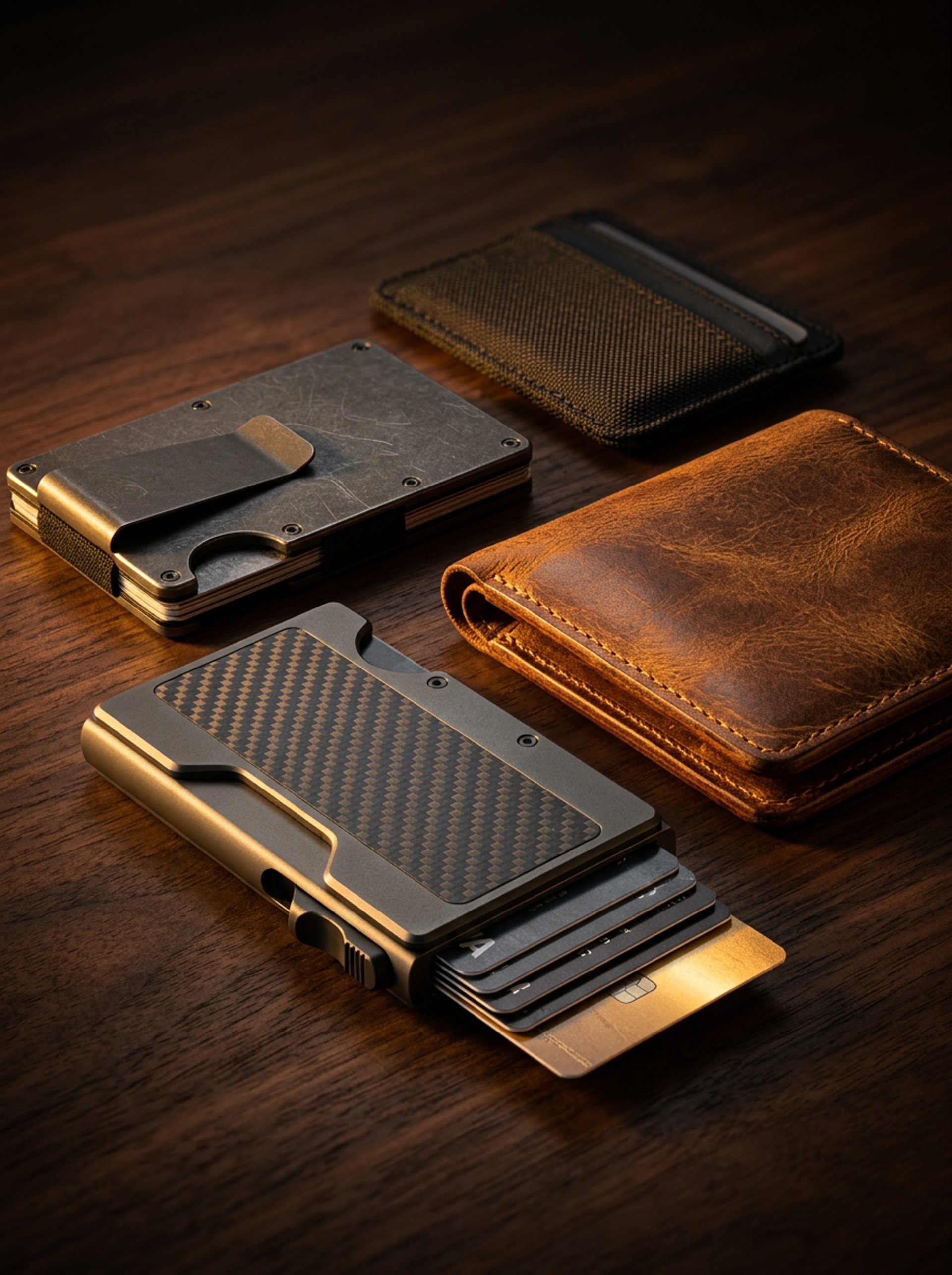
An everyday carry (EDC) wallet is more than just a place to hold your cards—it’s a tool that directly impacts how you move, access, and organize your essentials every day.
From quick-access smart wallets to ultra-slim minimalist designs, modern wallets are built around efficiency, durability, and carry comfort.
Unlike traditional bulky wallets, EDC wallets prioritize:
Slim profiles for better pocket carry
Faster access to frequently used cards
Materials that hold up to daily wear
Practical layouts that match real-world use
EDC wallets aren’t about storage—they’re about how you carry.

Quick Verdict
Best for daily carry: Slim, front-pocket wallets
Best for durability: Metal or hybrid wallets
Best for speed: Eject / quick-access wallets
Best for comfort: Flexible minimalist wallets

Types of EDC Wallets
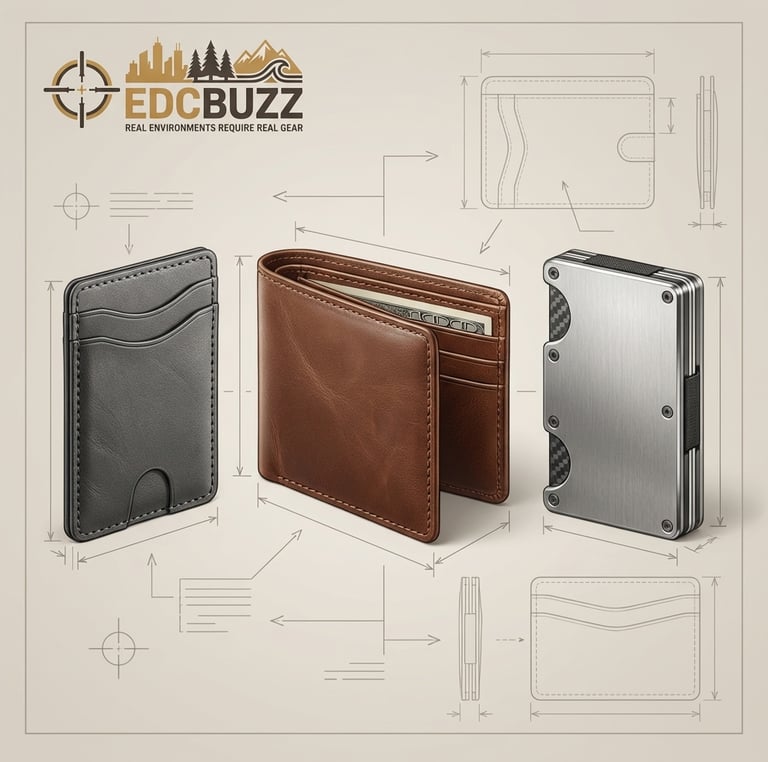
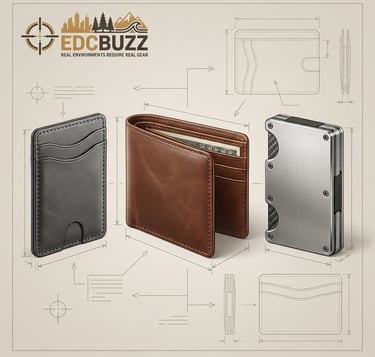
Understanding wallet types is the first step in choosing the right carry setup.
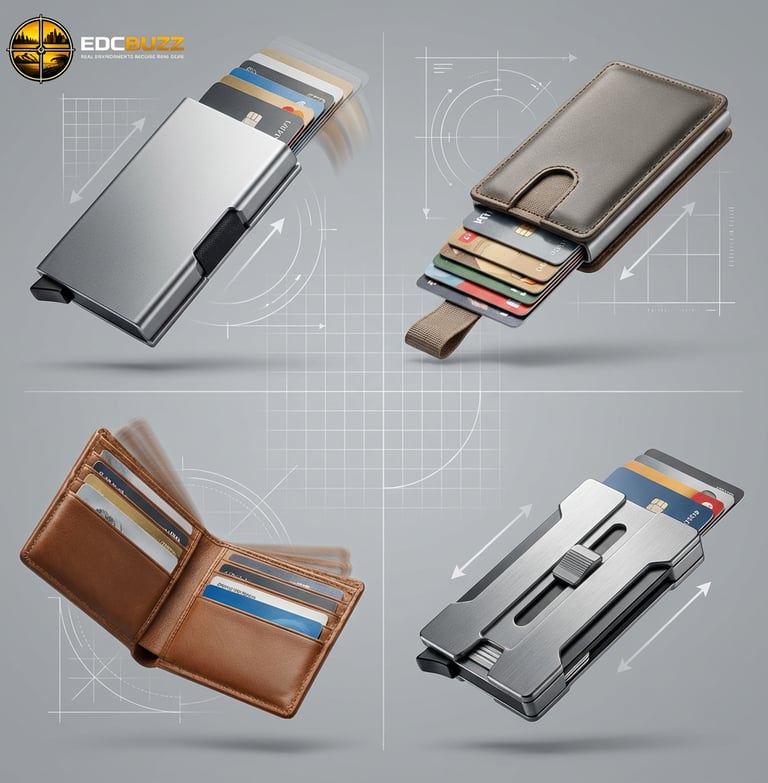
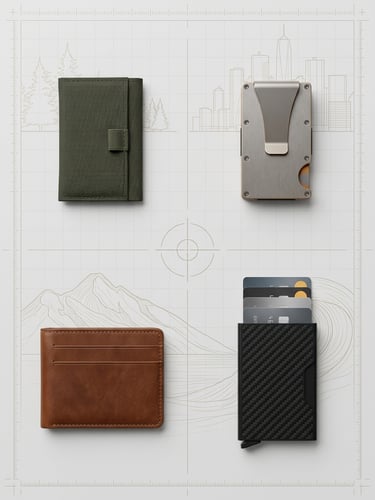
Minimalist Wallets
Minimalist wallets are built to reduce bulk and improve comfort.
They typically hold fewer cards and remove unnecessary storage to keep your carry clean and efficient.
They’re ideal for everyday use where speed and simplicity matter most, which is why Minimalist Wallets Explained is a good place to start.
Bifold Wallets
Bifold wallets offer a more traditional layout with modern refinements.
Slimmed-down versions keep the familiar feel while reducing bulk compared to classic designs.
They work well for users who want balance between storage and carry comfort.
Metal Wallets
Metal wallets focus on durability and structure.
They maintain their shape over time, protect cards from bending, and provide consistent performance under daily use, especially when comparing tradeoffs in Metal vs Leather Wallets.
They’re best suited for front pocket carry and minimalist setups.
Smart Wallets
Smart wallets use mechanical or tech-driven features like push-button card ejection or tracking integration.
They’re designed for quick access and modern convenience, though not everyone actually benefits as explained in RFID Wallets: Do You Need One.
These are ideal for users who frequently access their cards throughout the day.
Travel / Utility Wallets
These wallets expand beyond basic carry.
They often include:
Document storage
Zipper compartments
Multi-use layouts
They’re better suited for travel, organization, or extended carry setups, which often leads to overpacking as covered in Why Your Wallet Is Too Bulky.
WALLET STYLES EXPLAINED
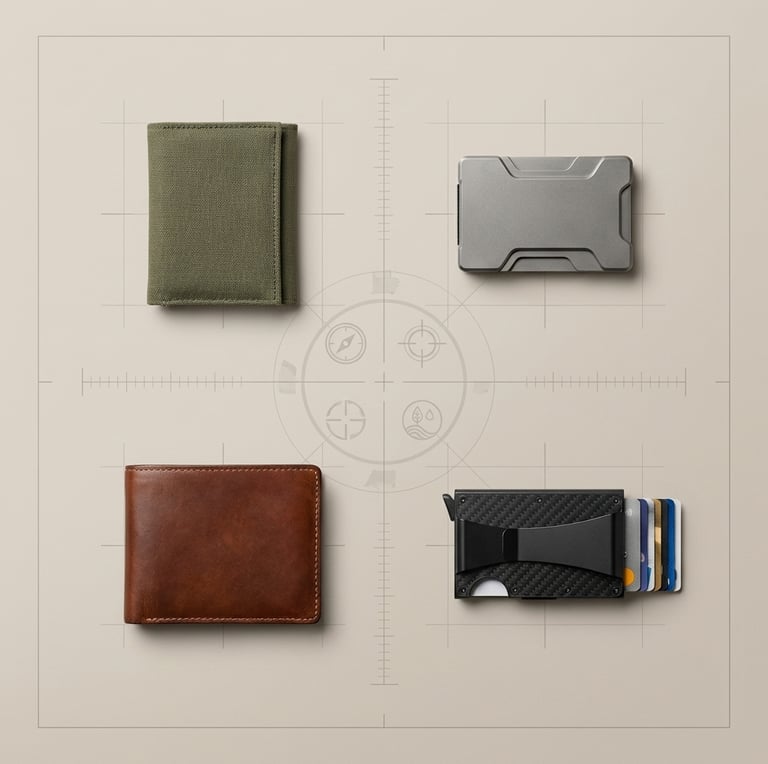
Wallet style affects how it feels in your pocket and how it performs over time.
Slim Profile
Slim wallets are designed to minimize bulk.
They sit flat in your pocket and reduce pressure when sitting or moving.
This is the most important factor for front pocket carry.
This is also the biggest deciding factor in the debate between Slim Wallet vs Traditional carry styles.
Structured Carry
Structured wallets use rigid materials like aluminum or steel.
They:
Protect cards
Maintain shape
Offer consistent access
But they can feel more noticeable in pocket.
Structured designs tend to hold fewer items, which aligns closely with How Many Cards Should You Carry.
Flexible Carry
Flexible wallets use fabric or leather.
They:
Adapt to your pocket
Feel more comfortable
Break in over time
But they may lose structure with heavy use.
Hybrid Designs
Hybrid wallets combine materials like metal + leather or fabric + polymer.
They aim to balance:
Comfort
Durability
Structure
These are often the most versatile options.
WALLET MATERIALS
The material of your wallet determines how it performs long-term—not just how it looks.
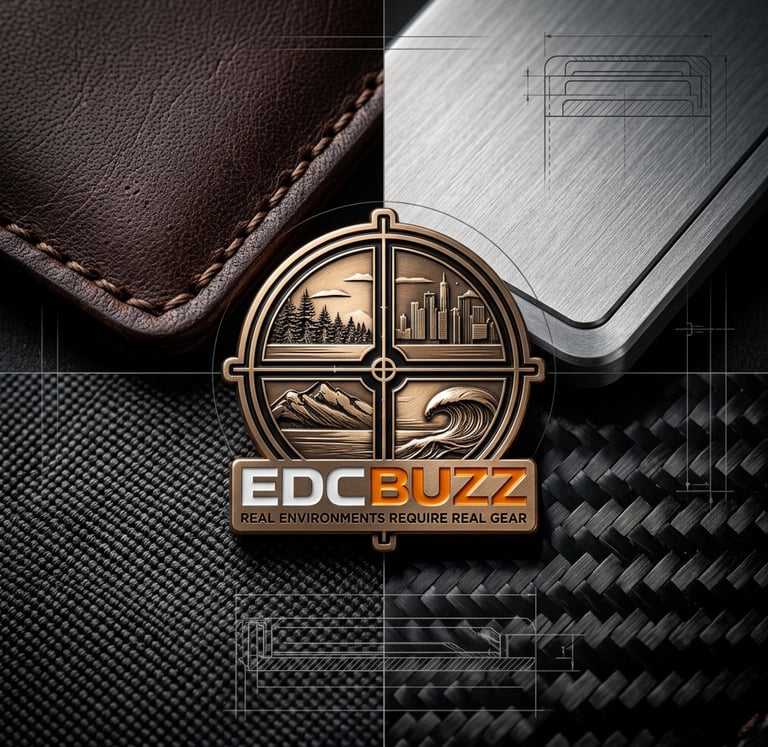
Leather
Leather offers a classic feel with natural flexibility.
It softens over time and becomes more comfortable with use.
However, it can stretch and lose structure depending on quality and load.
Understanding how leather behaves over time is part of Best Wallet Materials Explained.
Metal (Aluminum / Steel / Titanium)
Metal wallets provide durability and structure.
They:
Resist wear
Maintain shape
Protect cards
But they feel more rigid and can be less forgiving in pocket.
Technical Fabrics
Modern wallets use high-performance fabrics designed to outperform leather.
They:
Resist water and wear
Stay thin under load
Maintain flexibility
These are ideal for minimalist and active carry.
Polymer / Composite
These materials are lightweight and durable.
They’re often used in hybrid wallets to reduce weight while maintaining strength.
REAL WORLD USE
Different wallets excel in different environments.
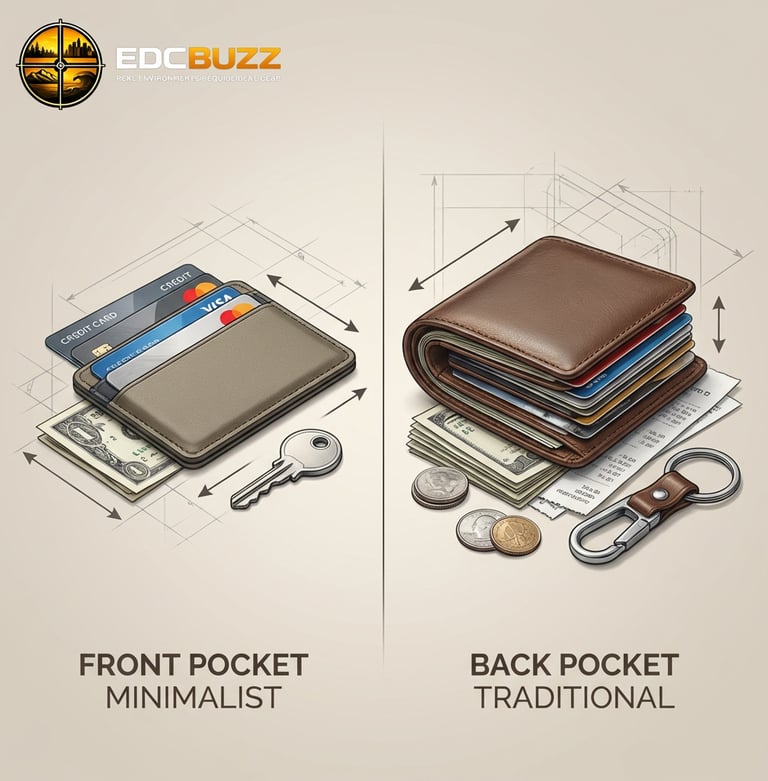
Most setups here lean toward efficiency, especially when following guidance from How to Choose an EDC Wallet.
Everyday Carry
Best options:
Slim wallets
Smart wallets
Minimalist setups
Focus on comfort, speed, and consistency.
Travel
Best options:
Utility wallets
Document holders
Focus on organization and storage.
Work / Hard Use
Best options:
Metal wallets
Hybrid wallets
Focus on durability and long-term reliability.
Durable setups here often rely on structured builds discussed in Are Metal Wallets Bad for Cards.
Casual Carry
Best options:
Leather wallets
Flexible designs
Focus on comfort and simplicity.
Casual carry tends to favor comfort, especially when comparing Front Pocket vs Back Pocket Wallet setups.
HOW TO CHOOSE THE RIGHT EDC WALLET
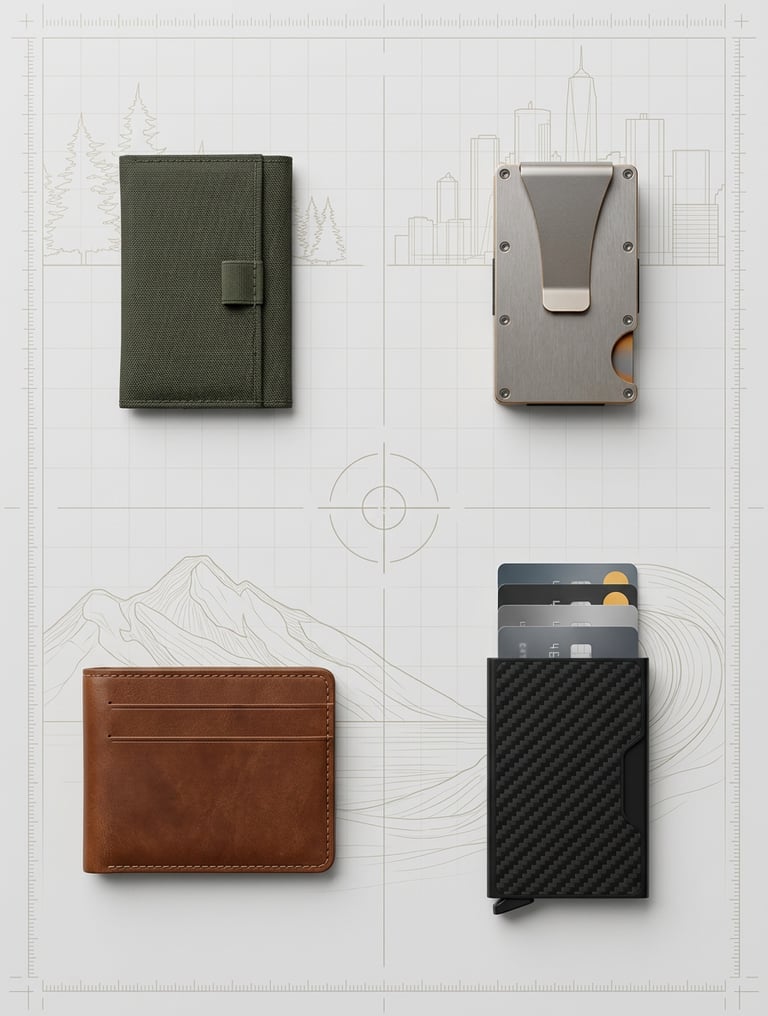
Choosing the right wallet depends on how you carry—not just what you carry.
Carry Location
Front pocket:
Slim, structured wallets perform best
Back pocket:
Flexible, softer wallets feel more natural
Card Count
More cards = more bulk.
Most wallets perform best with:
4–8 cards for daily carry
Access Frequency
If you access your wallet often:
Choose quick-access systems
If you don’t:
Simpler designs work better
Comfort vs Structure
Want comfort → flexible wallets
Want durability → structured wallets
Balance matters.
Carry fewer cards than you think you need
Keep your most-used card accessible
Avoid overloading minimalist wallets
Choose function over appearance
Replace your wallet if it loses structure
Your wallet should make your daily routine easier—not harder.
PRACTICAL EDC WALLET TIPS
EDC WALLETS
(Best Picks & Comparisons)

Find Your Perfect EDC Wallet
You've explored wallet styles, materials, capacities, and carry options. Now it's time to put that knowledge to work.
Use the EDCBuzz Wallet Advisor to find the best wallet for your budget, carry style, organization needs, and everyday lifestyle.
Explore More EDC Advisors
Your wallet is just one part of a complete everyday carry. Explore the rest of the EDCBuzz Advisor Series to build a loadout that fits your budget, organization style, and daily routine.
Related EDC Gear
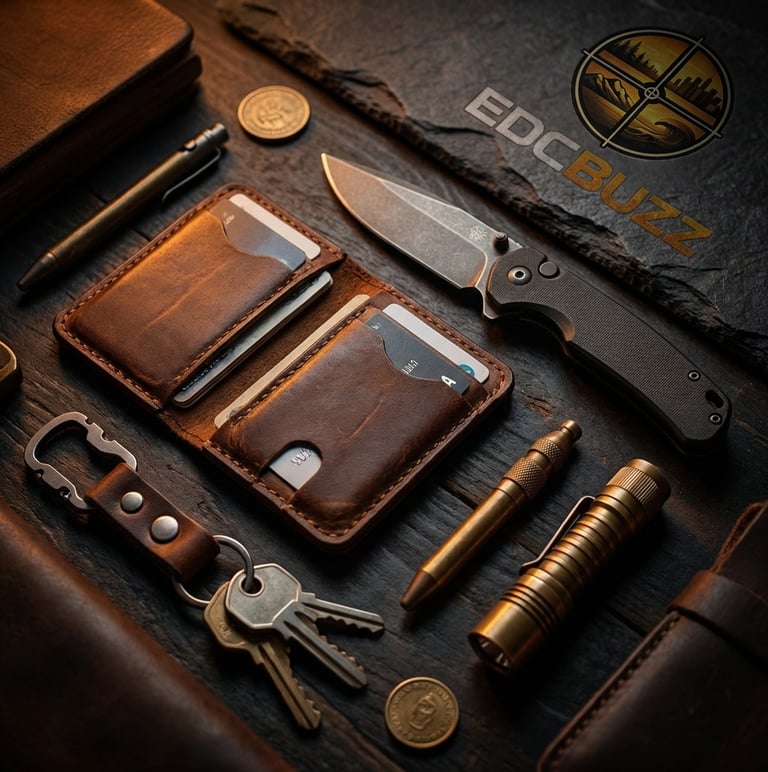
An EDC knife is most effective when paired with the right supporting tools. A well-built setup isn’t about carrying more—it’s about carrying what works together.
Flashlights
A compact flashlight adds immediate utility in low-light conditions and improves safety and control when using your knife. It’s one of the most practical additions to any EDC setup.
Multi-Tools
Multi-tools expand your capability beyond cutting with tools like pliers and screwdrivers. They complement a knife by handling quick fixes and adjustments.
Building a Complete Setup
A balanced EDC system focuses on what you actually use. A knife, light source, secondary tool, and simple organization create a setup that adapts without unnecessary bulk.
A well-balanced setup starts with the right foundation—this guide on how to build an EDC loadout ties everything together.
Frequently asked questions
What is the best EDC wallet?
The best wallet is one that matches your carry style—typically slim, durable, and easy to access—especially when aligned with guidance from How to Choose an EDC Wallet.
How many cards should I carry?
Most setups work best with 4–8 cards, which is explained further in How Many Cards Should You Carry.
Are metal wallets better?
They’re more durable, but less flexible than leather or fabric.
Are minimalist wallets worth it?
Yes, especially for improving comfort and reducing bulk.
What’s the best wallet for front pocket carry?
Slim, structured wallets perform best.
Do smart wallets break?
High-quality ones are reliable, but they have more moving parts than traditional designs.
How long should a wallet last?
A good wallet should last several years depending on materials and use.
What’s the biggest mistake people make?
Carrying too much—bulk ruins performance.
Final Thoughts
EDC wallets aren’t about carrying more—they’re about carrying smarter.
The best wallet:
Fits your pocket
Matches your daily habits
Makes access easier
Holds up over time
If you focus on how you carry—not just what you carry—you’ll end up with a wallet that actually improves your everyday routine.
Contact@TheBuzzHQ.com
© 2026 EDCBuzz. All rights reserved.
EDCBuzz
Master everyday carry systems with clarity and precision. Built for real environments and practical use.
For educational purposes only.
General Inquiries: