
Watch Ownership Guide
Buying a quality watch is only the beginning of the ownership experience. Whether you choose a rugged field watch, a precision automatic, a low-maintenance solar watch, or a feature-packed smartwatch, the way you care for it has a direct impact on how well it performs over the years.
The good news is that most everyday carry watches require surprisingly little maintenance. A few simple habits—keeping your watch clean, avoiding unnecessary impacts, replacing worn straps, and understanding when professional servicing is needed—can dramatically extend its lifespan.
Many of today's watches are built to last for decades. Quartz movements routinely provide years of reliable accuracy with minimal attention, solar watches eliminate routine battery changes altogether, and well-maintained automatic watches are often passed down through multiple generations.
This guide explains everything you need to know about owning an everyday carry watch. You'll learn how to care for different watch types, protect your investment from unnecessary wear, recognize when maintenance is needed, and develop simple habits that help your watch remain dependable for years to come.
If you're still deciding which watch to buy, start with our Watch Buying Guide. If you're comparing different styles, our Watch Types Guide explains the strengths and weaknesses of every major watch category before you make your purchase.

Why Watch Ownership Matters
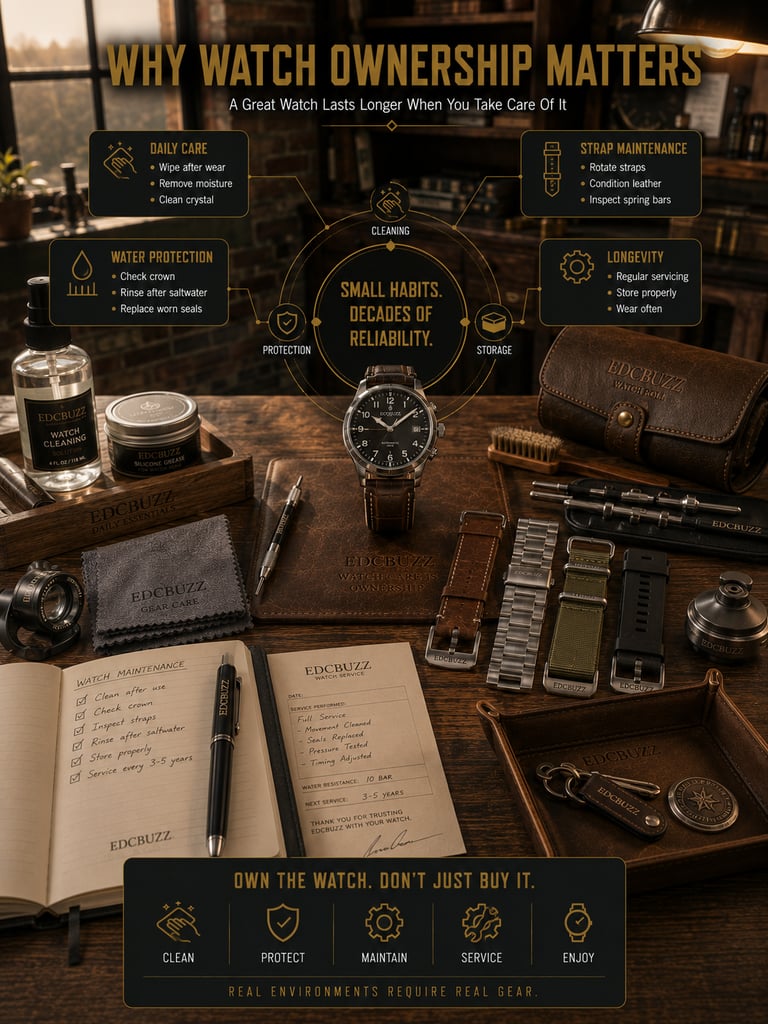
Most people spend hours researching a new watch but only a few minutes learning how to care for it afterward.
Fortunately, proper watch ownership isn't complicated. In fact, many of the habits that keep a watch looking and performing like new take only a few seconds each day. The biggest difference comes from consistency rather than effort.
A quality watch is designed to accompany you through everyday life. It will experience changing weather, accidental bumps against desks and door frames, exposure to sweat, dust, and occasional water. None of these situations are unusual, and a well-built watch is designed to handle them.
Problems usually develop when small issues are ignored over long periods of time. Dirt gradually builds around the crown and bracelet. Leather straps remain damp after repeated exposure to sweat. Worn seals are never replaced. Minor scratches become larger impacts because the watch isn't treated with the same care given to other everyday carry gear.
Good ownership habits help prevent those problems before they become expensive repairs.
They also preserve the appearance of your watch. A clean crystal, properly maintained strap, and polished case simply make a watch more enjoyable to wear. Whether your watch cost $100 or $1,000, taking care of it protects the investment you've already made.
Perhaps most importantly, good ownership builds confidence. When you know your watch has been maintained properly, you never have to wonder whether it'll keep accurate time during an important meeting, survive a weekend camping trip, or accompany you on your next vacation.
A dependable watch becomes something you stop thinking about because you know it'll simply do its job every day.
Building Good Watch Habits


Owning a watch for twenty years isn't usually the result of one major maintenance routine. It's the result of dozens of small habits repeated over thousands of days.
Fortunately, those habits are easy to develop.
The first is wearing your watch as it was intended. Everyday carry watches are built to be used. Many owners become overly concerned about minor scratches or signs of normal wear, but a quality watch develops character over time. Small marks from everyday life are often part of its story rather than something to fear.
At the same time, common sense goes a long way. Avoid striking your watch against concrete walls, metal equipment, or stone countertops whenever possible. No crystal or case material is completely immune to abuse, and preventing unnecessary impacts is far easier than repairing them later.
Another good habit is paying attention to how your watch feels. If the bracelet suddenly becomes loose, the crown feels different while setting the time, or moisture appears beneath the crystal, those changes shouldn't be ignored. Catching small issues early often prevents much larger repairs down the road.
It's also worth developing the habit of giving your watch a quick visual inspection every few days. Wipe away fingerprints, check for accumulated dirt around the lugs or crown, and make sure the strap remains in good condition. This simple routine takes less than a minute but helps keep your watch looking its best.
Finally, remember that watches are tools. Whether it's a Hamilton field watch accompanying you through years of hiking, a Citizen Eco-Drive worn every day at work, or a Garmin tracking hundreds of workouts, normal wear is expected. Proper ownership isn't about keeping a watch looking brand new forever—it's about keeping it reliable for decades.
Daily Care Tips
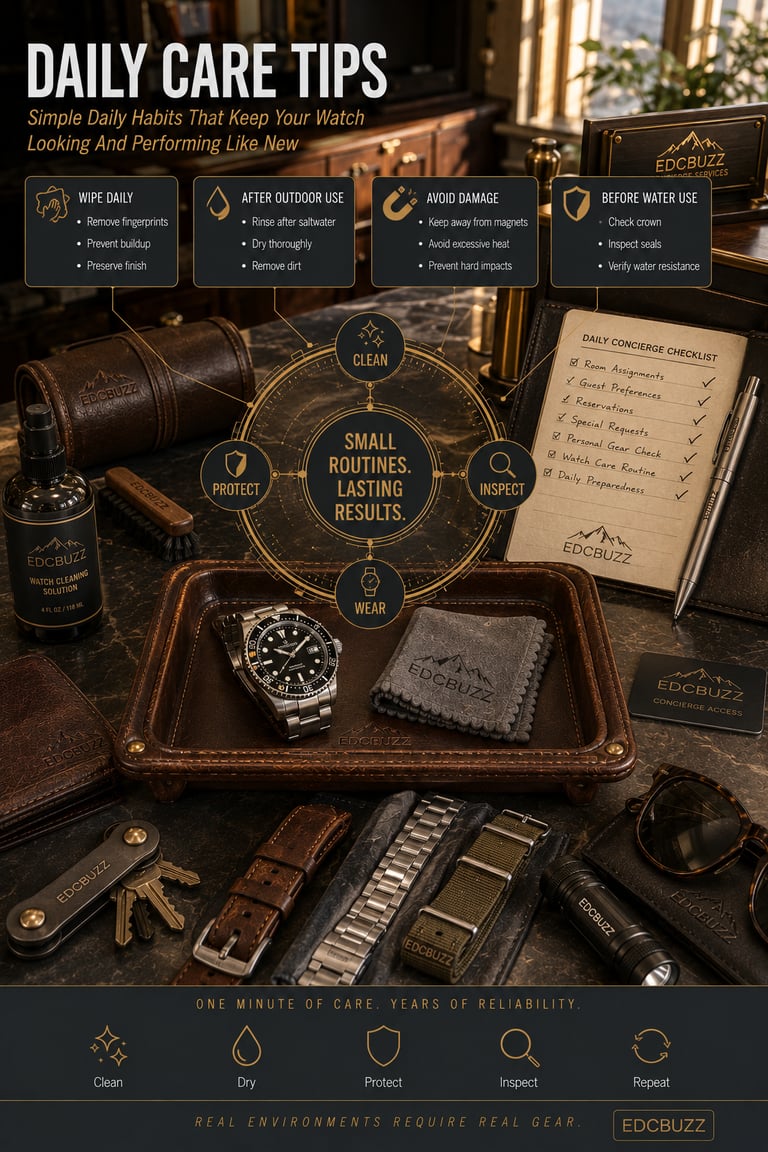
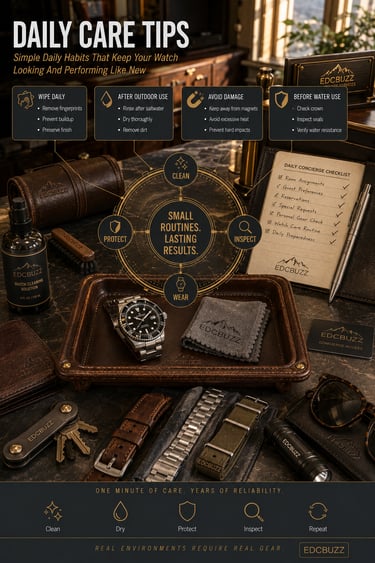
Daily maintenance doesn't require special equipment or expensive cleaning products. A few simple habits performed consistently will keep almost any watch looking and functioning like new.
At the end of the day, wipe your watch with a soft microfiber cloth. This removes fingerprints, body oils, sweat, and dust before they have an opportunity to build up. Stainless steel bracelets, polished bezels, and sapphire crystals especially benefit from this quick routine because they maintain their appearance with very little effort.
If you've been working outdoors, exercising, or spending time around saltwater, rinse watches with appropriate water resistance under clean fresh water before drying them thoroughly. Salt, sunscreen, dirt, and sweat can gradually wear on seals, bracelets, and straps if they're allowed to remain in place for long periods.
Avoid leaving your watch in extremely hot environments such as a vehicle dashboard during summer. Excessive heat can shorten gasket life, accelerate battery degradation in quartz watches, and unnecessarily stress lubricants inside mechanical movements.
Likewise, avoid exposing your watch to strong magnetic fields whenever possible. Powerful speakers, industrial equipment, and certain electronic devices can affect the accuracy of mechanical watches, although many modern models include improved magnetic resistance.
If your watch uses a screw-down crown, always confirm it's fully secured before swimming or exposing the watch to significant amounts of water. A properly tightened crown is one of the simplest ways to protect the movement from accidental moisture intrusion.
Finally, wear the right watch for the right activity. While many modern watches are remarkably durable, using a dress watch for heavy construction work or wearing a leather strap during repeated swimming sessions simply creates unnecessary wear. Matching the watch to the environment allows it to perform as designed while extending its overall lifespan.
Developing these habits takes very little effort, but over years of ownership they can make a noticeable difference in both reliability and appearance.
Cleaning Your Watch


Keeping your watch clean is one of the easiest ways to preserve both its appearance and long-term reliability. Dirt, sweat, skin oils, sunscreen, and dust slowly accumulate during normal wear, especially around the bracelet, crown, and the spaces between the lugs.
Fortunately, routine cleaning takes only a few minutes and requires very little equipment.
For most stainless steel watches, begin by wiping the case and bracelet with a clean microfiber cloth to remove fingerprints and loose debris. If additional cleaning is needed, use lukewarm water with a small amount of mild soap and a soft toothbrush to gently clean around the bracelet links, bezel, and crown.
After cleaning, rinse the watch thoroughly with fresh water and dry it using a lint-free microfiber towel.
Leather straps require a different approach. Excess moisture can shorten their lifespan, so avoid soaking them in water. Instead, wipe the strap with a dry or slightly damp cloth and allow it to air dry naturally if it becomes wet. Leather conditioners designed specifically for watch straps can also help maintain flexibility over time.
Rubber and silicone straps are the easiest to maintain. A quick rinse with fresh water after workouts, swimming, or outdoor activities removes sweat, salt, and dirt before they can cause discoloration or unpleasant odors.
Smartwatches also benefit from regular cleaning, particularly around charging contacts and optical heart rate sensors. Keeping these areas free from dirt helps maintain reliable charging and accurate health tracking.
One important habit is avoiding harsh chemicals. Household cleaners, solvents, bleach, and abrasive scrubbing pads can damage gaskets, coatings, and strap materials. Mild soap, fresh water, and microfiber cloths are almost always the safest choice.
Cleaning your watch every week or two—and more often if you're especially active—helps it look better while reducing unnecessary wear caused by accumulated grime.
For more maintenance advice, visit our Watch Maintenance Tips For Long-Term Reliability guide.
Caring for Different Strap Materials
The strap is one of the hardest-working parts of any everyday carry watch. It experiences constant movement, exposure to sweat, changing weather, and daily friction against clothing and your wrist.
Because different materials age differently, proper care depends on the type of strap you're wearing.
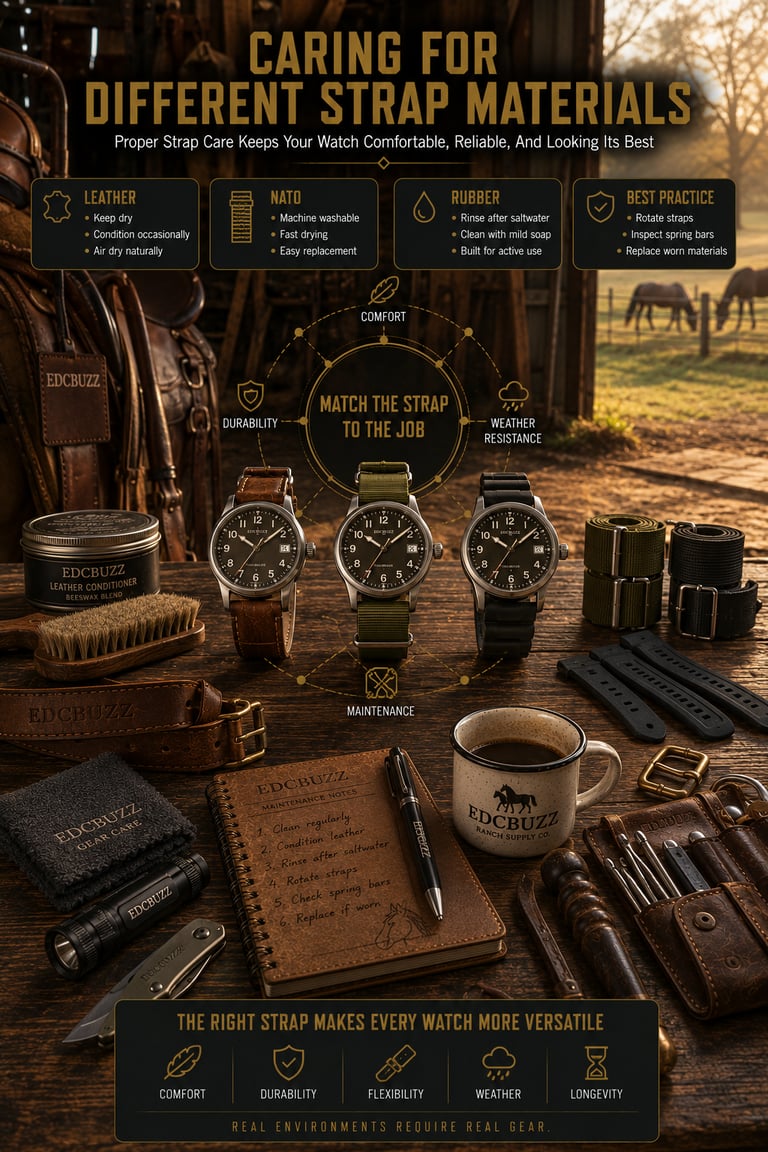
Leather Straps
Leather offers timeless style and exceptional comfort, but it also requires the most attention.
Water is leather's biggest enemy. While occasional moisture isn't a problem, repeated soaking can cause stiffening, discoloration, cracking, and premature wear. If your leather strap becomes wet, gently pat it dry and allow it to air dry naturally away from direct heat.
Rotating between multiple leather straps can also extend their lifespan by allowing each one to dry completely between uses.
With proper care, a quality leather strap can remain attractive for many years.
NATO Straps
NATO straps are among the easiest watch straps to maintain.
Most nylon straps can simply be removed from the watch and washed using warm water and mild soap. After rinsing thoroughly, allow them to air dry before reinstalling.
Because they're inexpensive and easy to replace, many owners keep multiple NATO straps available to match different seasons, clothing, or activities.
Their durability and quick-drying nature make them particularly popular for travel and outdoor adventures.
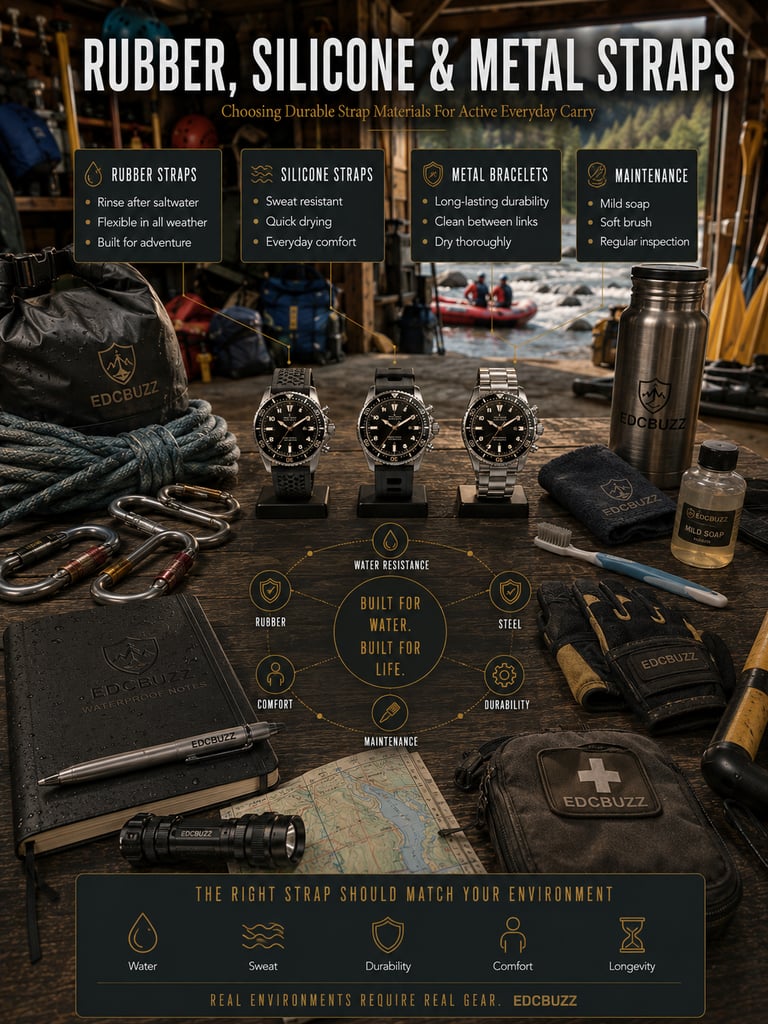
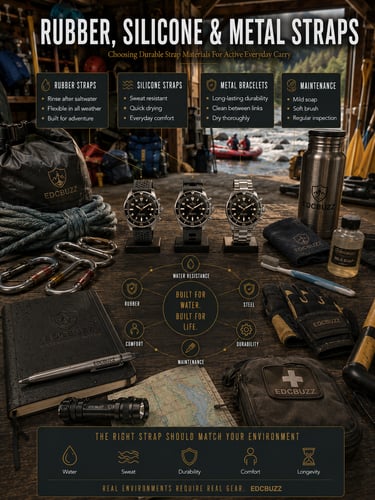
Rubber and Silicone Straps
Rubber and silicone straps thrive in environments where leather struggles.
Sweat, rain, swimming pools, ocean water, and mud rarely cause long-term damage when cleaned properly afterward.
A simple rinse with fresh water after swimming or exercising removes salt, chlorine, and body oils before they can gradually degrade the material.
Occasionally cleaning textured rubber straps with a soft toothbrush also helps remove dirt trapped in grooves and patterns.
Metal Bracelets
Stainless steel and titanium bracelets are among the longest-lasting strap options available.
However, the small gaps between links naturally collect dirt over time.
Regular cleaning using warm water, mild soap, and a soft brush keeps bracelets moving freely while maintaining their appearance. Drying thoroughly afterward helps prevent water spots from forming on polished surfaces.
Bracelets should also be checked occasionally for loose screws or pins, especially if they're worn daily.
Eventually, every strap reaches the end of its useful life. Replacing a worn strap is a simple way to give your watch a completely fresh appearance while restoring everyday comfort.
If your current strap is beginning to crack, stretch excessively, or lose its original appearance, our Signs It's Time To Replace Your Watch Strap guide can help you determine when it's time for an upgrade.
Protecting Your Watch from Damage
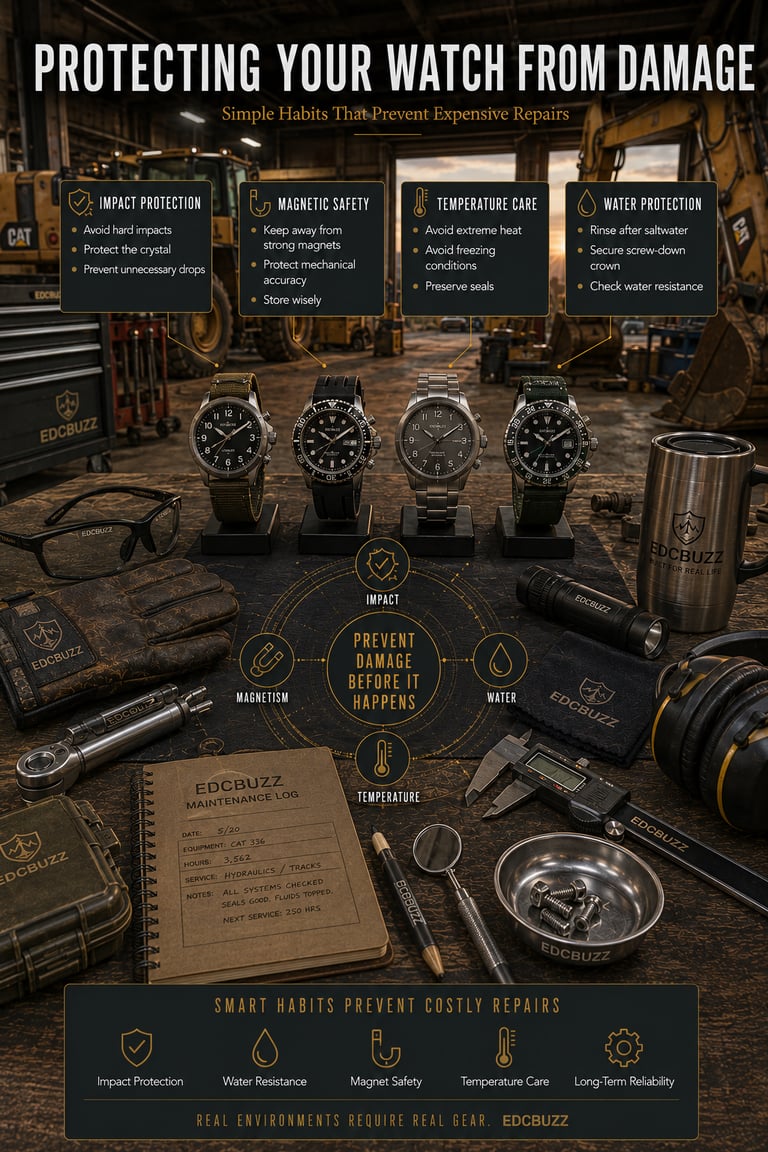

Everyday carry watches are built to handle daily life, but that doesn't mean they're indestructible. A few smart habits can significantly reduce unnecessary wear while helping your watch remain reliable for many years.
The most obvious threat is impact damage. Accidentally striking a watch against concrete walls, metal door frames, stone countertops, or heavy equipment can chip crystals, dent cases, or damage internal components. Simply becoming aware of where your watch sits on your wrist often prevents these accidental collisions.
Magnetism is another overlooked hazard. Mechanical watches are especially sensitive to strong magnetic fields produced by industrial equipment, large speakers, electric motors, and certain electronic devices. Magnetized movements may begin gaining or losing significant amounts of time until they're professionally demagnetized.
Quartz watches are generally much less susceptible, although avoiding unnecessary exposure is still good practice.
Extreme temperatures should also be avoided whenever possible. Leaving a watch on the dashboard of a hot vehicle or exposing it to prolonged freezing conditions places unnecessary stress on seals, lubricants, batteries, and electronic components. Most watches perform best within normal everyday temperature ranges.
Water resistance deserves regular attention as well. Never operate the crown or chronograph pushers while the watch is underwater unless the manufacturer specifically states that it's safe to do so. Doing so can compromise the seals and allow moisture to enter the case.
If your watch experiences a severe impact or you notice condensation beneath the crystal, have it inspected as soon as possible. Moisture trapped inside a watch can quickly lead to corrosion if left untreated.
Finally, remember that scratches are part of ownership. Trying to keep an everyday carry watch completely flawless often leads to unnecessary worry instead of enjoyment. Minor signs of honest wear tell the story of years spent on your wrist. The goal isn't perfection—it's preserving the watch's reliability while allowing it to be used as intended.
A quality watch is built to accompany you through everyday life. Protect it with common sense, maintain it regularly, and it'll likely outlast many other pieces of gear in your everyday carry.
Quartz Watch Ownership


Quartz watches have earned their reputation as some of the most dependable everyday carry watches available. Their outstanding accuracy, low maintenance requirements, and affordable ownership costs make them an excellent choice for first-time buyers and long-time enthusiasts alike.
Unlike mechanical watches, quartz movements rely on a battery and a vibrating quartz crystal to regulate timekeeping. This simple design allows them to remain remarkably accurate while requiring very little attention from the owner.
For most people, the only regular maintenance involves replacing the battery every two to five years, depending on the watch and movement. Many owners simply have the battery replaced during a quick visit to a local jeweler or watch technician.
Whenever the battery is replaced, it's also a good idea to have the water-resistance gasket inspected. Opening the case can disturb the seal, and replacing worn gaskets at the same time helps maintain the watch's ability to resist moisture.
If you notice your quartz watch suddenly losing time, stopping unexpectedly, or the seconds hand beginning to jump several seconds at a time, these are often signs that the battery is reaching the end of its life.
Aside from battery replacement, quartz watches require very little maintenance. Keeping the case clean, protecting the crystal from unnecessary impacts, and replacing worn straps when needed are usually all that's required.
For buyers looking for maximum reliability with minimal effort, quartz remains one of the smartest long-term choices available.
If you'd like to learn more about quartz performance, our How Accurate Are Quartz Watches? guide explains what you can realistically expect from modern quartz movements.
Automatic Watch Ownership
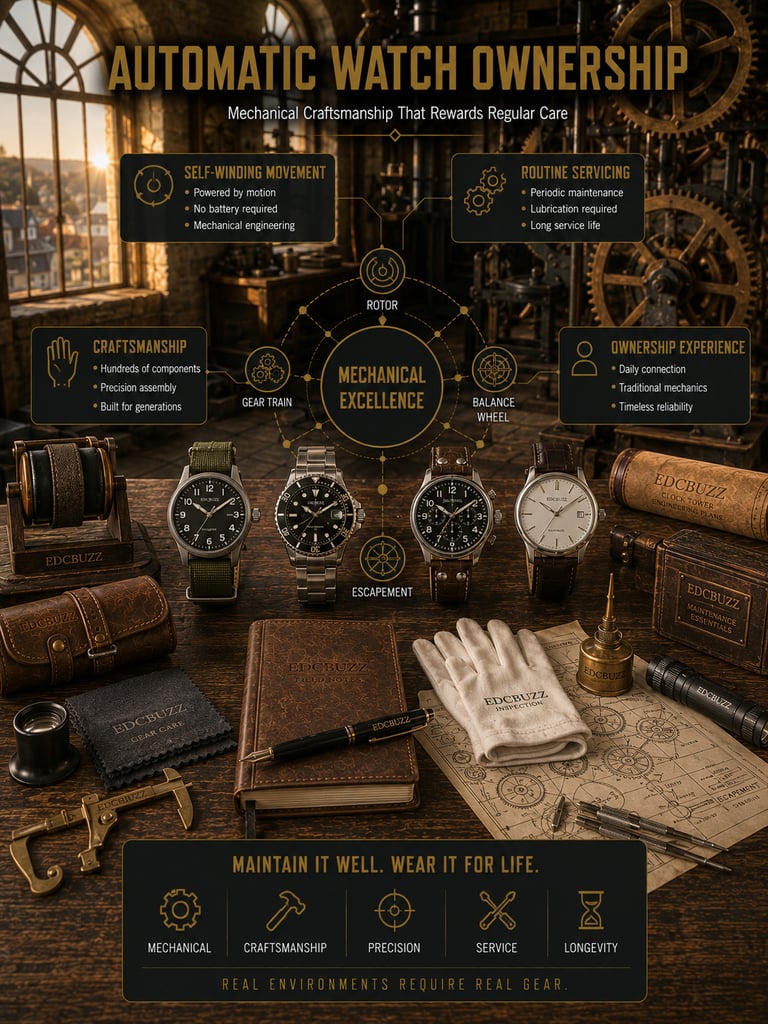
Owning an automatic watch is a different experience than owning a quartz watch. Rather than relying on a battery, automatic watches are powered by a mainspring that winds itself through the natural movement of your wrist. Every step you take and every movement of your arm helps keep the watch running.
For many owners, this mechanical engineering is part of the appeal. Wearing an automatic watch creates a stronger connection with the craftsmanship inside the case, and many enthusiasts enjoy the tradition that comes with mechanical timepieces.
Automatic watches do require a little more attention than quartz models. If left unworn for several days, most automatic watches will eventually stop once their power reserve is depleted. This is completely normal and simply means the watch needs to be rewound and the time reset before wearing it again. Many collectors who rotate between several watches use watch winders to keep automatic movements running, although they're generally a convenience rather than a necessity.
Accuracy also differs from quartz. It's perfectly normal for an automatic watch to gain or lose several seconds per day. This variation doesn't indicate a problem—it's simply part of how mechanical movements operate.
Perhaps the most important aspect of ownership is periodic servicing. Over time, lubricants inside the movement gradually break down, increasing wear on tiny mechanical components. Professional servicing cleans, lubricates, and adjusts the movement to keep it operating reliably for years to come.
Service intervals vary depending on the manufacturer and how the watch is used, but many owners have their automatic watches inspected every five to ten years.
Although automatic watches require more attention, many enthusiasts believe the experience is well worth it. A properly maintained mechanical watch can easily remain functional for generations.
If you'd like to better understand mechanical performance, our How Accurate Are Automatic Watches? guide explains why slight daily variations are completely normal.
Solar Watch Ownership


Solar watches combine many of the advantages of quartz watches with even lower maintenance requirements. Instead of relying on disposable batteries, solar watches continuously recharge an internal rechargeable power cell using natural or artificial light. Under normal use, many owners rarely think about charging at all because everyday exposure to light keeps the watch operating automatically.
The simplest habit for solar watch owners is surprisingly easy:
Wear the watch.
Daily exposure to sunlight or indoor lighting usually provides more than enough energy to maintain a healthy charge. Even watches stored in a well-lit room often continue charging without direct sunlight.
Problems generally occur only when a solar watch is stored in complete darkness for several months. If the rechargeable cell becomes fully depleted, most watches simply need extended exposure to bright light before returning to normal operation. Manufacturers often provide recommended charging times depending on available light conditions.
Another advantage of solar ownership is reduced maintenance. Since there are no routine battery replacements, the watch case remains sealed for longer periods, helping preserve water resistance while reducing long-term ownership costs.
Like any watch, however, solar models still benefit from routine cleaning, occasional gasket inspections, and replacing worn straps as needed.
Many buyers wonder how long solar technology actually lasts. Modern rechargeable cells are designed for years of reliable operation, with many manufacturers estimating service lives measured in decades rather than just a few years. For most owners, the rechargeable cell will likely outlast several conventional watch batteries.
If you're curious about long-term durability, our How Long Do Solar Watches Last? article explores what owners can realistically expect over years of everyday use.
For buyers seeking one of the lowest-maintenance watches available, solar technology remains one of the most practical innovations in modern watchmaking.
Water Resistance Maintenance
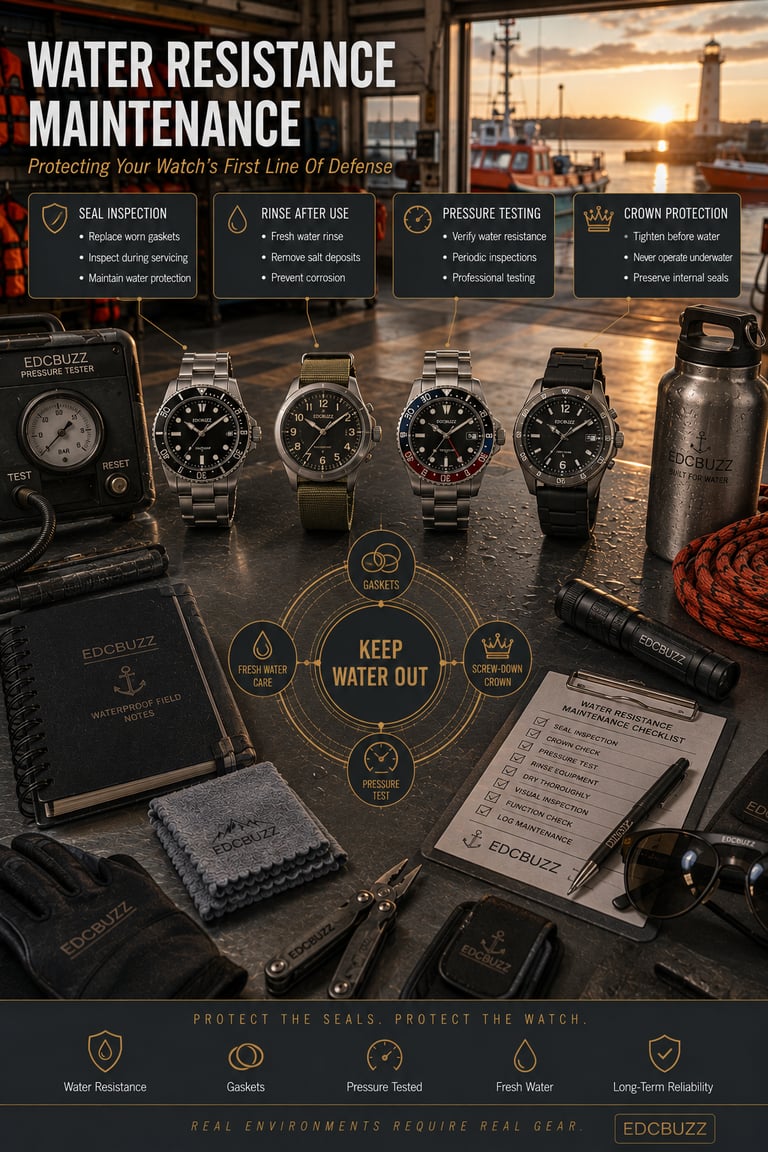
Water resistance is one of the most valuable features an everyday carry watch can have, but it's important to remember that no watch remains permanently water resistant without proper care. The seals and gaskets that keep moisture out gradually age over time. Heat, cold, sunlight, chemicals, and normal wear slowly reduce their effectiveness, even if the watch spends very little time in the water.
Fortunately, maintaining water resistance is straightforward. If your watch regularly accompanies you while swimming, boating, fishing, kayaking, or participating in water sports, it's a good idea to have its water resistance tested every few years. Many jewelers and watch repair shops can perform a simple pressure test without opening the watch.
Any time the case is opened—whether for a battery replacement, movement repair, or servicing—the seals should also be inspected and replaced if necessary. This inexpensive step helps restore the watch's original level of protection.
Saltwater deserves special attention. Although many dive watches are built specifically for marine environments, salt crystals can gradually accumulate around the bezel, crown, and bracelet. After spending time in the ocean, rinse your watch thoroughly with fresh water and dry it with a soft cloth.
Chlorinated pool water should also be rinsed away after swimming. While occasional exposure isn't harmful for most quality watches, removing chlorine helps preserve rubber seals and strap materials over the long term.
One of the most common mistakes owners make is adjusting the crown while the watch is wet. Unless your manufacturer specifically states otherwise, never pull out the crown or operate chronograph pushers underwater. Doing so can allow moisture to enter the case almost instantly.
Finally, remember that water resistance ratings describe the condition of the watch when it leaves the factory. Maintaining that protection depends on periodic inspections and replacing worn seals before they begin to fail.
Proper care allows a quality watch to continue handling water confidently for many years.
When Your Watch Needs Service
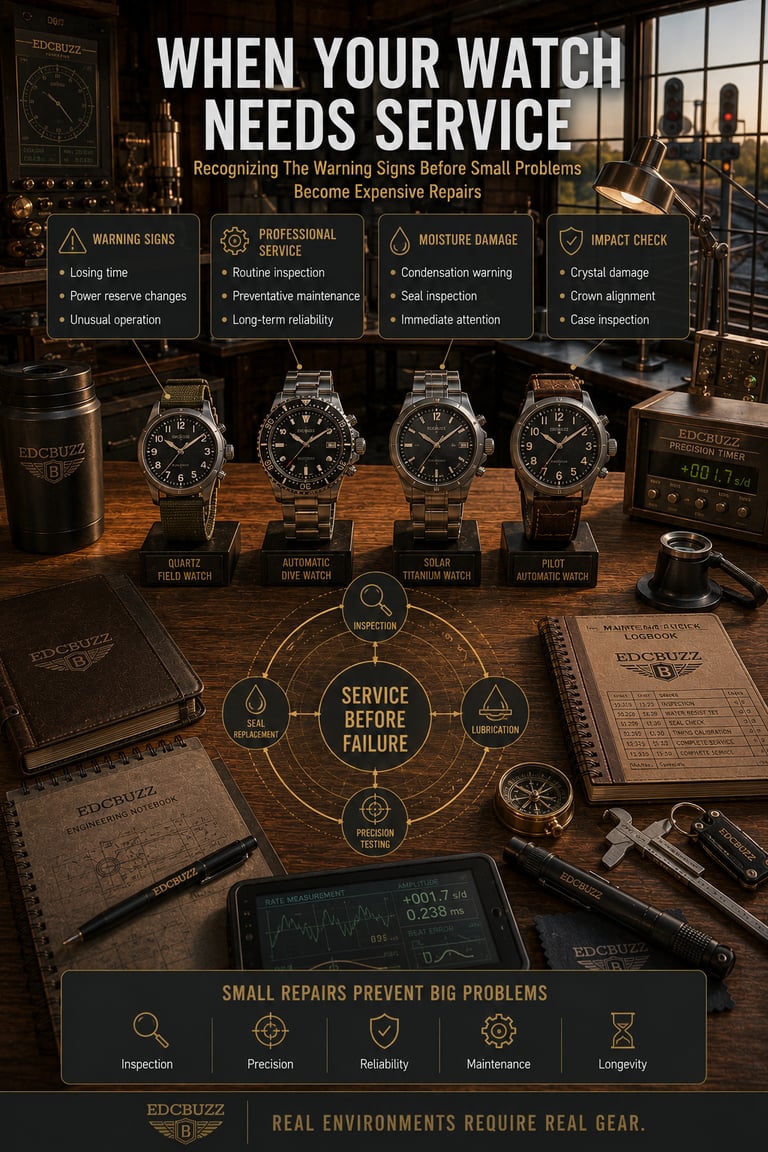
Most everyday carry watches don't require frequent professional maintenance, but every watch eventually reaches a point where servicing becomes necessary. Recognizing the warning signs early often prevents small problems from becoming expensive repairs.
For quartz watches, the most obvious sign is declining battery performance. If the watch begins stopping unexpectedly or the seconds hand starts jumping several seconds at a time, it's usually time for a battery replacement. During this visit, it's also wise to have the seals inspected and replaced if needed.
Automatic watches often provide more gradual warning signs. You may notice the watch gaining or losing significantly more time than usual, reduced power reserve, difficulty winding, increased resistance while setting the time, or unusual noises coming from inside the case. These symptoms don't necessarily indicate major damage, but they do suggest the movement should be inspected by a qualified watchmaker.
Condensation beneath the crystal requires immediate attention regardless of movement type. Even a small amount of moisture trapped inside the case can lead to corrosion if ignored. If you notice fogging beneath the crystal after exposure to water or changing temperatures, stop wearing the watch and have it inspected as soon as possible.
Physical damage also deserves attention. Deep impacts that crack the crystal, bend the crown, loosen the bezel, or significantly dent the case may affect more than just the watch's appearance. Internal components are remarkably precise, and severe impacts can sometimes damage the movement even if the watch continues running.
Routine servicing isn't something owners should fear. In many cases, it's simply preventative maintenance that helps a quality watch continue operating reliably for many years. A properly serviced watch often performs almost like new, even after decades of ownership.
If you'd like more information about service intervals and what professional maintenance includes, visit our How Often Should You Service Your Watch? guide.
Making Your Watch Last 20 Years
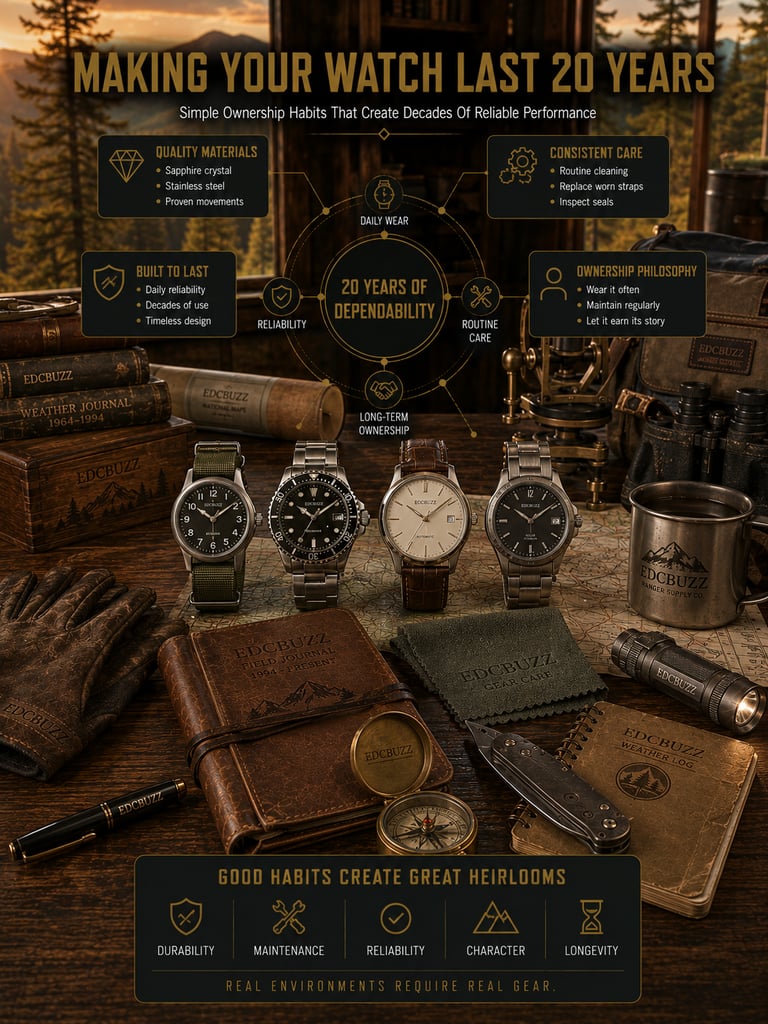

One of the greatest advantages of buying a quality watch is knowing it can remain part of your everyday carry for decades. Unlike many pieces of modern technology that become outdated after only a few years, a well-built watch often becomes more personal with time. Every small scratch, every worn strap, and every adventure adds to its story.
Making a watch last twenty years doesn't require complicated maintenance schedules or expensive equipment. It starts with choosing a watch built from quality materials. Stainless steel or titanium cases, sapphire crystals, dependable movements, and proven manufacturers all provide an excellent foundation for long-term ownership.
From there, consistency matters far more than perfection. Keep the watch reasonably clean. Replace worn straps before they fail completely. Service automatic movements when recommended. Replace batteries before they leak. Rinse away saltwater after beach trips. Store the watch in a dry location when it's not being worn.
Just as importantly, wear it. Watches are mechanical tools designed to accompany you through everyday life. Keeping a watch locked away to avoid scratches often means missing the experiences that eventually give it sentimental value.
Many people eventually discover that their favorite watch isn't necessarily the newest or the most expensive one they own. It's the one that traveled with them, celebrated milestones, survived countless workdays, and quietly kept accurate time through years of changing seasons.
A quality everyday carry watch is more than just another accessory. With a little common sense and routine care, it can become one of the longest-lasting pieces of gear you'll ever own.
If you're interested in preserving your watch for decades to come, our How To Make Your Watch Last 20 Years guide explores additional maintenance habits, storage tips, and ownership practices that help maximize the life of your investment.
Frequently Asked Questions
How often should I clean my watch?
For most everyday carry watches, a quick wipe with a microfiber cloth every few days is enough to remove fingerprints, sweat, and dust. If your watch is exposed to dirt, saltwater, or heavy perspiration, give it a more thorough cleaning with fresh water and mild soap as soon as possible. Regular cleaning helps preserve both the appearance and long-term reliability of your watch.
How often should I service my watch?
Service intervals depend on the movement. Quartz watches usually require little more than battery replacements and occasional gasket inspections. Automatic watches typically benefit from professional servicing every five to ten years, although manufacturer recommendations may vary. Solar watches require the least maintenance but should still be inspected periodically to ensure seals remain in good condition.
Can I wear the same watch every day?
Absolutely. In fact, everyday carry watches are designed for exactly that purpose. Quality watches from reputable manufacturers are built to withstand years of daily use. As long as you clean the watch regularly and perform basic maintenance when needed, wearing the same watch every day is perfectly normal.
How long should a quality watch last?
A well-built watch can easily last twenty years or more with proper care. Many mechanical watches remain in service for generations, while quartz and solar watches routinely provide decades of reliable performance when maintained appropriately. Longevity depends far more on regular care than the original purchase price.
When should I replace my watch strap?
Replace your strap when you notice significant cracking, stretching, broken stitching, deteriorating rubber, loose hardware, or excessive wear that affects comfort or security. Many owners replace straps every few years simply to refresh the appearance of a favorite watch.
Can I shower while wearing my watch?
Even if your watch has a high water resistance rating, it's generally better to avoid wearing it in hot showers. Heat, soap, shampoo, and repeated exposure to steam can gradually shorten the lifespan of seals and gaskets. Saving your watch for after your shower helps preserve its long-term water resistance.
What should I do if moisture appears inside my watch?
Condensation beneath the crystal should never be ignored. Moisture inside the case can quickly lead to corrosion and movement damage. If you notice fogging or water droplets under the crystal, stop wearing the watch and have it inspected by a qualified watchmaker as soon as possible.
Is it okay if my automatic watch gains or loses a few seconds each day?
Yes. Unlike quartz movements, automatic watches naturally vary by several seconds per day depending on the movement, position, and wearing habits. Small daily variations are completely normal and don't usually indicate a problem.
How should I store a watch when I'm not wearing it?
Store your watch in a clean, dry location away from excessive heat, direct sunlight, and strong magnetic fields. A watch box, drawer organizer, or dedicated watch case provides excellent protection from dust and accidental impacts. If storing a solar watch for an extended period, place it somewhere that receives occasional indirect light to help maintain its charge.
What's the most important habit for long-term watch ownership?
Simply wear your watch, keep it clean, and address small issues before they become major repairs. Routine maintenance, occasional servicing, and replacing worn straps when necessary will do far more to extend your watch's lifespan than expensive accessories or complicated maintenance routines.
Final Thoughts
Owning an everyday carry watch should be enjoyable, not complicated.
Whether you've chosen a dependable quartz field watch, a precision automatic timepiece, a maintenance-free solar watch, or a modern smartwatch, a few simple habits will help it continue performing reliably for years to come.
Regular cleaning, proper storage, routine servicing when needed, and paying attention to small changes in performance all contribute to a longer-lasting watch. Most importantly, don't be afraid to wear it. Everyday carry watches are built to become part of your daily routine, collecting experiences and memories along the way rather than sitting unused in a display case.
A quality watch is one of the few pieces of everyday gear that can remain with you for decades. With a little care and common sense, today's purchase can still be keeping accurate time many years from now.
If you're still searching for the right watch, our Watch Buying Guide will help you compare movements, materials, and features. If you're deciding between different styles, explore our Watch Types Guide, or browse our Best EDC Watches recommendations to find models that have earned their place in everyday carry.
Contact@TheBuzzHQ.com
© 2026 EDCBuzz. All rights reserved.
EDCBuzz
Master everyday carry systems with clarity and precision. Built for real environments and practical use.
For educational purposes only.
General Inquiries: