
EDC for Beginners: A Practical Guide to Everyday Carry Essentials
Discover practical tips on EDC for beginners, focusing on the essential pocket knife, flashlight, pen, and wallet to fit seamlessly into your daily life.
EDC TUTORIALSLOADOUTS
The EDCBuzz Editorial Team - Led by AJ “Buzz” Eichman
3/28/202611 min read
Everyday carry — or EDC, as the knights of pocket gear like to call it — isn’t about packing a Swiss Army knife-sized shed on your hip or channeling your inner action hero. It’s about keeping the right tools close at hand so life’s little fiddly bits don’t catch you off guard. For beginners, the challenge isn’t just collecting these shiny gadgets, but rather finding a balance between usefulness, comfort, and consistency. After all, tools you carry daily should feel like an extension of your hand, not a burden you forget until you sit down — and then both you and your pocket remind you.
Quick Verdict
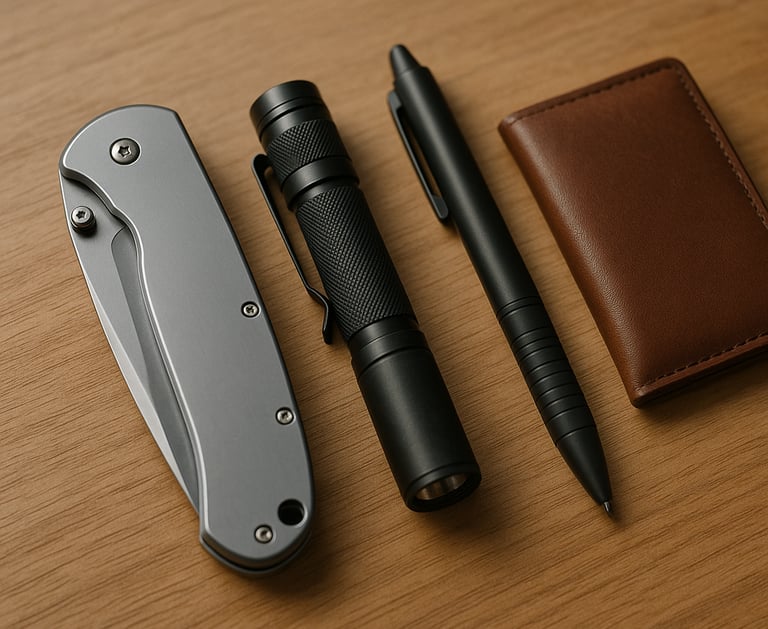
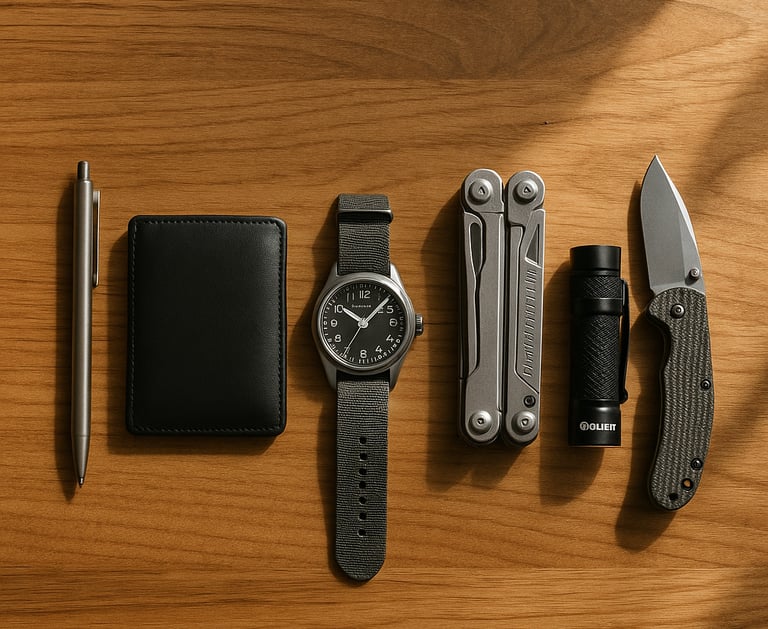
Start small: a reliable pocket knife, a compact flashlight, a pen, and a slim wallet are all you really need at first.
Look for quality and comfort over bells and whistles; you want gear that grows on you, not something that ends up in a drawer.
Build your setup gradually, adapting to your real-world needs instead of the internet’s latest hype.
Avoid overloading your pockets—gear should assist, not weigh you down.
What Is Everyday Carry (EDC)?
Think of everyday carry as the slim toolkit stitched into your daily routine. It’s less about impressing your friends and more about quietly solving minor inconveniences before they become full-blown headaches. Whether you’re cutting open a package, jotting down a quick note, or navigating a sudden blackout in your hallway, EDC gear ensures you’re not scrambling for a solution.
For beginners, EDC means focusing on basics—versatile items that consistently make your day smoother without demanding a maintenance schedule or a crash course to handle. It’s the kind of gear that becomes a seamless part of your rhythm, not another distraction. It’s simple, practical, and dependable. If you want a deeper breakdown of how all of this fits together, it helps to understand what EDC is at a foundational level.
Top Essential EDC Items for Beginners
Starting out, simplicity is your friend. Trying to carry every cool gadget out there is a fast track to pocket overload and regret.
1. Pocket Knife
A sharp, stainless steel blade is your quiet little hero for opening boxes, cutting cords, or even slicing fruit when needed. After a few weeks, the best knives reveal themselves not just by edge retention but by how comfortable they feel in your palm after repeated use. Look for one that locks safely, fits your hand well, and weighs just enough to hint at its presence without demanding attention. If you’re exploring your options, reviewing different types of EDC knives helps you understand what actually fits your daily carry.
2. Compact Flashlight
A small LED flashlight can totally change your day — or night — especially when fumbling with keys in a dim parking lot. Opt for a light that balances brightness with size. Too bright, and you might be that awkward guy lighting up the whole block; too dim, and it’s barely a glorified keychain trinket. Bonus points for rechargeable batteries and a sturdy clip, so it settles into daily use easily without demanding its own pocket.
3. Pen
Sure, everyone leans on their phone, but a well-made pen can surprise you. It’s the difference between scribbling illegible notes on the back of a receipt and leaving a good impression with a crisp signature or clear sketch. Find one with a solid grip that doesn’t slip even when you’ve been typing or using tools all day. A refillable cartridge is a small touch that pays off — because when your pen finally dies, you’ll thank yourself for not needing a scramble.
4. Wallet
A slim wallet that holds your essentials without ballooning your pockets is pure magic. Genuine leather or quality synthetic materials hold up with wear, and subtle features like RFID blocking can add peace of mind. After carrying one for a few weeks, you start noticing how it fits around your phone or how comfortably it sits when you’re sitting — those nuances really matter.
How to Choose Your First EDC Gear
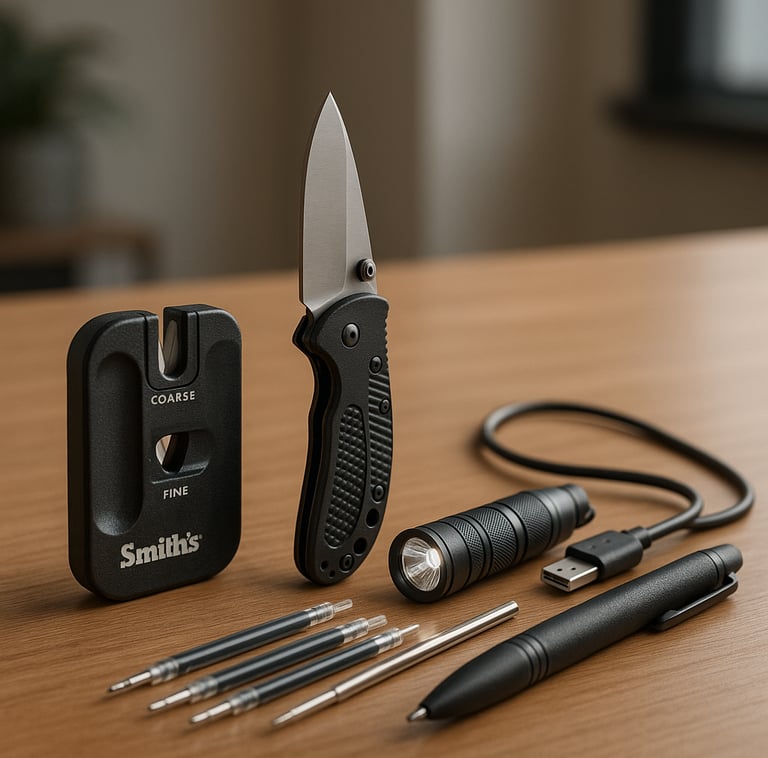
The temptation when starting out is to go for flash, fancy features, or the latest trending gear. Resist it. Instead, pay attention to usability, comfort, and simplicity. When testing gear — even mentally — ask if you’ll use it daily or just admire it now and then.
Materials make a huge difference over time. Stainless steel knives, durable plastics on pens, or well-stitched wallets show wear differently, and some stand up to sweat, pocket lint, and occasional drops better than others. The idea is to pick gear that not only performs but ages gracefully, kind of like a reliable colleague who doesn’t crumble when the workload piles up. If you want to understand why materials matter so much, a proper EDC knife steel guide helps connect those choices to real-world performance.
Don’t overlook fit and weight. For instance, heavy multi-tools can be a burden after a full day, while ultra-light flashlights sometimes forget their main job: shedding light. Carrying gear is a subtle negotiation you make many times a day. The best setups strike a balance between “enough” and “not too much.”
Tips for Building and Maintaining Your EDC Setup
Start with the essentials and give yourself time to figure out what you actually use versus what you thought you’d use. It’s tempting to grab a dozen tools at once, but experience teaches which items you reach for daily and which linger unseen.
Rotate your gear through real-world use. Test your knife on everything from packages to slicing open a stubborn fruit wrapper. Use your flashlight in low-light conditions deliberately, not just leaving it as a backup. Notice how your pen writes after a long meeting or a quick jot. This trial-by-fire approach separates gear that earns its spot from the rest.
Maintenance matters too. Keep your blades sharpened but don’t overdo it; a dull knife is frustrating, while an excessively keen edge is fragile. Recharge batteries routinely if you rely on flashlights, and stash backups wisely. A little care extends your gear’s life, making it feel more like a trusty friend instead of an occasional acquaintance.
Common EDC Mistakes Beginners Make
One of the most common traps for EDC rookies is the “carry everything” mindset. Bulk leads to discomfort, and you might find that the best tool is the one you actually have on hand, not the one you forgot at home because your pockets looked like a tackle box.
Another rookie move is picking overly complicated tools that require specialized knowledge or constant upkeep. A multi-tool with ten gadgets might sound handy, but if you don’t know how to operate the screwdriver or keep the pliers aligned, it’s just an awkward paperweight.
Also, beware of buying based on brand hype or slick marketing. Gear that looks great might be uncomfortable or less durable than it promises. Testing reviews from people who’ve lived with the products—not just those unboxed on camera—makes a difference.
Finally, ignoring how gear fits with your clothing and daily environment means you might love your knife but hate the everyday squeeze of it in your jeans’ pocket or the way your wallet bulges painfully when you sit.
Real-World Scenarios Where EDC Shines
Picture this: You’re coming home from work, juggling bags, and need to open a sealed package. That pocket knife you’ve gotten used to feels just right in your hand, slicing cleanly without fumbling around. It’s a small moment, but it saves you from scrambling for scissors or resorting to ungraceful tearing.
Or imagine a power outage while you’re reaching for your keys in the dark. Your compact flashlight clicks on immediately and rests comfortably clipped to your pocket edge. It’s not blinding, but the perfect beam to guide your way.
For note takers or those who sign papers on the fly, that dependable pen is the unsung hero. It’s light enough to carry without noticing but writes smoothly whenever called upon.
Even your wallet plays a quiet role: slim enough to keep your pockets balanced, its material growing softer and more comfortable with each day’s carry.
Upgrading and Customizing Your EDC Over Time
EDC isn’t static. As your daily routine shifts or your tastes refine, so too will your choices.
After a while, you might swap a simple knife for one with better ergonomics, or trade a flashlight for a rechargeable model with higher output. Perhaps your pen shifts from a basic ballpoint to something with a bit more flair but equal reliability.
Start small, then upgrade deliberately once you’ve identified what really matters in your day-to-day life. Avoid the trap of chasing every new model. Instead, focus on improvements that truly matter in comfort and function.
Remember, customization is also about fit—perhaps a clip on your multi-tool needs tweaking, or a key organizer replaces your bulky ring for better pocket harmony.
FAQs About Everyday Carry for Beginners
What are the essential EDC items for beginners?
A reliable pocket knife, compact flashlight, solid pen, and slim wallet form the foundational EDC for beginners. These cover basic tasks without weighing you down.
How do I start building my everyday carry kit?
Begin with a few practical essentials that you’ll use daily. Carry them consistently, then gradually add or upgrade based on what you find you need or want.
What materials should I look for in beginner EDC gear?
Look for stainless steel in knives for durability, sturdy plastic or metal for pens, genuine leather or quality synthetics for wallets, and aluminum or durable polymers for flashlights.
How can I make sure my EDC is both practical and comfortable?
Test your gear over several days. Pay attention to how it fits in your pockets, the weight after hours of carry, and ease of access. Comfort over novelty is key.
Should I upgrade my EDC items frequently or stick with basics?
Stick with basics until you understand your needs fully. When upgrading, aim for improvements that enhance comfort, durability, or functionality—not just the latest trend.
What are common beginner mistakes with everyday carry?
Overloading pockets, buying overly complex tools, choosing gear based on looks over function, and ignoring fit and comfort are typical mistakes.
How does a multi-tool compare with carrying individual tools?
Multi-tools offer convenience and space-saving but might compromise on ergonomics or have a steeper learning curve. Individual tools can be more specialized and comfortable depending on your routine.
Can I customize my EDC for work versus casual use?
Absolutely. Tailor your gear selections to different environments—for example, a slim pen and minimal wallet for the office, and a sturdier knife or flashlight for outdoor or side projects.
Practical Conclusion
Jumping into everyday carry as a beginner is less about amassing gear and more about weaving a few solid tools into your daily life. A well-chosen pocket knife, flashlight, pen, and wallet aren’t just items; they’re silent partners smoothing out the unexpected bumps in any routine.
Experience will teach you what stays, what goes, and what earns an upgrade. Your pockets might start feeling fuller for these tools, but they should never feel crowded or cumbersome. After all, the best EDC gear is the kind that ends up as indispensable as your coffee mug — not something you leave behind, because you just can’t carry the weight of it anymore.
If you take anything from this, remember: it’s not how many things you carry, but how well the few you do carry fit into your life. If you want to see how real-world knives compare once you’re ready to upgrade, looking at something like Civivi Elementum vs CJRB Pyrite helps connect beginner concepts to actual gear decisions.
That’s the real everyday carry trick. And no, there’s no magic blade that’ll cut through the hassle of picking the right gear for you — but a little patience and experience will.
Real-World Scenarios Where EDC Shines
Picture this: You’re coming home from work, juggling bags, and need to open a sealed package. That pocket knife you’ve gotten used to feels just right in your hand, slicing cleanly without fumbling around. It’s a small moment, but it saves you from scrambling for scissors or resorting to ungraceful tearing.
Or imagine a power outage while you’re reaching for your keys in the dark. Your compact flashlight clicks on immediately and rests comfortably clipped to your pocket edge. It’s not blinding, but the perfect beam to guide your way.
For note takers or those who sign papers on the fly, that dependable pen is the unsung hero. It’s light enough to carry without noticing but writes smoothly whenever called upon.
Even your wallet plays a quiet role: slim enough to keep your pockets balanced, its material growing softer and more comfortable with each day’s carry.
Upgrading and Customizing Your EDC Over Time
EDC isn’t static. As your daily routine shifts or your tastes refine, so too will your choices.
After a while, you might swap a simple knife for one with better ergonomics, or trade a flashlight for a rechargeable model with higher output. Perhaps your pen shifts from a basic ballpoint to something with a bit more flair but equal reliability.
Start small, then upgrade deliberately once you’ve identified what really matters in your day-to-day life. Avoid the trap of chasing every new model. Instead, focus on improvements that truly matter in comfort and function.
Remember, customization is also about fit—perhaps a clip on your multi-tool needs tweaking, or a key organizer replaces your bulky ring for better pocket harmony.
FAQs About Everyday Carry for Beginners
What are the essential EDC items for beginners?
A reliable pocket knife, compact flashlight, solid pen, and slim wallet form the foundational EDC for beginners. These cover basic tasks without weighing you down.
How do I start building my everyday carry kit?
Begin with a few practical essentials that you’ll use daily. Carry them consistently, then gradually add or upgrade based on what you find you need or want.
What materials should I look for in beginner EDC gear?
Look for stainless steel in knives for durability, sturdy plastic or metal for pens, genuine leather or quality synthetics for wallets, and aluminum or durable polymers for flashlights.
How can I make sure my EDC is both practical and comfortable?
Test your gear over several days. Pay attention to how it fits in your pockets, the weight after hours of carry, and ease of access. Comfort over novelty is key.
Should I upgrade my EDC items frequently or stick with basics?
Stick with basics until you understand your needs fully. When upgrading, aim for improvements that enhance comfort, durability, or functionality—not just the latest trend.
What are common beginner mistakes with everyday carry?
Overloading pockets, buying overly complex tools, choosing gear based on looks over function, and ignoring fit and comfort are typical mistakes.
How does a multi-tool compare with carrying individual tools?
Multi-tools offer convenience and space-saving but might compromise on ergonomics or have a steeper learning curve. Individual tools can be more specialized and comfortable depending on your routine.
Can I customize my EDC for work versus casual use?
Absolutely. Tailor your gear selections to different environments—for example, a slim pen and minimal wallet for the office, and a sturdier knife or flashlight for outdoor or side projects.
Practical Conclusion
Jumping into everyday carry as a beginner is less about amassing gear and more about weaving a few solid tools into your daily life. A well-chosen pocket knife, flashlight, pen, and wallet aren’t just items; they’re silent partners smoothing out the unexpected bumps in any routine.
Experience will teach you what stays, what goes, and what earns an upgrade. Your pockets might start feeling fuller for these tools, but they should never feel crowded or cumbersome. After all, the best EDC gear is the kind that ends up as indispensable as your coffee mug — not something you leave behind, because you just can’t carry the weight of it anymore.
If you take anything from this, remember: it’s not how many things you carry, but how well the few you do carry fit into your life. If you want to see how real-world knives compare once you’re ready to upgrade, looking at something like Cold Steel AD-15 vs Spyderco Para Military 2 helps connect beginner concepts to actual gear decisions.
That’s the real everyday carry trick. And no, there’s no magic blade that’ll cut through the hassle of picking the right gear for you — but a little patience and experience will.

Contact@TheBuzzHQ.com
© 2026 EDCBuzz. All rights reserved.
EDCBuzz
Master everyday carry systems with clarity and precision. Built for real environments and practical use.
For educational purposes only.
General Inquiries: