
Do You Need Polarized Sunglasses for Fishing?
Discover how polarized sunglasses reduce glare and improve your fishing experience with better underwater visibility and eye comfort.
EDC SUNGLASSES
The EDCBuzz Editorial Team - Led by AJ “Buzz” Eichman
7/4/20267 min read
If you’ve ever spent a decent chunk of time staring down at a shimmering lake or river while fishing, you know the glare off the water is more than just a mild annoyance. It’s a full-on visual adversary, washing out everything you’re trying to spot beneath the surface. That’s where polarized sunglasses claim their spot in the gear lineup. But do you really need them for fishing, or are they just another “nice to have” accessory gathering dust in your tackle box?
Having carried and lived with several pairs of polarized sunglasses across multiple fishing trips and outdoor adventures, I’ve seen firsthand how they stack up against regular tinted lenses. Let’s break down what polarized sunglasses bring to the table, how they work, and whether they’re worth making room for on your next outing. If you're just getting started, both EDC Sunglasses and Sunglasses By Activity provide a solid foundation for choosing the right pair.
Quick Verdict
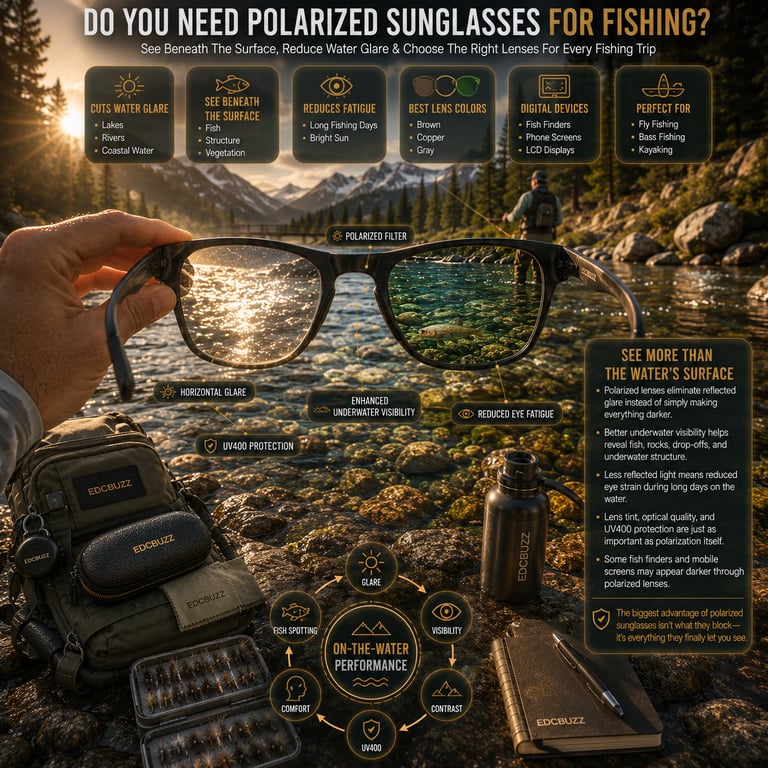
Polarized sunglasses significantly cut down water surface glare, improving your ability to see fish and underwater structures.
They reduce eye strain during long hours under bright sun, making for a more comfortable day on the water.
Not all polarized lenses are made equal; UV protection, lens quality, and tint matter just as much as the polarization.
While great for fishing, polarized sunglasses have versatile uses for other outdoor activities and driving, though they can interfere with viewing certain digital screens.
What Are Polarized Sunglasses?
At the core, polarized sunglasses aren’t revolutionary—they aren’t magic specs that give you x-ray vision or turn you into some aquatic Sherlock Holmes. What they do have is a special lens filter that’s designed to block out horizontally reflected light. That’s the light responsible for the intense glare bouncing off flat surfaces like water, snow, or even wet roads.
Your typical sunglasses tint cuts down overall brightness, but polarized lenses specifically target that horizontal light wave to reduce glare. This distinction makes all the difference when you’re fishing because instead of just dimming your view, polarized lenses bring clarity by stripping away the reflective noise from the water’s surface.
How Polarized Lenses Work to Reduce Glare
Imagine sunlight hitting a calm lake. The light that bounces off is polarized horizontally, which means it spreads out in mostly one direction. When your eyes try to look through this reflected glare, it’s like trying to see through a wall of confusing light.
Polarized lenses have a vertical filter that blocks this horizontal glare, letting through only the useful light waves. The result? You get a clearer, truer view into the water, revealing shadows, fish shapes, and underwater details that might otherwise be washed out or hidden.
Of course, the polarization angle is fixed, so twisting your head or tilting the glasses can sometimes mess with the effect. It’s a small detail many don’t mention upfront. And if you ever find yourself squinting at your phone or fish finder screen through polarized lenses, that’s because some LCDs also use polarization, which can clash with your glasses, making the screen appear dark or scrambled. If you enjoy both fishing and the golf course, the Best Golf Sunglasses guide also highlights lens features that work well in bright outdoor environments.
Benefits of Using Polarized Sunglasses for Fishing
Seeing beneath the surface is the holy grail of fishing visibility, and polarized sunglasses deliver on that front. One day spent without them, then another with them, really drives home the difference. With polarization, you actually spot fish lurking in shallows, underwater logs, weed beds, and even subtle water currents affecting bait movements.
Beyond visual clarity, there’s the comfort factor. Staring into bright reflections drains your eyes over time—something anglers often overlook until the fatigue sets in after several hours. Polarized lenses cut down on this strain. After a long day, your eyes don’t feel like they just survived an open-eye sunburn.
Polarized sunglasses also tend to boost color contrast and reduce overall visual noise. With the right tint—gray or brown are favorites—they preserve natural colors rather than color shifting everything toward an artificial hue. This nuance might seem minor at first but pays off in longer fishing sessions where color cues matter.
Plus, if you’re paddling or boating, the constant motion and shifting glare angles really emphasize the need for glare reduction. Polarized sunglasses settle into daily use with ease, which typically separates those that are genuinely useful from those just good for a quick debut on Instagram.
Common Misconceptions About Polarized Sunglasses
Many folks confuse polarized sunglasses with regular tinted ones. It’s an easy mistake, but one that’s worth setting straight. Regular tints only lower the light intensity—they don’t selectively block reflective glare. So, they might make things darker but still leave you squinting into that sun-dance on the water.
Another misconception involves UV protection. Polarization doesn’t automatically mean UV blocking. You need to check for UV400 protection to be sure you’re shielding your eyes from harmful UVA and UVB rays. Otherwise, you’re just swapping glare for a slightly darker, potentially less protective lens. If you're wondering whether premium models are worth paying for, Do Expensive Sunglasses Really Protect Your Eyes Better? takes a closer look.
People often think polarized lenses work in all lighting conditions, but low light or heavily overcast days can reduce their effectiveness. The same goes for indoor use or viewing through glass—they can actually hinder vision or cause weird visual effects sometimes.
Choosing the Best Polarized Sunglasses for Fishing
Here’s where life gets a little more nuanced. Not all polarized lenses are created equal, and long-term comfort hinges on several factors. Lens material, for example, matters. Polycarbonate tends to be lighter and more impact-resistant—appealing if you spend active days on the water. Glass lenses offer superior optical clarity but can be heavier and more fragile.
Lens tint play a role too. Gray tints provide neutral color perception, while brown and amber lenses enhance contrast and depth perception in a way that often complements fishing environments better. The choice largely boils down to personal preference and local conditions.
Don’t overlook fit. Polarized sunglasses that slide off your nose or pinch behind your ears quickly turn from essential gear to forgotten nuisance. After a couple of hours, poorly fitting glasses invite discomfort and constant adjustment distractions, which no angler wants.
Price is another factor. Premium brands tend to invest in higher quality polarized films and full UV protection. But budget-friendly options can still deliver solid performance if you verify the specs and read real-world reviews. Remember, it’s better to carry a pair you’ll actually wear than some pricey pair you reserve for bragging rights. If you're comparing traditional eyewear with impact-rated options, the Mechanix Vision Type-E vs Oakley Half Jacket 2.0 (Safety Glasses vs Sunglasses) comparison offers another perspective.
Additional Advantages for Outdoor Activities
While polarized sunglasses shine on the water, their value stretches beyond fishing. They’re equally handy for hiking, trail running, or any outdoor activity where glare off wet or bright surfaces challenges your vision.
In driving scenarios, polarized lenses cut down glare from wet roads, windshields, and vehicles around you, improving safety and reducing fatigue. You might not think fishing sunglasses double as daily drivers, but the crossover is real.
Just keep in mind those pesky LCD screens again. When using digital devices outdoors, flipping your head or removing the glasses might be necessary for a clear view. Beyond that minor hassle, the benefits more than justify carrying them on all your sunny-day adventures. For rapidly changing light conditions, it's worth knowing When Should You Wear Photochromic Sunglasses?
Care and Maintenance Tips for Polarized Sunglasses
Good polarized sunglasses benefit from a little TLC. Lens scratches reduce clarity and can compromise polarization effectiveness. Cleaning with a microfiber cloth and mild lens cleaner keeps them performing their best.
If you toss them in your gear bag without protection, expect some marks and scrapes in no time. A case is a sound investment, not just for safekeeping but to prevent constant dirt and grit buildup that can wear down coatings. If you expect your eyewear to take abuse, the Best Tactical Sunglasses guide covers some of the toughest options available.
Common Mistakes to Avoid When Buying Polarized Sunglasses
Mistaking tinted lenses for polarized lenses and expecting anti-glare performance.
Buying polarized sunglasses without checking for UV protection, risking eye damage.
Assuming one-size-fits-all; ignoring fit and wearability for long fishing trips.
Overlooking lens tint effects on contrast and color accuracy.
Purchasing cheap lenses prone to scratching and low optical clarity.
Expecting polarized glasses to work flawlessly in all lighting or viewing scenarios.
Neglecting screen visibility issues when using smartphones or digital fish finders. If you're considering a budget pair, read Are Cheap Sunglasses Bad for Your Eyes? before making a decision.
Frequently Asked Questions
What makes polarized sunglasses different from regular sunglasses?
Polarized sunglasses have a filter that blocks horizontally polarized light, which reduces glare from reflective surfaces. Regular sunglasses only reduce overall brightness without targeting glare.
Do polarized sunglasses work better for fishing than non-polarized ones?
Yes, polarized sunglasses improve underwater visibility by cutting the glare off water surfaces, making it easier to spot fish and underwater structures. If you're curious how polarized and non-polarized lenses compare directly, see Ray-Ban RB3025 vs Randolph Concorde Aviator (Polarized vs Non-Polarized).
Can polarized sunglasses protect against UV rays?
Not inherently. You need to check that the sunglasses offer full UV400 protection, blocking 100% UVA and UVB rays.
Are polarized lenses effective in low light or overcast conditions?
Their glare reduction relies on polarized reflections, which are less intense in low light, so effectiveness may be reduced.
Do polarized sunglasses affect viewing of phone or fish finder screens?
Yes, since many digital screens use polarization, polarized lenses can make screens appear dark or distorted at certain angles. If you're thinking about wearable displays instead, Can Smart Glasses Replace Traditional Sunglasses? explains the trade-offs.
How should I choose the best polarized sunglasses for fishing?
Consider lens material (polycarbonate vs. glass), UV protection, lens tint for color accuracy, fit and comfort, brand reputation, and your budget.
Can you use polarized sunglasses for other outdoor activities?
Absolutely. They’re useful for hiking, running, driving, and any outdoor activity where glare reduction improves comfort and visibility. They can also complement protective eyewear, but Are Safety Glasses Good Enough for Outdoor Work? explains where each type is appropriate.
Are polarized lenses more expensive and worth the investment?
Premium polarized lenses offer superior clarity and durability, generally worth the cost if you spend substantial time outdoors. Budget options exist but research is key.
Practical Conclusion
After spending significant time on the water sporting polarized sunglasses, the practical benefits become impossible to ignore. They don’t just feel like a luxury add-on; they genuinely improve your ability to see beneath the water’s surface and ease the visual toll of bright glare. That said, the right pair matters—quality lenses, proper UV protection, fit, and tint all influence your daily experience.
If you’re serious about fishing and spend hours in sunlight, polarized sunglasses aren’t just “nice to have.” They become part of the core gear you reach for without thinking. Plus, their usefulness spills over into countless other outdoor scenarios, making them a reliable companion for nearly any sunny-day pursuit.
So yes, you do need polarized sunglasses for fishing—assuming you want to spot the fish before they spot you. And if that’s not reason enough, they also come with the added bonus of looking like you know what you’re doing out there, even if sometimes it’s just to avoid squinting at your phone.

Contact@TheBuzzHQ.com
© 2026 EDCBuzz. All rights reserved.
EDCBuzz
Master everyday carry systems with clarity and precision. Built for real environments and practical use.
For educational purposes only.
General Inquiries: