EDC PENS:
COMPLETE GUIDE TO EVERYDAY CARRY PENS
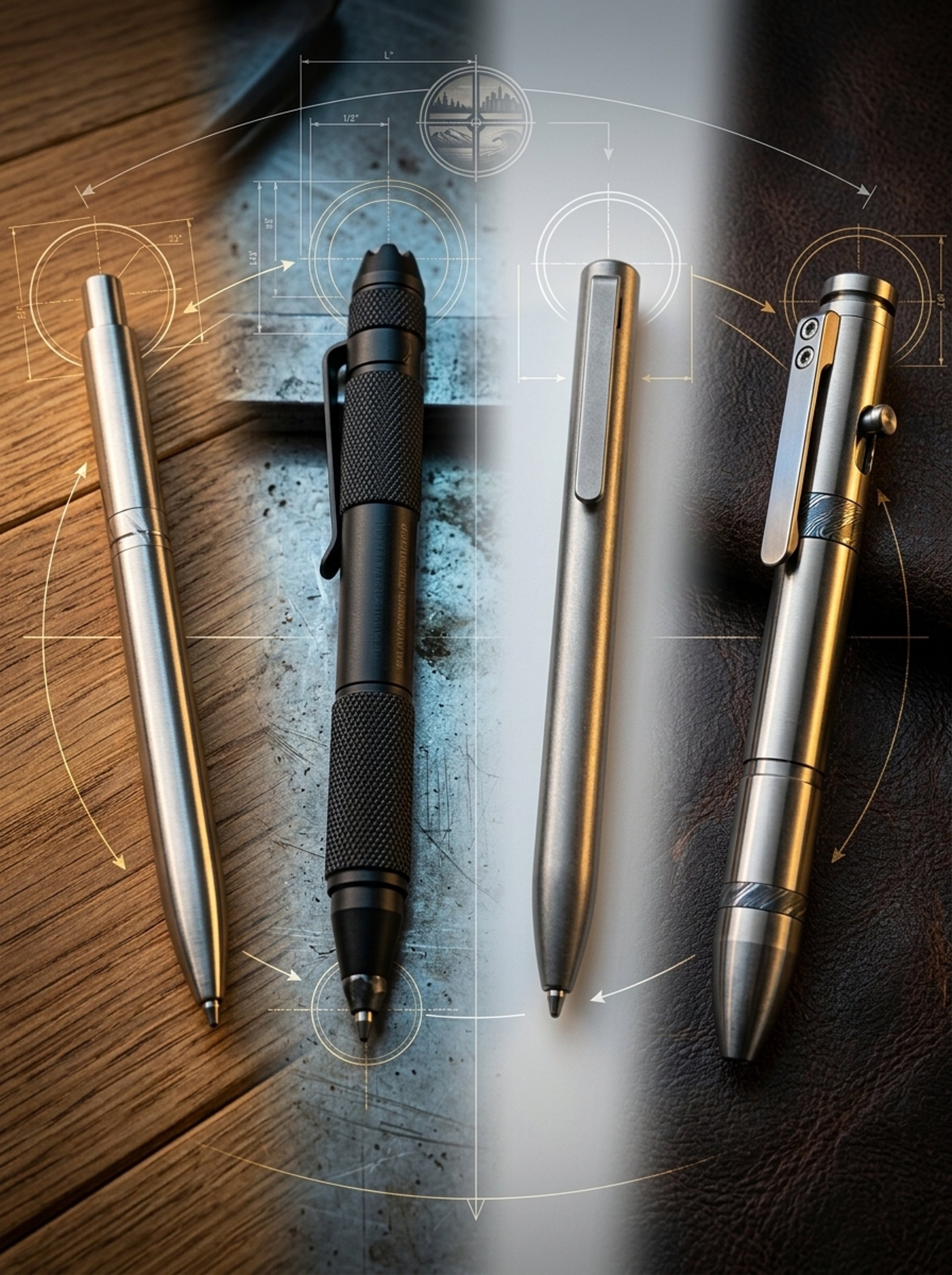
An everyday carry (EDC) pen is more than just something you write with—it’s a tool you rely on daily.
From quick notes to real-world tasks, the right pen affects how efficiently you handle everyday situations.
If you’re new to EDC pens, What Makes a Good EDC Pen breaks down what actually matters when choosing one.
Modern EDC pens are built around:
Durable materials that last
Reliable mechanisms that don’t fail
Comfortable carry without bulk
Consistent writing performance
A good EDC pen isn’t just carried—it gets used.
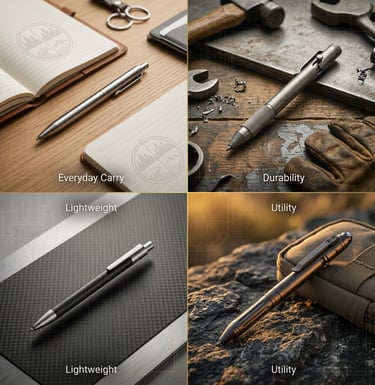
Quick Verdict
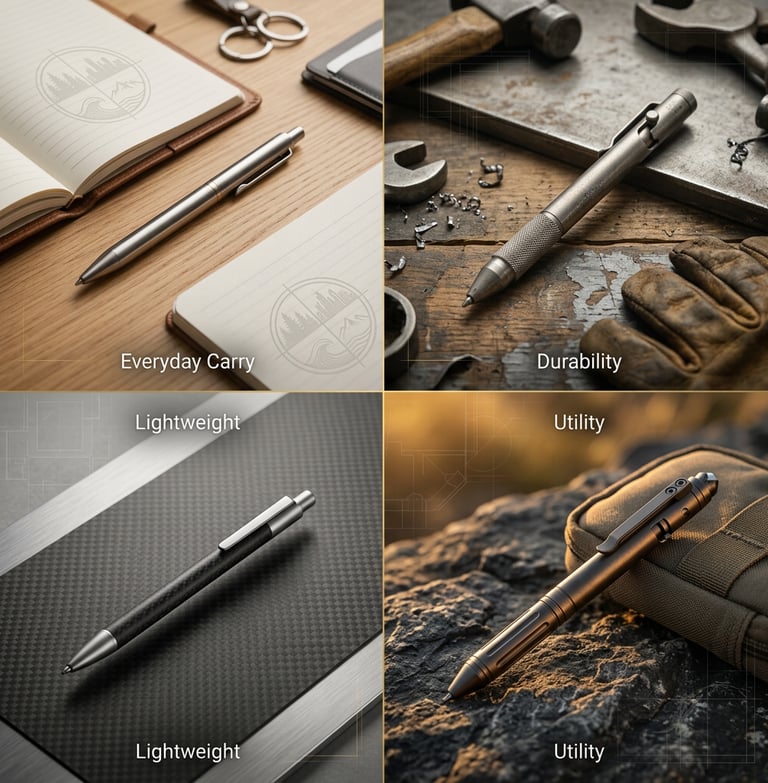
Best for everyday carry: Balanced, mid-size pens with reliable refills
Best for durability: Metal-built pens with bolt or capped designs
Best for lightweight carry: Slim, minimalist pens
Best for utility: Tactical pens with added features
Choosing between these comes down to how you actually use your pen daily.
TYPES OF EDC PENS
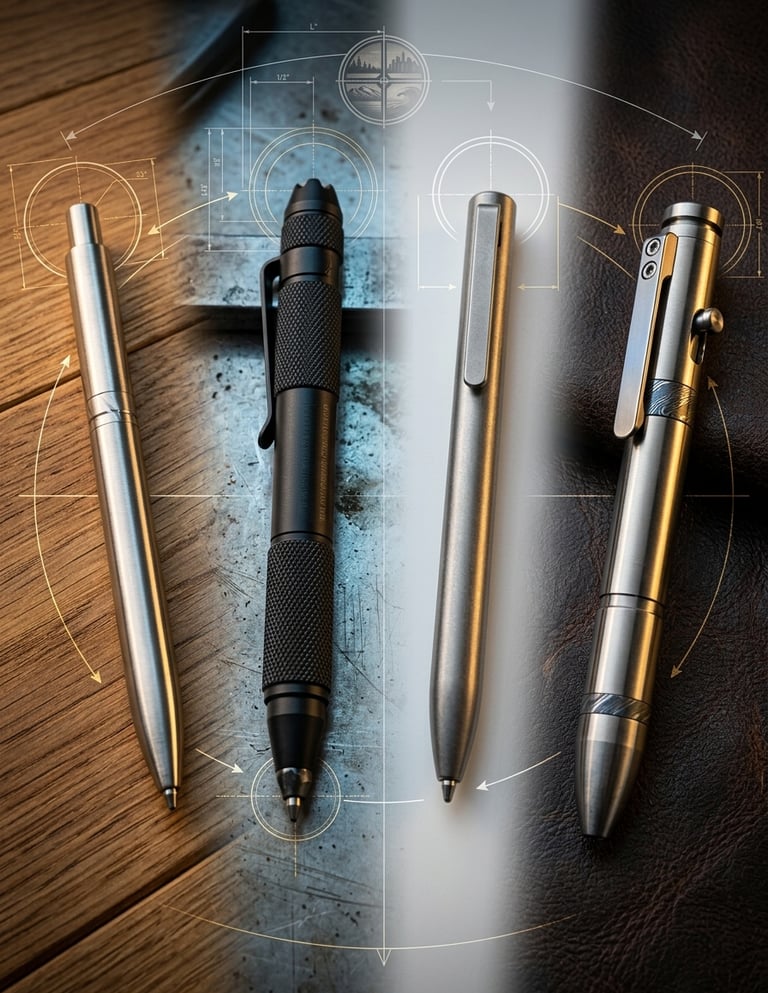
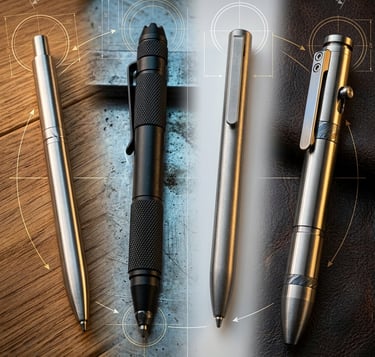
Understanding the different categories is the first step to choosing the right pen.
Everyday Carry Pens
These are your balanced daily-use pens.
They focus on:
Comfort
Reliability
Refill flexibility
Best for:
Daily writing
Work carry
General use
These are the most common and practical option for most users.
Tactical Pens
Tactical pens are built for durability and added functionality.
They often include:
Reinforced tips
Strong metal bodies
Emergency features
Best for:
Emergency use
Field work
Users who want added utility
These are covered deeper in Tactical Pens Explained.
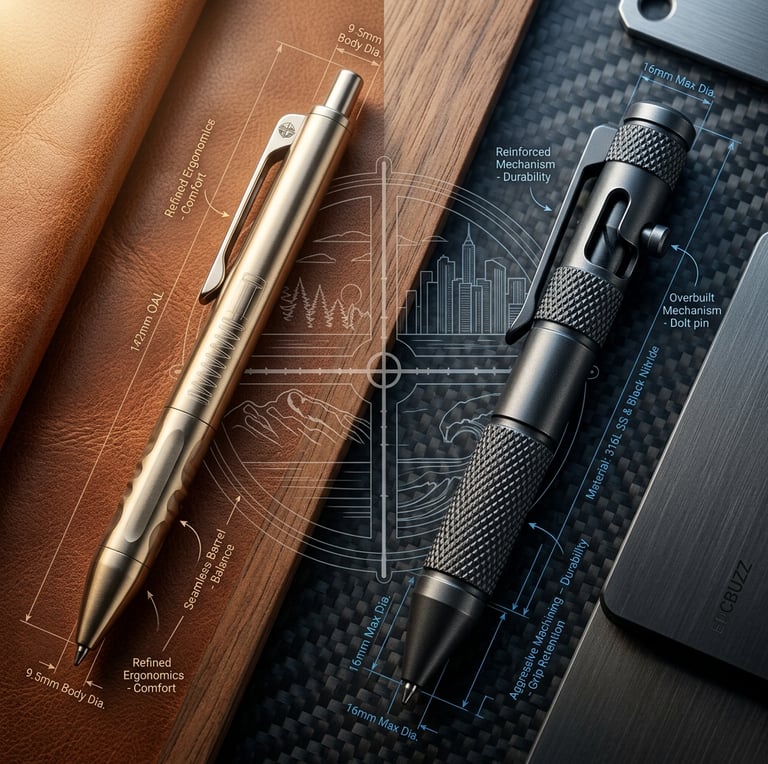
Bolt Action Pens
Bolt action pens focus on mechanical reliability and durability.
They offer:
Stronger mechanisms
Better long-term performance
More tactile interaction
Best for:
Frequent users
EDC enthusiasts
Long-term carry
For a full breakdown, see Bolt Action vs Click Pens.
Click Pens
Click pens prioritize speed and simplicity.
They focus on:
Fast access
Lightweight design
Easy operation
Best for:
Quick notes
Office use
Casual carry
They’re simpler—but typically less durable than bolt-action designs.
EDC PEN STYLES EXPLAINED
Design affects how a pen feels, performs, and holds up over time.
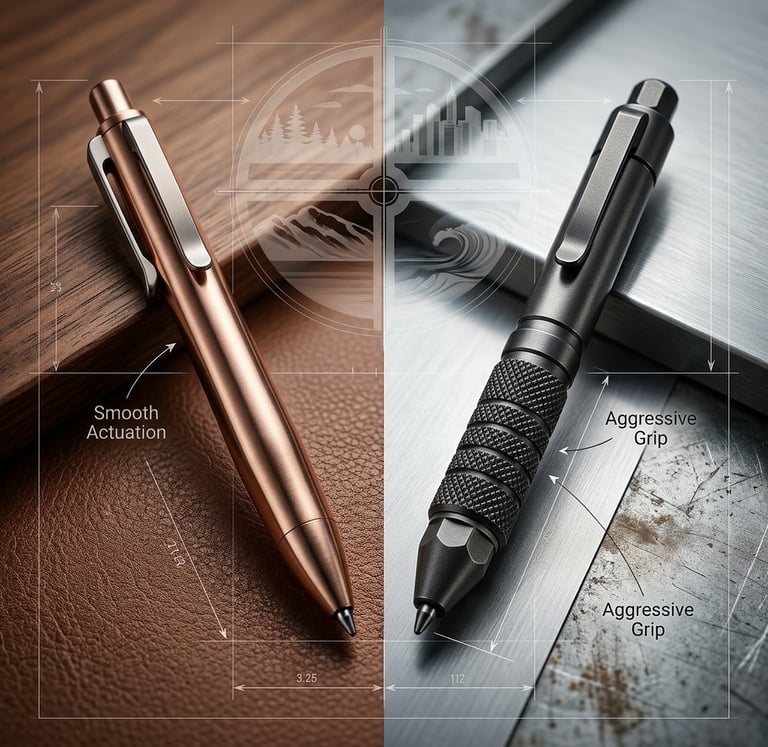
Balanced Design
Balanced pens aim to do everything well.
They provide:
Comfortable grip
Smooth writing
Reliable performance
This is the best choice for most users.
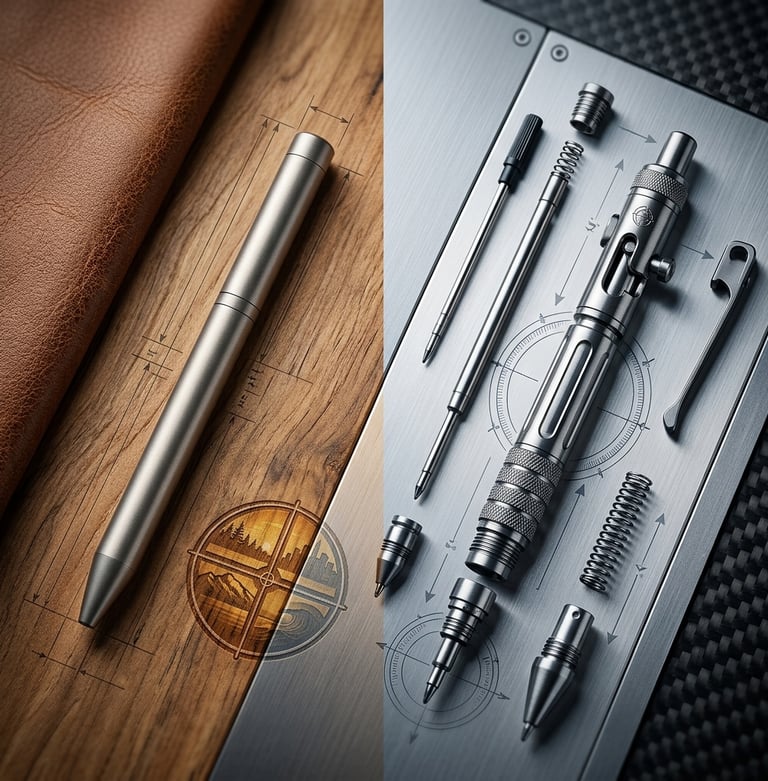
Strength-Focused Design
These pens prioritize durability over comfort.
They feature:
Heavier materials
Reinforced builds
Longer lifespan
Best for:
Work environments
Hard use
Frequent daily use
Trade-off: heavier carry.
Minimalist Design
Minimalist pens strip down to essentials.
They focus on:
Weight reduction
Simplicity
Clean carry
Best for:
Pocket carry
Users who want less bulk
Trade-off: fewer features.
Modular Systems
Some pens allow customization through refill compatibility.
They offer:
Multiple refill options
Adjustable fit
Custom setups
Best for:
Users who want flexibility
EDC enthusiasts
This is where pens like Big Idea Design stand out.
EDC PEN MATERIALS
Material impacts durability, weight, and long-term performance.
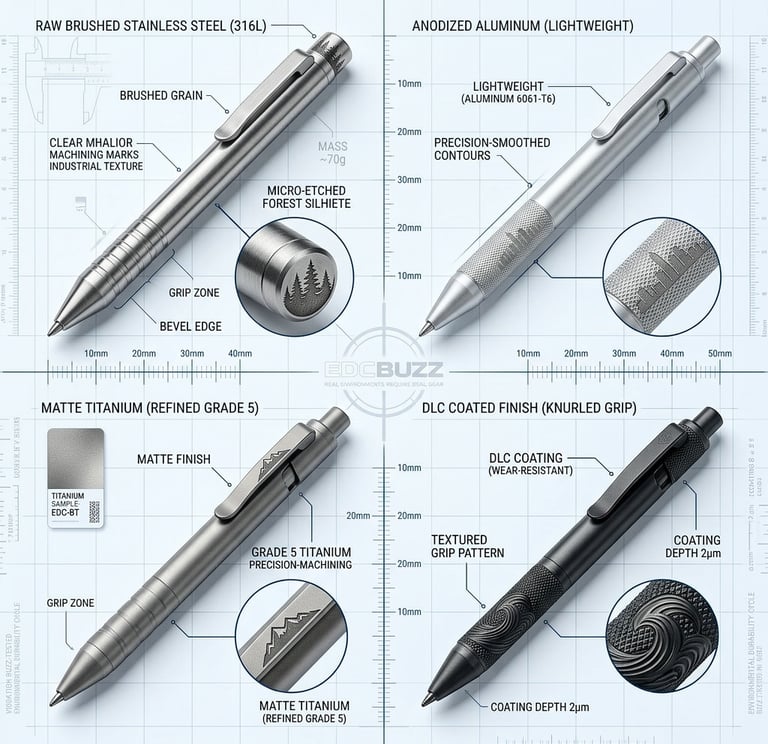
Stainless Steel
Most common for durability.
Benefits:
Strong
Corrosion-resistant
Long-lasting
Best for reliability.
Aluminum
Used for lightweight carry.
Benefits:
Easy to carry
Comfortable handling
Trade-off:
Less durable than steel
Titanium (Premium)
High-end material for EDC.
Benefits:
Strong-to-weight ratio
Corrosion resistance
Premium feel
Trade-off:
Higher cost
Covered deeper in EDC Pen Materials: Titanium vs Steel.
Coated Finishes
Used for grip and protection.
Benefits:
Better grip
Reduced wear
Improved durability
REAL WORLD USE
Different pens perform better depending on how you use them.
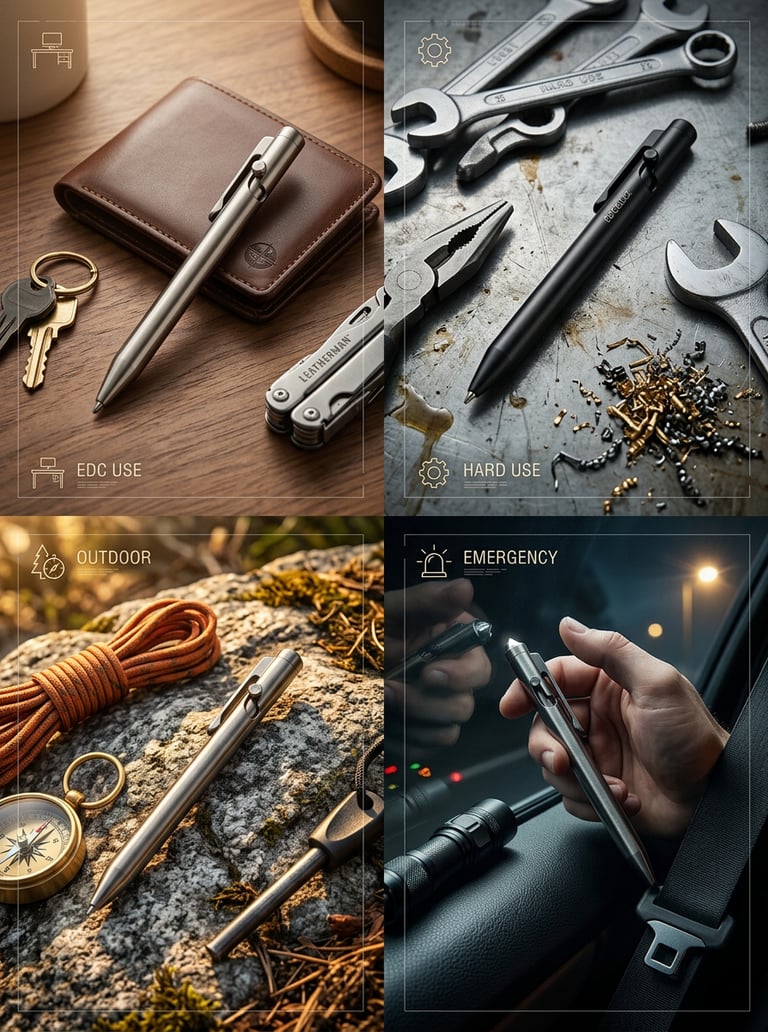
Everyday Carry
Best options:
Balanced pens
Compact designs
Focus on:
Comfort
Speed
Reliability
Work / Hard Use
Best options:
Metal pens
Bolt-action designs
Focus on:
Durability
Grip
Long-term use
Outdoor Use
Best options:
Pressurized ink pens
Tactical pens
Focus on:
Reliability
Performance in harsh conditions
Emergency Use
Best options:
Tactical pens
Glass-breaker designs
Focus on:
Speed
Utility
If you’re considering these, see Glass Breaker Pens: Are They Worth It.
HOW TO CHOOSE THE RIGHT EDC PEN
Choosing the right pen comes down to how you actually use it.
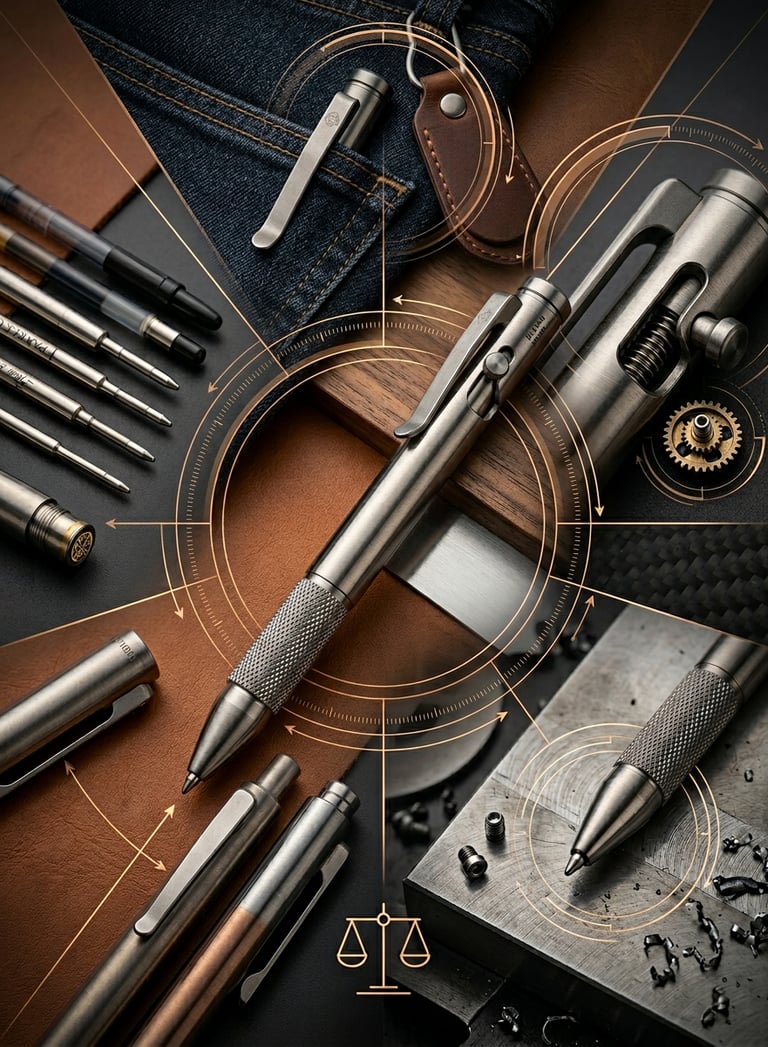
Tool Priority
Ask yourself:
Writing → choose balanced pens
Durability → choose metal builds
Utility → choose tactical pens
Carry Style
Pocket carry → slim designs
Clip carry → larger pens
If it’s uncomfortable, you won’t carry it.
Weight vs Comfort
Heavier pens = more durability
Lighter pens = easier carry
Balance matters.
Mechanism Choice
Bolt action → durability + feel
Click → speed + simplicity
Covered in Bolt Action vs Click Pens.
Refill Compatibility
Some pens are limited. Others offer flexibility.
If long-term use matters, prioritize refill options.
Carry something you’ll actually use
Avoid oversized pens for daily carry
Choose quality over features
Match your pen to your environment
A pen only works if you actually use it
PRACTICAL EDC PEN TIPS
BEST EDC PENS
(Best Picks & Comparisons)

Find Your Perfect EDC Pen
You've learned how refill types, materials, mechanisms, and writing styles influence everyday performance. Now it's time to put that knowledge to work.
Use the EDCBuzz Pen Advisor to find the best pen for your budget, writing needs, carry preferences, and everyday lifestyle.
Explore More EDC Advisors
A dependable pen belongs in every everyday carry. Explore the rest of the EDCBuzz Advisor Series to build a complete loadout that matches your budget and daily needs.
Related EDC Gear
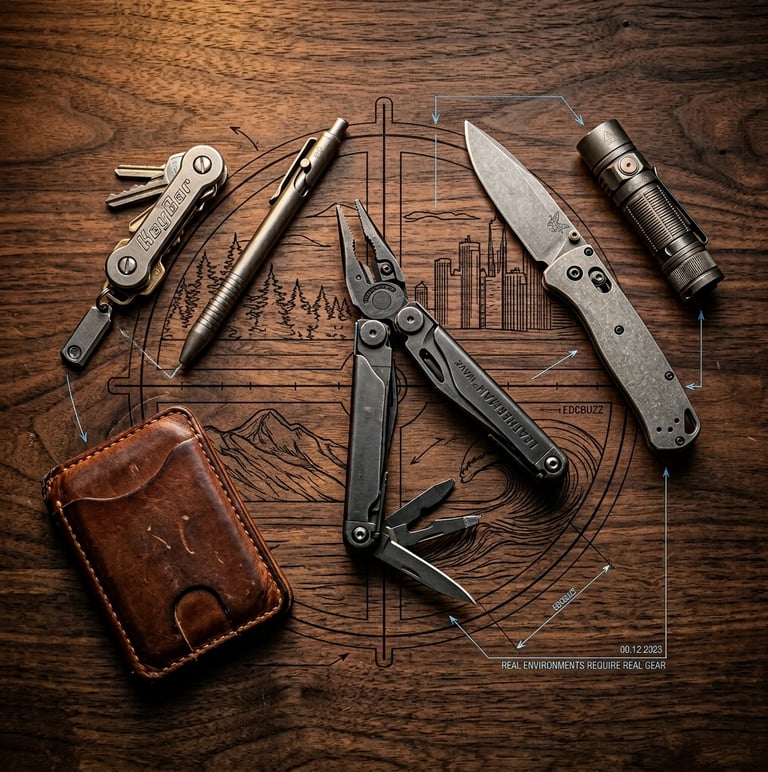
An EDC pen works best when it’s part of a simple, functional setup. It handles writing and communication, but it becomes more useful when paired with a few core tools that cover the rest of your daily needs.
FLASHLIGHTS
A flashlight gives you control in low-light situations where most real tasks actually happen. Your multi-tool handles the job—but your flashlight lets you see what you’re doing.
KNIVES
Multi-tools include blades, but a dedicated knife is faster and easier for daily cutting. Use a knife for frequent tasks. Use your multi-tool when things get more complex.
WALLETS
Your wallet affects comfort more than anything else you carry. A slim, structured wallet keeps your setup clean and prevents unnecessary bulk.
FULL EDC SETUP
A strong setup is built on balance.
Each tool has a role—multi-tool for versatility, knife for cutting, flashlight for visibility, wallet for organization. When everything has a purpose, your carry becomes faster, lighter, and easier to use.
Frequently asked questions
What makes a good EDC pen?
A good EDC pen comes down to consistency. It needs to work every time you reach for it, without thinking about it. That means a solid build, a reliable mechanism, and a refill system you can easily replace. If it’s uncomfortable to carry or unreliable in use, it won’t stay in your pocket—and that defeats the entire purpose of everyday carry.
Are expensive EDC pens worth it?
They are if you actually use a pen regularly. Higher-end pens typically offer better machining, stronger materials, and longer lifespans. That doesn’t mean everyone needs one. If your pen only comes out occasionally, a mid-range option makes more sense. But if you’re using it daily, the difference in quality becomes obvious over time.
What is the best mechanism for an EDC pen?
There isn’t a universal “best,” but there are clear trade-offs. Bolt action pens tend to last longer and offer a more solid, mechanical feel. Click pens are faster and simpler but can wear out sooner. Capped pens are the most secure but slower to deploy. For most EDC users, bolt action hits the best balance between durability and usability.
What refill is best for EDC pens?
The refill matters more than the pen body when it comes to writing performance. Parker-style refills are the most common in EDC pens and offer a good balance of availability and performance. Pressurized refills, like Fisher Space Pen cartridges, are better for extreme conditions. Gel refills provide smoother writing but aren’t always as durable. The best choice is the one you can consistently replace and rely on.
Are tactical pens actually useful?
They can be, but they’re not necessary for most people. Tactical pens are designed with durability and emergency use in mind, often including features like reinforced tips or glass breakers. That makes them useful for field work or preparedness setups. For everyday writing, though, most users will benefit more from a standard EDC pen that focuses on comfort and usability.
How heavy should an EDC pen be?
Weight should match how you carry your gear. A heavier pen often feels more durable and stable when writing, but it can become annoying if it’s in your pocket all day. Lighter pens are easier to carry but may feel less substantial. The goal is balance—something solid enough to use comfortably but light enough that you don’t notice it until you need it.
How long should an EDC pen last?
A well-built EDC pen should last for years, not months. Most quality pens are designed with replaceable refills and durable materials, so the body itself becomes a long-term tool. In many cases, you’ll go through dozens of refills before the pen shows any real wear.
What size pen is best for everyday carry?
Size comes down to how you balance comfort and portability. Full-size pens are better for extended writing because they feel more stable in hand. Compact pens are easier to carry and less noticeable in your pocket. Most people end up preferring something in the middle—a pen that’s easy to carry but still comfortable enough to use without compromise.
Final Thoughts
EDC pens aren’t about features—they’re about reliability.
The best pen:
Fits your carry style
Matches your daily use
Performs consistently over time
If you focus on real-world use—not just specs—you’ll end up with a pen you actually carry and use every day.
Contact@TheBuzzHQ.com
© 2026 EDCBuzz. All rights reserved.
EDCBuzz
Master everyday carry systems with clarity and precision. Built for real environments and practical use.
For educational purposes only.
General Inquiries: