
Metal Bracelet or Rubber Strap: Which Fits Your Lifestyle?
Discover whether a metal bracelet or rubber strap suits your lifestyle better for comfort, durability, and style in everyday carry watches.
EDC WATCHES
The EDCBuzz Editorial Team - Led by AJ “Buzz” Eichman
6/28/20268 min read
Choosing the right watch strap is often overlooked, but it's a surprisingly important part of everyday carry that can make or break your experience with a timepiece. When it comes to everyday carry watches, your strap needs to mesh well with how you live—what you do, how comfortable you need to be, how much wear and tear the strap can handle, and even how it looks with your daily style. Two of the most common strap choices are metal bracelets and rubber straps, each bringing distinct benefits and compromises rooted in their materials and design. Whether you’re clocking time in an office or tackling an active weekend outdoors, your strap choice should fit naturally into your lifestyle.
If you're still building your collection, our EDC Watches pillar covers everything you need to know about selecting the right watch for everyday carry before choosing the perfect strap.
So let’s take a closer look at the practical realities of living with metal bracelets versus rubber straps, the kind of stuff you don’t just notice on day one but after weeks or months of carrying and wearing. By the time you finish, you’ll have a clear sense of which strap suits your daily rhythms and where maybe swapping one for the other could make all the difference.
Quick Verdict
Metal bracelets offer unmatched durability and a classic formal look but can add noticeable weight during extended wear.
Rubber straps excel in comfort and flexibility, especially in hot or humid climates, making them ideal for active, outdoor lifestyles.
Maintenance is easier with rubber straps due to water resistance and simple cleaning, while metal bracelets may require occasional polishing and more involved upkeep.
Switching between the two strap types can extend your watch’s versatility, adapting it to varied occasions and environments.
Overview of Watch Strap Types: Metal Bracelets and Rubber Straps
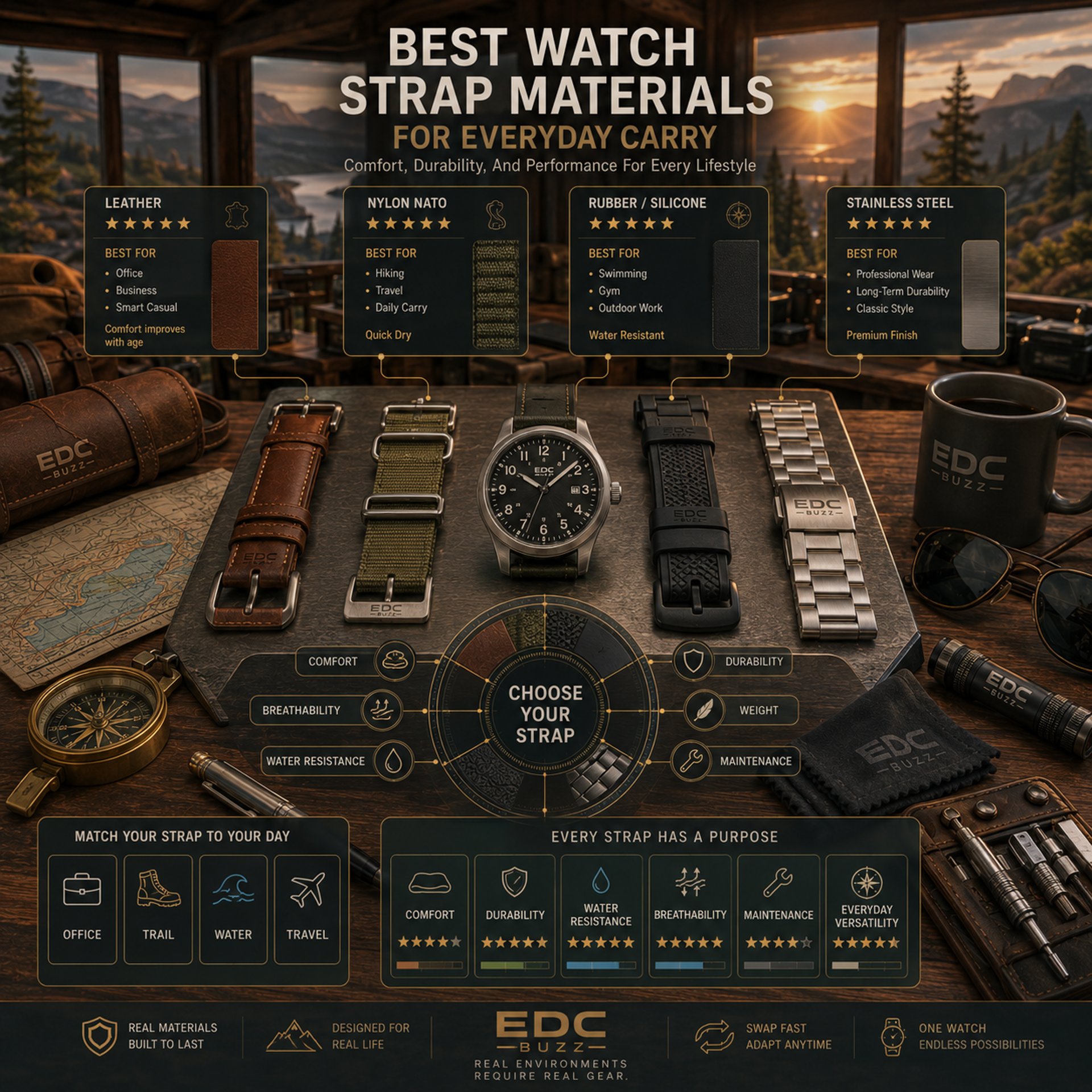
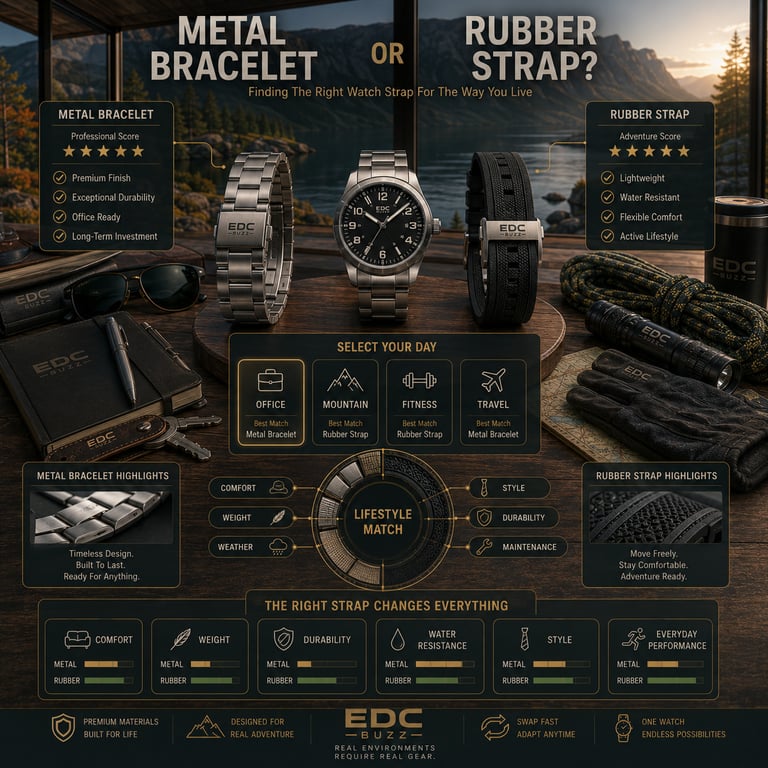
A metal bracelet is typically made from stainless steel or titanium links, sometimes coated or brushed for style and scratch resistance. It provides a robust, enduring feel—think of it as the tank of watch straps. On the other hand, rubber straps are crafted from materials like silicone or polyurethane, selected for their suppleness and resilience against water and sweat. If you picture a marathon runner’s go-to watch strap, it’s probably some sort of rubber or silicone band designed to minimize irritation and maximize movement.
If you're comparing different watch styles alongside strap options, the Watch Types Guide can help narrow down which combinations make the most sense for your needs.
But it’s not just materials that tell the story. How these straps are constructed, adjusted, and worn makes a significant difference in day-to-day usage. Metal bracelets rely on removable links and micro-adjust features for fit, while rubber straps use buckle holes, which can sometimes make precise sizing a bit trickier.
Materials and Construction Differences
Over time, metal bracelets prove their value in durability. Stainless steel resists scratches better than most, and titanium offers that rugged toughness with less heft. However, the weight of metal is not trivial. After a full day of wearing, especially if you’re desk-bound or moving less, you’ll notice the difference—a gentle reminder perched on your wrist, like an efficient but persistent work colleague.
Rubber straps, by contrast, are far lighter and more flexible. They flex and move with your wrist rather than against it. But that flexibility comes with tradeoffs; poor-quality rubber can crack or degrade over time, especially when exposed to intense UV light, chlorinated pools, or heavy sweat. Also, cheaper rubber straps sometimes stretch out, leading to a looser fit that you’ll notice only when it becomes a persistent annoyance. If long-term durability is important, The Most Durable Watch Materials Explained explores how different case and strap materials hold up over years of use.
Comfort and Wearability for Daily Use
Comfort is where rubber straps shine most brightly. Their softness and bendability make them ideal for prolonged wear, reducing grip fatigue on your wrist. They also conform to subtle wrist movements and often offer better ventilation, particularly if textured or perforated.
Metal bracelets take more getting used to. At first, you might appreciate the reassuring heft and solidity, but after several hours, some might find that metal links dig into the skin or feel cold at first contact before warming—like a well-meaning but awkward new acquaintance. Additionally, depending on the thickness and design of the bracelet, the weight can cause some mild discomfort or a feeling of bulkiness in pockets, which rubber straps rarely create.
If you spend a lot of time in warmer or humid environments, you’ll notice a key comfort factor: metal traps less sweat against the skin, but rubber tends to breathe better and avoid skin irritation, assuming you clean it regularly. It's also worth considering Signs It's Time To Replace Your Watch Strap if comfort suddenly changes after months or years of wear.
Durability and Maintenance Considerations
People often default to metal bracelets as the “durable” choice, and for good reason. Stainless steel links resist scratches and everyday bumps far better than most rubber straps. Titanium compounds that robustness with lighter weight, but you pay more for it. Metal bracelets also handle grime and dirt well, but cleaning can be a bit of a chore. You may need an ultrasonic cleaner or at least a soft toothbrush and some soap. Plus, keep an eye on the micro-adjustments and pins, as these can loosen over time and require occasional tightening or replacement.
Rubber straps, while less resistant to certain forms of wear, are less demanding when it comes to maintenance. A quick rinse with mild soap and water usually does the trick, and they dry fast. That said, they do degrade with prolonged exposure to UV and chemicals like sunscreen or chlorine. This degradation tends to be a slow creep rather than sudden failure, but if you neglect cleaning, you might face unpleasant odors or even skin irritation that you'll definitely notice long before any breakage. For keeping any watch performing its best, Watch Maintenance Tips For Long-Term Reliability covers routine care in more detail.
Style and Aesthetic Suitability
Style comes down to personal taste but also context. Metal bracelets bring a classic, timeless appeal to watches that fits well in office or formal environments. They meld effortlessly with a suit or business casual attire and tend to elevate the perceived value of a watch. There’s a subtle satisfaction in the weight and shine of a metal bracelet that just says “I’m ready for a meeting.”
Rubber straps, conversely, lean more casual and sporty. They’re a natural fit for active lifestyles and weekend casuals but can seem out of place in a very formal context. At their best, rubber straps carry a utilitarian charm that complements rugged or tool watches well, often coming in colors or textures that add personality without screaming for attention. For many EDC users, a good rubber strap is like the trusted old friend you can count on when things get hands-on or wet. If you're looking for recommendations, our Best Sport Watches and Best Dive Watches guides both feature excellent examples of watches that pair exceptionally well with rubber straps.
Matching Strap Choice to Lifestyle and Use Case
Your lifestyle is the ultimate decider. If your day involves long hours at a desk, meetings, or social events where dress matters, metal bracelets likely win out — but keep in mind the occasional weight tradeoff. On the other hand, if your world is more active—hiking, casual sports, or even a lot of time outdoors—a rubber strap’s comfort and resistance to sweat and water edge it ahead.
Choosing between traditional and modern watch designs often comes down to lifestyle as well. Our Garmin Fenix 8 vs Victorinox Journey 1884 (Smartwatch vs Traditional Watch) comparison looks at those differences from an everyday carry perspective.
For people who like a bit of both worlds, swapping straps is a great option. Many watches support quick-release spring bars now, making it a simple matter of changing from metal bracelet to rubber and back, adapting instantly to your plans. It’s like having two watches in one, without double the cost or wrist clutter.
Common Mistakes to Avoid
Assuming every metal bracelet is equally durable can be misleading. The quality of the links, type of steel, and build precision matter, and cheap bracelets can fail surprisingly fast.
Ignoring potential skin irritation with rubber straps is common, especially if you wear them in hot, sweaty conditions without cleaning. Neglecting to keep that in check turns comfort into an itch fest.
Not accounting for metal weight leads to surprises after a few hours or days of wear. It’s subtle at first but can influence how often you want to keep that watch on.
Buying rubber straps made from low-quality materials can leave you with cracking or stiffness rather than flexibility. Opt for trusted brands when possible.
Overlooking wrist measurement leads to poorly fitting straps, regardless of material, making comfort and security impossible to achieve. Common Watch Mistakes New Buyers Make covers several other issues worth avoiding before making a purchase.
FAQ
Which watch strap material is more durable for everyday use?
In most cases, metal bracelets are more durable owing to their resistance to scratches and environmental wear. However, top-tier rubber straps made from high-quality silicone can also provide long-lasting service, especially when properly maintained and not exposed to harsh conditions constantly.
Are rubber straps better for outdoor activities compared to metal bracelets?
Generally, yes. Rubber straps tend to be lighter, more flexible, and water-resistant, handling sweat and moisture better. They are less likely to cause discomfort during heavy activity or in warm climates, which often makes them the preferred choice for outdoor use.
Can I wear a metal bracelet watch strap in hot weather?
You can, but be aware that metal may feel cooler initially and trap less sweat compared to rubber. However, some users report mild skin irritation or discomfort from the weight and heat during prolonged exposure. It depends heavily on personal preference and the bracelet’s design.
How do I clean and maintain rubber watch straps?
Cleaning a rubber strap is straightforward: use mild soap and warm water, rinse thoroughly, and let it air dry. Avoid harsh chemicals, and clean regularly to prevent odor and skin irritation.
Do metal bracelets cause skin irritation?
Most quality metal bracelets do not cause irritation, but some people with sensitive skin can react to metal alloys or nickel content. Also, if the bracelet is too tight, it can trap sweat and dirt, leading to irritation.
Can I easily switch between metal and rubber straps on the same watch?
Yes, many watches feature spring bars or quick-release mechanisms that make swapping straps straightforward. Having both strap options can extend your watch’s versatility across different settings.
What styles of watches best match rubber straps versus metal bracelets?
Rubber straps suit sporty, dive, and tool watches well, emphasizing practicality and comfort. Metal bracelets elevate dress watches and general-purpose timepieces with a formal or classic flair.
Are metal bracelets heavier or less comfortable than rubber straps?
Metal bracelets are generally heavier and can feel bulkier after extended wear. Rubber straps provide lighter, more flexible comfort, especially noticeable during active or long-duration use.
Conclusion
Living with a watch strap long-term reveals nuances that first impressions just don’t show. Metal bracelets stand out for their durability, classic style, and robust feel, but that comes alongside extra weight and occasional fiddling with links and comfort. Rubber straps, lighter and more forgiving on the wrist, excel in active, warm, or wet conditions but require careful maintenance to avoid degradation and skin irritation.
If you're still deciding between sporty and traditional designs, the Seiko Prospex SRPE37 vs Timex Expedition Field Post (Dive Watch vs Field Watch) comparison offers another useful perspective on matching watches to your lifestyle.
Choosing between a metal bracelet and a rubber strap ultimately boils down to matching your watch to your lifestyle and daily activities. If you find yourself straddling both worlds, investing in the option to swap between straps can provide the best of all worlds: formal polish when you need it, and effortless comfort when you don’t.
At the end of the day, the right strap lets you forget you’re wearing a watch at all—except maybe when it reminds you it’s time to look at it. And if your strap makes you want to check the time even more, that’s a win in my book.
Contact@TheBuzzHQ.com
© 2026 EDCBuzz. All rights reserved.
EDCBuzz
Master everyday carry systems with clarity and precision. Built for real environments and practical use.
For educational purposes only.
General Inquiries: