

Mineral Crystal or Sapphire Crystal: Which Should You Choose?
Discover the key differences between mineral crystal and sapphire crystal watch glass to choose the best option for your watch’s durability and style.
EDC WATCHES
The EDCBuzz Editorial Team - Led by AJ “Buzz” Eichman
6/28/20267 min read
When it comes to the everyday carry watch, the crystal—the transparent layer protecting the dial—is more than just a simple cover. It’s a critical component that balances durability, clarity, and overall performance. Two dominant materials often debated among watch enthusiasts and casual wearers alike are mineral crystal and sapphire crystal. Understanding the distinctions between them helps clarify which is better suited for different lifestyles and requirements. So, what sets mineral crystal apart from sapphire crystal, and how do these differences influence your watch’s resilience and appearance?
If you're still exploring the fundamentals of watch construction, our Watch Types Guide provides a broader look at the different styles and components found in modern EDC watches. For a complete overview of everyday carry timepieces, visit our EDC Watches pillar.
Quick Verdict
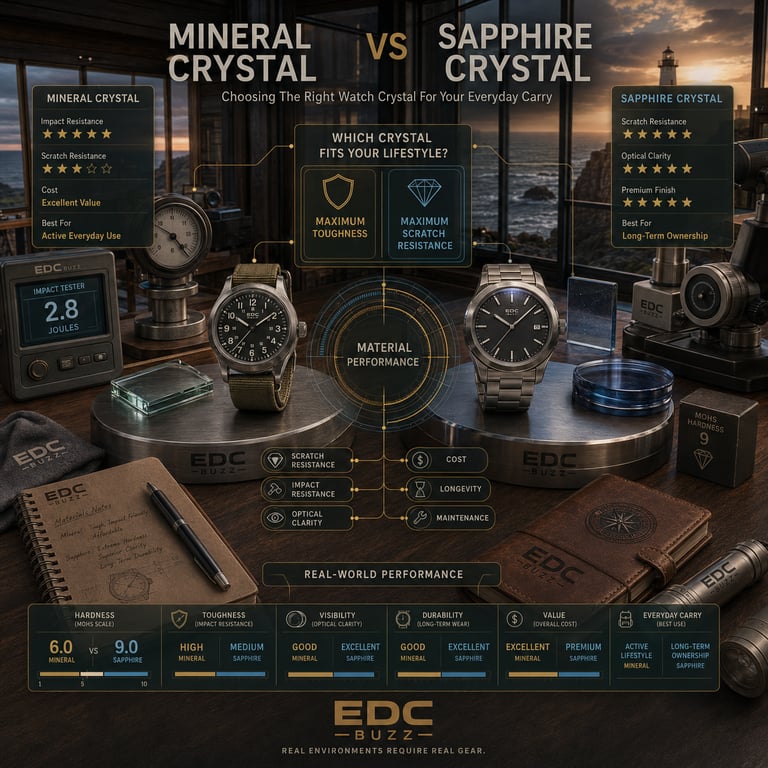
• Sapphire crystal offers superior scratch resistance, making it the go-to choice for frequent wearers and those concerned about long-term clarity.
• Mineral crystal excels in impact resistance and affordability, fitting well with active or budget-conscious users.
• Sapphire crystal is more prone to shattering on sharp impact, whereas mineral crystal may chip but rarely shatters completely.
• For dress or collector watches, sapphire crystal enhances perceived luxury and visual clarity, while mineral crystal remains a practical, everyday option.
What Is a Watch Crystal and Why It Matters
The watch crystal is the clear pane that shields the dial and hands from environmental elements, impacts, and wear. Beyond simply keeping dust and moisture out, it directly affects how you see the time and controls how the watch endures the rigors of daily use. If your watch crystal scratches quickly, it deteriorates legibility and aesthetics over time. Conversely, a fragile crystal could crack or shatter with an unfortunate knock, requiring costly repair. The choice of crystal material is an engineering decision that balances hardness, toughness, optical clarity, cost, and long-term durability.
If you're wondering whether premium materials are always worth paying for, our guide to Is An Expensive Watch Worth It? explores how material upgrades fit into the overall value of a watch.
Material Composition: Mineral Crystal vs Sapphire Crystal
Mineral crystal is essentially tempered glass that’s been chemically treated to increase its hardness and resistance to breaking. Tempering introduces compressive stresses on the surface, which makes the glass less likely to shatter outright on impact and more capable of withstanding everyday knocks. While mineral crystals aren’t impervious to scratches, their moderate hardness provides a solid middle ground between affordability and durability.
Sapphire crystal, on the other hand, is a synthetic material made from crystallized aluminum oxide, known scientifically as corundum. It ranks 9 out of 10 on the Mohs hardness scale—second only to diamond—making it exceptionally resistant to scratches from everyday objects like keys or desk surfaces. This level of hardness grants sapphire incredible longevity in maintaining a clear, unmarked surface.
Buyers considering premium everyday watches often encounter sapphire crystals on many of the models featured in our Best GMT Watches recommendations.
Performance Comparison: Scratch Resistance and Durability
Scratch resistance is where sapphire crystal clearly outperforms mineral glass. The high hardness rating means sapphire is effectively immune to most forms of surface scratching encountered in regular wear. This explains its popularity in higher-end and luxury watches, where maintaining pristine clarity is critical to the visual appeal.
However, hardness alone isn’t the full story. Toughness—how well a material absorbs energy from impacts without cracking—is equally important. Mineral crystal, being tempered glass, has a certain amount of flexibility and impact resilience. It can chip or crack under severe blows, but is less likely to shatter into many pieces.
Sapphire crystal, while hard, is relatively brittle compared to mineral glass. Sharp impacts, such as dropping onto a hard edge, can cause it to chip or even shatter. The trade-off for superior scratch resistance, therefore, is a vulnerability to sudden shocks.
In practical terms, this means that for someone whose daily activities involve frequent impacts, mineral crystal may offer a more durable compromise. For those whose priority is maintaining a scratch-free, clear glass over long periods with mostly desk or light use, sapphire crystal is advantageous. If overall durability is your primary concern, The Most Durable Watch Materials Explained examines how crystals compare alongside cases, bezels, and other components.
Typical Use Cases and Lifestyle Considerations
Choosing between mineral and sapphire crystal heavily depends on daily context and environment. If your watch sees office wear, handling keys, papers, and occasional desk bumps, sapphire crystal’s scratch resistance provides tangible benefits by keeping the dial clean and free from blemishes. The clarity differences between sapphire and mineral can be subtle, but over time sapphire’s resistance to micro-scratches preserves legibility and aesthetics.
Conversely, in more demanding environments—gardening, hiking, manual labor, or outdoor activities—the impact resistance of mineral crystal lends it a resilience that better matches rougher usage. It absorbs shocks that might otherwise cause sapphire to fail catastrophically. For budget-conscious buyers who want reasonable durability with less risk of cracking, mineral crystal watches make practical sense.
Collectors and formal watch users often lean toward sapphire crystal for its premium look and longevity. Mineral crystal’s more accessible price point and impact tolerance suit casual users or entry-level watch buyers where cost and toughness are balanced. If rugged durability is your priority, many of the models in our Best Pilot Watches guide are designed with demanding environments in mind.
Cost and Value Differences
Sapphire crystal typically carries a higher price tag due to the complexity of growing large synthetic corundum and machining it to precision. This cost increases retail price and can make replacement more expensive if the crystal is damaged.
Mineral crystal is more economical, usually seen in watches under $200, which helps keep overall watch costs accessible. The tempered glass manufacturing process is simpler and lends itself well to a wide range of watch styles without drastic impact on price.
For someone prioritizing long-term appearance with a higher initial investment, sapphire crystal’s scratch resistance can justify the price premium. For others looking for ruggedness and affordability, mineral crystal represents a better value proposition.
Common Misconceptions About Watch Crystals
One common mistake is assuming sapphire crystal is unbreakable. It is extremely scratch-resistant but not immune to cracking or shattering when dropped on hard surfaces. Equally, mineral crystal is often mistaken for ordinary glass; tempered mineral crystal is deliberately treated for improved hardness and shatter resistance, making it tougher than average glass.
Another misstep is overlooking the importance of impact resistance in favor of scratch hardness alone. Depending on lifestyle, erring on pure hardness may lead to unexpected fragility. Additionally, many buyers neglect to consider cost differences upfront, only to discover sapphire crystal options come with a higher price and replacement expense.
How to Identify Your Watch’s Crystal Type
Identifying your watch crystal isn’t always obvious. Visual cues help: sapphire crystals often appear clearer and more reflective with a distinctive sharpness to the edges. Mineral glass may have softer reflections and sometimes a slight tint.
A practical test involves the “water drop test,” where a drop of water sits more rounded on sapphire due to its smooth surface energy. Some jewelers or watchmakers can confirm by inspection or using specialized equipment.
If you have access to the watch’s documentation or brand specifications, the crystal material is often listed there and serves as the most reliable source. If you're comparing traditional watches with modern wearable technology, our Garmin Fenix 8 vs Victorinox Journey 1884 (Smartwatch vs Traditional Watch) comparison highlights how durability priorities differ between the two.
Making the Right Choice for Your Needs
Ultimately, the decision between mineral crystal and sapphire crystal boils down to weighing scratch resistance against impact resistance, balanced by budget and intended use.
If your daily wear involves few hard knocks but frequent surfaces that might scratch—desktop, keys, cuffs—then sapphire’s hardness will maintain clarity and minimize visible wear. For active users working with their hands or in environments prone to accidental drops, mineral crystal offers a more forgiving durability.
Consider also how much premium you are willing to spend for the benefits. Sapphire-equipped watches tend to belong to mid to higher price ranges and elevate watch refinement. Mineral crystal watches cover a broad range of modest budgets while delivering solid protection for everyday use. If you're still comparing crystal materials directly, our article Are Sapphire Crystals Worth It? takes an even deeper look at the strengths and weaknesses of sapphire.
Common Mistakes
A few pitfalls people encounter when choosing watch crystals include overestimating sapphire’s indestructibility, misunderstanding mineral crystal as ordinary glass, and ignoring the importance of impact resistance. Others neglect to factor in their own lifestyle's demands on the watch, focusing solely on specs without context.
It is also easy to forget the implications of cost: sapphire crystals can markedly increase price and repair expenses. Neglecting these practical considerations leads to buyer’s remorse when the watch does not perform as expected under real-world conditions. Learning What Makes A Good EDC Watch? can help put crystal materials into perspective alongside the other features that affect long-term satisfaction.
Frequently Asked Questions
What is the difference between mineral crystal and sapphire crystal?
Mineral crystal is tempered glass treated to be more scratch and impact-resistant than regular glass. Sapphire crystal is synthetic corundum, extremely hard and scratch-resistant but more brittle under sharp impact.
Is sapphire crystal completely scratch-proof?
No material is 100% scratch-proof, but sapphire crystal is highly scratch-resistant, with very few materials capable of scratching it under normal wear conditions.
Which watch crystal is better for outdoor use?
Mineral crystal generally performs better outdoors where impacts or drops are more likely, as it is tougher and less prone to shattering than sapphire.
How much more expensive is sapphire crystal compared to mineral crystal?
Sapphire crystals typically add a significant cost, sometimes several times more than mineral crystal replacement, contributing to higher watch retail prices.
Can mineral crystal scratches be polished out?
Minor scratches on mineral crystal can sometimes be polished or buffed out, but this depends on scratch depth and type of glass.
Does sapphire crystal chip or shatter easily?
Though hard, sapphire crystal can chip or shatter under hard impact, especially from sharp or angled blows, due to its relative brittleness.
Are there watches with other types of crystals besides mineral and sapphire?
Yes, some watches use acrylic crystals for their flexibility and ease of polishing, or coated mineral crystals that offer enhanced scratch resistance though not matching sapphire.
How do I know if my watch has a mineral or sapphire crystal?
Check the manufacturer’s specifications, look for visual clues like clarity and reflectiveness, or perform a water drop test. Watch specialists can also help identify the material.
Practical Conclusion
When weighing mineral crystal versus sapphire crystal, understanding the nuanced balance between hardness, impact resistance, cost, and daily use environment leads to a more informed choice. Sapphire crystal’s near-indestructible scratch resistance makes it ideal for clear long-term wear in low-impact settings, often favored by collectors and professionals. Mineral crystal’s tempered glass build provides respectable toughness and affordability, matching the needs of active users and those seeking reliable daily watches without premium cost.
Rather than chasing an absolute “best,” consider your lifestyle, watch features, and budget constraints. This pragmatic approach ensures you select a crystal that serves your everyday carry needs without compromise—and with a clear understanding of the trade-offs involved.
Contact@TheBuzzHQ.com
© 2026 EDCBuzz. All rights reserved.
EDCBuzz
Master everyday carry systems with clarity and precision. Built for real environments and practical use.
For educational purposes only.
General Inquiries: