
What Watch Features Actually Matter For Everyday Carry?
Discover the essential watch features for everyday carry focusing on durability, usability, and comfort to find your perfect daily companion.
EDC WATCHES
The EDCBuzz Editorial Team - Led by AJ “Buzz” Eichman
6/28/20268 min read
When it comes to everyday carry (EDC) gear, the watch often serves as more than just a timekeeper – it’s a constant companion that needs to keep up without slowing you down. Over the weeks I've spent living with various everyday carry watches, I’ve noticed that what truly matters goes well beyond the shiny specs sheet or initial “cool factor.” The features that stick with you (for better or worse) tend to be those that blend durability, usability, and comfort seamlessly throughout the day, every day.
If you’re in the market for an everyday carry watch, this isn’t about gadget overload or the fanciest complications. It’s about the kind of watch that feels like it was made to be worn and used—not just looked at. So let's cut into which watch features really count when you’re slipping one on for the long haul.
If you're just starting your search, our Watch Buying Guide covers the fundamentals of choosing a watch you'll actually enjoy wearing every day. For a broader overview of watch categories and recommendations, visit our EDC Watches pillar.
Quick Verdict
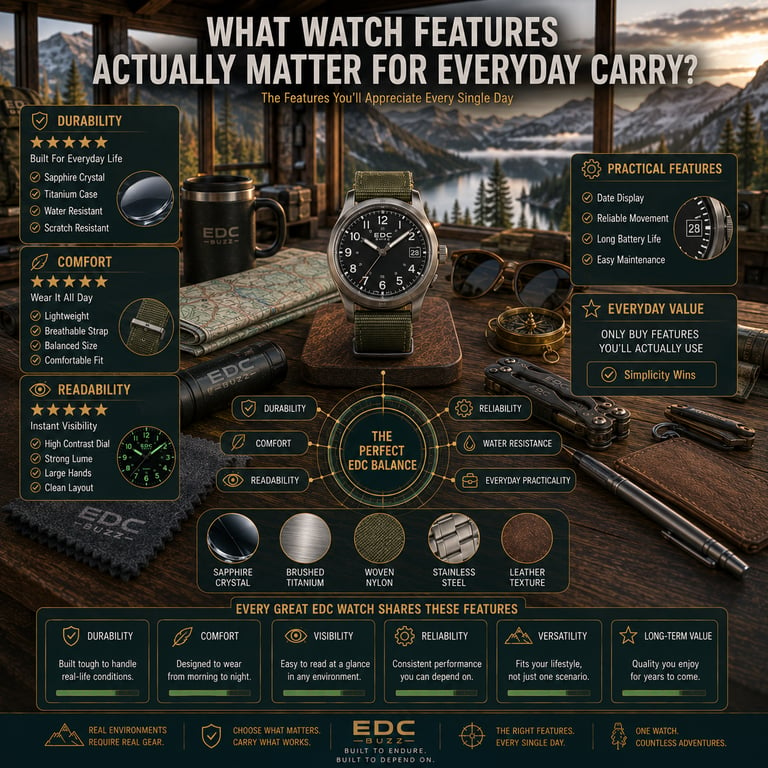
Durability in materials like sapphire crystal and titanium cases guarantees the watch can take a beating without looking it.
Usability boils down to dial clarity and a size that won’t draw unwanted attention or fuss every time you check the time.
Comfort is often overlooked but is vital — light, well-ventilated straps and just the right weight make all the difference past hour three.
Practical functions matter more than fancy extras. Water resistance, reliable battery life, and a simple date or alarm usually cover what you need.
What Defines an Everyday Carry Watch?
An everyday carry watch isn’t about flash—it’s about being consistently useful. It’s a watch you don’t have to think twice about slipping on every morning. It should perform reliably whether you’re at a desk, running errands, or chasing the occasional hike on the weekend. This means rugged enough to handle accidental knocks but comfortable enough not to weigh down your wrist or cause irritation by mid-afternoon.
If a watch feels like it’s tagging along like a burden rather than a trusted sidekick, it has missed the point of EDC. Comfort, durability, and usability should form the holy trinity of features that define any watch intent on becoming your everyday carry.
If versatility is your priority, our Best Smartwatches guide highlights several models that balance everyday practicality with modern features.
Key Features That Matter: Durability, Usability, and Comfort
Durability
In daily life, your watch will inevitably face knocks, scratches, and exposure to moisture. Durable materials are non-negotiable if you want one watch to do it all without looking like it’s survived a demolition derby. Sapphire crystal is king here—far more scratch-resistant than mineral glass or acrylic. Over time, scratched crystals pull down the whole look and legibility, so investing in sapphire pays off in everyday scrapes.
Case materials like stainless steel or titanium add essential toughness. Titanium edges out stainless steel on weight, making for a lighter watch with similar strength and better corrosion resistance. For those who prefer a watch that won’t slow them down, titanium is often a silent winner. Just don’t be surprised when you notice how light it is—the watch can virtually fade into your day like a stealthy coworker bringing donuts but never eating them.
Our article on Is An Expensive Watch Worth It? explores when paying more for premium materials and construction actually delivers long-term value.
Usability
What good is a tough watch if you have to squint to tell the time? An everyday carry watch needs a dial that’s easy to read at a glance in various lighting conditions. Clear numerals, contrasting hands, and favorable dial size all count here.
The watch size itself is worth considering. Too big, and it can rattle against your desk or clothing; too small, and it becomes fiddly to read. Finding the sweet spot depends on your wrist size but generally falls between 38mm and 42mm for comfort balanced with legibility.
A well-designed lume (glow-in-the-dark paint) can also be a silent hero, making the watch readable in low light without that annoying “grab a flashlight” moment.
Comfort
After a full day carrying a watch, weight and strap comfort become glaringly obvious. Heavy watches remind you they’re there — sometimes more than you'd like. Straps, too, can make or break your experience. Thick leather might look sharp but struggles with breathability, making sweaty wrists an unwanted souvenir of your day.
Silicone, nylon, and other breathable materials deliver all-day comfort, especially if you’re active or in humid environments. Adjustable straps that don’t pinch or slide around keep the watch feeling more like part of your routine than an afterthought on your wrist.
Material Choices and Their Impact on Performance
Sapphire Crystal versus Mineral Glass or Acrylic
Sapphire is hard to beat for scratch resistance, dramatically slowing the wear and tear that ruins watch faces. Mineral glass offers a middle ground with decent durability at a more approachable price, while acrylic can handle shocks better but scratches easily—a trade-off that’s rarely worth it for a true EDC watch.
If you're deciding between crystal materials, our comparison of Mineral Crystal or Sapphire Crystal: Which Should You Choose? explains where each option makes the most sense.
Stainless Steel versus Titanium
Stainless steel cases offer solid durability and classic looks but bring a noticeable heft that can become tiresome by day’s end. Titanium’s strength-to-weight ratio makes it an appealing alternative, especially once the initial novelty of a feather-light watch wears off and you notice your wrist doesn’t feel like it’s hauling a brick through email marathons or grocery runs.
Strap Materials
Leather straps can elevate style but tend to absorb sweat and don’t fare well in wet conditions. Nylon and silicone straps breathe better and dry quickly but don’t carry quite the same polish. For day-to-day use, nylon or silicone wins on comfort, especially if you’re not dressing exclusively for boardroom meetings.
If you're comparing strap options, our guide to Metal Bracelet or Rubber Strap: Which Fits Your Lifestyle? covers the strengths and compromises of two of the most popular everyday choices.
Functionalities That Add Real Value vs. Unnecessary Extras
Keeping things straightforward pays dividends in real life. Water resistance rated at 50 meters or more is usually enough to handle hand washing, rain, or sweat without worry. Beyond that, professional dive depths or extreme conditions probably don’t align with daily use and end up adding bulk or cost.
Basic features like a date display or an alarm can be surprisingly useful day to day. Meanwhile, chronographs and exotic complications often add bulk and complexity that you might never really use. After living with a few of those “kitchen sink” style watches, I can say the simpler ones tend to settle into daily carry more easily.
Battery type also deserves a mention here. Quartz watches offer reliable accuracy with low maintenance—charging or winding isn’t required, which is great for a no-fuss carry. Automatics have their enthusiasts but require motion or manual winding, which can be a chore if you don’t wear them every day. Solar-powered watches provide a nice middle ground but can be sensitive to charging conditions.
Our Best Solar Watches roundup is a great place to start if low-maintenance reliability is one of your top priorities.
Common Buying Mistakes When Choosing an EDC Watch
Overloading on features can backfire. A watch bristling with functions might seem appealing but often sacrifices battery life, adds weight, or clutters the dial. You don’t want a watch that feels more like a toolbox than a timepiece.
Another biggie is ignoring the durability of crystal and case materials. Cheap crystals scratch fast, and less robust case materials wear painfully over time, meaning your “affordable” watch starts to look tired much earlier than expected.
Skipping consideration of strap comfort is a mistake often dismissed until hours have passed. A watch that digs into your skin or traps sweat can quickly shift from everyday essential to pocket resident.
Also, watch water resistance must not be overlooked. Even modest exposure to moisture can ruin a watch if it’s not designed to handle it. Look for at least a 50-meter rating if you’re wearing your watch daily.
Finally, choosing based mostly on looks without weighing usability and durability can leave you stuck with a pretty but impractical daily companion.
How to Match Watch Features to Your Daily Activities
The best everyday carry watch is one that fits with what you actually do every day. For office workers handling light manual tasks and plenty of typing, a modestly weighted stainless steel or titanium watch with a clean dial and date feature usually hits the spot.
If your days bring occasional outdoor activity like hiking or cycling, shock resistance and water resistance become more important. Here, a rugged case material like titanium paired with a waterproof nylon or silicone strap pays for itself in comfort and durability.
For around-town errands and social settings, comfort, style, and straightforward usability tend to take priority. A watch that looks good but also feels good by mid-afternoon will be the one that earns wrist time.
If your home life involves DIY projects or chores that can bash the watch against rough surfaces, scratch-resistant crystal and a sturdy case will ensure the watch ages gracefully, not like the top of your toolbox after a weekend of hammer swings.
When travel enters the picture, look for watches that offer battery reliability, simple time zone adjustments, and enough water resistance to handle the unpredictable nature of airports, hotel pools, or sudden rainstorms.
Maintaining Your EDC Watch for Longevity
A good everyday carry watch isn’t just about features at purchase. Regular maintenance will extend its life well beyond initial expectations. Keep your watch clean, especially if your strap material attracts sweat or grime. Periodic servicing, especially with automatic watches, ensures the internal mechanisms keep ticking smoothly.
Our guide to How Often Should You Service Your Watch? explains recommended service intervals and what actually happens during a professional watch service.
Replacing worn or uncomfortable straps not only improves comfort but can freshen the watch’s look without a full upgrade. It’s one of those small luxuries where you get a noticeable boost in daily wearability without a big cost.
And always store your watch out of direct sunlight when unused to protect materials and prevent premature fading or deterioration.
Frequently Asked Questions
What level of water resistance is sufficient for an everyday carry watch?
For typical everyday scenarios—hand washing, sweat, rain—a water resistance rating of 50 meters or higher is generally enough to keep your watch safe.
Which materials provide the best durability for EDC watches?
Stainless steel and titanium cases offer excellent durability. Sapphire crystal is preferred for its scratch resistance, greatly extending the watch’s clarity and appearance.
How important is watch size and weight for daily wear comfort?
Very important. Watches between 38mm and 42mm often provide the best balance between legibility and comfort. Weight also matters; titanium cases offer lighter carrying without sacrificing strength.
What are the benefits of quartz vs automatic movements for everyday watches?
Quartz watches provide accuracy and low maintenance, ideal for fuss-free daily use. Automatics feel more traditional but require regular wear or winding to keep running.
Are additional functions like alarms or chronographs useful for typical EDC use?
Basic functions like alarms or date displays add practical value, but chronographs and complex complications often add bulk and aren’t necessary for most daily tasks.
How often should an EDC watch be serviced or maintained?
Mechanical watches generally benefit from servicing every 3-5 years. Quartz watches require less frequent maintenance, mainly battery replacement.
Practical Conclusion
Choosing an everyday carry watch is as much about what you’ll notice by the end of the day as what catches your eye on the shelf. Durability, usability, and comfort aren’t flashy, but they are the silent workhorses making a watch truly live up to the daily carry name.
A watch that fits smoothly into your daily rhythm, stands up to the bumps and spills life throws, and doesn’t demand constant attention is the rare find worth your time. You don’t need a feature-packed gadget; you need a dependable companion.
If you're looking for a proven all-around option, our Best Dive Watches guide includes several rugged models that combine durability, water resistance, and everyday practicality. If you're deciding between traditional outdoor capability and connected features, our comparison of Seiko Prospex SRPE37 vs Timex Expedition Field Post (Dive Watch vs Field Watch) highlights how two popular EDC styles approach everyday reliability.
After all, the best EDC watch is one you forget you’re wearing—until you glance down to see the time, and it’s just right. Kind of like hearing a dad joke so subtle you almost miss it, but you’re glad it’s there.
Contact@TheBuzzHQ.com
© 2026 EDCBuzz. All rights reserved.
EDCBuzz
Master everyday carry systems with clarity and precision. Built for real environments and practical use.
For educational purposes only.
General Inquiries: