
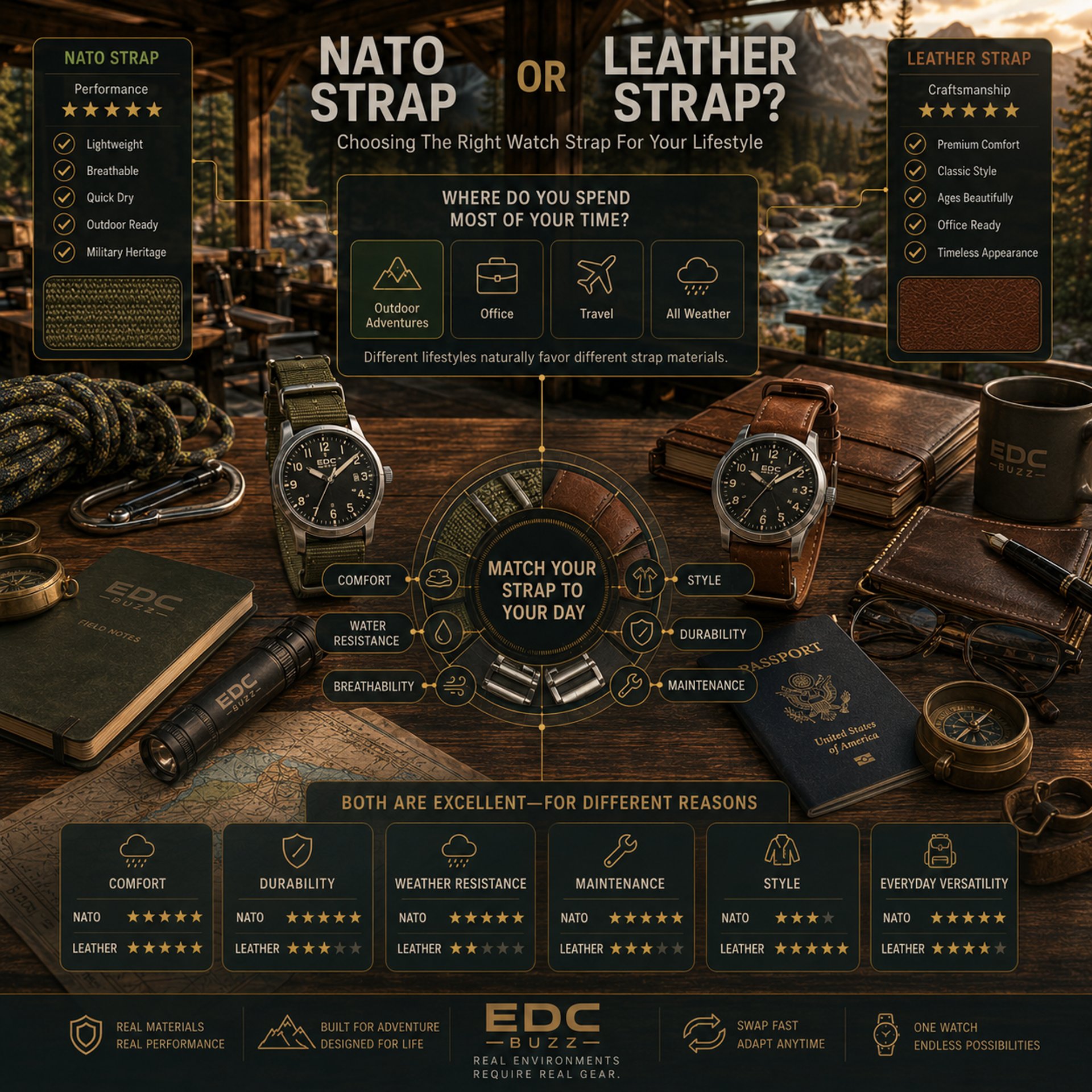
NATO Strap or Leather Strap: Which Is Right for You?
Explore the practical differences between NATO straps and leather straps to find the perfect fit for your daily watch-wearing lifestyle.
EDC WATCHES
The EDCBuzz Editorial Team - Led by AJ “Buzz” Eichman
6/28/20267 min read
When it comes to watch straps, few choices spark as much quiet debate as the humble NATO strap versus the classic leather option. Both have their loyal followings, and after spending a few weeks wearing each in different settings, I can say it's less about which is objectively better and more about what fits your daily life. The right watch strap is one that doesn’t just look good out of the box, but one that settles into your routine almost without you noticing it — until something doesn’t feel quite right.
In this article, we’ll break down the practical differences between NATO straps and leather straps, looking beyond the shiny first impressions to the lived-in reality of comfort, durability, style, and upkeep. After all, a watch strap is an everyday carry essential, and it pays to get it right. If you're still building your collection, our EDC Watches guide is the best place to start before deciding which strap style suits your needs.
Quick Verdict
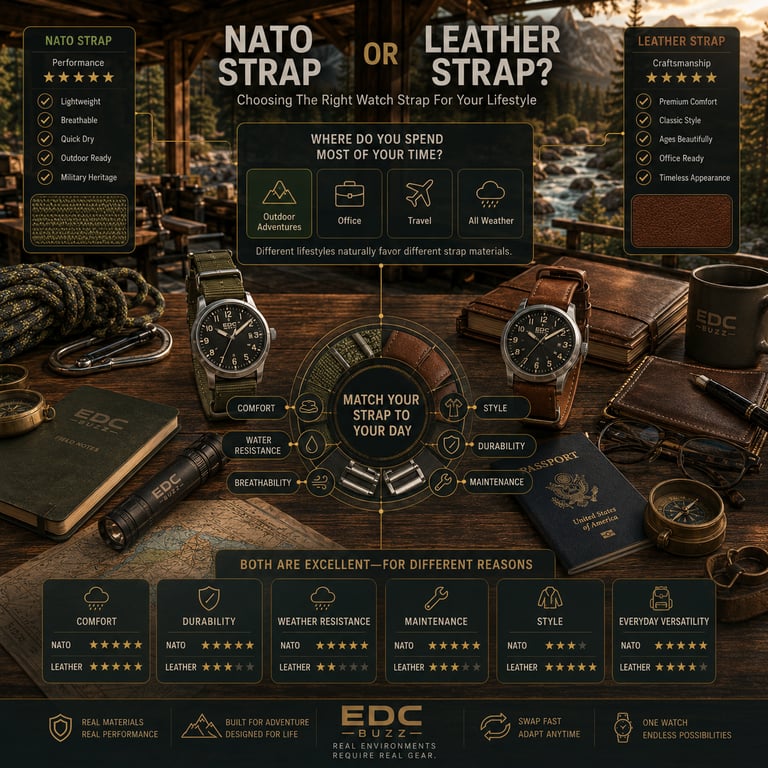
NATO straps excel in durability and moisture resistance, making them solid picks for active or humid days.
Leather straps bring a timeless, tailored look that enhances dressier occasions but demand a bit more TLC.
The one-piece design of NATO straps offers extra security against failure, a reassuring nod for those who want peace of mind.
Comfort varies by environment: NATO’s breathability wins in sweatier conditions, while leather softens beautifully over time for a personalized feel.
What Is a NATO Strap? Materials and Design
If you’ve ever swapped out a watch band in a rush, there’s a good chance you’ve encountered a NATO strap. Originating from the military-standard nylon bands designed for reliability and simplicity, the modern NATO strap is usually made from woven nylon or similar synthetic fibers.
Its defining feature is the one-piece design that threads underneath the watch case itself. This not only makes it easy to slide on and off without fiddly spring bars but also adds a layer of security. Should a spring bar fail, the watch won’t fly off your wrist and onto the floor — it’s a practical design detail that quietly earns points the longer you wear it.
The nylon used is lightweight yet tough, often with a subtle sheen that holds up well against daily friction. Plus, it dries quickly and tolerates sweat and splashes without degrading or smelling funky—a small detail, but one that matters if you wear your watch during workouts, outdoor chores, or in humid weather.
After a few days of wearing a NATO strap, you start to appreciate how it breathes. It doesn’t trap heat the way some synthetic or leather bands can, which makes long days with a watch on your wrist noticeably more comfortable. The strap is usually secured with stainless steel hardware, resistant to corrosion and wear. If you're curious about other practical strap materials, our Best Watch Strap Materials For Everyday Carry guide covers all the major options.
What Is a Leather Strap? Variations and Characteristics
Leather straps are the classic. They bring a warm, organic touch to a watch, molding to your wrist shape with time and giving each piece a unique character through subtle aging. However, not all leather straps are created equal.
From smooth calfskin and vegetable-tanned leather to exotic finishes like alligator or ostrich, the variety in quality and texture can be significant. The type of leather, its thickness, and the tanning process all influence not just looks but comfort and durability.
Initially, leather straps might feel a little stiffer, but it’s a short phase before they begin to soften and conform. This softening is part of the appeal—after a couple of weeks, the watch starts feeling less like an accessory and more like an extension of your wrist.
That said, leather isn’t without its quirks. It can be sensitive to moisture—wear it in wet conditions without care, and you risk discoloration or even some cracking over time. Regular conditioning and mindful use can go a long way in maintaining its supple feel and appearance, but that means committing a bit more attention to upkeep. If you wear your watch in professional settings, many of the models in our Best Dress Watches guide pair exceptionally well with leather straps.
Comfort Comparison: Which Strap Feels Better on Your Wrist?
Comfort is where preferences often diverge, and with good reason: your wrist isn’t just a display stand, it’s a living part of your day.
NATO straps, with their nylon weave, feel light and flexible from the get-go. One thing I’ve noticed during extended wear is that while they don’t exactly disappear on your wrist, they settle in quickly and won’t pinch or chafe if sized correctly. However, improper adjustment can cause a bit of watch movement or that “too tight” pinch some folks dislike. A minor trade-off considering the added security you get from the strap design.
Leather straps, meanwhile, require a break-in period but eventually reward with a glove-like fit. Their breathability doesn’t match nylon’s, which can be a drawback on hot days or during exercise. I’ve caught myself absentmindedly peeling a leather strap away from sweaty skin more than once, which isn’t exactly the definition of comfort.
That said, in cooler or controlled environments—offices, dinners, casual weekends—a leather strap often edges out nylon for a more luxurious feel. If the strap matches your wrist well, it’s less intrusive, and softness takes on a kind of quiet satisfaction that grows with age. Choosing the right case size also affects comfort, so our How To Choose The Right Watch Size guide is worth reading alongside this comparison.
Durability and Maintenance: How Each Strap Holds Up Over Time
If you want a strap that you barely think about maintaining, the NATO strap tends to be the safer bet. Nylon handles exposure to moisture, sweat, and general wear without much complaint. When dirty, a quick soak and rinse usually revive it without fuss.
Leather straps require a bit more respect. They're prone to wearing out faster if you consistently expose them to water or neglect conditioning. And yes, regular applications of leather conditioner are more than just a suggestion—they’re key to preventing stiffness, cracking, or color fading. Leather ages beautifully, but only if you put in the work.
One noteworthy detail: the NATO’s double pass design keeps the watch secured even if a spring bar decides to quit, reducing the risk of losing your watch entirely. Leather straps, with their two-piece design, lack this redundancy. It’s not a dealbreaker, but for folks with an active lifestyle or an eye on longevity, it’s worth considering. Proper care is just as important as the material itself, and our Watch Ownership Guide covers long-term maintenance in greater detail.
Style and Use Case Suitability: Matching Strap to Occasion
If watches had wardrobes, leather straps are the tailored suits — classic, versatile, and polished. They fit in effortlessly with business casual ensembles or dressier social events and upscale everyday wear.
NATO straps lean into casual, sporty vibes. They feel right at home on outdoor hikes, gym sessions, or anything where sweat, dirt, or quick resizing might happen. The variety of colors and patterns available also give them an edge in versatility if you like to switch things up without investing in an entire watch collection.
Some newer NATO straps even slide smoothly into semi-formal settings if kept subtle, but they’re rarely going to replace leather for a suit-and-tie day. Your call on how far you want to stretch the genre. If you're deciding between sporty and traditional watches overall, our Garmin Fenix 8 vs Victorinox Journey 1884 (Smartwatch vs Traditional Watch) comparison highlights how strap choices complement each style.
Common Mistakes When Choosing or Using Straps
Mistakes happen. Here are a few common ones that show up around these straps:
Assuming all leather is equally fragile without considering quality and finish. High-grade leather can be surprisingly durable.
Wearing leather straps frequently in wet environments without waterproofing or conditioning, which accelerates wear.
Not properly adjusting a NATO strap, causing discomfort or excessive watch movement.
Neglecting the need to clean and care for both types: nylon can accumulate dirt; leather needs conditioning.
Choosing a strap based solely on style without sizing it for your daily activities or climate.
Confusing genuine leather with bonded or synthetic versions, leading to mismatched expectations on lifespan and feel.
Many of these issues overlap with mistakes new owners make in general, so it's worth reading Common Watch Mistakes New Buyers Make before buying replacement straps or accessories.
FAQs About NATO and Leather Watch Straps
What are the main differences between NATO and leather watch straps?
NATO straps are typically made from durable nylon with a one-piece design that enhances security and moisture resistance, while leather straps offer a classic, often dressier look with a rich texture that ages uniquely but requires more maintenance.
Which strap type is more comfortable for daily wear?
Comfort depends on your environment. NATO straps are lighter and more breathable, ideal for active or humid settings, whereas leather straps soften over time to provide a personalized, snug fit, best for cooler or controlled conditions.
Are NATO straps suitable for formal occasions?
Mostly, they lean casual or sporty. While subtle, minimal pattern NATO straps can work in semi-formal settings, leather straps are generally the safer bet for formal dress.
How do I care for and maintain a leather strap?
Regular cleaning with a soft cloth and conditioning with leather-specific products helps maintain suppleness and prevent cracking. Avoid prolonged exposure to water and sweat.
Can NATO straps damage my watch?
Generally, no. The nylon is soft enough not to scratch the case, and the one-piece design can actually protect your watch better than standard two-piece straps in case of hardware failure.
Which strap is better for outdoor or active use?
NATO straps win hands down thanks to their water resistance, durability, and quick drying. If your watch regularly sees water, you may also find our Do You Need A 200M Water Resistant Watch? article helpful.
Do leather straps last longer than NATO straps?
It depends on use and care. Well-maintained leather can last many years, developing character over time, but neglect or moisture can shorten its life. NATO straps are typically lower maintenance and may need replacing more frequently but tend to resist everyday wear and sweat better.
Can I swap between NATO and leather straps easily?
Yes. Most watches with standard lug widths allow easy swapping between these strap types, especially if you invest in a spring bar tool.
Final Considerations: Making Your Choice Based on Lifestyle
Choosing between a NATO strap and a leather strap really comes down to how you intend to live with your watch. If your day involves sweat, weather, or a bit of dirt, and you want a strap that stays secure without extra fuss, the nylon NATO strap is your reliable workout buddy and travel companion. It’s affordable, low-maintenance, and versatile in style.
If your environment leans toward office or social settings where style and subtle sophistication matter, and you don’t mind tending your strap now and then, leather offers a classic look that softens and gains character with every wear.
In the end, no matter your pick, the strap that works best is the one you reach for every day without a second thought — except maybe a quick glance to appreciate how well it’s holding up. And if you’re still on the fence, having both on hand isn’t the worst idea, either. After all, a watch strap swap is one of the few upgrades that requires zero tools and zero fuss. A quick twist of the wrist – and you’re ready for whatever the day brings.

Contact@TheBuzzHQ.com
© 2026 EDCBuzz. All rights reserved.
EDCBuzz
Master everyday carry systems with clarity and precision. Built for real environments and practical use.
For educational purposes only.
General Inquiries: