

What Watch Case Size Fits Your Wrist?
Discover how to select the perfect watch case size for your wrist circumference to ensure comfort, style, and wearability in your everyday carry.
EDC WATCHES
The EDCBuzz Editorial Team - Led by AJ “Buzz” Eichman
6/28/20268 min read
Finding a watch that fits just right isn’t all about brand names or shiny dials. A big part of daily comfort and style boils down to something surprisingly simple: the watch case size. This is basically the diameter of the watch face, and it directly influences how your watch sits, feels, and looks on your wrist. Couple that with your wrist size—usually measured by wrist circumference—and you get a practical guide to choosing the correct watch size for your everyday carry. For a complete overview of choosing an everyday carry watch, start with EDC Watches.
I’ve spent enough time testing gear in the trenches of daily life to notice how a watch that’s just a few millimeters off can go from a smooth fit to an annoyance by mid-afternoon. It might not be screaming discomfort at first, but by the end of the day, you’ll be grateful you took the time to pick the right case size and consider how the watch actually behaves when worn over hours, not just minutes.
Quick Verdict
Watch case size should balance your wrist circumference, typically between 34mm and 44mm for most men’s and women’s styles.
Don’t overlook lug-to-lug length—it affects fit more than diameter alone and can cause an overhang that feels bulky.
Proper case size means the watch won’t slide around or pinch your wrist through the day—comfort that only comes from a watch that suits your wrist, not just your style preference.
Matching the strap width to the case size ties the whole package together for a watch that looks and feels proportionate.
Understanding Watch Case Size and Wrist Size
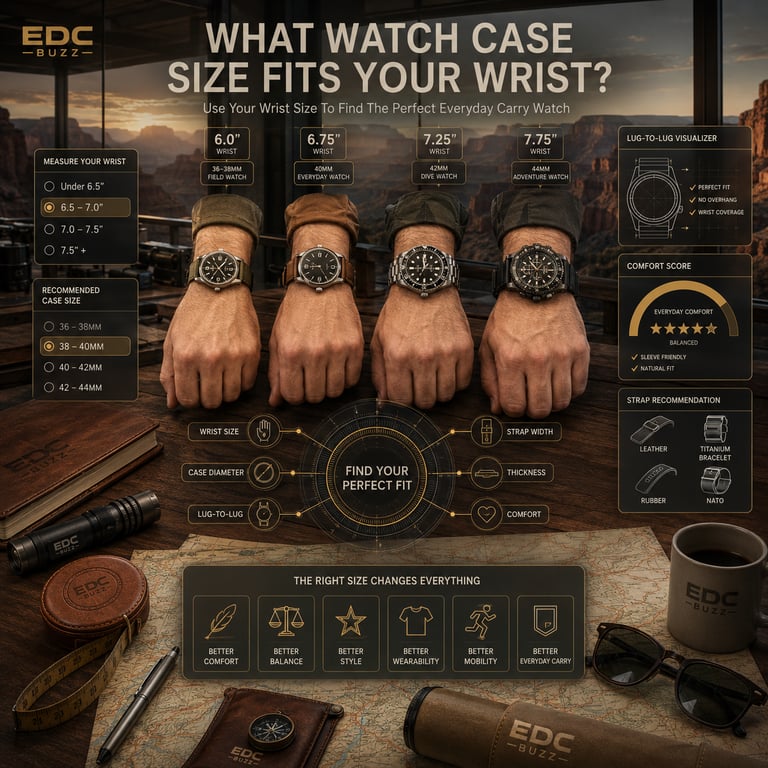
Let’s get one thing clear: watch case size isn’t just about looks. The diameter of the watch face—measured in millimeters—sets the stage for comfort and wearability. Smaller cases, say around 34mm to 38mm, are usually better suited for slender wrists. If you’re in the 6-inch wrist range, a watch in this diameter range will sit comfortably without feeling like a pancake on your arm.
On the other end, wrists stretching 7 to 8 inches often pair well with sizes near 40mm to 44mm. But here’s the kicker: those numbers don’t tell the full tale. Even a 40mm watch can feel overwhelmed on some wrists if the lugs (those little arms holding the strap) are long and extend beyond your wrist edges.
Wrist circumference is your starting point. Measure it accurately using a soft tape measure just above the wrist bone—the spot where you’d normally wear your watch. This isn’t something you want to eyeball, because an inch too loose or tight can send you running toward the wrong size. For a more complete sizing walkthrough, the How To Choose The Right Watch Size guide expands on the measuring process.
How to Measure Your Wrist Correctly
I’ve seen plenty of folks rough it with a piece of string or borrow a ruler, only to end up with inconsistent numbers. A flexible tape measure is the gold standard here. Wrap it snugly—not tightly—around your wrist just above the wrist bone. Jot down that number in millimeters or inches; precision here pays off.
If you don’t have a tape measure handy, use a strip of paper to mark where it overlaps, then measure that with a ruler. Do this a couple of times to confirm your measurement. Remember, you want the watch to have a little room, not feel like a tourniquet.
Standard Watch Case Sizes and Wrist Circumference Guide
Putting it all together with some general size guidelines:
For wrist circumferences under 6.5 inches: 34mm to 38mm case sizes work well. These watches won’t dominate your wrist, and they tend to feel lighter, which helps over a full day of wear.
6.5 to 7.5 inches: 38mm to 42mm is your sweet spot. Watches in this range strike a nice balance of visibility and comfort without looking oversized.
Above 7.5 inches: 42mm to 44mm or slightly larger can be fitting here, especially for casual or sportier styles. Just keep an eye on lug length and watch thickness.
At first glance, you might think size is directly about diameter, but lug-to-lug length often flips the script.
Why Lug-to-Lug Length Matters
Lug-to-lug length is the distance from one end of the watch’s lugs to the other, spanning across your wrist. Think of it as the watch’s true footprint. Even if the case diameter is modest, a longer lug-to-lug can make the watch overhang your wrist, which leads to annoying gaps or pressure points.
After a few weeks wearing watches with different lug lengths, I can tell the difference. Watches with shorter lug-to-lug measurements settle into the wrist better, and that’s where comfort often begins—not just in dial size but in how the watch cups the wrist.
If your wrist is on the smaller side but you insist on a larger diameter watch, look for pieces with shorter lug-to-lug measurements or curved lugs that wrap nicely around your arm. Otherwise, you start noticing the watch shifting, especially when typing or moving your wrist, which isn’t great for long-term wear.
Matching Strap Width to Case Size
The strap or bracelet is more than a fashion afterthought. It actually contributes a lot to how balanced and comfortable the watch feels. Too narrow a strap on a large case? The watch looks lopsided and might feel unstable. Too wide a strap on a smaller case can weigh down your wrist unnecessarily.
A good rule of thumb is for the strap width to be about half to two-thirds the case diameter. For instance, a 40mm watch usually pairs nicely with a 20mm strap. Beyond looks, the strap material and flexibility also impact wearability throughout your daily routine, especially if you’re the type to flex your wrist a lot working at a desk or outdoors. If you're considering different materials, Best Watch Strap Materials For Everyday Carry compares the most practical choices.
Common Fit Mistakes and How to Avoid Them
Forgetting that comfort endures over time ranks high on the list of common mistakes. People often buy the trendiest or biggest watch they can find, assuming it will look good or feel ‘cool’ without trying it on or considering fit. Overhanging watches that extend past the wrist can pinch, catch on clothing, and feel heavy mid-afternoon.
Another mistake is ignoring lug-to-lug length in favor of just diameter. This oversight usually reveals itself after several wears—even if the dial feels right—because the watch shifts or presses uncomfortably.
Then there’s strap mismatch. A heavy steel bracelet on a smaller diameter watch can weigh the whole thing down. Alternatively, a flimsy strap on a larger case can reduce stability and even wear unevenly over time.
Finally, measuring wrist size roughly or going solely by aesthetics can lead to picking a watch that doesn’t become your daily go-to. A watch is supposed to blend comfortably into your routine, whether you’re typing, reaching, or just living the average day. If you're comparing different strap styles, NATO Strap or Leather Strap: Which Is Right for You? explores how each affects long-term comfort.
Real-World Scenarios: Wearing the Right Watch Size
Imagine working a day at a desk with a bulky watch that drags your sleeve and shifts every time you flick your wrist. It’s a minor nuisance at first, but hours in, you’re consciously aware of it. Now picture a watch that just rests there—barely noticed, complementing your outfit while staying comfortably snug.
For outdoor enthusiasts, a watch too large for the wrist is a liability. It might snag on gear or leave marks when braced against surfaces. A well-fitted watch ensures freedom of motion without constant reminders of its presence.
In social or professional settings, the right watch size strikes the perfect balance between visibility and subtlety. It completes your outfit without dominating it or looking out of place. If you prefer slimmer profiles for daily wear, the Best Dress Watches guide showcases several comfortable options.
Tips for Choosing Your Next Watch Based on Wrist Size
Take time to measure your wrist carefully and consult sizing guides—don’t just guess. If possible, try watches on and wear them for several hours to gauge comfort. Remember that personal style matters, but comfort sustains wearability day after day.
Pay close attention to lug-to-lug and case thickness, especially if you have a smaller wrist. Go for watches with curves or shorter lugs to snug the fit. Don’t forget to match strap width proportionally; it’s a surprisingly big factor in wear feel.
Finally, give some thought to materials. Heavier metals might add presence but can tire your wrist over time, while lighter cases made of titanium or resin make bigger watches less cumbersome. If you're comparing lightweight materials against traditional steel, The Most Durable Watch Materials Explained provides a practical breakdown.
Frequently Asked Questions
How do I measure my wrist size correctly for a watch?
Use a flexible measuring tape snugly around your wrist just above the wrist bone. Alternatively, wrap a strip of paper around the same spot, mark the overlap, and measure its length with a ruler. Take a few measurements for accuracy.
What watch case size is ideal for a 6-inch wrist?
Generally, a case size between 34mm and 38mm fits comfortably for a 6-inch wrist, ensuring the watch doesn’t look oversized or shift uncomfortably throughout the day.
Does watch lug-to-lug length matter when choosing a watch?
Absolutely. Lug-to-lug length determines the actual space the watch occupies on your wrist. Even if the diameter is appropriate, long lugs can cause overhang and discomfort.
Can I wear a large watch if I have a small wrist?
You can, but comfort depends heavily on lug design and thickness. Watches with shorter lug-to-lug lengths and thinner cases tend to work better if you prefer larger diameters on smaller wrists.
How does strap width impact watch comfort?
Strap width affects balance and stability. A strap that is too wide or narrow relative to the case diameter can make the watch feel too heavy or unstable, impacting how it wears over time.
Are there standard guidelines for matching watch diameters to wrist sizes?
While personal preference varies, common guidance places smaller diameters (34-38mm) for wrists under 6.5 inches, mid-range sizes (38-42mm) for 6.5 to 7.5-inch wrists, and larger cases (42-44mm+) for wrists over 7.5 inches.
What are common watch sizes for men's and women's wrists?
Men’s watches typically range from 38mm to 44mm, while women’s watches often start between 28mm to 34mm. However, individual choice and trends can blur these lines.
How do different materials or watch thickness affect wearability?
Heavier materials like stainless steel add weight, which can be noticeable on larger watches. Thicker cases might catch or feel bulky, whereas lighter materials and thinner profiles improve long-term comfort.
Conclusion
Wearing a watch isn’t just about marking time—it’s about having a tool that naturally fits your wrist and lifestyle. Understanding watch case size in relation to your wrist circumference is the cornerstone of finding a watch that stays comfortable and looks proportional through daily activities. Beyond simple diameter, factors like lug-to-lug length and strap width weave into this formula, affecting how the watch settles and moves with you.
If you’ve ever realized your watch was the odd one out after a few hours or noticed it poking awkwardly when you rest your wrist, you’ve lived the importance of a right-sized watch. Take measurements seriously, know your sizing ranges, and try before you commit. If you're shopping for your next timepiece, Best Field Watches offers several models available in wearable case sizes across a variety of budgets.
Because a good watch should disappear into daily life — much like the socks you forget you’re wearing until you try to take them off. And no one wants that after a long day.
Find your fit, and the watch won’t just tell time. It’ll feel like time well spent.
Contact@TheBuzzHQ.com
© 2026 EDCBuzz. All rights reserved.
EDCBuzz
Master everyday carry systems with clarity and precision. Built for real environments and practical use.
For educational purposes only.
General Inquiries: