

How To Choose The Right Watch Size
Discover how to choose the right watch size by balancing diameter, lug-to-lug length, thickness, and strap fit for everyday comfort and style.
EDC WATCHES
The EDCBuzz Editorial Team - Led by AJ “Buzz” Eichman
6/28/20268 min read
There are few things in everyday carry quite as personal—and occasionally puzzling—as choosing the right watch size. Pick one too bulky, and you might find it clanking against your desk or snagging on shirt cuffs, making you wonder if you accidentally strapped a small brick to your wrist. Go too small, and it could disappear visually and physically, defeating some of the purpose of wearing a watch beyond simply telling time. The trick is balancing fit, comfort, and style in a way that works for your wrist and daily routine. Most of us don’t wear watches as trophies but tools—and how a watch sits on your wrist over hours and days matters a lot more than the initial glance. If you're looking for a complete overview of everyday carry timepieces, start with EDC Watches.
Watch size isn’t just about diameter—the often-cited 38 to 42 millimeters that many recommend. You have to look deeper than that, factoring in aspects like lug-to-lug length, thickness, strap choice, and even weight distribution. Buy a watch before measuring your wrist or thinking through these dimensions, and you’ll soon realize that a watch freedom fighter who claims size doesn’t matter hasn’t actually worn the thing through a long day of typing, driving, or washing dishes. It’s the subtle discomforts, the little nagging issues that build up over time, that tell the full story.
Quick Verdict
Measure your wrist carefully; a tape measure or string and ruler work best.
Case diameter is a good guideline, but lug-to-lug length usually dictates how the watch actually fits.
Thinner watches generally feel better under sleeves and don’t get caught on desks or clothing.
Strap material and adjustability are as important as case size for comfort over the long haul.
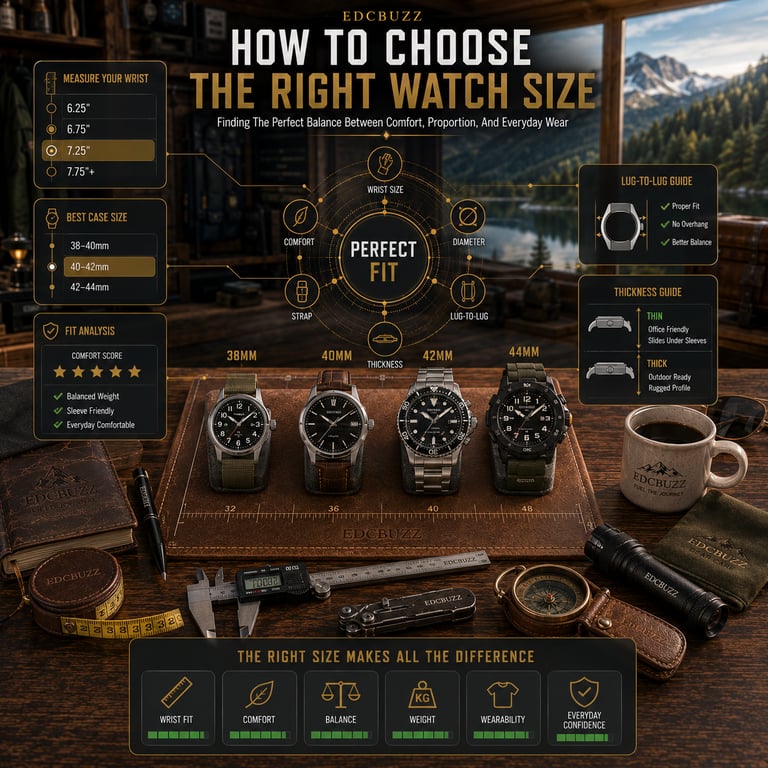
Understanding Watch Dimensions: Diameter, Lug-to-Lug, and Thickness
When you’re shopping or researching watch sizes, the default number everyone throws around is the case diameter. That’s the width of the watch face excluding the crown (the little knob for setting the time). For an average wrist, this usually falls between 38mm and 42mm. However, what the diameter doesn’t speak to is how far top to bottom the watch extends, which is the lug-to-lug length.
Lug-to-lug length—the distance between the points where the strap or bracelet attaches—has a more noticeable effect on fit than many realize. I’ve carried watches with a respectable 40mm diameter but a lug-to-lug length north of 50mm, and on a 6.5 to 7-inch wrist, the watch looked oversized and felt awkward, almost tipping the wrist. Conversely, a watch with a 42mm diameter but a shorter lug-to-lug measurement can nestle in comfortably.
Thickness is another sneaky factor. A thicker watch tends to catch on shirt cuffs or pocket openings. Over time, that nudge against your desk or shirt cuff wears on you—comfort dips, and you begin to wish for something a bit slimmer. Thinner watches usually slide under cuffs with less fuss and feel lighter even when the case diameter is the same. If you're comparing sizing before making a purchase, the Watch Buying Guide walks through additional considerations.
How to Measure Your Wrist Accurately
Before you go anywhere near a watch page, measure your wrist properly. I’ve seen people eyeball it and end up with a watch better suited for a wrist twice the size. Here’s a straightforward method: grab a flexible measuring tape, like the kind tailors use, and wrap it just below your wrist bone where you’d normally wear the watch. Make sure it’s snug but not tight, and note the circumference.
No measuring tape? No problem. Use a piece of string, mark the length where it wraps snugly, then lay it flat against a ruler. Record that length in millimeters or inches.
Knowing your wrist circumference helps you decide what case diameter might work. For example, for wrist sizes under 6.5 inches, smaller diameter watches closer to 38-40mm often feel more proportional and less bulky, while those with wrists over 7.5 inches might carry a 42mm or even slightly larger without discomfort. But again, don’t stop at diameter—check lug-to-lug and thickness.
Choosing the Right Watch Size for Different Wrist Types
Wrist shape matters just as much as wrist size. A wider, flatter wrist will often handle larger watches better than a narrow, rounded wrist of the same circumference. A watch’s lug design also plays a role—strongly curved lugs hug a wrist better and reduce overhang, which is when the watch edges extend beyond your wrist and catch on things.
Consider that a round, flat watch sitting on a curved wrist without curved lugs can “float” uncomfortably, causing the strap to pinch or the case back not to sit flush. Those little annoyances become more visible after wearing the watch during agile tasks like driving or lifting.
If your wrists are slim, look for watches with shorter lug-to-lug lengths and slimmer profiles. Also, consider the strap or bracelet type—metal bands tend to be heavier and less flexible, while leather or nylon weave straps conform better and often provide more comfort. If you're looking for versatile everyday options, the Best Field Watches guide includes many models with wearable proportions.
Balancing Aesthetics and Practical Comfort
The balance between how a watch looks and how it feels isn’t always obvious at first. A flashy, oversized dial might earn you compliments but leave you wincing as your wrist aches after a day at the office or casual weekend hike. On the other hand, a well-sized, modest dial might draw less attention but keep you comfortable and ready for whatever the day brings.
Over time, I find I respect designs that settle into daily use easily—that moment when the newness wears off and the watch just becomes part of your routine. That’s where sizing plays its quiet but essential role.
Weight distribution also influences comfort. A heavier watch can feel like you’re carrying a small paperweight attached to your wrist. While titanium or lighter metals mitigate some of this, large steel watches can remind you of the “one you forgot until you sat down” syndrome. Weight combined with bulk affects how the strap holds and whether the watch shifts when you move your arm. If you're deciding between lightweight and traditional materials, The Most Durable Watch Materials Explained covers the trade-offs.
Strap and Bracelet Considerations for Fit and Feel
Strap choice might seem secondary when people talk about “watch size,” but it’s a major player in comfort and perceived size. A tight, narrow strap paired with a large case can make the watch feel unbalanced and lead to pressure points under your wrist. Conversely, a strap that’s too loose leads to excessive movement, making the watch slide and cause friction.
Leather and nylon straps generally soften over time, molding to your wrist’s shape. They also add less weight than metal bracelets, which is valuable when you’re seeking all-day comfort. Adjustable clasp mechanisms in metal bands can help dial in the fit but still don’t always beat the flexibility of leather or fabric.
Some watches include quick-release strap bars, making it easy to swap out bands depending on your daily activities. I tend to switch from a sturdy nylon band during outdoor work to a slim leather strap for office days, which lets the same watch work in different comfort zones without buying multiple timepieces. If you're comparing materials, Best Watch Strap Materials For Everyday Carry explains the strengths of each option.
Common Sizing Mistakes to Avoid
One all-too-common mistake is zeroing in on case diameter alone. A watch might look right on paper by diameter, but if the lug-to-lug length stretches too far across your wrist, it can overpower the space and quickly become uncomfortable.
Another pitfall is ignoring the thickness dimension. If you spend much of your day typing or wearing shirts with cuffs, a thick watch becomes a nuisance. It can poke, press, or snag, which sounds trivial but grows irritating over time.
People often overlook the strap or bracelet material and fit until the watch is already part of their daily wear. A metal bracelet that doesn’t allow micro-adjustments can dig into skin or feel too loose and swing around. Leather straps that don’t breathe can become clammy in hot weather, reducing comfort and making the watch less pleasant to wear.
Finally, there’s the classic “oversized is better” trap. Sure, large watches catch eyes, but they might leave your wrist feeling like it’s wearing a dinner plate. Balance out visuals with use—especially if you actually need to wear the watch every day rather than just for show. Comparing What Watch Case Size Fits Your Wrist? with How Much Should You Spend On An EDC Watch? can help you avoid buying a watch that looks impressive but doesn't suit your needs.
Tips for Trying On and Testing Watch Fit
If possible, nothing beats trying a watch on before committing. Don’t just glance at it in the store; strap it on and move your wrist through regular motions—typing, shaking hands, checking your phone. Notice if it slides sideways or digs into your skin.
Try the watch on with clothes you’d usually wear it with. Does it catch on your shirt cuff or feel bulky under sleeves? Move your wrist up and down and check for grip fatigue — an uncomfortable strap or excessive weight can start tiring your arm subtly during long wear.
If shopping online, use online tools or augmented reality features some retailers provide to visualize lug-to-lug length. Some websites give you printable watch size cards that can be placed on your wrist to simulate watch proportions. While not perfect, these help avoid gross sizing mistakes.
FAQs on Watch Sizing and Comfort
How do I measure my wrist to pick the right watch size?
Wrap a flexible tape measure or string snugly just below your wrist bone where the watch will sit. Record the length, then use it to guide watch diameter and lug-to-lug choices.
What is lug-to-lug length and why is it important?
It’s the distance between the top and bottom part of the watch case where the strap attaches. This dimension influences how much wrist surface the watch covers—key for overall fit and comfort.
Can a larger watch fit comfortably on a smaller wrist?
Sometimes, but usually with difficulty. A large diameter combined with a long lug-to-lug length can overhang, causing discomfort or awkward movement. Straps and lug curvature play roles but only go so far.
How does watch thickness affect comfort and usage?
Thicker watches tend to snag on clothing and feel more cumbersome, especially under sleeves. Thinner watches generally offer more all-day comfort and ease of wear.
What strap materials work best for different wrist sizes?
Smaller or slimmer wrists usually find leather or nylon straps more comfortable due to flexibility. Larger wrists can handle metal bracelets better but should look for adjustable links or micro-adjustments.
Is there a standard watch size ideal for everyday carry?
A broad rule of thumb is 38 to 42mm diameter for most wrist sizes, but the watch’s lug-to-lug length, thickness, and strap comfort often define its suitability for everyday carry better than diameter alone.
How do I balance watch style with practical daily use?
Pick a watch that looks good to you but don’t ignore fit dimensions and strap comfort. A stylish watch that feels cumbersome after hours is less useful than a modest one you enjoy wearing all day.
Are there tools to help visualize watch size before buying?
Yes, some retailers provide printable size guides, AR visualization apps, or 3D models to help you see how different watches would look on your wrist.
Practical Conclusion
Choosing the right watch size means paying attention to more than just that simple case diameter number bounced around in forums and ads. It’s about the full profile: how the watch sits lug-to-lug, how thick it feels against your wrist, and how well the strap or bracelet complements the overall fit. It’s having a watch that doesn’t declare its presence by demanding occasional removal or wrist adjustment but settles in quietly—part of your everyday carry ensemble. The Watch Ownership Guide also includes long-term tips for maintaining a comfortable fit as straps and bracelets wear over time.
Take the time to measure your wrist, consider your typical day, and weigh the trade-offs between size, comfort, and style. That’s how you find a wristwatch that doesn’t just look good but carries well—turning the daily act of checking time from a minor annoyance into a comfortable, familiar habit. After all, a watch is one of the few EDC items you literally wear all day. Might as well make it a good fit.
Contact@TheBuzzHQ.com
© 2026 EDCBuzz. All rights reserved.
EDCBuzz
Master everyday carry systems with clarity and precision. Built for real environments and practical use.
For educational purposes only.
General Inquiries: