

How Often Should You Service Your Watch?
Discover the ideal watch service interval for mechanical and quartz watches to keep your timepiece accurate and reliable over the years.
EDC WATCHES
The EDCBuzz Editorial Team - Led by AJ “Buzz” Eichman
6/28/20267 min read
Keeping a watch ticking smoothly over the years isn’t just about winding it or swapping batteries. It’s a quiet responsibility that often goes overlooked until something goes wrong. I’ve seen my fair share of timepieces come through my hands in both clean and ragged states. Watches, especially mechanical and automatic ones, demand care not unlike the tools you depend on in the woods. Servicing at the right moments keeps things running reliably — which is exactly what you want when you’re relying on any gear, day in and day out.
Whether you're new to watch ownership or building a collection for everyday carry, our Watch Ownership Guide covers the habits that help your timepieces stay dependable for years. If you're still comparing styles before buying, our EDC Watches pillar offers a complete overview of the most practical watch types for everyday use.
Quick Verdict
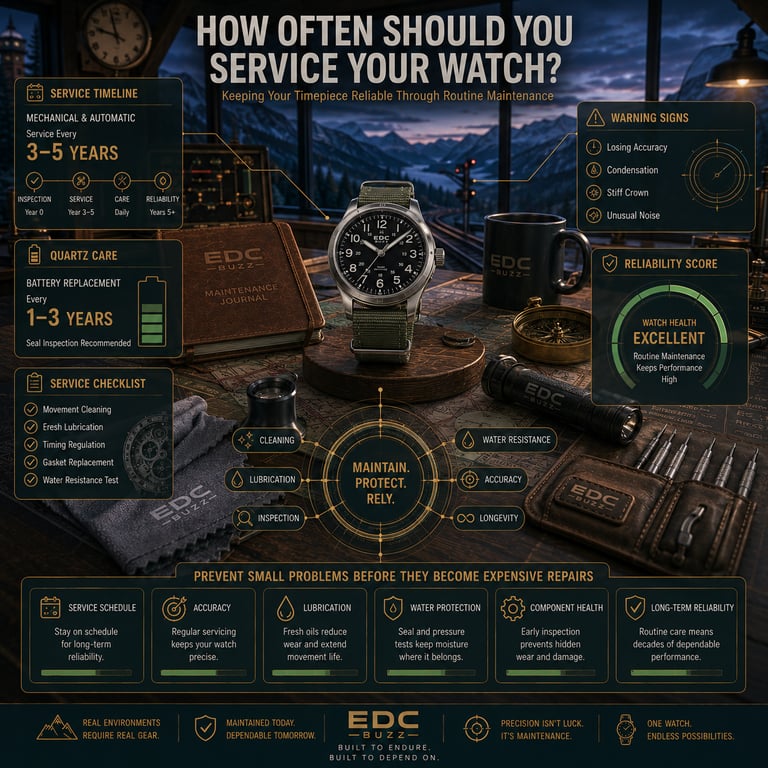
Most mechanical and automatic watches benefit from servicing every 3 to 5 years depending on use and environment.
Quartz watches generally need less frequent service, mostly centered around battery changes and occasional checks.
Regular maintenance extends accuracy and lifespan, preventing small issues from turning into larger repairs.
Delaying service or trusting unqualified technicians risks costly damage and unpredictable performance.
What Is Watch Servicing and Why It Matters
You might think your watch just keeps ticking as long as the battery or mainspring holds out. In reality, watches are delicate machines with dozens, sometimes hundreds, of tiny moving parts. Over time, oils dry up, dirt creeps in, and seals weaken. That’s where servicing comes in — a thorough disassembly, cleaning, lubrication, inspection for worn parts, and reassembly. Proper servicing also involves testing water resistance once seals are replaced. All these steps help the watch keep accurate time and protect it from moisture and debris.
Understanding What Watch Features Actually Matter For Everyday Carry? also helps explain why quality seals, reliable movements, and durable construction make routine servicing worthwhile over the life of a watch.
If you’re wearing your watch every day, you’ll notice little things start to change after a few years — maybe it runs a bit fast or slow, or you see condensation under the crystal from time to time. These subtle signs mean it’s time for a look inside. Like most outdoor gear, a well-maintained watch fades into the background until you really need it, and that’s when you want it to perform without fail.
Recommended Service Intervals for Different Watch Types
When it comes to how often to service your watch, the answer depends largely on the type of watch you carry and how you use it.
Mechanical and Automatic Watches
These watches rely on intricate mechanical movements powered by a mainspring. The manufacturer’s guidelines typically suggest servicing every 3 to 5 years. That window comes from years of experience observing how lubricants age and how parts wear under normal use. If you expose your watch to harsh environments—like heavy dust, moisture, or temperature swings—you might need to send it off sooner.
If you're deciding between movement types before purchasing, our guide to Automatic or Quartz: Accuracy In Real Life compares how each performs in everyday conditions and what that means for long-term maintenance.
Quartz Watches
Quartz watches are simpler machines, mostly electronic with far fewer moving parts. They generally require less frequent servicing, mostly centered around battery changes every 1 to 3 years and periodic inspections of the movement and seals. Over-servicing a quartz watch won’t do much good, but neglecting battery replacements or seal checks can lead to bigger problems, particularly with moisture intrusion.
For buyers looking for dependable, low-maintenance options, our Best Chronograph Watches roundup includes several reliable quartz chronographs that require very little routine attention.
What Happens During a Professional Watch Service
A proper service isn’t just opening the case and cleaning the outside. Reliable watchmakers follow a detailed process:
The watch is fully disassembled to expose the movement.
Each component is carefully cleaned, often using ultrasonic baths to dislodge grime.
The tiny moving parts are lubricated with special oils to reduce wear from friction.
Worn or damaged parts get replaced.
Seals and gaskets are tested, often pressure-tested, to confirm water resistance.
The entire movement is reassembled and tested for timing accuracy and performance.
This kind of attention is what separates a watch that keeps you on time for decades from one that stops or runs wild after a few years. It’s not flashy, but it’s necessary.
Signs Your Watch Needs Service
It’s easy enough to wait till a watch stops ticking before thinking about service, but by then the problem might be more severe. Look out for these warning signs instead:
Noticeable shifts in accuracy, either running too fast or too slow.
Stiff or gummy winding or setting crowns.
Build-up of moisture or condensation inside the crystal.
Grinding or unusual noises when winding.
Physical damage like cracked crystals or broken seals.
Deterioration or discomfort from worn straps or bracelets that could allow dirt inside.
Regular checks let you catch these early and send the watch out for maintenance before damage spreads.
Many of these symptoms develop gradually. Our guide to Watch Maintenance Tips For Long-Term Reliability explains the simple preventative habits that help reduce wear long before a full service becomes necessary.
Common Mistakes in Watch Maintenance
One of the biggest mistakes folks make is delaying service until there’s a glaring problem. That old saying about an ounce of prevention applies here. When you push a watch beyond recommended intervals, lubricants vanish, parts grind, and moisture sneaks in — and that’s when repairs start to cost more than the watch itself.
Another pitfall is trusting unqualified technicians who may lack proper training or equipment. Poorly done service can leave the watch over-oiled or incorrectly reassembled. Sometimes seals are neglected, leaving the watch vulnerable to water damage. And don’t overlook the little things like regularly cleaning the bracelet and case. Dirt and sweat build-up eventually wear down components and hide corrosion.
Many first-time owners unknowingly shorten their watch's lifespan by making avoidable errors. Our article on Common Watch Mistakes New Buyers Make covers several of the most common pitfalls before they become expensive repairs.
If you handle battery changes yourself, always check water resistance seals afterward, or better yet, have a pro look at it. It’s those unseen details that keep your watch capable when conditions suddenly change.
Tips for Extending Time Between Services
A couple of simple habits will keep your watch happier for longer:
Avoid exposing it to extreme heat, cold, or moisture whenever possible. Sudden temperature swings cause seals to expand and contract, inviting leaks.
Give your watch a gentle clean now and then, wiping off dirt and sweat from the case and strap.
Store your mechanical or automatic watch in a safe place if you’re not wearing it regularly, ideally in a watch winder or at least away from magnets.
Follow manufacturer recommendations but tune them with your usage in mind. Heavy daily wear in demanding conditions warrants more frequent checks.
If long-term durability is one of your priorities, our guide to How To Make Your Watch Last 20 Years expands on these habits with practical ownership advice that applies to nearly every watch type.
Choosing a Reliable Watch Service Provider
There’s nothing worse than handing your timepiece over and worrying about what happens next. When weighing options for service, look for watchmakers with formal training, certifications from recognized horology schools, or established reputations. It pays to check reviews — good service providers treat your watch like they’d treat their own. They’ll be transparent about what needs fixing and why, rather than piling on unnecessary parts or labor.
If you own a vintage or high-end watch, consider authorized service centers or specialists familiar with your brand. Proper tools and original parts often make the difference between patched fixes and preserved performance.
Owners of premium mechanical models featured in our Best Field Watches guide often benefit from using authorized service centers, especially when factory parts or water-resistance testing are required.
Practical maintenance doesn’t mean you need the fanciest workshop, just someone who knows what they’re doing and respects your investment.
Frequently Asked Questions About Watch Servicing
How often should I service my mechanical watch?
About every 3 to 5 years is typical, though heavy use or exposure to tough environments might mean sooner.
Do quartz watches need regular servicing?
Quartz watches mostly require battery changes and occasional checks — full servicing is less frequent but don’t skip seal inspections.
What happens if I don’t service my watch on time?
Lubricants dry up, parts wear faster, and seals fail — often leading to costly repairs or even permanent damage.
Can I service my watch myself?
Unless you have proper tools and experience, it’s best left to professionals. Watches are intricate and require careful handling.
How much does a typical watch service cost?
Costs vary widely based on brand and complexity, but expect a service to run from roughly $100 to $500 or more.
Is water resistance affected by servicing?
Yes. Seals and gaskets are checked and replaced during service to maintain water resistance ratings.
What signs indicate my watch needs servicing?
Poor timekeeping, condensation inside the crystal, stiff crowns, or unusual noises are all red flags.
Can servicing improve watch accuracy?
Yes. Cleaning and proper lubrication reduce friction, helping the watch maintain precise timekeeping.
Conclusion
In the years I’ve spent working outdoors and instructing others in wilderness skills, I’ve learned that reliability comes from steady care, not flashy features or frequent replacements. Your watch is no different. The kind of watch service interval you keep isn’t just about preserving a fancy machine — it’s about maintaining a tool that quietly gets the job done when you need it most. Stick to those 3 to 5 year marks for most mechanical watches, handle quartz models with sensible battery changes, and respect your service provider’s knowledge.
Whether you prefer a traditional mechanical watch or one of the modern options featured in our Best Smartwatches guide, regular maintenance remains the key to dependable long-term performance. If you're still deciding between digital and traditional timepieces, our comparison of Garmin Fenix 8 vs Victorinox Journey 1884 (Smartwatch vs Traditional Watch) highlights how ownership and maintenance differ between the two.
If you do, your watch will be the kind of dependable companion that barely crosses your mind until it’s exactly the time you rely on.

Contact@TheBuzzHQ.com
© 2026 EDCBuzz. All rights reserved.
EDCBuzz
Master everyday carry systems with clarity and precision. Built for real environments and practical use.
For educational purposes only.
General Inquiries: