
Common Watch Mistakes New Buyers Make
Avoid common watch buying mistakes by choosing the right size, movement, and materials that fit your daily lifestyle for long-lasting comfort and value.
EDC WATCHES
The EDCBuzz Editorial Team - Led by AJ “Buzz” Eichman
6/28/20268 min read
Buying your first watch is a bit like adopting a pet: you want to make sure it fits your lifestyle, needs, and daily rhythm, not just look good in photos. New watch buyers often jump headfirst into what feels like a sea of options without a clear sense of what will really work for them day to day. Watches aren’t just jewelry or collectibles—they're practical tools we carry every single day, and the small details can become either delightful or downright annoying after a few weeks of use.
In this guide, I'll walk you through the most common watch buying mistakes I’ve noticed people make when starting out, based on days, weeks, and months of carrying watches in the real world. The goal is to help you pick a watch you’ll actually want to wear beyond the honeymoon phase—without shedding tears over buyer’s remorse or ending up with something that feels like a brick strapped to your wrist.
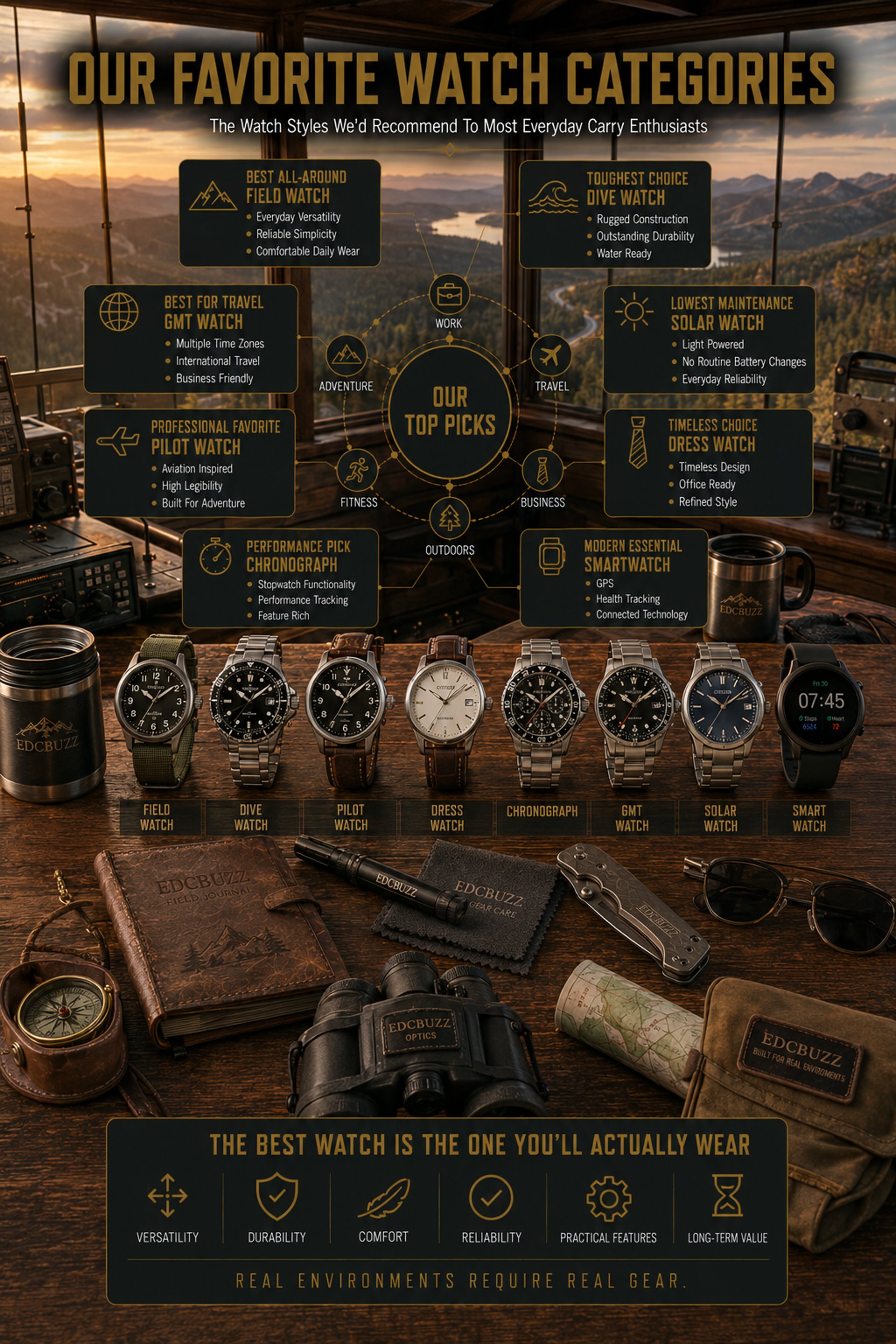
Before choosing your first watch, our Watch Buying Guide explains the fundamentals every new buyer should understand. You can also explore our complete EDC Watches pillar to compare watch styles, movements, and everyday carry recommendations in one place.
Quick Verdict
Watches should fit your daily environment, not just your wishlist.
Understanding movement types saves surprises on accuracy and maintenance.
Size and comfort are just as important as style.
Budget realistically to avoid spending on features that don’t fit your real use.
Test before buying if you can — comfort is surprisingly subjective.

Why Choosing the Right Watch Matters for Everyday Use
When you wear a watch every day, it becomes more than just a timekeeper. It’s part of your daily routine, sometimes your only wearable tech, and often something you hardly notice—until it doesn’t feel right. A watch that’s too heavy, too bulky, or poorly matched to your lifestyle can quickly end up gathering dust in a drawer. Conversely, a well-chosen watch can quietly support your schedule, outfit, and comfort throughout your day, from morning meetings to evening errands.
Think about the environments where you spend time: office, outdoors, social events, or DIY projects. Do you need a watch that can handle a bit of rough-and-tumble, or one that can slide discreetly under a shirt cuff? These practical questions often get overlooked when new buyers chase shiny features or prestige brands.
If you're still deciding where to begin, our Best Solar Watches roundup showcases several dependable, low-maintenance options that are especially beginner friendly.
Understanding Watch Movements: Quartz vs. Automatic
One of the earliest decisions for new watch buyers is picking between quartz and automatic movements. Most of the time, this choice impacts your watch’s accuracy, maintenance, and how much you need to baby it.
Quartz watches are powered by batteries and tend to keep time with remarkable precision. They’re low maintenance and consistent, which means you don’t have to reset your watch every week or wind it like an old-school timer. If you want a watch that just works without fuss, quartz is typically the safe bet.
For a deeper comparison of how these two movement types perform in everyday use, our guide to Quartz or Automatic: Which Is Better for Everyday Carry? covers the practical advantages and drawbacks of each.
Automatic watches, on the other hand, are mechanical beasts that wind themselves through your wrist movement. They often carry a certain charm and craftsmanship, but they are less accurate by nature and can require service every few years. After a few weeks of daily wear, you might notice an automatic running fast or slow compared to quartz peers, and if you skip wearing it, it’ll stop ticking until you wind it up again.
For new watch buyers, understanding these quirks can save headaches. It's not just about what looks cool on your wrist but how the watch’s inner workings will fit your patience and routine.
Selecting the Right Size and Fit for Your Wrist
One detail that surprises many new buyers is how much size matters after the first day. Watches that look great on a display or a celebrity’s wrist don't always fit comfortably on everyone else. A watch with a dial too large or thick can weigh heavily and irritate the skin over time, while a too-small watch might feel out of place or be hard to read.
Wrist size should guide your choice. For narrower wrists, watches around 38-42mm diameters generally feel balanced. Larger wrists can accommodate bigger faces without feeling overbearing. Also, the lug-to-lug length—the distance the watch spans across your wrist—can affect comfort more than diameter alone.
Our article on How To Choose The Right Watch Size explains how to measure your wrist and avoid buying a watch that feels awkward after long days of wear.
Try on watches in person when possible. Photos won’t tell you if the watch digs into your wrist, slides around, or feels like a wrist contender instead of a companion. Over time, those little annoyances add up, and it’s one of the most common unexpected objections I hear.
Material and Build Quality: What to Look For
Watch materials aren’t just about shine and style; they matter, big time, for durability and comfort during everyday carry. Stainless steel cases are the everyday workhorses: tough, reasonably light, and corrosion-resistant. Titanium cases offer an excellent lightweight alternative with similar toughness, but they come with a price premium.
If long-term durability is your priority, our guide to The Most Durable Watch Materials Explained breaks down the strengths and weaknesses of today's most common case materials.
Crystal choice on your watch face is also a key factor. Sapphire crystal is scratch-resistant and holds up beautifully against daily wear; you’re less likely to bring out a scowl when you see your watch after a trip through pockets, bags, and occasional knocks. Mineral glass or acrylic is more budget-friendly but tends to scratch sooner and may require much more care.
Similarly, watch bands vary significantly. Leather straps break in and feel great but might not do well with moisture or sweat. Metal bracelets are durable but can pinch or cause irritation if the links aren’t well finished. Rubber or silicone straps shine for active lifestyles but might not match more formal styles.
Water Resistance and Durability Explained
Buying a watch can be a challenge when it comes to understanding water resistance ratings—there’s a surprising amount of myth and misinterpretation even among seasoned buyers. The truth is, many watches labeled as “water-resistant” aren’t suited for swimming or showers unless explicitly rated beyond basic splash protection.
If you're unsure what those ratings actually mean, our article on What Is Water Resistance On A Watch? explains the differences between splash resistance, swimming, and true dive-ready water resistance.
A 30-meter water resistance rating usually means the watch can handle occasional splashes but not immersion. For everyday wear where you might wash hands or get caught in rain, 50m to 100m ratings provide more practical peace of mind. Beyond that, ratings like 200m or more are generally reserved for dive watches designed for swimming and snorkeling.
Don’t overlook durability. Watches with solid screw-down crowns, robust casebacks, and thicker crystals tend to withstand daily bumps better. In my experience, water resistance tends to be a feature you appreciate when it’s there but overlook in marketing — and sorely miss when it’s not.
Common Buyer Mistakes and How to Avoid Them
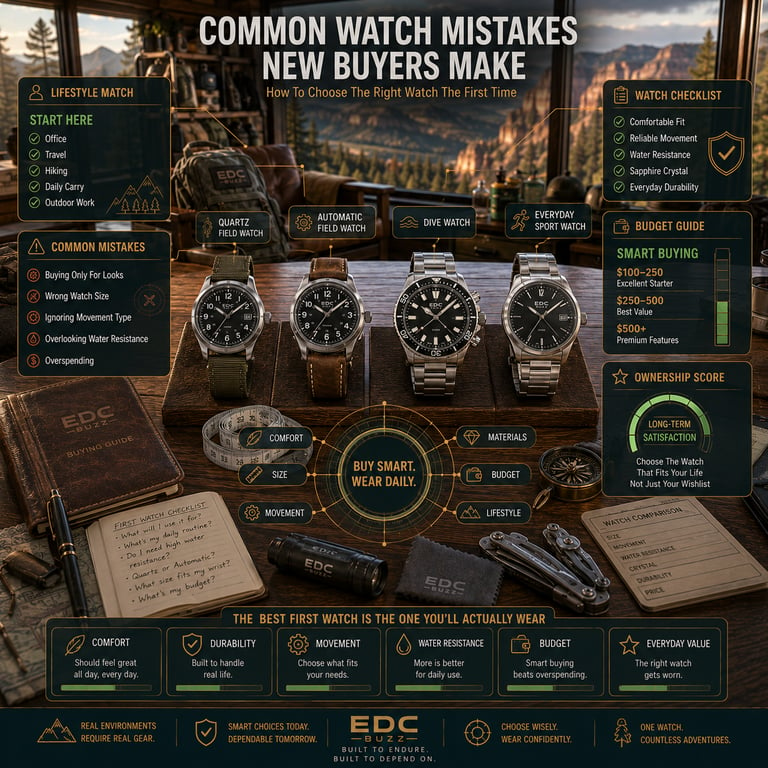
After carrying dozens of watches over the years, a few classic errors keep showing up with first-time buyers. Avoiding these will save you from common headaches.
Buying Based on Brand or Looks Alone
You might be tempted to pick something flashy or prestigious off the bat, but that often leads to a mismatch between aesthetics and practicality. Just because it looks great in a catalog doesn’t mean it will feel good on your wrist 10 hours into a workday. Focus on what matches your lifestyle.
Ignoring Watch Size and Comfort
A large, chunky watch might look great on a display hand or a magazine model, but it can become uncomfortable quickly. Likewise, too small a watch may seem out of place or be difficult to see at a glance. Always try watches on or examine lug lengths and thickness.
Not Understanding Movement Trade-Offs
Buying an automatic expecting a perfectly precise timekeeper or a quartz watch expecting no battery changes can lead to surprises. Know what maintenance entails and factor that into your choice.
Overlooking Water Resistance and Durability
Buying a watch without considering how you’ll use it—whether around water or during manual work—can end with damage you could’ve avoided by choosing robust materials or water-resistant designs.
If you're deciding between two popular everyday styles, our comparison of Tissot PRC 100 Solar vs Bulova Aerojet Open Heart (Solar Watch vs Automatic Watch) demonstrates how movement choice and intended use affect long-term ownership.
Setting an Unrealistic Budget
Watches range widely in price, and higher price doesn’t always mean better for your needs. Set a budget that reflects how you plan to use the watch and stick to it. There are excellent beginner options that cover fundamentals well.
Tips for Setting a Realistic Watch Budget
Money matters, but it’s easy to get caught in brand hype or feature creep when starting out. Look at your budget as a practical guide, not a barrier.
Identify your primary use: office, casual, active, or combo.
Set realistic expectations for maintenance costs, especially for mechanical watches.
Remember that spending a bit more upfront on build quality often pays off in longevity.
Don’t ignore after-sales service—warranty and repairs matter if you want to keep your watch for years.
Sometimes, mid-tier watches from less prestige competition can deliver more value and fewer headaches.
Our Best Watches Under $150 guide is a great place to start if you're looking for dependable value without overspending.
Frequently Asked Questions from New Watch Buyers
What is the best type of watch movement for everyday use?
Quartz watches generally provide greater accuracy and lower maintenance, making them ideal for everyday wear. Automatics offer charm and craftsmanship but require more attention.
How do I know what size watch fits me best?
Measure your wrist circumference and consider dial diameters between 38-42mm for narrower wrists, and up to 45mm for larger wrists. Try watches on if you can to judge fit and comfort.
Are expensive watches always better quality?
Not necessarily. While many luxury watches offer excellent craftsmanship, price doesn’t always equal suitability or durability for your lifestyle.
What features should I prioritize for a daily carry watch?
Comfort, water resistance suitable for your activities, scratch-resistant crystal, and reliable movement type top the list.
How much should I expect to spend on a reliable beginner watch?
You can find solid everyday watches in the $100-$500 range, covering reliable quartz or entry-level automatics.
What materials are best for durability and comfort?
Stainless steel and titanium cases with sapphire crystal faces offer a durable combo. Bands depend on personal comfort—metal bracelets and rubber straps are great for durability; leather offers comfort and style for less active use.
How important is water resistance for an everyday watch?
If you expect to encounter water frequently (showers, rain, swimming), water resistance of 50m or more is advisable. Otherwise, splash resistance may suffice.
Can I service my watch myself or should I rely on professionals?
Quartz watches usually just need battery replacements at a shop. Automatic and mechanical watches require professional servicing; DIY can risk damage without proper tools.
Conclusion
Buying your first watch isn’t just about picking out something shiny to mark time—it’s about finding a tool that suits the subtle demands of your everyday life. The mistakes new watch buyers commonly make mostly boil down to overlooking the ordinary realities of daily wear: comfort, durability, genuine use, and maintenance.
After weeks of carrying various watches, some details become glaringly clear: watches that fit well and feel light enough to forget are the ones you reach for first. Watches that balance style with resilience seldom stay in the drawer. And understanding the movement type helps you avoid surprises in accuracy and upkeep.
If you're still comparing your options before making a final decision, our Best Dress Watches guide showcases versatile models that work well in both professional and everyday settings. You can also explore our comparison of Garmin Fenix 8 vs Victorinox Journey 1884 (Smartwatch vs Traditional Watch) to see how modern smartwatches stack up against traditional timepieces for daily carry.
So before you commit, pause for a moment and look at what truly matters to you beyond the catalog specs. Your wrist will thank you with every tick. And if you catch a dry chuckle at the thought of forgetting your watch until you sit down, well, that’s just part of the journey.

Contact@TheBuzzHQ.com
© 2026 EDCBuzz. All rights reserved.
EDCBuzz
Master everyday carry systems with clarity and precision. Built for real environments and practical use.
For educational purposes only.
General Inquiries: