
What Is Water Resistance On A Watch?
Discover what water resistance truly means on a watch, why it matters for everyday carry, and how to choose the right rating for your lifestyle.
EDC WATCHES
The EDCBuzz Editorial Team - Led by AJ “Buzz” Eichman
6/28/20267 min read
When it comes to choosing an everyday carry watch, water resistance is one of the most misunderstood specifications. A rating like "30m" or "100m" seems straightforward, but those numbers don't necessarily represent how deep you can safely take your watch underwater. Understanding what these ratings actually mean helps you choose the right watch for your lifestyle while avoiding unnecessary damage. If you're still exploring the basics of everyday timepieces, our EDC Watches guide provides a complete overview of what to look for before buying.
Quick Verdict
Water resistance ratings indicate laboratory-tested pressure tolerance, not guaranteed depth for swimming or diving.
A 30m water resistance is fine for incidental splashes and rain but not suitable for swimming.
Watches rated 100m or above offer better real-world protection for swimming and snorkeling.
Regular testing and maintenance are essential as water resistance degrades over time.
What Does Water Resistance Mean on a Watch?
When we talk about water resistance on a watch, what we’re really referring to is the watch’s ability to keep water from entering its casing under specific conditions. Watch manufacturers perform tests in lab settings that simulate static pressure equivalent to certain depths underwater. These tests don’t replicate dynamic conditions like swimming motions or water currents but instead check if sealed gaskets, crowns, crystal bonds, and case materials hold firm against a set pressure.
In technical terms, water resistance is pressure resistance, often expressed in meters (m), atmospheres (ATM), or bars. For example, a watch with a 5 ATM rating corresponds to about 50 meters of static pressure. The ratings aren’t about the watch’s ability to be used at a certain depth per se but about how much water pressure it can resist without leaks.
Understanding these ratings also makes it easier to determine What Watch Features Actually Matter For Everyday Carry?, since not every user needs professional dive capabilities.
Understanding Water Resistance Ratings and Standards
To put those ratings into perspective, it helps to understand the standards behind them. ISO 2281 is a common standard for general wristwatches, specifying tests such as immersion under static pressure, condensation resistance, and resistance to small impacts.
For dive watches, ISO 6425 sets more rigorous benchmarks—requiring watches to withstand underwater pressures, resist shocks, resist magnetic fields, and maintain legibility underwater. However, most EDC watches won’t carry dive ratings but will adhere to simpler water resistance standards suited to everyday use.
Interpreting common water resistance levels reveals practical capabilities:
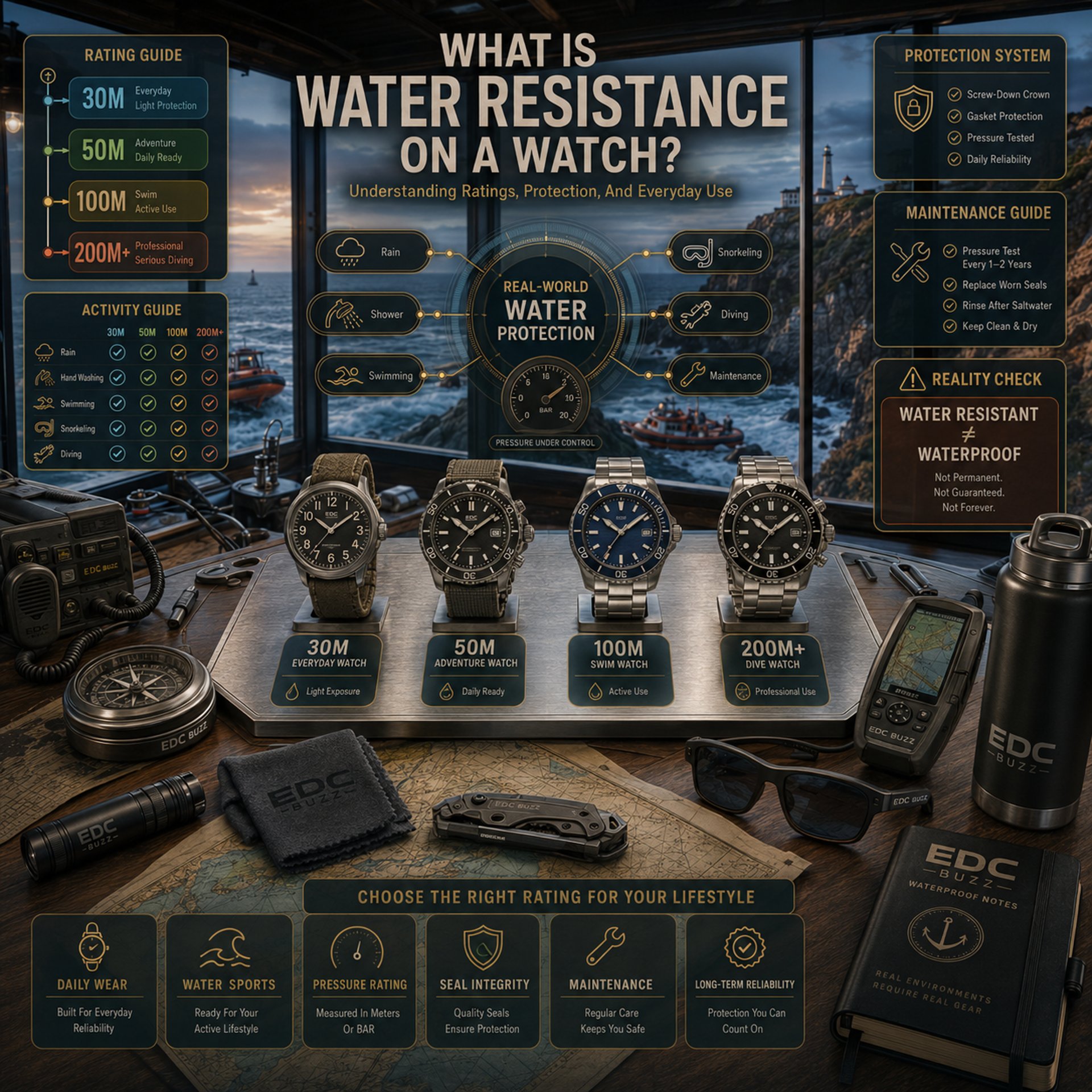
30m (3 ATM): Safe against splashes, rain, handwashing. Not designed for submersion or swimming.
50m (5 ATM): Can handle showering or short swimming sessions, but prolonged submersion is not ideal.
100m (10 ATM): Generally suitable for swimming, snorkeling, and exposure to water for longer durations.
200m+ (20 ATM and up): Appropriate for professional marine activities, serious diving, and high-impact water sports.
The numbers are useful as general guidelines but require context. They come from controlled tests where the watch remains still. In real life, moving through water increases the dynamic pressure on seals, sometimes beyond what static ratings consider.
If your activities regularly involve swimming or water sports, many of the models featured in our Best Dive Watches guide are designed specifically for those environments.
Real-World Interpretation of Water Resistance Levels
The distinction between controlled pressure testing and everyday scenarios is where many misconceptions arise. For example, a 30m water-resistant watch can technically resist pressure equivalent to 30 meters underwater—but it doesn’t mean you should dive with it or swim regularly. Movement in water, temperature changes, and chemicals in pools or soaps introduce stresses not accounted for in static lab conditions.
So why does this matter for EDC users? Because your watch might get wet during hand washing, caught in the rain, or accidentally submerged — but few need deep diving capabilities. Knowing which rating corresponds to your daily activities helps balance protection with cost and maintenance.
For instance, someone with a 50m-rated watch can likely shower and have occasional brief swims without damaging the watch. But if you frequently engage in water sports, snorkeling, or longer-term submersion, a 100m or higher rating provides an important margin of safety. If you're deciding whether that higher rating is actually necessary, see Do You Need A 200M Water Resistant Watch?
How Water Resistance Protects Your Watch in Daily Life
Water damage can be devastating for watches. Moisture intrusion corrodes metal parts, damages the movement’s lubrication, and causes fogging behind the crystal. Gaskets and seals are the primary barriers keeping water out, and their integrity determines how well a watch holds up.
Features like screw-down crowns, tightly sealed pushers, and synthetic gaskets reduce the chance of water sneaking in. Screw-down crowns essentially create a mechanical lock around the stem, compressing sealing rings and ensuring no gaps. This is why many water-resistant watches specify keeping crowns screwed in during exposure.
In everyday settings—washing hands or getting caught in the rain—the seals and gaskets prevent incidental water from reaching vulnerable internal components. However, exposing the watch to hot water, such as in a sauna or very hot shower, can cause seal deterioration due to thermal expansion and contraction, lowering water resistance faster.
The same sealing systems are also discussed in our Watch Buying Guide, which explains how different construction features affect long-term durability.
Common Misconceptions About Waterproof Watches
We often see the term “waterproof” thrown around casually, but in horology, it’s somewhat misleading. No watch is truly waterproof because water resistance can decline over time and under certain conditions. The only guarantee is that the watch has passed specified tests at a point in time.
Another frequent mistake is equating water resistance ratings directly with safe usage depths. As clarified, a 30m rating doesn’t mean the watch is suitable for swimming at 30 meters deep. Moreover, operating crowns or pushers underwater, even with a water-resistant watch, risks compromising seal integrity.
People also underestimate the impact of daily wear. Aging of rubber or silicone gaskets, accidental knocks, or exposure to chemicals can all degrade water resistance. That’s why routine service and water resistance testing are necessary for maintaining protection.
Maintenance Tips to Preserve Water Resistance
Most EDC users won’t think about water resistance beyond a simple number on the dial but keeping it reliable will significantly extend a watch’s lifespan. Gaskets and seals are designed to compress and flex but don’t last forever. Exposure to dirt, sweat, and oils further accelerate wear.
Regular inspection by a professional watchmaker can identify loss of tightness. They can pressure test the watch to confirm if it still meets its rated resistance. This is especially important after battery changes, opening the case back, or noticeable impacts. Routine care is covered in more detail in our Watch Maintenance Tips For Long-Term Reliability.
For mechanically complex watches with multiple pushers or chronograph functions, proper handling is key. Avoid pushing buttons underwater unless the watch is specifically rated for it, and always ensure crowns are fully screwed down when exposing the watch to water.
Choosing the Right Water Resistance Level for Your Use Case
Assessing what water resistance you need starts with an honest look at your daily routine and occasional activities. For someone whose watch rarely encounters water, a 30m or 50m rating shields against common splashes and rain, adding basic protection without driving up cost or complexity.
If you swim regularly or take part in water sports, leaning towards 100m or greater makes practical sense. Such watches not only handle submersion but withstand the dynamic forces of movement and occasional shocks.
More specialized uses—like scuba diving—demand even higher standards, but those are beyond typical EDC requirements.
The trade-offs often come down to design and maintenance. Higher water resistance often means bulkier cases, screw-down components that add complexity, and a need for more frequent servicing to maintain seals. Conversely, minimalist watches with low water resistance might be lighter and less expensive but less durable in water exposure. If you're comparing different approaches to durability, our Seiko Prospex SRPE37 vs Timex Expedition Field Post (Dive Watch vs Field Watch) comparison shows how intended use influences watch design.
FAQs About Watch Water Resistance
What does water resistance rating on a watch actually mean?
Water resistance ratings indicate a watch’s ability to resist water under controlled static pressure tests, reflecting how well seals and gaskets prevent water intrusion. They do not specify maximum usable depth during active use.
Can I swim or shower with a water-resistant watch?
It depends on the rating. Watches rated 50m or higher generally tolerate swimming and showering, while 30m-rated watches are safer for splashes or rain but not submersion. Hot water exposure can reduce water resistance.
How often should I have my watch’s water resistance tested?
Regular testing every 1-2 years is recommended, especially if you frequently expose the watch to water. Testing is also advised after battery changes, service, or impacts.
Is a waterproof watch really waterproof?
No watch is completely waterproof indefinitely. Water resistance can diminish with gasket aging, impacts, or improper use. “Waterproof” is a misnomer—water resistance ratings represent performance at a specific time and condition.
What are the differences between 30m, 50m, and 100m water resistance ratings?
These numbers correspond to pressure resistance under lab conditions, where 30m suits incidental water exposure, 50m covers bathing and light swimming, and 100m or above supports prolonged swimming and snorkeling.
How does water resistance relate to daily wear and outdoor use?
For daily activities, water resistance protects against rain, hand washing, and sweat. Outdoor use involving water contact benefits from higher ratings to prevent long-term damage.
Does water resistance protect against steam or hot water?
Steam and hot water pose risks by causing seals to expand and contract rapidly, potentially degrading water resistance even if the rating is sufficient for cold water.
Can water resistance be restored or improved on an older watch?
Yes, replacing gaskets, seals, and servicing the case can restore water resistance. Professional pressure testing ensures reliability after repair.
Practical Conclusion
Understanding water resistance on a watch comes down to recognizing it as a controlled measurement of pressure tolerance that informs us about how well the watch can resist water intrusion under specific conditions. It’s not a simple “go to this depth” instruction but a guideline based on laboratory tests.
For everyday carry, where exposure to moisture and water is inevitable but usually limited to splashes, rain, or occasional submersion, selecting a watch with the right water resistance rating based on your activities is essential. Balancing protection against design complexity and maintenance needs ensures your watch remains a reliable tool, not a fragile accessory.
Remember also that water resistance isn’t permanent. Regular upkeep, cautious use of crowns and pushers, and timely professional testing preserve the seals and help the watch stand up to the challenges of daily wear. In practical terms, knowing what water resistance really means empowers you to use your watch confidently and avoid preventable damage over time.

Contact@TheBuzzHQ.com
© 2026 EDCBuzz. All rights reserved.
EDCBuzz
Master everyday carry systems with clarity and precision. Built for real environments and practical use.
For educational purposes only.
General Inquiries: