

Best Features to Look for in EDC Earbuds
Discover what makes the best EDC earbuds stand out with key features like comfort, battery life, waterproofing, noise cancellation, and wireless connectivity.
EDC AUDIO
The EDCBuzz Editorial Team - Led by AJ “Buzz” Eichman
6/18/20268 min read
Everyday carry (EDC) earbuds are more than just a convenient audio accessory; they have become essential tools that tag along with us through commutes, workouts, work hours, and moments of downtime. But not all earbuds are created equal when it comes to the kind of use and abuse they handle on a daily basis. The best EDC earbuds strike a balance between comfort, durability, battery life, and usability without demanding constant babysitting or a drawer full of chargers. After living with a few contenders in this category, here’s what truly stands out and what falls short once the novelty wears off. If you're exploring the broader world of EDC Audio, situational awareness should be one of your primary considerations.
Quick Verdict
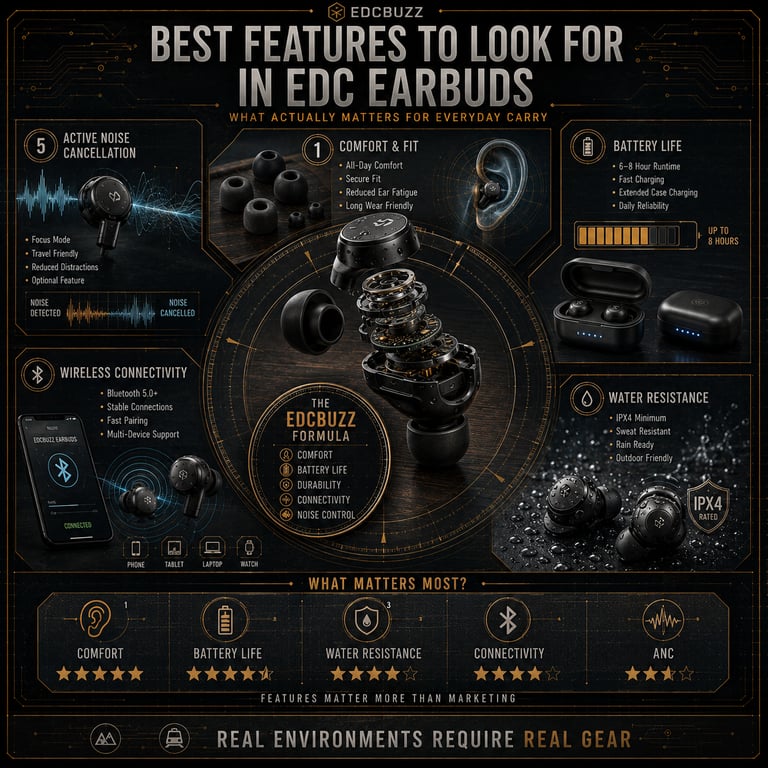
Prioritize earbuds with a secure, comfortable fit that lasts beyond a quick test drive.
Look for 6+ hours of playback, plus additional charges from the case — enough to get through a full busy day without scrambling for a plug.
Waterproof or sweat resistance with an IPX4 rating or better makes daily carry feel less fragile.
Active noise cancellation (ANC) is handy but comes at the cost of battery life and can be hit or miss depending on the model.
Stable Bluetooth 5.0+ connectivity keeps interruptions at bay and saves you from those “Why isn’t this pairing?” moments.
Why Comfort Matters for EDC Earbuds
Comfort is often the eyebrow-raiser people overlook until they’ve spent more than an hour with earbuds in place. I can confirm that a secure fit is great until you realize you’re digging into your ear canal or experiencing ear fatigue by the end of a long day. The best EDC earbuds strike a subtle balance—they stay put during movement, but don’t feel like overzealous earbuds forcing their way deeper with every step or nod. This is exactly why Why Comfort Matters More Than Sound Quality for EDC has become such an important consideration.
After a couple of weeks’ use, silicone ear tips usually prove more durable, but foam tips frequently win on comfort and noise isolation—though they may wear out faster. What’s more important is how the earbuds feel after you’ve been wearing them through meetings, walking, or even naps (because sometimes naps happen with earbuds in). The weight and size come into play here. Lightweight models tend to disappear in your pocket and ear, while bulkier ones can nag you with their presence, reminding you they’re there every time you turn your head.
You’ll notice where the design prioritizes some things over others—comfortable earbuds sometimes compromise on battery housing size, and vice versa. But those small trade-offs start to show when you’ve got earbuds bouncing around or needing constant adjustment.
Understanding Battery Life and Charging Options
Battery life is where the rubber meets the road. Most everyday carry earbuds advertise playback times in the six to eight-hour range, with charging cases kick-starting another battery cycle or two on the go. The daily reality? You want a pair that can carry you through a morning commute, an extended workday, and a bit of evening downtime without frantic searches for cables. For a deeper look, see How Much Battery Life Do You Really Need for EDC Audio?
In one pair I tested, the earbuds themselves lasted around seven hours, with the charging case providing two full charges after that. For a typical day, that meant I was worrying about battery life only once every couple of days — a practical balance if you don’t plan to binge three seasons of a show nonstop with them.
Active noise cancellation (ANC) features, while appealing, tend to eat into battery life noticeably. That simple moment of turning ANC on during noise-heavy commutes can shave an hour or more off the runtime. If battery endurance matters most in your daily grind, it’s worth testing how long ANC-enabled earbuds last versus their passive counterparts.
Charging times have improved, but some powering up scenarios still feel like waiting for paint to dry — a 15 to 30-minute quick charge for an hour of playback is a good middle ground. For extended trips, a compact charging case that fits easily in a pocket or bag is a must-have for hassle-free top-ups.
Waterproof and Sweat Resistance Ratings Explained
If you plan on using your EDC earbuds outdoors, whether for jogging, hiking, or just surviving a rain-shrouded commute, waterproof and sweat resistance should be non-negotiable. An IPX4 rating is widely considered the practical baseline for splash resistance—it handles sweat, rain, and the odd coffee spill without batting an eye. Understanding Water Resistance for Earbuds helps separate marketing claims from actual protection.
Higher ratings like IPX7, which allow brief submersion, feel like bringing an umbrella to a monsoon. They’re great if you’re the type to forget earbuds in your pocket during a wash or get caught in downpours regularly. But for most users, IPX4 or IPX5 hits the sweet spot between durability and cost.
A solid waterproof rating influences not just protection but also material choices and construction quality. Earbuds built to handle moisture usually feature sealed ports and water-repellent membranes, all of which add to longevity and the “grab and go” convenience of EDC gear that tolerates whatever the day throws at you without worrying about damage. Many buyers begin with Best EDC Waterproof Bone Conduction Headphones when durability is a top priority.
Active Noise Cancellation: Benefits and Considerations
Active noise cancellation is the feature that promises a bubble of quiet amid noisy environments, such as busy streets, plane cabins, or crowded offices. It uses microphones and digital signal processing to neutralize ambient sound, letting targeted audio come through without competition.
In practice, though, the effectiveness of ANC varies widely. High-end models deliver a noticeable reduction that genuinely improves focus and listening comfort. Budget options, while they might advertise ANC, often offer minimal difference, making you think you’re paying for a feature rather than a benefit.
It’s also important to consider ANC’s impact on battery life. The added processing requires extra power, typically halving or severely reducing playback time compared to passive modes. So if you’re not planning to use ANC frequently or for long stretches, it might be better to prioritize other features. Comparing Noise Canceling vs Passive Isolation can help determine which approach better fits your needs.
Wireless Connectivity: What to Expect and Look For
Bluetooth technology has come a long way, and for everyday carry earbuds, stable wireless connectivity is crucial. Lagging, dropouts, or pairing difficulties don’t just annoy—they interrupt whatever flow you’re trying to maintain, whether a podcast or a conference call.
Bluetooth 5.0 or higher is the current standard for reliable, low-latency connections and improved battery efficiency. Earbuds supporting it tend to pair faster and maintain stronger connections at longer ranges. Any model relying on earlier Bluetooth versions might start to feel clunky in daily use.
Another wireless subtlety I've observed is seamless device switching, which is a boon if you bounce between phone, tablet, and laptop. Some earbuds handle multiple device pairings gracefully, others not so much. If you juggle gadgets, this should factor into your choice.
Material and Build Quality for Durability
Build quality often reveals itself not in the showroom but in the real world. The best everyday carry earbuds use materials like sturdy plastics, reinforced metals, and quality silicone or foam for ear tips that last through everyday knocks and sweat. After a few weeks of shuffling through pockets, dropping into bags, and accidental scrapes, the cheap feeling or creaky parts become impossible to ignore. This is closely related to How Durable Should EDC Earbuds Be?
Another slightly underrated quality is the hinge and clasp mechanism on the charging case. It needs to hold securely without adding bulky weight or awkward size that might encourage you to leave it behind.
The earbuds’ finish also matters. Matte or textured surfaces usually handle fingerprints and grime better than glossy ones, which can quickly look like your hands have been in a cookie jar.
Common Buyer Mistakes When Choosing EDC Earbuds
The most frequent misstep I’ve seen is focusing solely on sound quality without thinking about the practical daily experience. Sure, sound fidelity matters, but if your earbuds don’t feel good for long sessions, you’ll stop using them.
Underestimating waterproofing and sweat resistance also causes heartbreak for active users — a quick jog or accidental rain can turn an expensive set into a paperweight if they’re not up to the task.
Ignoring battery life in favor of flashy features is a classic trap. Those neat active noise cancellation gimmicks or fancy touch controls won’t help if your earbuds die mid-commute.
Wireless stability often flies under the radar until multiple frustrations accumulate. Dropped connections in important calls or while working out quickly remind you why this feature deserves careful attention.
Lastly, assuming all ANC is created equal leads to disappointment. Some earbuds barely reduce any ambient noise but drain battery life as if they did.
How to Match EDC Earbuds to Your Daily Needs
Choosing the right EDC earbuds starts with knowing your daily routine and what you ask of your gear. For commuters and office workers, prioritizing noise cancellation and all-day comfort makes sense. Outdoor enthusiasts and fitness types should lean heavily into waterproof ratings and secure fit features. Frequent travelers benefit from longer battery life and a compact charging case. Many shoppers narrow their choices through Best EDC Earbuds and Best Premium EDC Earbuds.
If you often find yourself switching between devices or dealing with crowded wireless environments, look for earbuds with advanced Bluetooth capabilities and seamless device pairing.
Confidence in everyday carry earbuds comes when they settle comfortably into your routine, supporting your activities without drama or constant adjustments. Remember, an excellent pair is one you don’t have to think about too much—except to enjoy your music, podcasts, and calls.
Frequently Asked Questions
What makes earbuds suitable for everyday carry?
EDC earbuds combine comfort, durability, battery life, and ease of use in a compact form that can handle varied daily scenarios like commuting, working out, and casual listening without frequent fuss.
How important is waterproofing in EDC earbuds?
Waterproofing with at least an IPX4 rating is critical for protecting earbuds from sweat, rain, and accidental spills, helping them withstand daily wear and outdoor activities.
What is the average battery life I should expect from good EDC earbuds?
Look for earbuds with around 6 to 8 hours of playback per charge, plus additional charges from a portable case to cover extended daily use.
Do active noise cancellation earbuds drain the battery faster?
Yes, ANC consumes additional power and can significantly reduce runtime, so if long battery life is a priority, consider how often you’ll actually use ANC.
How can I tell if earbuds will fit comfortably for long periods?
Try different ear tip materials (silicone or foam), check the earbuds’ weight and shape, and consider how they feel after an hour or more of continuous wear rather than just moments.
Are wired earbuds better than wireless for everyday carry?
Wireless earbuds generally offer more convenience and freedom of movement for EDC, especially with advancements like Bluetooth 5.0+, but wired options avoid battery issues and might suit specific preferences.
What wireless features should I look for in EDC earbuds?
Bluetooth 5.0 or newer is desirable for stable connections and low latency, with smooth device pairing and decent range to avoid frustrating dropouts.
Can I use EDC earbuds for workouts or outdoor activities?
Yes, as long as they have a secure fit and an adequate waterproof or sweat-resistant rating (IPX4 or greater), EDC earbuds can handle exercise and outdoor use.
Conclusion
Everyday carry earbuds aren’t just another gadget; they’re a testament to how much thought goes into the gear we drag around daily. Comfort after hours of wear, battery life that keeps pace with your schedule, durability against sweat and weather, and reliable wireless connections all blend into what makes a great pair worth its place in your pocket or bag.
Choosing earbuds with honest, real-world validation rather than shiny specs on a box saves you from disappointment and keeps your daily soundtrack playing smooth as intended. Gear that feels good and works right doesn’t shout for attention—it quietly earns its keep, day after day. And if it throws in a bit of noise cancellation or waterproofing without grumbling about the battery life like a needy coworker, well—that’s a bonus you’ll appreciate every time you put them in.

Contact@TheBuzzHQ.com
© 2026 EDCBuzz. All rights reserved.
EDCBuzz
Master everyday carry systems with clarity and precision. Built for real environments and practical use.
For educational purposes only.
General Inquiries: