

Water Resistance for Earbuds
Learn how water resistance earbuds protect against moisture with IP ratings and construction details for durability in workouts, commuting, and outdoor use.
EDC AUDIO
The EDCBuzz Editorial Team - Led by AJ “Buzz” Eichman
6/18/20268 min read
In an age where earbuds have become indispensable for daily life—whether for workouts, commutes, or casual listening—understanding water resistance is essential. Moisture exposure through sweat, rain, or accidental splashes can compromise performance or damage these compact devices. But what does “water resistance” really mean for earbuds, and how well does it protect them in everyday scenarios? Diving into the details behind IP ratings and the construction choices manufacturers make reveals critical nuances that help you select earbuds suited to your environment and usage patterns. This isn’t just about marketing jargon; it’s about the science and engineering that determine whether your earbuds will hold up over time in the face of moisture. If you're building a complete EDC Audio setup, understanding moisture protection is one of the most important buying factors.
Quick Verdict
Water resistance for earbuds is primarily defined by IP ratings, indicating protection against water and dust.
Sweat resistance (often found at IPX4) suits workouts and light moisture exposure, while higher ratings (IPX7) allow temporary submersion.
Construction materials like rubber gaskets and hydrophobic coatings play a crucial role in moisture protection.
Proper care—drying and cleaning earbuds after exposure—significantly extends their functional lifespan.
What Is Water Resistance in Earbuds? Understanding IP Ratings
Water resistance, in technical terms, describes how effectively earbuds resist intrusion by water and other elements. The industry standard for quantifying this protection is the Ingress Protection (IP) rating, a two-digit number that classifies how well a device seals against dust and water. The first digit represents dust protection, while the second digit describes water resistance. Earbuds often carry ratings like IPX4 or IPX7, where “X” means the device isn’t rated or tested for dust—common in designs where moisture protection is prioritized over dust.
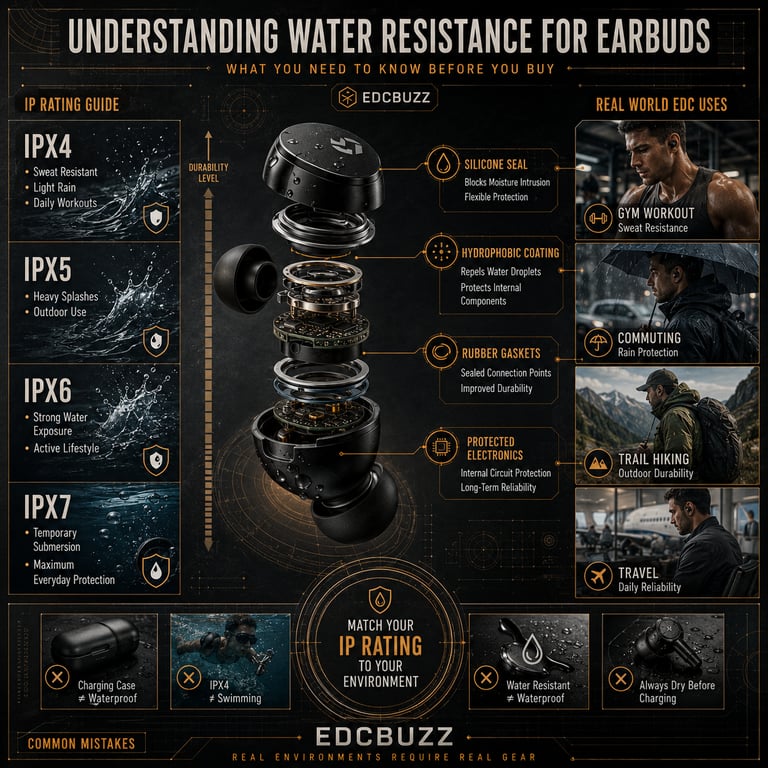
For example, an IPX4 rating means an earbud can handle splashes of water from any direction, typically sufficient for sweat and light rain exposure during daily workouts or commutes. On the other hand, IPX7 indicates the device can survive full immersion in up to 1 meter of water for 30 minutes, offering protection even against accidental drops in water or heavy downpours.
Understanding these digits isn’t just academic—knowing the limitations of your earbuds’ IP ratings informs how and where you can use them without worry. That’s the foundational layer of real-world durability you need. For a deeper breakdown, see Water Resistance for Earbuds.
Common Water Resistance Ratings and What They Mean
The range of IP ratings relevant to earbuds usually starts at IPX4 and goes up to IPX7, and each step has specific practical effects.
IPX4: This level provides basic protection against water splashes from any direction. It’s a common rating for workout earbuds because it handles sweat and rain well. The earbuds won’t be ruined by sweat dripping inside or by a refresher spray of water, but submersion or heavy water jets are beyond their protection.
IPX5 and IPX6: These offer increasing resistance against stronger water jets. While less common in earbuds, these ratings suggest better sealing and resilience if your routine includes exposure to rain or even wet environments where splashing can happen.
IPX7: Earbuds with this certification can be submerged in water to a depth of around 1 meter for 30 minutes without damage. This doesn’t mean you should use them for swimming laps, but they can survive accidental drops in puddles or sudden heavy rainstorms.
Beyond these, some manufacturers use marketing terms like “waterproof,” but without corresponding IP testing, those claims can be misleading. The IP rating is the most reliable technical indicator to trust instead of vague descriptors. Many users comparing products in the Best EDC Waterproof Bone Conduction Headphones category often focus heavily on IP ratings for this reason.
Materials and Construction Impacting Earbud Water Resistance
IP ratings alone don’t tell the whole story because how earbuds are built influences their durability in moisture-rich environments. Effective water resistance depends on combining multiple design elements that work together to keep water out without sacrificing sound quality or user comfort.
Seals and gaskets: Rubber or silicone gaskets around buttons, seams, and charging ports form physical barriers against water ingress. These create tight seals that prevent moisture from reaching sensitive electronics.
Hydrophobic coatings: These nano-scale treatments repel water at a molecular level, causing droplets to bead and roll off surfaces. Hydrophobic layers reduce the chance of water clinging to and penetrating earbuds.
Enclosure design: Earbuds designed for moisture protection often have minimal external openings and use screwed-down or molded housings that maintain internal integrity. Buttons might be sealed under membranes rather than open mechanical switches.
Materials: Using corrosion-resistant metals and plastics helps maintain durability over repeated moisture exposure cycles. Some earbuds use stainless steel or aluminum for external parts to prevent rust from sweat salts.
This combination of materials and construction features ensures that water resistance is practical, not just theoretical—extending your earbuds’ useful life even with consistent exposure to sweat or rain. Durability is closely tied to How Durable Should EDC Earbuds Be? when evaluating long-term performance.
Real-World Use Cases: Workouts, Commuting, and Outdoor Activities
Water resistance in earbuds most clearly shows its value in everyday scenarios where moisture exposure is common. For active lifestyles, sweat resistance is essential. During running, cycling, or gym sessions, earbuds encounter moisture that could otherwise corrode delicate components. An IPX4 rating generally suffices here, protecting enough without adding unnecessary bulk or cost.
For commuters, rain presents the main challenge. Earbuds that withstand splashes from umbrellas or light showers eliminate anxiety about weather ruining your device mid-trip. IPX5 or IPX7 ratings better meet these needs for people who often find themselves outdoors in variable weather.
Outdoor enthusiasts face both moisture and dust, which together create tough conditions. While many earbuds focus on water resistance, dust ingress protection becomes equally important in hiking or trail-running environments. Although earbuds rarely achieve full dust ratings, some designs incorporate dust-resistant materials and seals to enhance overall durability. This is especially important when considering Situational Awareness and EDC Audio during outdoor activities.
How to Maintain and Care for Water-Resistant Earbuds
Even the best water-resistant earbuds are not impervious to damage without proper care. Water resistance is not permanent; seals degrade over time, and sweat residues can cause corrosion or compromise electronics.
After workouts or rain exposure, it’s wise to wipe earbuds with a soft, dry cloth to remove moisture and salt residues. Avoid using harsh chemicals or soaps, which can damage seals or coatings.
Allow earbuds to air dry completely before storing them in their charging case, especially since cases typically lack IP ratings and aren’t designed to handle moisture. Charging cases are often the most vulnerable part of your system, so exercise extra caution, avoiding any wet environments for them.
When possible, remove and dry ear tips separately to reduce trapped moisture that can harbor bacteria or degrade material quality.
Periodic inspection helps spot seal damage or wear early, preserving water resistance effectiveness over the earbuds’ lifespan. Regular maintenance techniques covered in How to Clean EDC Earbuds and Headphones can significantly extend longevity.
Common Misconceptions About Waterproof and Water-Resistant Earbuds
A widespread confusion is conflating “water-resistant” with “waterproof.” Technically, “waterproof” implies complete protection against water ingress under all specified conditions, often supported by higher IP ratings such as IPX7 and above.
Many earbuds labeled “waterproof” only meet lower IPX4 or IPX5 standards, suitable for sweat and splashes but not for submersion or swimming. Using earbuds beyond their tested IP limits risks permanent damage.
Another point of confusion is dust protection. Some users neglect that an IP rating’s first digit (dust ingress protection) can impact earbud durability in outdoor use. Though many earbuds skip dust ratings, dust and sand can degrade mechanical parts over time.
Finally, some assume the charging case shares the earbuds’ water resistance. Most cases lack IP ratings and can be damaged by moisture. Using cases in wet environments or exposing them to sweat significantly increases failure risk. Users debating Are Expensive Earbuds Worth It for Everyday Carry? often discover that premium pricing does not automatically guarantee superior water protection.
Buying Guide: Choosing Earbuds Based on Water Resistance
Selecting earbuds with the right water resistance starts with assessing your typical use cases. For casual users primarily indoors, a basic IPX4 rating offers sufficient protection against unexpected splashes or sweat during short periods.
Active users who routinely sweat during workouts, or those facing regular rain exposure on their commutes, benefit from at least IPX5 certification. This ensures resilience against stronger moisture challenges without large design trade-offs.
If you plan to use earbuds outdoors extensively, especially in humid, dusty, or rainy environments, consider models with higher IPX7 ratings and dust ingress protection. This choice enhances longevity but sometimes comes with slight weight increases or bigger housings to accommodate robust seals. Models featured in Best EDC Earbuds under $150 and Best EDC Pocket Speakers often balance durability and value particularly well.
Remember that higher IP ratings often correlate with higher prices. Matching water resistance to your lifestyle and budget means balancing protection against practical trade-offs like cost, size, and weight. If you're deciding between audio styles, the AeroFit 2 vs CXK Bone Conduction (Non-Waterproof vs Waterproof) comparison highlights how different designs approach moisture protection.
FAQ: Answering Popular Questions on Water Resistance and Durability
What does the IP rating mean for earbuds?
The IP rating quantifies how well earbuds resist dust and water ingress. The first digit covers dust protection (0-6), and the second digit covers water resistance (0-9). For example, IPX4 means no dust rating but protection against splashes, while IPX7 supports submersion up to 1 meter for 30 minutes.
Are water-resistant earbuds suitable for swimming?
Generally, no. Most water-resistant earbuds are designed for sweat and rain but not prolonged submersion or swimming. Even with an IPX7 rating, limited immersion is allowed but swimming introduces motion and pressure that might exceed those limits.
How do I maintain earbuds after exposure to sweat or rain?
Dry them promptly with a soft cloth, avoid harsh chemicals, and air dry before storage. Remove and dry ear tips separately when possible. Protect charging cases from moisture as they often lack water resistance.
What is the difference between water-resistant and waterproof earbuds?
Water-resistant earbuds can handle some moisture exposure, like splashes or sweat, up to a specific IP rating. Waterproof earbuds provide a higher level of protection, able to withstand immersion, but few earbuds meet this standard robustly.
Can water damage void my earbud warranty?
Yes. Most manufacturers exclude water damage if it exceeds the advertised IP rating or comes from misuse, such as submersion beyond limits or improper care.
Are charging cases also water-resistant?
Typically, no. Charging cases rarely have IP ratings and are vulnerable to water and sweat damage, so they should be kept dry.
How important is sweat resistance for workout earbuds?
Very important. Sweat contains salts and moisture that can corrode electronics and degrade seals. Sweat-resistant earbuds increase durability and maintain performance during and after exercise.
Will water resistance affect sound quality or size?
Waterproofing measures like extra seals and coatings can slightly increase earbud size or weight, but quality manufacturers balance these to minimize impact. Sound quality typically remains unaffected when proper acoustic designs account for seal materials.
Practical Conclusion
Water resistance in earbuds is a layered concept built on standards like IP ratings but realized through thoughtful design and materials. Understanding the degrees of protection helps you pick earbuds that fit your lifestyle—whether that means withstanding sweat in intense workouts, braving rainy commutes, or tackling outdoor adventures.
Rather than assuming a “waterproof” label guarantees invulnerability, appreciating the technical details and trade-offs ensures realistic expectations. Remember, even the best water-resistant earbuds require proper care to perform well over time. Evaluating your exposure to moisture and dust, then choosing earbuds with appropriate IP ratings and durable construction, leads to smarter purchases and longer-lasting gear.
Ultimately, water resistance isn’t just a marketing feature—it’s an engineering challenge solved by precise materials science and design. Knowing what’s behind the ratings and construction empowers you to make informed decisions rather than guesses, resulting in earbuds that truly meet your everyday needs.

Contact@TheBuzzHQ.com
© 2026 EDCBuzz. All rights reserved.
EDCBuzz
Master everyday carry systems with clarity and precision. Built for real environments and practical use.
For educational purposes only.
General Inquiries: