

Situational Awareness and EDC Audio
Explore how to maintain situational awareness using everyday carry audio devices like bone conduction headphones and earbuds for a safer, convenient daily experience.
EDC AUDIO
The EDCBuzz Editorial Team - Led by AJ “Buzz” Eichman
6/18/20268 min read
In the world of everyday carry, audio gear has carved out an essential niche. Whether it’s earbuds for a morning commute or headphones during a jog, it’s tempting to dive headfirst into music, podcasts, or calls and forget the world around you. The challenge, however, is balancing the convenience of everyday carry audio devices with the need to maintain situational awareness. After all, acknowledging your environment isn’t just good common sense—it’s a safety practice that keeps you connected to life beyond your playlist. Over time, I’ve learned that this balance is less about flashy tech and more about how these devices integrate into your daily rhythm without making you into an oblivious nodding statue. If you're exploring the broader world of EDC Audio, situational awareness should be one of your primary considerations.
Quick Verdict
Bone conduction headphones offer decent situational awareness by leaving ear canals open, but with some trade-offs in audio quality.
Single-earbud use keeps one ear free, offering a straightforward way to stay alert without complex settings.
Noise-cancelling headphones with ambient or transparency modes provide a clever blend of sound immersion and environmental listening but need careful volume management.
Volume control and environment scanning remain the simplest, most effective habits alongside smart device choices.
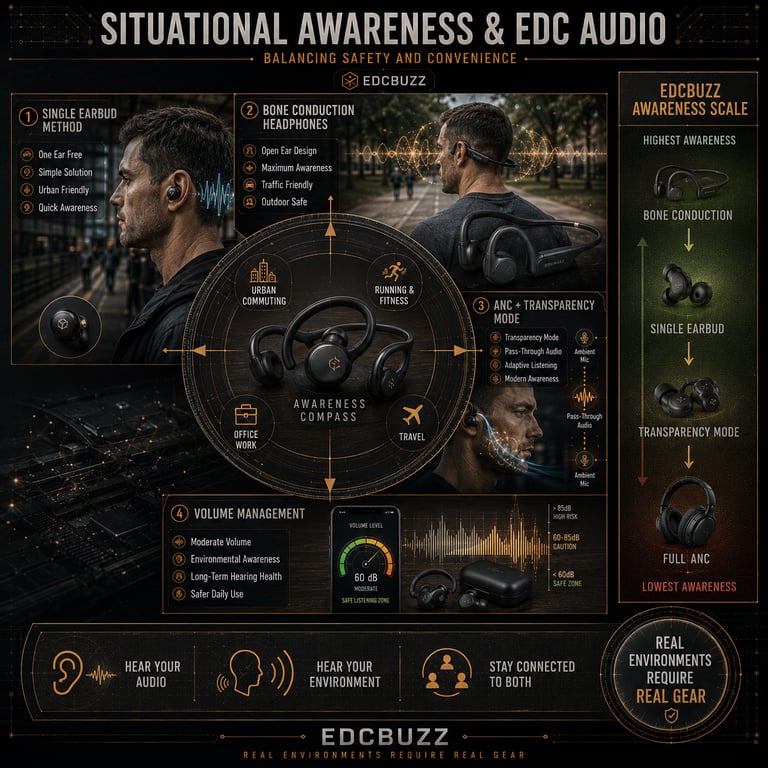
Understanding Situational Awareness with EDC Audio
Situational awareness is more than just noticing the odd squirrel darting between sidewalks or the pedestrian light changing color. It’s the quiet, ongoing process of staying mentally connected to your environment even when your ears have company. When EDC audio gear comes into play, this means being able to pick up critical sounds—car horns, approaching footsteps, verbal warnings—without constantly yanking the buds from your ears.
Over weeks of carrying and using different audio tools, I discovered that situational awareness isn’t just about gadget features; it’s equally about personal habits. For example, wearing earbuds at full blast in busy urban areas isn’t just a recipe for missing your stop, but it’s a shortcut to potential hazards. In contrast, moderate volume combined with occasional visual sweeps of your surroundings can keep you balanced. This balance is also discussed in Earbuds vs Headphones for EDC.
Types of Everyday Carry Audio Devices and Their Impact on Awareness
The type of audio device you choose plays a subtle yet significant role in how well you can maintain awareness.
Bone Conduction Headphones
Bone conduction devices don’t intrude on the ear canal. Instead, they transmit sound through vibrations on your cheekbones, leaving your ears open. This means ambient sounds arrive untouched, which is a clear advantage for situational awareness—probably why they’re popular with runners and cyclists. After several weeks using bone conduction headphones, I appreciated not missing important cues while still enjoying my audio. The downside is sound quality leans a bit toward “functional” rather than high fidelity, but for many, that’s a fair trade for safety. If you're considering this style, see Best EDC Waterproof Bone Conduction Headphones and Bone Conduction vs Open-Ear Air Conduction Headphones.
Single-Earbud Use
Carrying just one earbud is an old-school tactic that continues to hold water. It’s straightforward—leave one ear out of the game—and it works well across environments. I found it particularly useful during commutes or quick errands, where you want a bit of entertainment but remain receptive to your surroundings. Some might balk at missing stereo sound, but honestly, my buddies later in the week always notice it’s safer even if the music takes a hit.
Noise-Cancelling Headphones with Ambient Modes
Modern noise-cancelling headphones—those with active noise cancellation (ANC)—often include ambient or transparency modes. These settings turn on external microphones to feed surrounding sounds into the earcups alongside your music or podcasts. After a few weeks using top-tier ANC headphones with ambient mode, I found it’s a neat compromise. You get some noise isolation without going completely deaf to the world. Understanding Noise Canceling vs Passive Isolation can help determine which approach best fits your environment.
That said, the tech isn’t perfect. When the ambient mode kicks in, sounds can sometimes come across a bit odd or processed, like hearing traffic through a tin can. Also, volume settings matter—a lot. Too loud, and you drown out the ambient feed, defeating the point; too soft, and your audio becomes background noise you barely register. It felt like tuning a fine instrument—gain too high or low, and the balance shifts.
Practical Tips for Safe Use of Earbuds and Headphones
Let’s cut to the chase on best practices that actually stuck with me after practical use:
Keep Volume Moderate
This one should go without saying, but in day-to-day reality, it often gets ignored. Keeping your volume at a moderate level not only protects your hearing but also ensures you can pick up important environmental cues. After all, no amount of fancy tech helps if you’ve got earbuds blasting so loudly the world is silent except for your playlist.
Use Single Earbuds or Bone Conduction for Active Environments
When moving through busy streets, near traffic, or in unfamiliar areas, having one ear open or using bone conduction headphones creates a naturally safer audio environment. This small adjustment noticeably improved my confidence and comfort during daily runs and urban commutes.
Enable Ambient or Transparency Modes on ANC Headphones
If you’re invested in noise-cancelling gear, take full advantage of ambient modes. They’re designed for this balancing act—letting in crucial environmental sounds without sacrificing sound immersion. Just remember to keep track of volume levels and recalibrate as different environments demand.
Scan Your Environment Regularly
Even the best audio devices won’t save you from missing a sudden honk or a pedestrian approach if your eyes are glued solely to your phone. Making a habit of consciously scanning your surroundings every few minutes makes a noticeable difference in awareness, especially moving from quiet streets to busier zones.
Features in EDC Audio Gear that Enhance Environmental Awareness
As audio tech evolves, manufacturers are introducing features aimed specifically at maintaining situational awareness:
Pass-Through Microphones
These microphones pick up outside sound and feed it into your headphones or earbuds. This “pass-through” allows you to hear conversation, traffic, or announcements without pausing whatever you’re listening to.
Auto Volume Adjustment
Some devices monitor ambient noise and adjust volume automatically. For example, if you step into a noisy street, the volume might increase slightly; if you move into a quiet park, it lowers accordingly. This feature takes some mental juggling away, though I found it’s still wise to stay aware of how your ears react.
Safety Alerts
A few standout EDC audio devices are integrating safety alerts, like sound detection of approaching sirens or honks, and can notify you via audio cues or vibrations. These aren’t widespread yet, but they show promise for blending convenience and safety.
Common Mistakes That Compromise Safety
In spending real time with EDC audio, I’ve noticed habits that tend to dull situational awareness more than any technology can:
Wearing Noise-Isolating Earbuds at High Volume in Busy Areas
It’s the classic issue—you’re in the middle of a noisy city or crosswalk, cranking your earbuds to drown out the chaos. Meanwhile, you’re oblivious to honking cars or alerts. The irony is that noise isolation without situational consideration can transform your ears into a distraction, the very opposite of the peace you’re after.
Assuming Noise Cancelling Means Removing the Device to Stay Alert
Not realizing that ambient modes exist leads many to take earbuds or headphones out entirely. While this works, it’s less convenient. Modern devices often allow a middle ground, so explore those modes before deciding removal is the only option.
Ignoring Environmental Risks When Immersed in Audio
We all get that tunnel vision effect when the soundtrack is just right. I’ve found myself caught up in a podcast and missed a bike bell beside me—embarrassing if not dangerous. Balancing convenience with safety means deciding where and when you immerse fully and where you pull back.
Not Considering Surroundings Before Activating Audio Devices
Running a quiet trail versus walking down a busy sidewalk calls for different audio strategies. Some folks forget to adapt their gear and habits to these situational needs, which can be a costly oversight.
Real-World Scenarios: When and Where to Prioritize Awareness
Knowing when to dial up or down awareness while carrying your audio is key.
Urban Commuting
City streets demand a high level of alertness. The ideal setup here tends to single-earbud use or ANC headphones with ambient mode turned on at reasonable volume. This helps in catching announcements, vehicle noise, and crowd movements without sacrificing audio companionship.
Outdoor Jogging or Walking
Here, bone conduction headphones shine. I started favoring them for trail runs and neighborhood strolls. The subtlety of not blocking ear canals means you pick up natural sounds—a growl from a dog or rustling in bushes—without forgoing your playlist. Products featured in Best EDC Open Ear Headphones are often designed specifically for this purpose.
Office and Home Use
Situations demanding focused attention but also quick interruption awareness—for example, to hear colleagues or family—benefit from ANC headphones with ambient mode or informed single earbud use. Low volume is preferable to keep one foot in the present environment.
Working Around Machinery
If you’re near noisy tools or equipment, situational awareness can be lifesaving. Audio devices should be used sparingly or at low volume, with ambient features carefully calibrated. I’d opt mostly for bone conduction or keep sound off until breaks. Some users compare solutions in ISOtunes Sport BT vs Bose QuietComfort (Hearing Protection vs No Protection) when balancing protection and awareness.
Traveling in Crowded Spaces
Airports and transit hubs are audio chaos zones. Combining pass-through mic features with active scanning of surroundings can help prevent missing announcements or obstacles. In these scenarios, I tend to drop audio devices if it gets too overwhelming.
Balancing Audio Enjoyment and Safety in Daily Life
The key takeaway from living with EDC audio devices is that balance is less a setting and more a mindset. Gadgets with situational awareness features help, but they’re no replacement for thoughtful use. The trick is to carry devices chosen not just for sound quality or brand, but for how they fit into your daily routines and environments. Once you accept that you’re not just an audience to your music but a participant in a larger world, finding that harmony feels almost automatic. If you're selecting gear, Best Features to Look for in EDC Earbuds is a useful resource.
FAQs on Using EDC Audio Safely
How can I stay aware while listening to music with earbuds?
Use single-earbud setups or bone conduction headphones to keep one ear open, keep volume at moderate levels, and regularly scan your surroundings visually.
What EDC audio devices are best for safety in public spaces?
Bone conduction headphones and noise-cancelling headphones with ambient/transparency modes are generally best for maintaining environmental awareness.
Is it safer to use bone conduction headphones for situational awareness?
Yes. Because they don’t block the ear canal, ambient sounds remain clear, enhancing awareness; however, the audio quality may not be as crisp as traditional earbuds.
How loud should I keep my audio to maintain environmental awareness?
Volume should remain moderate — loud enough to enjoy but low enough to hear external sounds. Avoid volumes above 85 decibels for extended periods.
Do noise cancelling headphones have features to help keep awareness?
Many modern ANC headphones offer ambient or transparency modes that use external microphones to blend outside sounds with your audio playback.
Can I use earbuds safely while commuting or running?
Yes, by using one earbud only or pairing them with awareness-friendly devices, keeping volume moderate, and staying visually alert to surroundings.
What are the risks of poor situational awareness with EDC audio?
Missing critical sound cues like traffic, warnings, or human interaction, which can result in accidents, missed stops, or hazards.
How do ambient modes work on headphones for safety?
They utilize microphones on the headphones to pick up external sounds and blend them with your audio, allowing you to hear environmental noises without removing your device.
Conclusion
After carrying and using various EDC audio devices in real-world settings, it became clear that situational awareness isn’t solely a byproduct of the latest technology but an ongoing practice enhanced by it. Whether choosing bone conduction headphones, single-earbud use, or noise-cancelling models with ambient modes, the goal remains the same: remain connected to the world around you without giving up the convenience and enjoyment these everyday carry gadgets provide. In the end, it’s as much about knowing when to listen to the world as it is about knowing when to listen to your playlist. And maybe, if you keep the volume just right, you won’t miss either one.

Contact@TheBuzzHQ.com
© 2026 EDCBuzz. All rights reserved.
EDCBuzz
Master everyday carry systems with clarity and precision. Built for real environments and practical use.
For educational purposes only.
General Inquiries: