
Earbuds vs Headphones for EDC
Explore the pros and cons of earbuds for EDC versus headphones, focusing on comfort, portability, sound quality, and battery life to find your perfect everyday audio companion.
EDC AUDIO
The EDCBuzz Editorial Team - Led by AJ “Buzz” Eichman
6/18/20268 min read
If you’re like me, your EDC Audio device isn’t some flashy gadget you forget about after the first unboxing thrill. It’s a daily companion—something you carry, use, scowl at when the battery dies, and appreciate when tunes or calls come through clear and comfy. Choosing between earbuds and headphones for everyday carry (EDC) isn’t just about picking which looks cooler or gets better reviews online. It’s about how they fit into your real, often messy, everyday life.
After carrying both earbuds and headphones under varying conditions, I’ve come to realize they each bring their own strengths and quirks to the table. The decision? It comes down to how and where you use them, what sacrifices you’re willing to make, and yes, what fits comfortably in your pocket—or on your head—come rain or shine.
Quick Verdict
• Earbuds excel in portability and pocket-friendliness but can grow tiring with long-term wear.
• Headphones generally offer superior sound quality and comfort for extended listening sessions.
• Noise cancellation tends to be stronger and more consistent with over-ear headphones.
• Battery life favors headphones, but many premium earbuds hold their own given smaller form factors.
Overview of Earbuds and Headphones in EDC
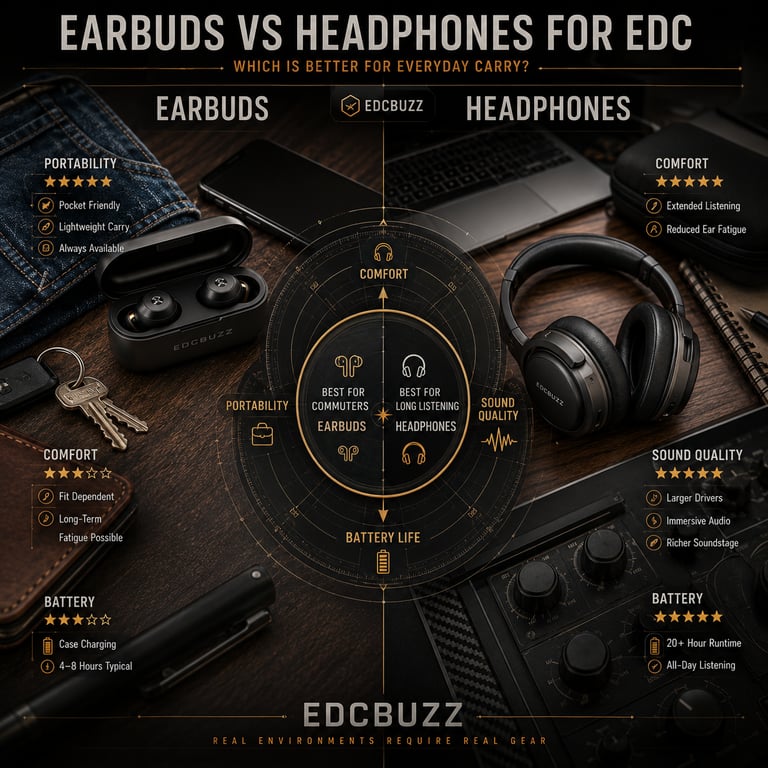
Everyday carry audio devices have to strike a balance between convenience, comfort, and performance. Earbuds slip right into your ear canal, making them remarkably compact. This means tossing them into your pocket, bag, or the coin pocket of your jeans without much fuss. Headphones, especially over-ear models, cover (or rest on) your ears, necessitating a bit more space but bringing with them larger drivers and padding that can make a long day of listening less of a grind.
In daily use, earbuds feel like the stealthy sidekick. They’re easy to forget, though sometimes your ear will remind you when discomfort creeps in. Headphones are the more deliberate choice—you generally need to plan a little more for carrying and storage but are rewarded with better audio immersion and wearability over hours. If you're new to the category, start with What Is EDC Audio to understand how everyday carry audio fits into a broader EDC setup.
Comfort Comparison: Earbuds vs Headphones
Let’s start with comfort, because you’re not going to use anything that irritates you after an hour or two. Earbuds sit inside the ear canal, which means they sometimes press in ways that aren’t immediately obvious. After a few days or hours at a stretch, that pressure can become noticeable, especially if you’re the type to fiddle with them or adjust frequently. Some buds come with multiple tips and shapes, and that helps, but the fit is always personal.
Headphones spread the load over your ears and head. The ear cups are padded and rest against or over your ears, which usually translates to less direct pressure inside the ear canal. After extended use, you’ll notice padding material—memory foam being the gold standard—makes a difference in reducing fatigue. That said, earmuffs do add some clamping pressure on your head, which varies by design.
It’s the difference between a continuous gentle squeeze versus a direct poke. For all-day wear, many find headphones more tolerable, granted you don’t have to deal with storing a bulky device on the go. For a deeper dive into long-term wearability, see Why Comfort Matters More Than Sound Quality for EDC.
Portability and Storage Considerations
This is where earbuds shine, obviously. Your earbuds and their case can practically disappear in any pocket or small compartment. You almost forget you’re carrying them until you pull them out for a quick listen. They’re lightweight and generally unnoticeable during other activities, from commuting to jogging—or even doing dishes if you’re that person.
Headphones, especially over-ear models designed for sound quality and comfort, are bulkier. You’ll typically need a dedicated pouch or bag space. Some fold down, and portable designs have slimmed over time, but they’re still significantly larger than earbuds.
If your EDC system involves light pockets or minimal gear, headphones might feel like a burden. However, if you carry a backpack or messenger bag regularly, it’s less of a hassle. Just don’t be surprised if you catch yourself eyeing available pocket space like a hawk.
No matter which option you choose, proper storage matters. How to Carry and Protect Your Earbuds Every Day covers simple ways to keep your audio gear protected during daily carry.
Sound Quality Differences for Daily Use
Here’s where personal preference ties closely with technical realities. Headphones house larger drivers, which can produce a warmer, fuller sound with better bass response and spatial depth. For long listening sessions, podcasts, music, or video, that extra sound stage presence means less listening fatigue and often more enjoyment.
Earbuds have come a long way, with many models delivering surprisingly clear and balanced audio. However, the small drivers working within tight confines of the ear canal sometimes struggle with deep bass and overall volume consistency, especially in noisy environments.
That said, high-end earbuds with sophistication in tuning and codecs can still give headphones a run for their money. Some of the models featured in Best Premium EDC Earbuds demonstrate just how far modern earbuds have evolved.
Battery Life and Charging Convenience
Battery life is a classic trade-off in EDC audio devices. Larger headphones naturally accommodate bigger batteries, regularly offering 20 or more hours of continuous playtime. That’s handy for long commutes, travel days, or working through music marathons without stressing over charging.
Earbuds are constrained by their smaller size. Most fall between 4 and 8 hours per charge, often supplemented by a charging case that extends total use. The ease of popping earbuds into a case and letting them recharge on the fly is convenient, but if you forget the case or run out of charge mid-day, you could feel caught out.
If battery life is one of your biggest buying factors, compare the tradeoffs discussed in Battery Life vs Sound Quality before making a purchase.
Charging methods also differ. Headphones often require wired charging, and some have started adopting wireless charging options. Earbuds almost universally charge from their compact cases, which can be wireless or wired.
Noise Cancellation Performance
Noise cancellation is a frequently cited reason to invest in quality earbuds or headphones. Both earbuds and headphones can offer active noise cancellation (ANC), where microphones detect ambient sounds and cancel them electronically.
Headphones have an edge here, principally because the physical design creates passive noise isolation by covering your ears completely. This creates a solid barrier from external noise even before ANC kicks in. The combination generally delivers a more immersive and quieter experience.
Earbuds rely on sealing your ear canal with tips and ANC to block noise. While ANC technology in earbuds has improved dramatically, their physical limitations mean some ambient sounds bleed through, especially with less expensive models or in very loud environments.
If you want to better understand the difference between ANC and physical isolation, read Noise Canceling vs Passive Isolation.
Materials and Durability for Everyday Carry
When you’re carrying audio gear daily, durability quietly matters as much as sound quality or battery specs. Earbuds tend to be made mostly of plastic with silicone tips and lightweight cases. This makes them prone to wear on earbud tips and scratches on cases if not carefully stored.
Some now come with reinforced cables or sturdier housings, but the small parts mean you’re often replacing tips and cleaning more frequently.
Headphones often use more substantial materials: metal frames, memory foam ear pads, quality plastics, and fabric or leatherette for cushioning. These factors improve comfort and lifespan but add weight.
Frequent folding, pocketing, and handling can wear down hinges or padding over time, so build quality varies by brand and price. Generally, investing in a well-constructed headphone returns better longevity if you treat it more like a tool than a toy.
For additional perspective, check out How Durable Should EDC Earbuds Be?
Making the Right Choice Based on Your EDC Needs
Choosing between earbuds for EDC and headphones boils down to matching the gear to your lifestyle and use cases.
If you’re mostly on the move—commuting, exercising, or working in various locations—and need something light and pocketable, earbuds make a compelling case. They’re easy to grab, stow, and forget, which is a practical win for many.
Many of the options featured in Best EDC Earbuds are designed specifically around portability and convenience.
On the other hand, if your daily routine includes lots of hours plugged in—whether for work calls, focus sessions, or just better sound enjoyment—and you’re not as constrained by pocket space, headphones bring comfort and audio performance that justify the extra bulk.
If you’re edging toward a mix, consider hybrid models or premium earbuds that push comfort and battery life boundaries, though compromises remain.
Common Mistakes When Choosing EDC Audio Gear
One of the biggest errors folks make is assuming earbuds and headphones deliver the same sound quality and noise isolation. Design differences and physical constraints mean there’s no true parity.
Another mistake is overlooking battery life. It’s easy to get dazzled by specs but forgetting that earbuds’ smaller batteries need more frequent charging or reliance on cases, which can be misplaced.
Comfort often gets ignored until the sore ears or pressure points remind you otherwise. It’s worth investing time in trying gear or reading detailed reviews from seasoned users to avoid regret.
Finally, don’t dismiss material durability. A cheap pair of earbuds is likely to degrade quickly under daily jostling, while a well-built headphone, even if bulky, might serve you reliably for years.
Frequently Asked Questions
What are the main differences between earbuds and headphones for everyday carry?
Earbuds are small, in-ear devices optimized for portability and convenience, while headphones are larger, over-ear or on-ear devices that offer better sound quality, comfort, and battery life at the cost of size and storage requirements.
Which type offers better battery life for EDC?
Generally, headphones have longer battery life due to larger batteries, often exceeding 20 hours per charge. Earbuds typically last between 4 to 8 hours per charge but rely on charging cases to extend usage.
Are earbuds or headphones more comfortable for all-day use?
Comfort depends on personal preference and use case. Headphones generally provide better comfort over long sessions due to padded ear cups and less direct ear canal pressure.
How does noise cancellation compare between earbuds and headphones?
Headphones usually provide better noise cancellation thanks to passive isolation from covering ears and more space for ANC tech.
Can earbuds provide the same sound quality as headphones?
While premium earbuds have improved significantly, headphones often deliver richer sound quality with better bass and spatial fidelity.
What materials make earbuds and headphones more durable for daily carry?
Earbuds with reinforced housings and quality silicone or foam tips last longer. Headphones built with metal frames, robust hinges, and high-quality foam or leatherette padding stand up better to daily use.
Are there hybrid models suitable for EDC that combine benefits of both?
Some models try to bridge the gap, like neckband-style earbuds or foldable headphones designed for portability.
How do portability and storage requirements differ?
Earbuds are highly portable and usually come with compact charging cases easy to stash in pockets. Headphones need dedicated storage space due to their larger size.
Conclusion
When you’re packing your pockets or bag every day, the right audio gear becomes more than just a luxury—it’s part of your daily toolkit. Earbuds for EDC offer remarkable portability and a lightweight profile that can easily blend into hectic days on the move. Headphones for EDC bring superior sound and comfort for longer sessions but ask you to carry their size with intention.
Neither choice is inherently better, but long-term experience shows that understanding how you use audio gear will guide you to the right fit. You’ll notice small things—how pressure builds, battery habits, and how they feel after hours—that first impressions miss.
The goal isn’t the fanciest model or loudest bass. It’s the daily companion that becomes reliable without demanding attention.
So, whether it’s tiny buds tucked away or cushy headphones resting on your head, let practicality, comfort, and honest wear experience lead your choice.

Contact@TheBuzzHQ.com
© 2026 EDCBuzz. All rights reserved.
EDCBuzz
Master everyday carry systems with clarity and precision. Built for real environments and practical use.
For educational purposes only.
General Inquiries: