

Are Expensive Earbuds Worth It for Everyday Carry?
Explore whether expensive earbuds deliver better sound, durability, and comfort for everyday carry or if budget options can keep up with daily demands.
EDC AUDIO
The EDCBuzz Editorial Team - Led by AJ “Buzz” Eichman
6/18/20267 min read
When it comes to everyday carry gear, earbuds often don’t get the respect they deserve. Folks tend to focus on knives, flashlights, or multi-tools when thinking about reliability and durability. But if you carry earbuds daily, their durability is just as important. These little pieces face plenty of abuse—sweat, rain, accidental drops, jostling in pockets or bags—yet they’re expected to keep performing without fuss. Durability for EDC earbuds means they withstand everyday stresses without failing when you need them most.
You want earbuds tough enough to earn your trust, but not so complicated or heavy that you notice carrying them. It’s the kind of quiet dependability that grows clear after days and weeks of use, not the flashy features that catch your eye for a minute and then fade. Every day, whether outdoors, commuting, or sitting at a desk, you rely on earbuds that keep up without complaints. If you're exploring the broader world of EDC Audio, situational awareness should be one of your primary considerations.
Quick Verdict
Look for earbuds with at least an IPX4 rating or better to handle sweat and occasional rain.
Sturdy materials like reinforced plastics or aluminum improve impact resistance and longevity.
A secure, comfortable fit helps prevent drops and wear from constant readjusting.
For wireless models, battery life and case durability are practical parts of overall toughness.
What Does Durability Mean for EDC Earbuds?
Durability in earbuds isn’t just about not breaking if dropped once. It’s about surviving the grind of daily life and keeping up through moisture, dirt, and rough handling over months or even years. An earbud that fails after a week in rain or a few accidental knocks isn’t suitable as reliable EDC gear.
Physically, durability means resisting shocks and preventing water or sweat from creeping inside and frying the internal components. Beyond that, longevity depends on maintaining fit and comfort so you’re not fiddling constantly to keep them in place, increasing the chance you’ll drop or damage them.
Battery life and connectivity for wireless earbuds are also part of durability. If your buds run out mid-commute or lose connection every time you draw them from your pocket, their usefulness drops fast.
Key Durability Features: Waterproofing, Impact Resistance, Build Quality
Waterproofing is often the first thing people consider. You’ll see ratings referred to as “IPX” followed by a number. The higher the number, the better protection against water. For general everyday use, an IPX4 rating—that’s protection against splashing water—is usually enough. This means you won’t have to worry about sweat from a run or an unexpected drizzle. Understanding Water Resistance for Earbuds helps put these ratings into real-world perspective.
If your routine includes heavy rain or more intense exposure, look for earbuds with IPX7 or higher, meaning they can handle immersion in water short-term. While these ratings rarely guarantee dust resistance, they do indicate careful sealing, which helps overall toughness. Users who spend significant time outdoors often compare options found in Best EDC Waterproof Bone Conduction Headphones.
Impact resistance comes down to materials and design. Earbuds built with reinforced plastic housings, rubberized coatings, or aluminum elements tolerate drops and bumps better than cheap plastics. It’s not just about one fall—the real test comes with repeated knocks and snags.
Build quality ties it all together. Tangled, fragile cords lead to wire breaks that no amount of waterproofing can save. For wired earbuds, look for braided cables or strain relief near connection points. For wireless models, check the charging case material and hinge durability. The case protects your investment when not in use and often sees just as much rough treatment.
Materials That Enhance Earbud Toughness
You won’t find many earbuds boasting titanium shells or military-grade anything, but solid materials make a difference. Silicone ear tips provide more than a comfortable seal—they help keep earbuds firmly in place, reducing drops and noise. Reinforced cables or braided wires resist frays and snags, extending lifespan for wired options.
In wireless buds, aluminum casings add heft without too much weight, improving durability over plain plastic. Rubber coatings on buttons and housings absorb shocks and provide better grip, both of which matter when you’re fumbling around outdoors or after a long day. Many models featured in Best EDC Earbuds under $150 offer an excellent balance between durability and affordability.
How to Match Earbud Durability to Your Daily Use Needs
Not everyone needs earbuds that can survive a mudslide, but knowing where and how you’ll use them pays off. For office or home use, moderate water resistance and tangle-free cables usually suffice. If you workout regularly or spend time outdoors, look for earbuds that can handle sweat and accidental drops.
Consider your environment. Choosing the right setup starts with How to Choose EDC Audio for Your Daily Environment. A daily commuter walks through rain and shoves earbuds in coat pockets or bags. Durable waterproofing and a solid case are non-negotiable. Outdoor runners value a secure fit and sweat resistance; that real-world fit lessens the chance you’ll lose an earbud mid-stride.
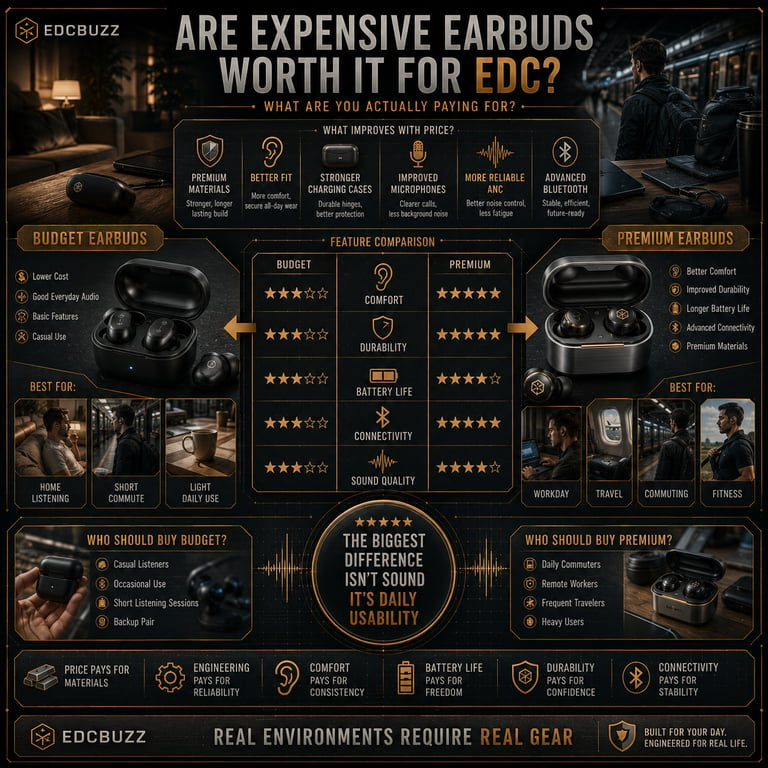
Making practical choices is more useful than chasing flashy extras or top specs. If battery life barely covers your typical use, or cables fray too easily, you’ll wind up frustrated. Some buyers also compare products from Best Premium EDC Earbuds to determine whether additional durability features justify the cost.
Common Durability Mistakes and How to Avoid Them
It’s easy to assume that an expensive pair of earbuds means they’re tougher. Price doesn’t always equate to durability. Some budget models include solid features that outperform high-end units in real-world ruggedness. If you're weighing cost against performance, Are Expensive Earbuds Worth It for Everyday Carry? explores that topic in more detail.
Ignoring waterproof ratings is another common slip. Sweat damages earbuds over time much like rain can. If you exercise or live somewhere wet, skimping on water resistance will cost you.
Fit matters more than most realize. Frequent readjusting leads to drops, scratches, and worse. Selecting earbuds that stay put reduces accidental damage. This is one reason many users research Sony LinkBuds vs Shokz OpenFit Pro (Earbuds vs Bone Conduction) before choosing a daily carry option.
The same goes for overall design. Comparing AeroFit 2 vs CXK Bone Conduction (Non-Waterproof vs Waterproof) can highlight how construction choices affect durability in different environments.
Lastly, wireless earbuds sometimes get overlooked for battery and case durability. Batteries don’t last forever, but poor design in charging cases accelerates wear. If your charging case shell cracks or the lid binding loosens after a few months, your whole system suffers.
Maintaining Your Earbuds for Long-Term Durability
Even the sturdiest earbuds need a bit of care. Dirt, earwax, and sweat buildup degrade components over time. Regular cleaning with a soft brush, gentle cloth, and occasional disinfecting keeps them working well. Following the practices outlined in How to Clean EDC Earbuds and Headphones can help maximize longevity.
Stow earbuds safely when not in use. Tossing them loose in a bag invites damage. A dedicated case—ideally the original—guards against crushing and tangling. Proper storage methods discussed in How to Carry and Protect Your Earbuds Every Day reduce unnecessary wear.
Avoid extreme temperatures or moisture beyond their rating. Leaving buds in a hot car or wet pocket invites early failure.
Wireless Vs. Wired Earbuds: Durability Considerations
Wired earbuds often wear out due to cable damage. The thin wires inside can break from repeated bending or pulling, which is something I’ve seen often over the years. A thicker, braided cable helps, but cables remain a weak point.
Wireless earbuds trade cable fragility for battery and connectivity concerns. The batteries inside wear down with use and age, which can be a problem if you depend on them heavily. Charging cases, too, must be tough enough to endure daily travel and handling.
Wireless models are generally better sealed, offering improved water resistance. But they also rely on Bluetooth connections that sometimes falter in crowded environments or if buds don’t fit right.
Your choice depends on your routine—wired earbuds avoid battery headaches but must withstand wire wear. Wireless give freedom of movement but bring their own durability considerations. Some users ultimately choose Best EDC Open Ear Headphones or even Best EDC Pocket Speakers depending on how they carry audio throughout the day.
FAQs on EDC Earbud Durability
What does an IPX rating mean for earbuds?
It indicates the level of water resistance. IPX4 means protection from splashes; IPX7 means can be submerged in water for brief periods. Higher is generally better for durability around moisture.
How can I tell if earbuds are impact resistant?
Look for earbuds made with reinforced plastics, metal elements like aluminum, or rubberized surfaces. These features help absorb shocks from drops or bumps.
Are waterproof earbuds necessary for everyday use?
Not always, but if you sweat a lot, run outdoors, or live somewhere rainy, water resistance prevents damage. Even light sweat can degrade earbuds not designed for moisture.
How long should durable earbuds last under normal conditions?
With care, well-built earbuds can last a few years. Longevity depends on your use, material quality, and maintenance habits.
Can I use durable earbuds for outdoor activities like running or hiking?
Yes, with at least IPX4 water resistance, secure fit, and shock-resistant construction, earbuds handle most outdoor conditions without trouble.
What materials make earbuds more durable?
Reinforced plastic, aluminum, rubber coatings, and braided cables improve toughness and wear resistance.
How do I maintain my earbuds to improve durability?
Clean them regularly, store them in a protective case, avoid extreme temperatures, and keep moisture within their rated limits.
Do wireless earbuds have different durability concerns than wired ones?
Yes. Wireless earbuds stress batteries and charging cases more, while wired earbuds are prone to cable wear and breakage.
Practical Conclusion
Durability is a quiet but critical attribute in EDC earbuds. You’re not looking for the shiniest or fastest new model; you want earbuds that don’t quit on you. The kind you forget you’re wearing for weeks because they just keep working.
Focus on waterproof ratings that suit your lifestyle, materials proven to take knocks, and a fit that stays consistent. Consider whether wired or wireless suits your daily routine best and keep up basic maintenance.
In my years teaching wilderness skills, I’ve learned that the best gear fades into the background so you can focus on the task at hand. Durability in your everyday carry earbuds ensures your soundtrack isn’t the first thing you have to worry about when the day drags on or the weather turns against you.

Contact@TheBuzzHQ.com
© 2026 EDCBuzz. All rights reserved.
EDCBuzz
Master everyday carry systems with clarity and precision. Built for real environments and practical use.
For educational purposes only.
General Inquiries: