

Bone Conduction vs Open-Ear Air Conduction Headphones
Explore the differences between bone conduction headphones and open-ear air conduction headphones to find the best open-ear tech for your everyday carry.
EDC AUDIO
The EDCBuzz Editorial Team - Led by AJ “Buzz” Eichman
6/18/20269 min read
Open-ear headphones continue to carve out a distinct niche in the audio world, particularly for those who value situational awareness alongside their music or calls. Unlike traditional headphones that block or insert within the ear canal, these open-ear solutions let you stay connected to your surroundings. But within this category, two fundamentally different technologies vie for attention: bone conduction headphones and open-ear air conduction headphones. They share the “open-ear” label, yet their approaches to sound transmission couldn’t be more different, with practical implications on sound quality, comfort, and use cases. This article aims to break down how each technology works and what it means for your everyday carry (EDC) audio gear. For a broader overview of the category, see EDC Audio.
Quick Verdict
• Bone conduction headphones transmit sound through vibrations on the cheekbones, bypassing the eardrum, which can help maintain ear health and situational awareness but limits sound fidelity—especially bass response.
• Open-ear air conduction headphones deliver sound via traditional air pressure waves close to but not inside the ear canal, offering richer sound but with some sound leakage.
• Comfort and fit diverge: bone conduction rests on the temporal bones while air conduction devices typically wrap around or rest near the outer ear, influencing long-term wearability.
• For activities requiring safety and environmental awareness such as cycling or walking, both options work well, but your choice should reflect your priorities around audio quality versus comfort and noise conditions.
What Are Bone Conduction Headphones? How They Work
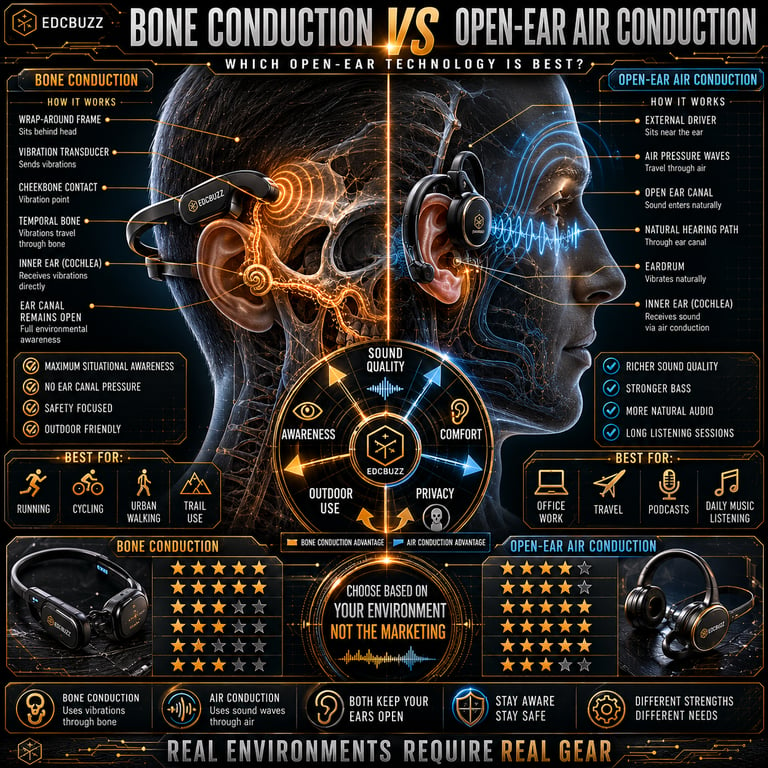
Bone conduction headphones operate on a fascinating principle that sidesteps the traditional acoustic path. Instead of pushing sound waves through air into the ear canal, these devices convert audio signals into vibrations. Those vibrations are then transmitted through the bones of your skull—specifically the temporal bones, which are located near the temples above your cheekbones—and directly stimulate the cochlea within the inner ear. Since this method bypasses the eardrum entirely, the ear canal remains open to ambient sounds.
This is particularly useful for anyone looking to avoid ear canal insertion, whether for hygiene reasons or comfort. For individuals who experience ear pain or pressure with conventional earbuds, bone conduction headphones offer a different sensory experience without isolating you from the environment. They’re also helpful in scenarios where auditory situational awareness is critical because you’re not blocking the air path through the ears. Many users who prioritize Situational Awareness and EDC Audio gravitate toward open-ear technologies for this reason.
However, the physics of bone conduction introduce intrinsic limitations. Because vibrations must travel through complex bone structures, reproducing deep bass frequencies and high-fidelity audio becomes challenging. Bass tones lose some of their impact, and overall sound clarity can fall short compared to direct air conduction methods. Despite this, improvements in transducer technology are steadily closing the gap.
Understanding Open-Ear Air Conduction Headphones
Open-ear air conduction headphones take a different approach to maintaining environmental awareness. These devices feature small drivers positioned near the entrance of the ear canal—on the outer ear or just outside it—without sealing or inserting into the ear. They rely on traditional sound transmission through air pressure waves, which means audio reaches your eardrum in the expected manner.
Because the ear canal remains open, you still hear ambient noise. This design balances audio playback quality with situational awareness, making it a versatile choice for daily use. Open-ear air conduction headphones typically deliver richer sound compared to bone conduction models, especially when it comes to bass response and overall music fidelity. If you are shopping for recommendations, our guide to the Best EDC Open Ear Headphones highlights some of the strongest options available.
The trade-off comes from their open shape; sound leakage can be a consideration, especially in quiet settings. People nearby may hear your audio, which can impact privacy. Additionally, depending on the design and fit, they might not block out background noise as effectively as fully sealed in-ear headphones, but this is intentional to maintain awareness.
Key Differences: Bone Conduction vs Open-Ear Air Conduction
The fundamental difference between these two technologies lies in the sound transmission pathway. Bone conduction headphones physically vibrate the skull, sending mechanical energy directly to the inner ear, bypassing the eardrum. Open-ear air conduction headphones send conventional sound waves through the air, targeting the ear canal entrance but leaving the canal unobstructed.
Why does this difference matter? It creates a series of trade-offs. Bone conduction offers a safer alternative for ear health since it doesn’t stress the eardrum, and it’s less intrusive for users sensitive to ear canal obstruction. On the other hand, this method compromises on sound quality — especially in rich bass and complex audio textures — because bone vibrations are less efficient at reproducing the full audio spectrum.
Open-ear air conduction headphones provide better sound fidelity by preserving the ear’s natural sound path. They deliver fuller sound with better dynamic range but might leak sound in quiet environments. The ear remains open to ambient noise, but since sound travels through air, it tends to be less noticeable to those nearby when compared to bone conduction vibrations. The real-world differences become clear when comparing products such as Sony LinkBuds vs Shokz OpenFit Pro (Earbuds vs Bone Conduction).
Sound Quality Comparison and User Experiences
When assessing sound quality, it’s crucial to consider not just numbers but how these technical differences translate into your everyday use. Bone conduction headphones will invariably produce leaner sound profiles. The notable absence of robust bass limits the impact and warmth of music, which might feel thin or flat to an audiophile. Mid and high frequencies also skew differently due to the vibration delivery. This makes them better suited for spoken-word content like podcasts, phone calls, or light music listening where environmental awareness trumps immersive sound.
Conversely, open-ear air conduction headphones tend to offer richer and more natural music playback. The nuances in audio production—the layering, tonal warmth, and bass presence—are much more apparent. However, this can come at the cost of some sound leakage, which users need to factor in if they want discretion. This tradeoff is closely related to the discussion in Battery Life vs Sound Quality, where convenience and performance often compete.
Comfort, Materials, and Fit Considerations
Understanding how these headphones physically engage with your head is as important as the audio tech. Bone conduction models rely on transducers pressing lightly against your cheekbones. This unique contact point means the headphones don’t fill or cover the ear but instead rest just ahead of the ears. The fit needs to be snug enough for good transmission but not so tight as to cause discomfort. Users who wear glasses or have sensitive skin near the temple bones might find some models less comfortable over prolonged sessions.
Open-ear air conduction devices typically wrap around the ear or rest just outside the ear canal. They use soft silicone or plastic for comfort, often with adjustable bands or tips for a customized fit. Since they don’t press against bone but sit near the external ear, many find them less fatiguing for extended use, although this depends on head shape and activity level.
Material choices also matter for durability and weight. Lightweight plastics and silicone keep both types from feeling bulky, but some premium frames include titanium or other metals for strength without adding heft. Durability is a factor if you include your headphones in your everyday carry and subject them to frequent use outdoors or on the move. Proper maintenance practices from How to Clean EDC Earbuds and Headphones can also extend product lifespan.
Real-World Everyday Carry Use Cases
Both open-ear headphone types have distinct advantages depending on your daily activities. Bone conduction headphones excel when you need to prioritize environmental awareness and ear health, such as while running, cycling, or walking in urban settings. Because your ear canal is free, situational sounds like vehicle horns or conversations come through unimpeded, which is vital for safety.
Open-ear air conduction headphones also serve well in these scenarios, especially when audio quality is important without total sound isolation. They’re a strong fit for office use or home environments where you want some background sound along with your music or calls. Their tendency to leak sound might be less problematic indoors, and their richer audio helps with longer listening sessions. Budget-conscious users sometimes pair them with portable audio gear from the Best EDC Pocket Speakers category depending on the environment.
Neither option is a perfect substitute for noise-isolating or noise-canceling headphones when your priority is immersive sound or blocking out distractions. However, for an everyday carry user who values a balance between listening and awareness, both technologies provide compelling benefits.
Pros and Cons of Each Technology
Bone Conduction Headphones
Pros: Keeps ears open, bypasses eardrum (potentially reducing ear fatigue), good for safety and hearing sensitive users, comfortable for some who dislike earbuds.
Cons: Limited bass and sound richness, vibration sensation may feel unusual, less effective in very noisy outdoor conditions, fit comfort varies widely.
Open-Ear Air Conduction Headphones
Pros: Better sound quality and bass response, comfortable fit around ear, maintains ambient sound awareness, often allows longer wear time without fatigue.
Cons: Audible sound leakage to others, less ear protection from loud environments, potential for less situational sound in extremely noisy places.
Common Mistakes When Choosing Open-Ear Headphones
A frequent misstep is assuming bone conduction headphones deliver audiophile-grade sound. Their design inherently limits bass and dynamics, so understanding this upfront prevents disappointment. Conversely, some buyers overlook the sound leakage issue with open-ear air conduction headphones, which can be disruptive in quiet or shared environments.
Fit and comfort tend to be underestimated. Because bone conduction headphones rest on bone rather than soft tissue, they might feel strange or uncomfortable after long periods. Similarly, open-ear air conduction models vary greatly in how they wrap around and fit the ear, so testing them with your head shape is wise. Comparing models such as AeroFit 2 vs CXK Bone Conduction (Non-Waterproof vs Waterproof) can help illustrate how design choices affect comfort and usability.
Another common error is confusing “open-ear” with “in-ear” or “earbuds” that block ambient noise. Open-ear designs are about maintaining environmental awareness, so if you’re looking for noise isolation, these are not the answer. Understanding Earbuds vs Headphones for EDC can help clarify these distinctions.
Finally, users often forget that performance varies depending on noise conditions. Bone conduction may struggle outdoors with loud ambient noise, whereas air conduction headphones might fare better in those scenarios but at the risk of revealing your audio to others.
Buyer’s Guide: Which Open-Ear Headphone Is Right for You?
Deciding between bone conduction headphones and open-ear air conduction headphones comes down to prioritizing what matters more for your specific daily carry needs. If you value ear health, want to avoid ear canal occlusion, and prioritize safety in outdoor environments, bone conduction is worth serious consideration. Test them for comfort and sensitivity to vibrations, as this is a personal factor.
If sound quality—particularly for music playback—is more important, and you don’t mind some sound leakage, open-ear air conduction headphones will generally give you a better audio experience. They are also likely to provide longer comfort in sedentary use cases like office work or commuting. Evaluating the Best Features to Look for in EDC Earbuds can help narrow down which features matter most to you.
Consider your typical environments, too. For quiet or shared spaces, air conduction headphone sound leakage and bone conduction’s limited bass must be weighed against privacy and audio enjoyment.
Durability, battery life, and Bluetooth connectivity tend to be comparable across both technologies nowadays, so these factors should not dominate your decision.
Frequently Asked Questions
How do bone conduction headphones work compared to open-ear air conduction headphones?
Bone conduction headphones transmit audio through skull vibrations directly to the inner ear, bypassing the eardrum, while open-ear air conduction headphones deliver sound by air pressure waves near the ear canal but keep the ear canal open.
Which open-ear headphone technology offers better sound quality?
Open-ear air conduction headphones typically provide superior sound quality with richer bass and clearer audio because they use traditional air conduction, while bone conduction headphones often sacrifice some sound fidelity due to the vibration transmission method.
Are bone conduction headphones safe for everyday use?
Yes. Bone conduction headphones avoid putting pressure on or inserting into the ear canal, potentially reducing ear fatigue or damage. However, individual sensitivity to vibrations can vary, so it’s best to test comfort for your specific use.
Do open-ear air conduction headphones leak sound easily?
They can, especially in quiet environments, since their open design lets some audio escape outside the ear. This might disturb others nearby if you listen at higher volumes.
Can I use bone conduction headphones while cycling or running safely?
Absolutely. One of their key advantages is maintaining environmental awareness with open ears, making them suitable for outdoor activities like cycling or running where hearing ambient sounds is crucial.
What materials are commonly used in these headphones for durability and comfort?
Manufacturers typically use lightweight plastics and silicone for comfort and flexibility. Premium models may incorporate titanium or metal alloys for strength without adding significant weight.
How do outdoor noise conditions affect bone conduction versus air conduction headphones?
Bone conduction can struggle to compete with loud ambient noise outdoors because vibrations have less perceived loudness. Open-ear air conduction headphones might perform better in these settings but may expose your audio to others.
What should I consider when choosing between these two open-ear headphone types for daily carry?
Evaluate your priorities: sound quality vs. ear comfort and health, noise environment, privacy needs regarding sound leakage, fit preferences, and how much you value situational awareness during different activities.
Conclusion
The technical distinction between bone conduction headphones and open-ear air conduction headphones fundamentally shapes their usability and sound characteristics. Bone conduction opens the door to safer ear health and uncompromised environmental awareness by bypassing the eardrum, but it pays a price in audio richness and bass reproduction. Meanwhile, open-ear air conduction headphones leverage the natural air path to deliver fuller sound, trading off some privacy and slight sound leakage.
For everyday carry enthusiasts, this is not about one technology being outright “better” than the other; it is about understanding the trade-offs that align best with your lifestyle. Whether you prioritize clear environmental interaction with lower fidelity or improved audio immersion with open ears, both technologies represent viable open-ear solutions that defy traditional headphone design. Armed with these insights, your headphone choice moves from guesswork to informed decision-making.

Contact@TheBuzzHQ.com
© 2026 EDCBuzz. All rights reserved.
EDCBuzz
Master everyday carry systems with clarity and precision. Built for real environments and practical use.
For educational purposes only.
General Inquiries: