
How to Choose EDC Audio for Your Daily Environment
Discover how to choose the best EDC audio gear that balances comfort, durability, and usability for your everyday environments.
EDC AUDIO
The EDCBuzz Editorial Team - Led by AJ “Buzz” Eichman
6/18/20267 min read
Everyday carry audio gear has quietly become one of those essentials that is easy to overlook until you realize how much it shapes your day. Whether it’s earbuds slipping in and out during your commute, a set of headphones muffling office chatter while you work, or a compact speaker that follows you to the park, the audio gear you carry has to do more than just sound good. It has to fit effortlessly into the specific environments you encounter daily, balancing sound quality, comfort, and ease of use without calling attention to itself. Over weeks of living with a handful of EDC audio devices, I’ve noticed that the real test isn’t how they perform fresh out of the box, but how they settle into the many different moments of a day — like the subtle discomfort after a long wear, or the mild frustration of fiddling with tiny controls on a busy sidewalk.
Quick Verdict
Comfort and fit matter more than flashy sound specs for daily extended use.
Noise isolation or cancellation can transform noisy commutes but may be less critical at home.
Battery life is the quiet MVP — the last thing you want is your earbuds dying mid-podcast.
Durable, sweat-resistant materials pay off when life’s unpredictability meets your gear.
Understanding EDC Audio: What It Is and Why It Matters
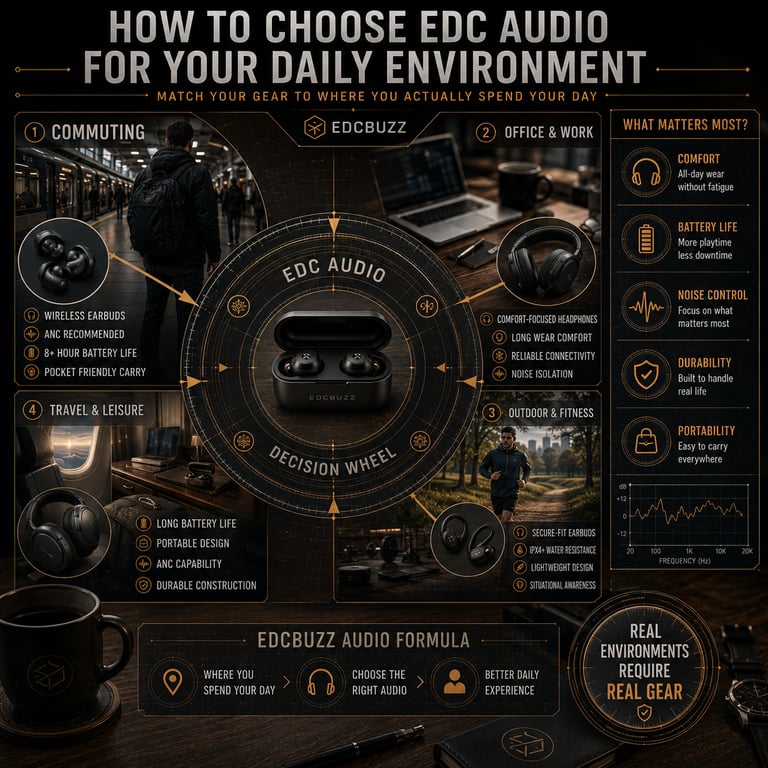
When we talk about EDC audio, we’re referring to the portable devices intended to go with you everywhere — earbuds, headphones, or portable speakers that aim to strike the right balance between sound, convenience, and durability. The key is not just having great audio quality but matching it to your environments and daily activities. A pair of bulky headphones might deliver rich sound, but if they end up shoved in your bag because your commute is crowded and tight, they’re not really EDC any more than a full-sized toolbox is pocket carry. Similarly, earbuds that slip out or hurt your ears after an hour might boast technical specs, but they’re not truly designed for all-day, everyday use. Real-world audio gear needs to play nice with your lifestyle over repeated use, not just dazzle momentarily. To better understand the category as a whole, see What Is EDC Audio and the broader EDC Audio guide.
Key Features to Consider for Your Daily Environment
The environments we spend time in — office, public transit, outdoors, home — each demand different audio priorities. Noise Canceling vs Passive Isolation becomes an important consideration here. Noise isolation or active noise cancellation (ANC) helps block out distractions like bus chatter or office noise. But it’s also worth remembering that ANC or isolation effectiveness can come with a trade-off in comfort; some designs press too firmly or create an unnatural sensation in the ear after hours of use. A secure, comfortable fit is a practical must, especially when worn for long stretches. I’ve found that memory foam tips or flexible silicone hubs that adapt quietly to ear shape are usually worth the small extra attention at first fitting.
Battery life emerges as a real day-to-day factor. Devices that top out at a couple of hours might look fine on paper but frustrate when you reach for a quick recharge mid-shift. For portable speakers, longer playtime means you won’t have to race against the clock during your park breaks. For more on this tradeoff, see Battery Life vs Sound Quality. And if your routine brings you outdoors, exposure to sweat or rain should nudge you toward gear with water resistance ratings — something rated at IPX4 or better handles the occasional drizzle without drama. Finally, simple, responsive on-device controls and reliable wireless connectivity prevent moments lost fumbling on a phone or staring blankly, waiting for it to reconnect.
Comparing Earbuds, Headphones, and Portable Speakers for EDC
The choice of device type often boils down to the environments where you plan to use them most. Earbuds are the classic commuter’s ally — minimally obtrusive and pocket-friendly. Over weeks carrying several pairs, I've noticed the best earbud designs practically disappear from awareness, aside from when you realize it’s time for a charging break or wish you’d stuffed in a spare tip size beforehand. That said, cheaper earbuds or overly small ones sometimes make you feel like you’re wearing earplugs that you can’t quite trust not to fall out. Many users start with recommendations from Best EDC Earbuds under $150.
Headphones offer more immersive sound and often better noise isolation but are less adaptable to crowded or active environments. If your day features a lot of stationary work, headphones with soft memory foam padding can turn the hours into something close to a comfy cocoon. But take them for a stroll, and the weight becomes a mild annoyance that only grows by the afternoon — not unbearable, but noticeable. If awareness matters, it is worth exploring Best EDC Open Ear Headphones and Bone Conduction vs Open-Ear Air Conduction Headphones.
Portable speakers come into play when sharing audio is just as important as personal listening, like evening meetups or solo hikes. While inherently less private, their size and durability matter most for EDC. A lightweight, splash-proof speaker will comfortably ride in your pack without adding bulk or drama. Playing with one through a few days, you’ll realize the difference between something that can survive a spill or rough handling from the one that can’t. Many people prefer options from Best EDC Pocket Speakers for this role.
Materials and Build Quality for Durability and Comfort
Durability often gets talked up, but it’s the small material details that accumulate and define day-to-day comfort and confidence. Silicone ear tips, memory foam padding, and rubberized buttons may not scream high-tech, but they make the difference between gear that lasts and gear that quickly joins the drawer of ""I wanted to like you."" Materials that resist sweat buildup and feel smooth against the skin prevent that clammy, irritated ear feeling, especially during warmer months or workouts.
Water resistance ratings go beyond marketing jargon here. An IPX4 rating means you can safely sweat and get caught in a light rainstorm, which is plenty for many daily situations. If your lifestyle demands more ruggedness, look for IPX7 or similar specifications, but know that those tend to come in at a slight portability cost. Over time, protective coatings and seals show their worth in how well your gear holds up to everyday scuffs and unplanned splashes.
Battery Life and Connectivity: Ensuring Continuous Use
What stands out after daily use is that battery life is one of those things users only notice when it’s running low too often. A set of earbuds rated for 5 hours might sound fine, but that leaves little margin for delays, long commutes, or forgotten charges. On the other hand, devices hovering around 8–12 hours or more easily cover a full day’s use without worry or a packed charger on hand. If battery endurance is a priority, see How Much Battery Life Do You Really Need for EDC Audio?
Wireless connectivity, typically Bluetooth these days, must pair quickly and stay stable. Any interruption is a jarring reminder of how much we rely on seamless audio during multitasking or busy daily life. Some codecs like AAC or aptX improve quality and latency but only if your devices support them, which is worth double-checking if you’re picky about audio fidelity or gaming/video sync.
Common Mistakes When Choosing EDC Audio Gear
Picking audio gear based solely on specs or hype is one of the easiest missteps. I’ve seen plenty of devices promise premium sound but fall short on comfort or usability after a few days. Weight and bulkiness often get ignored early on; a device that’s comfortable on a desk might become a nuisance once walking, biking, or packed in a bag. Underestimating environmental noise levels explains why some devices work great at home, but utterly fail on busy streets or crowded buses. Battery factors too frequently get overlooked until reality hits mid-week with a dead charge. Lastly, ignoring fit and material comfort leads to gear gathering dust instead of daily pocket time.
Practical Tips for Matching Audio Gear to Your Lifestyle
Before rushing out, take time to honestly map your daily environments, activities, and priorities. If you spend most of your time in an office or home, prioritize comfort and sound isolation. Commuters should lean toward reliable noise-canceling options with solid battery life and durable, sweat-resistant materials. Active users like runners or gym-goers benefit from secure fit and IPX-certified gear. Some users compare products directly through ISOtunes Sport BT vs Bose QuietComfort (Hearing Protection vs No Protection) before making a decision.
Another tip: try different tip sizes or padding materials if your gear allows. Sometimes the difference between “wear it all day without noticing” and “earache in 20 minutes” is a tiny adjustment or change in material. Also, test on-device controls to make sure you can manage calls or skip tracks without needing to fish out your phone — especially handy when your hands are full.
Finally, if you switch environments often, consider a versatile device or even a pair of complementary gear pieces — earbuds for active time, headphones for quiet stations, or a portable speaker for group settings.
FAQ: Answering Your Everyday Carry Audio Questions
What are the best types of EDC audio devices for commuting?
Wireless earbuds with good noise isolation or active noise cancellation are usually the top pick for commuting. They fit securely, offer decent sound clarity amidst noise, and pack away easily.
How important is noise cancellation in everyday carry audio gear?
It depends on your environment. ANC is invaluable for crowded, noisy areas but less critical if you mostly listen in quiet spaces. Keep in mind some ANC designs trade off comfort for isolation effectiveness.
What materials make for durable everyday carry audio devices?
Silicone tips, memory foam padding, and rubber or soft-touch plastics stand up well to sweat, grime, and daily handling. Water resistance ratings like IPX4 add extra peace of mind for outdoor use.
How do I choose between earbuds and headphones for daily use?
Consider your activity. Earbuds are more portable and discreet, ideal for movement and short bursts. Headphones provide better sound quality and comfort for stationary or office use but tend to be heavier.
What battery life is typical for portable EDC audio devices?
Earbuds generally offer 5 to 12 hours of playback per charge, sometimes supplemented by charging cases. Headphones often have longer life, with some models reaching 20+ hours.
Can I use EDC audio gear comfortably during exercise or outdoor activities?
Yes, if you select models with a secure fit, sweat resistance, and materials that don’t irritate skin. Testing for comfort during movement is key.
What features improve audio usability in busy or noisy environments?
Noise isolation or ANC, clear on-device controls, reliable Bluetooth connectivity, and good battery life all contribute to hassle-free use amidst distractions.
Are wired or wireless EDC audio devices better for everyday carry?
Wireless has become the standard for convenience and adaptability, but wired devices can offer lower latency and avoid battery worries. The choice hinges on personal preference and use cases.
Conclusion
Choosing the right everyday carry audio gear is more about living with the device across your variety of daily settings than chasing the highest specs on paper. Comfort, fit, durability, and sensible features often win out over flashy sound claims when the novelty fades and the routine sets in. Whether you find yourself navigating crowded trains, typing away at your desk, jogging through the park, or simply enjoying music at home, the best EDC audio integrates into your life so seamlessly you almost forget it’s there. And if it sometimes disappears so well that you have to check your pockets twice before sitting down — well, that’s probably a sign it’s doing its job just right.

Contact@TheBuzzHQ.com
© 2026 EDCBuzz. All rights reserved.
EDCBuzz
Master everyday carry systems with clarity and precision. Built for real environments and practical use.
For educational purposes only.
General Inquiries: