
Why Comfort Matters More Than Sound Quality for EDC
Discover why comfort in everyday carry gear often outweighs sound quality, ensuring your EDC is practical, wearable, and always ready to use.
EDC AUDIO
The EDCBuzz Editorial Team - Led by AJ “Buzz” Eichman
6/18/20267 min read
Everyday carry (EDC) gear is supposed to make life easier — not add a layer of fuss or discomfort. When it comes to audio-related EDC items, like earphones and headphones, there’s a natural tendency to zero in on sound quality. After all, isn’t crystal-clear, rich audio what we want from these devices? Well, yes… but not necessarily every day, all day, without compromise.
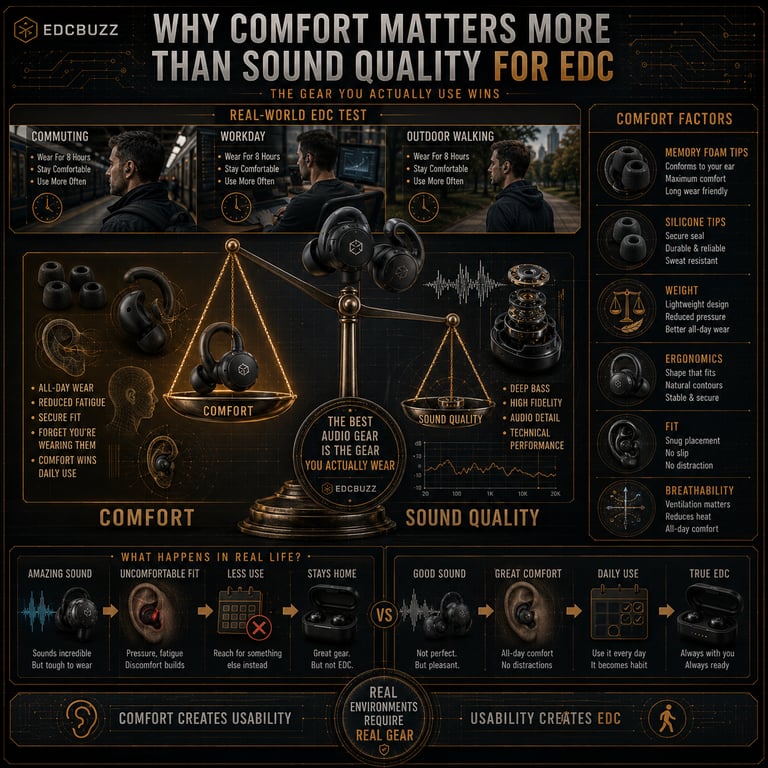
After spending a good chunk of time with various EDC gear, I’ve learned that comfort in everyday carry often outweighs the technical hurdle of sound quality for practical, daily wear. Your ears and hands have to live with that gear from morning commute to evening wind-down and beyond. That’s where comfort wins. This is a core principle throughout EDC Audio gear selection.
Quick Verdict
Comfortable EDC gear encourages consistent use; discomfort means it’s likely to get demoted to the drawer.
Materials and design play a bigger role in “wearability” than fine-tuning of specs like sound frequency response.
Sound quality differences are often subtle in casual or mobile scenarios, making comfort the deciding factor.
Adjustable or ergonomic features that improve fit and ease-of-use give gear staying power in your rotation.
The Role of Comfort in Everyday Carry
EDC isn’t just about having something on hand; it’s about having something you genuinely want with you every day. Comfort in everyday carry revolves around how a piece of gear feels after hours on your person — whether that’s earbuds, a multi-tool, a pen, or a wallet.
Take earphones, for example. The initial out-of-the-box sound might wow you with crisp highs or booming bass. But after a few hours, tight tips or poor fit start to grate. Your ears don’t just want quality sound; they want freedom from irritation. That same principle applies across many categories. If a tool digs into your palm, or a flashlight pocket clip shifts and pinches halfway through the day, those minor annoyances pile up.
Comfort supports daily usability because it lowers the barrier to use. Gear that feels good gets pulled out more often. That means you’re actually putting it to work — rather than leaving it behind because of a sore wrist or tight grip fatigue.
How Comfort Influences Usability and Frequency of Use
When EDC gear comfortably settles into your routine, you’re far more likely to engage with it. For example, I’ve carried lightweight wallets that after a week became so unnoticeable in my pocket, I almost forgot I was carrying them — not something I’d brag about at parties, but a strong endorsement for comfort. The same goes for pens with balanced weight and smooth grips; I reach for those first when jotting notes.
Contrast that with gear focused purely on specs — like an audio device boasting impeccable frequency response measurements, but sporting a bulky design and rigid ear tips. While the initial demonstration might impress, once you start wearing them through a commute, that bulky feel gets distracting. That distraction becomes discomfort, and discomfort kills usability.
Gear that blends lightweight materials, balanced weight distribution, and thoughtful ergonomic shapes reduces grip fatigue and pocket bulge. You notice those small design wins over time — the gentler edge on a knife handle, the soft silicone tip that actually breathes, or a clip that doesn’t snag your shirt.
Materials and Design Choices That Maximize Comfort
In my experience, a few key material choices consistently boost comfort in everyday carry:
Silicone and memory foam ear tips for earphones: These shapes and materials conform to your ear canal, reducing pressure points and muffled sound tunnels.
Anodized aluminum and lightweight composites: Both are tough yet light enough to ease pocket and hand strain.
Textured grips and rounded edges for tools: Provide better hold with less fatigue, especially during repetitive tasks.
Adjustable components: Swappable ear tips, modifiable handle scales, and adjustable clips let you customize how the gear fits and feels.
Take everyday pens. A matte finish that resists slipping without being abrasive saves your fingers during long note-taking stretches. Similarly, a folding knife with rounded back spacers feels noticeably smoother in hand than one with harsh ridges — that slight change can keep your hand fresh through the day’s chores.
Sound Quality vs Comfort: Finding the Right Balance
There’s no denying sound quality matters — especially if you’re using your EDC audio gear to dive into podcasts, music, or calls. But for casual daily carry, the differences between “great” and “almost great” sound are often overshadowed by how that gear feels on or in your body for hours. The tradeoff is often discussed in Battery Life vs Sound Quality.
After all, the best audio in the world doesn’t do much good if your ears hurt, or you have to readjust constantly because the fit isn’t right. Comfort influences your perception of sound too — when you’re distracted by discomfort, audio enjoyment drops.
The balanced approach is to seek out gear with sound quality that meets your baseline expectations while prioritizing ergonomic fit. Often, headphones or earphones with modest tuning but smart adjustments deliver the kind of consistent comfort that keeps you plugged in without irritation. Many users comparing Best Premium EDC Earbuds eventually discover comfort matters more than raw audio performance.
Common Comfort Mistakes and How to Avoid Them
A surprising number of people focus heavily on technical specs like sound quality in EDC gear but skip the comfort check. Common pitfalls include:
Buying audio gear solely based on frequency response charts instead of real wear-time tests.
Choosing heavier, bulkier gear that looks impressive but tires out your hands or pockets quickly.
Overlooking materials that affect breathability and tackiness — a sweaty or slippery grip kills comfort fast.
Assuming that more expensive or “premium” automatically means more comfortable.
Ignoring adjustable features like varying ear tip sizes, handle contours, or length options.
Forgetting to test gear in the scenarios you’ll actually use it (long commutes, desk work, outdoor strolls).
If you want gear you’ll actually carry and use, never buy based on specs alone. Try before you commit whenever possible. Pay attention to fatigue signals your body sends during extended use. This is especially important when evaluating Are Expensive Earbuds Worth It for Everyday Carry?
Practical Tips for Choosing Comfortable EDC Gear
Comfort can feel subjective, but these practical pointers will guide your next purchase:
Prioritize materials known for lightweight durability and tactile comfort.
Look for ergonomic shaping that fits your hand or ear naturally.
Seek adjustable or customizable components to dial in the best fit.
Carry gear through a full day in realistic conditions before deciding (test drives are not just for cars).
Don’t dismiss the value of a good clip or pocket placement — ease of carry influences comfort.
Consider how your EDC gear interacts with other items — a tight pocket is an enemy of comfort.
Remember, comfort isn’t a luxury — it’s the foundation of usability.
Real-World Scenarios Where Comfort Beats Sound Specs
In daily commuting, where earphones might be worn for hours amid distractions, the convenience of a secure, pleasant fit trumps whether the bass hits precisely at 60Hz. I’ve found myself swapping out technically superior buds for a “comfortable enough” pair just because the latter didn’t irritate or fall out. Many buyers begin with Best EDC Earbuds under $150 because comfort often matters more than premium audio features.
At the office, where a pen is an extension of your hand for taking notes and signing paperwork, smooth grip and balanced weight let me work for hours without cramping. Similarly, having a lighter multitool stashed in my pocket encourages me to reach for it more often, whether for small repairs or quick tasks.
For outdoor walks or errands, gear that breathes well and tucks discreetly without poking or pinching makes all the difference. Comfort makes carrying enjoyable instead of a chore — and that’s when EDC gear truly does what it’s meant to do. If awareness is important during those activities, Are Open-Ear Headphones Better for Everyday Carry? is worth exploring.
FAQ
Why is comfort more important than sound quality in EDC?
Comfort determines how long and often you can use your gear. Sound quality is important, but if the gear hurts or irritates, you’ll stop using it, making sound quality irrelevant.
How does comfort affect everyday carry usability?
Comfort enhances wearability, reduces fatigue, and minimizes distractions. This leads to more frequent use and better overall experience with your gear throughout the day.
What materials improve comfort in EDC gear?
Lightweight composites, anodized aluminum, silicone ear tips, memory foam accessories, and textured grips tend to boost comfort by being light, breathable, and ergonomically pleasant.
Can comfortable EDC earphones still have good sound quality?
Absolutely. Many comfortable designs intentionally balance ergonomic fit with solid audio tuning, providing a satisfactory sound experience without sacrificing comfort.
What are common signs of uncomfortable EDC gear?
Persistent soreness, grip fatigue, pressure points, skin irritation, slipping, or the urge to remove or adjust the gear constantly are red flags of poor comfort.
How do I balance comfort vs performance when choosing EDC items?
Look for gear that meets your baseline functional needs while optimizing fit and weight. Prioritize adjustability and hold real-world usage tests before finalizing your choice.
Are lightweight tools always more comfortable for daily carry?
Lighter tools often cause less fatigue but must still be designed with good grip and balance to avoid discomfort. Weight is one piece of the comfort puzzle.
How can I test comfort before buying EDC gear?
Use the gear in real scenarios, during extended periods, and pay attention to fit, pressure, ease of use, and any discomfort that develops over time rather than first impressions.
Conclusion: Prioritizing Comfort for Better EDC Experience
At the end of the day — or rather, after a few days of carry — comfort reveals itself as the unsung hero in everyday carry gear. It’s the quiet factor that turns “nice to have” into “can’t live without.” Ignoring comfort in favor of pure sound quality or headline specs is like buying shoes based only on color and forgetting to check if they pinch.
Your EDC gear should fade into the background, not scream for attention with aches and adjustments. Whether it’s earphones, tools, or pens, paying close attention to comfort means you’re more likely to carry gear you trust, reach for in the moment, and live with day in, day out. After all, the best kind of EDC is the one that feels like it’s part of you — and that’s a lot more important than chasing perfect sound.
Comfort wins. Every time.

Contact@TheBuzzHQ.com
© 2026 EDCBuzz. All rights reserved.
EDCBuzz
Master everyday carry systems with clarity and precision. Built for real environments and practical use.
For educational purposes only.
General Inquiries: