
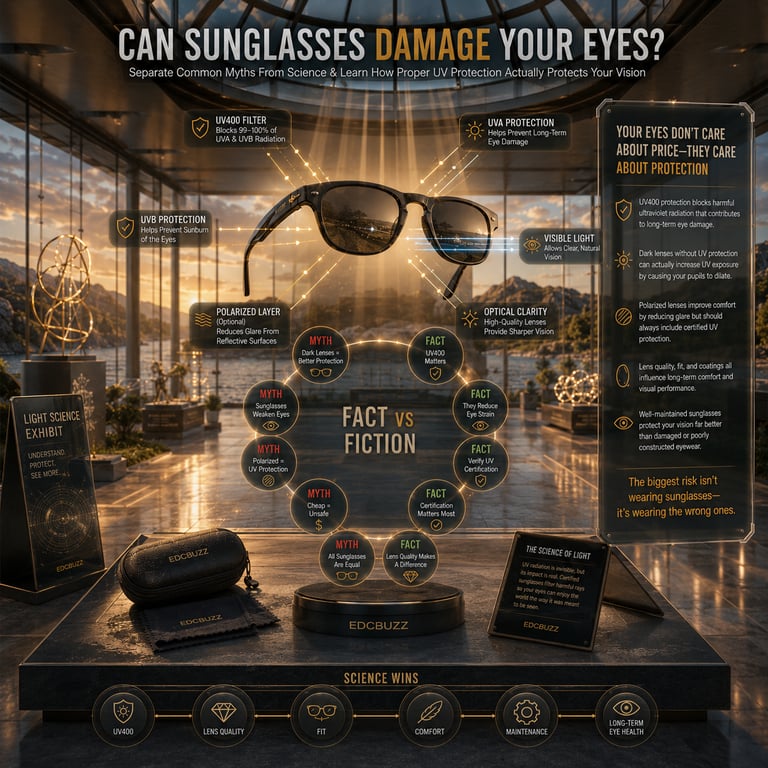
Can Sunglasses Damage Your Eyes?
Explore the facts about sunglasses eye damage and learn how proper UV protection sunglasses keep your eyes safe and comfortable every day.
EDC SUNGLASSES
The EDCBuzz Editorial Team - Led by AJ “Buzz” Eichman
7/4/20267 min read
If you’ve ever wondered whether sunglasses might actually do more harm than good, you’re not alone. There’s a surprising amount of chatter about sunglasses eye damage floating around, with concerns that wearing shades could somehow weaken your eyes or even harm them over time. It’s one of those things where if you don’t look too closely, the myths blend in with the facts like glare on a windshield. The truth is less dramatic but more interesting: Sunglasses primarily shield your eyes from harmful UV rays, but the wrong pair might inadvertently let more damage slip in. So, can sunglasses harm eyes? The short answer is yes, but only if you don’t pick the right ones. Let’s dig into the real story behind sunglasses safety and how proper choices can protect your vision day after day.
For a complete overview, start with EDC Sunglasses before exploring the Sunglass Lens & Frames Guide to better understand how different features affect eye protection.
Quick Verdict
Sunglasses with 100% UV protection are essential to prevent eye damage from harmful ultraviolet rays.
Dark lenses without UV protection can actually increase UV exposure by causing your pupils to dilate.
Polarized lenses reduce glare but do not inherently protect against UV rays; you need verified UV blocking coatings.
Comfort, lens material, fit, and condition affect daily wearability and the effectiveness of your sunglasses over time.
How Sunglasses Protect Your Eyes: The Role of UV Protection
When you think of sunglasses, blocking bright light comes to mind first, but their real purpose is filtering out ultraviolet (UV) radiation. UV rays from the sun can accelerate eye problems like cataracts, macular degeneration, and retinal damage. The key is proper UV protection — sunglasses rated to block 100% of UVA and UVB rays create a barrier against these invisible threats.
Quality UV protection works like sunscreen for your eyes. Instead of just cutting brightness, the lenses absorb or reflect harmful rays, reducing cumulative damage from daily exposure. Over time, this means less strain and a lower risk of developing long-term eye health issues. For anyone spending time outdoors, UV protection isn’t an optional feature; it’s a baseline requirement. If you're wondering What Are Polarized Sunglasses and Are They Worth It?, it's important to understand how polarization differs from UV protection.
Can Sunglasses Without UV Protection Harm Your Eyes?
It’s tempting to assume that dark lenses always mean safer eyes, but the opposite can be true if your sunglasses lack UV filtration. Here’s the twist: wearing dark lenses without UV protection tricks your eyes into thinking it’s darker than it really is, causing your pupils to dilate in response. With bigger pupils, more harmful UV rays slip past the lens and into your eyes, which can lead to increased exposure compared to wearing no sunglasses at all.
This is one of those subtle details most people won’t notice right away but will catch with some real-world wear. After a few hours in sunlight wearing cheap sunglasses, you might feel more eye strain or irritation—classic signs that your eyes are working overtime against UV rays. So, by choosing sunglasses solely based on lens darkness, you could unintentionally put your eyes at greater risk, especially if you're buying inexpensive eyewear without knowing Are Cheap Sunglasses Bad for Your Eyes?
Understanding Lens Types, Materials, and Coatings
Choosing the right lens isn’t just about block level; the material and coatings can make a significant difference in comfort and durability during daily use.
Polycarbonate lenses are lightweight and highly impact resistant, popular for everyday carry thanks to their toughness and UV filtering properties. Glass lenses offer superior optical clarity but tend to be heavier, which can become noticeable after hours of wear, especially for those who prefer a lighter pocket carry. Trivex is another durable, lightweight lens material worth considering if you want a blend of clarity and protection without a weight penalty.
Coatings enhance performance further: anti-scratch keeps lenses clear of everyday wear and tear; anti-reflective layers reduce distracting reflections; and mirror coatings can help manage glare, especially around water or snow. Polarized lenses are an often misunderstood aspect — they excel at cutting glare from reflective surfaces but don’t automatically come with UV protection. Always verify UV blocking separately when opting for polarized shades, as explained in Polarized Sunglasses and UV Protection Explained.
After a week or two of switching between lens types, it’s quite clear how much lens weight and surface durability matter. The glasses you barely feel at the end of the day usually get used more regularly. Function wins over flash every time in real-world use.
Common Misconceptions About Sunglasses and Eye Damage
With sunglasses, some myths just won’t go away. Besides the odd idea that wearing sunglasses can weaken eyesight from disuse—which has no solid basis—people often confuse lens darkness with protection level. Dark lenses do not equate to safe lenses, and you can’t rely on polarization alone to safeguard your eyes from UV radiation.
Another misconception is that sunglasses somehow “trap” harmful rays and cause damage. In reality, sunglasses with proper UV filters either absorb or block those rays. If anything, the largest risk is wearing subpar lenses that give a false sense of security. Many people also assume higher-priced eyewear is automatically safer, but Why Do Premium Sunglasses Cost So Much? explains what you're actually paying for.
The belief that frequent use might make your eyes dependent or fragile is more superstition than science. Wearing sunglasses reduces eye strain and fatigue from glare, which helps maintain clearer vision throughout the day and helps avoid squint-related headaches.
How to Choose Safe and Effective Sunglasses for Everyday Use
Selecting sunglasses isn’t rocket science, but a little care goes a long way. Above all, check the label for 100% UVA and UVB protection or UV400 rating—that’s non-negotiable. Without it, you’re rolling the dice with your eye health.
Fit matters more than most expect. Sunglasses that sit close to your face, ideally with wraparound frames, prevent UV rays from sneaking in at the edges. While this style isn’t everyone’s cup of tea, it’s particularly helpful during long outdoor sessions like hiking or cycling, making Best Hiking Sunglasses a helpful place to compare suitable options.
Lens color and tint can influence comfort and contrast but don’t impact UV protection by themselves. Gray lenses provide more natural color balance, while brown or amber can enhance contrast in certain environments. Pick the tint that feels easiest on your eyes during your regular activities.
Comfort isn’t just about how the glasses look on your face but how they feel after hours on the move. After a full workday carrying the same pair, the difference between lightweight polycarbonate and heavy glass lenses becomes more than a minor detail—it influences whether you actually keep wearing them consistently.
Practical Advice on Caring for Your Sunglasses
No matter how good your sunglasses are, they need care to maintain their protective qualities. Scratched lenses don’t just look bad; they reduce optical clarity and can lessen UV protection effectiveness.
Always clean lenses with a microfiber cloth and lens cleaner or mild soap and water. Avoid using rough fabrics or household cleaners that damage coatings. When not wearing them, stow your sunglasses in a protective case to prevent unintended damage during daily carry.
Keeping an eye on wear and tear is part of responsible ownership. If you notice scratches, peeling coatings, or warping frames, it’s time to think about replacements. Like any piece of EDC gear, your sunglasses work best when they’re in top shape. If you're unsure how long they should last, learn Do Sunglasses Expire?
When to Replace Your Sunglasses to Protect Eye Health
Unlike some gear that you can carry until it simply breaks, sunglasses have a clearer expiration date based on performance. Scratched or pitted lenses degrade your ability to see clearly and may reduce UV blocking efficiency.
Coatings wear off with time, especially if you don’t properly clean and store your glasses. Most experts recommend replacing sunglasses every two years or sooner if you notice visible damage or if the UV protection label has worn off.
Regular updates might sound like a hassle, but the benefits to your eye comfort and health make it worthwhile. After all, you wouldn’t keep wearing a pair of worn-out boots for months on end, and your eyes deserve no less diligent care. Investing in Best Premium Sunglasses can also improve long-term durability and lens quality.
Common Mistakes When Choosing Sunglasses
• Buying sunglasses based on the darkness of the lenses alone, ignoring crucial UV protection ratings.
• Assuming polarized lenses automatically block UV rays without verifying UV certification.
• Wearing scratched or damaged lenses that compromise visual clarity and reduce protection.
• Overlooking the importance of the lens material’s weight and durability for daily comfort.
• Neglecting fit and wraparound styles that block UV from side angles effectively.
• Failing to clean lenses properly, leading to scratches and reduced optical performance. If prolonged discomfort continues, you may also want to understand Why Do Some Sunglasses Cause Eye Fatigue?
FAQ
Can sunglasses without UV protection damage my eyes?
Yes. Dark lenses without UV protection cause pupils to dilate, allowing more UV rays to enter and potentially increasing eye damage.
How do sunglasses protect my eyes from UV radiation?
They filter harmful UVA and UVB rays from sunlight, reducing risks of cataracts, retinal damage, and eye strain. For a deeper technical comparison, see Ray-Ban RB3025 vs Randolph Concorde Aviator (Polarized vs Non-Polarized).
Is a darker lens always better for eye protection?
No. Lens darkness affects brightness reduction but doesn’t guarantee UV protection; certified UV blocking is what matters.
Do polarized sunglasses protect against UV rays?
Polarized lenses reduce glare but don’t inherently block UV rays unless combined with a proper UV coating.
What materials are best for sunglasses lenses in everyday use?
Polycarbonate lenses offer great impact resistance and UV protection with light weight, while glass lenses have superior clarity but are heavier.
How often should I replace my sunglasses for optimal eye safety?
Typically every two years, or sooner if lenses are scratched, coatings are degraded, or UV protection is no longer guaranteed.
Can wearing sunglasses too often weaken your eyesight?
No, wearing sunglasses reduces eye strain and does not cause your eyes to weaken.
Are wraparound sunglasses more effective than standard frames?
Wraparound styles block UV rays entering from side angles better, offering increased protection during prolonged outdoor activities. If you also use protective eyewear for work, compare Mechanix Vision Type-E vs Oakley Half Jacket 2.0 (Safety Glasses vs Sunglasses).
Conclusion
After living with sunglasses day in and day out, it’s clear the real danger isn’t in wearing them but in trusting the wrong pair. Proper UV protection isn’t a luxury—it’s fundamental to preserving eye health over the long haul. Dark lenses can make your eyes feel more comfortable but aren’t a substitute for certified protection, and polarization favors glare reduction rather than UV filtering directly.
Your daily sunglasses should balance protection, comfort, and durability, settling nicely into your routine rather than feeling like a bulky nuisance. Treat them like the essential gear they are, clean them with care, and swap them out before years of scratches dim your world. Doing so ensures that when you reach for your sunglasses, you’re not just blocking the sun, but guarding your eyesight like a pro who’s spent more than a few seasons outside observing rather than guessing. And that’s the kind of everyday carry wisdom worth investing in—no dad joke necessary, though I admit one slipped in earlier.

Contact@TheBuzzHQ.com
© 2026 EDCBuzz. All rights reserved.
EDCBuzz
Master everyday carry systems with clarity and precision. Built for real environments and practical use.
For educational purposes only.
General Inquiries: