
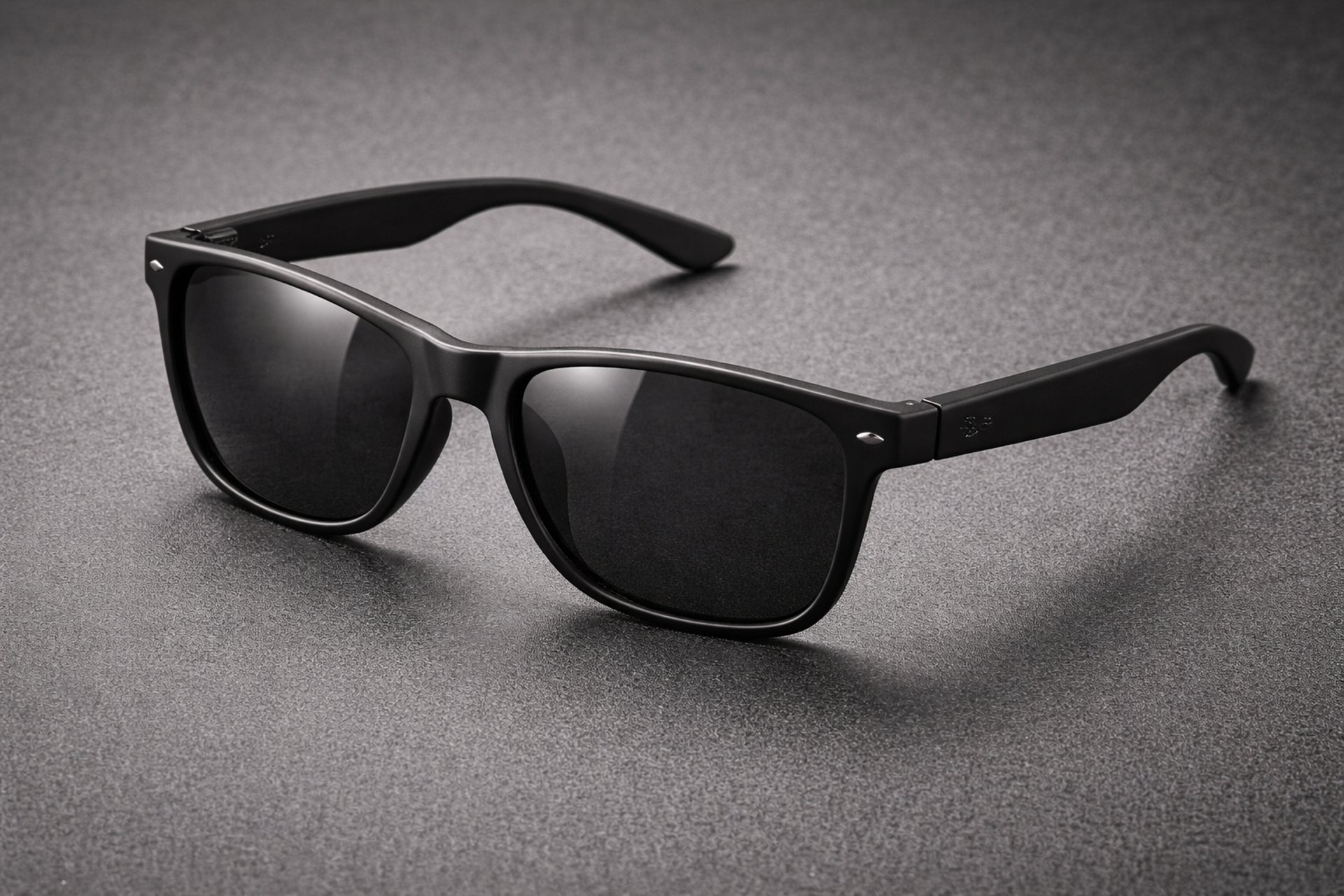
Are Cheap Sunglasses Bad for Your Eyes?
Discover why not all cheap sunglasses protect your eyes, the importance of UV protection, lens quality, and how to buy sunglasses on a budget.
EDC SUNGLASSES
The EDCBuzz Editorial Team - Led by AJ “Buzz” Eichman
7/4/20266 min read
If you’ve ever found yourself squinting under a bright sun, you know why sunglasses are more than just fashion accessories. Their main job is to protect your eyes from ultraviolet, or UV, rays that can cause damage over time. Now, here’s where things get tricky: not all sunglasses do that job equally well, especially cheap ones. You might think that any pair with dark lenses will keep your eyes safe, but that’s not always true. In fact, some low-cost sunglasses lacking proper UV protection can do more harm than good. This isn’t about brand names or the latest trends; it’s about what works when your eyes really need it—whether you’re out for a hike, running errands, or just driving home after a long day.
For a complete overview, start with EDC Sunglasses and explore Sunglasses By Activity to find the right eyewear for how and where you spend your time outdoors.
Quick Verdict
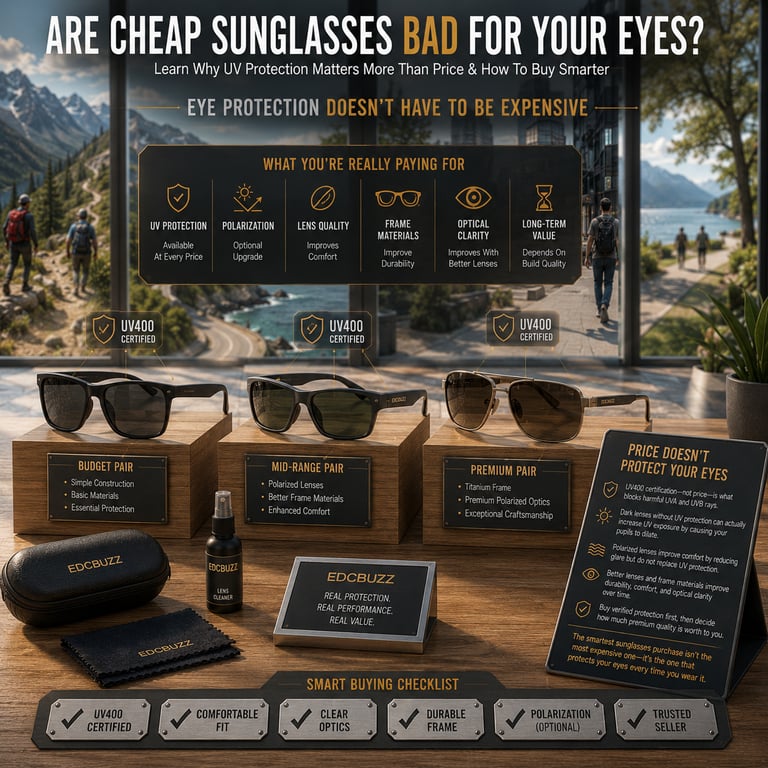
Sunglasses without proper UV protection can actually increase eye damage by causing your pupils to dilate, letting in more harmful rays.
The darkness of lenses doesn’t guarantee UV blocking; always check for 100% UV protection or the UV400 label.
Lens quality matters—distorted or scratched lenses strain your eyes and make long-term use uncomfortable.
Polarized lenses reduce glare but don’t add extra UV protection on their own.
Buying from reputable sources helps ensure your sunglasses deliver on their protective promise.
Understanding UV Radiation and Eye Health
Ultraviolet radiation comes mainly in two flavors: UVA and UVB. Both have their way of creeping into your eyes and causing trouble down the road. UVA rays penetrate deep, potentially contributing to cataracts and retinal damage. UVB rays are a bit more intense on the surface, often linked to things like photokeratitis—basically a sunburn for your corneas. So, keeping UV out is not just about comfort; it’s about preventing damage that shows up years later when you least expect it. Understanding Polarized Sunglasses and UV Protection Explained also helps clear up many common misconceptions.
How Sunglasses Protect Your Eyes
Good sunglasses are windows against UV radiation. The mark of true protection shows up in the lens specifications: you want lenses that block 99% to 100% of UVA and UVB rays. Look for the label UV400—that covers all the necessary wavelengths. What this means in practice is: your eyes stay shielded, your pupils don’t dilate unnecessarily, and you end up with less strain and fatigue. On the other hand, if lenses only darken your view without blocking UV, your pupils will widen to compensate, letting in more dangerous rays than if you wore no sunglasses at all. It’s a bit like opening all your doors when you think you’re locking them shut. If you're wondering What Are Polarized Sunglasses and Are They Worth It?, it's important to know they address glare rather than UV protection itself.
Risks of Cheap Sunglasses Without Proper UV Protection
Here’s where cheap sunglasses pull a sneaky trick. You pay less, so you might think you’re getting the same shade and comfort. Instead, you often end up with lenses that don’t filter UV at all. The lenses get darker, but that’s just tint—not protection. This causes your pupils to dilate, increasing the amount of UV rays hitting your eyes. Over time, this can contribute to issues like cataracts, macular degeneration, and other eye damage. Beyond UV risk, low-quality lenses can distort your vision. When that happens, your eyes work harder to focus, leading to headaches and fatigue—not exactly what you want when you’re outdoors or behind the wheel. If you regularly notice discomfort, you may also be interested in Why Do Some Sunglasses Cause Eye Fatigue?
Lens Quality: More Than Just Darkness
Not all lenses are made the same. You might pick up a pair of cheap sunglasses thinking dark lenses equal comfort, but the truth lies in the optical quality of the glass or plastic. If lenses warp or introduce distortions, your eyes compensate in ways that tire them faster. Scratches aren’t just cosmetic; they scatter light unevenly, causing glare and reducing clarity. Polycarbonate lenses are a good option—they’re lightweight, impact-resistant, and tend to offer consistent protection. Sometimes, a lens coating can add scratch resistance or reduce reflections, which makes wearing sunglasses more pleasant. This is the kind of detail you notice more after a few days of use. For a closer look at lens materials, see Serengeti Anteo vs Oakley Sutro TI Sweep (Glass vs Polycarbonate).
Polarized vs Non-Polarized Sunglasses
If glare bothers you, polarization can be a real game changer. Polarized lenses cut down reflected light from shiny surfaces like water or pavement, making your view clearer and reducing eye strain. But remember: polarization doesn’t increase UV protection. It’s a separate feature aimed at comfort rather than safety. You’ll want both if you spend time outdoors in bright conditions, but don’t assume polarized means protected from harmful rays. If you're also considering adaptive lenses, Julbo Shield REACTIV vs Maui Jim Stone Shack (Photochromic vs Polarized) explains how the technologies compare.
Materials and Construction: What to Look For
Material makes a difference—not just for durability but for everyday ease. Polycarbonate lenses are popular for their impact resistance and lighter weight, which helps if you wear sunglasses for extended periods. Glass lenses offer excellent optical clarity but can be heavier and break more easily. Frames matter, too. Well-constructed frames that fit your face will reduce light leaking in from the sides, enhancing protection and comfort. Cheap hinges or flimsy plastics rarely age well in the sun, so it’s worth choosing something that will last beyond a season or two. If you spend time in work environments, Best Safety Glasses can help you find eyewear built for tougher conditions.
Buying Guide: Choosing Effective Sunglasses on a Budget
If you want proper protection without blowing your budget, keep it simple: look for certified UV-blocking sunglasses, even in the lower price range. Check the labels carefully: 100% UV protection or UV400 means they block the full range of harmful rays. Avoid picking sunglasses just because they look cool or cost less. Sometimes local optical shops or trusted online retailers offer affordable options with guaranteed protection. Also, pay attention to fit and lens quality—comfort and clarity go hand in hand with protection. If you’re only carrying one pair, I’d lean toward those that ask less from you in terms of eye strain and upkeep. Many of the options in Best Budget Sunglasses meet these requirements without costing a fortune.
Common Mistakes When Buying Sunglasses
One of the most common missteps is assuming darker lenses equal better protection. They might make you look cool, but without UV filtering, they harm your eyes more than they help. Another mistake is buying sunglasses purely on style or price without verifying they block UV rays. Some people get stuck believing polarized means complete eye safety—that’s not true. Polarized lenses reduce glare but don’t offer added UV protection by themselves. A final trap is using sunglasses irregularly; your eyes gain the best defense when you wear them consistently, not just now and then when it’s really bright. If you're considering premium models, it's worth understanding Why Do Premium Sunglasses Cost So Much?
Frequently Asked Questions About Sunglasses and Eye Protection
Are cheap sunglasses bad for your eyes?
Not all cheap sunglasses are bad, but many lack proper UV protection. Without it, dark lenses can cause your pupils to dilate, letting in more harmful UV rays and increasing eye damage risk over time.
How do I know if sunglasses provide proper UV protection?
Look for labels stating 100% UV protection or UV400. These indicate the lenses block both UVA and UVB rays. Buying from reputable sellers also helps ensure authenticity.
Can wearing sunglasses without UV protection harm my eyes?
Yes. Dark lenses without UV filtering cause your pupils to dilate, allowing more UV rays to enter, which can damage the eyes if exposure adds up over years.
What’s the difference between polarized and UV protection lenses?
Polarized lenses reduce glare from reflective surfaces, improving visual comfort. UV protection lenses specifically block harmful ultraviolet rays. You can have polarized lenses without UV protection, but it’s better to have both.
How do lens materials affect durability and eye comfort?
Lenses made from polycarbonate are lightweight and impact resistant, making them comfortable for long wear. Glass offers better optical clarity but is heavier and more breakable. Quality material helps reduce eye strain over time. Photochromic Lenses Explained: How They Work also covers another lens technology that can improve comfort in changing light.
Are there budget-friendly sunglasses that still protect my eyes well?
Yes. Many affordable brands offer certified UV protection sunglasses. Focus on verified UV blocking rather than price alone, and make sure lenses aren’t distorted or heavily scratched.
How often should I replace my sunglasses?
Replace them when lenses become scratched or damaged, or if the UV protection label is missing or compromised. Usually, every couple of years is a good baseline for regular use. For more guidance, see Do Sunglasses Expire?
Does lens color affect UV protection or eye health?
Lens color mostly affects comfort, contrast, and glare reduction, not UV protection. Darker lenses don’t automatically block more UV rays. Protection depends on lens material and coatings.
Practical Conclusion
After spending decades outdoors, I’ve learned there’s no substitute for dependable eye protection. Cheap sunglasses that lack UV blocking might feel fine at first, but they’re the kind of gear you stop thinking about when they’re working well—and that’s usually a good sign. Your eyes don’t get a second chance once damage sets in, so it’s worth investing a little time and care when picking sunglasses. Find ones with verified UV protection, decent lens quality, and a fit you can wear all day without fuss. It’s not about flashy looks or the lowest price; it’s about having something that keeps your eyes safe no matter the weather or how long you’re outside. That’s the kind of wisdom that sticks with you long after the sun goes down.
Contact@TheBuzzHQ.com
© 2026 EDCBuzz. All rights reserved.
EDCBuzz
Master everyday carry systems with clarity and precision. Built for real environments and practical use.
For educational purposes only.
General Inquiries: