
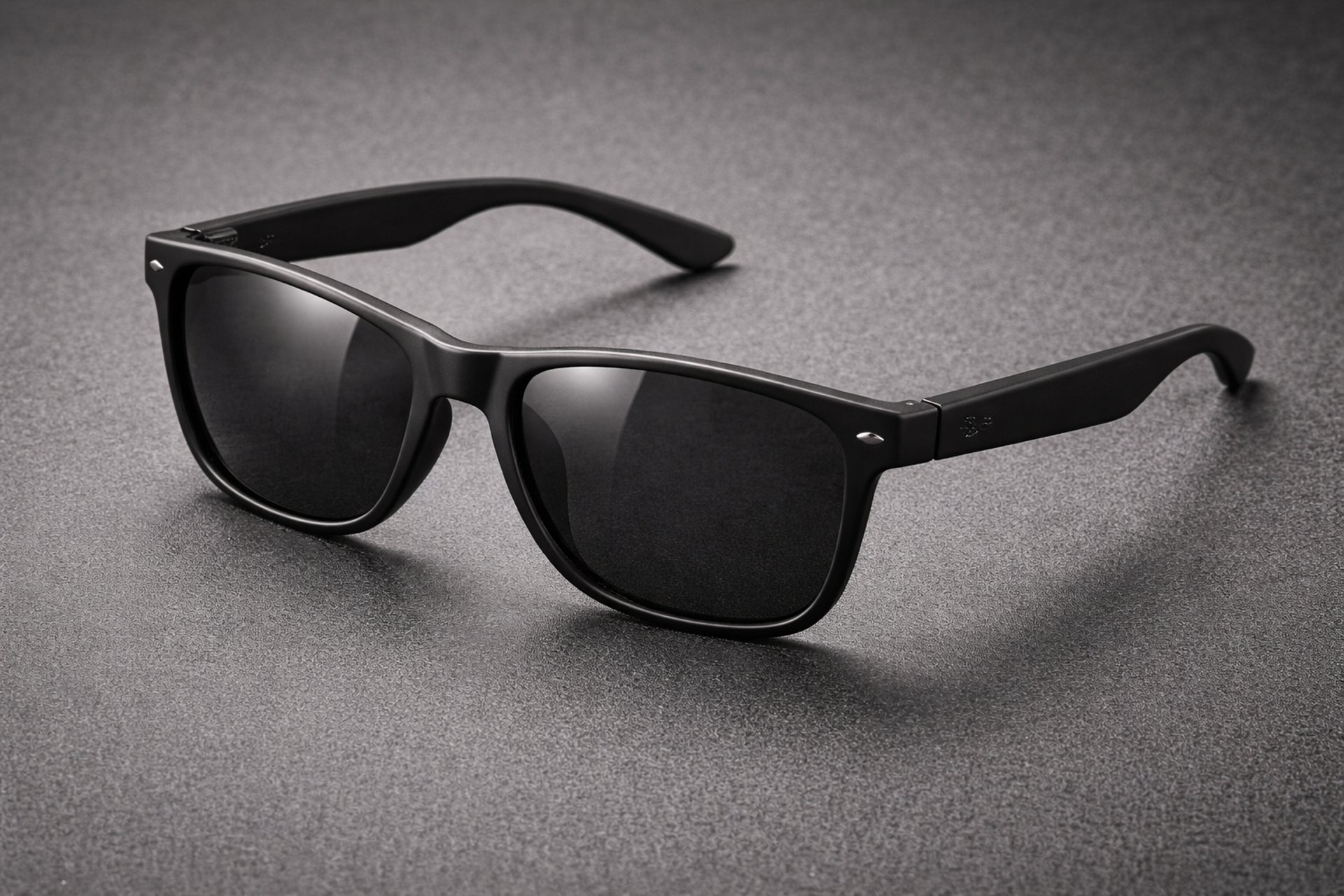
Can Smart Glasses Replace Traditional Sunglasses?
Explore how smart glasses stack up against traditional sunglasses in protection, tech features, and everyday usability before you choose your next eyewear.
EDC SUNGLASSES
The EDCBuzz Editorial Team - Led by AJ “Buzz” Eichman
7/4/20268 min read
Introducing smart glasses into the eyewear market has raised an intriguing technical question: can these digital hybrids actually replace traditional sunglasses? At first glance, it might seem that smart glasses, packed with sensors, displays, and connectivity, offer a clear advantage over basic tinted lenses. Yet, when we dig into how each type functions, their material design, and practical use, the story is more nuanced. Smart glasses bring compelling capabilities, but traditional sunglasses deliver proven, reliable protection and comfort that remain essential in everyday and outdoor environments. This article explores the core technologies, benefits, and limitations of both, helping you understand what each offers and where trade-offs come into play.
If you're comparing modern eyewear options, our EDC Sunglasses hub and Sunglass Lens & Frames Guide explain the materials and features that matter most before choosing your next pair.
Quick Verdict
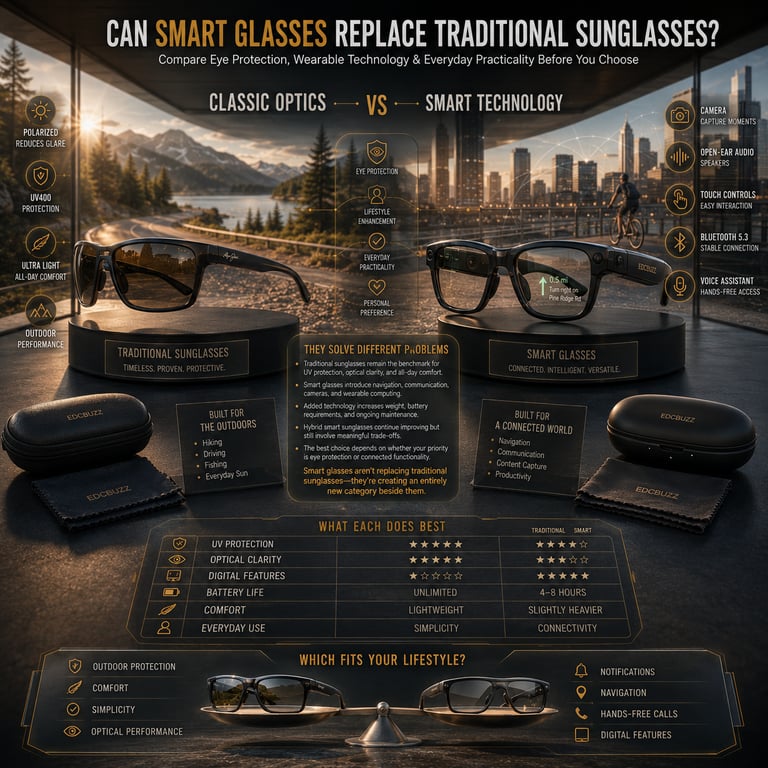
Traditional sunglasses excel at consistent UV protection, glare reduction, and optical clarity due to mature lens materials and coatings.
Smart glasses add digital features such as augmented reality overlays, notifications, and hands-free interaction, but these come with compromises in battery life, weight, and cost.
Hybrid smart sunglasses attempt to balance UV protection with tech functionality, but often reduce optical quality or stylistic versatility.
Everyday carry users should weigh whether smart glasses’ added tech benefits justify their bulk and maintenance compared to the simplicity and reliability of traditional sunglasses.
What Are Smart Glasses? Key Technologies Explained
Smart glasses are essentially eyewear frames embedded with electronics—microdisplays, sensors, microphones, speakers, batteries, and sometimes cameras. Their lenses may serve dual purposes: filtering sunlight while providing digital overlays through augmented reality (AR). Unlike traditional sunglasses, smart glasses integrate software-driven functionality, connecting to smartphones or other devices via Bluetooth or Wi-Fi.
Understanding the components often clarifies the compromises at play. Microdisplays embedded near your line of sight provide heads-up information, navigation prompts, or notifications. Sensors track your environment, movement, or biometric data. Microphones and speakers enable hands-free calls or voice commands. Power comes from internal batteries designed to last from a few hours to an 8-hour maximum under typical use, though heavy AR or audio use reduces this significantly.
Operating smart glasses also involves firmware or app ecosystems that require periodic updates and user management. This software layer determines responsiveness and usability but can introduce complexity and dependency on compatible smartphones. The technology integration increases physical bulk and weight, often reducing the comfort you expect from everyday eyewear. If you're wondering whether they're ready to replace conventional eyewear, Can Smart Glasses Replace Traditional Sunglasses? explores the topic in greater depth.
Traditional Sunglasses: Purpose and Proven Benefits
Traditional sunglasses have one primary mission: protect your eyes from ultraviolet (UV) radiation and manage visible light, especially glare. The materials and construction reflect decades of refinement focused on eye safety and optical performance rather than digital function.
Lens materials commonly include glass, polycarbonate, or CR-39 plastic, each with its own balance of clarity, weight, impact resistance, and scratch resistance. Glass lenses generally offer superior optical clarity but are heavier and more fragile, while polycarbonate balances toughness and lightness but may sacrifice a bit of sharpness and scratch resistance.
To enhance effectiveness, lenses are treated with coatings that block UV rays, reduce glare through polarization, and sometimes add mirror finishes for style and further infrared reduction. These coatings directly improve your visual comfort and protect your long-term eye health. Frames are engineered for secure fit and durability without the need to house electronic components, allowing for a simpler, lighter design. Drivers looking for maximum visual clarity may also want to compare Best Driving Sunglasses.
Comparing Materials and Construction: Smart vs. Traditional
When comparing materials, the difference is not just about lenses but the entire frame construction. Smart glasses require frames robust enough to accommodate embedded electronics and power sources without compromising on user comfort excessively. This often means thicker temples, added weight, and potential pressure points behind the ears or on the nose bridge. Meanwhile, traditional sunglasses emphasize minimalism and ergonomics since their only electronic consideration might be lens coatings and hinge quality.
Lens materials in smart glasses sometimes include photochromic elements that adjust tinting based on ambient light. This capability attempts to replicate traditional sunglass adaptability but rarely reaches the optical precision or consistency of premium sunglasses. Furthermore, the integration of display elements may interfere mildly with lens clarity, limiting smart glasses’ effectiveness in intense sunlight or highly reflective environments. For another perspective on protective versus everyday eyewear, see Mechanix Vision Type-E vs Oakley Half Jacket 2.0 (Safety Glasses vs Sunglasses).
Feature Set and Performance: What Smart Glasses Bring to the Table
Smart glasses differentiate themselves with features that extend beyond passive eye protection. Augmented reality overlays can display navigation cues, fitness metrics, or notifications without taking eyes off the path. This hands-free interaction can prove useful in urban commute, outdoor sports, or certain work tasks where quick glances save time and enhance situational awareness.
Additional sensors embedded in smart glasses track biometrics like heart rate or step count, turning them into fitness and health companions. Audio capabilities support voice commands and calls directly through bone conduction or in-ear speakers, allowing interaction without removing the glasses.
However, every one of these advantages carries trade-offs. Batteries powering these features generally last 4 to 8 hours depending on usage intensity. Extended outdoor use without recharge isn’t guaranteed, which means smart glasses might require carrying chargers or balancing feature usage carefully. Similarly, the optics of smart glasses lenses often do not match the visual sharpness and glare control of high-end traditional sunglasses.
Real-World Usability: Everyday Carry and Outdoor Scenarios
From a practical perspective, everyday carry and outdoor users typically prioritize consistent UV protection, comfort during extended wear, and reliable optical clarity. Traditional sunglasses deliver this with proven materials and simple functionality that rarely fails.
Smart glasses shine in specific scenarios where augmented information enhances safety or convenience. For example, a cyclist can use smart sunglasses to keep an eye on route navigation and incoming calls without diverting focus. Outdoor workers or hikers might benefit from heads-up environmental data or weather alerts integrated into their eyewear.
Still, carrying and using smart glasses daily requires acceptance of their increased size, weight, frequent charging needs, and software updates. Furthermore, their performance in bright sunlight isn’t as consistent as traditional sunglasses due to display visibility and lens clarity limitations. If you're considering top-tier optics instead, explore Best Premium Sunglasses.
Battery Life, Comfort, and Maintenance Considerations
Battery life often emerges as a primary limiting factor for smart glasses. Unlike traditional sunglasses that never require charging, smart eyewear demands a recharge cycle and power management habits. Users need to plan for downtime or carry charging accessories, especially when using display and audio features heavily.
Comfort also sees a shift. The additional internal components increase frame thickness and sometimes weight distribution shifts, which can cause discomfort over longer periods. In contrast, traditional sunglasses optimize ergonomics to reduce pressure points, making them better suited for all-day wear.
Maintenance differs as well. Traditional sunglasses require occasional cleaning and delicate handling to preserve coatings and lens integrity. Smart glasses add software maintenance: updates, syncing, app management, and troubleshooting connectivity. This digital upkeep, while routine for tech gear users, can feel cumbersome to those seeking low-maintenance eyewear. Budget-conscious shoppers may also appreciate goodr FXG vs KOO Supernova (Cheap vs Expensive).
Common Mistakes About Smart Glasses and Sunglasses
One common error is assuming smart glasses automatically provide the same level of eye protection as premium traditional sunglasses. While some smart sunglasses include UV-protective lenses, many designs prioritize digital features at the expense of optimal sun filtering and glare reduction.
Battery expectations can also mislead buyers. Users unfamiliar with power constraints may be frustrated by limited runtimes and the need to recharge during key outdoor activities.
The physical bulk and weight of smart glasses are often overlooked until extended wear, causing discomfort or reluctance to carry them regularly.
Privacy and compatibility issues also arise in practice. Smart glasses rely on smartphone pairing and network connectivity, which may raise concerns about data security or limit use with less common operating systems.
Finally, expecting smart glasses to match traditional sunglasses perfectly in style or subtlety is unrealistic. Integrated technology demands design concessions that may stand out more than conventional frames. Many buyers also ask, Do Expensive Sunglasses Really Protect Your Eyes Better?
Should You Choose Smart Glasses or Traditional Sunglasses?
Your decision should start with priorities: do you need solid eye protection and comfort for prolonged outdoor use, or are you looking for a wearable tech platform that brings heads-up data and interaction to your daily routine?
If UV protection, glare reduction, and crystal-clear optics are essential, traditional sunglasses remain the best choice due to mature materials and simple designs optimized for these needs.
If you’re a tech enthusiast who values augmented reality overlays, fitness tracking, or notifications integrated into eyewear—and can manage battery life and maintenance—you may find smart glasses worth incorporating into your everyday carry.
Hybrid smart sunglasses attempt to bridge the gap, but they often introduce compromises in optical quality or design minimalism. Weigh those trade-offs carefully. If you're experiencing discomfort with certain lenses, Why Do Some Sunglasses Cause Eye Fatigue? may help explain the causes.
FAQ
Do smart glasses provide adequate UV protection compared to traditional sunglasses?
Some smart glasses include UV-protective lenses, but they typically do not match the comprehensive filtering and polarization capabilities of premium traditional sunglasses. Always verify UV ratings and certifications when considering smart eyewear for sun protection.
How long does the battery last on typical smart glasses used outdoors?
Battery life generally ranges from 4 to 8 hours depending on feature use. Heavy use of displays, audio, or sensors reduces runtime, requiring strategic charging or feature management for all-day use.
Can smart glasses work well in bright sunlight and outdoor conditions?
Smart glasses can struggle with display visibility in direct sunlight, and their lenses may not provide the same glare reduction as polarized traditional lenses. Photochromic adjustments help but don’t fully replicate premium sun protection.
What are the main material differences between smart glasses and traditional sunglasses?
Traditional sunglasses use glass, polycarbonate, or CR-39 plastic optimized for optical clarity and durability. Smart glasses frames are thicker to house electronics, often using reinforced plastics or composites, which can impact weight and comfort.
Are smart glasses bulky compared to regular sunglasses for everyday wear?
Yes, the integration of batteries, displays, and sensors tends to increase frame thickness and weight, which may affect long-term comfort compared to lightweight traditional frames designed solely for eyewear. You can also read Are Cheap Sunglasses Bad for Your Eyes? if you're weighing value against performance.
What smartphone compatibility issues should buyers consider?
Smart glasses typically require pairing with specific smartphone operating systems and apps. Compatibility varies by brand and can limit usage for some devices or necessitate frequent software updates.
Do smart glasses offer any practical benefits for outdoor sports or activities?
They can provide real-time navigation, performance metrics, and hands-free communication, helpful for cyclists, runners, and hikers. The trade-off is managing battery life and ensuring the display remains visible in varying light conditions. Another common concern is Can Sunglasses Damage Your Eyes?
What are the maintenance differences between smart and traditional sunglasses?
Traditional sunglasses need cleaning and occasional lens care. Smart glasses require additional digital maintenance, including firmware updates, app management, and device syncing, adding complexity to upkeep. It's also worth knowing Do Sunglasses Expire?
Conclusion
Smart glasses represent a fascinating convergence of eyewear and digital technology, promising to redefine how we receive information and interact with the world. Yet, they are not a straightforward replacement for traditional sunglasses, which remain specialized tools optimized for eye protection, clarity, and comfort. The real distinction lies in understanding your primary needs and how the features and trade-offs of each category align with your daily use.
For those with tech-centric lifestyles who accept the compromises in weight, battery life, and cost, smart glasses can enrich how they navigate urban and outdoor environments. For users prioritizing proven sun protection and comfort throughout long wear periods, traditional sunglasses remain unmatched. Hybrid models offer some middle ground but rarely deliver the best of both worlds without concessions.
In the end, informed decisions about eyewear hinge on understanding not just what smart glasses and traditional sunglasses do, but how their materials, design, and performance interact to serve your unique everyday carry and outdoor scenarios.

Contact@TheBuzzHQ.com
© 2026 EDCBuzz. All rights reserved.
EDCBuzz
Master everyday carry systems with clarity and precision. Built for real environments and practical use.
For educational purposes only.
General Inquiries: