
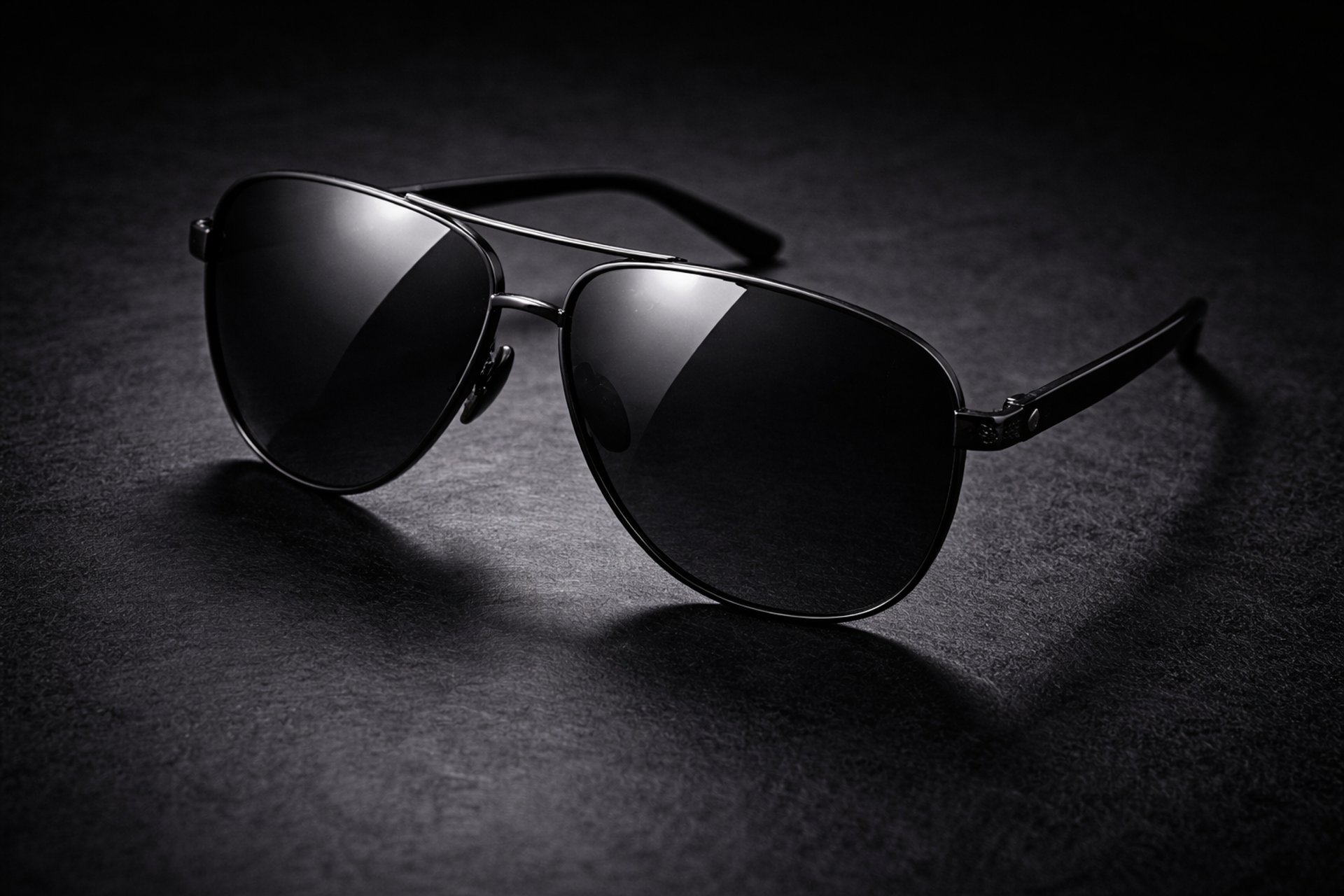
Do Expensive Sunglasses Really Protect Your Eyes Better?
Explore whether expensive sunglasses offer better eye protection or if verified UV blocking and lens technology matter more for your safety and comfort.
EDC SUNGLASSES
The EDCBuzz Editorial Team - Led by AJ “Buzz” Eichman
7/4/20266 min read
When stepping into the world of sunglasses, the price tag often feels like an indicator of quality and protection. But when it comes to safeguarding your eyes from harmful ultraviolet (UV) rays, does spending more actually translate to better defense? The truth is nuanced. At the core of eye protection is UV blocking—an attribute more determined by lens technology and manufacturing standards than simply how much the frame or brand costs. Understanding the science behind UV protection, lens materials, coatings, and additional features like polarization can help you cut through the marketing and make an informed choice that truly benefits your eyes.
If you're shopping for everyday eyewear, our EDC Sunglasses guide and How To Choose Sunglasses resource explain what features actually matter before spending your money.
Quick Verdict
Effective eye protection depends on genuine UV blocking capabilities, not the cost of the sunglasses.
Polarized lenses reduce glare and improve comfort but don’t inherently provide better UV protection.
Higher-end sunglasses often feature superior scratch resistance and optical clarity, enhancing durability and user experience rather than protection alone.
Verification through reputable certifications and UV protection labels is more important than price when selecting sunglasses for eye safety.
How Sunglasses Protect Your Eyes: The Science of UV Blocking
The primary hazard sunglasses shield against is ultraviolet radiation from the sun, which includes UVA and UVB rays. These wavelengths can penetrate the eye and cause a range of issues, from photokeratitis (sunburn of the cornea) to increased risks of cataracts and macular degeneration over time. The critical element is the lens’s ability to provide effective UV filtering.
UV protection in sunglasses is measured by the percentage of UV rays blocked and by the wavelength range covered. The gold standard is 100% UV protection or a UV400 rating, which blocks nearly all UVA and UVB radiation. Importantly, this function relies on coatings or the lens material itself rather than lens tint or darkness. Dark lenses without proper UV filters can actually encourage the pupils to dilate more, letting in greater harmful radiation.
In practical terms, it is the chemical treatments and layering within the lens that absorb or reflect the UV radiation before it reaches your eyes. This is why even inexpensive sunglasses can provide adequate UV protection, provided they have properly certified coatings. If you're shopping on a budget, Best Budget Sunglasses shows options that still prioritize eye protection.
Understanding Lens Technology: Polarization, Materials, and Coatings
Beyond UV blocking capabilities, sunglasses incorporate various technologies that affect user experience, durability, and function.
Polarization filters are designed to reduce glare by blocking horizontally polarized light, which is common when sunlight reflects off surfaces like water or roads. This feature improves visual comfort and clarity but does not enhance UV blocking properties by itself. For effective protection, polarized lenses must also include UV blocking coatings.
Lens materials similarly influence both performance and durability. Polycarbonate lenses are lightweight and impact-resistant, making them practical for active everyday carry. Though they offer decent optical clarity, polycarbonate tends to scratch more easily compared to glass. Glass lenses, by comparison, provide superior optical clarity and scratch resistance but are heavier and more prone to shattering on impact.
Coatings applied to lenses also play significant roles: anti-scratch coatings extend lens life, anti-reflective coatings reduce internal reflections that may cause eye strain, and mirror coatings can reduce overall brightness. These enhancements improve comfort and longevity but do not directly contribute to UV protection beyond the initial blocking layer. For a closer look at lens materials, see Serengeti Anteo vs Oakley Sutro TI Sweep (Glass vs Polycarbonate).
Do Expensive Sunglasses Offer Better Protection? Breaking Down the Myths
There’s a common assumption that a higher price equates to better eye safety with sunglasses. However, this belief doesn’t hold up under scrutiny.
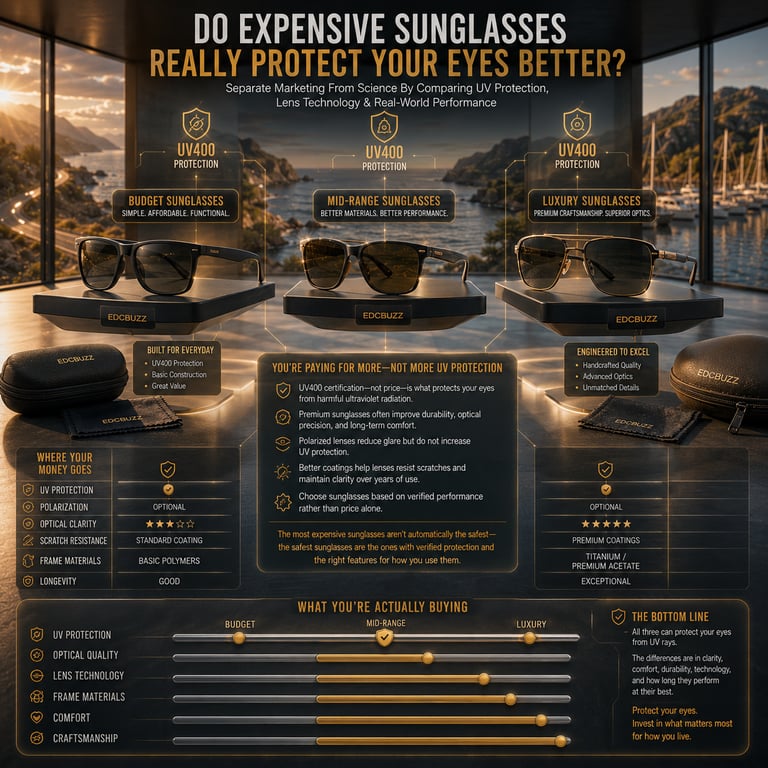
Firstly, UV protection is a standardized measurement that reputable manufacturers include regardless of price point. A pair of sunglasses that claim 100% UV protection should theoretically block the same harmful rays whether they cost $20 or $200. It’s the verification and quality control behind the scenes that matter.
Where expensive sunglasses gain an edge is in secondary features such as:
Lens durability: Premium materials and coatings reduce scratches and maintain clarity longer, ensuring sustained protection without optical distortion.
Optical precision: High-end lenses often exhibit less chromatic aberration and distortion, reducing eye strain during prolonged wear.
Frame construction: Better materials yield stronger, more comfortable frames that hold lenses in correct alignment to preserve optical integrity.
However, none of these characteristics increase UV blocking efficiency itself. That is inherent to the lens chemistry and coatings applied.
Key Features to Look for in Sunglasses for Effective Eye Protection
When selecting sunglasses with eye safety in mind, focus first and foremost on verified UV protection. Look for clear labeling such as 100% UV protection, UV400, or endorsements from recognized regulatory bodies like ANSI, ISO, or CE certifications.
Polarization is a valuable addition if you regularly experience glare, but recognize it is complementary rather than protective against UV.
Evaluate the lens material in relation to your intended use—polycarbonate for impact resistance and lightweight portability or glass for optical clarity and scratch resistance.
Consider coatings that reduce glare and scratches, as these will maintain comfort and lens integrity over time.
Finally, fit and frame design influence how much sunlight travels around the lenses and into your eyes. Wraparound styles or larger lenses offer better coverage but are not substitutes for proper UV blocking. Athletes may also benefit from Best Athletic Sunglasses.
Common Mistakes When Choosing Sunglasses for Eye Safety
Misunderstandings about sunglasses protection often lead to choices that can compromise eye health.
One frequent error is assuming darker lenses automatically mean better UV protection. The tint level only affects visible light reduction, not ultraviolet blocking.
Another is conflating polarization with UV protection. Polarized lenses improve comfort but do not affect harmful UV rays if uncoated. If you're considering polarization, What Are Polarized Sunglasses and Are They Worth It? explains the advantages and limitations.
Relying solely on brand reputation or fashion appeal without checking for certification can lead to false security.
Additionally, neglecting lens quality can contribute to eye strain. Poor optical clarity, chromatic distortions, or uneven coatings cause subtle but chronic discomfort that accumulates.
Lastly, some might unknowingly wear sunglasses with inadequate UV blocking, especially when buying very cheap or unregulated products. These can increase the risk of UV damage by causing the pupils to dilate behind dark lenses that fail to filter UV.
Practical Tips for Everyday Use and Maintenance of Sunglasses
To ensure your sunglasses continue to protect your eyes effectively, routine care and mindful use are vital.
Store sunglasses in a protective case when not in use to prevent scratches or frame damage that can misalign lenses.
Clean lenses with a microfiber cloth and lens cleaner designed for coated optics to maintain coating integrity.
Replace sunglasses if coatings start to degrade visibly, lenses become scratched, or fit changes affect coverage.
Remember that UV protection doesn’t diminish over time per se, but physical wear and damage can reduce effectiveness indirectly.
For active or outdoor work settings, choose lenses that balance protection, impact resistance, and comfort without sacrificing UV blocking.
Checking the authenticity of UV protection through third-party testing or manufacturer transparency improves confidence in your purchase regardless of what you paid. If you're comparing value, goodr FXG vs KOO Supernova (Cheap vs Expensive) offers a practical real-world comparison.
Frequently Asked Questions
Do expensive sunglasses block UV rays better than cheap ones?
Not necessarily. UV protection depends on lens coatings and certifications, not price. Both expensive and affordable sunglasses can offer 100% UV blocking if properly made and verified.
What do polarized lenses do, and do they protect from UV?
Polarized lenses reduce glare by filtering horizontal light reflections but do not provide UV protection by themselves. Effective sunglasses often pair polarization with UV blocking coatings.
How can I check if my sunglasses have adequate UV protection?
Look for labels stating 100% UV protection or UV400, and certification marks such as ANSI, ISO, or CE. Some opticians or specialty stores offer UV testing services.
Are there specific lens materials that protect my eyes better?
Lens material affects impact resistance and optical clarity but not UV protection directly. Polycarbonate is impact-resistant and lightweight, while glass offers superior optical quality and scratch resistance.
Do lens coatings add to sun protection or only reduce glare?
Coatings mainly reduce glare, reflections, and scratches; they do not add UV filtering beyond the base protection incorporated into the lens. If discomfort is an issue, Why Do Some Sunglasses Cause Eye Fatigue? explains why it happens.
Can cheap sunglasses damage my eyes if they don’t block UV properly?
Yes. Dark lenses without proper UV blocking can cause pupils to dilate, allowing more harmful UV radiation to reach the eyes, potentially increasing damage risk. You can also learn more in Are Cheap Sunglasses Bad for Your Eyes?
Is lens durability important for eye protection or just for longevity?
Durability impacts both user comfort and consistent protection. Scratched or damaged lenses can distort vision and strain eyes, indirectly reducing protective effectiveness.
How often should I replace my sunglasses to maintain eye protection?
Replace sunglasses when lenses become scratched, coatings degrade, or frames no longer fit properly. Typically, this may be every one to three years depending on use and care. It's also helpful to know Do Sunglasses Expire?
Conclusion
The ability of sunglasses to protect your eyes against UV radiation is grounded in lens technology and verified UV blocking capabilities rather than price. While expensive sunglasses frequently incorporate features that improve durability, optical clarity, and user comfort, these benefits do not inherently translate into superior UV protection compared to more affordable counterparts that meet recognized standards. Prioritize checking for certified UV filters, lens construction, and appropriate coatings to ensure your eyes are genuinely shielded. When balanced with your practical needs and budget, this understanding will help you select sunglasses that serve as effective, reliable components of your everyday carry gear without unnecessary expenditure. If you're still curious about premium pricing, Why Do Premium Sunglasses Cost So Much? provides a closer look at where the extra money goes.

Contact@TheBuzzHQ.com
© 2026 EDCBuzz. All rights reserved.
EDCBuzz
Master everyday carry systems with clarity and precision. Built for real environments and practical use.
For educational purposes only.
General Inquiries: