
The Biggest Wallet Mistakes Most People Make
Discover the biggest wallet mistakes and how proper organization, material choice, and maintenance can boost your everyday carry wallet’s durability and ease.
EDC WALLETS
The EDCBuzz Editorial Team - Led by AJ “Buzz” Eichman
5/19/20268 min read
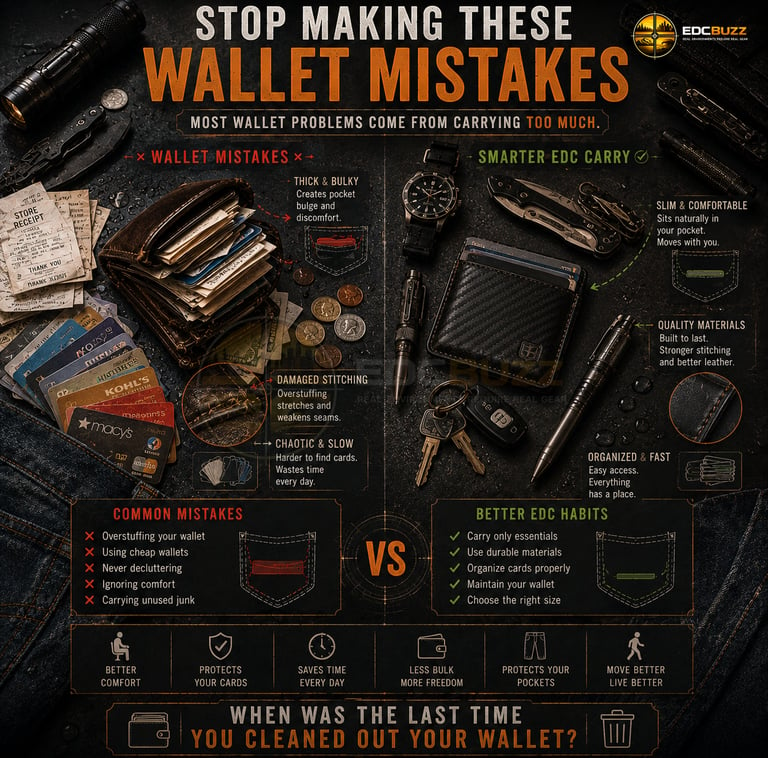
There’s no denying it — the bulky wallet is a classic culprit in the daily discomfort saga. You sit down after a long day, and that thick pocket bump suddenly reminds you it’s still there. After living with slim wallets for several weeks, it becomes painfully clear why these sleek little carriers have won many a fan in the everyday carry world. They don’t just look better in your pocket; they feel better. The difference shows up not just in your silhouette, but in long-term comfort, usability, and even the way materials behave over time. If you’ve been stuck in the mindset that wallets need to carry everything but the kitchen sink, it might be time to reconsider what truly belongs in your pocket. If you're still exploring overall carry styles and setups, start with EDC Wallets.
Quick Verdict
• Slim wallets reduce pocket bulk, making sitting and movement noticeably more comfortable over the course of a day.
• They promote carrying only essentials, which improves organization and speeds up card access.
• Thoughtful materials and construction balance durability with a lightweight feel, minimizing pocket strain.
• Less pocket wear and tear means your clothing lasts longer — no small benefit after months on the move.
What Is a Slim Wallet and How Does It Differ From Traditional Wallets?
A slim wallet isn’t just a skinny version of a full-sized counterpart. It’s a stripped-down design philosophy that prioritizes minimal thickness and efficient storage over capacity. Typically, slim wallets keep loaded thickness under about an inch, which sounds like a minor detail, but it completely changes how the wallet feels in your pocket.
Traditional wallets hog space, bulge noticeably in jeans or trousers, and often encourage carrying a handful of cards, receipts, and miscellaneous items that aren’t often used. Slim wallets, by contrast, restrict that habit. They tend to hold between four and eight cards and a modest stash of cash, forcing a rethink about what you really need at hand. If you’re still comparing different carry styles, Slim Wallet vs Traditional Wallet: Which One is Right for You? breaks down the biggest differences in real-world use. From sleek leather bifolds refined to a featherlight profile, to tension-driven elastic cardholders or stitched nylon sleeves, the variety speaks to different carry preferences but unites around one big goal: less bulk.
Comfort Benefits: Why Slim Wallets Feel Better in Your Pocket
The real test of any carry item is how it feels once the novelty has worn off, and that’s where slim wallets really stand out. After a few days, the weight and bulk of a traditional wallet can become downright distracting. You catch yourself shifting awkwardly in chairs to avoid sitting on an uncomfortable bump, or noticing how your pants pocket stretches unevenly.
Slim wallets settle into daily use easily, which is usually where better designs start to stand out. Because they’re thinner, they reduce the profile your pocket has to work around. That means less pressure pushing against your thigh or lower back, especially if you tend to slide your wallet in a front pocket. Additionally, less thickness means less strain on fabric and seams, which can prolong the life of your favorite pair of pants.
One small but telling detail: after consistent carry, the pocket feel stays uniform instead of morphing into a hard, misshapen lump that you have to fish out carefully. It’s something you don’t appreciate until you’ve gone back to carrying something thicker — the discomfort sneaks up on you, like realizing your desk chair’s been slightly misadjusted for weeks.
If pocket comfort matters most to you, Front Pocket vs Back Pocket Wallet: Which Is Better for Everyday Carry? explores how wallet placement changes long-term comfort and daily usability.
Materials and Construction: What to Expect in a Slim Wallet
Materials play a quiet yet critical role in how a slim wallet performs day in and day out. Leather remains a solid classic, delivering a comfortable softening over weeks of use while maintaining enough structure to avoid the flimsy feel that some minimalist designs suffer. The best leather wallets aren’t stiff out of the box, but they’re not floppy either, striking a good balance that keeps cards secure without needing to overstuff.
Metal and carbon fiber options tend to appeal to those who want added durability and a modern aesthetic. The trade-off here is often weight and rigidity. Metal wallets hold up well against abrasion and can be surprisingly light, especially aluminum versions, but they might dig into your leg or hip depending on how they sit. Carbon fiber blends often provide a good stiff-but-light combo but won’t adapt or soften with time like leather. If you’re debating different materials, Metal vs Leather Wallets: Which One Fits Your EDC Better? compares the strengths and weaknesses of each carry style.
Nylon and woven synthetics bring their own perks, mostly ultra-lightweight feel and water resistance. These materials usually benefit from reinforced stitching or heat welding to prevent wear and come with elastic or band retention systems to keep contents snug.
In all cases, well-designed slim wallets use retention mechanisms — be it elastic bands, magnet closures, or snap fasteners — that minimize bulk while securely holding essentials. It’s impressive just how far wallet usability has come when you can carry only what you need, accessible in a snap, without extra fat fighting for pocket real estate.
How Slim Wallets Improve Usability and Everyday Access
At first glance, some people fear that cutting down on space means sacrificing convenience. After living with slim wallets, I can say that many designs have flipped this assumption on its head. Fewer compartments often mean fewer lost cards and less fumbling.
Most slim wallets feature intuitive card slots arranged for quick retrieval, with pull tabs or cutouts adding that little extra ergonomic boost. Once you start using a wallet designed for ease rather than capacity, you’ll notice how the time it takes to access a card or cash shrinks. It might seem trivial before trying it, but saving just a couple of seconds on every transaction adds up — over a week, a month, a year.
Another subtle plus: trimming down what you carry encourages a more consistent everyday loadout. This cuts back the random receipts and expired cards that bulk up traditional wallets and make utility a headache. Many people making the switch also start exploring setups in Best Minimalist Wallets once they realize how much bulk they truly don’t need.
Common Mistakes When Choosing or Using a Slim Wallet
Even with all the benefits, there’s a handful of mistakes that newcomers often make with slim wallets, which can undercut the very advantages they’re seeking:
Overstuffing
It sounds obvious, but cramming a slim wallet with more items than it’s designed for immediately defeats the comfort purpose. Once the wallet is stretched beyond its intended capacity, it bulges and becomes uncomfortable just like the bulky wallets some folks try to escape.
Material Mismatch
Not all materials hold up equally well under real daily use. Leather that’s too thin can wear through quickly, while metal or rigid wallets that are too stiff might create pocket discomfort. The best fit lies in matching the material to how you carry and your tolerance for weight or rigidity.
Ignoring Size Relative to Pocket
A great slim wallet can still feel awkward if it doesn’t fit the pocket type. Too large and it shifts or bunches; too small and cards might fall out or get misaligned. Testing your wallet choice with your typical pants or jacket pockets is often overlooked.
Assuming Durability by Slimness
Just because a wallet is slim doesn’t mean it’s built to last. Construction matters. Reinforced stitching, welds, and quality closures separate ephemeral purchases from dependable everyday tools.
If your current wallet constantly feels overloaded, Why Your Wallet Is Too Bulky — And How to Fix It covers the biggest causes of unnecessary pocket bulk.
Real-World Scenarios: Who Benefits Most From Slim Wallets?
Certain carry contexts highlight the perks of slim wallets. Daily commuters appreciate the comfort difference when sitting on trains or buses, where a bulky wallet can be a literal pain in the ass. Office workers who need quick, frequent card access find slim wallets eliminate the distracting bulk in tight suit pockets or minimal desk drawers.
Casual outings and social settings benefit from the lighter load that complements a minimalist EDC philosophy. Traveling with a slim wallet also helps keep essentials consolidated without adding unnecessary weight or volume to your pockets, which is especially valuable when layered among other gear.
Outdoor enthusiasts or anyone layering clothing often prefer slim wallets simply because the fewer pocket obstructions, the better range of motion and less adjustment needed throughout the day.
Tips for Choosing the Right Slim Wallet for Your EDC Needs
Selecting a slim wallet hinges on thoughtful consideration rather than impulse. Start by assessing your daily carry essentials — how many cards do you truly use? How Many Cards Should You Carry in Your Wallet for Everyday Carry? helps break down what most people actually need daily versus what simply adds unnecessary bulk. Do you need space for cash, receipts, or other small items? From there, decide on the right materials: leather for classic look and comfort, metal or carbon fiber for durability and modern style, or nylon for lightness and weather resistance.
Next, consider the wallet’s retention system. Elastic bands offer flexible hold but may stretch over time; magnet closures provide ease but require strength testing to avoid accidental opening; snap fasteners add security but can increase thickness slightly.
Finally, size matters. Make sure the wallet fits the pockets you frequent most. A quick test is slipping the wallet fully loaded into your favorite jeans or jacket, sitting down, and moving around. It should feel natural, not intrusive. And remember — resistance to pocket wear is worth a second look too. Wallets that minimize stress points on fabric typically outlast bulkier alternatives.
Frequently Asked Questions About Slim Wallets
What makes a wallet 'slim' compared to traditional wallets?
Slim wallets prioritize minimal thickness and essential storage, generally keeping loaded thickness under an inch, avoiding the bulk and multipockets typical of traditional wallets.
How many cards and cash can a slim wallet typically hold?
Most slim wallets comfortably hold between four to eight cards plus some cash, enough for daily essentials without encouraging overstuffing.
Are slim wallets suitable for all pocket types?
While generally versatile, suitability depends on size relative to the pocket. Front trouser pockets and jacket pockets accommodate slim wallets best, while very tight or shallow pockets might feel cramped.
What materials provide the best combination of durability and comfort?
Genuine leather offers a balanced solution with softness that improves over time; aluminum blends durability and lightness; nylon provides weather resistance and ultra-light weight; carbon fiber offers rigid strength but less flexibility.
How does a slim wallet improve everyday carry comfort?
By reducing pocket bulk and weight, slim wallets prevent discomfort from pressing against your body during sitting or movement, and they lessen wear on clothing seams.
Can a slim wallet hold other EDC items besides cards and cash?
Some slim wallets have integrated slots or elastic loops for small tools like a micro pen or key, but most focus on essentials to maintain their thin profile.
What features should I look for in a slim everyday carry wallet?
Look for durable materials, secure retention systems (elastic, magnets, or snaps), ease of card access features, appropriate size for your carry style, and reinforced construction for longevity.
Do slim wallets wear out faster than full-sized wallets?
Not necessarily. Wear depends on material quality and construction. A well-made slim wallet can last as long as or longer than traditional wallets, especially since it reduces fabric strain and bulk-related damage.
Conclusion
Slim wallets prove their worth not in flashy gimmicks, but in daily comfort and practical usability that only show up after consistent carry. The subtle shift from a bulky paperweight to a sleek, efficient carrier rewires your everyday experience, cutting out the annoyances of pocket bulge and overstuffed chaos while encouraging smarter organization. When you pay attention to materials, size, and retention quality, you end up with a companion that feels less like a necessity weighing you down and more like a thoughtfully engineered tool designed for your lifestyle.
After all, the best EDC gear is the kind you forget you’re carrying — except for when it makes life easier, one smooth transaction or comfortable seat at a time. If your wallet is still the reason you sit awkwardly, maybe it’s time for a slimmer change. Just don’t forget where you put it; these little things do have a habit of disappearing.
If you’re ready to upgrade your setup, Best EDC Wallets is a great place to compare modern minimalist carry options.
Contact@TheBuzzHQ.com
© 2026 EDCBuzz. All rights reserved.
EDCBuzz
Master everyday carry systems with clarity and precision. Built for real environments and practical use.
For educational purposes only.
General Inquiries: