
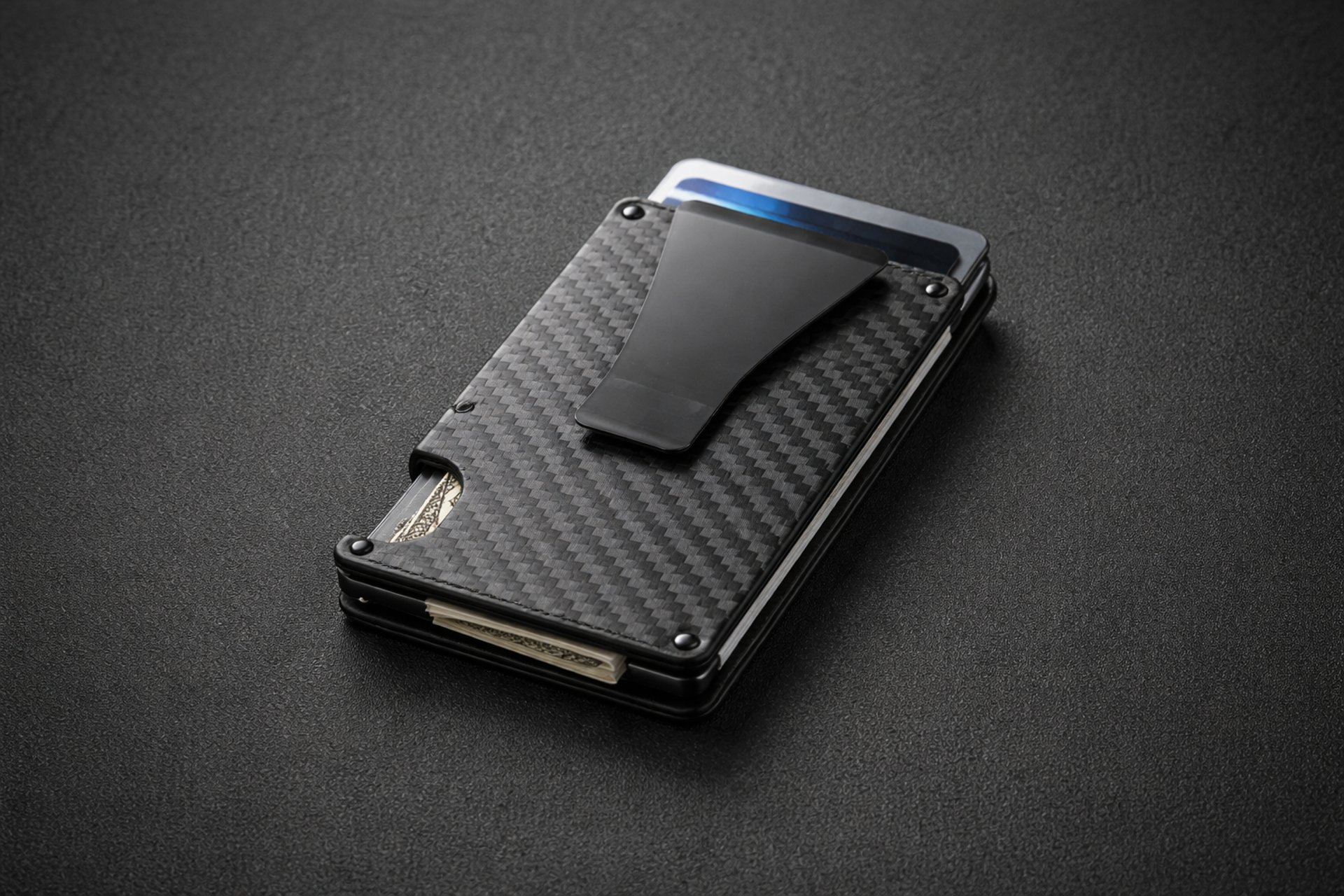
Slim Wallet vs Traditional Wallet: Which One is Right for You?
Explore the differences between slim wallets and traditional wallets to find the perfect fit for your everyday carry needs, balancing comfort, size, and usability.
EDC WALLETS
The EDCBuzz Editorial Team - Led by AJ “Buzz” Eichman
4/9/20265 min read
Everyday carry decisions tend to sneak up on you—like when you realize at the office that your wallet has become a small but noticeable brick in your back pocket. The age-old debate between slim wallets and traditional wallets isn’t new, but it’s worth revisiting when you’re ready to trade bulk for efficiency, or capacity for comfort. After spending genuine time with both, I’ve noticed the subtle but meaningful ways these two wallet styles settle into daily life, long after the initial excitement wears off.
Today we’re diving into a hands-on comparison that highlights wallet size, comfort, durability, and everyday usability—so you know exactly what to expect after weeks of carrying whichever style you pick. Whether you’re constantly shuffling through cards or just carrying the basics, this breakdown will help you decide which wallet really earns that permanent spot in your pocket.
Quick Verdict
• Slim wallets make pocket bulk disappear and ease comfort during long days of sitting or moving, but they gently remind you not to overload them.
• Traditional wallets bring the bonus of organizational space, which suits those with lots of cards and cash, but that benefit comes with trade-offs in pocket feel.
• Material choice plays a surprisingly big role in durability and long-term comfort — leather still leads, but synthetics are running close.
• A wallet isn’t just a holder; usability features like card access and RFID-blocking can make all the difference in real-world carry.
What Defines a Slim Wallet and a Traditional Wallet?
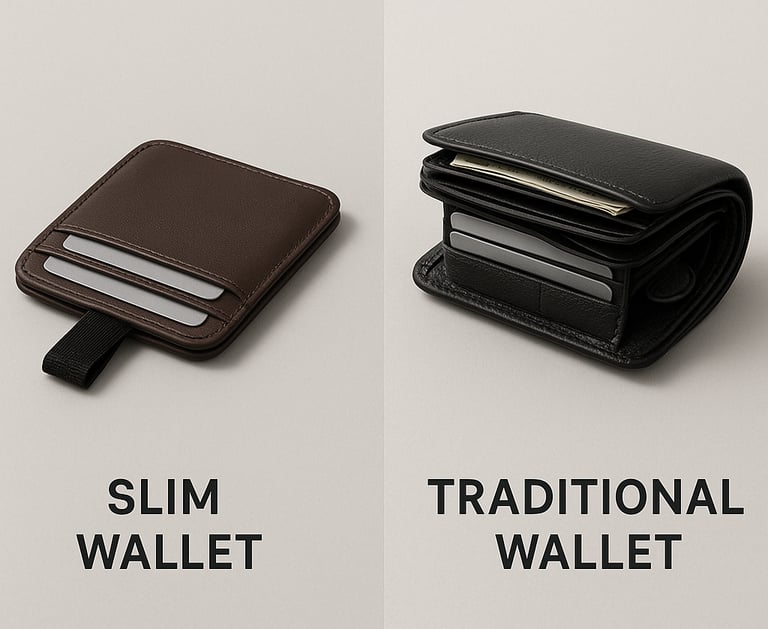
At first glance, it might seem obvious: one is “slim,” one is “traditional.” But the subtle design differences impact how they live with you daily. Slim wallets focus sharply on minimalism — think fewer cards, a couple of folded bills, and often clever touches like pull-tabs or elastic bands to speed card access.
If you want a deeper breakdown of how minimalist carry works, Minimalist Wallets Explained ties directly into how slim wallets function in real-world EDC.
They rarely have coin pockets and tend to measure less than half an inch thick when filled.
Traditional wallets, on the other hand, aim for versatility. They come loaded with dedicated compartments for multiple cards, cash bills, receipts, and sometimes even coins. Their thickness can creep north of an inch, especially if you fill them.
Materials and Construction Differences
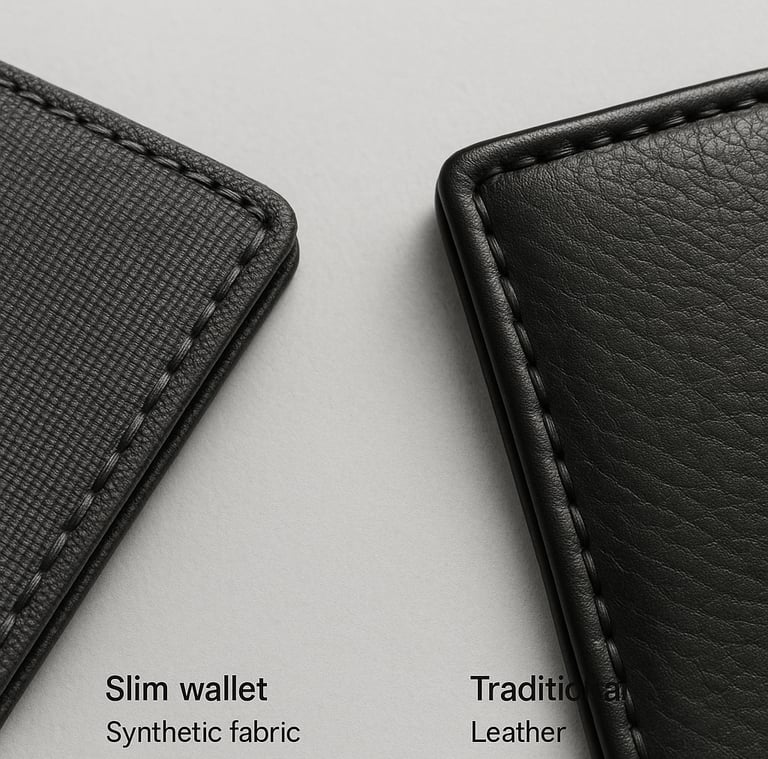
Anyone who’s carried a wallet day after day knows the material makes or breaks the experience. Leather, long the go-to, earns points for durability and that nice way it softens into a comfortable shape over time. Most traditional wallets are leather-heavy, balancing the premium feel with practical longevity.
If you're comparing material performance across wallet types, Best Wallet Materials Explained gives a clearer picture of how each holds up over time.
Slim wallets often shake things up by mixing in synthetic fabrics or metals to keep weight down and add some water resistance. Some also include RFID-blocking layers, usually easier to integrate given the smaller footprint.
Comfort and Pocket Feel Comparison
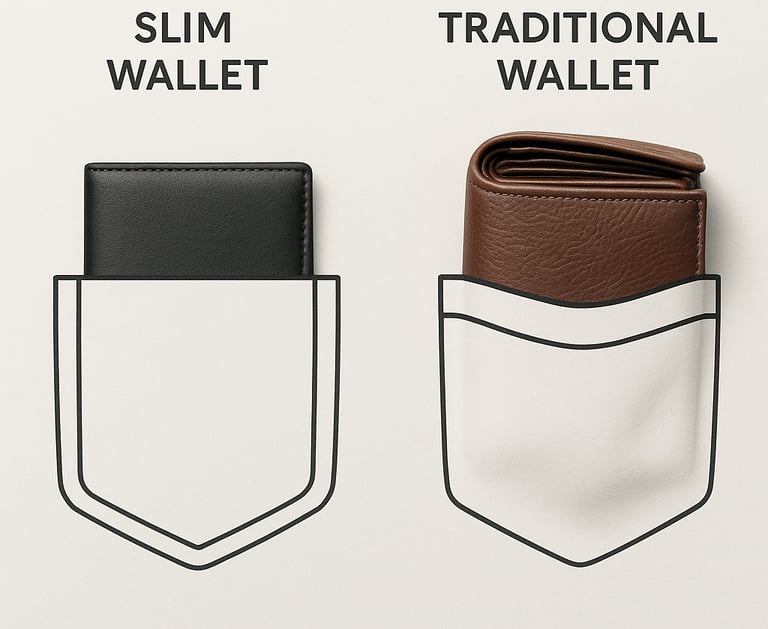
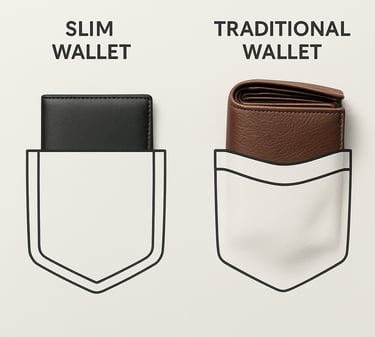
Once a wallet has been carried for a few days, its weight and thickness stop being abstract specs and become very real. Slim wallets tend to disappear into your pocket — a relief after you’ve sat through a few meetings and found that traditional wallet slowly rubbing you the wrong way.
If you’re still deciding where to carry your wallet, Front Pocket vs Back Pocket Wallet plays a big role in how each style actually feels day to day.
Traditional wallets, carried in a back pocket or even front pocket, start to push their physical presence on you after a while. A stuffed traditional wallet can become an awkward lump, something you’re constantly unconsciously adjusting.
Usability: How Cards and Cash Are Carried
This is where personal habits shape the choice. Slim wallets generally encourage you to carry just essentials — a handful of cards and a few bills. The trade-off is you have to be deliberate with what you carry.
Traditional wallets handle volume better, with multiple card slots, billfold sections, and sometimes coin pockets. This extra space comes with a bit of organization, but it’s often at the cost of speed.
If you’re trying to stay efficient with your carry, browsing options like Best EDC Wallets Under 50 or Best Minimalist Wallets can help you find designs that match how you actually use your wallet.
Durability and Lifespan Considerations
Durability doesn’t always track directly with style but leans heavily on material and construction quality. Traditional wallets, mainly leather, handle abuse well and tend to last for years if cared for right.
If you want to see how different builds compare in real-world conditions, Pioneer Flyfold vs Secrid Slimwallet gives insight into durability differences between compact designs.
Slim wallets sometimes get a bad rap for durability, but many use tough synthetics and reinforced stitching to punch above their weight.
Buyer Considerations: Matching Wallet to Lifestyle
Ultimately, your choice should fit your lifestyle — not just in theory, but in carry reality. If your day is mostly office-bound, involving sitting most of the day and lighter carry needs, a slim wallet offers incredible comfort and easy pocket integration.
For those comparing real-world usability and feature sets, Ekster Men's Wallet PRO vs Dango Wallet & Document highlights how different wallet styles handle everyday demands.
For those who juggle multiple cards, receipts, and cash throughout varied activities — from errands to meetings — traditional wallets provide flexibility and organization that matter.
Common Mistakes When Choosing a Wallet
Choosing a wallet is more nuanced than just picking the one that looks cool on day one. Here’s what I’ve noticed people get wrong after living with their wallets:
• Assuming slim wallets are less durable just because they’re small
• Overloading a slim wallet until it stretches or tears
• Carrying a traditional wallet that’s too large for your pocket
• Ignoring thickness and pocket feel in the decision
• Overlooking RFID-blocking needs
FAQ
What are the main differences between slim and traditional wallets?
Slim wallets prioritize minimal carry and low bulk, while traditional wallets offer more compartments and organization.
How many cards and cash can slim wallets typically hold?
Most slim wallets comfortably hold around 4 to 7 cards, plus a small number of folded bills.
Are slim wallets less durable than traditional wallets?
Not necessarily. Durability depends mostly on materials and construction.
Which wallet style is more comfortable for everyday carry?
Slim wallets generally offer greater comfort due to their low profile and lighter weight.
Do slim wallets provide RFID protection?
Many slim wallets incorporate RFID-blocking layers as a feature.
How do I choose a wallet based on my everyday carry needs?
Assess how many cards and bills you regularly carry and your pocket preferences.
Can traditional wallets fit into front pockets comfortably?
While possible, they can feel bulky and may cause discomfort.
What materials are best for long-lasting wallets?
Leather remains the gold standard, while high-quality synthetics offer durability and water resistance.
Conclusion and Recommendations
After living with both slim and traditional wallets, it comes down to your priorities. If you value comfort, pocket feel, and don’t carry excess cards or coins, a slim wallet settles into your carry routine smoothly.
If you want to explore more options across styles and price ranges, the EDC Wallets pillar ties everything together into a full system.
If you prefer to carry a full suite of cards, cash, and other small essentials, and don’t mind the added bulk, a traditional wallet serves you well with extra organizational features and a reassuring heft.
Whichever you choose, lean into the materials and construction quality, and remember that the right wallet always fits not just your pockets, but your daily habits.
Contact@TheBuzzHQ.com
© 2026 EDCBuzz. All rights reserved.
EDCBuzz
Master everyday carry systems with clarity and precision. Built for real environments and practical use.
For educational purposes only.
General Inquiries: