
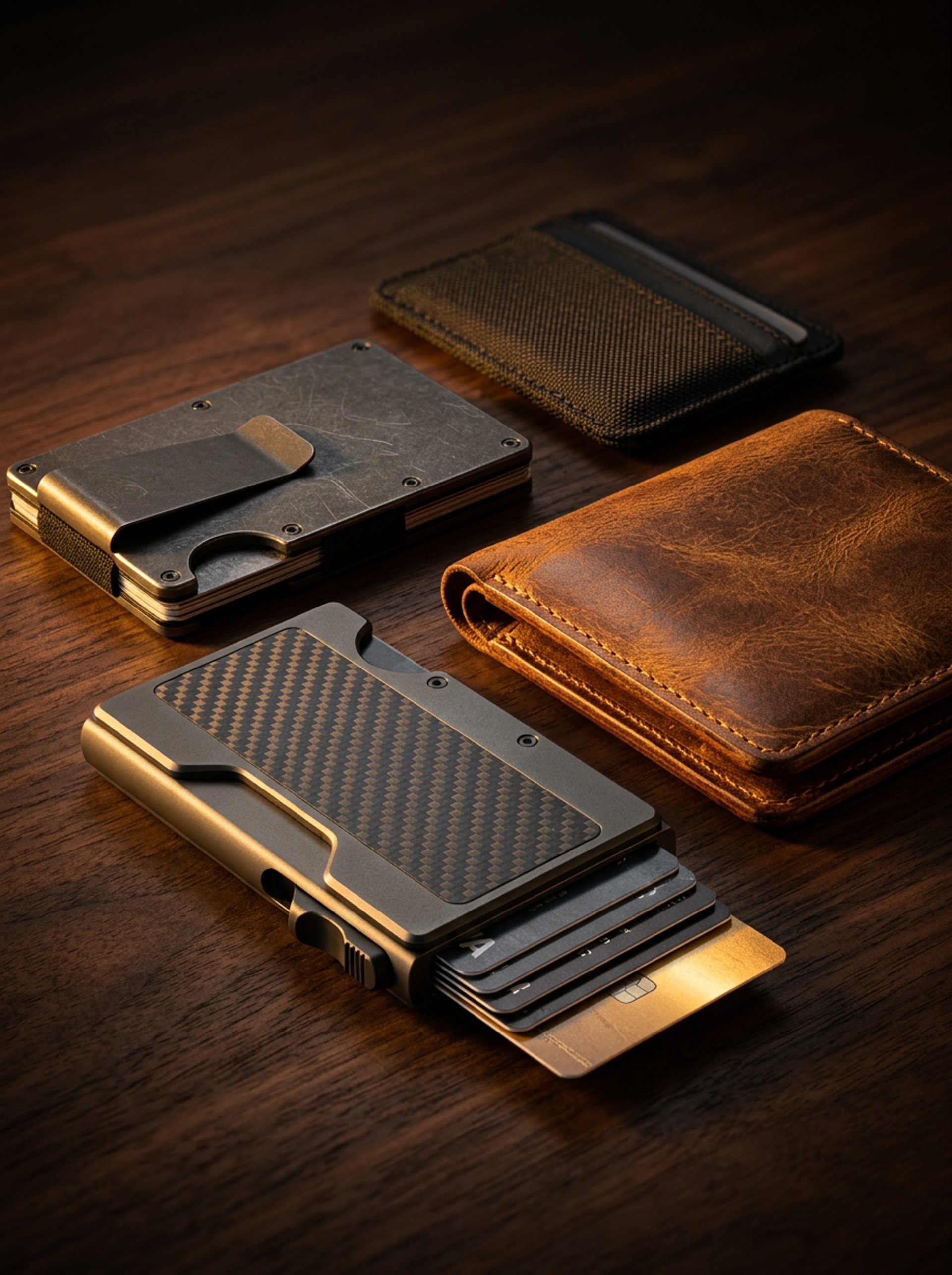
How Many Cards Should You Carry in Your Wallet for Everyday Carry?
Discover how many cards to carry daily for the perfect balance of convenience, minimalism, and wallet durability.
EDC WALLETS
The EDCBuzz Editorial Team - Led by AJ “Buzz” Eichman
4/9/20266 min read
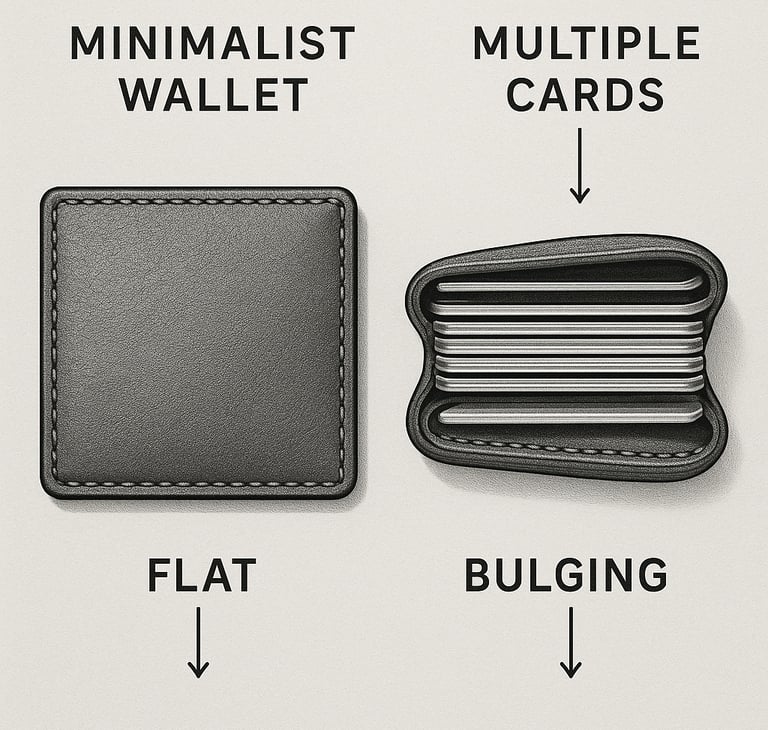
Finding the right balance between convenience, minimalism, and practicality when it comes to how many cards you carry in your everyday wallet isn’t as simple as it sounds. Carry too many, and your wallet bulges like it’s hiding secrets it shouldn’t; carry too few, and you might find yourself awkwardly scrambling for the one card you left behind. Over weeks of carrying various wallets and trimming my card count, I’ve learned that the magic number isn’t fixed, but depends on your daily routine, wallet design, and a bit of discipline.
Quick Verdict
Most minimalist wallets comfortably hold between 4 to 6 cards without turning into a pocket monster.
Carry your essential cards: primary credit/debit, photo ID, and any critical membership or insurance cards.
Organize cards by frequency of use — less digging means less pocket frustration.
Resist the urge to lug every card you own; it saves your wallet’s shape and your back pocket’s dignity.
Why the Number of Cards Matters in EDC Wallets
We often overlook the subtle tyranny of an overstuffed wallet until the moment it twists awkwardly in your pocket on your commute or makes sitting an uncomfortable puzzle. The number of cards impacts more than just bulk; it influences how the wallet wears, how easy you can access what you need, and ultimately, how long your wallet lasts before looking like a crumpled mess of leather or synthetics.
If you're dealing with bulk issues already, Why Your Wallet Is Too Bulky connects directly to what happens when card counts creep too high.
Overloading a wallet is like a slow-motion destruction project. Card slots stretch, leather edges warp, and seams start to protest. On the flip side, skimping on cards can leave you fumbling for IDs, payment options, or loyalty cards when you least want to. The sweet spot? Enough cards to cover your everyday basics and a couple of extras, no more.
Typical Wallet Card Capacities and Materials
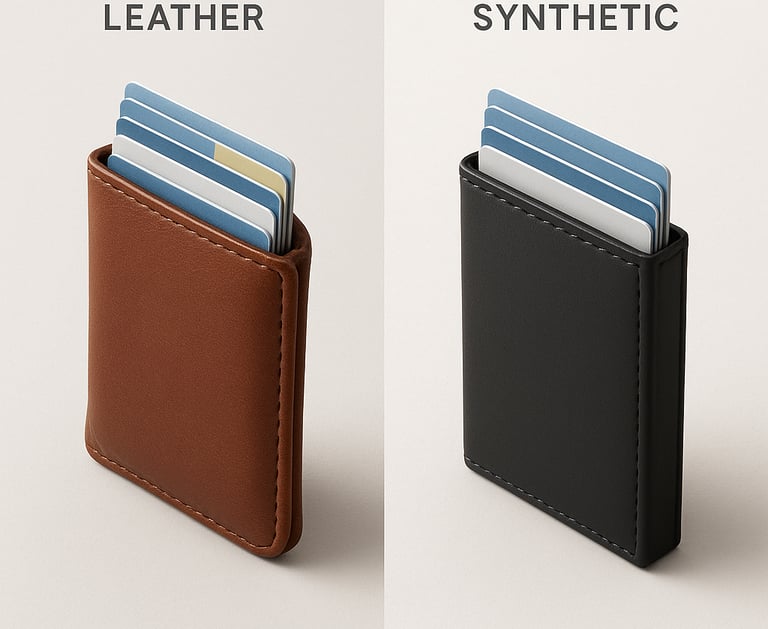
Most minimalist wallets advertise a card capacity ranging from about 3 to 6 cards per section. However, once you slide in thicker, RFID-blocking cards or sleeves, that capacity feels tighter than the label suggested. Leather wallets tend to start snug but loosen with time, which is a double-edged sword — comfortable, but less shape retention. Synthetics offer resistance to stretch but can feel stiff in day-to-day use.
If you want a deeper look into how materials impact capacity and wear, Best Wallet Materials Explained ties directly into this section.
Between wallets designed for all-in-one use and slimline cardholders, I’ve found the ones optimized for 4 to 6 cards strike the best balance. That handful accommodates your essentials, and these designs usually have quick-access slots that limit fumbling. Beyond six cards, the ridge along the edge starts to dig into your hands and pockets, and the wallet’s form slips from sleek to bulky before you notice.
Essential Cards to Carry Every Day
After living with more cards than I’d care to admit, paring down to the essentials pays dividends in comfort and speed. Here’s my recommended daily lineup:
Primary Credit and/or Debit Card
Photo Identification
Health Insurance Card
Essential Membership or Transit Cards
Emergency Contact Card or Backup
If you’re trying to simplify your carry further, Minimalist Wallets Explained aligns closely with reducing card load to essentials.
Avoid stuffing in rarely used membership or discount cards, loyalty punch cards, or copies of documents. These clutter the wallet, add weight, and contribute to wear without payoff.
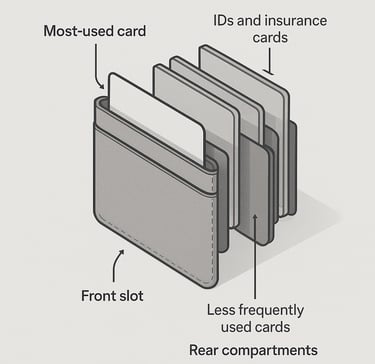
How to Organize Your Wallet for Quick Access
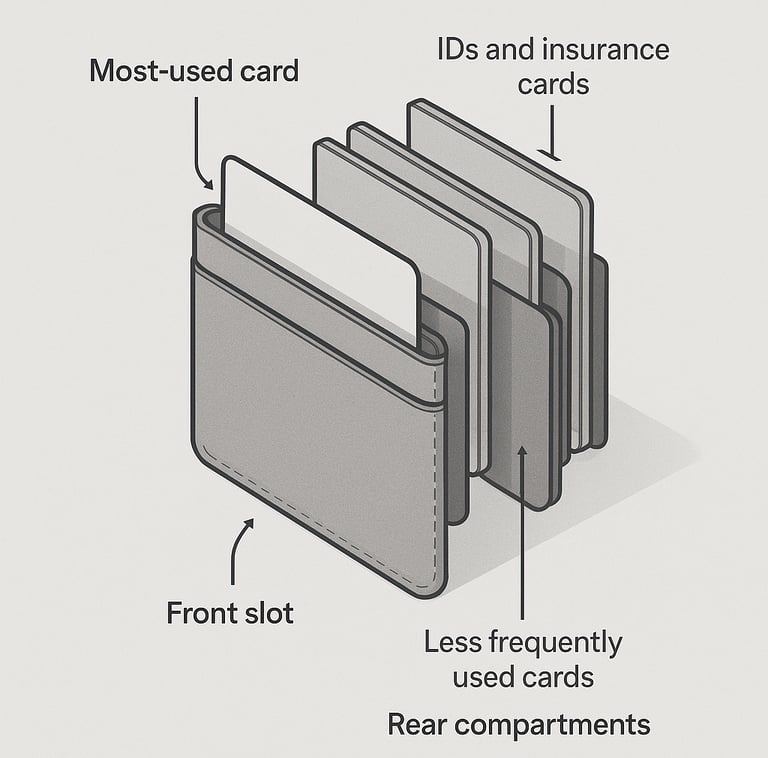
Wallet organization isn’t just about neatness; it’s about efficiency in your pocket’s traffic flow. Over time, I’ve found it pays to sort cards based on use frequency:
Front or quick-access slot
Middle slots
Back slots or secondary compartments
If you're deciding how pocket placement affects organization, Front Pocket vs Back Pocket Wallet is worth factoring into your setup.
Creating this mental map means you spend less time digging and more time moving on with your day. Leather or rigid wallets require a bit more care in organizing since pushing and shuffling can stretch card slots unevenly. Synthetic stretch wallets are a bit more forgiving but still benefit from thoughtful placement.
Also, watch for cards with different thicknesses, such as RFID-blocking sleeves or transit passes. Putting these next to paper-thin cards may distort the whole stack, so group similar cards together when possible.
Pros and Cons of Digital vs Physical Cards
Digital wallets are enticing. No bulk, instant updates, and fewer cards to carry. Still, they aren’t flawless replacements just yet. There are places, particularly with IDs or specific members-only access, where a physical card remains the only option.
If RFID and digital security are concerns, RFID Wallets Do You Need One breaks down how protection fits into modern carry.
Relying exclusively on digital can lead to awkward moments, often when your phone is dead or inconveniently tucked away. The mix that’s worked for me involves carrying only my truly necessary physical cards while shifting less essential ones to digital apps.
Common Wallet Overstuffing Mistakes to Avoid
It’s easy to fall into wallet overstuffing traps — I’ve been there. Here are a few recurring mistakes that sneak up on even the best intentions:
Carrying all cards “just in case”
Holding onto expired or unused cards
Ignoring wallet capacity limits
Neglecting slot rotation
Poor organization
Tips for Maintaining Your Wallet’s Durability
A well-chosen wallet paired with mindful care can last years, even through steady daily use. After months or years, I’ve noticed these small practices make the difference:
Avoid overstuffing beyond design capacity.
Rotate cards and slots occasionally.
Keep wallet clean and dry.
Choose quality materials designed to handle your preferred card load.
Remove cards you no longer need.
Consider using slim RFID sleeves.
How to Choose the Right Wallet for Your Card Needs
Pick a wallet that matches not just your style but your card carrying habits. If you’re a minimalist who lives on a couple of cards, a simple card sleeve or slim bifold designed for 3 to 4 cards will serve you well.
If you're comparing actual wallet options for different carry levels, Best Minimalist Wallets and Best Premium EDC Wallets are good reference points for real-world designs.
If your day demands a few extra membership, transit, or insurance cards, look for wallets with secure multi-slot designs and some flexibility in material.
Frequently Asked Questions
How many cards can a typical minimalist wallet hold?
Most minimalist wallets are designed to hold about 3 to 6 cards comfortably.
What are the essential cards to carry daily?
Typically, a primary payment card, a photo ID, and critical insurance or membership cards.
Is it better to carry fewer cards or all my cards in an EDC wallet?
Fewer cards usually mean more comfort and less wear.
How can I organize my cards for quick access?
Place your most-used card in a front slot, others behind based on frequency.
Are digital wallet apps a practical substitute for physical cards?
They help reduce bulk but don’t fully replace physical cards.
What wallet materials best handle multiple cards?
Sturdy synthetics and leather handle load differently; both have tradeoffs.
Can carrying too many cards damage my wallet?
Yes, overcapacity stresses materials and reduces lifespan.
Should I carry both credit and debit cards daily?
Depends on your routine, but many carry at least one primary option.
Conclusion
Carrying the right number of cards in your everyday wallet is less about rigid numbers and more about striking a balance suited to your lifestyle, wallet design, and daily needs. Over the long haul, carrying 4 to 6 well-chosen cards feels like the sweet spot — enough to keep you covered without turning your pocket into a bulging annoyance.
If you want to explore full wallet setups built around this philosophy, the EDC Wallets pillar connects everything together.
Watch for how your wallet ages, how easy your cards are to access, and how the whole setup fits your pocket and daily grind. If your wallet starts to protest with stretched leather or pokey edges, consider stepping back and trimming your card load. In the end, a wallet should serve you smoothly, not remind you it’s there every time you sit. And remember, minimalism doesn’t have to be a chore—it’s practical comfort that just happens to keep your dad jokes breezy. After all, a slim wallet carries fewer punchlines but a lot more ease.

Contact@TheBuzzHQ.com
© 2026 EDCBuzz. All rights reserved.
EDCBuzz
Master everyday carry systems with clarity and precision. Built for real environments and practical use.
For educational purposes only.
General Inquiries: