

The Most Durable Watch Materials Explained
Discover durable watch materials that withstand scratches, impacts, and corrosion for everyday carry. Learn how to pick the best watch for your lifestyle.
EDC WATCHES
The EDCBuzz Editorial Team - Led by AJ “Buzz” Eichman
6/28/20268 min read
Choosing the right watch materials makes more difference than folks often realize. It isn’t just about how shiny or light a watch looks on your wrist. The materials determine how well that watch will hold up to daily bumps, scratches, weather, and whatever else life throws at you. If you’re carrying an everyday watch—especially one that sees outdoor use or rough conditions—durability matters more than a glitzy dial or fancy features. A dependable watch material means you won’t have to worry that your timepiece will fail when you need it.
Whether you're buying your first everyday watch or upgrading to something built for decades of use, our EDC Watches pillar covers the different watch styles, materials, and buying considerations that matter most.
Quick Verdict
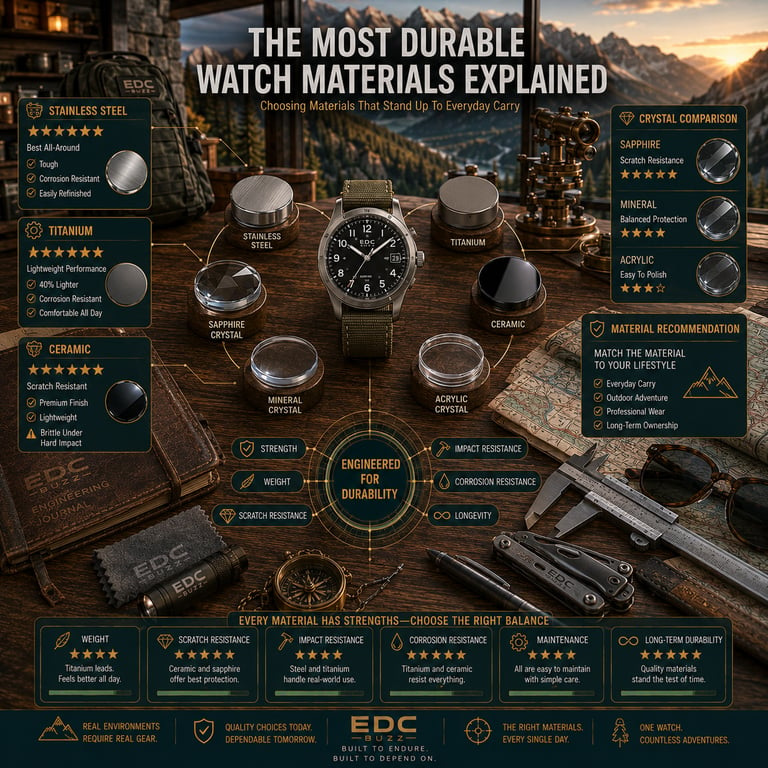
Stainless steel offers a solid balance of toughness, corrosion resistance, and reasonable cost.
Sapphire crystal is the best for scratch resistance but comes with the risk of shattering if hit hard.
Titanium provides lightweight, corrosion resistance, though it scratches more easily than steel.
Ceramic is scratch-resistant and light but can crack under sharp impacts.
Choosing watch materials depends largely on what you expect from your watch: daily wear, outdoor abuse, or style preference.
Why Watch Material Matters for Durability
I’ve spent a good part of my life outdoors, and I’ve learned the hard way that a watch is no good if it doesn’t keep ticking or shows the hours right when you need it. The materials in the watch case, crystal, and band all contribute to how well the watch stands up to knocks, moisture, and time itself.
When you’re out in the wild or working hard, a watch made from fancy but fragile materials isn’t much use. On the other hand, a watch that looks plain but can shrug off scratches and corrosion will keep going. How those materials age, how tough they are against everyday wear, and how easy they are to maintain—these things decide if a watch is truly durable. If you're wondering whether premium materials justify the added cost, What Makes A Good EDC Watch? provides a solid foundation before diving into specific materials.
Common Durable Watch Materials: Stainless Steel, Titanium, Ceramic, and More
Stainless steel is probably the most common material in durable watches, and with good reason. It’s strong, reasonably heavy, and it resists rust even when exposed to sweat or a bit of rain. Marine-grade steel, like 316L, is often used because it holds up well in moist conditions. It’s not immune to scratches, but steel can be polished back to looking decent if you don’t mind putting in the effort. It’s a material that rarely lets you down, and it won’t surprise you with sudden cracks or failures.
Titanium is another material that turns up quite often, especially when weight matters. This metal is about 40 percent lighter than steel and handles corrosion very well. For someone who doesn’t want to feel the weight of their watch after a long day, titanium has a place. The trade-off is it scratches easier on the surface. But those scratches tend to be superficial, and the metal itself won’t weaken. If you lean toward titanium, it’s worth thinking about the care you’ll give it. It won’t chip or crack like some materials but does need a watchful eye to keep it looking clean.
Ceramic has a reputation for being tough, and in some ways, it is. It’s excellent at resisting scratches—you won’t see the kind of wear marks you get on metal over time. Plus, it’s lighter than steel and gives the watch a modern, polished look. But ceramic has a brittle side. A hard knock, especially if the watch hits edge-first, can cause cracks or chips. This isn’t something that shows up in everyday wrist movements but makes ceramic less forgiving during drops or heavy impacts.
Comparing Watch Crystal Types: Sapphire, Mineral, and Acrylic
The glass covering the face of your watch plays no small role in durability, too. Sapphire crystal is a favorite among those who want to avoid scratches at nearly all costs. Scoring a 9 out of 10 on the Mohs hardness scale, it resists scratching better than just about anything short of diamond. That said, sapphire crystal’s high hardness also means it can be brittle. Hit it hard, and there’s a risk it could shatter or chip.
Mineral glass is a more affordable middle ground. It’s tougher than acrylic and less likely to scratch easily. While not as hard as sapphire, it offers a decent balance if you’re looking for durability without the brittleness concerns.
Acrylic, the softest of the three, scratches easily but rarely cracks. Some folks find they can polish out scratches on acrylic, which isn’t possible with sapphire or mineral glasses. It’s a trade-off anyone carrying their watch through rough environments might appreciate. If you're deciding between these materials, Mineral Crystal or Sapphire Crystal: Which Should You Choose? compares their strengths and weaknesses in much greater detail.
Pros and Cons of Each Material for Different Use Cases
Each of these materials has a place, depending on what you expect from your watch.
For daily office wear or general use, stainless steel paired with a sapphire crystal makes solid sense. You get good scratch resistance where it counts and a watch that can handle daily knocks around your desk or while running errands.
If you spend much time outdoors—hiking, fishing, or working with your hands—titanium’s lighter weight and corrosion resistance will stand out. You’ll want to be mindful of surface scratches, but those won’t keep your watch from working. If you're looking for watches designed around rugged use, our Best Dive Watches guide features models built for demanding environments.
Ceramic shines if you want something scratch-resistant and light but don’t plan on dropping your watch or banging it hard. It’s a bit like wearing eyeglasses; the glass might resist scratches, but a drop on concrete is another matter.
Sapphire crystal is unbeatable for scratch resistance but needs care against impacts. If replacing the crystal is likely a hassle or expense for you, heed the risk.
How to Choose the Best Watch Material Based on Your Needs
If you’re only carrying one watch, it’s wise to lean toward a combination that demands less from you. Stainless steel with sapphire crystal is a classic for a good reason—it balances strength, corrosion resistance, and cost, with repair options widely available.
Titanium works well if weight is a silent concern. You won’t be reminded by a heavy watch at the end of the day, but remember it’s not as tough on the surface finish.
Ceramic and sapphire demand a careful wrist. You notice their benefits after a few days, especially when scratches don’t show, but you don’t want them to see a drop. Same with the watch crystal choice: sapphire for scratch resistance, mineral or acrylic if you want some flex.
Pay attention, too, to the band and clasp. Durable materials there are just as important because even the toughest watch case won’t last if the strap breaks or the clasp fails. Choosing the right combination becomes easier after reading our Watch Buying Guide, which walks through the trade-offs between materials, movements, and intended use.
Care and Maintenance Tips to Extend Watch Life
No matter how tough the materials, watches benefit from regular care. Steel and titanium watches can be cleaned with mild soap and water, dried well, and occasionally polished to remove superficial scratches. Avoid harsh chemicals, especially on titanium, as some cleaners can dull or discolor the surface.
Ceramic watches are easiest to clean but require you avoid impacts that might crack them. Sapphire crystals don’t need polishing but are worth protecting from hard knocks.
Replacing sapphire glass can be costly and not always readily available, so consider that before choosing a watch with this material. Steel can take scratches and polish them out, letting you live with minor wear longer. Following the advice in Watch Maintenance Tips For Long-Term Reliability will also help preserve both the appearance and function of your watch for years.
Common Mistakes When Considering Watch Durability
One mistake I often see is assuming that all “tough” materials are scratch-proof. That’s not true. Some scratch-resistant materials are brittle—for instance, sapphire and ceramic will stand up to scratches but might shatter on a solid impact.
Another trap is focusing only on the watch case and crystal materials while neglecting the band or clasp. The watch might be bulletproof, but if the strap tears or the clasp slips open, you’re out of luck.
Some people expect a heavier watch to be more durable. Steel watches carry weight, but that heaviness can get tiring. Lightweight options like titanium might handle abuse better simply because you don’t worry about them as much.
Lastly, picking a watch material based purely on looks can lead to disappointment. If your watch spends time outdoors or in harsh conditions, durability will trump style alone. Comparing Seiko Prospex SRPE37 vs Timex Expedition Field Post (Dive Watch vs Field Watch) is a good example of how different materials and designs suit different types of everyday carry.
Frequently Asked Questions About Durable Watch Materials
What is the most scratch-resistant watch material?
Sapphire crystal is the best when it comes to resisting scratches on the watch face. It’s much harder than mineral or acrylic glass and keeps that “like new” look longer.
How does titanium compare to stainless steel for watch durability?
Titanium is lighter and more corrosion-resistant but tends to scratch easier than steel. Steel is heavier but can be polished to reduce the appearance of scratches.
Are ceramic watches prone to cracking or breaking?
Yes. While ceramic resists scratches well, it can be brittle and prone to cracking if dropped or hit hard, especially on edges or corners.
What type of watch glass is best for everyday wear?
Sapphire crystal is usually best for everyday wear because it resists scratches and looks good over time, but if you expect rough use, mineral glass may be a more practical choice.
How to care for a sapphire crystal watch?
Avoid hard impacts and clean the crystal regularly with a soft cloth. Since sapphire can shatter on strong hits, using the watch with care will extend its life. Polishing scratches isn’t an option here.
Which watch materials are best suited for outdoor use?
Stainless steel and titanium are typically the best materials for outdoor watches. They resist corrosion and impact better than ceramic and offer easier maintenance.
Can watch materials rust or corrode over time?
Materials like stainless steel and titanium resist rust and corrosion well. Lower-grade steel or untreated metals may show rust if exposed to moisture without care.
Is a heavier watch always more durable?
Not necessarily. Heavier watches often use stainless steel, which is durable, but bulky weight can be a burden. Lighter materials like titanium provide good durability without the same wear fatigue.
Practical Conclusion
Over decades of time spent outdoors, I’ve learned that a watch’s materials are more than just technical details; they’re the difference between a tool that stays reliable and one that leaves you guessing. Stainless steel stands out as a practical all-rounder—built tough, able to shrug off moisture, and repairable in most situations. Titanium offers the advantage of lightness with a few trade-offs in surface care. Ceramic and sapphire bring impressive scratch resistance but demand mindfulness around impacts that can’t be shrugged off.
Choosing durable watch materials comes down to knowing how and where you’ll use that watch. For everyday carry with a mix of work and leisure, go with what offers balance and reliability. If you find yourself carrying a watch through rougher conditions, lean into those materials that stand up to wear without fuss.
At the end of the day, durability isn’t about having the newest gadget on your wrist. It’s about having a watch that just works quietly and keeps on ticking, long after the novelty wears off. That’s the kind of reliability worth seeking.
Contact@TheBuzzHQ.com
© 2026 EDCBuzz. All rights reserved.
EDCBuzz
Master everyday carry systems with clarity and precision. Built for real environments and practical use.
For educational purposes only.
General Inquiries: