

Best Watch Strap Materials For Everyday Carry
Discover the best watch strap materials for everyday carry, balancing comfort, durability, and style suited to your daily routine and needs.
EDC WATCHES
The EDCBuzz Editorial Team - Led by AJ “Buzz” Eichman
6/28/20269 min read
When it comes to everyday carry, the watch you wear is often more than just a tool for checking the time — it’s a constant companion, balancing style, function, and comfort throughout the day. But here's the thing most folks don’t talk about enough: the strap. That humble band wrapped around your wrist can make or break your daily experience. You might have that state-of-the-art watch face, but if your strap isn’t suited for your routine, you’ll notice it pretty quickly.
After carrying and wearing several watches through different daily rites and grinds, I can say that knowing the right watch strap materials for everyday carry is more than just picking what looks good. It’s about what feels good, lasts, and works wherever your day takes you. If you're still deciding on the watch itself, our EDC Watches pillar is a great place to start before narrowing down strap options.
Quick Verdict
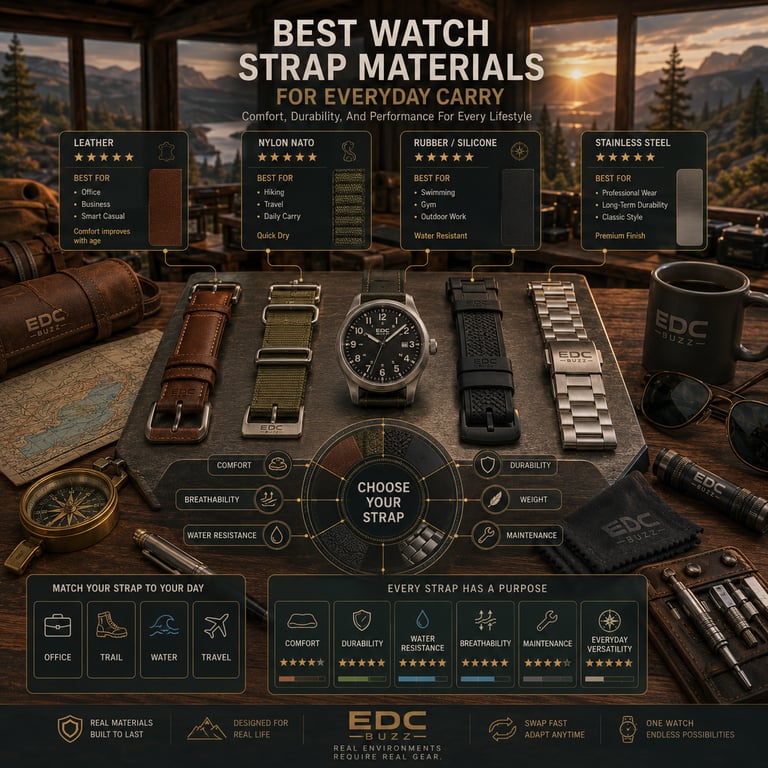
Leather straps offer classic comfort and style but demand regular maintenance and don’t hold up well in wet or sweaty conditions.
Nylon (including NATO straps) provides lightweight durability and breathability, ideal for active and outdoor use, with easy maintenance.
Rubber and silicone straps excel at water resistance and flexibility, perfect for sports or rugged, sweaty wear.
Metal bracelets are durable and dressy but heavier and less breathable, which can lead to wrist fatigue over time.
Why Watch Strap Material Matters for Everyday Carry
You don’t notice your watch strap when it’s doing its job right — it simply supports the watch, feels comfortable, and stays put all day long. But once you’ve worn a strap past the novelty phase (usually a few days), minor annoyances start creeping in. Maybe the leather absorbs sweat and stiffens awkwardly, or the nylon itches a little after hours outdoors. The metal bracelet might chafe or feel like you're wearing a small anvil by day's end. These aren’t make-or-break issues, but they definitely shape how much you want to wear the watch in the first place.
Good watch strap materials strike a balance between comfort, durability, usability, and aesthetics. The trick is you have to match your strap to your lifestyle and daily routine. Office slick? Leather or metal might fit. Lots of outdoor or wet work? Nylon or silicone would serve you better. If you're building an entire collection, our Watch Buying Guide covers how different watches and straps fit different lifestyles.
Common Watch Strap Materials Explained
Not all watch straps get the same spotlight, but each material brings its own set of strengths and quirks. Here’s a look at the four main types you’re likely to encounter when browsing everyday carry watch straps.
Leather Straps: Pros, Cons, and Best Use Cases
Leather is the classic for a reason. Its warmth and softness develop with wear, molding to your wrist in a way synthetic straps just can’t match. A well-made leather strap can elevate an everyday watch into something you’d comfortably wear to the office or a night out.
That said, leather demands care and environment awareness. It doesn’t like water — get caught in the rain or sweat heavily, and the leather can absorb moisture, leading to stiffness, discoloration, or worse, premature breakdown. This isn’t a strap for gardening or trailblazing unless you’re fine with swapping it out regularly.
Over weeks of use, leather’s thickness and flexibility settle into a rhythm. Some thinner leathers can feel just right fast, while thicker ones might initially feel bulky but soften with time. One tip from experience: check your skin after wearing leather regularly, especially in warm weather. Some straps cause mild irritation from repeated sweat absorption — nothing serious but noticeable if sensitive.
If you work in a more formal setting or want that polished look on your daily carry watch, leather is the way to go — with the understanding it needs respect and maintenance like occasional cleaning and conditioning. If you're shopping for something versatile enough to pair with multiple strap styles, our Best Dress Watches guide is worth exploring.
Nylon and Fabric Straps for Active Lifestyles
If leather is the well-dressed cousin, nylon straps — especially NATO-style — are the reliable work boots of watch bands. Their lightweight, woven texture breathes well, making them ideal for active wear or warm days when sweat is a constant companion.
Nylon straps are also admirably resilient. They resist water, dry quickly, and tolerate some rough treatment without complaint. Over several weeks of outdoor use, I’ve found that nylon straps feel less sticky or irritating compared to leather once sweat builds up — they just shrug it off and keep going.
Another practical plus is their one-piece construction under the watch case, which gives extra security if a spring bar fails. They’re also easy to clean — a quick rinse and air dry get them back in shape without fuss.
On the flip side, nylon straps lack the formal style of leather and won’t bring that same sleek aesthetic in a business setting. But for everyday carry where comfort and durability matter more than dressiness, nylon straps wear like champions. Plus, they often come in colors and patterns that add a bit of personality without feeling loud. If you're deciding specifically between nylon and leather, our NATO Strap or Leather Strap: Which Is Right for You? article goes into much more detail.
Rubber and Silicone Straps for Durability and Water Resistance
For those who need a strap that stands up to sweat, water, and the occasional splash of who knows what else, rubber and silicone are your allies. They’re flexible and forgiving, rarely cause irritation, and shrug off moisture like it never happened. After several weeks of sports or physical work use, these straps prove they can handle heat, grime, and everything from hand washing the dog to impromptu gym sessions without signs of wear.
The flexibility means they bend easily around the wrist, reducing pressure points. They feel a little softer and more “cushiony” than nylon under constant wear. Their only real drawback is they can attract dust or lint, and on occasion, skin-sensitive users might find cheaper versions cause mild irritation. Investing in higher-quality rubber or silicone straps usually solves that.
The look skews casual and sporty — if you’re pairing your everyday watch with suits or dress shirts, these won’t always match. But for rugged weekend wear or active daily routines, they’re the comfortable, maintenance-free option that doesn’t disappear in your pocket like that forgotten set of keys. If you're weighing rubber against steel for daily wear, our Metal Bracelet or Rubber Strap: Which Fits Your Lifestyle? comparison can help narrow the choice.
Metal Bracelets: Strong, Stylish, but Heavy
Metal bracelets, typically stainless steel, have a reassuring heft and solid feel that instantly ups the presence of a watch. They’re tough — scratches, sweat, and dirt don’t faze them easily, making them a sensible choice for daily office wear or occasions when durability and appearance count equally.
That said, their weight is a double-edged sword. After hours on the wrist, a metal bracelet can become noticeable. If you’re not used to it, wrist fatigue or a slight pinch now and then might show up. Link construction makes metal bracelets fairly flexible, but less so than fabric or rubber straps, so the overall comfort can feel clunkier through the day.
They don’t breathe like fabric or nylon, so in warmer climates, you might notice more sweat trapped under the links, which can lead to minor discomfort. Cleaning is straightforward but requires a bit more time if you want to keep them sparkling.
For those with sensitive skin, hypoallergenic steel options exist, but metal straps sometimes react poorly with skin chemistry, causing irritation. Worth testing if you plan prolonged wear.
How to Choose the Right Strap for Your EDC Needs
If you’re aiming to pick the best watch strap materials for everyday carry, start by honestly assessing your daily activities, style preference, and tolerance for maintenance.
For office or casual day-to-day wear that leans dressy, leather or metal could be your go-tos — just be ready to care for leather or accept the weight of metal.
If you spend a lot of time outdoors, or expect your strap to face sweat, water, or active motion, nylon or rubber hits the sweet spot for comfort and durability.
Have sensitive skin? Try straps made with hypoallergenic materials and test them out for a day or two. Remember, cheap straps often mean cheap materials, increasing irritation risks.
Don’t forget strap width and lug compatibility. A strap that fits perfectly (usually 18mm to 24mm depending on your watch) will feel more secure and last longer.
Also, quick-release spring bars add ease if you like swapping straps often. If you're comparing watches that commonly use different strap styles, our Garmin Fenix 8 vs Victorinox Journey 1884 (Smartwatch vs Traditional Watch) comparison offers some practical perspective.
Comfort is paramount. Thickness, flexibility, and breathability all factor in. Leather thick as a book might look sharp but feel stiff; thinner nylon or silicone bands may offer a soft, “forgot-it’s-there” feel.
Consider maintenance: leather requires conditioning, nylon can be washed, silicone just needs a rinse, and metal demands periodic cleaning to remove grime from links.
Maintenance Tips to Prolong Strap Life
No matter which material you choose, a little regular care goes a long way.
For leather, keep it dry and conditioned with suitable leather creams. Avoid submerging in water — a damp cloth cleaning is usually better. Swap leather straps out if you notice cracking or excessive stiffness.
Nylon straps are tough but appreciate an occasional hand wash with mild soap. Make sure they fully dry before wearing again to prevent skin irritation.
Rubber and silicone benefit from simple wipe-downs or gentle scrubbing to keep dirt and sweat at bay. Avoid harsh chemicals which can degrade the material.
Metal bracelets should be cleaned with a soft brush and warm water. Dry completely to avoid rust or corrosion, though stainless steel is largely resistant.
Understanding when straps show fatigue signs and replacing them accordingly keeps your watch comfortable and secure. If you're unsure when replacement is actually necessary, our Signs It's Time To Replace Your Watch Strap guide covers the warning signs to watch for.
Common Mistakes When Choosing Watch Straps
Choosing a watch strap is simple enough, but after living with various options, some missteps are all too common.
Picking straps based only on looks without considering your daily activity. That handsome leather may dry out and crack if you’re outdoors often.
Ignoring strap width and lug compatibility leads to poor fit, which can cause the watch to shift, stress pins, or even damage your watch.
Assuming all leather straps handle water equally. Spoiler alert: few do. Water exposure leads to faster wear unless you have a specially treated strap.
Overlooking breathability. Straps that trap sweat or heat on warm days will cause irritation and discomfort over time.
Buying cheap straps that fall apart fast or cause allergic reactions. Investing a little more upfront saves headaches later.
Not factoring in the ease of cleaning and maintenance, leading to dirty, smelly, or damaged bands before you expected.
Many of these issues are also covered in Common Watch Mistakes New Buyers Make, especially for first-time buyers.
Frequently Asked Questions
What watch strap materials are best for everyday wear?
Leather, nylon, rubber/silicone, and metal all have their place depending on your daily activities and comfort preferences. None is universally best; it’s about what fits your routine.
How do I choose a strap that is both durable and comfortable?
Consider your activity level and environment first. Durable nylon or rubber straps often offer excellent comfort for active lifestyles, while leather and metal suit more formal or casual wear but with differing maintenance needs.
Can leather watch straps be used for outdoor activities?
Leather can be used outdoors but isn’t ideal for wet or sweat-heavy activities since moisture affects its longevity and comfort. If you want leather on hand, be ready to swap it out if conditions get rough.
What are the benefits of nylon NATO straps versus rubber straps?
Nylon straps are breathable, lightweight, and quick to dry, making them ideal for sweat and varied environments. Rubber straps are more water-resistant and flexible, better suited for direct water exposure or rugged, sweaty wear. If you're considering a field watch specifically, our Khaki Field vs Promaster Navihawk A-T (Field Watch vs Pilot Watch) comparison discusses how strap choices complement different watch styles.
How often should I replace my watch strap?
It depends on material and use. Leather may last months to a year with care, nylon and silicone several years with proper cleaning, and metal bracelets even longer if maintained. Replace when you notice wear, discomfort, or damage.
Are metal watch straps good for people with sensitive skin?
Some metal straps may irritate sensitive skin. Opt for hypoallergenic stainless steel or titanium options and ensure the bracelet is clean. Testing for short periods helps gauge your skin’s reaction.
How do I clean and maintain different watch strap materials?
Leather needs gentle cleaning and conditioning, nylon benefits from hand washing and drying, rubber and silicone require simple wiping, and metal bracelets call for brushing and drying.
What factors affect the longevity of a watch strap?
Material quality, exposure to moisture and sweat, maintenance habits, and how well the strap fits your watch and wrist all influence its lifespan.
Practical Conclusion
Long-term satisfaction with your everyday carry watch often comes down to the strap — that seemingly minor piece that supports every move and mood of your day. After wearing many straps across the spectrum of materials and conditions, it’s clear there’s no single “best” pick for everyone. Instead, the best watch strap materials for everyday carry hit the sweet spot between comfort, durability, and practicality tuned to your lifestyle.
Leather charms with its style and comfort but needs TLC and dry conditions to last. Nylon straps carry you through sweat and rough weather with light, breathable resilience. Rubber and silicone stand tough where moisture and movement rule, while metal offers dependable strength and style at the cost of some heft and breathability.
Taking a thoughtful approach to your strap — considering what you do, where you do it, and how you care for your gear — will keep your watch feeling as ready as you are. If you're still deciding which watch deserves that perfect strap, our Best EDC Watches guide is an excellent place to compare the top options. And if you notice the strap quietly disappearing on your wrist the way a good accessory should, you know you picked well. Or at least better than that old bookmark you tried wearing once.
Contact@TheBuzzHQ.com
© 2026 EDCBuzz. All rights reserved.
EDCBuzz
Master everyday carry systems with clarity and precision. Built for real environments and practical use.
For educational purposes only.
General Inquiries: