

What Every Maintenance Technician Should Carry Daily
Discover essential maintenance technician daily carry tools that boost efficiency, comfort, and durability for every workday.
LOADOUTS
The EDCBuzz Editorial Team - Led by AJ “Buzz” Eichman
6/11/20268 min read
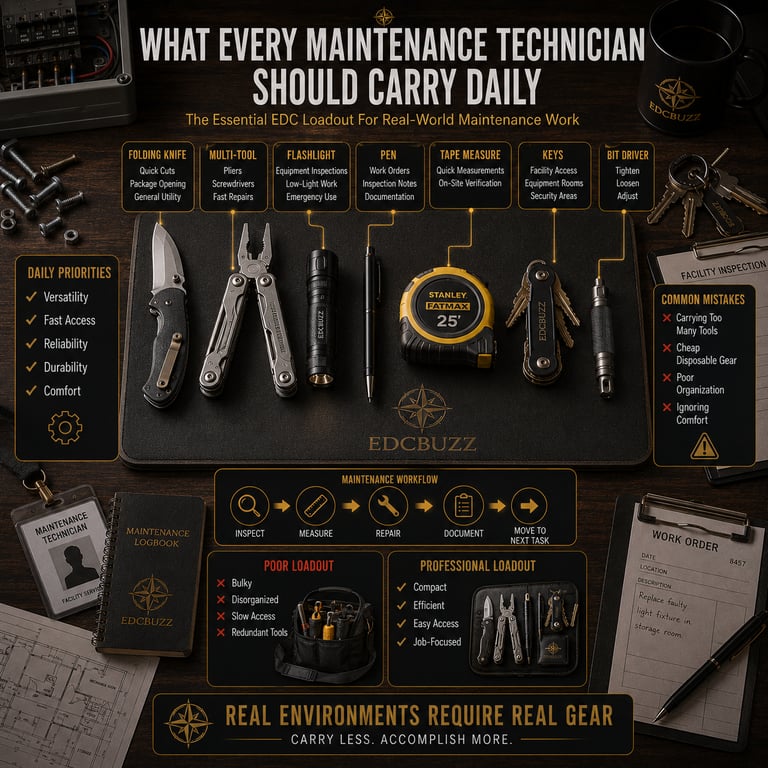
Every maintenance technician knows that success on the job depends less on luck and more on preparation. You can’t afford to show up and fumble around looking for that one screwdriver or a tape measure you swear you had five minutes ago. That’s where a well-rounded daily carry kit comes into play. Carrying the right everyday carry tools for maintenance tasks means being ready for whatever the day throws at you — whether it’s a quick fix on a factory line or an unexpected plumbing tweak in a commercial building.
After spending weeks carrying and using a curated set of EDC tools designed for maintenance pros, I’ve come to appreciate not just what’s in the kit, but how the tools behave from first use through extended wear. This isn’t a glossy unboxing review; it’s a practical look at the gear that gets the job done day after day.
If you're building or refining a work-focused setup, the EDC Loadouts Guide and EDC Loadout Builder by Budget can help match gear recommendations to your budget, priorities, and daily responsibilities.
Quick Verdict
• A reliable maintenance technician daily carry favors compact, versatile tools made from quality materials that resist wear and corrosion.
• Multi-tools make great backbone pieces, but blending them with select specialty tools improves efficiency and durability.
• Comfort and ease of access matter — bulky or awkward tools quickly become pocket dead weight by mid-shift.
• Organized storage, like magnetic holders or compact cases, keeps your essentials close and cuts down wasted seconds digging around.
Why Maintenance Technicians Need a Dedicated EDC Kit
You don’t stumble into a maintenance gig carrying spare parts loose in your pockets or half an uncooperative toolbox. The real heroes are the tools you can grab and trust to work without fuss. Those everyday carry essentials become part of your workflow rhythm. They don’t just fill space; they improve speed, accuracy, and safety.
When you pick tools that fit well in your hand after a full day, that comfort adds up. You’re not just fighting with your gear, you’re using it. That’s the difference between a technician who finishes on time and one dragging their feet or needing a second trip back to the van.
For examples of complete role-specific setups, compare the Best Budget Maintenance Tech EDC Loadout and Best Premium Maintenance Tech EDC Loadout.
Must-Have Tools for Daily Carry
Let’s be clear—carrying every possible tool just turns your pockets into a jumbled mess and your back into a sore reminder that your EDC kit needs a rethink. The best toolkit is the one that balances versatility with practicality.
Cutting Tools
A folding utility knife or a compact EDC knife is indispensable. After weeks carrying one, I noticed how the grip texture and blade deployment style really matter. A smooth-opening tool with a secure lock feels less like a chore and more like an extension of your hand. Make sure the blade material holds an edge well—stainless steel is often the go-to for corrosion resistance, especially if you work in humid or wet environments.
Screwdrivers and Pliers
A multi-tool featuring pliers, flathead, and Phillips screwdrivers is often the first thing in the pocket. It’s a neat package that eliminates the need to carry separate screwdrivers unless your job frequently demands specialized bits. Even so, a small set of precision drivers or a compact bit driver equipped with common sizes can make things less frustrating for those more stubborn fasteners.
If you're comparing options, Top Multi-Tools for Maintenance Technicians highlights some of the strongest choices for daily work.
Measuring Devices
A tape measure is non-negotiable on-site for quick dimension checks. The trick is finding one with a compact profile and a sturdy locking mechanism. Beyond tape measures, small electronic testers or a digital caliper might earn a spot depending on your specialty, but don’t overload here—pick what gets frequent use.
Multi-tools are convenient but rarely perfect for every task. I’ve found that after a few days using only a multi-tool, you start to feel its compromises—grip fatigue from smaller handles, limited leverage, or blades that aren’t quite right for tougher cuts. Pairing a quality multi-tool with a couple of selected full-size tools often delivers the best long-term usability.
Material and Build Quality to Look For
There’s a reason stainless steel is the darling of maintenance EDC gear. It resists rust and corrosion, so you aren’t constantly fighting grime or agonizing over spotty finishes. Hardness and edge retention on blades mean less sharpening and better reliability when precision cutting counts.
For handles, look for ergonomics that don’t leave your fingers screaming by lunchtime. Rubberized or textured grips that maintain tactility even with greasy or sweaty hands are more than just comfort luxuries—they prevent slips and the need to over-grip out of insecurity. It sounds minor until you’ve been tightening screws for hours on end.
Aluminum bodies on multi-tools or measuring tape cases keep the weight down without sacrificing durability. After a full shift, weight matters. Tools that feel light enough to effectively vanish in your pocket reduce cumulative fatigue and keep you moving smoothly through the day.
How to Organize and Carry Your Tools for Maximum Efficiency
The last thing you want is for your daily carry essentials to turn into an archaeological dig when you’re halfway through a job. Organization is partly about the physical method—whether that means a belt pouch, magnetic strip on the hip, or an arranged internal pocket in your work bag.
Magnetic holders are underrated; they snap your most-used screwdrivers or pliers into easy reach and won’t slip out with each movement. Compact cases or roll pouches with dedicated slots keep edges protected and prevent metal corners from making themselves unwelcome in your jeans.
Occasionally, you have to consider clothing too. Tool-friendly pants or jackets with reinforced pockets or dedicated slots can save your skin (and your tools) during tough workdays.
Many technicians find that How Maintenance Techs Can Build an EDC Loadout Under $250 provides a useful framework for balancing organization, budget, and functionality.
Common Mistakes to Avoid When Building Your Daily Carry Kit
First, resist the urge to carry every specialized single-use tool you own. This turns your kit into dead weight and slows you down when you need to move fast. Multi-tools offer versatility but don’t rely on them exclusively if your tasks demand extra precision or strength.
Second, never skimp on material quality. Tools that wear out or corrode rapidly don’t just cost more over time—they invite failure when you least need it. Regular maintenance is non-negotiable; a dull blade or loose screwdriver bit loses precious seconds and raises frustration levels.
Avoid ignoring comfort. A heavy or awkward tool is a pain, not just physically but mentally. Your EDC kit should feel like a natural part of your day, not a clunky reminder every time you reach into your pocket.
Many of these issues show up repeatedly in Most Common Maintenance Technician EDC Mistakes.
Maintenance and Upkeep Tips for Your EDC Tools
Your tools will outlast a lot of your work boots if you keep them sharp, clean, and properly stored. It’s tempting to give gear a quick rinse and toss it back into a pocket, but that’s how rust and grime sneak in.
A simple wipe-down and occasional oiling of folding mechanisms can keep tools opening smoothly. Sharpen blades regularly, and test screwdrivers to make sure bits aren’t stripped or worn down. A quick inspection at the start of the day can save you a walk back to the van or worse, improvising a fix that doesn’t hold.
Customizing Your EDC Kit for Different Maintenance Tasks
No two maintenance roles are the same. An HVAC technician might favor insulated screwdrivers and compact digital thermometers, while a plumber’s daily carry leans toward small pipe cutting tools and adjustable wrenches.
Don’t be afraid to tweak your kit based on daily assignments or seasonal tasks. Modular carrying solutions help here—tools that can swap in and out without overhauling the entire setup. You’ll quickly recognize what earns pocket space and what can stay on the truck.
For a broader look at how different outdoor and technical professions prioritize gear, see Landscaper vs Maintenance Tech EDC Loadout.
Real-World Use Cases Demonstrating Essential Tool Benefits
During a routine inspection in a manufacturing plant, I needed to quickly replace a worn gasket. My compact utility knife’s sharp blade and solid grip made cutting the gasket material straightforward without awkward wiggling or risk of slips. Meanwhile, my multi-tool’s pliers handled the clamps easily, while a magnetic holder on my belt kept that screwdriver a quick, confident reach away for final tightens.
On another occasion, repairing a faulty electrical panel meant insulated handles were a must. Carrying tools without the right grip texture and insulation would’ve been careless at best. The light weight of well-chosen tools kept hand fatigue manageable, even though the job dragged longer than expected.
Carrying your kit to a job site can start as a choice and end up as a habit. The better your gear feels in use, the more it becomes part of your daily rhythm—not just what you carry, but what you carry with.
One example is lighting. Many technicians eventually discover Why Flashlights Matter More Than Knives for Maintenance Work when working in cramped mechanical rooms, attics, crawlspaces, or poorly lit service areas.
Frequently Asked Questions
What are the must-have tools for a maintenance technician's daily carry?
Essentials include a sturdy folding utility knife, a multi-tool with pliers and screwdrivers, a compact tape measure, and optionally specialty drivers or testers based on your trade.
How can I organize my EDC tools for better efficiency at work?
Use belt pouches, magnetic holders, and dedicated tool organizers or roll pouches to keep tools in assigned spots. Choose clothing with reinforced pockets if possible.
What materials are best for durable and long-lasting EDC tools?
Stainless steel is preferred for corrosion resistance, and hardened alloys improve cutting edge retention. Ergonomic rubberized or textured grips improve comfort and safety.
Should I carry multi-tools or individual tools for maintenance tasks?
A hybrid approach works best. Multi-tools offer compact versatility, but select specialty tools improve durability and reduce strain during repetitive or demanding tasks.
How do I maintain my EDC tools to ensure they last longer?
Clean tools regularly, oil folding mechanisms, sharpen blades, check for wear, and store them properly in protective cases or organized pouches.
Are there recommended sizes or weights for tools to carry all day?
Compact, lightweight tools that fit comfortably in your pockets or belt are ideal. The goal is to minimize fatigue without sacrificing functionality.
What safety considerations should I keep in mind when choosing EDC tools?
Look for insulated handles for electrical work, slip-resistant grips for wet environments, and lockable knife blades to prevent accidental openings.
Can my EDC kit be customized based on different maintenance specialties?
Absolutely. Tailor your tools to daily tasks and worksite needs, swapping in specific testers, cutters, or drivers to optimize performance and comfort.
Conclusion
A maintenance technician’s daily carry isn’t just a box of tools—it’s a carefully balanced toolkit honed by experience and grounded in real-world demands. After living with these essentials day to day, the small details stand out: a blade that stays sharp through tough cuts, a screwdriver that fits perfectly in your hand, a tape measure you can deploy one-handed without fuss.
It’s tempting to chase the latest gadget or overload your pockets “just in case,” but efficiency and comfort over time trump novelty. Clean, durable tools organized for quick access make the difference between a smooth, productive shift and one constantly interrupted by searches, slips, or breakages.
Your EDC tools for maintenance should feel like trusted partners — lightweight enough to fade into the background, reliable enough to spring into action without hesitation. That’s the kind of carry that turns good technicians into great ones. After all, the best tool in your pocket is the one you actually carry every day.

Contact@TheBuzzHQ.com
© 2026 EDCBuzz. All rights reserved.
EDCBuzz
Master everyday carry systems with clarity and precision. Built for real environments and practical use.
For educational purposes only.
General Inquiries: