

Top Multi-Tools for Maintenance Technicians: Essential Gear for Every Job
Discover the essential multi-tools every maintenance technician needs, combining durability, versatility, and ergonomic design for efficient daily repairs.
LOADOUTS
The EDCBuzz Editorial Team - Led by AJ “Buzz” Eichman
6/11/20267 min read
For anyone who makes a living fixing things, the multi-tool is less a convenience and more a necessity. Maintenance technicians, in particular, rely on these compact devices to tackle everything from a loose screw to a snapped wire without lugging around a whole toolbox. The best multi-tools combine versatility and durability, ready to deliver essential functions exactly when you need them. After living with a handful of these gadgets day-to-day, I’ve noticed some clear truths about what separates the good from the gimmicky. Whether you’re climbing HVAC ladders, sprinting between electrical panels, or just passing time fixing the office coffee machine, the right multi-tool can genuinely lighten your load and your mind.
If you're building a maintenance-focused setup, the EDC Loadouts Guide and EDC Loadout Builder by Budget can help identify which tools deserve a place in your daily carry.
Quick Verdict
A durable stainless steel build makes all the difference for daily maintenance work.
Ergonomics matter more than you think—comfort over long sessions beats flashy features.
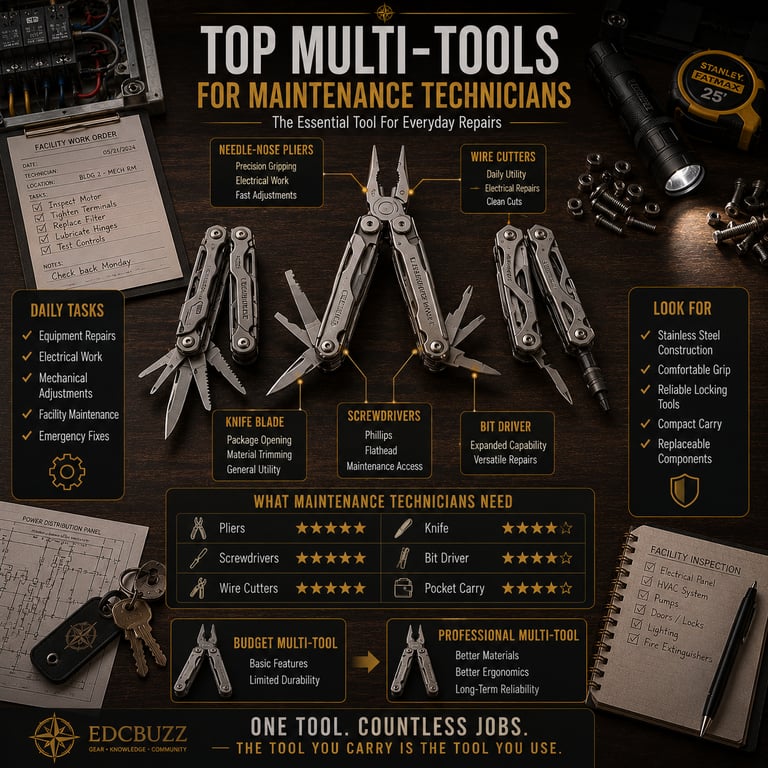
A versatile toolset including pliers, wire cutters, various screwdrivers, and a folding knife covers most maintenance bases.
Compact size and manageable weight ensure the tool is actually carried, not forgotten until needed.
Why Multi-Tools Are Essential for Maintenance Technicians
Let’s face it: maintenance work is rarely predictable. You might start the day planning to tighten a few bolts, only to end it stripping wires or opening a stubborn panel. Carrying a full set of specialized tools on every job is impractical, and often unnecessary. That’s where multi-tools come in. Compact enough to fit in your pocket or clipped to your belt, they bundle the most common tools into one accessible package. This portability means you’re never caught without the right screwdriver bit or cutting edge when urgency calls.
But the value of a multi-tool goes beyond mere convenience. A solid tool in your pocket means fewer trips back to your truck for that “one thing” you forgot. It also speeds up minor fixes — which add up when you’re juggling several maintenance points a day. Over time, carrying the right multi-tool becomes second nature, blending into your work habits like a trusty extension of your hands.
For examples of complete work-ready setups, compare the Best Budget Maintenance Tech EDC Loadout and Best Premium Maintenance Tech EDC Loadout.
Key Features to Look for in Maintenance Multi-Tools
When picking a multi-tool for maintenance, it’s easy to get dazzled by long lists of features. What really matters, though, is the balance between usefulness and simplicity. Here’s what I look for after extended use:
Pliers with needle-nose sections tend to see the most action, handling everything from tiny nuts to delicate wiring.
Wire cutters and strippers rated for common wire gauges count when electrical work pops up.
Multiple screwdriver heads—flat, Phillips, Torx—are a must. The more versatile, the better.
A folding knife is handy for opening packaging or scoring a cable sheath (no “sharp knives” needed for combat here, just everyday utility).
Easy-to-access tools with reliable locking mechanisms improve safety and efficiency.
Replaceable bits or upgrade options help keep your multi-tool useful as job demands evolve.
A compact design that doesn’t weigh you down but still feels solid in the hand.
Material and Build Quality: What Makes a Durable Multi-Tool?
Steel is king in the multi-tool world, but not all steel is created equal. For maintenance technicians, a quality stainless steel alloy—typically 420 or 440 variants—pushes back rust and holds edges longer on cutting tools. After weeks of daily use, it’s the wear resistance and corrosion protection that matter most, especially for those working around moisture or grease. Plastic or cheaper alloys may save some weight or cost upfront but will quickly show dents, loosen hinges, or outright fail.
The hinge mechanism also deserves some attention. A smooth, firm pivot makes deploying tools effortless and keeps parts aligned under pressure. You want no slack over time; a loose plier joint is a fast way to lose precision and control.
Top Multi-Tool Picks for Different Maintenance Tasks
No single multi-tool fits every maintenance technician’s needs perfectly, but a few models have earned their stripes by balancing toughness, tool variety, and carry comfort.
For general mechanical and electrical repairs, models with pliers, wire cutters, and an array of screwdriver bits work well. One that fits this description handles everything from HVAC panel access to tightening appliance screws without fuss.
If your work leans heavily on wiring and delicate tasks, a multi-tool with wire strippers calibrated to standard gauges and long needle-nose pliers makes a noticeable difference. The finer grip reduces hand fatigue on repetitive wire prep.
For those who spend time outdoors or in fieldwork, corrosion resistance and a secure carry clip or sheath become a priority. A lighter multi-tool that disappears in the pocket is a boon when climbing ladders or maneuvering tight spaces.
If you're trying to build an entire work-ready kit around one tool, What Every Maintenance Technician Should Carry Daily is a natural next step.
User Ergonomics and Everyday Carry Considerations
Ergonomics is a quieter concern until you’ve worked two hours tightening tiny screws with a tool that digs into your palm or strains your grip. Those details matter. Tools with contoured handles and non-slip textures reduce hand fatigue and improve control, especially during repetitive tasks. A bulkier multi-tool might promise more features, but it often ends up being more hassle tucked inside a pocket or clipped on a belt.
Weight also comes into play. After a day on your feet, even a few extra ounces can add up. The best multi-tools strike a balance—substantial enough to feel durable, yet light enough not to remind you of their presence. The right design lets the tool sit quietly in your pocket, unlike the one I once forgot about until I sat down—surprising but thankfully harmless.
Common Mistakes When Choosing a Multi-Tool
It’s tempting to judge multi-tools by brand name alone or buy the one with the longest list of features. Neither approach serves well in practice. Sometimes a heavyweight tool full of rarely used gadgets just adds bulk and complexity without meaningful benefits.
Another common oversight: neglecting tool maintenance. Even the best multi-tools wear over time. Regular cleaning, loosening and tightening screws, and lubricating pivots keep your gear ready to perform and extend its lifespan.
Some buyers also overlook locking mechanisms, which are essential for safe and confident use of blades and pliers. Skipping this feature—or relying on flimsy locks—can turn a handy tool into a frustrating or dangerous nuisance.
Many of these issues appear repeatedly in Most Common Maintenance Technician EDC Mistakes.
Maintenance and Care Tips for Longevity
Keeping your multi-tool in top shape isn’t complicated but does require some discipline. After the job, wipe off dirt and grease to prevent buildup. A drop or two of light machine oil on pivot points smooths operation and curbs rust.
Sharpen your cutting edges periodically. Dull tools don’t just hinder work—they can cause accidents because more force is needed.
Replace worn or damaged parts if your model allows it. Investing in parts replacement extends the life of your tool far beyond typical wear timelines, saving money in the long run.
Buyer’s Guide: Selecting the Right Multi-Tool for Your Needs
Your ideal multi-tool depends largely on the scope of your maintenance work and budget. Professional-grade tools often come with higher price tags but justify themselves through stronger materials and refined ergonomics suited to heavy daily use.
If you work on a variety of tasks across mechanical and electrical domains, focus on toolsets that cover broad functionality without unnecessary gimmicks.
For budget-conscious users, prioritize quality build and ergonomics over a laundry list of seldom-used features. Sometimes, less is more, especially if it encourages consistent carry and use.
Ask yourself what you’ll genuinely need day in and day out rather than chasing the latest multi-tool fad. The tool you carry every day is the one that earns its keep.
For technicians balancing cost against capability, How Maintenance Techs Can Build an EDC Loadout Under $250 offers a practical roadmap.
Frequently Asked Questions
What features should maintenance technicians prioritize in a multi-tool?
Focus on pliers, wire cutters, multiple screwdriver heads, and a locking folding knife. Reliability, ease of use, and tool locking mechanisms also rank high.
How do multi-tools compare to carrying individual tools for repairs?
Multi-tools trim down bulk and weight, offering portability and versatility at the cost of specialized performance. They excel for quick jobs and emergency fixes but don’t replace dedicated tools for heavy-duty tasks.
Are stainless steel multi-tools better than those made from other materials?
Stainless steel offers superior durability and corrosion resistance, critical for maintenance work exposed to moisture or harsh conditions. Cheaper metals may save cost but sacrifice longevity.
Can multi-tools handle heavy-duty maintenance tasks?
They can handle light to moderate tasks typical in maintenance, including cutting wires and turning screws. For heavy-duty work, specialty tools remain necessary.
How important is the size and weight of a multi-tool for everyday carry?
Very important. A balanced size and weight encourage daily carry, reducing the risk the tool becomes an unused drawer ornament.
What are the best brands for multi-tools aimed at maintenance professionals?
Brands known for solid build quality, good ergonomics, and practical toolsets tend to top the list. Look for those offering replaceable parts and good warranties.
Do multi-tools come with warranties or service plans for technicians?
Many reputable manufacturers provide warranties and offer replacement parts or servicing, which can significantly extend tool life.
How often should multi-tools be maintained or serviced?
Regularly clean and oil your tool after use. Sharpen blades and check locking mechanisms monthly or after heavy use to keep performance optimal.
Conclusion
In the field of maintenance, every minute—and every tool—counts. The multi-tool’s greatest strength lies in fitting the diverse needs of technicians into a single, portable package. After living with a variety of these tools through real workdays, the keys to a reliable, comfortable carry become clear: high-quality materials, thoughtful ergonomics, and a balanced feature set that stays useful rather than superfluous. Choose your multi-tool with an eye for durability and daily practicality, and it won’t just be another piece of gear—it’ll become an extension of your hand, ready to fix the next problem without fuss or fanfare. And that, in the end, is exactly what maintenance work deserves.

Contact@TheBuzzHQ.com
© 2026 EDCBuzz. All rights reserved.
EDCBuzz
Master everyday carry systems with clarity and precision. Built for real environments and practical use.
For educational purposes only.
General Inquiries: