
How Maintenance Techs Can Build an EDC Loadout Under $250
Discover how maintenance techs can build an efficient, durable, and budget-friendly EDC loadout under $250 with essential everyday carry tools.
LOADOUTS
The EDCBuzz Editorial Team - Led by AJ “Buzz” Eichman
6/11/20268 min read
When you spend your days elbow-deep in gears, wires, and pipes, everyday carry (EDC) gear isn’t about style or flex—it’s about function. Maintenance technicians, in particular, need a reliable set of tools on hand that don’t weigh them down or break the bank. Building an EDC loadout under $250 might sound like trying to outfit Batman on a shoestring, but it’s entirely doable with some thoughtful picks. The real trick is balancing durability, usability, and cost without getting distracted by shiny bells and whistles you won’t use on a regular basis.
A solid EDC loadout is your toolbox in your pocket. It needs to handle the nitty-gritty quickly and comfortably — no fumbling, no fuss, just smooth execution. Over weeks of carrying and using different gear, you realize it’s more than just raw specs on paper. It’s the feel after hours on the job, the grip when your hands are greasy, and how the tools settle in your pockets. Let’s break down how to assemble a maintenance tech’s everyday carry that works without taking a toll on your wallet or your back.
If you're trying to build a balanced work-ready setup, the EDC Loadouts Guide and EDC Loadout Builder by Budget can help prioritize gear based on your budget and daily responsibilities.
Quick Verdict
Prioritize multi-functional, durable tools that can cover common repair and measurement tasks.
Lightweight, pocket-friendly gear pays off when you’re moving around all day.
Quality materials like stainless steel and anodized aluminum ensure the loadout lasts.
Smart choices mean you can have a full set of EDC essentials under $250 without skimping on performance.
Why EDC Matters for Maintenance Technicians
Maintenance work can be unpredictable. One moment you’re changing a filter, the next you’re troubleshooting a wiring issue in a dark crawl space. Your gear needs to respond instantly, without asking questions or weighing you down. EDC essentials aren’t just tools — they’re trusted sidekicks that keep your work efficient and frustration low.
Relying on a bulky toolbox isn’t practical on a tight schedule or when you’re navigating cramped equipment rooms. That’s where a well-curated EDC loadout steps in. When each item fits your task, your hand, and your pocket, you finish jobs faster and with less fatigue. And since you’re carrying this gear all shift, comfort factors like weight distribution and grip texture move from "nice-to-have" to essential.
For examples of complete setups built around real maintenance work, compare the Best Budget Maintenance Tech EDC Loadout and Best Premium Maintenance Tech EDC Loadout.
Key EDC Essentials for Maintenance Work
A maintenance tech’s lineup should do a few key jobs: cutting materials cleanly, measuring and marking, providing light in dark spots, and managing notes or quick sketches. Here’s a look at must-haves that work day in, day out:
Multi-Tool
A versatile multi-tool is the cornerstone of a budget-friendly maintenance EDC. It combines essential functions like pliers, screwdrivers, knives, and sometimes wire cutters into a single compact package. After carrying one for several weeks, you start to appreciate the simplicity of not juggling a handful of single tools. The right multi-tool feels like an extension of your hand — not too bulky, with just enough weight to feel solid but not cumbersome.
When evaluating multi-tools, focus on stainless steel components that resist corrosion, especially critical for grease and moisture-prone environments. Anodized aluminum bodies cut down weight without giving up durability. A well-made pocket clip or pouch also matters — quick access can save minutes, which adds up.
If you're comparing options, Top Multi-Tools for Maintenance Technicians provides a deeper look at some of the best choices available.
Compact Flashlight
Routine maintenance often means working in dimly lit or shadowed areas. You want a flashlight that’s tough, bright, and easy to pocket. Opt for an LED flashlight with adjustable brightness settings so you can conserve battery or dial in a focused beam when needed. Over time, you’ll notice which brightness levels get used most — and how battery life impacts your day. A flashlight that’s light enough to almost disappear in your pocket is a bonus; you’ll only remember it when you need that extra light, not when you’re sitting.
Many technicians eventually discover Why Flashlights Matter More Than Knives for Maintenance Work after spending time in mechanical rooms, crawlspaces, and poorly lit service areas.
Sturdy Wallet
Maybe not the first thing you think of in a maintenance kit, but your wallet carries more than cash. It’s your ID badge, keys, and sometimes obscured slips of paper with job notes. A slim, durable wallet in materials like aluminum or rugged leather keeps things secure without adding bulk. After weeks of daily use, you notice if a wallet begins to sag, tear, or lose its structure — small issues that become annoying quickly.
Pen for Notes
A pen is a quiet workhorse tool. For maintenance techs, it’s about legible, reliable writing on everything from greasy surfaces to notepads. Ballpoint or gel ink pens with a firm tip and a robust clip tend to fare best. Carried in your pocket or clipped to a notebook, the pen shouldn’t snag or fall out with every movement. Over time, a cheap pen losing ink mid-task becomes less funny and more "why did I not spend $3 more?"
Tape Measure or Ruler
Measuring with precision is non-negotiable. A compact tape measure with a sturdy locking mechanism offers accuracy and ease of use on the job. Some pocket rulers work well for quick dimensions but don’t replace the versatility of a tape measure for most maintenance tasks. Grip and ease of extension count when you’re measuring repeatedly — the last thing you want is a sticky tape that jams mid-pull.
Choosing Multi-Tools vs Single-Function Tools
Regardless of your trade, the debate often comes down to versatility versus specialization. Multi-tools pack several functions into one carry piece, saving space and, usually, money. Dedicated tools may outperform on specific tasks but can add unwanted bulk and cost when you’re trying to keep an EDC compact and efficient.
In practice, I've found that a quality multi-tool handles over 80% of day-to-day needs with ease. Over months of use, I noticed the tiny compromises it makes: the screwdriver isn’t going to replace a full set, and the wire cutters don’t have the bite of specialty pliers. But for quick fixes and adjustments, it shines. The key is picking multi-tools with well-thought-out ergonomics so they remain comfortable through extended use — hand fatigue starts setting in fast when grip shape is wrong.
Durable Materials and Construction to Consider
You don’t have to buy the most expensive gear to get decent durability — but materials matter. Stainless steel blades and functional parts resist corrosion and wear, especially since maintenance gear often sees grease, water, and dust. Aluminum or titanium handles reduce weight without giving up structural integrity; after several weeks, the difference in pocket fatigue is noticeable.
The construction quality is another big factor: solid pivots, strong springs, and reliable locks on knives and multi-tools make a night-and-day difference in how tools feel and hold up. Over time, cheap tools tend to wobble, get stiff, or fall apart — and nothing ages your EDC faster than fixing or replacing gear that should have lasted.
Balancing Cost and Quality Within a $250 Budget
Building this loadout on a budget requires some strategy. The temptation is to grab the cheapest option that fits the task, but that can mean replacing tools often, which adds up. Instead, look for brands known for blending affordability with performance in everyday carry gear. Many reputable makers offer solid entry-level multi-tools, knives, and flashlights that punch above their price.
Breaking down the budget across essentials helps. For example:
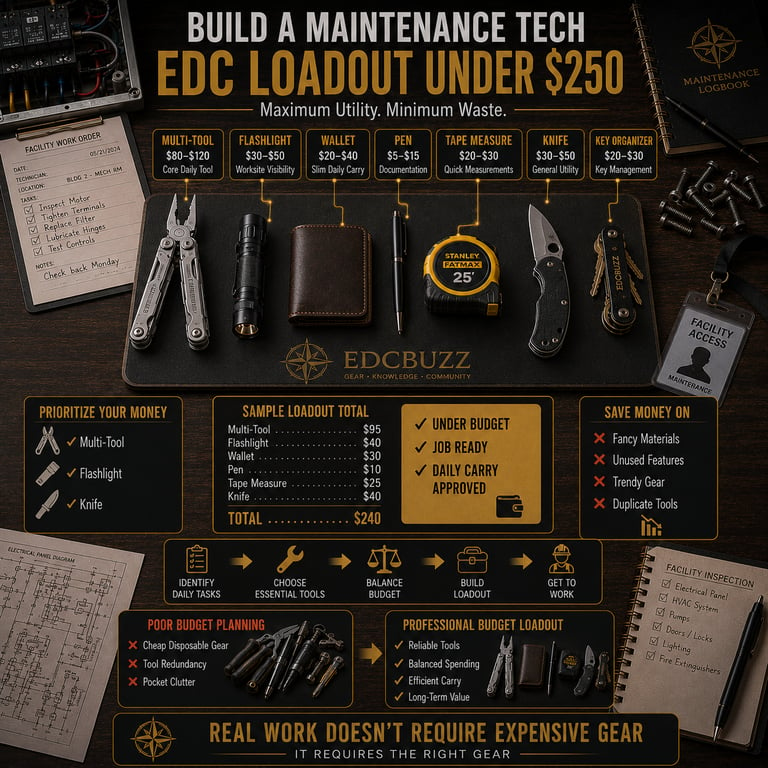
Multi-tool: $80 to $120 for reputable, reliable models
Flashlight: $30 to $50 for a compact, bright LED
Wallet: $20 to $40 for slim, durable options
Pen: $5 to $15 for consistency and durability
Tape measure: $20 to $30 for a solid compact model
This rough spread leaves a little wiggle room for accessories or a backup item. I’ve learned it pays to invest the most where durability matters — often the multi-tool and flashlight — then stretch the rest wisely.
Organizing Your EDC Loadout for Efficiency
Once you’ve got your kit assembled, how you carry it makes a real difference. Pockets are precious real estate. Personally, I use a dedicated pouch for the multi-tool clipped securely at the belt—easier to grab in a hurry and keeps it from banging against other items. The flashlight goes in the same pouch or nearby pocket, and slim items like pen, wallet, and tape measure slip into front pockets for easy access.
Consistency is key. The more your gear lives in predictable spots, the smoother your day moves. Over the weeks, you’ll learn which carry methods work best for your habits and job. Sometimes switching a tool from pocket to belt clip subtly changes how often it’s used (hint: easier access means more use).
For a broader approach to work-focused gear organization, What Every Maintenance Technician Should Carry Daily covers additional strategies.
Care and Maintenance Tips for Your Tools
Carrying tools isn’t just about picking good ones — it’s about keeping them ready. Grease, dust, and sweat all take their toll. Regular cleaning with a damp cloth, light lubrication on moving parts, and sharpening blades once in a while keep your tools functioning smoothly.
I recommend a quick post-shift wipe down and opening or extending moving parts to check for grit or stiffness. This small habit pays off by preventing unexpected mishaps. Also, store everything dry overnight to prevent rust, especially if your job involves water or humidity.
Upgrading Your EDC: When and What to Buy Next
The $250 cap is a great starting point but not a final stop. After daily use, you’ll identify gaps or tools that wear faster than others. If a multi-tool’s pliers don’t handle tougher jobs, consider a dedicated pair of pliers as your next upgrade. Need more light modes or longer battery life? Time for a higher-spec flashlight.
The beauty of a balanced initial setup is you can pick upgrades based on real needs, not sales pitches. And each addition should still fit your carry style, aiming to improve efficiency or comfort. Treat your EDC gear like shoes: the right fit is more important than flashy looks or brand names.
Common Mistakes to Avoid When Building a Maintenance Tech EDC Loadout
Overspending on specialized tools that won’t see daily use, blowing your budget early.
Ignoring comfort and carrying ergonomics, ending up with gear that nags your pockets or hands.
Choosing cheap, low-quality tools that break or dull quickly, leading to frustrations and replacement costs.
Carrying redundant single-function tools instead of versatile multi-tools, adding unnecessary weight.
Skipping real-world testing before committing to purchases—you want to know how it feels and works, not just specs.
Many of these problems are covered in greater detail in Most Common Maintenance Technician EDC Mistakes.
Frequently Asked Questions
What are the must-have EDC tools for maintenance technicians?
A reliable multi-tool, compact flashlight, sturdy wallet, pen, and tape measure cover the essentials for typical maintenance tasks, focused on portability and durability.
How do I choose between a dedicated knife and a multi-tool for EDC?
For maintenance work, a multi-tool often wins for versatility and space-saving, though specialized knives can add precision. Consider your daily tasks and pocket space.
Can quality EDC gear be affordable under $250?
Absolutely. Many brands offer reliable, durable options that fit this budget if you balance quality and cost thoughtfully.
What materials should I look for in durable everyday carry tools?
Stainless steel parts resist corrosion, anodized aluminum or titanium reduce weight, and solid construction ensures longevity under frequent use.
How to maintain and care for EDC tools to prolong their lifespan?
Regular cleaning, light lubrication on moving parts, sharpening blades, and storing tools dry help keep them ready and reliable.
Are compact flashlights useful for maintenance work?
Yes, they provide essential illumination in dark spaces and should be bright, durable, and easy to access without adding bulk.
How to organize EDC gear for quick access during work tasks?
Assign dedicated carry spots—such as clipped pouches for multi-tools and front pockets for smaller items—and keep that routine for efficiency.
What brands offer the best value for budget EDC gear?
Look for reputable brands known for blending affordability and quality, especially those favored by working professionals rather than tactical or purely recreational lines.
Practical Conclusion
Carrying the right everyday gear is less about gadget lust and more about getting the job done comfortably and reliably. For maintenance technicians, assembling an EDC loadout under $250 is perfectly achievable when you focus on multi-functionality, quality materials, and smart sizing.
The real test isn’t in the purchase—it’s in the wear, the grip, the weight after a long day, and the way these tools become part of your rhythm on the job. Once you find that balance, your EDC becomes more than gear; it’s a trusted partner that quietly makes your workday smoother, one clip, one light, and one cut at a time. And should you ever wonder why you’re smiling while tightening a bolt? That subtle nod goes to the gear doing its job without calling attention to itself.
There’s no shiny badge for best-dressed pocket, but when your tools work without complaint, that’s the real win.

Contact@TheBuzzHQ.com
© 2026 EDCBuzz. All rights reserved.
EDCBuzz
Master everyday carry systems with clarity and precision. Built for real environments and practical use.
For educational purposes only.
General Inquiries: