

How Long Do Solar Watches Last?
Discover how long solar watches last, with insights on battery lifespan, durability, maintenance, and reliable daily use for your solar watch lifespan.
EDC WATCHES
The EDCBuzz Editorial Team - Led by AJ “Buzz” Eichman
6/28/20267 min read
If you find yourself relying on a good watch for daily tasks or timekeeping out in the woods, it pays to understand what makes one last. Solar watches have been quietly earning solid reputations among folks who want something less fuss and more dependability. These watches take light—any light—and turn it into power, which keeps the time ticking with less worry about swapping a battery now and then. But how long do solar watches last in the real world? And what should you expect after putting one through its paces day after day?
If you're exploring different everyday carry watches, our EDC Watches guide covers the major watch categories and helps you decide where solar models fit into your collection.
Let’s settle into that question — the kind of thing I’d explain calmly around a campfire, without any hype or rush. It all comes down to the watch’s rechargeable battery, how it holds up over time, and how well the watch’s build stands against what life throws at it.
Quick Verdict
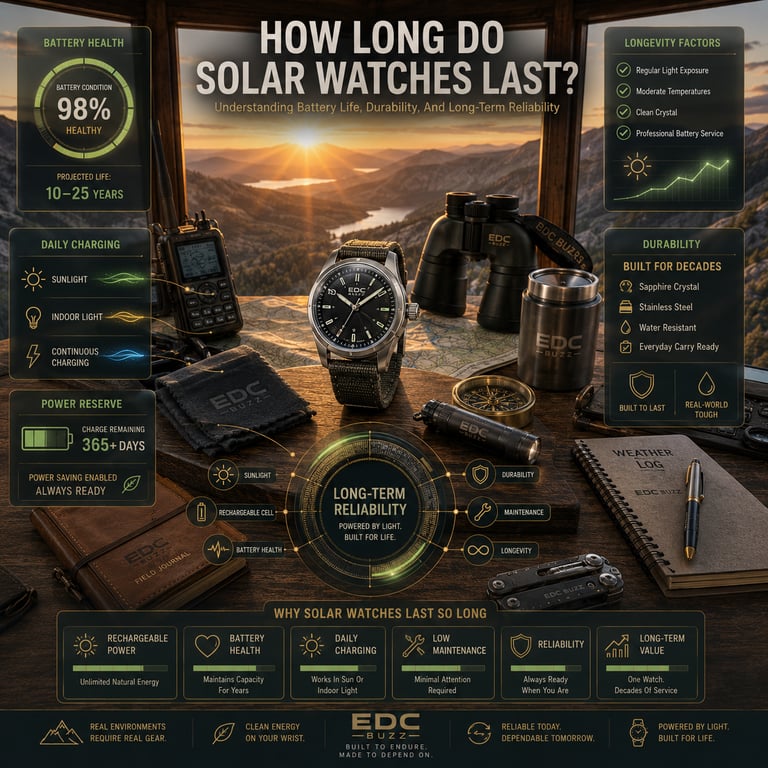
Solar watch batteries generally keep going between 10 to 25 years before needing replacement.
Regular exposure to light, even indoors, is important to maintain battery charge and reliable function.
Real longevity depends on avoiding extreme temperatures and physical shocks that wear down components.
A good solar watch is usually tough enough for everyday carry work and outdoor use without special pampering.
How Solar Watches Work: The Basics
Solar watches run on light. Inside the watch face, there are photovoltaic cells—tiny solar panels—that soak up light and turn it into electricity. That electricity charges a rechargeable battery tucked inside, which powers the watch’s hands, digital display, or any extra features. This rechargeable battery is not your usual disposable watch battery; it’s designed to handle many charging cycles over a long period.
This means if you wear your solar watch regularly and let it catch some light each day—be it natural sunlight or even artificial indoor light—it should keep ticking for years without needing a new battery. But the battery doesn’t last forever. Over time, all rechargeable cells degrade gradually, holding less charge and needing replacement eventually. If you're curious about the technology behind these watches, Why Solar Watches Are Becoming More Popular explains why they've become a favorite for everyday carry.
Typical Lifespan of Solar Watch Batteries
In my experience, the battery in a solar watch tends to last anywhere from about 10 years up to 25 years, depending on how it’s treated and which battery technology is used. That’s quite a long stretch compared to a conventional quartz watch that might burn through several disposable batteries in the same timeframe.
You start noticing the battery’s fade when the watch doesn’t hold charge as well, or powers down if left in the dark too long. But this happens slowly. With proper care and regular exposure to light, the battery degradation is minimal year to year.
Factors That Affect Solar Watch Durability
Battery life aside, the watch’s overall durability plays a major role in how long it lasts. After all, a watch that loses its crystal or cracks its case isn’t doing much good, regardless of charge.
Materials matter. Watches with sapphire crystal, stainless steel cases, and solid seals tend to hold up better against scratches, moisture, and blunt force. Plastic or cheaper metal watches might save you a few bucks upfront, but they tend to show wear faster and may let in water or dust that harms the inside. The Most Durable Watch Materials Explained dives deeper into how different materials affect long-term reliability.
Another factor is exposure to extreme temperatures. Lithium-ion or similar rechargeable batteries don’t like scorching heat or freezing cold. Prolonged exposure can cause faster battery aging or even component damage. So if your watch spends long periods in sweltering sun or bitter cold without protection, its lifespan will likely suffer.
Maintenance Tips to Extend Your Solar Watch’s Life
Keeping a solar watch going strong isn’t complicated, but it takes some mindful habits. First and foremost, wearing the watch often or leaving it in a well-lit spot is key. The cells need that regular light to keep the battery healthy and avoid deep discharge, which can shorten battery life over time.
Keep your watch clean, especially the face where the solar cells live. Dirt, grime, or skin oils reduce light absorption and mean less efficient charging. A gentle wipe with a soft cloth now and then goes a long way.
Avoid banging your watch around—things like dropping it or hitting it against hard surfaces might damage the case or internal parts. And if you know you’re heading into extreme weather, it’s best not to rely solely on the watch to keep precise time; the harsh environment can sneak up on delicate components. Following Watch Ownership Guide recommendations can help maximize the lifespan of any watch you own.
Common Misconceptions About Solar Watch Longevity
One mistake I’ve seen often is people thinking solar watches never need a battery replacement. The rechargeable batteries will eventually wear out; it’s just a slower process compared to standard watch cells.
Another is forgetting the importance of light exposure. People sometimes stash their solar watches away for long periods in dark drawers. That can drain the battery deeply, making it harder for the watch to bounce back and reducing overall lifespan.
Also, not all solar watches are built equally. Some are made with better materials and quality control than others, so assuming every solar watch lasts the same is a gamble. That’s why choosing a model known for durability and reliable cells is part of getting a watch that will keep pace for years. If you're shopping for one, our Best Solar Watches guide highlights dependable models worth considering.
Real-World Use Cases for Solar Watches
Where solar watches really shine are in daily wear and outdoor settings. For those who spend plenty of time outside or work in environments where changing batteries regularly is a hassle, solar watches offer peace of mind.
If you spend weeks camping or traveling to places where a replacement battery isn’t just a few dollars at the corner store, having a watch that charges itself with daylight is something to appreciate. Some models come with power-saving features, keeping the watch in a low-energy state when not exposed to light, which extends usable time between charges.
For the home or office user, solar watches provide a sustainable alternative to usual battery swaps, which means less waste and less fiddling with tiny batteries over time. If you're weighing solar against mechanical options, Tissot PRC 100 Solar vs Bulova Aerojet Open Heart (Solar Watch vs Automatic Watch) offers a practical comparison.
When and How to Replace Your Solar Watch Battery
Eventually, the rechargeable battery inside your solar watch will need replacing. Signs to watch for include the watch struggling to keep charge, shutting down unexpectedly, or the second hand skipping in odd intervals.
Replacing these batteries isn’t always a simple task like swapping a button cell in a cheap quartz watch. Rechargeable batteries often require professional service to ensure proper installation, water resistance is maintained, and other components aren’t disturbed.
It pays to have your watch serviced by the manufacturer or a skilled watchmaker who knows solar technology. That way, you maintain the watch’s reliability and prevent damage that could cut its life short. For more detailed service recommendations, see How Often Should You Service Your Watch?
Choosing a Durable Solar Watch for Everyday Carry
If you’re looking for a solar watch to wear every day, I’d suggest focusing on build quality over bells and whistles. Look for models with solid cases—stainless steel or titanium if possible—and sapphire crystal faces for scratch resistance.
Water resistance is helpful. It doesn’t have to be diving-grade, but a watch that can handle a splash or brief rain is more practical for most work and outdoor conditions.
Also, consider brands with a track record of reliable solar technology. Cheaper models may save you money on day one but can lead to headaches down the road. How To Read Watch Specifications Before Buying can help you identify the features that actually contribute to long-term durability.
You want a solar watch that doesn’t draw attention but simply works — the kind you forget you’re wearing until you need it.
Common Mistakes to Avoid
Neglecting regular exposure to light, causing deep battery discharge and strain.
Assuming no maintenance is required—solar watches need gentle care like any tool.
Exposing the watch to extreme temperatures for long periods, which shortens battery and component life.
Ignoring dirt and grime buildup on solar cells, reducing charging efficiency.
Believing all solar watches last equally; quality varies by brand and model.
Overlooking manufacturer guidelines on care and battery replacement intervals.
Frequently Asked Questions
How long does the battery in a solar watch last?
Typically, between 10 to 25 years, depending on use, care, and the specific battery technology inside.
Do solar watches need their batteries replaced?
Yes. Although the rechargeable batteries last longer than conventional ones, they will eventually wear out and require professional replacement.
How often should I expose my solar watch to light?
Regular daily exposure is best. Even indoor lighting helps maintain charge, but natural sunlight is more effective.
Can solar watches be used in low-light conditions?
They can operate in low-light environments after a good charge but will need more time under bright light to recharge efficiently.
What kind of maintenance does a solar watch require?
Regular cleaning of the watch face, avoiding extreme temperatures, and gentle handling to protect seals and components.
Are solar watches more durable than traditional battery-powered watches?
Many are, especially when made with quality materials and designed for outdoor use, but durability depends on brand and model as much as power source.
Can extreme temperatures damage my solar watch?
Yes. Both very hot and very cold conditions can degrade the battery faster and may harm internal components.
What factors affect the lifespan of a solar watch?
Battery quality and care, exposure to light, temperature extremes, physical shocks, and overall build quality all play crucial roles.
Conclusion
Solar watches offer a quietly dependable alternative to the usual run-through of disposable batteries, especially for those who spend plenty of time outdoors or just want a watch that works without much fuss. Their core advantage comes down to their rechargeable battery, which with good habits, can keep going for decades.
The real secret is treating your solar watch like a fine tool: let it catch the light regularly, keep it clean, avoid harsh conditions when possible, and expect that eventually, the battery will need professional attention. This approach keeps the watch on your wrist quietly doing its job without fuss or fanfare.
If you're wondering whether solar technology is worth the investment compared to other options, Is An Expensive Watch Worth It? provides additional perspective before making your next purchase.
In the end, a good solar watch fades from your mind as a worry and becomes simply another reliable piece of gear you depend on — and that’s the kind of thing that never goes out of style.

Contact@TheBuzzHQ.com
© 2026 EDCBuzz. All rights reserved.
EDCBuzz
Master everyday carry systems with clarity and precision. Built for real environments and practical use.
For educational purposes only.
General Inquiries: