

Signs It's Time To Replace Your Watch Strap
Learn the key signs for watch strap replacement to maintain comfort, protect your watch, and avoid unexpected strap failure.
EDC WATCHES
The EDCBuzz Editorial Team - Led by AJ “Buzz” Eichman
6/28/20267 min read
When it comes to everyday carry gear, your watch strap rarely gets the spotlight. Yet, it’s the unsung hero holding your watch in place all day, every day, through commutes, meetings, weekends, and the occasional “what was I thinking?” moment. Over time, even the sturdiest of straps start showing signs that they’re past their prime. Knowing when to replace your watch strap isn’t just about keeping your look sharp — it’s about maintaining comfort, protecting your watch, and avoiding the awkward “my strap just gave out” moment. In this article, I’ll walk you through the practical signs indicating it’s time for a watch strap replacement, what those signs look like across different materials, and how to keep your strap in good shape while it still can. Before choosing a replacement, our EDC Watches pillar can help you understand how straps, materials, and watch styles all work together.
Quick Verdict
Visible cracks, fraying, or discoloration usually mean your strap is due for retirement.
Comfort changes — stiffness, skin irritation, or looseness — are subtle but important warning signs.
Different strap materials wear out in different ways: leather stiffens, rubber gets brittle, metal loosens.
Regular cleaning helps, but maintenance only delays the inevitable. Knowing when to swap straps saves you hassle.
Why Watch Straps Need Replacing
Watch straps take a lot of daily punishment, even if it doesn’t always look like it. Think about it: your strap faces everything from sweat and oils, sunlight, occasional brushes against rough surfaces, and the simple stress of bending every time you flex your wrist. This constant wear can weaken materials, break down finishes, and cause closures to lose their grip over time. If you stretch your strap endurance too far, you risk rubbing your skin raw, losing your watch altogether, or worse, damaging the watch case where the strap attaches.
A strap replacement isn’t a cosmetic whim — it’s a practical move to keep your daily carry efficient and comfortable. Sure, some straps age gracefully and develop character, but when stiffness, odors, or breakage sneak in, it’s time to think beyond nostalgia. Learning Best Watch Strap Materials For Everyday Carry can also make it much easier to choose a replacement that matches your lifestyle.
Common Signs It’s Time to Replace Your Watch Strap
Wear and tear show up differently depending on the strap material, but some indicators are universal. If you spot any of these signs, consider a replacement:
Cracks or stiff spots that don’t soften with wear
Frayed stitching or tears near buckle holes or lugs
Unpleasant odors that won’t go away after cleaning
Discoloration or stains that water and soap can’t fix
Malfunctioning clasps or buckles that won’t hold secure
Skin irritation or rashes that wasn’t there before
Loose fit despite adjusting the clasp or holes
These aren’t just cosmetic. Stiffness can make your watch uncomfortable for daily wear — nobody wants a strap that feels like it was harvested straight from a 1970s leather couch. Broken stitching or cracks increase the risk of a sudden strap failure, which often happens at the worst possible time.
Material-Specific Wear Patterns and Replacement Triggers
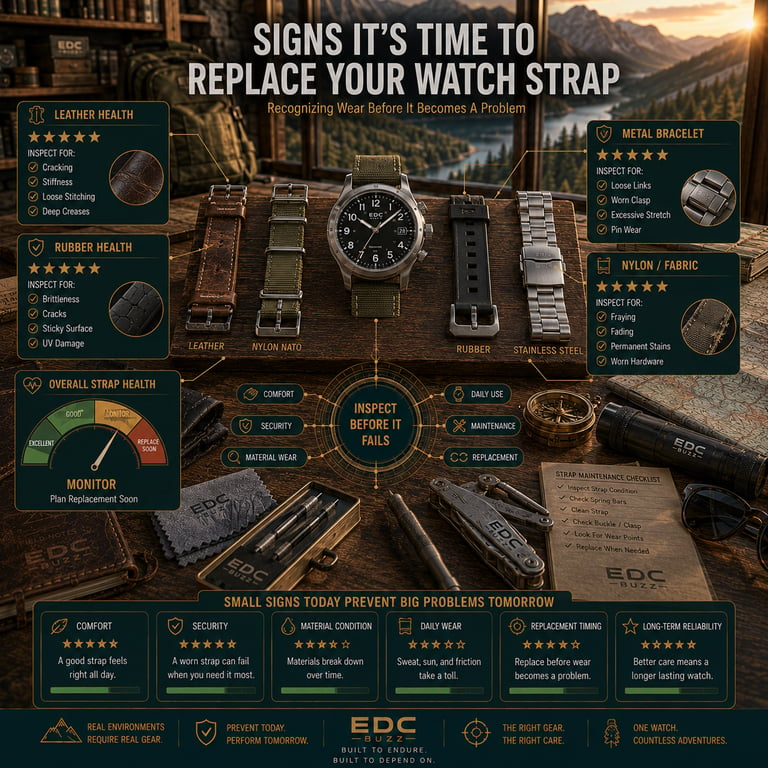
Leather Straps: Classic, stylish, but not invincible. Leather absorbs sweat and natural oils from your skin, which causes it to stiffen and crack over time. Soft leather may soak in odors you’ll never quite wash out. After a while, you might notice the leather darkens unevenly or starts peeling near the edges. When your leather strap feels more like a rock than a soft band, or the smell starts drawing comments from coworkers, it’s definitely time for a swap. Also watch closely for worn stitching, especially near buckle holes and lugs, where stress concentrates.
Rubber and Silicone Straps: These are the go-to for active lifestyles, moisture resistance, and easy cleaning. However, over time rubber and silicone degrade with exposure to UV light, sweat, and temperature swings. The strap can become brittle and prone to tears or sticky patches. If your rubber strap cracks when you flex it, or if it’s sticky in an unpleasant way, replace it. Fortunately, these straps dry quickly after washes, but don’t trick yourself into thinking “just one more day” when brittleness sets in—failure can be abrupt.
Metal Bracelets: Durable and professional looking, metal bracelets usually last longest. But they have their own issues. Links can stretch or wear unevenly, causing the bracelet to become loose or noisy. Clasps are critical here; a failing clasp means the whole bracelet could come undone without warning. If you notice rattling links or the clasp doesn’t click shut properly, it’s time for maintenance or replacement. One caveat: metal bracelets can often be repaired or adjusted but don’t ignore persistent looseness — it wears on comfort and security.
Fabric and Nylon Straps: Popular for their breathability and lightweight feel, these can fray at the edges or develop stains that won’t budge after washing. Though tougher to “ruin” than leather or rubber, they still succumb to wear from daily use. If fraying or color fading becomes heavy, or if the fabric smells persistently musty, it’s time for a fresh one.
How to Properly Maintain Your Watch Strap
Maintenance can extend the lifespan of your strap significantly, but only if done carefully and regularly. Here’s the routine that works in my experience:
Leather straps benefit from occasional conditioning with products made for leather care. Don’t overdo it — too much conditioner can soften the leather excessively. Keep it dry and avoid prolonged sweat exposure when you can.
Rubber and silicone straps just need rinsing after exposure to salt, sweat, or dirt. Avoid harsh cleaning chemicals or oils that can break down the material quicker.
Metal bracelets require a soft brush and warm soapy water to remove grit between links. Dry thoroughly to prevent any lingering moisture that might speed up corrosion.
Fabric straps are usually machine washable but check the manufacturer’s guidance. Air dry naturally to avoid shrinking or warping.
Keep in mind that no amount of cleaning will stop a strap from eventually aging out. Maintenance delays replacement but doesn’t eliminate the inevitable. Regular care recommendations in Watch Ownership Guide can also help extend the life of both your strap and your watch.
Choosing the Right Replacement Strap for Your Lifestyle
When the time comes to replace a strap, keep your everyday carry habits in mind. Not every strap suits every wrist or workday. Here’s what I’ve learned from living with watches through different phases:
If your work or hobby gets sweaty or dirty often, a rubber or silicone strap is usually a good bet. They handle moisture well and clean easily, though they do need swapping out more often than metal.
For office or casual wear, leather still offers unmatched style and comfort, but remember they need more care and usually last 6 to 12 months under heavy daily wear.
Metal bracelets feel weighty but are a solid choice if you want longevity and robustness, as long as you can tolerate the extra heft.
Fabric or nylon straps deliver on lightweight comfort and versatility but watch for fraying and fading.
And no matter the material, ensure the strap width and attachment mechanism match your watch precisely. Ill-fitting straps can cause stress on your watch lugs or feel uncomfortable enough to skip wearing your watch altogether — a loss nobody wants. If you're deciding between common strap materials, NATO Strap or Leather Strap: Which Is Right for You? and Metal Bracelet or Rubber Strap: Which Fits Your Lifestyle? both offer detailed comparisons based on different lifestyles.
Common Mistakes Watch Owners Make with Watch Strap Wear and Replacement
A couple of pitfalls I see often enough deserve a callout:
Ignoring early signs of wear — like slight stiffness or loose stitching — is a common way straps fail unexpectedly. When you start noticing wear, it’s smarter to plan a replacement than wait for the strap to spring a surprise during your day.
Clinging to straps for sentimental reasons or sheer neglect often backfires. A strap is a tool, not a relic. Spending a small amount on a proper replacement usually beats the embarrassment and risk of a snap.
Using harsh cleaning agents or soaking straps that aren’t designed for it accelerates breakdown. Leather especially hates overexposure to water and chemicals.
Failing to pick a strap material suited to your lifestyle invites discomfort and more frequent replacements. Choose wisely upfront, based on real day-to-day use, not just looks.
Overlooking fit issues, like straps that are too loose or too tight, can cause skin irritation or hot spots, which sometimes get mistaken for skin sensitivity rather than a strap problem. If you're unsure whether it's time to replace the entire watch instead of just the strap, Can You Wear The Same Watch Every Day? provides a helpful perspective on long-term daily use.
FAQs About Watch Strap Replacement
How often should I replace my watch strap?
It depends on the material and usage. Leather straps usually last 6 to 12 months under daily wear. Rubber and silicone last around 1 to 2 years but can degrade faster under harsh conditions. Metal bracelets can last several years but need periodic adjustments and possible clasp replacements.
What are common wear signs to look for on different types of straps?
Leather shows stiffness, cracks, and odors. Rubber and silicone get brittle and crack. Metal bracelets loosen links and faulty clasps. Fabric or nylon may fray and stain badly.
Can watch straps be repaired or do I always need a replacement?
Metal bracelets can often be repaired or adjusted. Leather may be conditioned but not truly fixed once cracked or heavily damaged. Rubber and silicone tears usually require replacement. Fabric frays rarely repair fully.
How do I maintain my watch strap to extend its lifespan?
Keep it clean with material-appropriate methods, avoid harsh chemicals, and let it dry naturally. Condition leather occasionally and rinse rubber regularly to remove salt or sweat.
Are some watch strap materials more durable than others?
Metal bracelets tend to last longest, followed by rubber/silicone, then leather and fabric. But durability must be balanced with comfort and intended use.
What is the best type of watch strap for heavy daily use?
Rubber or silicone straps are often best for active, sweaty environments. Metal bracelets suit rough daily wear but are heavier. Leather can be stylish but less durable under heavy sweat or dirt exposure.
How do I know if my watch strap is causing skin irritation?
If redness, rash, or itching appears only where the strap touches your skin and improves when the watch is off or with a different strap, it’s likely the cause.
Can changing watch straps affect the water resistance of my watch?
If the watch is properly sealed and the strap changes don’t involve opening the case, water resistance generally won’t be affected. However, improper installation can put stress on the lugs or case back, so use care or a professional for replacements.
Conclusion
After a few weeks, months, or maybe years of everyday wear, your watch strap quietly picks up the signs of age and stress. Replacing it when those signs become clear isn’t just an aesthetic choice — it’s about preserving comfort, watch safety, and the smooth carry experience you rely on day in and day out. Whether your strap is leather that’s started to peel, rubber that’s turning brittle, or a metal bracelet with a loose clasp, knowing what to look for helps you stay ahead of unexpected failures. Regular maintenance is worthwhile, but it doesn’t buy you forever. So keep an eye on those cracks, odors, and fit — your wrist (and your watch) will thank you.
And remember, a well-chosen, well-maintained strap can quietly vanish into your daily routine, unlike that stray sock you forgot you shoved in your pocket this morning.
Contact@TheBuzzHQ.com
© 2026 EDCBuzz. All rights reserved.
EDCBuzz
Master everyday carry systems with clarity and precision. Built for real environments and practical use.
For educational purposes only.
General Inquiries: