
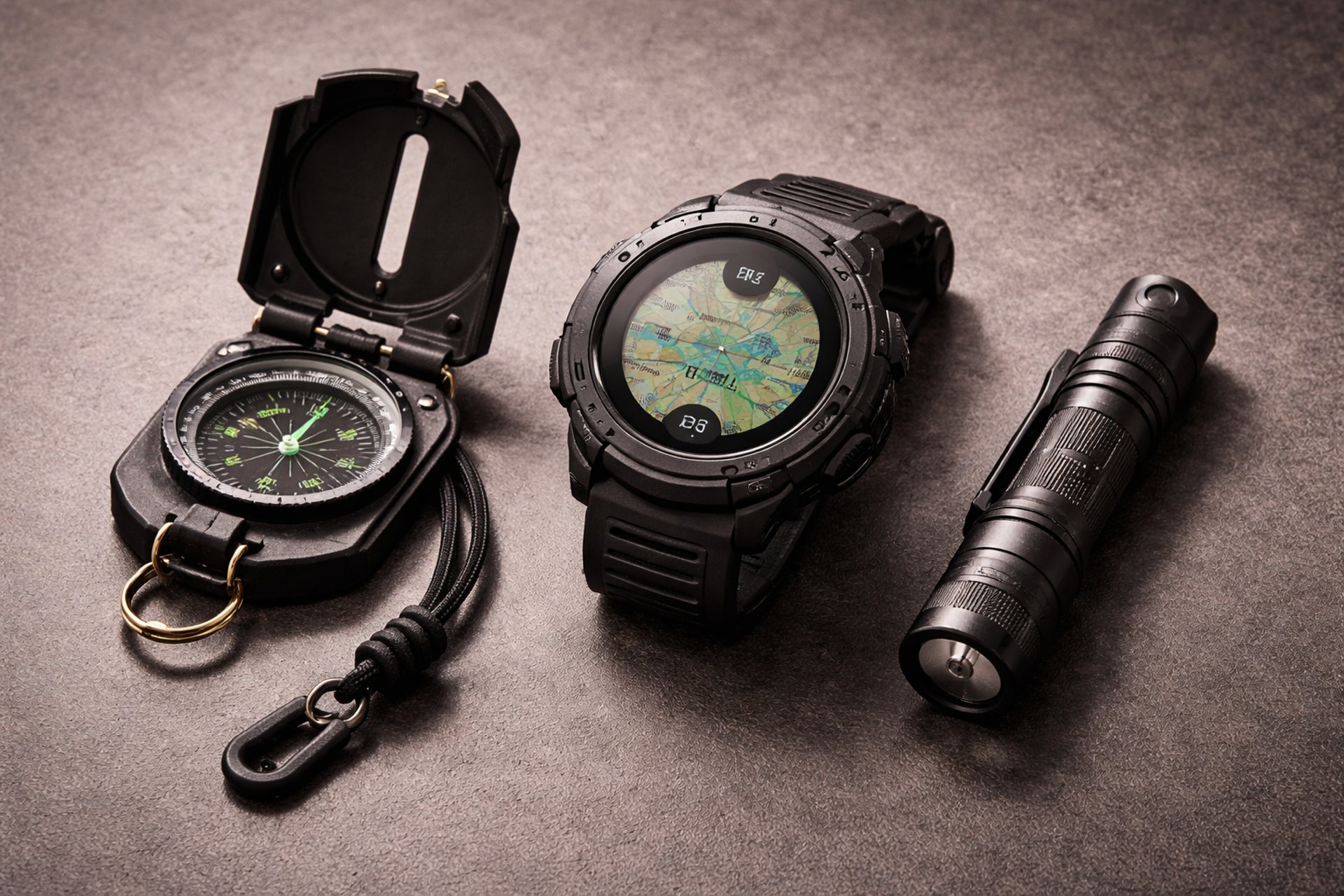
What Makes A Good EDC Watch?
Discover what makes a good EDC watch with the perfect balance of durability, usability, and comfort to keep up with your everyday routine.
EDC WATCHES
The EDCBuzz Editorial Team - Led by AJ “Buzz” Eichman
6/28/20268 min read
When it comes to everyday carry, a watch isn’t just a way to check the time—it’s a tool you rely on day in and day out. You want one that can keep pace with your routine but doesn’t demand babysitting. After all, a good everyday carry watch has to strike a balance: tough enough to handle whatever you throw at it, comfortable enough that you don’t notice it’s there, and usable enough so you don’t need a magnifying glass or a degree to figure out what time it is. This isn’t about flashy bling, though style still matters; it’s about a piece of gear that works quietly, consistently, and comfortably while you get through your day. For a broader overview of watch styles and recommendations, explore EDC Watches.
Quick Verdict
Durability is a must: materials like stainless steel, titanium, or reinforced resin protect against scratches and impacts.
Usability means clear dials, reliable movement, and practical features like date displays or backlighting.
Comfort depends on thoughtful sizing, strap choice, and weight—not too bulky, not fiddly, just right.
Water resistance should fit the daily grind from sweat to rain without needing special care.
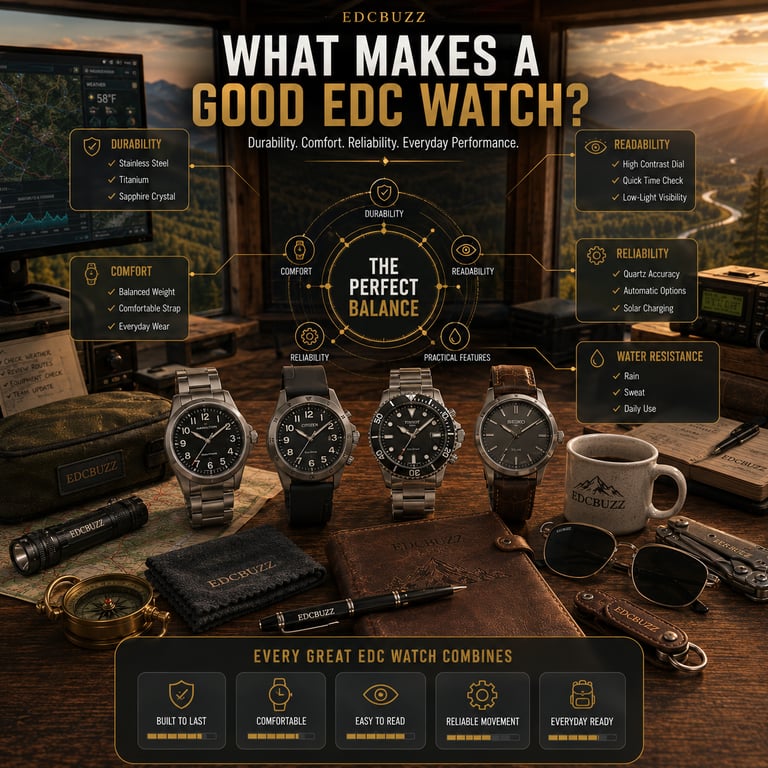

What Defines an EDC Watch?
An everyday carry watch isn’t your weekend-only showpiece or a desk clock pretending to be wristwear. It’s the silent partner on your wrist that you count on to keep ticking, look decent enough for casual to semi-formal settings, and shrug off small scrapes and spills without complaint. If you're narrowing down styles, the Watch Types Guide can help match a watch to your daily routine. By the time you’ve worn it everyday for a few weeks, you start to notice how it settles against your skin and handles the little bumps that fill up real life. Does it feel balanced or like you’re lugging a paperweight? Does the dial stay legible in less-than-ideal lighting? These are the moments that turn a watch from a novelty to a constant.
Key Features of a Good EDC Watch
Durability comes first in the checklist. After all, a crack or a scratched crystal isn’t just an eyesore—it’s a day-ruiner when you want to keep things practical. Stainless steel cases have that reassuring heft and scratch resistance, titanium offers the same toughness but lighter for extended wear, and reinforced resin brings shock absorption without weighing you down. Sapphire crystal glass scores high for scratch resistance and clarity but expect to pay a premium for that feature. If you're shopping for recommendations, the Best EDC Watches page highlights models that balance durability, comfort, and value.
Usability pivots on more than just telling time. Clear, uncluttered dials with contrast-rich markings and decent-sized hands make a world of difference when you glance at your wrist during a busy day. Backlighting or luminous markers ensure you’re not fumbling in dim spots, which turns out to be more handy than you thought. Features like date windows or chronographs also add to usefulness, but watch for overcomplication—if you need a manual just to read the time, it’s working against you.
Comfort and fit might get overlooked in the excitement of flashing design elements, but after several hours you’ll thank yourself for picking a well-fitting watch. The size should balance visibility and pocket-friendly dimensions. Straps matter too—leather offers style and comfort but can suffer with sweat, nylon and silicone handle moisture better but may feel less at home in more formal settings. Weight also factors in; even a solid watch can be bothersome if it sits too heavily on your wrist.
Materials and Durability Considerations
It’s tempting to go heavy or chunky thinking it’ll last longer, but endurance is more about having the right materials and construction. Stainless steel works well for most people, providing a robust case that’s easy to clean and resist scratches. Titanium is a clever alternative for those who want a lighter feel without sacrificing toughness—it’s also less likely to irritate sensitive skin. Reinforced resin, often found in sport or digital models, offers shock resistance and surprisingly good durability but sometimes lacks the polished look for office wear.
Scratch-resistant sapphire crystal sets a high bar and reflects less light, aiding visibility. On the other hand, mineral glass is more affordable and still handles daily knocks, but it’s more prone to scratches—and if your watch is your constant companion, those add up. If you're deciding between crystal types, Mineral Crystal or Sapphire Crystal: Which Should You Choose? breaks down the practical differences.
Water resistance deserves an exact shout-out. It isn’t about underwater adventures for most of us but about handling sweat, rain, and accidental splashes. Ratings like 30m or 50m suit daily wear for most, while 100m or more might be overkill unless you’re in wetter environments or like the option to swim without swapping watches. If you're unsure how much protection you actually need, Do You Need A 200M Water Resistant Watch? compares common water-resistance ratings.
Usability: Functionality and Readability
The straightforward act of telling time can get unnecessarily complicated, so an EDC watch’s usability boils down to simplicity and effectiveness. Digital displays have their place for quick reads and backlight convenience, but many still prefer the timeless familiarity of analog hands. Either way, clarity matters. High contrast between hands and dial background prevents squinting, and well-sized numerals or indices help avoid that awkward mental math of guessing the time.
A date complication is a quiet victor in usefulness—being able to glance down and confirm the date saves fumbling through phones or legacy planners. Chronographs and alarms can add value but only if they don’t clutter the dial or make the watch thicker and heavier. Illumination—be it lume paint or backlighting—should kick in with minimal effort and last long enough to cover typical low-light scenarios. If you enjoy timing functions, the Best Chronograph Watches page highlights some of the strongest everyday options.
Comfort and Fit for Everyday Wear
Even the sturdiest, most feature-packed watch surrenders if it becomes a nuisance on the wrist. After continuous wear, you’ll notice if your watch digs into your skin, gets tangled under shirt cuffs, or feels unbalanced. The ideal size varies by wrist and preference, but generally, a case diameter in the 38mm to 44mm range hits the sweet spot for most. Thickness contributes to bulk too and a thin profile reduces snagging when sliding hands into pockets or gloves.
Straps play double duty here. Leather straps wear in nicely and conform over time, but they might hold sweat uncomfortably or deteriorate faster if wet. Nylon and silicone alternatives handle moisture and heat better but can sometimes pinch or irritate if they’re stiff or cheap. Metal bracelets bring durability but tend to add weight and are less forgiving to fit nuances, often requiring links removed or added to get just right.
Small details add up. A well-placed buckle or clasp that locks securely without pressing into the wrist can keep your watch firmly in place without annoying pressure points. Over days, this balance between fit, weight, and strap type determines whether your watch fades into the background or becomes a constant distraction.
Common Misconceptions and Buying Mistakes
One of the most frequent missteps is buying a watch based purely on looks, then realizing it’s tough to read or wears like a brick. Aesthetics are important, sure, but they don’t make a watch good for everyday carry. Comparing different styles can also help, such as Garmin Fenix 8 vs Victorinox Journey 1884 (Smartwatch vs Traditional Watch) if you're deciding between digital convenience and classic analog reliability.
Overloading on features is also a trap. Multifunction watches sound appealing, but extra dials, buttons, and settings often mean added weight and complexity you don’t need. Similarly, size matters—oversized watches might look rugged but can become uncomfortable quickly or snag on clothing. And don’t forget strap material; a cheap band can cause skin irritation or fail after a few weeks, defeating the purpose of a reliable carry watch.
Lastly, overpaying for luxury or brand prestige without considering whether the watch suits your actual daily routine wastes money better spent on durability and comfort.
Real-World Use Cases for EDC Watches
Consider your daily environment—what your watch needs will vary if you’re desk-bound versus outdoor-heavy. If your day features exposure to water or impacts, a durable case with higher water resistance and shock protection ranks high. For office settings, something slimmer but still robust may serve best, with a leather strap or metal bracelet that complements your attire.
Home and DIY tasks often call for scratch-resistant glass and a clear dial for quick time checks between projects. Hikers and cyclists should prioritize weight, strap durability, and water resistance, plus luminous hands to handle changing light conditions. Travelers might appreciate alarms or multiple time zone displays for convenience, but remember, more features can add bulk. If multiple time zones are part of your routine, What Is A GMT Watch And Who Needs One? explains when that feature is truly worthwhile.
Routine fitness or sports users benefit from sweat-resistant straps, lighter watches, and ease of cleaning, so materials like silicone or nylon shine here. Reflecting on your lifestyle over weeks or months will clarify what features truly matter and help you avoid carrying a cluttered or uncomfortable watch.
How to Choose the Right EDC Watch for You
Start with durability—make sure the materials match your everyday wear and tear. Stainless steel, titanium, and reinforced resin each bring pros and cons depending on weight and finish preferences. Next, look closely at usability: dial readability, backlighting or lume, and necessary complications like date or chronograph should feel intuitive. The Watch Buying Guide offers a step-by-step approach if you're still narrowing down your options.
Comfort can’t be overstressed. Try on watches where possible and imagine hours or days of wear. Consider strap materials, case size, and weight. Don’t shy away from asking if it feels heavy or bulky after some wrist time. Water resistance should cover typical exposure without fuss, and battery life or movement type (quartz for accuracy and low maintenance, automatic for mechanical charm) affects upkeep. If you're comparing movement types, Quartz or Automatic: Which Is Better for Everyday Carry? explores the strengths of each.
Finally, think about style as a finishing touch—while secondary to function, your watch should fit the settings you find yourself in most often without standing out in a bad way. Practicality coupled with a bit of versatility often does the trick. If you're deciding between classic field styling and a purpose-built dive watch, Seiko Prospex SRPE37 vs Timex Expedition Field Post (Dive Watch vs Field Watch) provides a useful side-by-side comparison.
Frequently Asked Questions
What materials make an EDC watch durable?
Stainless steel, titanium, and reinforced resin are prime options that offer varying balances of toughness, weight, and comfort. Sapphire crystal glass enhances scratch resistance on the dial.
How important is water resistance in an everyday carry watch?
Very important. At minimum, a splash-proof rating handles sweat and rain. Higher ratings up to 100m or more are key for heavier moisture exposure like swimming or strenuous outdoor use.
Which watch movement is best for EDC: quartz or automatic?
Quartz offers accuracy and low maintenance, ideal for daily dependability. Automatic watches provide mechanical charm and power reserve but may need occasional winding and are generally pricier.
What size and weight should an EDC watch have for comfort?
Typically, cases between 38mm and 44mm diameter with moderate thickness suit most wrists. Weight should feel balanced, not cumbersome, allowing for all-day wear without fatigue.
Are multifunction watches better for everyday carry?
Not necessarily. Added features can mean more bulk and complexity. Choose multifunction watches only if you truly need and regularly use those extra functions.
How do you maintain and clean an EDC watch?
Wiping down regularly with a soft cloth prevents grime buildup. Leather straps benefit from occasional conditioning; silicone and nylon can often be rinsed. Avoid exposing the watch unnecessarily to chemicals or extreme conditions.
Can an expensive watch be practical as an EDC piece?
Yes, if it balances durability, comfort, and usability. However, some luxury pieces focus more on aesthetics than practical wear, so evaluate your specific needs before investing.
What are some recommended brands or models for beginners?
Brands like Seiko, Citizen, Casio, and Timex offer reliable, durable, and affordable EDC watches that cover a wide range of usability and styles. The Best Watches Under $150 page is a great place to start if you're shopping on a budget.
Conclusion
A good EDC watch is the kind of gear you don’t have to second-guess throughout the day. It’s durable enough to take a few knocks and spills, usable enough so you never have to stop and squint, and comfortable enough that you forget it’s there—until you need it, of course. It’s less about flashy bells and whistles and more about consistent, practical performance across all the small moments that add up. If long-term reliability is your goal, How To Make Your Watch Last 20 Years offers practical maintenance tips beyond basic care. When you nail that balance of durability, usability, and comfort, you end up with a watch that becomes a dependable, if understated, part of your everyday carry essentials. Because in the end, time waits for no one, but a good watch makes sure you’re never left guessing.
Contact@TheBuzzHQ.com
© 2026 EDCBuzz. All rights reserved.
EDCBuzz
Master everyday carry systems with clarity and precision. Built for real environments and practical use.
For educational purposes only.
General Inquiries: