
Rechargeable vs Disposable Flashlights: Which One Should You Choose?
Explore the pros and cons of rechargeable flashlights versus disposable ones to find the perfect EDC light that fits your lifestyle and needs.
EDC FLASHLIGHTS
The EDCBuzz Editorial Team - Led by AJ “Buzz” Eichman
4/2/20267 min read
If you’re anything like me, your everyday carry (EDC) flashlight isn’t just a gadget—it’s a companion. It’s there when the lights go out, when you’re fumbling for keys, or even when you need to inspect that mysterious noise coming from under the sink. But when it comes to picking your perfect EDC light source, the choice between rechargeable flashlights and disposable flashlights isn’t always clear cut. Both have their merits and quirks, and long after the initial shine fades, what really matters is how well they live up to the daily grind.
Quick Verdict
Rechargeable flashlights shine in cost efficiency and consistent performance but need reliable access to charging.
Disposable flashlights offer straightforward simplicity and lightweight portability, though at the expense of frequent battery swaps.
Battery life per charge or set varies widely by model; rechargeable tends to maintain steady output longer during use.
Your lifestyle—whether you're often near a power source or prefer readiness without fuss—should guide your flashlight choice.
How Rechargeable Flashlights Work
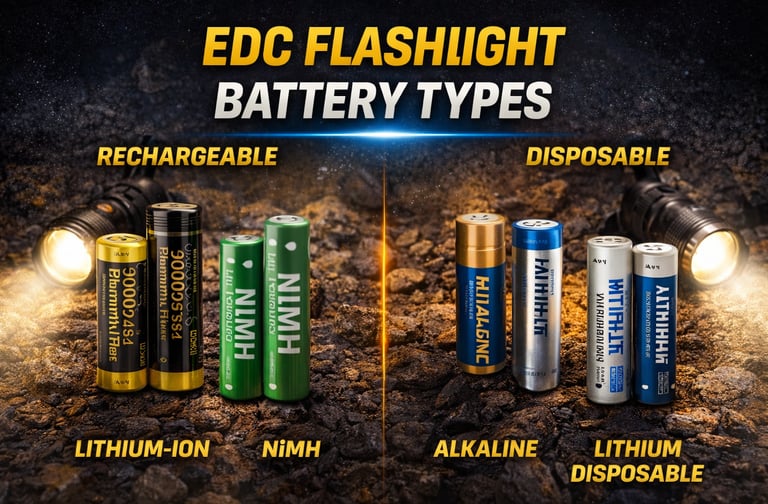
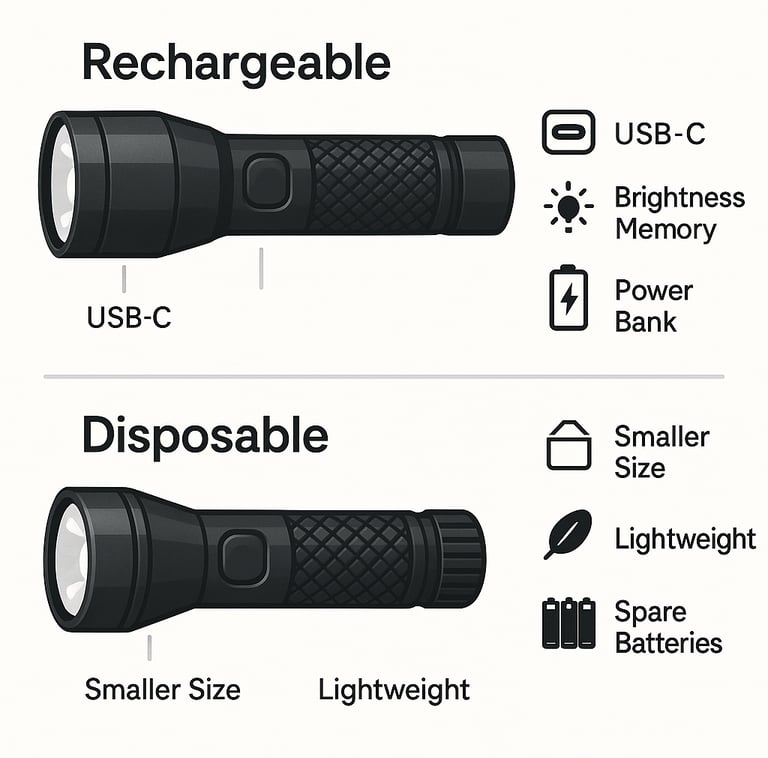
Rechargeable flashlights typically run on lithium-ion batteries that you can recharge over and over. Many models now come with USB charging—USB-C is becoming popular, allowing faster and more universal charging. Some units have removable batteries; others have built-in cells. This setup means after you run the battery down, you plug it back in rather than rummage through drawers for fresh ones. For a deeper understanding of how power systems impact performance, it helps to explore edc flashlight battery types.
After using rechargeable options for weeks, I’ve noticed the convenience of never needing to carry spare batteries is a real relief. Charging at your desk, in the car, or even your pocket power bank keeps the light ready to roll. However, you do become tied to the charging cycle, so forgetting to plug it in overnight can quickly turn your trusted flashlight into an expensive paperweight.
How Disposable Flashlights Work
Disposable flashlights use non-rechargeable batteries like alkaline or lithium cells. When the power runs out, you swap in new batteries. Simplicity is their hallmark—no charging cables, no waiting. They’re usually smaller and lighter because they don’t need integrated charging gear.
In day-to-day use, disposable flashlights impress with their “grab and go” nature. That said, you soon learn to mind your spares. Running out of batteries unexpectedly can be a real inconvenience, especially if stores aren’t nearby. And carrying extra batteries adds weight, an often ignored but persistent annoyance after a full day’s carry.
Battery Life and Performance Comparison
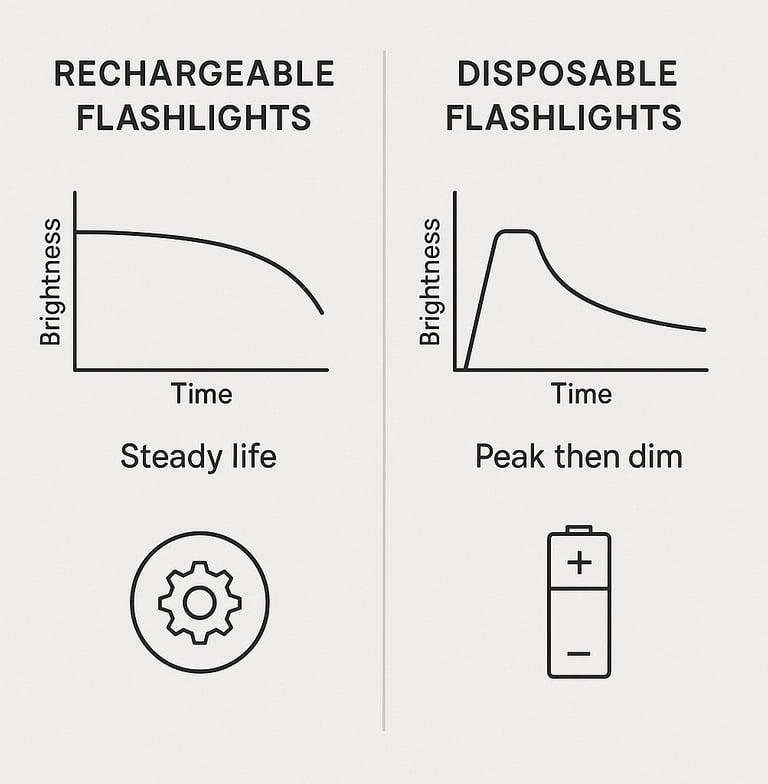
Battery life is front and center in this debate. Rechargeables generally provide longer and more consistent light output across their runtime because lithium-ion batteries maintain voltage better than alkaline disposables. Many rechargeable flashlights come with memory settings, so your preferred brightness is ready to go without fiddling.
That said, battery life depends heavily on the model and how hard you push it. Boost brightness, and neither battery type will last forever. Disposable batteries often give a short surge of strong light before gradually dimming, whereas rechargeable flashlights tend to hold steady until they suddenly drop off. These performance differences also tie into beam efficiency and output behavior discussed in lumens vs candela explained.
Over time, rechargeable battery capacity decreases—expect 300 to 500 full charging cycles before you’ll start noticing runtime losses. It’s not dramatic if you replace batteries or the flashlight itself in due course, but worth knowing. On the flip side, disposables need replacing with every power loss, which adds cost and waste.
Convenience and Usability in Daily Carry
From a pocket-carry perspective, disposable flashlights can edge out rechargeables for weight and size. Without a built-in charging port or heavier battery pack, they feel a bit lighter for slim or minimalist pockets. However, depending on your usage habits, you might find yourself carrying spares that add up quickly.
Rechargeable flashlights, once you factor in cords or docks at home and on the go, might seem fiddly. But the ease of never having to hunt for batteries or guess how many to pack is hard to beat for frequent users. Also, many rechargeable units incorporate additional handy features—brightness memory, USB-C charging, and even fast charge tech—which slowly reveal their value after a few trips out in the field. Many of these modern features are commonly found in curated picks like best edc flashlights.
It’s a tradeoff. Disposable flashlights win points for straightforward, no-fuss use. Rechargeables reward regular users who plan ahead and have convenient charging access.
Cost Analysis: Upfront and Long-Term
Looking at the dollars and cents, rechargeable flashlights often cost more upfront. You’re paying for the battery tech and charging features built in. On the other hand, disposable flashlights are usually cheaper initially but add up as you keep buying replacement batteries.
After weeks of use, the math becomes clearer. If you find yourself buying alkaline AA batteries every few weeks, that cost stacks up surprisingly fast. Meanwhile, a rechargeable flashlight charged daily or weekly essentially runs on juice you already pay for with your electricity. It’s a long-term saving that starts to make sense the more you use the flashlight.
That said, poor-quality rechargeable batteries can bite back with early replacements, so investing wisely matters. Likewise, the convenience of disposables means fewer headaches, which has its own value.
Environmental Impact Considerations
This one is easy to overlook when focused on performance, but carrying flashlights also means dealing with the aftermath of batteries. Disposable batteries add waste—a lot of it if you’re a heavy flashlight user—and many end up in the trash, which isn’t great for the planet.
Rechargeables, by contrast, reduce battery waste dramatically across their lifespan. Lithium-ion battery recycling is a thing (though not perfect), and fewer batteries discarded means less environmental toll. Using rechargeable flashlights is simply a more sustainable choice if you’re serious about minimizing your EDC’s footprint.
Common Myths and Misconceptions
A few assumptions about flashlight types tend to trip people up. First, rechargeable flashlights don’t always have longer battery life. It depends on battery size, output settings, and LED efficiency just as much as the battery chemistry.
Second, you generally can’t swap rechargeable batteries for disposable ones in the same flashlight. Voltage and size differences make that impractical and potentially harmful to the unit. Stick to recommended batteries for your model.
Third, leaving a rechargeable flashlight plugged in after charging isn’t necessarily dangerous. Most modern devices have overcharge protection, meaning you can leave them docked without frying the battery overnight. Still, it’s good practice to avoid constant full charges when possible to prolong battery health.
Choosing the Right Flashlight for Your EDC
Picking between rechargeable and disposable flashlights ultimately comes down to your lifestyle and preferences. If you commute daily, work in an office, or have reliable access to power throughout the day, a rechargeable flashlight can feel like a natural extension of your kit. Compact options built for convenience and portability can often be found in lists like best keychain flashlights.
If you’re the occasional user or go on adventures where charging isn’t an option, disposables might be more dependable. Keeping emergency batteries in your bag or vehicle is often the simplest strategy.
Personal habits matter, too. If you tend to forget charging cords or hate managing extra gear, disposable is less to fuss about. Conversely, if you appreciate tech features and don’t mind a daily recharge ritual, rechargeable flashlights pay off handsomely in the long haul. For more performance-focused comparisons between models, it’s useful to review breakdowns like NEXTORCH TA70 vs Olight ArkPro.
Common Mistakes
Assuming rechargeable flashlights always provide superior battery life without accounting for specific model capacity and usage.
Forgetting to carry spare disposable batteries when relying solely on disposables, leading to frustrating downtime.
Overlooking how long charging takes for rechargeables, which can affect availability if you need immediate light.
Buying cheap rechargeable batteries that degrade quickly instead of choosing trusted brands or models.
Neglecting environmental impacts by ignoring the waste footprint of disposable batteries versus sustainable rechargeables.
Frequently Asked Questions
How long does a rechargeable flashlight last on a full charge compared to disposable batteries?
Runtime depends on flashlight design and brightness setting. Typically, rechargeable flashlights maintain steady output longer but may have shorter total hours at high brightness compared to disposables. On lower settings, rechargeables often outperform disposables considerably.
Can I replace rechargeable batteries in my flashlight with disposable ones?
No, rechargeable and disposable batteries commonly differ in voltage and size, making them incompatible. Using incorrect batteries risks damage to your flashlight and voids warranties.
Which flashlight type is more reliable for outdoor emergency use?
Disposable flashlights are often preferred for emergencies where charging isn’t guaranteed because you can carry spare batteries easily. Rechargeable models require careful planning to ensure they’re charged and ready.
How durable are rechargeable flashlight batteries over time?
Most rechargeable batteries retain good capacity for 300-500 full charging cycles. Proper charging habits and storage prolong lifespan, but eventual capacity loss is normal.
Are rechargeable flashlights more expensive upfront than disposable types?
Yes. Rechargeables typically have higher initial costs due to advanced battery and charging features. However, they usually cost less over time because you avoid repeated battery purchases.
What are the pros and cons of USB charging for flashlights?
USB charging is convenient and widely compatible, allowing fast recharges via common cables and power banks. The downside is you need to carry or access cables and power sources, which may be inconvenient for some users.
Is it safe to leave a rechargeable flashlight plugged in after charging?
Most modern flashlights have protection circuits that prevent overcharging, so leaving them plugged in briefly after full charge is generally safe. Extended charging should be avoided to maximize battery lifespan.
How do I maintain the battery life of my rechargeable flashlight?
Avoid letting the battery fully drain regularly, store in moderate temperatures, and use proper chargers. Occasional partial discharges and avoiding constant full charges can help keep batteries healthy longer.
Conclusion
In the end, the rechargeable versus disposable flashlight debate boils down to how you live with your gear day after day. Rechargeable flashlights reward regular users with convenience, consistent performance, and sustainability but demand a commitment to keeping your light charged. Disposable flashlights win when simplicity, immediacy, and lightweight carry matter most—perfect for the occasional user or those venturing where power is scarce.
After weeks of carrying and using both types, what stands out is that no flashlight choice is perfect. Each fits a user profile, not a universal one. The best EDC flashlight is the one you actually carry, trust, and keep ready when the lights go out or you need reliable illumination on the move. Choose wisely, charge responsibly, and keep your path well-lit. And if you happen to forget it in your pocket until you sit down—well, at least it wasn't the remote.

Contact@TheBuzzHQ.com
© 2026 EDCBuzz. All rights reserved.
EDCBuzz
Master everyday carry systems with clarity and precision. Built for real environments and practical use.
For educational purposes only.
General Inquiries: